Inside Ukraine’s Interceptor Drone Innovations Swatting Down Thousands Of Russian Shaheds
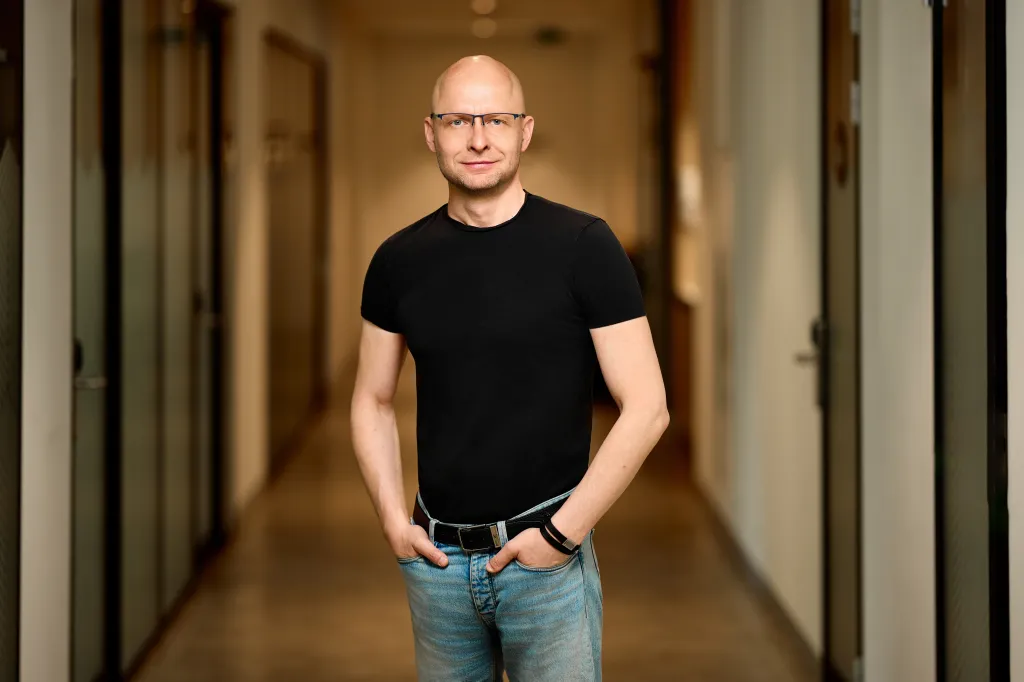
Hours after hunkering down during Russia’s most intense Shahed-136 drone barrage of the war, the head of the country’s defense technology incubator spoke with us about the interceptor drones his country developed to defend against them.
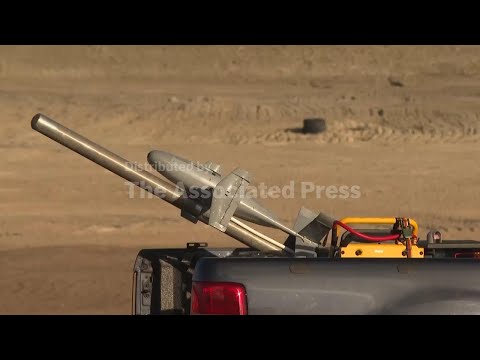
Some of these small munitions cost about $1,000 a piece and can reach speeds of nearly 200 miles per hour. Some also have AI-assisted guidance. They have proven to be a far cheaper alternative to effectors like Patriot interceptors – costing more than $5 million a piece – and even far less advanced missiles for downing Shaheds, which have caused widespread destruction across Ukraine for years. In an hour-long interview, Brave1 CEO Andrii Hrytseniuk talked about how Ukraine developed Shahed interceptors, their effectiveness and the growing interest from the U.S. – which produced its own drone-killing interceptor that Ukraine has used – and other allies. He also spoke about Ukraine’s burgeoning uncrewed ground vehicle industry, which we will discuss in the second part of this interview.
Some of the questions and answers have been lightly edited for clarity.

Q: Tell us about Ukraine’s development of Shahed interceptor drones.
A: The majority of Shaheds are destroyed by interceptors. So this is the dominance of interceptors in aerial defense already. And Ukraine built the new class of weapon globally. It didn’t exist before. Interceptors have extremely high potential, and the main advantage of the interceptors is extremely low price.
In total, we have more than 150 Ukrainian companies who are producing interceptors. And these are interceptors of different architecture. Some are small rocket type first-person view (FPV) drones. In some cases, they resemble small planes. In some cases, they resemble big planes. Some of them are X wings, like a combination between FPV and fixed wing. We use different varieties in different regions and different conditions.

Q: How do you determine which interceptors are right for the job?
A: As an example, in case the Shaheds are coming from the Black Sea, where we have Odessa and other cities on the coast, small interceptors are used only in the last kilometers. The planes are used like loitering munitions, flying for hours and when they find a Shahed, they destroy it.
We need some interceptors that are capable of flying for hours and for hundreds of kilometers. For some, we need just a small diameter zone of protection.
Q: Given the success you’ve had with interceptor drones, have the U.S. and allies in the Gulf reached out, considering the death and destruction caused by Shahed drones launched by Iran?
You can see video of one of those attacks below.
A: I am permanently discussing and we are involved in discussion of interceptors and the potential of interceptors. And of course, it’s one of the top priorities for all countries to build the capability to use interceptors.
Ukraine is able to produce more than 2,000 interceptors per day, and this is not a maximum per day, more than 2,000. And for us, this is not a threshold, not a limit. In the case of export contracts and procurements, we can do much more than 2,000 per day. As an example, during the terroristic attack of Russia, they used more than 1,300 Shaheds and this was just during the last 24 hours. So of course, we need to have a huge number of interceptors.
Q: Did you use more than 1,000 interceptors to defend against them?
A: I will not share details of how many Shaheds were destroyed by interceptors or other types of weapons, but in total, we were able to hit 97% of all Shaheds. This is the public information from our air defense command.
The following video shows some of the aftermath of the recent Russian Shahed barrage.
Q: So when the U.S. and allies ask for help, what do you tell them and what is the current status of exports? The last time I wrote about this issue, the law prevented exports.
A: Brave1 works with Ukrainian and international companies to build and test solutions. We are not deeply involved in export questions. So I cannot comment here, because I’m not aware of the current status.
Q: The U.S. sent its own interceptor drones, the Merops system, to Ukraine in 2024. It proved so effective that it was sent to the Middle East to protect U.S. assets during the now-paused war against Iran. How much, if anything, did Ukraine learn from it?
A: Most successful defense manufacturers learned from our military and Brave1 – both Ukrainian manufacturers, and Merops. Without the direct input of the Ukrainian military and experts, Merops would never have become such a high-performing system, as it is now.

Q: What can you tell me about the relationship between Ukraine and the U.S. and allies as a result of what’s taking place in the Middle East?
A: It’s extremely interesting, and a lot of questions are coming to us, and we are sharing our experience.
Q: Have you had direct conversations with the U.S. military?
A: We are working with the majority of our allied countries. We have calls, sessions, conferences where we are sharing our experience, and the results of Brave1 transforming and improving the Ukrainian defense industry. Everyone is interested. This is the magic that it’s possible to do in such a short period of time. Right now, in Brave1, we have more than 2,300 different Ukrainian companies that are building weapons. And when the war started, it was a majority of state run companies and a very small number of private companies, and right now there is a huge list of companies.

Ukraine’s $2,000 Drone Is Destroying Russia’s $50,000 Shaheds. And Everyone Wants It
Q: You told me that Ukraine has a wide variety of interceptor drones, from the small ones to the bigger ones. How many different kinds of interceptors do the U.S. and allies need to defend against what Iran was launching?
A: I believe that the minimum is 10.
Q: 10? Why?
A: It takes 10 different types of architecture. For us, it’s important to have more different products, because it creates competition between Ukrainian companies, and they are much quicker, building new innovations, and they run faster to get ahead of the competitors – of their rivals. Also, it’s important to have not only interceptors. Interceptors themselves do nothing. This is the combination of variety of technologies, radars, permanent control system, the navigation systems, the systems for remote control, because the soldiers operating them should be not on the front line. They need to be in shelters. So this is the variety of different sub technologies, and as a whole, this is the segment of drone-based aerial defense.
Q: Wild Hornets, for instance, claims its Sting interceptor can be operated by soldiers from 2,000 kilometers away. How common is that?
A: Right now our pilots are able to manage interceptors from any place in the world.

Wild Hornets 2,000 Km
Q: Could pilots at the Tampa, Florida headquarters of U.S. Central Command, which oversees American military efforts in the Middle East, operate interceptor drones?
A: Let’s imagine I’m sending my pilot to the U.S. on a business trip and something happens, and my pilot will be needed to manage interceptors. He will be able to do it from New York or California.
Q: Getting back to the 10 different kinds of interceptor drones the U.S. and allies need. What different kinds? What are the differences?
A: Interceptors against ISR drones. Interceptors against Shahed heavyweight kamikaze drones. Interceptors against decoys. Interceptors that are capable of flying extremely high. Interceptors that are capable of increasing their speed to catch jet kamikazes. Interceptors that can throttle very quickly. Interceptors that have a long flight time and can fly a long distance. So there are a variety of different interceptors.

Q: How do you use AI?
A: We have a very responsible attitude about the ethical aspects of AI. Human-in-the-loop sometimes is used, but mostly we use human-on-the-loop where it’s a synchronous usage of human to arm, disarm, to cancel decisions, but not the human-in-the-loop where we need to wait for the human decisions, because speed of decisions should be taken into account. The effective hitting of Shahed drones is much higher when the human is not in the loop, but on the loop.
Q: Has Ukraine learned any lessons watching the U.S. and its allies defend against Iranian Shahed drones?
A: That’s the best question from all my interviews, for the last period of time. I can tell this subjectively from myself, not a representative of Brave1 or the country. One of the main lessons is that you should never be sure that you are secure enough and your technologies are perfect, because you don’t know what is in the pocket of your enemy. And you always need to be ready for the worst case scenario and permanently improve the level of readiness to counteract or react to absolutely non-predictable different things. And the speed of your reaction is crucial.
You can see one such Iranian Shahed attack on U.S. forces in the following video.
Q: Is there anything in particular you’ve seen about the performance of Iranian drones against the U.S., Israel, the UAE and other countries that surprises you and that you need to develop new ways to defeat them?
A: No. As you know, there is a strong cooperation between Russia and Iran, and Iranian technologies appear to have been used on the battlefield by Russia, and I’m sure vice versa as well.
Q: Have you seen anything different about how Iran is using these drones?
A: I didn’t see anything different. The things that I saw were the same, but I’m not a military expert. We are focusing on technologies.
You can see Iran’s Shahed drone attack on the U.S. Navy’s facility in Bahrain on the opening day of the war below.
Q: What about Ukrainian companies? How closely are they watching this conflict, and when they talk to you, are they saying anything about what they’ve learned and can use to improve Ukrainian weapons?
A: Everyone would like to help. And because we see that Ukraine, this is the only country who knows – and proven for years – how to defend itself against Russian new technologies. And of course, for us, it’s very painful to see because we have this experience. We know what to do, but all these tens of millions [of] people are facing these problems, but we could help.

Q: In March, President Donald Trump said: ‘We don’t need their help in drone defense. We know more about drones than anybody. We have the best drones in the world, actually.’ What do you think about that?
A: I cannot comment.
Q: Would you say there was a difference in the level of interest from the U.S. and allies at the beginning of the war to now?
A: Of course, absolutely different interest. Previously, it was almost zero interest. And right now, this is number one topic.

Q: What advice would you give to the U.S. about defeating Shaheds?
A: Number one is, do not believe that you have plenty of time, a lot of time for preparation. The time is gone. The second one is cost matters. And the expenses for defense should be less than the expenses of your enemy to attack you. Number three is permanently focus on asymmetrical solutions.
Q: Like what?
A: When Ukraine didn’t have enough air defense missiles, we invented interceptors (drones). When we had a lack of 155mm ammunition, we invented FPV drones. When we had a lack of helicopters, we invented drone bombers. We had a lack of naval fleet, so we invented naval drones.
And we see that such tremendous change of new technologies on the battlefield posed a lot of different new innovations everywhere, and we are the Ukrainian government cluster that analyzes all military ideas of different industry players. We see that every month the number of ideas is increasing, nothing. This is just opening new doors to a new era of new technologies.

Q: Have interceptor drones been able to replace those fired by high-end systems like the Patriot air defense system and others?
A: No. It’s not about replacement. Interceptors will never replace Patriot. Patriot is a great technology, the best in the world missiles for protection against ballistic missiles, hypersonic missiles. But of course, it absolutely doesn’t make any sense to use it against Shaheds. It’s extremely expensive, extremely it is overkill.

In our next installment, Hrytseniuk talks about how Ukraine plans to meet President Volodymyr Zelensky’s directive to produce 50,000 uncrewed ground vehicles this year.
Contact the author: howard@TWZ.com