An expedited investigation at the time found three players knew about the plan: captain Steve Smith, vice-captain David Warner and fellow batter Cameron Bancroft. They all faced lengthy bans.
However Khawaja, Warner and another player on the tour, Chadd Sayers, have all now said they believed everyone knew.
Current Australia captain Pat Cummins has rejected claims he knew sandpaper was being taken onto the field as “nonsense”, and expressed hurt that Khawaja – his friend – had called his reputation into question.
The release of Khawaja’s book has also renewed scrutiny of Cricket Australia’s initial investigation.
A handful of players – including the batter – have said they were not interviewed for it, and Warner has accused the governing body of a “cover-up”.
“Over the past week we’ve had several different and conflicting accounts of what transpired in Cape Town in 2018 and it’s been an incredibly difficult and uncomfortable time for the game and for everyone who was involved,” Greenberg said on Friday.
“What’s become clear is that some players were not heard at that time. That opportunity now exists in a place without judgement, without sanction.”
He said the forum would be confidential – and that the Cricket Australia board would decide what information to make public.
The incident had “a lot to do with the culture that existed back at the time”, Greenberg said: a win-at-all-costs mentality which he admitted the governing body played a role in creating.
He added that it is important the current Australian team be “afforded the space to perform at their best at what is a very important time and period for the game”.
Australia’s bowling attack in the contentious third Test – Pat Cummins, Josh Hazlewood, Nathan Lyon and Mitchell Starc – remain fixtures in the national side.
Philippine’ tennis star Eala was left stunned after a 6-3, 6-0 loss to the 102-ranked American in Hong Kong.
Published On 8 Nov 20268 Nov 2026
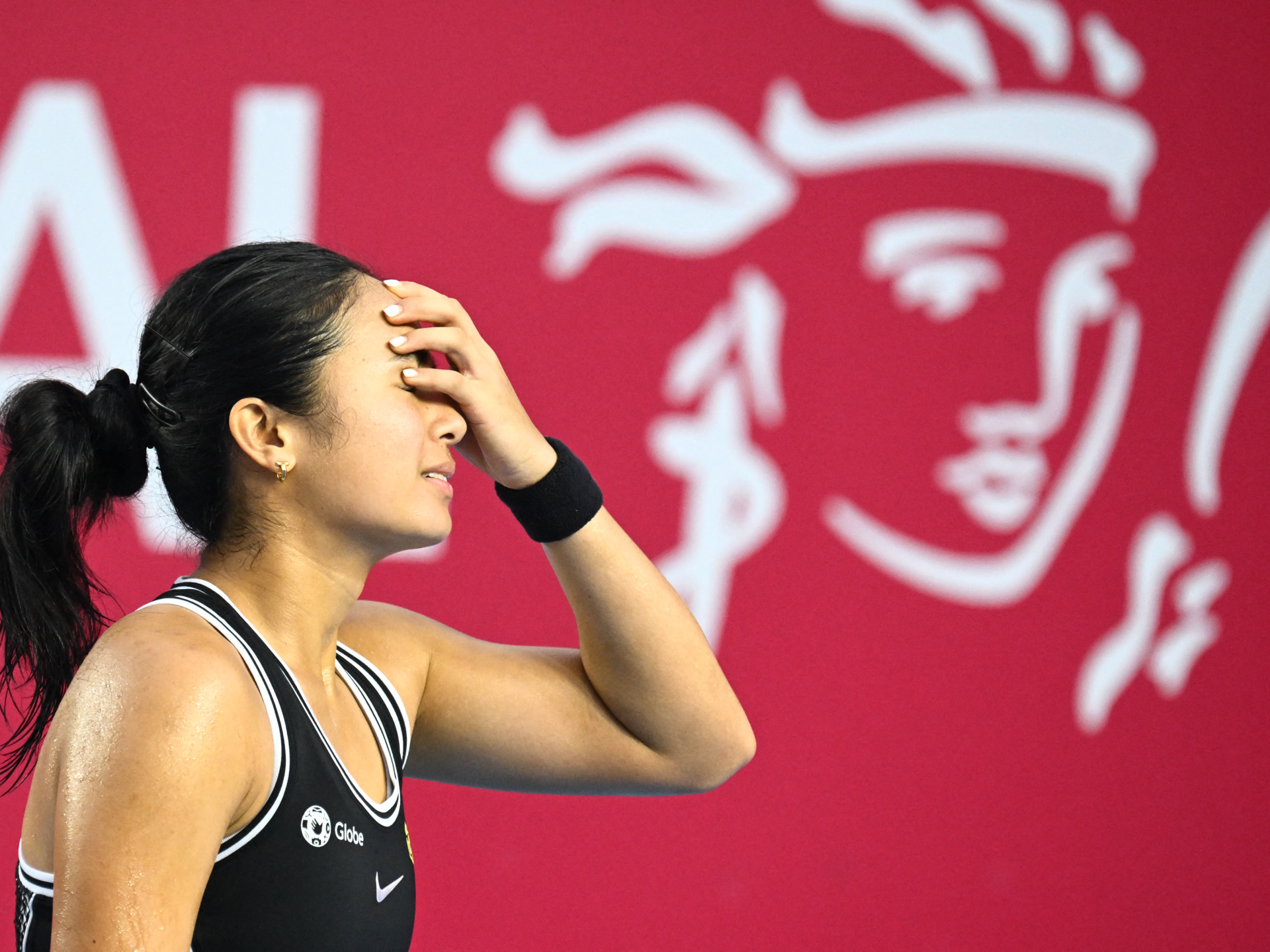
Tennis trailblazer Alex Eala from the Philippines burst into tears as she reflected on a “life-changing” season after falling agonisingly short of a second WTA Tour title in Hong Kong.
The second seed was stunned 6-3, 6-0 by Claire Liu in the final of the Hong Kong Open as the American, ranked 102nd, won her first tour title on Sunday.
Recommended Stories
list of 3 itemsend of list
Eala is at a career-high 17 in the world after a breakout year in which the 21-year-old clinched her maiden title, in Washington, DC, in August.
That victory made her the first player from the Philippines to win a tournament on the WTA Tour.
Eala, set to rise to world number 15 next week, started the year ranked 50th.
“This season has changed my life; it’s changed my life for the better,” Eala, who finished the final with heavy strapping on her right leg, told the crowd afterwards.
Becoming emotional as she addressed her team in the stands, she said: “I’m incredibly proud of the work we’ve put in this year.
“We’re the only ones that truly know what it took to arrive to this point in our journey.
Ritu Pant always made sure that her merchant navy officer husband told her two things before departing on an assignment.
“I always noted the details and the name of his ship and his emergency contact details in case of a crisis,” says Ritu, who is based in the northern Indian state of Uttarakhand.
That’s what she did on April 25, when her husband Ajay left Paradip Port in the state of Odisha on board the MT Smyrtos, a crude oil tanker. Her husband had been a sailor for 18 years, and spent six or seven months a year at sea. But growing threats to seamen – amid the wars in the Middle East and between Russia and Ukraine, and from pirates roaming the high seas – had increased her jitters in recent years.
Yet it was through a social media post that she learned in mid-June that the ship had been captured. Not by pirates, but by the British armed forces, because the MT Smyrtos is under Western sanctions for allegedly working as part of Russia’s shadow fleet, a network of vessels that help Moscow evade United States and European economic restrictions to continue to sell oil and gas, amid the war on Ukraine.
Now Ajay Pant faces charges of flouting United Kingdom sanctions against Russia by commandeering the ship. It’s the first known instance when a European nation has kept a ship captain under arrest on such grounds, and could set a worrying precedent, say lawyers and groups advocating for the rights of seafarers. “This is a unique case,” said Tony Patten, the UK representative at the International Transport Workers’ Federation (ITF), an organisation that works for the rights of seafarers.
Other European countries have also taken over ships that they accuse of violating sanctions against Russia, but while they’ve kept the vessels, they have so far let the sailors go. In March this year, a captain of a suspected Russian shadow fleet was prosecuted in absentia by a French court. In another case from Finland, a court dismissed charges against the captain of a Russian oil tanker accused of damaging undersea cables in the Baltic Sea on account of lack of jurisdiction. In other cases, European nations have set commercial sailors free with fines.
By contrast, Ajay faces up to 10 years in prison if convicted.
The case has also underlined a growing tension between maritime traffic through international waters – the Smyrtos was not in British territorial waters when it was captured – and the enforcement by countries of sanctions that are not approved by the United Nations.
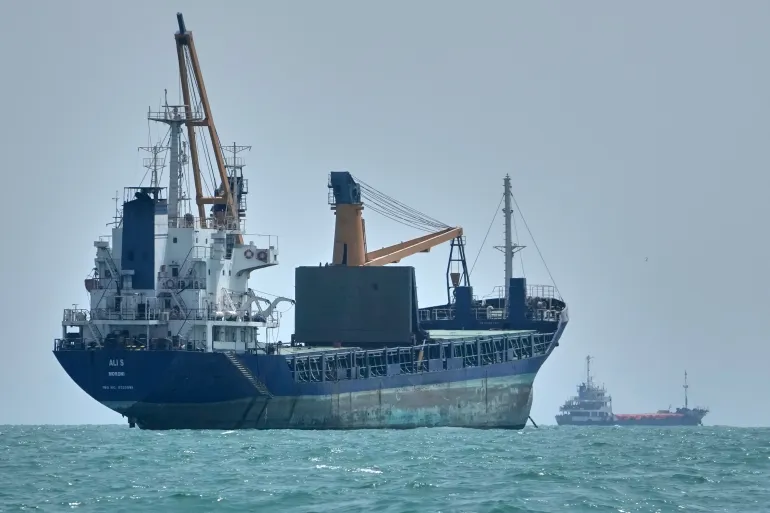
A general cargo ship lies anchored among other commercial vessels in the Strait of Hormuz off Bandar Abbas, Iran, September 6, 2026 [Vahid Salemi/AP Photo]
‘Situation of the sea was very bad’
The open seas have always been dangerous, but the risks have mounted as wars and piracy have turned ships and their crew into active targets for militaries and mercenaries alike.
At least 24 seafarers have been killed in the Strait of Hormuz since the US and Israel launched their war on Iran in February. More than 120 commercial ships and tankers have been attacked in this period in the waterway, which used to transport a fifth of the world’s energy supplies before the start of the war.
The death toll in the Black Sea is even grimmer: At least 40 sailors have been killed in more than 570 attacks on vessels there. Piracy off the coast of Somalia has resurged, too.
For Ritu Pant, all of that meant increased insecurity each time her husband went on a ship.“I was quite worried,” she said, describing her thoughts while Ajay was at sea. “When I talked to Ajay, I would tell him that you need to keep in touch always; you need to tell me that you’re fine and everything is safe around because the situation of the sea was very bad.”
But it was not uncommon for her to not hear from her husband for days, due to network disruptions at sea. So Ritu would track updates of her husband’s ship online, a practice that has become increasingly common among families of sailors at sea.
On June 14, the MT Smyrtos was chugging through the English Channel when the Royal Marines Commandos intercepted it, in what was a first-of-its-kind operation authorised by then British Prime Minister Keir Starmer.
At the time, the ship was in international waters, outside the territorial jurisdiction of the UK. Yet Chinook, Merlin Mk4 and Wildcat helicopters from the Maritime Air Group; a Royal Air Force P-8A Poseidon Maritime Patrol Aircraft; a frigate; and a mine countermeasures ship participated in the military operation to take control of the vessel, according to the British Ministry of Defence.
The ship was carrying oil from Russia and was on track to pass through the Suez Canal on its way to India, its destination.
“This successful operation delivers yet another blow to Russia and reminds those fueling Putin’s war in Ukraine that we will not let them hide,” Starmer said in a post on X.
What followed was equally unprecedented; charges of allegedly breaching Russian sanctions were brought against Ajay, who has since been in detention in the UK. After an initial court hearing, his bail was denied.
Captain Ajay Pant (R) with his wife Ritu on one of the ships he has previously commandeered [Courtesy Ritu Pant]
‘Criminalisation of seafarers’
Enforcement of maritime sanctions brought against Russia after its full-scale invasion of Ukraine in 2022 has been tenuous at best, which makes the Smyrtos case “very unique”, said David Hammond, a lawyer and founder of Human Rights At Sea, a nonprofit and UN-accredited organisation advocating for the rights of people living, working, transiting and operating at sea.
“It is unique in terms of the interception and the interdiction of a vessel that had been sanctioned, having passed through the English Channel as an international transit corridor. It’s, in my understanding, not happened before,” he said.
On the one hand, Hammond explained, the outcome of the case will determine how coastal states enforce sanctions against vessels. But, he said, it also underscores the risks of “criminalisation of seafarers”.
Hammond said Ajay Pant’s case was part of a broader pattern of “shipping crews finding themselves in a position where they are arrested for many crimes, such as trafficking or movement of drugs that they’re not even aware of having been put on board the ship”.
He cited the example of Ali Albokhari, a Finnish-Syrian chief mate on a cargo ship, who was detained by Turkish authorities in 2023 after 137kg (302lb) of cocaine was found on board.
Patten of the ITF echoed similar sentiments. “Our stance is that seafarers being penalised automatically when something like this happens isn’t fair. We would always uphold the right of the seafarer,” he said.
Hammond said Ajay’s case was especially without parallel. “In the case of the Smyrtos, it could be argued that Captain Pant is being criminalised for simply doing his job,” he said, adding that the direction in which the British courts rule will set a new precedent for masters’ accountability over movement of sanctioned goods.
The case, Hammond added, “is a perfect storm in a global storm of impunity; who is accountable and who enforces accountability”.
“And the unintended consequences of which are yet to be seen,” he warned.
An aerial view of the heavily damaged Russian-flagged cargo ship OMSKIY-107 washed ashore at Alacali Beach on September 2, 2026 in the Sile district of Istanbul, Turkiye. The 108-metre (354ft) bulk carrier drifted ashore after its crew reportedly abandoned the ship in lifeboats, following a drone attack that struck the vessel in the Black Sea [Burak Kara/Getty Images]
‘Horrible year at sea’
The case also raises wider concerns, Hammond said, about how shipping companies and the countries vessels traverse often treat seafarers. “Undeniably, seafarers are seen as disposable assets,” he said, “disposable because they can be easily replaced but concurrently, as assets for assuring continuous global movement of goods by sea.”
The killings in the Strait of Hormuz and the Black Sea have underscored that sense among sailors and their families – that the lives of those who keep the global economy moving are seen as disposable by those in power.
In a statement shared with Al Jazeera, the International Maritime Organization confirmed at least 66 sailors were killed in various conflicts this year, and hundreds of others injured. Many sailors are also still missing and feared to be dead. “It has been a horrible year for people at sea,” Patten said. “Problems have always existed, but conflicts and geopolitical change have certainly heightened them.”
Ajay Pant’s case also shines new light on a growing number of instances where navies have gone outside their territorial waters to seize tankers that they claim are violating their domestic sanctions regimes.
Since February, when the US and Israel launched their war on Iran, US forces have intercepted and captured several cargo ships in the Indian Ocean. These vessels were seized not just far from US territorial waters but also far from the theatre of their war, on accusations that they were helping Iran evade US sanctions.
The US and the UK argue that they are acting within the bounds of international law.
The UN Convention on the Law of the Sea permits a warship to visit a cargo ship to verify its flag where there are reasonable grounds to suspect the vessel is without nationality. The British Defence Ministry, in its statement after the seizure of the Smyrtos, said that if a vessel is determined to be stateless, the UK can exercise criminal and maritime enforcement powers under its domestic Policing and Crime Act.
The Smyrtos, like many ships that are accused of belonging to Russia’s “shadow fleet”, has frequently changed its flag. The ship had once previously been registered in The Gambia, and then adopted a Cameroon flag in December 2025. When it departed from a Russian port, it had a Cameroonian flag, but Lloyd’s List Intelligence reported that the ship had been removed from Cameroon’s register earlier, in June. It is owned by a Chinese company.
According to the British Defence Ministry, Russia sells about 75 percent of its oil using such shadow tankers.
But whether militaries have the right to enforce their domestic sanctions and laws in international waters against individuals and vessels that are not registered in their territory remains a contested question in international law.
The capture of such vessels raises “a much bigger issue” of “the freedom of navigation at sea”, said Hammond.
To Ajay’s family and those advocating for him, it also raises a more human question: If a cargo ship captain passing through international waters can be captured and tried by nations for allegedly violating their domestic laws, is any sailor safe?
Ritu Pant wearing her husband Ajay’s cap while visiting him on an earlier ship he commandeered [Courtesy Ritu Pant]
Anchored with hope
That’s a question that Ritu has lived with in the past few months, forcing the former school principal into advocacy not just for her husband’s release, but for seafarer rights globally.
“Ajay’s case goes beyond just our family, and could be a landmark judgement for seafarers worldwide,” she said. “It raises the fundamental question of whether a master of a ship can be criminalised for decisions that are beyond his authority, knowledge or control.”
The journey has been a difficult one, she said.
“Ajay was the primary breadwinner of his family, and I have also been forced to give up my work to focus on this case,” the mother of an eight-year-old and a one-year-old said.
“He has also been a caregiver to his elderly parents,” she added, saying that for the first few days after the arrest, she kept the news from them, worried for their health. “I wouldn’t allow the daily newspaper in the house and stopped sending my older daughter to school, afraid that someone would say something hurtful to her.”
Eventually, Ritu informed the family and prepared them for the struggles ahead.
“The hardest part is having to do this across continents. We have only spoken to him over short calls, and he has had no personal visitors since I went to meet him in August,” she said. “I don’t want him to feel that he has been forgotten.”
But despite the hardships, she remains hopeful, as support has poured in from the global seafarers community. “When I started posting on social media, I received so many messages from families and wives of sailors,” she said. “Every seafarer’s family I’ve talked to relates to this. So many sailors are getting targeted right now in conflict at sea; they are being made scapegoats.”
Now, she’s preparing for Ajay’s upcoming trial. “I have to bring him back home,” she said. “For his family, but also because no seafarer should be treated in this way.”
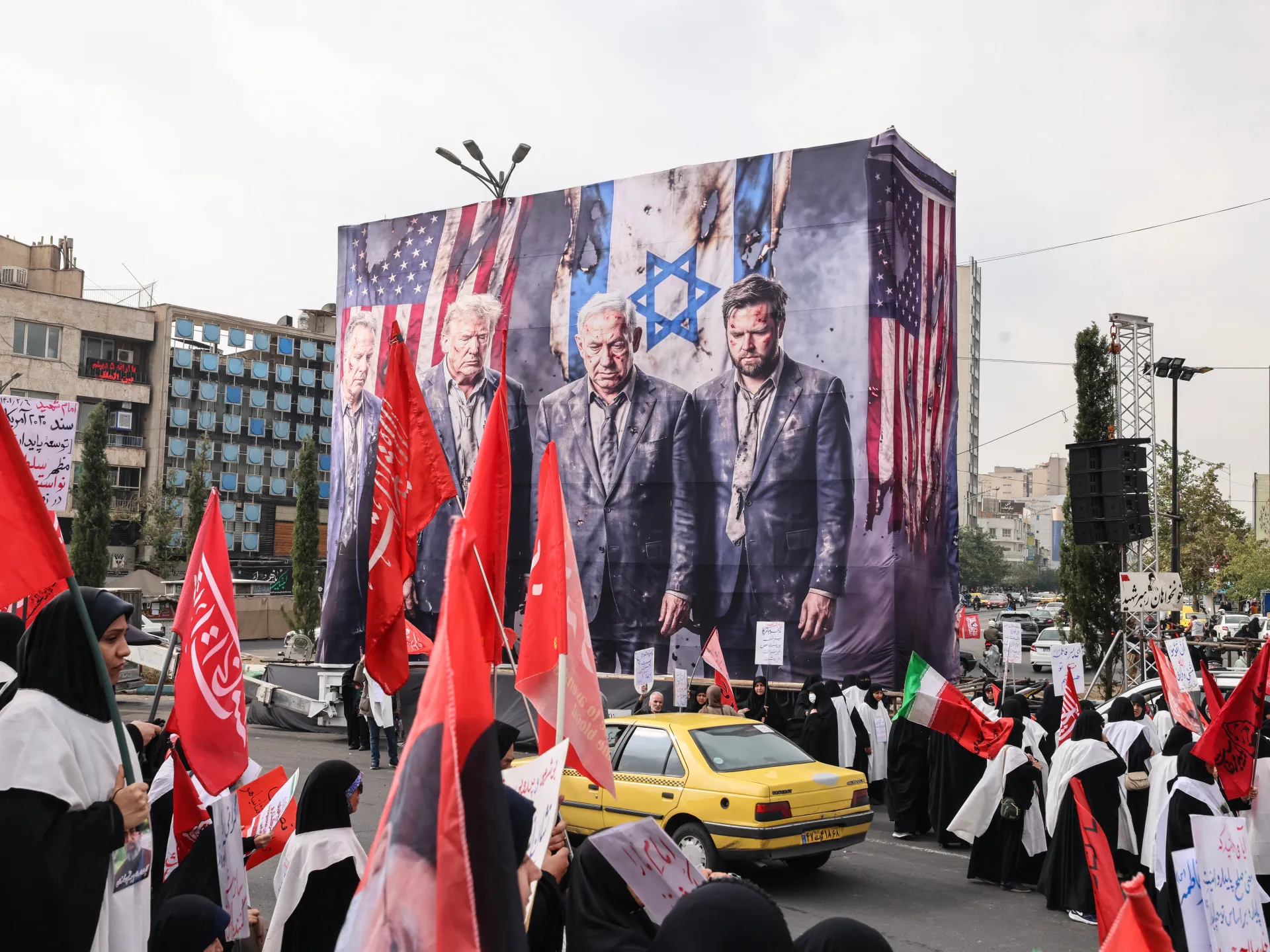
The chief of staff of Iran’s armed forces has laid out five conditions for what he calls a roadmap to lasting security, as Qatar said it was “hopeful” that Tehran and Washington could reach a deal paving the way for future negotiations, despite overnight US strikes on Qeshm Island.
Major-General Ali Abdollahi’s plan calls for an end to hostilities on all fronts, including Lebanon and the Gaza Strip, the complete lifting of sanctions and the unfreezing of Iranian assets and war reparations, Iran’s Tasnim news agency reported on Tuesday.
Recommended Stories
list of 3 itemsend of list
The plan also calls for recognition of Iran’s sovereignty over the Strait of Hormuz, and a guarantee against future aggression under a regional security framework for West Asia.
The plan comes as Qatar steps up mediation efforts amid fears the US-Israel war on Iran, launched in late February, could escalate after the midterm elections in the United States on Tuesday.
Qatar’s Ministry of Foreign Affairs spokesman Majed al-Ansari said in his weekly briefing in Doha on Tuesday that a Qatari delegation held a meeting with Iranian officials in Tehran for more than three hours on Monday, before returning to Doha that evening. Both sides are now reviewing Qatar’s proposal, he said, with mediators exchanging proposals between them in real time.
“If there were no glimmer of hope, there would be no negotiations,” al-Ansari said, adding that Qatar would not speculate on whether an agreement or a military escalation was more likely.
He warned that any escalation, whether attacks on Iranian territory or on shipping, “will have an impact on the negotiations”, and said continuing the Qatari-Pakistani mediation remained a priority. He reiterated that freedom of navigation in Hormuz was nonnegotiable, referring to Doha’s condemnation of the targeting of the Qatari tanker Al-Mayda.
Reporting from Tehran, Al Jazeera’s Resul Serdar Atas said mediators were aiming to avert a new round of fighting.
He said a Qatari delegation visited Iran on Friday in response to a letter to Iran from US Vice President JD Vance, and an Iranian delegation travelled to Qatar the following day.
“The Qataris are trying to mediate with Iran, not on a peace deal, but on a framework to restart the negotiations,” he said. Of Monday’s brief visit, he added: “The reading is that the Qataris carried a message to Tehran and immediately left after that.”
“The main issue is the mistrust between the two parties,” Atas said. “The Iranians say that twice previously the US attacked them when they were engaged in diplomacy. That’s why they’re asking for concrete steps, such as lifting sanctions, removing the naval blockade, returning frozen Iranian assets and letting Iran sell oil on the global market.”
US officials reportedly said the military carried out limited strikes on Qeshm Island on Monday that did not amount to a resumption of major combat operations, saying Iran had tried to target a US aircraft and the attack took out the launcher.
One official called it “a defensive measure for Iranians using surface-to-air missiles against US assets”. IRNA reported five explosions on the island, with more blasts heard in Bandar Lengeh. President Donald Trump had said on October 8 that the US would not attack Iran before the midterm elections.
The Islamic Revolutionary Guard Corps (IRGC) said on Tuesday it downed two US MQM-170 reconnaissance drones south of Qeshm and destroyed an MQ-9 drone east of the strait.
Parliament Speaker Mohammad Bagher Ghalibaf, Iran’s lead negotiator, said, “The ball is in America’s court to prevent war.”
Tehran’s Hamshahri newspaper reported that Iran had updated its target bank to include US bases and infrastructure in Europe.
Zeidon Alkinani, the founding director of the Arab Perceptions Institute, said both sides remained open to diplomacy.
“Diplomacy and force are running in parallel,” Alkinani told Al Jazeera. “The diplomatic channel is alive – it has always been since March, but there hasn’t unfortunately been a fundamental breakthrough.”
Vance had said on Monday he was optimistic about reaching a negotiated settlement.
However, Deputy Foreign Minister Kazem Gharibabadi said on Tuesday Iran was neither waiting for the outcome of US midterm elections nor shaping its policies around them.
Great Britain’s Kadeena Cox set a new world record as she won C4 1km gold at the Para Cycling Track World Championships in the Netherlands.
The 35-year-old crossed the line in 1 minute 9.545 seconds to win her seventh world title.
Cox faced a nervous wait as Tara Neyland took to the track afterwards in pursuit of a medal, but her Australian rival could not eclipse the Briton’s time.
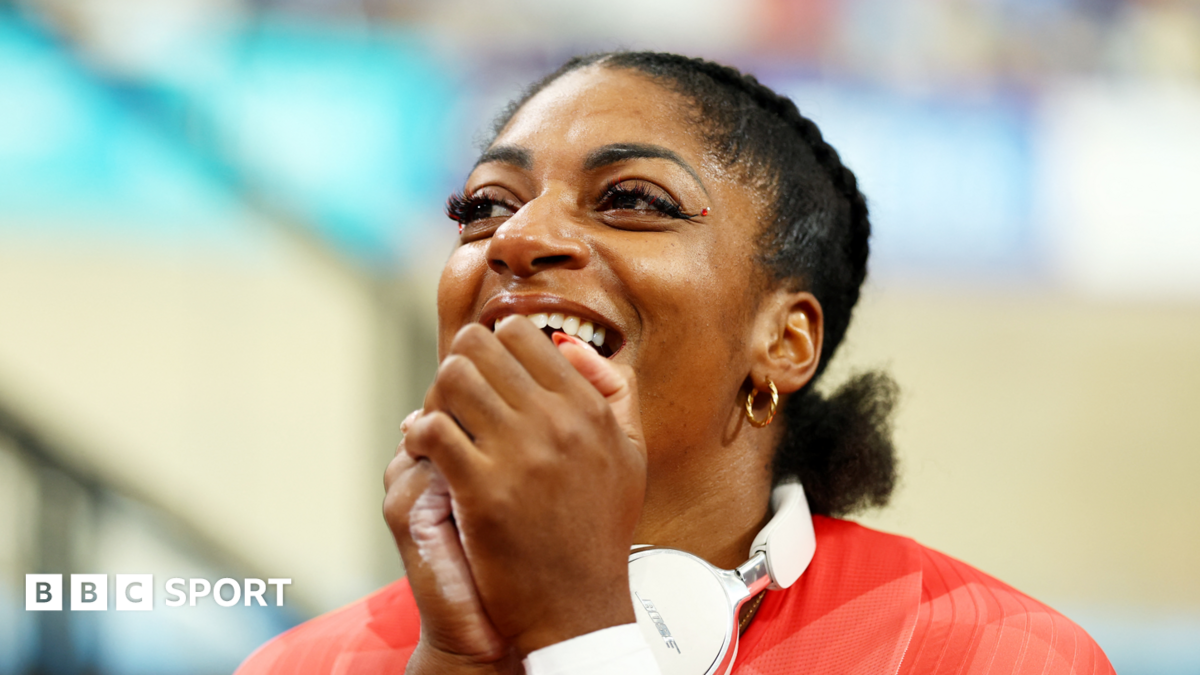
Cox, who is a five-time Paralympic gold medallist, was draped in a British flag by her team following victory as she joyously celebrated her first world title since 2024.
In the men’s tandem B 1km time-trial, Britain’s James Ball defended his title as he won gold alongside new partner Aaron Pope.
The pair dominated in the final, crossing the line in 59.563 seconds as Ball secured his eighth world title, with Pope winning his first.
In the women’s pursuit final, Britain’s Sophie Unwin alongside Jenny Holl won silver behind New Zealand’s gold medallists Emma Foy and Jessie Hodges.
Unwin and Holl had earlier set a new world record of 4:30.262 in qualifying, before it was broken by Foy and Hodges’ time of 4:29.672.
In the men’s C4 final, Britain’s Archie Atkinson won bronze, while compatriot Fin Graham also took bronze in the C3 1km time-trial.
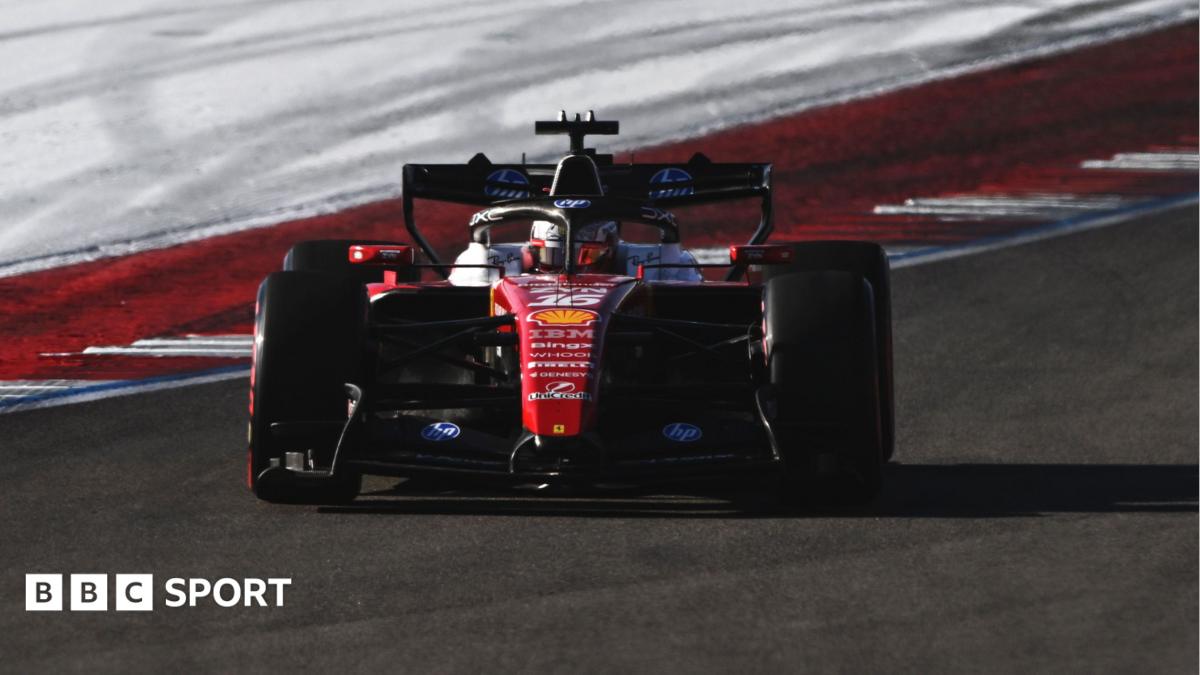
Ferrari have an upgrade on their car this weekend, focused on a new floor, but Leclerc was downplaying expectations.
“It felt good but it is not the gain I have seen or heard about,” Leclerc said. “It is small gains but we could still see them on the car. It is a small step forward and we started the weekend on the right foot with a good balance and that is the outstanding thing with this Friday.
“It has been a very clean Friday for me, but the others seem to be gaining more than us from Friday to Saturday and seeing the little gap there is, it is not going to be so easy tomorrow.”
McLaren’s Lando Norris was seventh fastest, although the world champion did not set a time on his qualifying simulation run on soft tyres after making a mistake at Turn 16.
Norris was the fastest on the long runs, at about 0.2secs on average faster than Verstappen, but cannot be compared as he was running the hard tyre.
McLaren have introduced the first of three consecutive planned upgrades this weekend, but he was not happy with his performance.
“Difficult,” Norris said. “The pace is not bad. We seem a step away from Red Bull and Ferrari, probably Mercedes as well, but the car is very difficult to drive, too difficult to be consistent and get a nice feeling consistently.
“To get the car be quick we just have to try so hard to be perfect and you can’t be perfect. I am sure everyone has similar problems in a way but we are just not quick enough yet to be there consistently enough.”
McLaren’s Oscar Piastri was eighth quickest, ahead of Red Bull’s Isack Hadjar and Haas driver Oliver Bearman.
Ever since Uefa announced its plans to alter the format of the Champions League in 2021, the impact on matches has been a hot topic. Scrutiny has only increased since the changes were implemented in time for the 2024-25 season.
After beginning life as a six-team invitational tournament in 1955-56 before growing to a 32-team knockout tournament in 1967, the Champions League as we know it began in 1992.
A group stage was added, with the last 16 entering a knockout phase. There was a brief spell with two group stages, but this was reverted back to the single group-stage format for the 2003-04 tournament.
The group stage previously featured 32 teams in eight groups of four, with the top two sides from each of those groups qualifying for the last 16.
For the start of the 2024-25 season, the group stage was replaced with a 36-team league phase, with each side playing eight one-off fixtures instead of six games against three teams.
The top eight finishers qualify directly for the knockout stages, with those placed ninth to 24th entering a two-legged play-off stage.
The bottom eight are eliminated, meaning that after eight matches, 24 sides are still in the competition. Some argue that that creates a lack of jeopardy, which encourages teams to play more expansively.
But do more goals equal better quality?
“I think the entertainment has gone up, although I’m not sure the quality has gone up,” The Times football writer Tom Arnott told BBC Radio 5 Live.
“If I’m looking at the games it’s brilliant to watch and thrilling because the football itself is fantastic – but what do they mean?
“The lack of jeopardy, why would PSG and Barcelona play for a draw, why not go for it? If you need five wins from the eight games you know you’ve got some margin there. If you lose it’s OK. I think the format allows all the teams to loosen up.
“The entertainment value is there but I think you come away from these matches sometimes and still think ‘what does it all mean?’. The lack of jeopardy early on does deliver entertainment.”