A walking tour of Andalucía’s historic white villages: ‘Nightingales serenade us as we wind along lush river valleys’ | Andalucia holidays
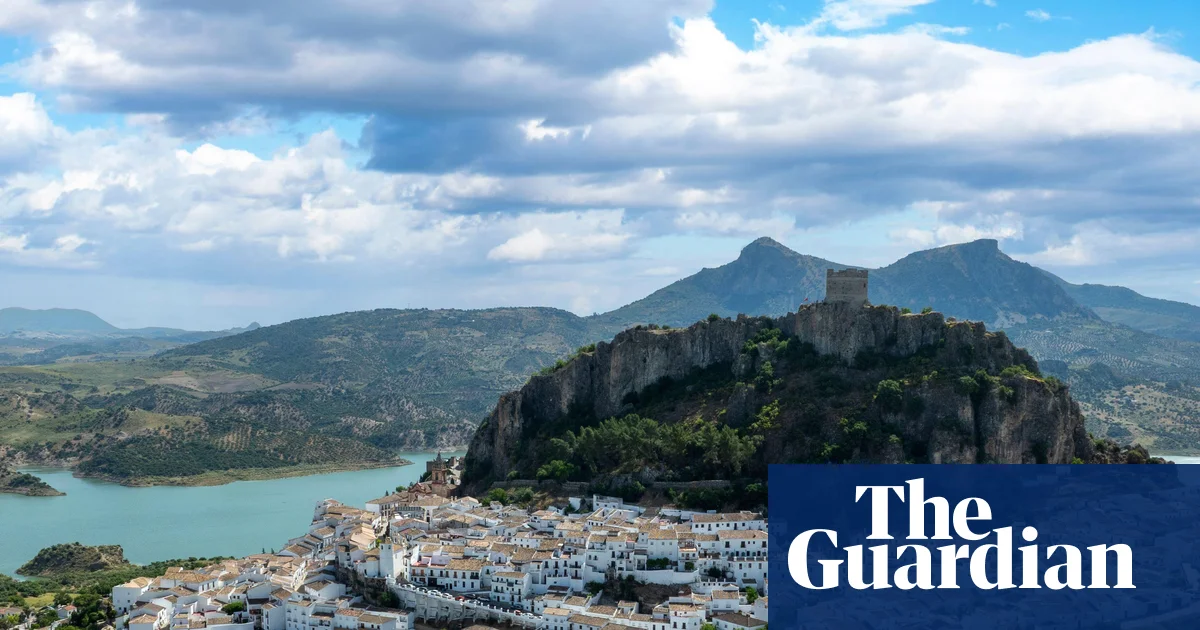
‘The wind is in from Africa / Last night I couldn’t sleep.” Joni Mitchell has ear-wormed her way into my head as my wife and I step out from Zahara de la Sierra into the mountains of Sierra de Grazalema natural park. The Africa bit probably comes from yesterday’s visit to Zahara’s castle museum. Here, high above the tiled terracotta mosaic of village rooftops, we learned how the recapture of this picturesque hill town was a turning point in the Reconquista – the military campaign of the 1400s that saw the Catholics retake southern Spain after seven centuries of Moorish control. As for sleep deprivation, I may just have overdone it on last night’s tapas.
Either way, Africa feels present as we tramp through the countryside of Andalucía, if only in the wildlife. The painted lady butterflies drifting over the flower-spangled verges, the turtle doves purring from the olive groves and the booted eagle drifting overhead: all are summer visitors recently blown in from the great continent to our south.
It’s day two of our White Villages of the Ronda Mountains walking tour, a self-guided seven-day route from On Foot Holidays that explores this alluring corner of southern Spain. We arrived yesterday by bus from Málaga, winding up through the mountains until the whitewashed dwellings of Zahara appeared like teeth in the hillside ahead. This was the first of the week’s four pueblos blancos, all tucked picturesquely into the natural park’s rugged 51,695 hectares (127,740 acres) of limestone peaks and serpentine river valleys.
I’ve walked with On Foot before, so the routine is familiar: water bottles and packed lunches stashed in daypacks, laminated map around neck on lanyard and route app open on phone (belt-and-braces navigation). Best of all, our luggage is already wending its way by taxi to the next destination.
The conditions couldn’t be more perfect. The hillsides burst with blossom and birdsong, the May temperature is a pleasant mid-20s (midsummer out here would be punishing), and the peaks stand proud against the clear blue sky. It’s hard to believe February brought such heavy rains that much of our route was then impassable – and some areas of the park were affected by wildfires later in the summer.
But each month here has its own character. September/October – also prime walking season – sees the chestnuts and cork oak forests turn russet and gold, and the spring irises and orchids replaced by the post-summer bloom of wild asparagus and autumn crocus. Overhead, those booted eagles will be massing for their return journey – along with bee-eaters, honey buzzards and other winged voyagers – back to Africa.
Today’s hike takes us south towards Grazalema: pueblo blanco number two. We skirt a reservoir then wind along a lush river valley, nightingales serenading us from the oleander thickets, and by late morning are rising into the mountains, the vista gaining grandeur as we gain height.
Lunch is in a high meadow, where we unwrap our bocadillos while bees buzz and butterflies busy themselves among the blooms. Afternoon brings a long uphill slog, then finally a cool descent through shady pines to sleepy Grazalema. Another 11 miles (18km) under our belts.
We stay two nights in Grazalema at the Hotel la Mejorana, meeting wild ibex on a mountain circuit high above town, and eating at the cosy Cádiz el Chico restaurant, where a menu featuring partridge and wild boar (though, thankfully, not ibex) reflects the region’s hunting traditions. At night, the cobbled streets are quiet beneath a canopy of stars.
Benaoján, the third of our pueblos blancos, lies about 16 miles to the south-east. We exit Grazalema early in the morning, beneath the Los Peñascos mirador. Roosting griffon vultures line the cliffs like pterodactyls, warming up in the morning sun before, one at a time, flapping off on table-top wings for another day combing the plains.
Our route leads down through the oak woods before rising again into the hills. Here we enter a limestone wonderland, the karst formations sculpted by wind and rain into Henry Moore-like statues. Bee-eaters dart overhead, their liquid chirrups audible long before we lay eyes on them. A passing walker greets us with a cheery “Buen camino!” He’s returning with his father to see the farmhouse where they grew up. We find Dad sitting on a nearby rock, devouring an empanada. They’re the only other walkers we meet all day.
Our hideaway at Benaoján is the Molino del Santo hotel, where we dine beside a chuckling stream on a terrace crowded with potted geraniums. From here, it takes us two hours to hike to the Cueva de la Pileta, an immense cave system discovered in 1905 when a local farmer spotted bats streaming from a fissure in the hillside.
Local guide Ainhoa Bullón leads us down cool, narrow passages into measureless caverns, her thin torch beam illuminating flowstone formations as enormous and elaborate as a Gaudí cathedral – formed, she explains, by the drip-drip of lime at the rate of 1cm every 400 years. The farthest recesses hold exquisite shamanic rock art, some more than 25,000 years old. Ainhoa overflows with information, talking us through the cave’s successive ages of antiquity, from Neanderthal to Neolithic. Most important, she delivers us safely back to the blazing sunshine outside.
Our week ends at Ronda, perched atop the precipitous El Tajo gorge. The celebrated clifftop town seems to beckon us onward like some mythical sky citadel as we tramp our final kilometres towards it. Below the cliffs, we find ourselves back in tourist land, sharing the steep climb to the top with a gaggle of selfie-snapping day trippers.
We make it, slumping at the first available cafe table to lever off boots, fold away the map and order a celebratory cold cerveza. Tomorrow, we catch our bus back to Málaga. For now, a final night lies ahead, with a stirring panorama from our room at the Parador de Ronda and the promise of a slap-up meal down in the old town. Our beers arrive, and any lingering strains of Joni are soon lost to a busker’s volley of flamenco guitar.
The trip was provided by On Foot Holidays. It costs from £985pp for a seven-night self-guided route in Grazalema natural park, ending in Ronda; five-, six- and eight-night routes also available. The walking season is February-May and September-December (April, May, September and October being optimum)