Lockheed Confirms RQ-170 Sentinel Spy Drones Took Part In Maduro Capture Mission
Lockheed Martin has offered a very rare confirmation of the RQ-170 Sentinel stealth drone‘s operational exploits, in this case, in support of the recent mission to capture Venezuelan dictator Nicolas Maduro.
“This is what you can expect from Lockheed Martin: continued significant investment to advance technology development and produce proven major weapon systems at ever greater scale. We build on this momentum with a powerful start to 2026,” CEO Jim Taiclet said during a quarterly earnings call this morning. “Lockheed Martin products, once again, proved critical to the U.S. military’s most demanding missions. The recent Operation Absolute Resolve [in Venezuela] included F-35 and F-22 fighter jets, RQ-170 Sentinel stealth drones, and Sikorsky Black Hawk helicopters, which helped ensure mission success while bringing the men and women of our armed forces home safely.”
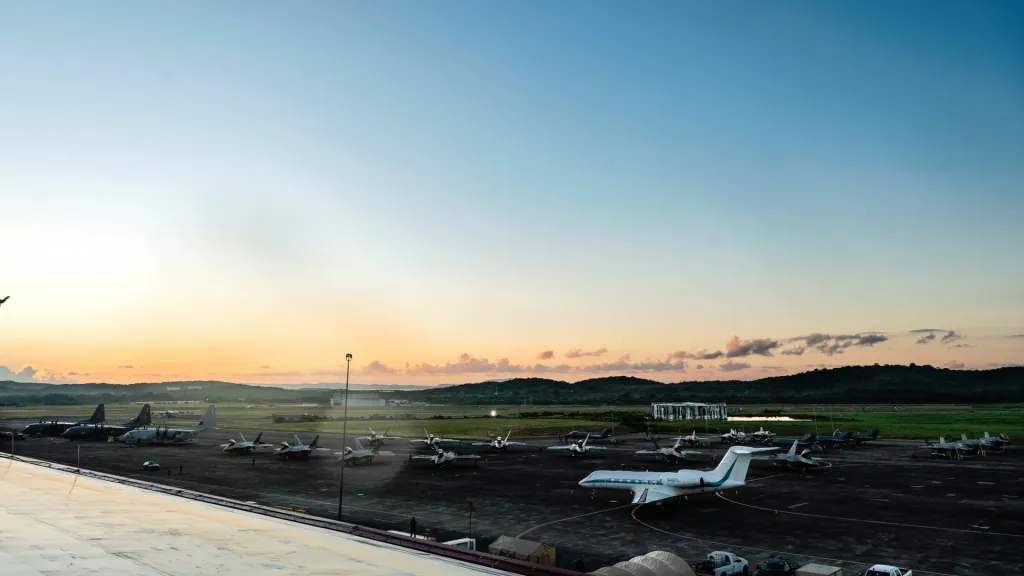
After the conclusion of Operation Absolute Resolve on January 3, video footage had emerged showing at least one, and possibly two, RQ-170s arriving at the former Naval Station Roosevelt Roads in Puerto Rico. This was a major hub for aircraft employed in the operation and had already offered very strong evidence of the Sentinel’s involvement.
The U.S. military subsequently confirmed that F-35s, F-22s, and Black Hawks – the latter belonging to the U.S. Army’s elite 160th Special Operations Aviation Regiment, the Night Stalkers – among many other types of aircraft had taken part in the operation. While mention was also made of the use of drones, the RQ-170 was not explicitly named.

A now-deleted post in December 2025 from Air Forces Southern (AFSOUTH) on X, which included a picture of an individual wearing a name patch with an RQ-170 silhouette and the sleeve insignia of the 432nd Wing, had prompted earlier questions about whether the drones were operating in the region. The only units known to fly Sentinel are the 30th and 44th Reconnaissance Squadrons, both of which are assigned to the 432nd Wing at Creech Air Force Base in Nevada. A total of between 20 and 30 RQ-170s are said to be in the Air Force’s inventory.
The exact role the RQ-170 played in Operation Absolute Resolve remains unclear, and Lockheed Martin CEO Jim Taiclet offered no further details. TWZ has previously detailed how the mission and the lead-up to it are exactly what the Sentinel was designed for. As we wrote:
“RQ-170s would have provided a valuable way to discreetly track Maduro’s movements and otherwise establish his ‘patterns of life,’ as well as those of the forces guarding him, for an extended period of time in the lead-up to the actual launch of the operation to capture him. During the mission itself, having one of the drones orbiting overhead would have provided an indispensable source of real-time information, including to help spot threats that might unexpectedly appear. Those same feeds would also have given senior leaders, including President Donald Trump, a way to watch the operation as it happened.”
…
“With all this in mind, RQ-170s could also have surveilled Venezuelan military bases and other sites that U.S. forces struck as part of the operation overnight, and helped with post-strike assessments. The Air Force has disclosed having at least conducted tests in the past of the Sentinel in the bomb damage assessment role in combination with B-2 bombers.”
Since then, it has also emerged that the U.S. military planning for the mission included preparations to destroy three airfields in the country if it appeared that fighters belonging to the Venezuelan Air Force were attempting to scramble and intercept the raiding force. That threat did not materialize, and none of those facilities were ultimately struck, but it would have been necessary to closely monitor them to be sure.
Substations were also targeted to cut power to the Fuerte Tiuna (Fort Tiuna), a sprawling military base in Venezuela’s capital, Caracas, housing Maduro’s fortress-like compound.

Multiple Venezuelan air defense assets were also struck at various locations in the country during the operation. TWZ has also highlighted previously how suppression and destruction of enemy air defenses (SEAD/DEAD) would have been a key mission for the F-22s and F-35s in the force package. U.S. Navy EA-18G Growlers, and likely at least one U.S. Air Force EC-130H Compass Call aircraft, also contributed electronic warfare support to this mission and other aspects of the operation.
The RQ-170’s participation in Operation Absolute Resolve adds to the still relatively limited publicly available information (and even less that is officially confirmed) about the use of these drones over the years. The U.S. Air Force only officially acknowledged the Sentinel’s existence in 2009, two years after it was first spotted in Afghanistan and had been dubbed the “Beast of Kandahar.”
RQ-170s were used to monitor aspects of Iran’s nuclear program, something that was thrust into the public eye after one of the drones went down in that country in 2011, a major intelligence loss. RQ-170s likely also played a role in relation to the Operation Midnight Hammer strikes on Iranian nuclear sites last year, where they could have provided direct overhead coverage and intelligence for post-mission bomb damage assessments.
Sentinels are understood to have surveilled Al Qaeda founder Osama Bin Laden’s compound in Pakistan in the lead-up to the raid that led to his death, which also occurred in 2011. This, as well as operations over Iran, are prime examples of the Sentinel’s ability to persistently surveil key sites even in denied areas. The preparations for and execution of Operation Absolute Resolve also followed a playbook with direct parallels, as well as notable differences, to the Bin Laden mission.
The stealthy RQ-170s have also deployed to South Korea in the past, from where they likely conducted flights at least very near to North Korean airspace. The drones have also been at least deployed elsewhere in the Pacific, as well.
Between 2022 and 2023, Sentinels may have flown missions in the Black Sea region, gathering intelligence on Russian forces on the heavily-defended occupied Crimean Peninsula. A satellite image available through Apple Maps showing an RQ-170 at Naval Air Station Sigonella in Italy has lent some further credence to those reports. Sigonella has been and continues to be a hub for intelligence, surveillance, and reconnaissance flights over the Black Sea. It is unclear when the image was taken, but it looks to be from a relevant timeframe based on the visible state of construction elsewhere at the base.


Though much still remains to be learned, the remarks today from Lockheed Martin CEO Taiclet have added a small, but notable addition to the story of the RQ-170.
Contact the author: joe@twz.com