senators

Senators eye crackdown on prediction markets advertising to minors

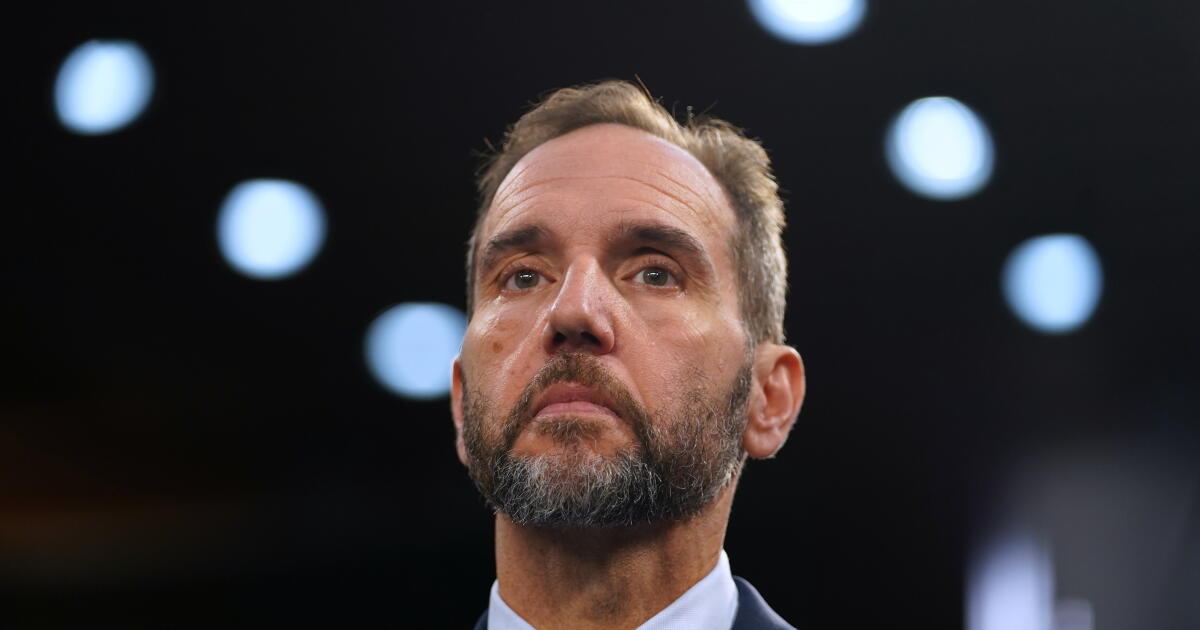
Sen. Ted Cruz, R-Texas, speaks Wednesday at a Senate subcommittee hearing focused on the recent surge in popularity of sports betting and betting by minor. Photo by Erika Tulfo/Medill News Service

WASHINGTON, May 20 (UPI) — As sports betting and prediction market platforms like Kalshi and Polymarket grow in popularity, U.S. senators on Wednesday weighed the need to regulate use of the platforms by minors.

One main issue senators raised during a hearing by the Senate Commerce Subcommittee on Consumer Protection, Technology and Data Privacy was how prediction markets use social media to advertise their platforms to underage users, putting them at risk of a gambling addiction.

“Young people are being inundated with advertisements on social media. Their favorite influencers and sports figures are introducing minors to betting,” said Sen. Marsha Blackburn, R-Tenn., who chaired the hearing.

“This is not safe. It needs to stop, and advertising to minors is disgusting,” Blackburn said.

The “No Sure Bets: Protecting Sports Integrity in America” hearing was intended to discuss the prevalence of sports betting and its impact on the integrity of matches.

It followed a unanimous Senate vote last month to ban its members and their staffs from trading on prediction market platforms, and the senators seemed determined to do more. Issues surrounding gaming continue to be a hot topic in Congress, where more than 10 active bills are related to prediction markets.

Some recent high-profile scandals surrounding prediction market platforms have also drawn attention to the industry, including the arrest of U.S. Army soldier Gannon Van Dyke last month. He was charged with using classified information to profit from a Polymarket wager related to the capture of Venezuelan president Nicolás Maduro in January.

In the same month, Kalshi fined and suspended from its platform three congressional candidates for betting on the outcomes of their own elections.

In the hearing, Sen. John Hickenlooper, D-Colo., criticized prediction markets like Kalshi for hiring social media influencers to promote their platforms to adolescent users.

“I think it’s specifically dangerous for minors to get into sports betting, and especially on prediction markets. That’s why almost all the states say [the legal betting age] is 21, not 18,” Hickenlooper said.

“Prediction markets let users as young as 18 bet on sports, but they also market their products to younger, more vulnerable audiences who are in many cases adept at getting around the platform precautions.”

A study released in January by Common Sense Media found that more than one-third of adolescent boys aged 11 to 17 admitted to engaging in gambling over the past year. Almost 60% of those who have been gambling said that they were exposed to gambling content through social media.

Kalshi, in an email, denied advertising to minors and pointed to recently implemented consumer protection measures, including requesting a selfie from the user to supplement documents verifying their age.

Hickenlooper grilled Patrick McHenry, a former U.S. representative now acting as senior adviser to the Coalition for Prediction Markets, on the guardrails to ensure underage users could not access their platforms.

McHenry pointed to the Commodity Futures Trading Commission, which oversees prediction markets and regulates them as a form of financial derivative rather than an avenue for gambling.

“The CFTC is a cop on the beat. It has the capacity to oversee this market, just as they’ve done with a broader commodities marketplace that has been around and well-versed for decades,” he said.

The Commodity Futures Trading Commission’s jurisdiction over prediction markets has been a contentious topic, since users can trade event contracts related to sports, weather, politics and more.

The Prediction Markets Are Gambling Act, which Sen. Adam Schiff, D-Calif., introduced in March, seeks to ban prediction markets from listing contracts that resemble sports bets, arguing that such contracts are considered gambling and should be subject to state regulation.

The agency argues that sports event contracts were treated as “swaps,” a term used to describe events that have potential economic consequences.

But Sen. Ted Cruz, R-Texas, pushed back against the classification of sports contracts on prediction markets as financial derivatives.

“What is the economic consequence of whether a pitcher throws a ball or strike?” he asked.

Another bill specifically targeting digital gambling advertisements to minors was introduced Monday. Sens. Richard Blumenthal D‑Conn., and Katie Britt, R‑Ala., are advocating the Gaming Advertisement to Minors Enforcement Act, which would implement a federal ban on sports betting ads on social media platforms for minors.

Source link

Senators approve withholding their own pay during government shutdowns

Senators unanimously approved a resolution Thursday to withhold their pay during government shutdowns, an attempt to make federal closures financially painful for lawmakers after a string of record-breaking impasses in the past year.

The bipartisan support for the measure comes at a time when federal closures have become longer and more frequent, frustrating lawmakers who say there should be punishment when Congress fails at its most basic legislative duty.

Under the resolution, senators’ pay would be withheld by the secretary of the Senate whenever a government shutdown affects one or more agencies, then released once funding is restored. It will take effect the day after the Nov. 3 general election.

“Shutting down government should not be our default solution to our refusal to work out our issues and our differences,” said Sen. John Kennedy, the bill’s sponsor, in a floor speech Wednesday.

“This is about putting our money where our mouth is,” said Kennedy, R-La.

Two shutdowns in the past year created significant financial hardship for tens of thousands of federal workers, particularly at the Department of Homeland Security. The department reopened last month after a 76-day partial shutdown, the longest agency funding lapse in history.

The Homeland Security shutdown came just a few months after a 43-day lapse of the entire federal government, which was the longest such closure on record.

The Constitution stipulates that lawmakers must be paid so they have received salaries during shutdowns even as federal workers went without paychecks. When the full government shutdown began in October amid a dispute over health care subsidies, Sen. Lindsey Graham proposed a constitutional amendment to require members to forfeit their paychecks when the government is closed.

“If members of Congress had to forfeit their pay during government shutdowns, there would be fewer shutdowns and they would end quicker,” Graham, R-S.C., said at the time.

Graham said his legislation was the most “constitutionally sound” way to deal with the problem, but the process would have been much more laborious as three-fourths of states must ratify an amendment.

Lawmakers in previous shutdowns have often pledged to forgo their paychecks while federal workers went unpaid.

Kennedy told reporters Wednesday that he pushed his measure to ensure there is “shared sacrifice” during shutdowns. He added that it does not go as far as he would like, but that it’s a start.

Asked why it does not extend to the other chamber of Congress, Kennedy said “the House’s business is the House’s business” while also touching on the tensions between the Senate and House.

“There’s a very strong undercurrent of animosity among some of my friends in the House,” Kennedy said.

“It’s quickly becoming like two kids fighting in the back of a minivan,” he said.

Cappelletti and Jalonick write for the Associated Press.

Source link

Democratic senators press U.S. military on Israel’s evacuation zones, warning of legal risks

A dozen U.S. Democratic Senators have called for the U.S. Central Command to answer questions about American coordination with Israel in declaring broad “ evacuation zones ” in Lebanon and Iran, alleging that the practice may violate international law.

The letter underlines how the Democratic Party — both its leaders and the base — has grown increasingly critical of Israel.

Since the beginning of the U.S.-Israeli war against Iran and the latest Israel-Hezbollah war in Lebanon, the Israeli military has regularly issued maps covering large areas of territory along with warnings telling all residents of the zones to flee. Israel had previously used a similar approach in Gaza.

The senators said the sweeping warnings have “been used to permanently displace people and destroy homes and towns” and that some civilians who refused to leave their homes in the areas have been killed by subsequent strikes.

The 12 senators led by Vermont Sen. Peter Welch, in a letter dated May. 4 to CENTCOM chief Adm. Brad Cooper that was provided to The Associated Press, state that Israel’s practice of unilaterally declaring mass evacuation warnings in Lebanon and Iran “likely contravene international laws the United States has helped develop around humane warfare.”

The other signatories include senators Bernie Sanders of Vermont, Elizabeth Warren of Massachusetts and Sen. Tammy Baldwin of Wisconsin.

The letter asked the CENTCOM chief whether U.S. forces have coordinated military targets with Israeli forces during the recent war with Iran, whether they provided assistance or intelligence helping Israel’s military to impose the evacuation zones in Lebanon and Iran, and whether CENTCOM signed off on U.S. military support for the targeting of people or infrastructure in the evacuation zones. It also asked whether the U.S. military has reviewed the legality of the practice.

The Israeli military declined to comment when asked about the letter. CENTCOM did not immediately respond to a request for comment.

In the past, Israel has said the evacuation maps aim to keep civilians out of harm’s way. It says Hezbollah has positioned fighters, tunnels and weapons in civilian areas across southern Lebanon, from which it has launched hundreds of drones and missiles — without warning — into northern Israel.

A shift in the party stance

Observers said the move is part of a larger shift in the stance of Democratic Party leaders on U.S. military assistance to Israel. Democrats have also been critical of the Trump administration’s entry into the war on Iran alongside Israel.

The letter came nearly three weeks after more than three dozen Democrats supported an effort by Sanders to block arms sales to Israel, signaling a growing discontent in the party with Israeli Prime Minister Benjamin Netanyahu and the wars in Gaza and Iran.

The two resolutions to block U.S. sales of bulldozers and bombs to Israel were opposed by all Republicans and rejected 40-59 and 36-63.

Jon Finer, former deputy national security adviser under President Joe Biden, said the recent steps by Democratic senators reflect a “growing concern about Israeli conduct of various wars that cause civilian harm and U.S. complicity in that” across the spectrum within the Democratic Party.

Asked why the Democratic Party is taking these steps now and not at the time when the war in Gaza and the Israel-Hezbollah war broke out — when the Democratic Biden administration was in power — Finer said: “our operational integration with Israel appears to be growing, which is part of it, but the truth is the Democratic base has been moving in this direction for some time and Washington has been catching up.”

Andrew Miller, a former senior official on Israel and Palestinian Affairs at the State Department, said the letter “represents a shift among congressional Democrats moving from questions of the legality of Israeli military operations to concerns about the complicity of the U.S. military.”

“It demonstrates that Democrats are taking international law very seriously and that is a welcome development,” Miller said.

The evacuation zones

Israel has issued dozens of evacuation warnings in Lebanon since the latest Israel-Hezbollah war began on March 2. Over 1 million people in Lebanon have fled their homes during the war.

Israel has also issued similar warnings for Iranians, both during the 12-day Israel-Iran war last year and during the U.S.-Israeli war launched on Iran on Feb. 28. In one case last year they warned 300,000 people in Tehran, Iran’s capital, to evacuate.

On Wednesday, the Israel military’s Arabic-language spokesperson Avichay Adraee issued an evacuation warning to residents of 12 villages in southern Lebanon saying Hezbollah is using them to launch attacks. The warnings came despite a ceasefire that has been nominally in place since April 17, although Israel and Hezbollah have been carrying daily attacks since then.

The senators said the declaration of evacuation zones does not absolve Israeli and U.S. forces “from the absolute legal responsibility to determine that each individual person or civilian facility targeted by drones, jets, and gunfire is, in fact, a military target.” It said the use of the zones has been linked to “the deaths of thousands of civilians,” describing them as “kill zones.”

In response to questions by the AP last month, the Israeli military said it issues warnings by phone, text, radio broadcast, social media and leaflets dropped from the air, in accordance with the “principles of distinction, proportionality and feasible precautions” under international law.

Mroue writes for the Associated Press. AP writer Julia Frankel contributed to this report from Jerusalem.

Source link