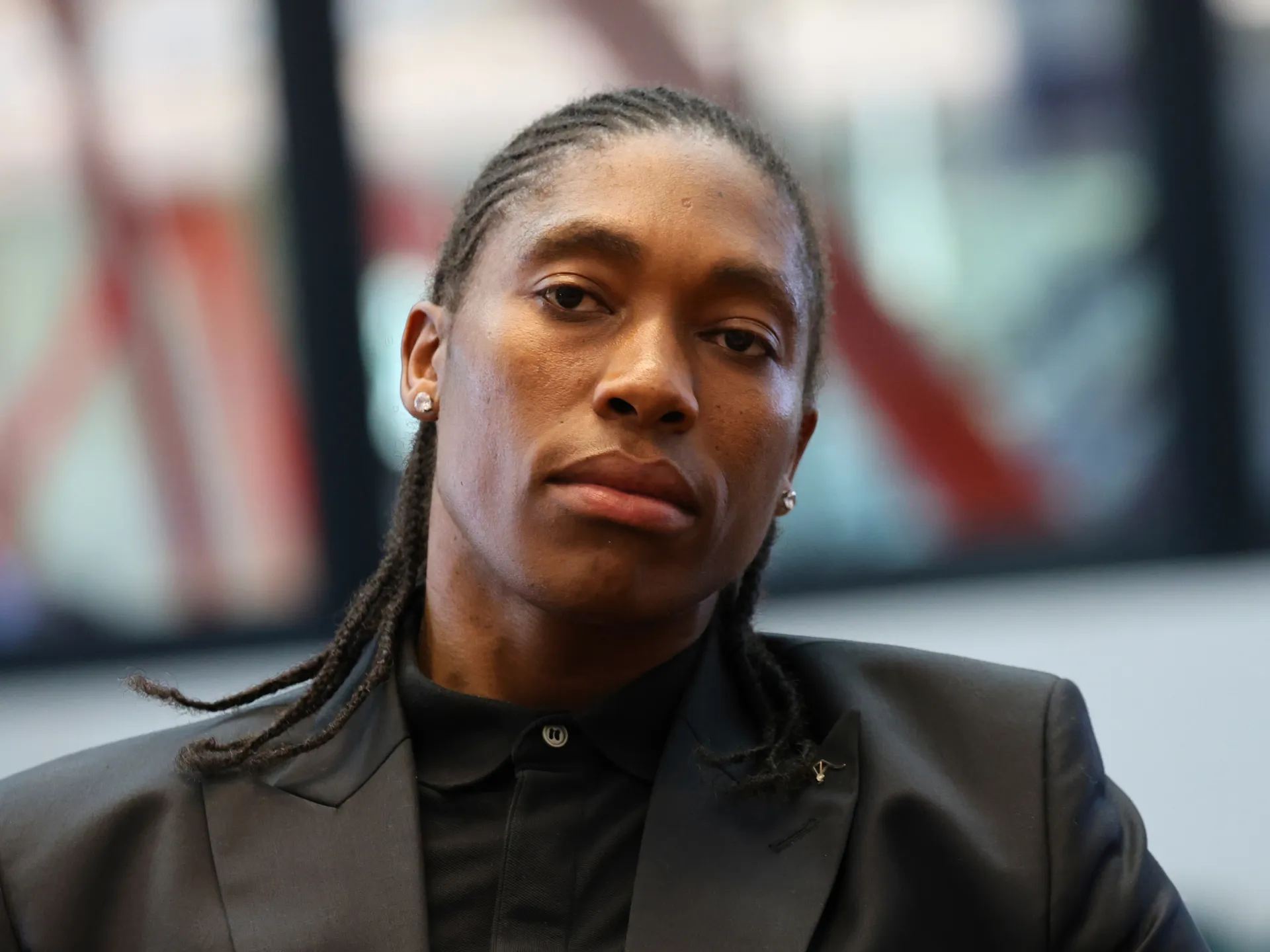
Semenya

Caster Semenya pledges to fight against Olympic gender-testing policy | Athletics News

‘We’re going to be vocal about it, we’re going to make noise until we’re heard,’ South Africa’s gold medallist says.

Double Olympic champion Caster Semenya ⁠says she intends to fight ⁠against the introduction of gender testing for the female category at the Olympics, a policy the South African insists “undermines women’s rights”.

The International Olympic Committee (IOC) unveiled the policy last week and it is expected to become a universal ⁠rule for competitors in female elite sports after years of fragmented regulation that led to controversy.

Recommended Stories

list of 4 itemsend of list

Semenya has been at the centre of one of those controversies due to her long-running legal case against World Athletics over her right to compete on the track despite having a ⁠Difference of Sexual Development (DSD).

“We’re going to be vocal about it, we’re going to make noise until we’re heard,” the 35-year-old athlete told the Reuters news agency on Monday.

“Now it’s a matter of women standing for themselves to say, ‘Enough is enough.’ We are not going to be told how to do things.

“If really we are accepted as women to take part, why does my appearance or my voice, why do my inner parts ‌need to be a problem to take part in the sport?”

DSDs are a group of rare conditions involving genes, hormones and reproductive organs. Some people with DSDs are raised as female but have XY sex chromosomes and blood testosterone levels in the male range.

The IOC policy document said including “androgen-sensitive XY-DSD athletes” in the female category in events that rely on strength, power or endurance “runs fundamentally counter to ensuring fairness, safety and integrity in elite competition”.

Semenya, who won two Olympic and three world titles in the 800 metres before being limited to shorter events, believes the IOC got the science wrong.

Semenya said “there’s no science” that XY-DSD gave an athlete ⁠an advantage. “I’ve been there, I’ve done that. There’s no such thing as that,” she said.

“There are people ⁠who are delusional. There are people who are convinced because a woman is masculine, a woman is born with intersex conditions, the DSD, they’ve mentioned all those things [that they have an advantage].

“But what I say is that if you’re going to be a great athlete, it’s through hard work.”

The test that will be applied to ⁠all athletes who want to compete in the female class will be conducted by a cheek swab or saliva analysis.

There will be further investigation for any athletes who test positive for the SRY gene, ⁠which is on the Y chromosome and triggers the development of male characteristics in ⁠mammals.

“What this decision does, it undermines women. It undermines women’s dignity. It violates women’s rights because we know historically, these [tests] have failed before,” Semenya said.

“Women need to be celebrated. Women are not supposed to be questioned about their gender. Why that is their physique? Why it is how they look like? It doesn’t matter. Neither also the ‌hormone level. Those are the things that are obviously genetics that cannot be controlled.”

Semenya said IOC President Kirsty Coventry, the first woman and first African to hold the office, had failed to properly consult her or other athletes living with DSDs about the policy.

“They sent us ‌a ‌letter the day they were going to publish [the new policy],” she said.

“If you’re going to consult, consult with a genuine heart. Don’t consult because you’re ticking the box. Unfortunately, they have ticked a wrong box.”
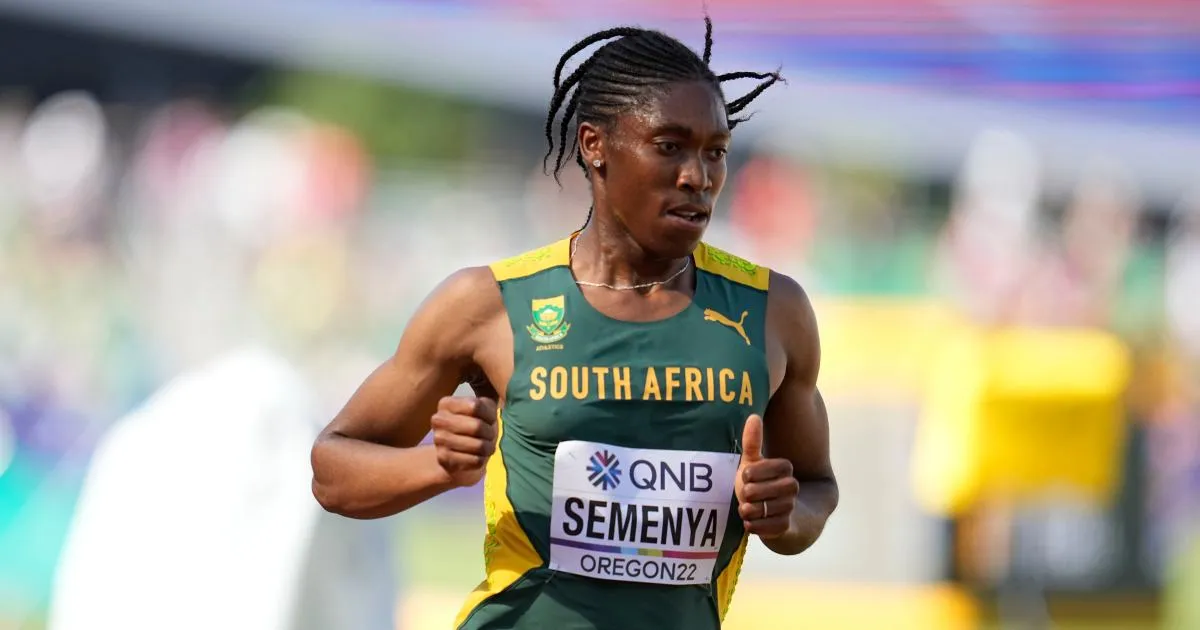
Source link

Olympic gender test ‘a disrespect for women’, South Africa’s Semenya says | Olympics News

South African sprinter Caster Semenya, a two-time Olympic 800-metres champion, says the International Olympic Committee’s (IOC’s) reinstatement of gender verification tests for the 2028 Los Angeles Games is “a disrespect for women”.

The hyperandrogenic athlete on Sunday also expressed her disappointment that the measure was taken under new IOC President Kirsty Coventry of Zimbabwe.

Recommended Stories

list of 3 itemsend of list

“For me personally, for her being a woman coming from Africa, knowing how African women or women in the Global South are affected by that, of course it causes harm,” Semenya said in Cape Town on the sidelines of a sporting competition.

The IOC said on Thursday that only “biological females” will be allowed to compete in women’s events, preventing transgender women from competing.

The IOC had previously used chromosomal sex testing from 1968 to the 1996 Atlanta Olympics before abandoning it in 1999 under pressure from the scientific community, which questioned its effectiveness, and from its own athletes commission.

“It came as a failure, and that’s why it was dropped,” Semenya said.

“It’s like now we need to prove that we are worthy as women to take part in sports. That’s a disrespect for women.”

Semenya has become the symbol of the struggle of hyperandrogenic athletes, a battle on the athletics tracks and then in courtrooms, to assert her rights, which she has waged since her first world title in the 800m in 2009.

In 2025, she won a partial victory at the European Court of Human Rights in her seven-year legal fight against track and field’s sex eligibility rules.

The court’s highest chamber said in a 15-2 ruling that Semenya had some of her rights to a fair hearing violated before Switzerland’s Supreme Court, where she had appealed against a decision by the Court of Arbitration for Sport. It had ruled in favour of track’s international governing body, World Athletics.

The original case between Semenya and Monaco-based World Athletics was about whether female athletes who have specific medical conditions, a typically male chromosome pattern and naturally high testosterone levels, should be allowed to compete freely in women’s sports.

The European court’s ruling did not overturn the World Athletics rules that in effect ended Semenya’s career running the 800m after she had won two Olympic gold medals and three world titles since emerging on the global stage as a teenager in 2009.

IOC’s policy shift removes conflict with Trump

In a major shift of policy, the IOC is abandoning rules it brought in in 2021 that allowed individual federations to decide their own policy and is instead implementing a policy across all Olympic sports.

“Eligibility for any female category event at the Olympic Games or any other IOC event, including individual and team sports, is now limited to biological females, determined on the basis of a one-time SRY gene screening,” the IOC said in a statement.

They will be carried out through a saliva sample, cheek swab or blood sample. It will be done once in an athlete’s lifetime.

“The policy we have announced is based on science and has been led by medical experts,” Coventry said.

“At the Olympic Games, even the smallest margins can be the difference between victory and defeat, so it is absolutely clear that it would not be fair for biological males to compete in the female category. In addition, in some sports it would simply not be safe.”

The new policy removes a potential source of conflict between the IOC and United States President Donald Trump as the 2028 Los Angeles Olympics comes onto the horizon.

Trump issued an executive order banning transgender athletes from women’s sport soon after he returned to office in January 2025.

The US leader took credit for the IOC’s new policy in a post on his Truth Social network on Thursday.

“Congratulations to the International Olympic Committee on their decision to ban Men from Women’s Sports,” Trump wrote. “This is only happening because of my powerful Executive Order, standing up for Women and Girls!”

2024 Olympic gender row

While sports such as swimming, athletics, cycling and rowing have brought in bans, many others have permitted transgender women to compete in the female category if they lowered their testosterone levels, normally through taking a course of drugs.

The IOC is bringing in the new policy after the women’s boxing competition at the 2024 Paris Olympics was rocked by a gender row involving Algerian fighter Imane Khelif and Lin Yu-ting of Taiwan.

Khelif and Lin were excluded from the International Boxing Association’s 2023 world championships after the IBA said they had failed eligibility tests.

However, the IOC allowed them both to compete at the Paris Games, saying they had been victims of “a sudden and arbitrary decision by the IBA”.

Both boxers went on to win gold medals.

Lin has since been cleared to compete in the female category at events run by World Boxing, the body that will oversee the sport at the Los Angeles Summer Games.

Source link