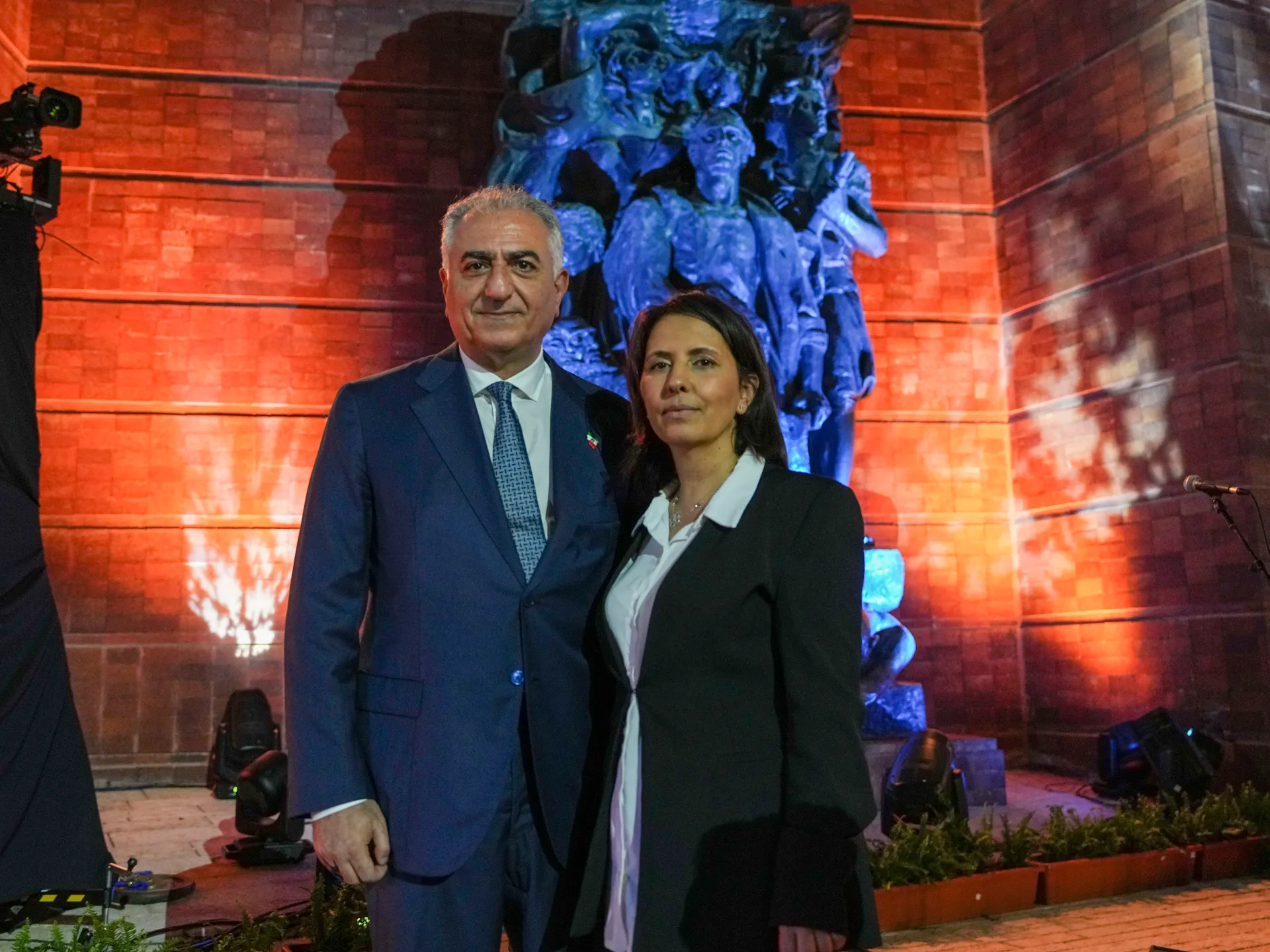
For decades, Reza Pahlavi was the polite face of the Iranian opposition in exile – a former fighter pilot who spoke of nonviolent resistance and secular democracy from his home in the United States.
But this weekend, the tone of the 65-year-old heir to the Peacock Throne and son of Iran’s last shah changed dramatically.
In a direct challenge to the Iranian government, Pahlavi called on Iranians to “seize city centres” and prepare for his imminent return, prompting what Iranian state media described as “armed terrorist attacks” across the country.
“Our goal is no longer merely to come into the streets,” Pahlavi declared in a statement released on his X account. “The goal is to prepare to seize city centres and hold them.”
From heir to exile
Pahlavi was born in Tehran on October 31, 1960, seven years after the US and the UK engineered a coup against Iran’s then-elected Prime Minister Mohammad Mosaddegh, who had nationalised the assets of the Anglo-Persian oil company, now known as BP, in 1951.
Pahlavi was officially named crown prince at the age of seven. His path seemed destined for the throne until the 1979 revolution upended the region.
At 17, he left Iran for fighter pilot training in the US at Reese Air Force Base in Texas. While he was away, the repressive monarchy collapsed, and the current political system was established, barring his return.
Pahlavi completed his training and later earned a degree in political science from the University of Southern California. During the Iran-Iraq War in the 1980s, he famously volunteered to serve as a fighter pilot for his country but was rejected by the authorities in Tehran.
He has lived in exile ever since, residing in the US with his wife, Yasmine Pahlavi, and their three daughters.
‘Preparing to return’
For more than 40 years, Pahlavi advocated for a referendum and nonviolent change. However, his rhetoric has sharpened significantly in recent days.
On Saturday, he urged workers in key sectors — transport, oil, and gas — to launch nationwide strikes to “cut off the financial lifelines” of the state. He specifically called on the “youth of the Immortal Guard” — the erstwhile imperial forces — and security forces to defect.
“I, too, am preparing to return to the homeland so that at the time of our national revolution’s victory, I can be beside you,” he stated.
His call to action comes amid reports of the largest antigovernment protests in years. Pahlavi asked supporters to hoist the pre-1979 “Lion and Sun” flag, a symbol of his father’s rule, and to occupy public spaces starting from 6pm local time (14:30 GMT).
‘Terrorist’ accusations
The response from Tehran has been furious. On Sunday, state-affiliated media outlets labelled the protests as a “new phase of insecurity” and an “internal armed war”.
A report by the conservative Vatan-e Emrooz newspaper, cited by the Tasnim news agency, described Pahlavi’s call as cover for “terrorist nuclei” to attack police and Basij forces.
“Do not be mistaken; this is not merely a riot … these were armed terrorist attacks,” the report stated, claiming that dozens of security personnel had been killed.
Officials have linked Pahlavi’s escalation to foreign interference, specifically accusing the US and Israel. They claimed the unrest is a “Plan B” by US President Donald Trump and Israeli Prime Minister Benjamin Netanyahu following the conclusion of the 12-day war between Israel and Iran in May last year.
‘Opposition against the opposition’?
While Pahlavi has found renewed popularity on the streets, he faces sharp criticism from within the fractured Iranian opposition.
Alireza Nader, an Iran expert, argued in a recent article that Pahlavi’s political activities have become divisive. Critics accuse his circle of attacking other prominent dissidents, such as Nobel Peace Prize winner Narges Mohammadi, labelling them “leftists” or “terrorists”.
“Pahlavi has doubled down on his advisors despite others’ unease about them,” Nader wrote, questioning whether the prince has become “the opposition against the opposition”.
There are also concerns about manipulation. Nader noted that Pahlavi’s online support is partly driven by cyber-armies linked to the Iranian government, designed to sow discord, raising questions about “who is co-opting whom”.
Despite these internal rifts, Pahlavi remains the most visible figurehead for the current wave of unrest. With the Trump administration maintaining a hands-off approach — asserting it is “up to Iranians to choose their own leaders” — and the streets of Tehran burning, the exiled prince appears to be making his final gamble for the throne he lost 47 years ago.
Weekly insights and analysis on the latest developments in military technology, strategy, and foreign policy.
U.S. forces have secured the runaway Russian-flagged oil tanker Marinera, a U.S. official has confirmed to TWZ. Elements of the U.S. Army’s 160th Special Operations Aviation Regiment and other American aviation assets had previously deployed to the United Kingdom ahead of an apparent effort to board the ship. Readers can get caught up on the pursuit with our latest coverage here.
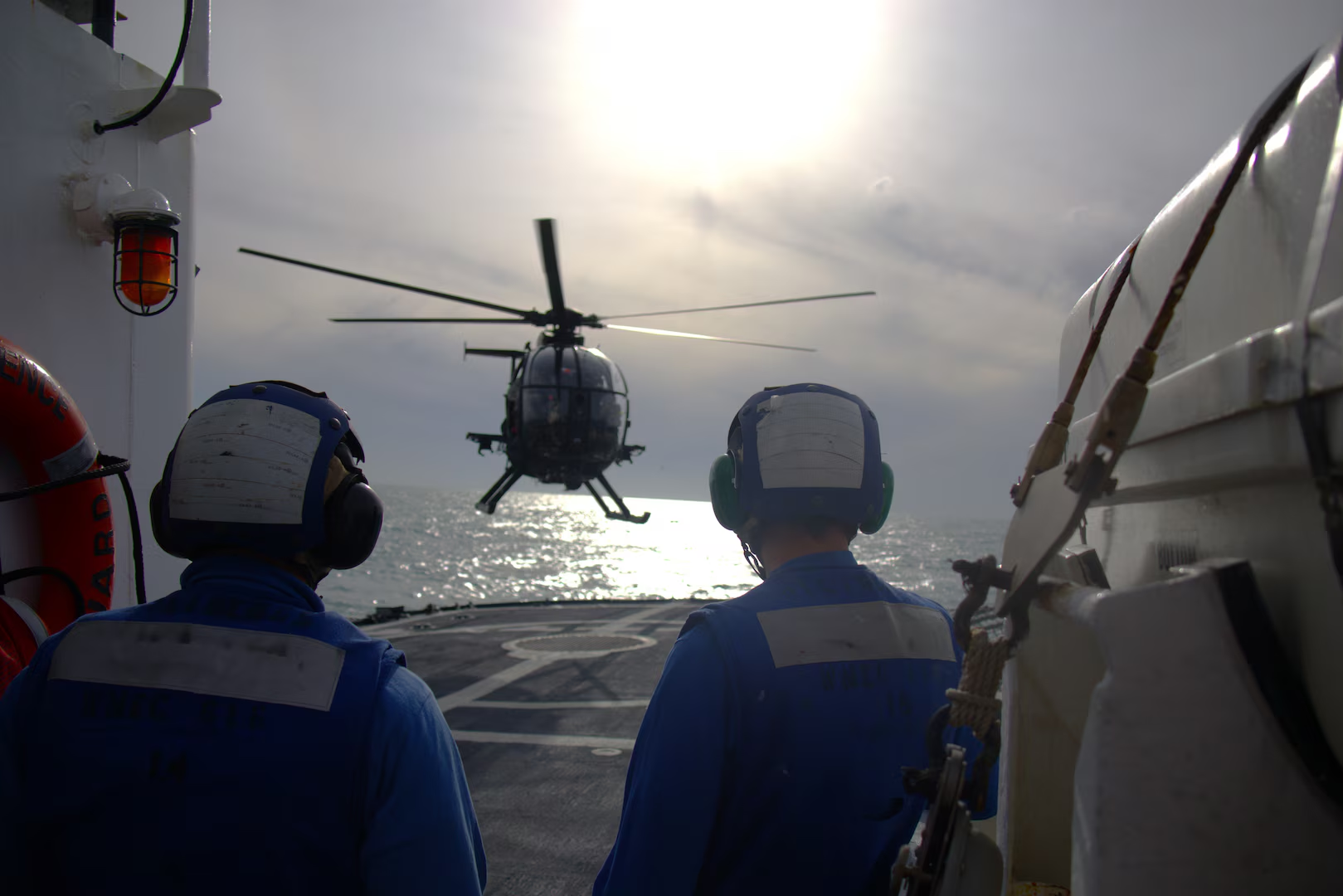
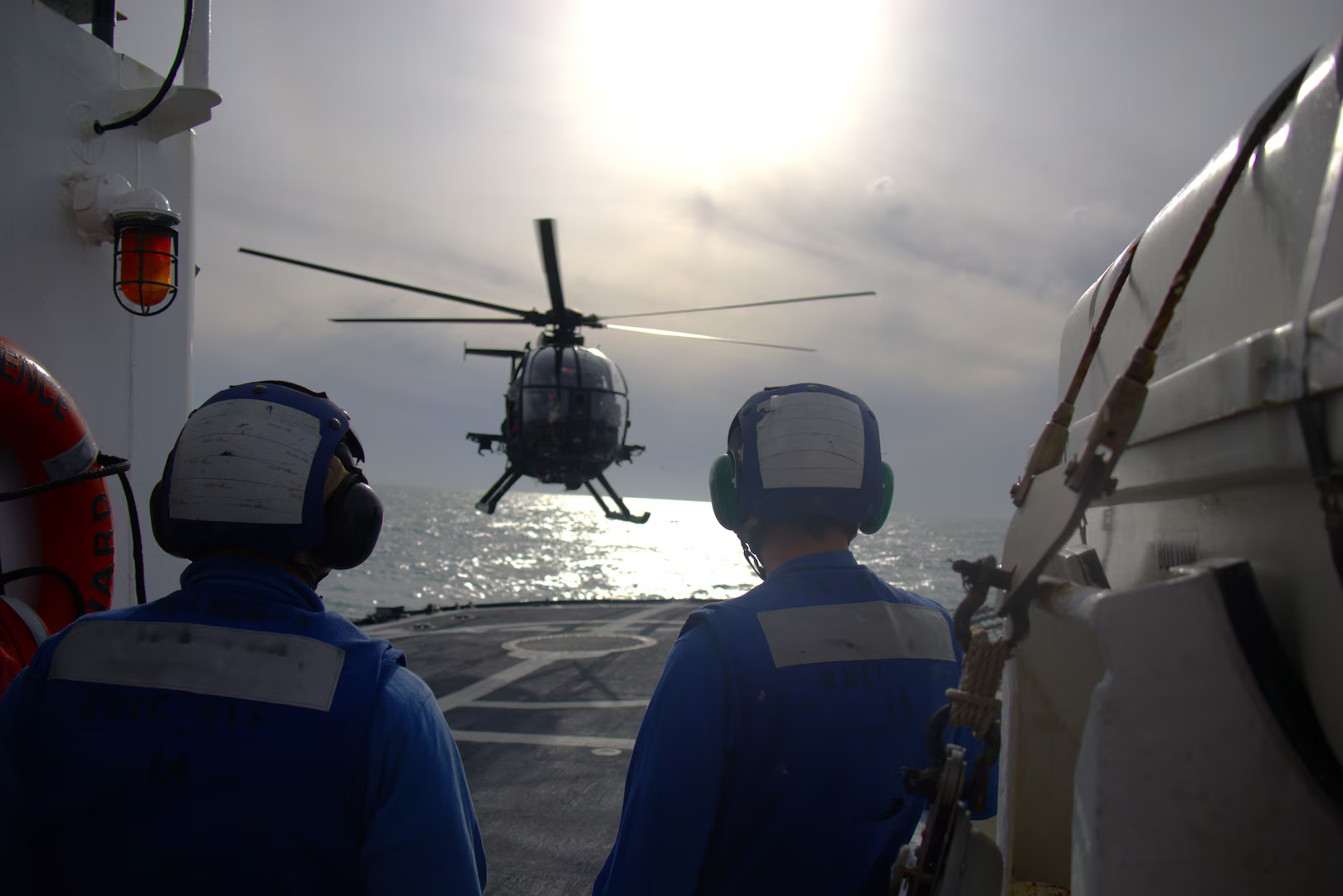
Personnel from the U.S. military and the U.S. Coast Guard carried out the boarding operation, according to reports from Reuters and The Wall Street Journal. Russian news outlet RT had earlier released imagery said to have been taken from the deck of the Marinera showing an MH-6 Little Bird helicopter, a type operated by the 160th SOAR, approaching the ship.
In the past several hours, open source flight tracking had also shown a large number of aircraft from bases in the United Kingdom heading north toward where the ship is located.
UPDATE 1200Z 07/JAN/2026 – We’ve confirmed a few of the earlier RAF flights are involved in other routine operations, but we now have a confirmed stream of US support aircraft, ISTAR and other platforms heading for the UK-Iceland gap, likely staging for the tanker Op!#BELLA1… https://t.co/knpNOL2oNKpic.twitter.com/wX2dBUluUQ
Ship tracking data available online had also shown the Marinera, which had been shadowed by a wide range of aviation assets and a U.S. Coast Guard cutter for weeks now, making a sharp turn to the south in the direction of the United Kingdom and Ireland.
Marinera (IMO 9230880) formally Bella 1 made a sudden southbound turn at 11:26 UTC near 60.9386N, 16.37014W, slowing from ~9 kn to ~8 kn.
Known until recently as the Bella-1 before it was re-registered and the crew painted a Russian flag on it, the Marinera is part of a so-called shadow fleet. These vessels are accused of transporting oil for Russia, Iran, and Venezuela in violation of sanctions imposed by the United States and other countries. On December 20, the Coast Guard had previously attempted to board the ship, which is not carrying any oil at present, as it headed toward Venezuela. However, the crew refused to allow it, and the ship began sailing back toward Europe. Reports earlier this week said that new U.S. plans to interdict the boat had subsequently been drawn up, tied to the aforementioned deployment of special operations forces and other assets to the United Kingdom.
The Wall Street Journal reported yesterday that the Russian military had sent a submarine and other naval assets to escort the Marinera. Reuters has reported that Russian Navy vessels were in the vicinity when the boarding operation occurred.
Where the Marinera may now be headed and what its ultimate fate may be remains to be seen.
TWZ will continue to update this story as it develops.
Update: 9:14 AM Eastern –
U.S. European Command released a statement about the seizure on X.
It has been pointed out that Little Birds are not capable of being refueled in flight and likely would not have had the range to reach the tanker from bases on land in the region. It is more likely that any MH-6s involved in this operation launched from a ship closer by. The 160th SOAR is known to train to operate its Little Birds from Coast Guard cutters. Night Stalker helicopters also have a long history of flying from U.S. Navy ships, including recently during the operation to capture Venezuelan dictator Nicolas Maduro.
A Little Bird aboard the Coast Guard cutter Diligence during a 2023 interdiction mission. (USCG)
We have reached out to the Pentagon and U.S. Coast Guard for more details and will update this story with any pertinent information provided.
Update: 9:32 AM Eastern –
The U.K. Defense Ministry (MoD) provided us with a statement about its aircraft observed over the North Atlantic.
“Quick Reaction Alert Typhoon fighter aircraft were launched on 6 Jan from RAF Lossiemouth…after unidentified aircraft were tracked flying towards UK airspace. The aircraft remained outside of our area of interest (UK FIR) and no intercept took place. The launch of RAF QRA aircraft from RAF Lossiemouth and supporting AAR Voyager from RAF Brize Norton was not associated with any form of maritime surveillance operations.”
Update: 9:36 AM Eastern –
War Secretary Pete Hegseth weighed in on the seizure, saying that “the blockade of sanctioned and illicit Venezuelan oil remains in FULL EFFECT – anywhere in the world.” The Marinera, however, never arrived in port and was not carrying any fuel.
Meanwhile, as the seizure of the Marinera was taking place, the U.S. also boarded another sanctioned oil tanker in the Caribbean, according to U.S. Southern Command (SOUTHCOM).
“In a pre-dawn action this morning, the Department of War, in coordination with the Department of Homeland Security, apprehended a stateless, sanctioned dark fleet motor tanker without incident,” SOUTHCOM announced on X. “The interdicted vessel, M/T Sophia, was operating in international waters and conducting illicit activities in the Caribbean Sea. The U.S. Coast Guard is escorting M/T Sophia to the U.S. for final disposition. Through Operation Southern Spear, the Department of War is unwavering in its mission to crush illicit activity in the Western Hemisphere. We will defend our Homeland and restore security and strength across the Americas.”
In a pre-dawn action this morning, the Department of War, in coordination with the Department of Homeland Security, apprehended a stateless, sanctioned dark fleet motor tanker without incident.
The interdicted vessel, M/T Sophia, was operating in international waters and… pic.twitter.com/JQm9gHprPk
Officials in the U.K. would likely have had to sign off on this operation, The Times reported.
The British government would have given the green light for the American mission to seize a Venezuela-linked oil tanker, a senior UK military source tells @thetimeshttps://t.co/RNMph9P1zz
British aviation journalist Gareth Jennings notes that the Little Birds can be equipped with a 62-gallon auxiliary fuel tank, giving them an operating radius of about 670 kilometers (about 416 miles).
They can be equipped with a 62 US gallon auxiliary Goliath fuel tank to double the capacity of the 62 US gallon main fuel tank. Would give an approx 670 km operating radius.
There are several ways Little Birds can take part in a mission like this, as our editor-in-chief Tyler Rogoway notes.
Update: 9:57 AM Eastern –
U.S. Homeland Security Secretary Kristi Noem also released a statement, confirming that the Coast Guard Legend class cutter trailing the Marinerawe wrote about yesterday was the Munro.
“One of these tankers, Motor Tanker Bella I, has been trying to evade the Coast Guard for weeks, even changing its flag and painting a new name on the hull while being pursued, in a desperate and failed attempt to escape justice,” Noem stated on X. “The heroic crew of the USCGC Munro pursued this vessel across the high seas and through treacherous storms— keeping diligent watch, and protecting our country with the determination and patriotism that make Americans proud. These brave men and women deserve our nation’s thanks for their selfless devotion to duty.”
In two predawn operations today, the Coast Guard conducted back-to-back meticulously coordinated boarding of two “ghost fleet” tanker ships— one in the North Atlantic Sea and one in international waters near the Caribbean. Both vessels —the Motor Tanker Bella I and the Motor… pic.twitter.com/EZlHEtcufX
“In accordance with the norms of the 1982 UN Convention on the Law of the Sea, a regime of freedom of navigation operates in the waters of the high seas, and no state has the right to use force against ships properly registered in the jurisdictions of other states,” the message said.
“According to the department, the ship received a temporary permit to sail under the Russian state flag on December 24th,” the official Russian RIA Novosti media outlet reported on Telegram. The vessel was boarded at 3 p.m. local time (7 a.m. Eastern).
The first official statement from the Russian government following the seizure of Russia-flagged MARINERA / BELLA-1 tanker by the United States.
Russian Ministry of Transport refers to the UN Convention on the Law of the Sea:
— Status-6 (War & Military News) (@Archer83Able) January 7, 2026
Update: 10:39 AM Eastern –
Flight tracking data claims to show that U.S. Air Force Special Operations Command (AFSOC) AC-130J Ghostrider gunships were overhead during the Marinera operation. While we can’t independently confirm this, TWZ has written about the value Ghostriders can bring to this kind of maritime interdiction operation, which you can read about here.
Ok so we have N103MC, and N167MC. We’ll have to find more.
I totally think these are tactical regs/hexes they are using for ops. https://t.co/imxwlH2gfY
As we previously reported, these aircraft arrived at RAF Mildenhall on Sunday. Local photographer Andrew McKelvey shared some photos of one of those Ghostriders, ARSON17, taking off from Mildenhall at about 9:45 a.m. local time (4:45 a.m. Eastern). AFSOC declined comment.
In a post on his Truth Social site yesterday, Trump explained that Venezuela will be turning over tens of millions of barrels of oil to the U.S. to sell.
“I am pleased to announce that the Interim Authorities in Venezuela will be turning over between 30 and 50 MILLION Barrels of High Quality, Sanctioned Oil, to the United States of America,” Trump proclaimed on Truth Social. “This Oil will be sold at its Market Price, and that money will be controlled by me, as President of the United States of America, to ensure it is used to benefit the people of Venezuela and the United States! I have asked Energy Secretary Chris Wright to execute this plan, immediately. It will be taken by storage ships, and brought directly to unloading docks in the United States.”
( @realDonaldTrump – Truth Social Post ) ( Donald J. Trump – Jan 06 2026, 6:46 PM ET )
I am pleased to announce that the Interim Authorities in Venezuela will be turning over between 30 and 50 MILLION Barrels of High Quality, Sanctioned Oil, to the Unit… pic.twitter.com/OKsLNqPShe
— Donald J Trump Posts TruthSocial (@TruthTrumpPost) January 7, 2026
Update: 12:04 AM Eastern –
The rhetoric from Moscow about the Marinera operation is ramping up.
“We need to attack with torpedoes and sink a couple of American patrol boats,” Alexei Zhuravlev, the first deputy head of the State Duma’s Defense Committee, said today. “The U.S. needs a military response to the Marinera situation. The U.S., which is enjoying a kind of euphoria of impunity after the special operation in Venezuela, can only be stopped now with a slap in the face like this.”
Update: 12:42 PM Eastern –
During her afternoon briefing, White House Press Secretary Karoline Leavitt was asked several questions about the seizure of the Marinera, as well as the Sophia. She was also queried about whether she had any information about the Russian submarine that The Wall Street Journal on Tuesday said was deployed to escort the ship. Below are some of those interactions.
Q: Russia specifically asked the United States not to seize that tanker. Does this action risk a larger conflict with Russia?
A: The vessel this morning was seized in the North Atlantic pursuant to a warrant issued by a U.S. Federal Court after being tracked, and this was a Venezuelan shadow fleet vessel that has transported sanctioned oil. And the United States of America under this president is not going to tolerate that. I would also just add the vessel had a judicial seizure order and the crew, so that means the crew is now subject to prosecution for any applicable violation of federal law, and they will be brought to the United States for such prosecution.
Q: Are you concerned about increasing tensions with Russia because of the tanker?
A: “…with respect to these ships seizures, that means enforcing the embargo against all Dark Fleet vessels that are illegally transporting oil and only legitimate commerce. To answer your question … that’s the policy of this administration, and he’s not afraid to implement it.
Q: Was there any engagement with that submarine … and what is the deconfliction on the Russian use ahead of that type of warning package?
A: Again, this was a Venezuelan shadow fleet vessel that has transported sanctioned oil. The vessel was deemed stateless after flying a false flag, and it had a judicial seizure order, and that’s why the crew will be subject to prosecution.
Update: 12:57 PM Eastern –
The U.K. “provided enabling support to the United States at their request to interdict the vessel,” according to the MoD, which is using the ship’s previous name to reference it.
“U.K. armed forces provided pre-planned operational support, including basing, to U.S. military assets interdicting the Bella 1 between the U.K. and Iceland following a U.S. request for assistance,” the MoD said in a statement. “RFA Tideforce is providing support for U.S. forces pursuing and interdicting the Bella 1, while the RAF provided surveillance support from the air.”
“This ship, with a nefarious history, is part of a Russian-Iranian axis of sanctions evasion which is fuelling terrorism, conflict, and misery from the Middle East to Ukraine,” Defense Secretary John Healey said. “The UK will continue to step up our action against shadow fleet activity to protect our national security, our economy, and global stability – making Britain secure at home and strong abroad.”
“Deterring and disrupting the Russian shadow fleet is a priority for the U.K.,” MoD added. “To date, we have imposed sanctions on 520 Russian shadow fleet vessels. This is working. For example, Russia’s critical oil revenues are down 27% compared to October 2024, the lowest since the start of the war in Ukraine.”
Update: 1:57 PM Eastern –
Speaking to reporters on Capitol Hill in between Congressional briefings on Venezuela, Secretary of State Marco Rubio claimed that the Venezuelans want the oil from the seized tanker Sophia to be part of the aforementioned deal Trump stated on Truth Social.
NEW: Sec. Hegseth and Sec. Rubio speak after Senate briefing on Venezuela:
“They want that oil that was seized to be part of this deal. They understand that the only way they can move oil and generate revenue and not have economic collapse is if they cooperate and work with the… pic.twitter.com/EbUz1LNaA4
“We are going to take between 30 and 50 million barrels of oil. We’re going to sell it in the marketplace at market rates, not at the discounts Venezuela was getting. That money will then be handled in such a way that we will control how it is dispersed in a way that benefits the… pic.twitter.com/HdUEYRi8zO
The United States military is attempting to seize a Russian-flagged oil tanker with links to Venezuela after a weeks-long pursuit, US and Russian media outlets report.
Two unnamed US officials told the Reuters news agency on Wednesday the operation is being carried out by the Coast Guard and US military.
Russian state broadcaster RT reported it appears US forces are trying to board Venezuela-linked oil tanker Marinera from a helicopter, and published an image of a helicopter hovering near the ship.
RT cited an unnamed source as saying a US coast guard vessel has been following the tanker and an attempt to seize it during a storm had already been carried out.
The Russian Foreign Ministry has been cited by state media as saying the ship, which is now flying the Russian flag, is in international waters and acting according to international maritime law.
It called on Western countries to respect the vessel’s right to freedom of navigation.
A man carrying 55 pounds of suspected methamphetamine in gift-wrapped boxes was arrested for drug trafficking near Louisville, Ky., on Monday. File Photo by Justin Lane/EPA-EFE
Dec. 27 (UPI) — A Nebraska man was arrested near Louisville, Ky., when police found 55 pounds of suspected methamphetamine in Christmas wrapping inside his vehicle’s trunk on Monday.
Jeffersontown Police Department officers arrested Jacob Talamantes, 23, while he was at a shopping center near the Bluegrass Parkway after a police dog detected drugs in his 2013 Chevrolet Malibu.
Police officers searched his vehicle and found the meth in gift-wrapped boxes inside the trunk and arrested him.
“No amount of festive wrapping can disguise the harm these drugs inflict on families and communities,” JPD Chief Richard Sanders said in a news release.
“The coordinated efforts of partner agencies ensured these holiday-wrapped packages never reached the streets,” Sanders said.
The police were conducting a drug investigation at the shopping center when the dog alerted them to the drugs when Talamantes arrived in the vehicle, WLWT reported.
He tried to walk away from the police, but they detained him.
Talamantes told officers he was driving from Iowa and intended to traffic the drugs, and he was arrested and charged with first-degree trafficking in a controlled substance.
The Drug Enforcement Agency and Kentucky State Police assisted with the arrest and are helping with the investigation into the matter.
Jeffersontown is located about 15 miles southeast of Louisville.
The Ukrainian military says its forces have withdrawn from the battle-scarred town of Siversk in the eastern Donetsk region after heavy fighting with Russian forces.
In a statement on Telegram on Tuesday, Ukraine’s General Staff said that Russian troops had a “significant advantage” in manpower and equipment and had exerted constant pressure on the defending Ukrainian troops by staging small-unit assaults in difficult weather conditions.
Recommended Stories
list of 4 itemsend of list
Ukraine’s decision to withdraw its forces was made to “preserve the lives of our soldiers and the combat capability of the units”, the General Staff said.
Heavy losses were inflicted on Russian forces before the order to retreat was given, and Siversk remains “under the fire control of our troops”, and “enemy units are being blocked to prevent their further advance,” the General Staff added.
Ukraine’s DeepState military monitoring site reported late on Tuesday that Russian forces had occupied Siversk as well as Hrabovske, a village in Ukraine’s Sumy region close to the border with Russia.
Russian Lieutenant General Sergei Medvedev had told Russian President Vladimir Putin on December 11 that troops had taken Siversk, where fighting has been fierce in recent months, but Ukrainian officials denied the Russian reports at the time.
Ukraine’s military said at the time that Russian troops were “taking advantage of unfavourable weather conditions” to launch attacks, but were mostly being “destroyed on the approaches”.
The Kyiv Independent news site said that, despite Siversk’s modest size – it had a pre-war population of 10,000, and now, just a few hundred civilians remain – the town was key to the defence of northern Donetsk.
The town had helped shield the larger Sloviansk and Kramatorsk areas, “the main bastions of Ukraine’s so-called ‘fortress belt’”, which Russia has been unable to conquer since the start of fighting, the Kyiv Independent said.
Donetsk is one of three Ukrainian regions at the centre of Russia’s territorial demands, which are the stumbling blocks to reaching an agreement on a ceasefire. Ukraine’s leaders have said they will not concede their country’s territory taken during Moscow’s invasion.
Russian forces had already seized an estimated 19 percent of Ukrainian territory as of early December, including Crimea, which Moscow annexed in 2014, all of the Luhansk region, and more than 80 percent of Donetsk, according to the Reuters news agency.
Russian forces also control about 75 percent of the Kherson and Zaporizhia regions, and small parts of the Kharkiv, Sumy, Mykolaiv and Dnipropetrovsk regions, according to Reuters.
A 28-point peace plan first put forward by the administration of US President Donald Trump last month says that a negotiated settlement would see Crimea, Luhansk and Donetsk “recognised as de facto Russian, including by the US”.
Ukrainian President Volodymyr Zelenskyy recently said that the United States is pushing for Ukraine to withdraw its forces from the Donetsk region to establish a “free economic zone” in the area, which he said the Russian side is referring to as a “demilitarised zone”.
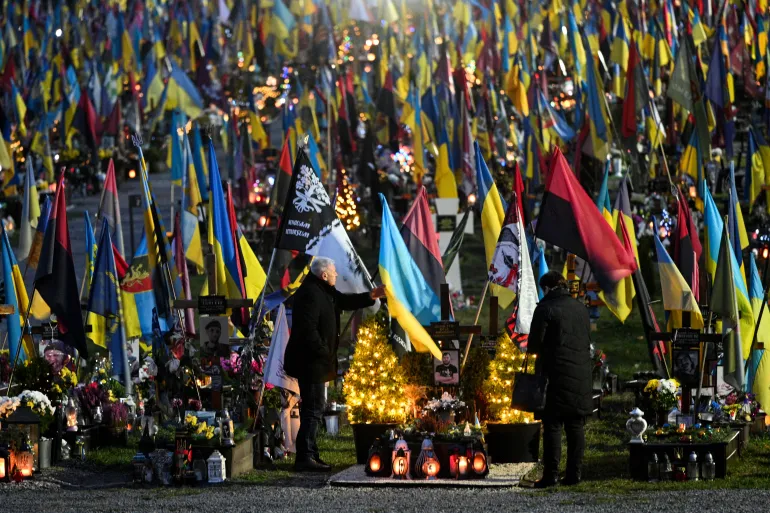
People visit the graves of fallen Ukrainian soldiers, decorated with Christmas trees and New Year’s decorations, at the Lychakiv Military Cemetery, in Lviv, Ukraine on Tuesday [Yuriy Dyachyshyn/AFP]
Pope saddened as fighting continues over Christmas
The latest setback for Kyiv on the battlefield came as Zelenskyy said on Tuesday that Russian forces had launched another “massive attack” on Ukraine on Monday night, killing at least three people, including a four-year-old girl, across 13 regions targeted with drones and missiles.
In Russia, Ukrainian drone attacks killed four people in the Belgorod region over the past two days, local officials said.
Pope Leo expressed disappointment on Tuesday that Russia had apparently refused to agree to a ceasefire on December 25, the date many Christians celebrate Christmas.
“I will make an appeal one more time to people of goodwill to respect at least Christmas Day as a day of peace,” Leo said, speaking to reporters outside his residence in Castel Gandolfo, Italy.
“Maybe they will listen to us, and there will be at least 24 hours, a day of peace, across the world,” he said.
While most people in Ukraine and Russia are Christians, many are Orthodox, meaning they observe Christmas on January 7.
Russian President Vladimir Putin announced an unexpected 30-hour unilateral truce a day before Easter this year, a rare pause in Russia’s war on Ukraine, which has now continued for close to three years, after Russia’s full-scale invasion in February 2022.
Human Rights Watch, an international non-governmental organisation, has raised concerns over the dire humanitarian situation in the Democratic Republic of Congo, following the capture of Uvira town by M23/AFC rebels.
In a statement released on Monday, Dec. 15, Human Rights Watch reported that the offensive launched by M23/AFC, with support from Rwanda in Uvira and the surrounding areas, has resulted in a significant displacement of populations. It stated that access to humanitarian assistance has been severely diminished.
According to figures from the United Nations, approximately 200,000 people have fled the fighting, including over 30,000 who have crossed the border into Burundi. Congolese refugees arriving in Burundi have informed UN officials that they are receiving little to no humanitarian assistance. Human Rights Watch reports that local hospitals and health centres are overwhelmed amid a decline in humanitarian aid due to limited access and financial resources.
The organisation emphasises the suspension of food assistance in the province, stating that the UN World Food Programme has halted its support throughout South Kivu, worsening the living conditions of displaced populations still in areas affected by conflict. They are urging all forces present on the ground to ensure humanitarian access and the protection of civilians. In particular, they demand that the Rwandan authorities and the M23 guarantee access to essential items for the population’s survival, including water, food, and medicine.
Human Rights Watch states that the lack of progress in humanitarian aid, despite recent diplomatic efforts, is concerning.
“The Washington Accords dealing with the situation in the Eastern DR Congo have not permitted improved security nor better access to aid for the civilians near Uvira in South Kivu,” said Clementine de Montjoye, Human Rights Watch’s principal researcher for the Great Lakes region.
While humanitarian needs are rapidly increasing, Human Rights Watch exhorts its international partners to act quickly.
“The situation faced by civilians in South Kivu is more and more perilous, and the humanitarian needs are considerable,” the non-governmental organisation said, calling for an urgent reinforcement of assistance and the adequate protection of civilian populations.
Human Rights Watch has expressed alarm over the worsening humanitarian crisis in the Democratic Republic of Congo, particularly after the M23/AFC rebels, with Rwandan support, seized Uvira town. The conflict has displaced around 200,000 people, with over 30,000 fleeing to Burundi, where they receive minimal humanitarian support. The organisation highlights the overwhelming pressure on local health facilities and the suspension of the UN World Food Programme’s aid in South Kivu, exacerbating the plight of those in conflict-ridden areas.
Human Rights Watch urges all involved forces to ensure the protection of civilians and access to essential services like food, water, and medicine. Despite diplomatic efforts, progress in humanitarian aid remains limited, with recent agreements showing little effect on improving security or aid distribution in South Kivu. The NGO calls for urgent international action to bolster aid efforts and provide adequate protection for civilians amidst increasing peril and significant humanitarian needs.