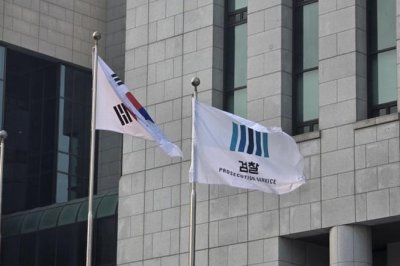
searches

FBI searches Virginia Senate leader’s office as part of corruption probe, AP source says

The FBI searched the Virginia state Senate leader’s office on Wednesday as part of a corruption investigation, a person familiar with the matter said. Federal agents also were seen at the senator’s nearby cannabis business.

The search at Virginia Sen. L. Louise Lucas’s district office in Portsmouth comes after the Democrat helped lead the state’s recent redistricting effort.

The FBI said only that it was conducting a court-authorized search warrant in Portsmouth. The person who confirmed the FBI’s search was not authorized to discuss an ongoing investigation by name and spoke to the Associated Press on condition of anonymity.

Besides the search at Lucas’ office, agents in FBI T-shirts also went into the nearby Cannabis Outlet, which she opened in 2021. Several entrances to its cannabis store parking lot were blocked by unmarked vehicles with flashing blue lights.

Lucas — a prominent backer of legalizing marijuana — has said the store sells legal hemp and CBD products. It has drawn scrutiny from local media amid allegations that some products were mislabeled.

Virginia has legalized pot possession, but retail sales of recreational marijuana remain illegal in the state.

A message seeking comment was left Wednesday on a cellphone for Lucas, who has been a state senator for 34 years.

State House Speaker Don Scott said he was deeply concerned by the FBI search.

“Right now, there is far more theatrics and speculation than actual information available to the public,” Scott, a Democrat, said in a statement, adding that more facts were needed “before anyone rushes to political conclusions.”

Gov. Abigail Spanberger declined to comment. Some other Virginia Democrats were quick to note that the search comes as the FBI and Justice Department have opened a spate of politically charged investigations into perceived adversaries of President Trump.

The context “must be acknowledged,” U.S. Rep. Bobby Scott said in a social media post.

Last week, the Justice Department charged former FBI Director James Comey with making a threatening Instagram post against Trump, an accusation that Comey — who for nearly a decade has drawn the president’s ire — has denied. A separate mortgage fraud case, ultimately dismissed by a court, targeted Democratic New York Atty. Gen. Letitia James, who had brought a major civil fraud lawsuit against Trump and his business.

The FBI and Justice Department have also provoked concerns among Democrats about ongoing election-related investigations, including the seizure by agents of ballots and other information from Fulton County, Ga.

Lucas has been a vocal leader of Virginia’s redistricting effort, which voters approved last month. A sign urging people to “vote yes” to “stop the MAGA power grab” still hung Wednesday on a fence separating her office’s parking lot from the parking for the cannabis shop.

Amid a national, state-by-state partisan redistricting fight kicked off by Trump’s desire to aid his fellow Republicans, Virginia voters OK’d a Democrat-backed constitutional amendment authorizing new U.S. House districts. The plan could help the party win up to four additional seats.

“We are not going to let anyone tilt the system without a response,” Lucas said after the vote. Trump, meanwhile, denounced the results.

The state Supreme Court let the referendum proceed but has yet to rule whether the effort is legal. The court is considering an appeal of a lower-court judge’s ruling that the amendment is invalid because lawmakers violated procedural requirements.

Voting districts typically are redrawn once a decade, after each census. But Trump last year urged Texas Republicans to redraw House districts to give the GOP an edge in the midterms. California Democrats reciprocated, and redistricting efforts soon cascaded across states.

Lucas, 82, has been a figure in Virginia politics since the 1980s, when she became the first Black woman elected to a City Council seat in her native Portsmouth. She now is the first woman and first African American to serve as the body’s president pro tempore.

Earlier in life, she was the Norfolk Naval Shipyard’s first female shipfitter, according to her biography in the state library. The job entails making, installing and repairing sometimes enormous metal assemblies for vessels.

In recent years, she has been the chief executive of a Portsmouth business that runs residences, day programs and transportation for intellectually disabled adults.

Tucker, Breed and Peltz write for the Associated Press. AP writers Dylan Lovan in Louisville, Ky.; Jake Offenhartz in New York; and Claudia Lauder in Philadelphia contributed to this report.

Source link

Supreme Court wary of barring police from phone searches to find crime suspects

A divided Supreme Court heard arguments Monday on whether the police use of phone tracking data violates the Constitution’s protection against “unreasonable searches.”

Most of the justices sounded wary of barring investigators from obtaining precise location history from Google or cellphone providers if it helps find a murderer or a bank robber.

“I’m trying to figure out why this was bad police work,” Justice Brett M. Kavanaugh told an attorney representing the defendant, Odell Chatrie.

He said a police detective in Virginia was seeking clues to find a bank robber and sought a “geofence warrant” from a judge that told Google to turn over data from phones that were near the bank during the hour of the robbery.

“In the end, he got three names,” Kavanaugh said, including Chatrie, who pleaded guilty. He said these searches have proved to be practical for finding criminals.

But other justices said the court should not rule broadly to endorse digital searches of vast data bases held by private companies.

What about emails or Google photos, asked Justices Sonia Sotomayor, Neil M. Gorsuch and Amy Coney Barrett.

All three said this information deserves more privacy protection than location data.

In the past, the court has said the 4th Amendment protects against government searches that intrude upon a “reasonable expectation of privacy.” The two sides in this case differ on whether a digital search of location data violates privacy rights.

Gorsuch said he was generally skeptical of broad searches if the government had no particular suspect.

Is it OK to search “all the rooms in a hotel for a gun or all the storage units or all bank deposit boxes for the pearl necklace that has been stolen?” he asked.

Eric Feigin, a deputy solicitor general, said the government probably could not obtain a search warrant for all storage units or hotel rooms, but a Google search is different because it is a software filter.

Chief Justice John G. Roberts Jr. proposed a narrow ruling.

Perhaps unwittingly, Chatrie had agreed to have Google store his location history data. Roberts said he could have turned off the public location data, and for that reason, he may have lost his right to appeal.

“If you don’t want the government to have your location history, you just flip that off,” he said.

Justice Samuel A. Alito Jr. agreed. Chatrie “voluntarily disclosed to Google the information about where he was going to be,” he said.

Eight years ago, Roberts wrote an opinion for a 5-4 majority that said investigators needed a search warrant before they could obtain 127 days of cell tower records that helped convict a Michigan man of several store robberies.

Four of the court’s liberal justices joined that majority, but only two of them — Sotomayor and Elena Kagan — remain on the court.

Since then, Kavanaugh, Barrett and Justice Ketanji Brown Jackson have joined the court.

The National Assn. of Criminal Defense Lawyers and other civil liberties groups backed Chatrie’s challenge to the government’s use of geofence warrants.

Chatrie had “a reasonable expectation of privacy in his location history given both its sensitive and revealing nature and the fact that it was stored in his password-protected account,” Washington attorney Adam Unikowski told the court. “There was not probable cause to search the virtual private papers of every single person within the geofence merely because of their proximity to the crime.”

Feigin, the Justice Department attorney, said a ruling for Chatrie “would impede the investigation of kidnappings, robberies, shootings and other crimes.”

He agreed, however, that email should be protected because it involves personal communication.

The justices will hand down a ruling in Chatrie vs. U.S. by the end of June.

Source link

Supreme Court weighs phone searches to find criminals amid complaints of ‘digital dragnets’

A man carrying a gun and a cellphone entered a federal credit union in a small town in central Virginia in May 2019 and demanded cash.

He left with $195,000 in a bag and no clue to his identity. But his smartphone was keeping track of him.

What happened next could yield a landmark ruling from the Supreme Court on the 4th Amendment and its restrictions against “unreasonable searches.”

Typically, police use tips or leads to find suspects, then seek a search warrant from a judge to enter a house or other private area to seize the evidence that can prove a crime.

Civil libertarians say the new “digital dragnets” work in reverse.

“It’s grab the data and search first. Suspicion later. That’s opposite of how our system has worked, and it’s really dangerous,” said Jake Laperruque, an attorney for the Center for Democracy & Technology.

But these new data scans can be effective in finding criminals.

Lacking leads in the Virginia bank robbery, a police detective turned to what one judge in the case called a “groundbreaking investigative tool … enabling the relentless collection of eerily precise location data.”

Cellphones can be tracked through towers, and Google stored this location history data for hundreds of millions of users. The detective sent Google a demand for information known as a “geofence warrant,” referring to a virtual fence around a particular geographic area at a specific time.

The officer sought phones that were within 150 yards of the bank during the hour of the robbery. He used that data to locate Okello Chatrie, then obtained a search warrant of his home where the cash and the holdup notes were found.

Chatrie entered a conditional guilty plea, but the Supreme Court will hear his appeal on April 27.

The justices agreed to decide whether geofence warrants violate the 4th Amendment.

The outcome may go beyond location tracking. At issue more broadly is the legal status of the vast amount of privately stored data that can be easily scanned.

This may include words or phrases found in Google searches or in emails. For example, investigators may want to know who searched for a particular address in the weeks before an arson or a murder took place there or who searched for information on making a particular type of bomb.

Judges are deeply divided on how this fits with the 4th Amendment.

Two years ago, the conservative U.S. Court of Appeals for the 5th Circuit in New Orleans ruled “geofence warrants are general warrants categorically prohibited by the 4th Amendment.”

Chief Justice John Roberts poses for an official portrait at the Supreme Court building in 2022.

Chief Justice John Roberts sided with the court’s liberals in a 4th Amendment privacy case in 2018.

(Alex Wong / Getty Images)

Historians of the 4th Amendment say the constitutional ban on “unreasonable searches and seizures” arose from the anger in the American colonies over British officers using general warrants to search homes and stores even when they had no reason to suspect any particular person of wrongdoing.

The National Assn. of Criminal Defense Lawyers relies on that contention in opposing geofence warrants.

Its lawyers argued the government obtained Chatrie’s “private location information … with an unconstitutional general warrant that compelled Google to conduct a fishing expedition through millions of Google accounts, without any basis for believing that any one of them would contain incriminating evidence.”

Meanwhile, the more liberal 4th Circuit in Virginia divided 7-7 to reject Chatrie’s appeal. Several judges explained the law was not clear, and the police officer had done nothing wrong.

“There was no search here,” Judge J. Harvie Wilkinson wrote in a concurring opinion that defended the use of this tracking data.

He pointed to Supreme Court rulings in the 1970s declaring that check records held by a bank or dialing records held by a phone company were not private and could be searched by investigators without a warrant.

Chatrie had agreed to having his location records held by Google. If financial records for several months are not private, the judge wrote, “surely this request for a two-hour snapshot of one’s public movements” is not private either.

Google changed its policy in 2023 and no longer stores location history data for all of its users. But cellphone carriers continue to receive warrants that seek tracking data.

Wilkinson, a prominent conservative from the Reagan era, also argued it would be a mistake for the courts to “frustrate law enforcement’s ability to keep pace with tech-savvy criminals” or cause “more cold cases to go unsolved. Think of a murder where the culprit leaves behind his encrypted phone and nothing else. No fingerprints, no witnesses, no murder weapon. But because the killer allowed Google to track his location, a geofence warrant can crack the case,” he wrote.

Judges in Los Angeles upheld the use of a geofence warrant to find and convict two men for a robbery and murder in a bank parking lot in Paramount.

The victim, Adbadalla Thabet, collected cash from gas stations in Downey, Bellflower, Compton and Lynwood early in the morning before driving to the bank.

After he was robbed and shot, a Los Angeles County sheriff’s detective found video surveillance that showed he had been followed by two cars whose license plates could not be seen.

The detective then sought a geofence warrant from a Superior Court judge that asked Google for location data for six designated spots on the morning of the murder.

That led to the identification of Daniel Meza and Walter Meneses, who pleaded guilty to the crimes. A California Court of Appeal rejected their 4th Amendment claim in 2023, even though the judges said they had legal doubts about the “novelty of the particular surveillance technique at issue.”

The Supreme Court has also been split on how to apply the 4th Amendment to new types of surveillance.

By a 5-4 vote, the court in 2018 ruled the FBI should have obtained a search warrant before it required a cellphone company to turn over 127 days of records for Timothy Carpenter, a suspect in a series of store robberies in Michigan.

The data confirmed Carpenter was nearby when four of the stores were robbed.

Chief Justice John G. Roberts, joined by four liberal justices, said this lengthy surveillance violated privacy rights protected by the 4th Amendment.

The “seismic shifts in technology” could permit total surveillance of the public, Roberts wrote, and “we decline to grant the state unrestricted access” to these databases.

But he described the Carpenter decision as “narrow” because it turned on the many weeks of surveillance data.

In dissent, four conservatives questioned how tracking someone’s driving violates their privacy. Surveillance cameras and license plate readers are commonly used by investigators and have rarely been challenged.

Solicitor Gen. D. John Sauer relies on that argument in his defense of Chatrie’s conviction. “An individual has no reasonable expectation of privacy in movements that anyone could see,” he wrote.

The justices will issue a decision by the end of June.

Source link