JPMorgan Chase dominates other banks when it comes to AI banking citations, but regional banks are invisible.
Whenever someone poses banking-related inquiries to AI platforms like ChatGPT, Claude, Gemini or Perplexity, the biggest banks are getting upstaged by third-party comparison hubs and media outlets.
Three websites in particular — Bankrate, Investopedia and Wikipedia — supply 68% of all banking-related AI citations, according to an “AI Visibility” report from communications firm 5WPR. Bank-owned domains, meanwhile, account for less than 7%.
Even within the narrow slice of visibility banks do capture, one name dominates. In response to real consumer questions, such as “best bank near me” or “top bank in [state],” JPMorgan Chase & Co. holds 28.4% of consumer banking AI citation share in the U.S. That’s more than Bank of America (7.1%), Wells Fargo (5.9%), Citi (4.8%), and Capital One (4.2%) combined.
The findings underscore a new reality in the AI era: brand prestige matters less if a chatbot leaves a bank out of the conversation entirely.
JPMorgan Leads Chatbot Citations
“It isn’t accidental,” Ronn Torossian, founder and chairman of 5WPR, told Global Finance in an email. JPMorgan Chase operates more than 4,800 branches across the U.S., but “branch count has almost nothing to do with it,” he added.
Whenever someone consults an AI platform about where to bank, the New York-based firm wins the AI answer outright in only three states: New York, Illinois, and Arizona. Still, Chase owes its AI presence to machine-readable content on its own site, combined with a press footprint that keeps it landing in outlets AI engines already trust, Torossian explained.
But the bank hasn’t locked in the lead just yet. “This is a snapshot, and AI citation patterns shift as engines update retrieval and as competitors invest in the same levers,” he added. “Any bank willing to match that content and structural investment can close the gap.”
Until then, AI assistants will likely continue citing media coverage of banks rather than the banks themselves, he added.
“What these publishers [Bankrate, Investopedia, Wikipedia and also NerdWallet] are doing right is straightforward: comprehensive, frequently updated comparison content, clear schema markup, strong domain authority, and a format built to directly answer the exact questions people and now AI are asking,” Torossian said.
These sites present direct ‘best’ and ‘worst’ rankings of banks, credit cards, and other financial products, giving AI engines structured data to pull from.
Bankrate, for example, feeds answers to specific inquiries about borrowing and connects them with competing lenders. This forces banks to up their game to win over potential customers.
“When banks compete, users get better [interest] rates that help them save money more easily and more effectively,” Bankrate editor-in-chief John Puterbaugh said in an email. “Our commitment to consumer advocacy and helping people get better deals runs across our whole business, and we believe this approach will win even as AI platforms and LLMs continue to evolve.”
What Are Banks Doing Wrong?
Bank websites, by contrast, typically heighten the marketing language to tout their products and offerings. The problem? AI engines ignore that type of content and, instead, identify content that answers specific questions with clarity.
As Andy Mollison, head of search and Innovation at Varn Search Marketing, puts it: AI systems are built around language.
“Vague claims such as ‘we go above and beyond’ provide little useful information,” Mollison said in an email. “A statement such as ‘customers can access support 24 hours a day, seven days a week’ is concrete, verifiable and far more likely to match a user’s query.”
Regulatory and compliance constraints also limit how banks communicate in ways that don’t affect financial-information publishers, Mollison explained. “That often leaves them with less educational content, and more content that is cautious, technical or heavily qualified,” he added.
As a result, publishers have the AI advantage over banks, because they write in language that matches how people actually ask questions.
Regional Banks Face a Discovery Gap
Perhaps the starkest finding from the 5WPR report is this: 22 of the 75 largest U.S. banks registered less than 0.3% citation share. Top bank names — Fifth Third, KeyBank, M&T, Huntington and Regions — barely show up despite their branch networks. Meanwhile, fintech challengers are eating their lunch.
Chime, SoFi, Ally and Discover now out-cite regional banks like PNC, Truist, U.S. Bank and Citizens in AI answers, despite operating with a fraction of the deposit base.
“These five banks registering under 0.3% citation share despite significant size and branch networks isn’t a vanity-metric problem; it’s a discovery problem,” Torossian said. “As more consumers use AI assistants as a first stop for financial research, a bank that’s missing from those answers is missing from consideration at the exact moment decisions are being formed.”
5WPR is careful to frame the index not as a hard count pulled from platform query logs. “Nobody outside those companies has access to that, and any firm claiming otherwise is overselling,” Torossian said. He also acknowledged the report can’t yet tie citation share to account openings or traffic. AI platforms, after all, don’t publish that data. “We’re measuring the front door. We’re not measuring the sale,” he said.
Why AI Invisibility Is Risky
Still, Torossian argued that waiting for proof before investing in AI visibility carries its own risk.
Recall the early days of search engine optimization when Google’s search algorithms transformed how businesses competed online. Companies began investing heavily in web presence during the so-called “SEO Gold Rush” in the early 2000s.
“The brands that showed up first captured the customers,” Torossian said. The ones that waited for proof spent the next decade “trying to catch up,” he added.
“That’s the same bet regional banks made about search fifteen years ago,” he added. “And it’s the same bet that let fintechs out-cite them in AI answers today.”
5WPR isn’t the only agency tracking AI usage among bank consumers. Wells Fargo published a survey in April, alongside the American Bankers Association, reporting that 19% of U.S. adults (and 38% of Gen Z) use AI for financial advice. Two-thirds of those respondents acted on the AI financial suggestions and said those recommendations proved profitable or worthwhile.
In other words, facts matter. Tyler Desjardin, the founder of Pivot Creative Media, a firm that focuses on improving business visibility when it comes to SEO and AI-generated results, advises clients to prioritize just that.
“Brands need to ensure that they provide accurate information so that AI does not have to create something that could be misleading to search engines,” Desjardin said. “Visibility should come from structured information that conveys correct facts, rather than trying to game the system, since AI automatically eliminates any thin or misleading content.”
Anthony Noto covers corporate finance and private credit. Contact him at anoto@gfmag.com
Natasha Carr was just one week old when she was abandoned in a toilet at St Thomas’s Hospital, Lambeth, in 1989. She turned to the ITV show for assistance in tracing her biological family in 2018, having no knowledge of her life prior to being fostered and ultimately adopted at the age of two.
While the show was unable to locate her biological parents, it uncovered, after three years of searching, that Natasha has a full sister named Lee-Ann, who is just 18 months older than she is.
Sharing 51 percent of Natasha’s DNA, Lee-Ann was also a foundling, having been left in the staff toilets at St James’s Hospital in Balham when she was just a few days old.
At the time of their reunion in 2022, Natasha told host Davina McCall: “It’s so lovely to have someone who has the same experience. No one will ever understand unless you’re in the exact same situation, and she literally was in the same situation,” reports MyLondon.
On Monday evening (August 24), the ITV show broadcast an update to Natasha and Lee-Ann’s story in Long Lost Family: What Happened Next, eight years after their initial search began.
While the team searched for further relatives of the sisters, they learned that their father had passed away only a few years earlier, following a battle with cancer. Natasha and Lee-Ann received the heartbreaking news away from the cameras.
“I’m on my way to give Natasha and Lee-Ann major information; sadly, their birth father has died, which we’ve told them away from the cameras,” Davina revealed.
Yet the sisters faced another stunning development as Davina confirmed their birth mother had been traced. “She’s still alive, and she would really like the chance to meet them and to start building a relationship,” she added.
Throughout Davina’s conversation with Natasha and Lee-Ann, she disclosed that their father was born and brought up in Jamaica until he was 14 years old.
“It’s really interesting to know our background and where we come from and who we are”, Lee-Ann shared, “That’s what started my journey, I wanted to know what flag.”
The siblings also learned their biological mother was alive and had additional children, leaving them both astounded.
Lee-Ann became visibly emotional and received support from Natasha as Davina confirmed their mum’s desire to reconnect with her two daughters.
Subsequently, in the episode, Natasha confirmed she had encountered her birth mum while Lee-Ann was still coming to terms with the revelation.
Long Lost Family: What Happened Next is available to stream on ITVX
Weekly insights and analysis on the latest developments in military technology, strategy, and foreign policy.
The U.S. Air Force’s X-62A test jet was able to use its artificial intelligence (AI) driven ‘brain’ to autonomously spot and track other aircraft in flight, and then move to intercept them, in recent testing. On top of this, the AI ‘agent’ on the X-62A performed these tasks by leveraging data from an infrared sensor pod slung underneath the aircraft. The tests demonstrate exactly the kind of autonomous air-to-air combat capabilities the Air Force is hoping to gain from its first batch of operational Collaborative Combat Air (CCA) drones.
The Air Force and Lockheed Martin shared details about the new testing involving the X-62A, which is a uniquely modified F-16, today. The U.S. Air Force Test Pilot School (USAF TPS), Lockheed Martin’s famed Skunk Works advanced projects division, and other unmanned “industry partners” supported what is described variously as a “closed‑loop AI combat test” and a demonstration of “autonomous AI sensor-to-vehicle control.” The X-62A, which started life as a two-seat F-16D Viper and is also known as the Variable Stability In-flight Simulator Test Aircraft (VISTA), is assigned to the USAF TPS. The Air Force also nicknamed this particular test effort Have Heat.
The X-62A seen at Edwards Air Force Base in California during the Have Heat testing. USAF
“Leveraging Lockheed Martin’s Infrared Search and Track Legion Pod, during the HAVE HEAT program, the X-62 VISTA platform demonstrated the ability of AI agents to ingest live infrared sensor data, directing the X-62 to autonomously intercept an airborne target in real time,” according to a release from the Air Force’s 412th Test Wing at Edwards Air Force Base in California.
“An artificial intelligence (AI) agent used targeting information from an operational sensor to execute successful air intercepts against a live target,” a separate release from Lockheed Martin also explained. “Across eight flights, the X-62 Variable In-flight Simulation Test Aircraft (VISTA) executed 27 AI-controlled intercepts.”
A T‑38 jet trainer was used as the live target during the tests, per Lockheed Martin.
As an aside, it is also worth noting here that Legion Pod has been in active operational use on crewed Air Force fighters for some time now. This reflects a separate renaissance that infrared search and track (IRST) capabilities have been seeing across the U.S. military. IRSTs are especially valuable for helping spot stealthy targets with features designed to reduce their radar cross-sections since they detect and track infrared emissions. By extension, IRSTs are also immune to radio frequency electronic warfare jamming. As passive sensors, they do not emit their own signals that could alert a target to the fact they are being tracked, either. IRSTs can still be used to cue or otherwise be linked to other sensors, including active electronically-scanned array radars. Fusing data from multiple sources can provide higher fidelity tracks of multiple targets, as well as improved situational awareness overall.
What Have Heat has now demonstrated is the ability of an autonomous platform to use its own closed data loop to directly prosecute an aerial intercept of a physical aircraft. It also showed that the parties involved could move “AI testing from simulated target data to real-time, on‑board sensor streams, mirroring the data environment pilots will face in future high-stakes engagements,” Lockheed Martin’s press release notes.
This all speaks to a core challenge in the development of advanced autonomous aircraft: situational awareness limitations. While the aforementioned simulated dogfight in 2024 was a breakthrough event, the Air Force subsequently disclosed that the X-62A and the F-16 had been directly exchanging data the entire time. This, in turn, underscored the difficulties of ensuring an autonomous platform can safely operate closely together with friendly aircraft, let alone engage a non-cooperative hostile threat, as TWZ explored in detail at the time. The Air Force, as well as other branches of the U.S. military, have been open about the need to overcome these hurdles and the difficulties of doing so.
Another picture of the X-62A at Edwards during Have Heat. USAF
It is also important to note that the commercial and military aviation sectors have been developing and fielding ever-more advanced automated ‘sense and avoid’ systems for crewed aircraft for decades now. This technology has already been working its way into the uncrewed aviation realm. However, at least so far, the main focus has been on flight safety in controlled airspace rather than dynamic air combat operations over hostile territory where threats and other hazards could emerge unexpectedly.
“Our autonomous agents consumed classified infrared search and track feeds and executed combat‑critical maneuvers in real time. This achievement marks a decisive advance toward delivering AI‑augmented air dominance for the United States,” Ron Fehlen, Vice President and General Manager of Lockheed Martin Skunk Works, stressed in a statement today about Have Heat.
“Our ability to provide reliable sensor data is critical, but the real advantage comes when that data can connect seamlessly with AI to take action,” Stacy Kubicek, Vice President and General Manager at Lockheed Martin Sensors and Global Sustainment, also said in a statement. “This project demonstrates how sensing and autonomous AI can come together as a force multiplier to make faster, more informed action in complex environments.”
“HAVE HEAT represents a meaningful expansion of avionics capability towards integrated, AI-driven control of multiple sensors and air vehicles for mission autonomy,” Air Force Lt. Col. Joshua Strafaccia, Dean of Faculty for Research at the USAF TPS, said in his own statement. “This bridges a capability gap and positions us to test advanced autonomy faster.”
As mentioned at the start, for the Air Force more specifically, Have Heat is another important stepping stone toward the air combat capabilities the service wants at least from its initial tranche of CCA drones. Using CCAs as forward IRST nodes is clearly a top priority. Putting the passive sensors out ahead of manned platforms, especially in groups, will generate high-quality target data independent of radars that even stealth aircraft cannot hide from. It will also help with survivability of the drones compared to equipping them with radars, but some will likely be equipped that way, as well. With all this in mind, IRST has already been emerging as a key capability for CCA-type programs more broadly, and not just in the United States.
A pre-production YFQ-44A Fury at Creech Air Force Base during an operational test last month. USAFA pre-production YFQ-42A Dark Merlin comes in to land at Creech Air Force Base during the operational testing in July. USAF
The Air Force does still see human operators at least being on the loop for the foreseeable future, especially to authorize lethal attacks. The service’s F-22 Raptors are in line to be the first airborne controllers for operational CCA drones. At the same time, the exact command and control schema can be expected to evolve as autonomous capabilities continue to advance, and human operators gain more trust in those platforms to perform their assigned tasks.
All of this is directly intertwined with tests like Have Heat to expand what the autonomous packages for those uncrewed aircraft are capable of doing. The X-62A has been especially deeply involved in this work for years now. The aircraft itself has been receiving new upgrades specifically to expand its own autonomous and other capabilities. The Air Force’s press release on Have Heat today also touched on another recent effort called Have Holidays, which focused on rapid testing of new software and hardware. Have Heat and Have Holidays were conducted in parallel.
“HAVE HOLIDAYS saw simultaneous integration and evaluation of a wide suite of modular technologies into the X-62’s Enterprise Open Mission System Architecture computer,” according to the Air Force’s release. “This included the integration of a non-prime, third-party autonomous agent onto the X-62, testing of enhanced safety rules to prevent autonomous vehicles from violating user-established operational limits, and further chip integration for advanced sensor exploitation.”
Another stock picture of the X-62A USAF The unique X-62A Variable-stability In-flight Simulator Test Aircraft (VISTA) seen here flew in a fully autonomous mode against a crewed F-16 fighter in a milestone mock dogfight in September 2023. USAF
TWZhas previously explored in detail the importance of rapid, iterative testing in the development of new AI-driven autonomous capabilities, including in the virtual realm. Lockheed Martin says that it was able to complete “full integration and ground test of the agents” used in Have Heat in just three months using its “‘Supermassive’ AI agent generation capability.”
“This system-of-systems test served as critical technical risk mitigation on the design and development of logistics and integration frameworks required to maximize flight opportunities post-MSU, paving the way for broader government, academic, and industry partnerships,” the Air Force’s release today also added.
MSU here is the larger Mission Systems Upgrades plan for the X-62A. The MSU effort is currently working toward the integration of Raytheon’s PhantomStrike radar onto the aircraft, as well as other new “sensor and computing capacity” and “modern network data communications” capabilities, per the Air Force. The addition of PhantomStrike, a lower-cost lightweight active electronically-scanned array radar, is particularly significant and will give the test jet another important boost in situational awareness, as you can read more about here.
PhantomStrike: Next generation radar superiority
“X-62 is continued proof that an agile, dedicated team can rapidly advance Department of War initiatives through intentional collaboration,” Air Force Col. Maryann Karlen, Commandant of the USAF TPS, said in a statement today. “Accomplishing these significant milestones is a direct reflection of the adaptability and warfighter focus personified by all members of the school.”
Members of the Royal Netherlands Air and Space Force stand next to a pre-production YFQ-44A drone during the CCA testing at Creech Air Force Base in July 2026. USAF
The Air Force is now hoping to begin fielding its first operational CCAs by 2030. In the meantime, tests like Have Heat utilizing the X-62A and other platforms will only become more important to help build the foundation for the air combat capabilities those drones will provide on day one.
Maybe there is something in the fog. Matthew Rhys landed two Emmy nominations in different categories for darkly comedic and darkly chilling turns this TV season.
Rhys is nominated for lead actor in a comedy series for his deft performance as Tom Loftis, a single dad and the mayor of a cursed New England island who is trying to balance the town’s supernatural threats with his efforts to boost tourism, in Apple’s TV’s breakout horror-comedy series “Widow’s Bay.” The word-of-mouth buzz around the series, which premiered in April, intensified each week leading up to its finale last month and prompted chatter around its prospects as a major Emmys contender. The series arrived late in the season, so only its first seven episodes qualify for the 2026 awards cycle, but that was enough for Rhys to nab a nod.
It wasn’t the only performance from Rhys that voters boosted. He is also nominated for lead actor in a limited or anthology series for his role as the sociopath Nile Jarvis, a famed and formidable real estate developer who once was the prime suspect in the killing of his wife, in Netflix’s “The Beast in Me.” Nile finds himself in a cat-and-mouse dynamic with his new neighbor (Claire Danes), an author in search of her next book subject who is suspicious of his innocence.
Prior to this year’s nominations, Rhys received five Emmy nominations over his career, including for his lead roles in “The Americans” and “Perry Mason,” as well as a guest actor nod in “Girls.” He won in 2018 for his role as KGB spy Philip Jennings in “The Americans.”
The Times spoke with Rhys about his nomination; these are edited excerpts.
Matthew Rhys as Mayor Tom Loftis in Apple TV’s “Widow’s Bay.”
(Apple)
Congratulations on your exciting morning — it’s a big day in the Rhys-Russell household [Keri Russell, Rhys’ partner, is nominated for lead actress in a drama for her role in “The Diplomat”]. Let’s start with the most important question: What’s in the fog, Matthew?
[laughs] I love how it took me a moment. I was like, “Wait, what?” Oh, yes, the fog! What’s in the fog is an incredible Season 2.
Place me in the moment when you got the news.
I was in Brooklyn Bridge Marina at the time. I just got off a boat, and I thought, “Oh, God, it’s 11:40.” So I thought quite possibly [they] got to our categories. I checked my phone and there were the many texts. That was the exciting moment because if you haven’t been nominated, there’s no text.
Did one text stand out from the others?
The real pinch-me moment — this is going to sound like a real name drop — but it really got me emotional because I thought, if I’d have told my 18-year-old self that Gary Oldman would text me to congratulate me, I wouldn’t have believed it. That’s when it got me in an emotional way because he’s such a true hero.
Let’s start with “Widow’s Bay,” which recently wrapped its first season. There’s something so thrilling about how it broke through the way that it did. What has struck you about how viewers responded to this horror comedy?
There was a great degree of nervousness about how this would land, whether indeed it would land at all, and the fact that it has, and kind of the depth and the complex nature that’s landed or resonated with people in different ways, is what I’ve loved. Some people go, “Oh my God, it’s so funny”; some people say, “Oh my God, it’s terrifying” — some people say both. And some people pick up on the weirdest things, and then some people pick up on the most obvious, great things. But it’s the length and breadth and the variety of its resonances that has really made me very happy, and really made me doff my cap to [creator] Katie Dippold, for what she did.
What should networks and studios take away from the success of “Widow’s Bay” if they are really paying attention?
Take the risk. And challenge audiences. Everyone’s more than ready for it and thirsty for it in a real way. I really hope this does something in the Hollywood psyche, where they go, “Let’s put away the remakes and let’s just get after new challenging, original material.”
What guidance did you get from Katie about who Tom was and how to play him?
She’s dizzyingly collaborative, so she said, “Tom is yours.” It was more me going, “But what about this for Tom?” She would help, but she really said, “Tom is yours to create now. Everything I’ve done is on the page.” And it was. That’s the beauty of her writing. If you’re true to it, and you don’t get in the way of it, it sings.
The way Tom reacts to situations and people is such a master class in facial expressions. Did you recognize that would be your tool for your performance early on?
We had a kind of sliding scale — Hiro [Murai, executive producer and director], myself and Katie — because it was a departure for me. I’d go, “I don’t know where this lives or where reality lives.” And as much as anyone can say, “Play for real” — playing it for real can mean many things. It can mean a very minimal reaction, and it can mean a great reaction, and so there were times when I was like, “I’m gonna hit the sliding scale, and you let me know where it should be landing, or where, in your opinion, it’s landing in a real way.” Sometimes they were like, “Maybe a little less,” and then they were like “Maybe a little more.” That element of collaboration was wonderful too.
The moment on the boat is a GIF I send often. The jolt.
It’s funny, we have a great and incredible stunt coordinator Paul [Marini]. He said, “You have to lead where the momentum of the energy would be; it’d be your hips. So let your hips lead, and then let your body follow.” And I was like, “Oh, that’s smart.” Then if you do that, then it has a degree of comic effect to it. But my pelvis hasn’t quite recovered.
Matthew Rhys as Nile Jarvis opposite Claire Danes as Aggie Wiggs in Netflix’s “The Beast in Me.”
(Netflix)
Sort of like your dance moment in “The Beast in Me” — lead with the hips. This is your thing, Matthew.
Anytime, in the stage direction, it says “dances,” I’m like [mimics vomit sound]. That strikes ice in my veins because I’m always like, “Oh my God.”
That’s your horror comedy.
That is my true horror comedy because my dancing can be horrific and comical when it is to be neither.
Let’s talk about “The Beast in Me.” Nile Jarvis was also quite the departure from you. What was your entry point to understanding him and figuring out how chilling to make him?
It was a lot of YouTube watching, where you just type in “psychopaths” and stuff comes up. I read Jon Ronson’s “The Psychopath Test” and “The Journalist and the Murderer” [by Janet Malcolm]. The writing was so strong in “The Beast in Me,” so much of Nile was preemptively done for me. As [director] Antonio Campos said, “The trick might be not to do too much because enough has been said.” Everyone has this predisposed idea of who he is and, therefore, the idea we came up with was to do not as little as possible, but to be minimal with it because he’s aware of what everyone thinks of him and there’s a degree of enjoyment and relishing in that.
Have you been able to sensibly eat a roast chicken since?
No, not sensibly. It’s become Pavlovian for me now. When I eat roast chicken, I devour it in a slightly psychotic way. I love that scene. It’s an astute piece of writing to say so much about someone without words.
What would you be best suited to achieve: rebranding the town of Widow’s Bay as a tourist destination or charming your neighbors into signing paperwork for the construction of a running path through the backwoods of their properties?
I’m not saying I could charm the neighbors, but I would attempt to charm the neighbors. Playing Tom was exhausting in a way that playing Nile wasn’t. I always spent the end of the day on “Widow’s Bay” going, “My God, I’m exhausted” — because you’re just vibrating on a higher level with Tom. It’s always like, “Listen, please!” The pitch is always higher; you’re always like, “You’ve got to listen to me!” Or if you’re terrified, you’re just hyperventilating.
I know the news of these nominations is still fresh and I don’t want to tell you how to approach the big night, but I just have to say, this could be the moment you take a page from Philip Jennings of “The Americans” and come with a wig and getup so when they pan to you during both categories, you can make them feel distinct.
That’s exactly what I’m going to do. I’m going to Jennings it. I’m going to PJ it. When it pans to me in the second category, I’m gonna look completely different. I’m going to be dressed as Elizabeth [Jennings].
Well, congratulations. How do you think you and Keri are going to celebrate?
Keri, in true “Americans” style, is having me meet her in a clandestine spot that I don’t know anything about, so who knows what. I don’t know what the afternoon is going to unfold, but it’s a big surprise. She might end up killing me, who knows.
The new series of ITV’s Long Lost Family begins with an emotional story of a search for a family.
David has now met his family including his aunt Marianne and cousin Saskia.(Image: ITV)
A remarkable new series of Long Lost Family on ITV uses DNA technology and painstaking detective work to reunite two foundlings with family members they lost contact with or never met.
In December 1960, David Stevenson was discovered inside a locked apartment block in North-West London. He was found in the corridor up on the second floor, outside one of the flats. He was several days old and cold, but well fed. For Long Lost Family: Born Without Trace, 65-year-old David returns to the flats more than six decades on still with burning questions about why he was left in such a specific place and whether this provides any clues as to who his birth parents are.
David says: “This place is part of me and part of my identity, no question. This is where my story starts here, so coming back here is emotional. Babies are often left at a police station or a hospital. Whoever put me here…this is a locked private block. Were some of the other residents somehow involved? The WPC arrived and discovered me on the floor with people milling round.”
Although some residents were investigated by the police, enquiries failed to help identify David’s birth parents or link them to him. David was adopted by the Stevenson family and had a happy childhood in nearby Edgware. He grew up knowing about his start in life, but for a long time he wasn’t curious to know more.
“I did know that I was a foundling but as far as I was concerned I had a mum and dad and it wasn’t a problem for me.”
He now has three sons of his own. They reflect on the risks involved with searching – the answers could be upsetting. David is also conscious of the experience of his birth mother.
“If I find my birth mother and she didn’t tell anyone and she wasn’t keen on that secret turning up that would be hard because it would be rejection all over again. The consensus from the police doctor was that I was a result of an unattended birth. and that must be a traumatic experience for any woman,” he says.
With his sons now grown up, David remarried and now lives with his second wife Julie. In 2009 they launched a national appeal for information. Ultimately it did not provide answers, but it did mark the start of a decade of their own extensive investigative work.
Using the apartment building as their primary clue, they developed several hypotheses about the residents. More recently David has turned to searching through DNA, which revealed that he has both Dutch and French heritage. While this is a significant development, the search has stalled, leaving him still not knowing who his birth parents are. Thankfully the LLF team get a breakthrough on David’s search.
There is a strong connection to a particular Dutch family. Two family members, including a woman called Marianne agree to take DNA tests. The pair of them testing enables LLF expert Ariel Bruce to – with certainty – identify David’s birth mother. Her name is Petra and she sadly died in 2010. Upon seeing a photo of David, the family immediately see a likeness to Petra.
Show host Nicky Campbell travels to the Netherlands to meet with Marianne – David’s aunt and his first cousins Saskia and Bart. He wants to see how they are dealing with the news and to learn more about Petra. It transpires that nobody in the family ever knew that she was pregnant and gave up a baby in London. They are left with mixed feelings. They are desperately sad that Petra had to endure this alone but delighted to be able to meet their new cousin and welcome him into the family.
After finishing school, Petra moved to Paris to work as an Au Pair and was living there when David was conceived. This tallies with David’s French DNA and the thinking that his birth father is French. She then moved to London and subsequently parted with David.
She grew up in a strict Catholic household where news of her pregnancy would not have been tolerated. Marianne says: “It was parents after Second World War. They would be angry.”
Bart adds: “They were Catholic and they would also have been very concerned with what society would think of having a child born out of wedlock.”
The sad news that Petra has died is shared with David away from the cameras. French privacy laws mean that DNA testing is very uncommon in France and so Ariel and the team are not able to identify his birth father. Referring to the death of Petra, David tells host Davina McCall: “It’s a shame because it closed an avenue that might have been open to me.”
Davina explains that the nature of Petra’s relationship with David’s birth father is unknown, along with any possible connections to the building where David was found. She describes Petra’s strict upbringing in The Netherlands and explains that she never confided in her family about giving birth at 20. David is quite affected by learning that after returning to the Netherlands, she did not have any more children.
David says: “Oh wow. I find that surprising. And quite sad actually, you know, not having a family, having given up the one child that she did have.”
Davina then reveals that Petra has family members in Rotterdam who were all too willing to take DNA tests. She passes on a letter that they have written him, where they explain that they would love to meet and share as much information about Petra as they can. David is moved by this gesture.
He says: “To meet people close to Petra would be very nice. To put a name to my mother and a picture, it’s a profound feeling. That is amazing.
“I’ve often said I’m not looking for another family, you know. All I want to know is where did I come from? But seeing these[photos] and reading the letter, you know, I want to meet these people. Yeah, that’s as big as it can be.”
After travelling to Rotterdam and has an emotional first meeting with Marianne, Bart, Saskia and another first cousin Jan. They share details about Petra, her personality and interests. David concludes: “One of the most rewarding things…is to hear them talk about her, and, and it’s helped me form an idea of her character. I’m very excited abut the future. There was nothing but love from them.”
Petra’s sister Marianne tells him: “She would love you and you would love her.”
The other search on next week’s programme sees Sarah Gray search for her birth mother.
She was found inside a Leicester telephone box in June 1983. Just a newborn baby, she was discovered by a woman going to make a phone call. Now a mother herself of 3-year-old twins, she often reflects on her own beginnings. She had a very happy and fulfilling adoption but her start in life was never openly discussed.
“I think you know in your family the conversations that can come up freely, and I think there’s a time and a place for certain things and I didn’t push it.”
Returning to the telephone box she sees that it’s on a busy road where there would have been lots of passers-by.
Sarah, 43, said: “Whoever it was has left me in a public phone box right next to a bus stop, next to a community centre… they definitely wanted me to be found.”
The search team make incredible strides with Sarah’s case and identify her birth mother. Davina is able to finally bring Sarah some answers about who she is and where she comes from, Sarah’s mother – who is alive – wants contact and a meeting to be done off camera.
* Long Lost Family: Born Without Trace Series 8 begins on Monday night at 9pm on ITV and ITVX.
It was a glimpse of an old couple sharing a tender moment in the bustling horchatería that drew me into one of Valencia’s most storied culinary traditions. As he sipped his milky horchata de chufa and a white crescent moon appeared on his coiffed moustache, they shared a soft laugh and she dabbed it away from his upper lip.
“There’s no fixed time to drink horchata,” the lady said. “As long we have at least one every day.”
In Valencia, this refreshing, creamy, non-alcoholic drink is so beloved it is nicknamed “white gold”, and grand parlours dedicated to making it are still going strong in the city’s most sought-after locations. These often historic, traditional places are called horchaterías (or orxateriasin Valencian) and there are dozens dotted around the region.
Production is authorised in 16 towns in the Valencia region, with the quaint town of Alboraya (Alboraia in Valencian), about 45 minutes’ walk from Valencia old town, acknowledged as its birthplace and global capital. Here, buried in the low-lying, fertile fields around the town, you’ll find the drink’s principal ingredient: the chufa.
Chufas, known as tiger nuts in English, have been cultivated in Valencia for more than 1,000 years. They look like wooden raisins but taste nutty and slightly sweet when eaten raw. Tiger nuts are not actually nuts, but tubers of a grass-like plant from the sedge family. Valencia’s agricultural zone north of the city produces 5.3m to 8m kilograms of dried tiger nuts a year. Most of the harvesting takes place in spring to ensure ample supply for the balmy summer months.
‘The horchata is darker, creamier and richer than most’ … a table at Horchatería De Santa Catalina in Valencia.
To turn the wrinkly tubers into horchata, chufas are cleaned, soaked and crushed, then mixed with water. Nowadays, cinnamon, lemon or orange zest and sugar are added to boost the flavour.
Alboraya is also the birthplace of horchata’s companion: the farton, a long, cigar-shaped pastry glazed with sugar, created in the 1960s by the Polo family to dip in and mop up every last drop of horchata from the bottom of the glass. Some stay loyal to its humble predecessor, rosquilletas (breadsticks), which are less absorbent but an intriguingly salty, anise-flavoured counterpart to horchata’s sweetness nonetheless.
Leaving Alboraya with a bellyful of the indulgent combination, I weighed the task of finding the perfect horchatería. It felt wrong to split up horchata from its farton, so I would consider both. Horchaterías tend to offer three versions of horchata: líquida (liquid), granizada (semi-frozen slush) or mixta (a blend of liquid and slush). It would be the traditional classic líquida for me.
In Valencia, there are hundreds of places serving horchata and fartons, but I wanted tradition and old-world charm – places that exist only to make horchata, not as an afterthought to spiced lattes or ice-cream. After sifting out the cafes, coffeehouses and ice-cream parlours, a handwritten list on a single sheet of A4 remained.
Horchatería Fabián
It’s early evening in the old town, and the narrow shopping alley leading to my first stop, family-run Horchatería Fabián, is filled with tourists and an after-work crowd. Past bustling taverns and restaurant terraces, I glimpse its entrance and the date it was founded: 1975. Sounds promising, but something is missing. Where are the customers?
Although the place is empty, the staff are distracted and cold. The horchata they unwillingly produce is over-sweet, almost artificial tasting, and the farton is parched and crumbles on to the plate. Horchata seeps into its pores nicely when I dip it into the glass, but the overriding sensation is a numbing sweetness.
I slink out of the unwelcoming room, back on to the busy street and into a local tavern, fearing my high expectations for this jaunt are misplaced. Horchata €3, 4/10 Farton €1, 3/10
Horchatería Daniel
The next day, I spy the queue spilling out of the glass-panelled room at Horchatería Daniel. This is arguably the most well-known horchatería company in Valencia, founded in 1949 and still a family business, with three locations in Valencia.
I visit all three. The original, and the largest, is in Alboraya, decked with wooden tables and a constant flow of regulars. In its basement, production of horchata and fartons begins at 5am for here and its other locations – one in the famous Mercado de Colón and the third in a grand parlour in the centre of the old town, near to Plaza de la Reina.
That’s where I wait now, warmed by the evening sun, before I’m shuffled into a grand, airy room and handed a glass from a cluttered tray.
I can barely hear myself think over the noise of chatter and glasses clinking. The horchata is creamy and only moderately sweet. Together with the traditional farton, it’s easy to see why this is still one of the most popular horchaterías in town. Giddy, I order its newest farton creation – coated in a layer of chocolate, raspberries and crushed pistachios. Its dry interior and disjointed melange of flavours bring me back down to earth. Stick with the old favourites here and you can’t go wrong. Horchata €1.95, 6.5/10 Farton 85 cents, 6/10
Horchatería Santabárbara
South from the old town the streets widen out into sun-filled, palm-lined avenues leading to the suburb of Montolivet, where neighbourhood favourite Horchatería Santabárbara has been in situ for four years.
Most tables are busy, but this does not deter the manager, Rafa, from skipping between them to pat regulars on the back and run through each step of horchata production with wide-eyed tourists. By the time he reaches our table, my glass – which is refreshing but a little too sweet – is empty.
“Try this,” Rafa commands, passing me a new glass. “This is the original horchata, no sugar, no nothing. Just chufa and water.” It’s a revelation. The overburdening sugary aftertaste is gone, and what’s left is a clean, refreshing natural drink that sings above the mediocrity of the sweetened version. Pair it with its spongy, glazed farton and you’ll want to join the sea of smiling regulars coming back for more. Horchata €2.50, 7/10 Farton 80 cents, 6.5/10
Horchatería de Santa Catalina
In the shadow of the stunning 17th-century baroque bell tower of the Santa Catalina Church in the old town, Horchatería de Santa Catalina is the grandest of them all.
A tight entrance decorated with ceramic tiles from Manises opens into a grand dining room packed with marble tables. A curved wooden staircase leads into an equally beautiful room upstairs – both are heaving when I arrive in the evening.
A chilled white glass and a longer farton dusted with icing sugar arrives on the table. Like the locals around me, I don’t hesitate. The farton melts in my mouth, while the horchata is darker, creamier and richer than most. It is a delightful combination. The place itself is a class act in one of the city’s most beautiful neighbourhoods. Horchata €4, 8/10 Farton €1.55, 6.5/10
Horchatería Mari Toñi
North of the river in residential La Saïdia is another neighbourhood favourite, Horchatería Mari Toñi. It’s just a few minutes from artsy Benimaclet and on the way to Alboraya, if you’re leaving from the old town.
Opening at 6.15am, it’s the first place in town to get a horchata and stays busy until it closes 15 hours later. Fartons are freshly made each morning and initially they look dry. The sugar glazing seems to wilt rather than crack. But the first bite proves looks aren’t everything – they are light and fluffy, perfectly porous to the creamy horchata produced in this charming, authentic location. Horchata €3, 6/10 Farton 80 cents, 7.5/10
On the move? The takeaway alternative
Horchatería Mon Orxata.
In more than 20 visits to different Valencian horchaterías, I watched as horchata was decanted into unbranded buckets and large flasks, conducted away from the main floor. In Alboraya, at both Horchatería Panach and Horchatería El Sariers, at least 10 litres of horchata were transported out by three families in under 10 minutes.
In the city, two standout takeaway alternatives emerged. Across most central plazas in Valencia, Món Orxata is bringing back a lost 400-year-old tradition of selling unpasteurised horchata from street carts. Its horchata is clean, crisp and one of the most refreshing on the hottest of days.
Pair it with the orange-infused farton, made with fermented dough by award-winning Valencia-born pastry chef Migue Señorís at Gelática Ice Concept near the coast, and enjoy both during a sunset walk along the city’s beach. Món Orxata horchata €3.30, 7/10 Gelática Ice Concept farton €1.90, 8.5/10
Rescuers in eastern Afghanistan are searching through mud and rubble after flash floods and a landslide tore through Nuristan province. At least 23 people have been killed and dozens are still missing as officials warn of more heavy rain and a rising death toll.
Cape Verde has been named the ‘best ultimate football-inspired island’ by Expedia, with searches for Cape Verde holiday packages up 265% following the African country’s World Cup heroics this summer
Cape Verde made a big impact on the tournament(Image: AFP via Getty Images)
Searches for Cape Verde holidays have soared by 265% following the African nation’s footballing exploits this summer, according to figures from Expedia.
The island, made up of 10 volcanic islands with a total population of 491,233, captured the public’s hearts thanks to their performances at the World Cup. Their impressive showing proved so popular that searches have risen sharply compared to this time last year – with overall interest in island breaks up 55%.
Cape Verde features on Expedia’s 2026 Island Hot List, which spotlights the world’s most sought-after island destinations. Each location on the list falls into a distinct category, covering the finest romantic, wellness, nature, family and budget-friendly getaways – among others – with Cape Verde crowned the ‘best ultimate football-inspired island’.
Travel expert and spokesperson Melanie Fish said: “The list was finalised until one destination generated so much buzz from football fans that we had to give them an award of their own.”
Elsewhere on the list, St. Lucia takes the top spot as the ultimate romantic escape, while Porto Santo, Madeira, Portugal, is the preferred choice for wellness and relaxation.
Praslin, Seychelles leads the way for nature enthusiasts, and Syros, Greece, takes the crown for cuisine. Palawan, Philippines, is ideal for natural wonders, while Culebra, Puerto Rico, reigns supreme for water-based adventures.
Norway’s Lofoten Islands also secured a place on the list for arctic adventures, while Sanibel Island, Florida, USA, is the destination for family getaways. Phu Quoc, Vietnam tops the list for affordable luxury while Fiji leads the way for ‘multi-generational value’.
Expedia’s Melanie Fish added: “Islands don’t just satisfy the urge to get away; they can also be one of the smartest holiday values.”
Holidaymakers can book flights, hotels, car hire and activities on Expedia – making the planning process far simpler, and helping save money in the process.
Popular islands fill up quickly, particularly during busy holiday seasons – booking ahead helps guarantee the best prices and availability.
EXPEDIA’S 2026 ISLAND HOT LIST (INCLUDING YEAR-ON-YEAR SEARCH INCREASES).
St. Lucia (+125%) – Best for Romantic Escapes (Hotel Recommendation: Sugar Beach, 5 stars)
Porto Santo, Madeira, Portugal (+85%) – Best for Wellness & Relaxation (Hotel Recommendation: Pestana Porto Santo Beach Resort & Spa, 5 stars)
Praslin, Seychelles (+80%) – Best for Nature Lovers (Hotel Recommendation: Coco de Mer Hotel and Black Parrot Suites, 4 stars)
Syros, Greece (+60%) – Best for Cuisine & Charm (Hotel Recommendation: Syrou Melathron, 4 stars)
Lofoten Islands, Norway (+50%) – Best for Arctic Adventure (Hotel Recommendation: Henningsvær Bryggehotell, 4 stars)
Palawan, Philippines (+40%) – Best for Natural Wonders (Hotel Recommendation: Carpe Diem Villas & Resort, 4 stars)
Culebra, Puerto Rico (+35%) – Best for Water Adventures (Hotel Recommendation: Club Seabourne Boutique Hotel, 3 stars)
Sanibel Island, Florida, USA (+25%) – Best for Family Escapes (Hotel Recommendation: Sanibel Inn, 3 stars)
Phu Quoc, Vietnam (+25%) – Best for Affordable Luxury (Hotel Recommendation: Green Bay Phu Quoc Resort & Spa, 5 stars)
Fiji (+15%) – Best for Multi-generational Value (Hotel Recommendation: OUTRIGGER Fiji Beach Resort, 5 stars
New for 2026: Cape Verde (+265%) – Best Ultimate Football-inspired Island (Hotel Recommendation: Morabeza Hotel, 4 stars).
July 19 (UPI) — Extensive search and rescue missions were underway in Peru’s mountainous central Andean highlands Sunday following a deadly 5.1 magnitude earthquake.
The Peruvian National Police said they were actively conducting search, rescue, emergency response and security operations in the Junin region after Saturday’s temblor, which had its epicenter in the Chongos Bajo district of Chupaca province, about 200 miles east of Lima.
More than 250 personnel from the Peru’s emergency services, K-9 and medical units, as well as other specialized teams, were also in the rugged highlands as the government issued a preliminary report of five dead, 21 injured and more than 300 affected by the quake.
It struck at 9:21 p.m. Saturday local time.
“I deeply regret the consequences of the earthquake that occurred in Junín,” Peruvian President-elect Keiko Fujimori said in a statement. “I express my most heartfelt condolences to the families of those who have passed away and my solidarity with those who have been affected.”
The national volunteer firefighting corps were similarly dispatched to the region to aid the National Police in search and rescue operations, debris removal, evacuations and pre-hospital care for those in the hardest-hit areas, the interior ministry said.
The health ministry, meanwhile, sent a brigade of specialists brigade to begin providing medical care to those affected, joining local teams already present in Junin.
“The Ministry of Health maintains continuous monitoring of the emergency and will continue to mobilize the human, logistical, and medical resources necessary to safeguard the lives and health of the affected population,” officials said.
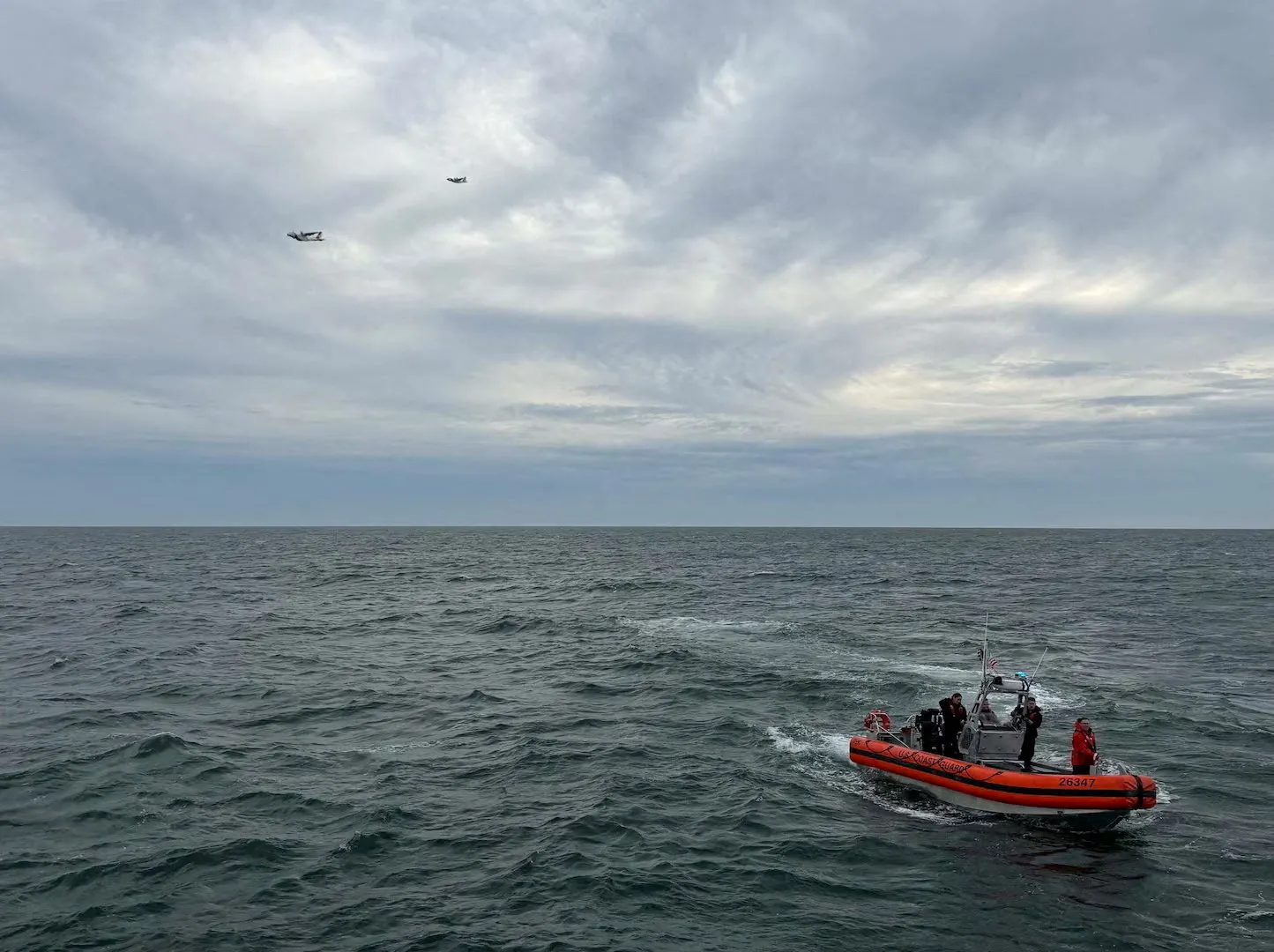
July 15 (UPI) — A search for three people missing in San Francisco Bay after their cabin cruiser sank a day earlier will end when the sun sets on Wednesday, the U.S. Coast Guard said.
Eleven boats and four aircraft have been searching hundreds of miles of water for those reported missing after a cabin cruiser capsized off the coast of Alcatraz on Tuesday afternoon.
Officials initially said 19 people were aboard the 49-foot, three-level Volare cabin cruiser and that 17 people had been rescued from the water, leaving two people unaccounted for. One person rescued was later pronounced dead. A dog on board also died. But officials have since said 20 people were on the craft and that three were missing.
Capt. Jarod Toczko, sector commander of Coast Guard Sector San Francisco, announced the deadline for the search during a 2 p.m. press conference, explaining that none of the missing had been found, despite a search of more than 950 square nautical miles and more than 1,700 miles of track line.
“We have completely saturated the search area,” he said.
“As I look at the extensive search effort we have put forth to this point, I look at the probability of success of locating a survivor within the search area given everything we’ve put forth and all the environmental conditions, my intention is to suspend active search operations at sunset this evening.”
He said the families have been notified and crews will continue to search until the sun sets.
Dean Crispen, chief of the San Francisco Fire Department, said that three survivors who were transported to the hospital have been released and were “doing okay.”
The person who died was identified Wednesday by the San Francisco Office of the Chief Medical Examiner as 79-year-old Clifford Joseph Boisa of Sutter County.
Authorities were notified at 3:37 p.m. PDT about a boat in distress in the San Francisco Bay. Witnesses had incorrectly identified steam emanating from the boat as smoke, leading initial reports to indicate a fire was on board. Civilians boaters were first to arrive on the scene and are being hailed for saving lives.
The cause of the capsizing is under investigation, but Toczko told reporters that survivors and those who responded to the scene said that the boat was hit by a wave that caused it to list heavily, lose its stability and roll over.
Some occupants were thrown into the water, Toczko said, adding that there is a “high possibility” that others had been trapped inside the vessel.
Crispen had said during a Tuesday press conference that all aboard the vessel were adults, mostly family members and close friends who were participating in “some kind of memorial service.”
San Francisco Mayor Daniel Lurie said that while he laments the tragedy, he is “incredibly proud of the all hands-on-deck effort.”
“From Marin to Oakland to San Francisco to the good Samaritans, it was truly all hands-on-deck effort to save 16 people,” he said. “And my heart goes out to the families of the victims.”
Google (GOOG) (GOOGL) is going head-to-head with Pinterest (PIN) with Google Images, a search engine that indexes images across the web, redesigned into a “place for discovery and inspiration.”
Much like Pinterest (PINS), Google Images (GOOG) (
‘Many ruin bars seem to be just tourist traps now,” says artist István, standing outside Instant-Fogas complex, which calls itself Europe’s biggest ruin pub, but looks more like a mammoth nightclub with several dancefloors.
“These bars were a hot topic 20 years ago, but many have become really commercial now,’ says István. “Ruin bars being expensive actually ruins their purpose. I’m a student, I like beers that are under 1,000 forints [about £2.50], and the big commercial ruin bars are typically much more expensive.”
Ruin bars (or romkocsmák) emerged mainly in Budapest’s historic Jewish Quarter (District VII) in the early 2000s when abandoned, prewar buildings and empty courtyards were transformed by young entrepreneurs into cheap bohemian art spaces that flaunted their dilapidation. They were typically peppered with fairy lights and mismatching secondhand furniture and artefacts.
Many have since lost their ruin bar essence and aesthetic, and simply host punters on the lash and a stream of guided pub crawls, stag and hen parties. But some proper ruin bars do still exist.
Photograph: Hemis/Alamy
Szimpla Kert (or Simple Garden) is considered the pioneer of Budapest’s ruin bars and can feel overwhelming of an evening on your first visit; it’s much calmer in the day. Gigantic, buzzing, with multiple rooms on two levels, lots of colourful lights and pulsating music, it is undeniably a bit touristy, yet not unpleasantly so.
It has become a community centre, too, with film showings, an art gallery, a farmers’ market, flea market and other regular activities.
Suitably decrepit, with graffitied walls, rough wooden benches, concrete floors, a huge disco ball and plants lining the ceilings, it certainly has character. Nights may have live music and there are DJs, with small bars serving craft beers, cocktails and more. Prices are high for a Budapest bar – about 2,000 forints (£5) for a half litre of lager. Yet with a tatty bar space on such a huge scale completely assaulting your senses, there really is nowhere else like it. 9/10
The perfect example of a ruin bar being ruined. The night I visited, the clientele was 90% male, a high proportion of them out to get drunk.
It’s the kind of mainstream sports bar you’d find anywhere, with football screens and arcade games, but also some rather dilapidated areas (perhaps as a nod to the ruin bar concept, possibly through neglect) and a tree in the middle of an open courtyard.
A £1 charge is added to each relatively expensive drink as a deposit for the ugly plastic cup it’s served in – and that I have no interest in taking away. Of course, many people don’t realise this and don’t get their deposit back, and it is a difficult process if you do: customers are typically directed to another bar with a sizeable queue to get the money returned.
Unsurprisingly, there are critical reviews of Füge Udvar online. 0/10
Photograph: Ben West
With a collection of shabby bar stools and tables inside and out, a chaotic mishmash of artworks on the walls and windows covered in stickers, Fekete Kutya (or Black Dog) certainly cultivates the ruin bar vibe.
“It’s been here since 2013 and used to be a ruin bar for local people,” says student Milan Keleti while serving me a PostřižinskéFrancin lager (£2.10). “Initially, this was a place for artists, for people that couldn’t afford expensive bars. But, as this area has become more touristy, about half the custom is now from tourists. But it still has the atmosphere, the music, the decor that is fit for ruin bars.”
Although Fekete Kutya is becoming popular with tourists, it has noticeably lower prices than the big, commercial bars. It also has live music. 8/10
While this sizeable District IX space has elements of the ruin bar formula – rooms centred on a courtyard, worn plaster walls, exposed brick, industrial chic, rustic wooden tables and a tree in situ – it has more of the vibe of an east London craft beer bar.
Indeed, it focuses on beers for discerning drinkers – Hungarian and international – with more than 20 on draught each day. Beers from the nearby Fehér Nyúl brewery are particularly popular. 7/10
Consisting of a large room with a high ceiling and a vintage cafe look, packed with artwork, graffiti, stickers, fairy lights, mannequins, toys, chandeliers and carpets scattered across the worn floorboards, this very much has the ruin bar vibe. Around two Roman-style pillars – presumably holding up the place – are lots of colourful, rickety little chairs and tables, where locals and visitors chat away, creating a laid-back atmosphere.
Originally a grand late-19th century coffee house frequented by Budapest’s intellectuals and writers, this is still a place to conduct a conversation (Csendes Létterem means “quiet restaurant” in Hungarian), something you might struggle with in some of the larger ruin bars pumping out loud music. Sometimes Csendes hosts events, such as live acoustic music and cinema nights.
A block away from Astoria or Calvin Square, you could perhaps try an Edelweiss wheat beer (half litre £5.70) or maybe a tequila (£4.45). 9/10
Photograph: Ben West
It is heavenly to walk down the steps into this little, off-the-beaten-track basement venue as a six-piece band is playing Hungarian folk songs with gusto, encircled by audience members dancing energetically – and everyone appears to be local.
The true spirit of the ruin bar is alive and well here.
Although, once again, the exact definition of a ruin bar seems to be rather elusive. “It’s not really a ruin bar – but then I suppose, come to think of it, it is a ruin bar,” says bartender Anna Horváth, serving me a gin and tonic in an old jam jar.
While ruin bars were “traditionally” located in District VII, this is very much a scaled-down version of the concept, in District VIII. Also known as Fővárosi Kulipintyó, it is suitably shabby, with a semicircular wooden slatted roof, a worn cream and brown tiled floor, antique posters, plates and, curiously, old boots on display, with beer barrels stacked up by the entrance.
“It’s like being in a second world war Anderson shelter,” says my son Jethro. Although, at 27 years of age, I’m not sure he’d really know what that would be like.
Zsír has live music most nights – which could be klezmer (instrumental Ashkenazi Jewish music),Balkan, Romanian or Latin.
“I come here every night for the live music,” says regular Gyula Márky, straight from the dancefloor. “It’s fantastic. It’s like you’re in a novel or something; it’s really, really special. Dancers, singers and musicians all together: that’s the best thing I can imagine.” 10/10
Accommodation was provided byUp Hotel Budapest, which has doubles from €92, room-only
U.S. Navy airmen prepare an MH-60S Seahawk helicopter for flight as part of recovery operations for NASA’s Orion Capsule prior to splashdown after a successful uncrewed Artemis I Moon Mission off the coast of Baja California, Mexico, on Dec. 11, 2022. A Navy aircrewman remains missing after a MH-60S Seahawk he was aboard crash landed in the Arabian Sea on Wednesday. File Pool Photo by Mario Tama/UPI | License Photo
July 5 (UPI) — The U.S. military suspended its search Sunday for a missing Naval aircrewman who went missing Wednesday following an emergency landing in the Arabian Sea.
U.S. Naval Forces Central Command announced the suspension of the search in a statement on social media after more than 102 hours.
“The efforts concluded following an extensive search by the U.S. Navy and U.S. Air Force in the U.S. Central Command area of responsibility,” U.S. Naval Forces Central Command said in a statement. “The Sailor’s name is benign withheld until at least 24 hours after next-of-kin notification is complete in accordance with Navy policy.”
The search spanned more than 14,000 square miles. The military utilized multiple helicopters and other U.S. Air Force aircraft, aircraft carriers and guided-missile to canvas the region.
The missing crewman was aboard a MH-60S Sea Hawk helicopter when it crash landed at about 3:30 a.m. EDT on Wednesday. There were four people in the helicopter. The other three crewmembers were recovered and listed in stable condition.
The helicopter was on a routine patrol when it went down.
U.S. officials said the helicopter’s crash landing was not the result of hostile fire.
A U.S. Navy MH-60 helicopter, like the one seen here, made a water landing in the Arabian Sea on Wednesday. A search has been launched for one aircrewman aboard the helicopter was has since reported missing. File Photo by Keizo Mori/UPI | License Photo
July 2 (UPI) — A search is ongoing for an aircrewman who went missing after the Navy helicopter they were aboard performed an emergency landing in the Arabian Sea, the U.S. military said.
U.S. Naval Forces Central Command said in a brief statement that the MH-60S Sea Hawk helicopter with four people on board made the emergency landing at 3:30 a.m. EDT Wednesday.
Three of the helicopter’s crew were recovered and were listed in stable condition, while the fourth member remained missing.
U.S. Navy assets in the region are searching for the missing aircrewman, it said.
Little information about the incident has been made public. U.S. Naval Forces Central Command said there was no indication that hostile activity prompted the emergency landing.
“The cause of the incident is under investigation,” it said.
The helicopter was assigned to the aircraft carrier USS George H.W. Bush, which departed Norfolk, Va., on March 31, according to U.S. Fleet Forces Command. The aircraft carrier has been in the Arabian Sea since at least May 3, according to a statement from U.S. Central Command, which said it was deployed to the U.S. 5th Fleet area of operations to support maritime security and stability in the Middle East.
The United States has been at war with Iran since Feb. 28. The two sides are negotiating an end to the war amid a cease-fire.
Rescue teams in Greece are combing through the rubble for survivors after a four-story apartment building in Athens collapsed on Tuesday. Four people have since been rescued from beneath the debris. Authorities are still investigating the cause of the collapse.
Specially-trained search dogs are used to sniff out where potential victims may be located, says Ivory – who has been deployed to relief efforts following earthquakes in Haiti, Japan and Nepal and is currently helping to coordinate efforts in Venezuela from the UK.
They can identify a person’s smell even when they are buried as far as 10m (32.8ft) under rubble – and will let out a “really strong and sustained bark” when they do, alerting rescuers to a potential survivor.
The dogs are trained using toys imprinted with a human’s smell, Ivory explains. Then, when they actually locate a human on the ground, they are handed the toy as a reward by their handler.
Search dogs can also be very useful during the technical part of rescue operations, says Sakthy Selvakumaran of the UK-based charity Search and Rescue Assistance in Disasters (SARAID), which deploys personnel to large-scale disasters worldwide.
They can find hard-to-navigate paths through rubble to follow a scent or identify different access points to the victim, Selvakumaran tells the BBC.
I first went to a bouchonas a 20-year-old Erasmus student. I’d accidentally ended up spending a semester of my year abroad in the Auvergne countryside, which meant every weekend I’d thumb a ride to the nearest big city – Lyon. I didn’t know much about Lyon, except that it was famous for its food – in particular the hearty fare served up at these traditional restaurants with their red gingham tablecloths and chalkboard menus. So when I found myself eating stringy, overpriced beef muscle that cost more than my night at a hostel, I wondered what the hype was about.
But after nearly five years living in the city, I’ve now learned how to avoid the tourist traps (which largely line Vieux Lyon between souvenir shops selling fridge magnets and sweet shops). Historically, most bouchonsweren’t in Lyon’s old town anyway, writes Yves Rouèche in Histoire(s) De La Gastronomie Lyonnaise, but in the neighbourhoods of Vaise, Croix-Rousse and La Guillotière, the gateways to the city in the Renaissance period where merchants and travellers stopped for the night.
Elsewhere in France, bouchontranslates as “traffic jam”, “wine cork”, or (if you ever need to converse with a medieval peasant) a “wisp of straw”. I’d assumed the name came from the wine cork, as Beaujolais and Rhône Valley wines are served liberally in these establishments,but, as one bouchonowner tells me, it’s more likely to come from the straw: bunches of straw were often used to mark the doors of auberges (inns) that were open and serving food. Shared tables, checked tablecloths and pots de vinare all hallmarks of a bouchon, but the real defining feature is the quantity of meat served, particularly offal – enough to surprise even devout carnivores.
The restaurantsreally took off in the 19th century, when they were largely run by women, known as MèresLyonnaises (Lyonnaise mothers). They dished up andouillette(tripe sausage), rognon de veau (calf’s kidneys) and cervelle de canut(silk worker’s brain, actually a soft cheese infused with shallots, garlic and herbs) to silk merchants and weavers. The Michelin guide discovered one of these “mothers” in 1933, and awarded Eugénie Brazier six Michelin stars, three for each of her restaurants. For the 65 years that followed, she was the most decorated chef in history, and her success put Lyon and its bouchonsfirmly on the map.
I drank wine at breakfast and consumed a veritable slaughterhouse worth of offcuts to find the best.
I was excited about this spot, because it has won awards for its quenelles. These sausage-shaped egg, flour and butter dumplings remind me of toad-in-the-hole batter, and in a bouchon, they’re usually stuffed with pike and covered in sauce aux écrevisses (crayfish sauce).
The restaurant is busy with local diners, and busy in decor. The red and white curtains are patterned with chickens, and the chandeliers and lamps on the bar are frilly and ornate. There’s already rosette(salami) and cervelle de canut on the table.
My quenelle is almost as large as a loaf of bread , but I finish up the lot, enjoying the contrast between the crisp, oven-browned top of the quenelle and the doughier part that’s been saturated in sauce. It’s buttery and tastes like marmite, and reminds me of British comfort food staples such as yorkshire puddings and dumplings. It’s very good, but, just like getting excited for several months about going to watch Avatar, I’d set my expectations too high. Quenelles with crayfish sauce €24. Bouchon rating: 7/10
I arrive at 9am – and feel as though I’ve got there late. All of the other tables are full, the carafes of wine sitting on them half empty. La Meunière upholds the tradition of mâchon, Lyon’s answer to the bottomless brunch, only with hearty quantities of meat washed down with red wine. Originally, this would have served as lunch for hungry canuts (silk weavers), but now it’s popular with office workers and anyone else looking for an excuse for a midweek breakfast booze.
There’s no choice of menu (“salad” is a loose term for the starter). There’s not a vegetable in sight, rather tongue, ivory-coloured slices of cold pig’s trotters, lentils and pâté. So much cold meat early in the morning turns my stomach a little, but other than the pig’s trotters – possibly a mental block rather than a gustatory one – it’s all pretty good. The main course goes down easier: new potatoes roasted in their skins, pork that falls apart when I dig my fork into it, slices of sausage and bacon that’s more fat than meat, all in a rich gravy and garnished with parsley. I don’t manage lunch that day. Mâchon:€34. Bouchon rating: 8/10
A local I speak to outside says it’s “excellent”, which abates my fears over having selected a bouchoncalled Jura, surely a slanderous move when the Jura region is around 90 miles from Lyon. “It’s historic,” says the owner, as he shows me its magnificent wine cellar, filled with enormous, dusty bottles of Chartreuse (a herbal liqueur) as long as my torso. “A wine merchant from Jura was the first person to set up a restaurant here.”
In a moment of bravery – and in spite of the smell – I try my friend’s andouillette. It takes liberal quantities of the accompanying mustard sauce to choke down the mouthful. My own pistachio-infused sausage with new potatoes is way more palatable, although the presentation reminds me of my grandparents’ “meat and potatoes” approach to cooking. The standout is the pâté en croûte, like a giant pork pie with a jelly made from port, cognac and cherry liqueur.
For dessert I order an iced souffle infused with Chartreuse. It’s wonderfully rich, but I can’t really tell the difference between an iced souffle and a very decadent ice-cream. Pâté en croûte: €17.50. Bouchon rating: 7.5/10
This is the only old town bouchon I try, and there are far more tourists in here than any of the others. Unusually, there’s a vegetarian option; theravioles, miniature ravioli in a vermouth cream sauce, are baked and topped with copious amounts of melted cheese.
Looking forward to a pig trotter-free meal, I order it, but am promptly told off by the owner. It’s only there so groups don’t have to leave the veggie at home, he says. So I double up, and order an oxtail macaroni gratin with foie gras, which is the house speciality – and infinitely more flavourful. I follow it up with a sticky pink praline tart with praline ice-cream that is so sweet it almost makes my teeth hurt. Oxtail macaroni gratin: €30. Bouchon rating: 7/10
This pint-sized bouchonis owned and run by Fatima Zerrouki (in the kitchen) and Paola de Almeida Rocha (front of house), the fourth generation of women to run it. There is a short set menu, which helps with my indecisiveness, and I start with chicken liver pâté, sprinkled with hazelnuts and gherkins to add a little crunch.
Next up is poulet au vinaigre, the largest chicken leg I’ve ever seen, served in a sauté pan. The sauce is pure indulgence, made with vinegar, tomato pulp, heaps of onions and garlic, white wine and cream – and after eating it I finally understand why Michelin inspectors put Lyon’s bouchonson a pedestal a century ago. If I had the choice between this poulet auvinaigreand my mum’s Sunday roast, I’d choose the former. Sorry mum. Two-course set menu: €30. Bouchon rating: 9/10
Families are sharing details about their loved ones online as more than 50,000 people remain missing after two devastating earthquakes hit Venezuela on Wednesday night. Rescue teams and local residents are still digging through the rubble on Friday, hoping to find survivors.
Mexican journalist Roxana Guzman’s disappearance for more than two weeks has renewed concerns over escalating violence against journalists in Mexico, where attacks on the press continue with near-total impunity.
Forty-eight days, 16 hours, 57 minutes and 12 seconds after a virus transforms humanity into a blissful symbiotic horde, one of its survivors, Carol (Rhea Seehorn), treats a rooftop as a personal driving range — the golf balls shattering a neighboring building’s windows. “If you’re alone for 40 days, you’re going to go a bit crazy and be lonely,” says “Pluribus” cinematographer Paul Donachie of the series’ aesthetic, which finds surreal beauty in bland desert urbanism emptied of people. “We searched Albuquerque to find the right kind of rooftop and building to frame her in light, but with darkness around her,” he says. “We’re putting her in this box before revealing what she’s aiming at.” Along with a looser framing, shadow and contrast highlight loneliness and emotional ambiguity. As another survivor (Carlos-Manuel Vesga) makes the long journey in search of Carol, “what was interesting about this particular episode was there was no dialogue and we’re telling two little stories of what’s going on emotionally with each person,” Donachie notes. “She is trying to enjoy it and take her mind off it. But I think there’s frustration not knowing what the hell is going on in the world.”
While it might be true that the cases are progressing, families of the missing argue they are moving at a snail’s pace.
Since early December, Fault Lines has spent time with families who are pushing for accountability and pleading with the government to learn what happened to their loved ones.
In some cases, they have spent years without receiving any direct response.
“It gets harder every time my nephew asks when his father will come home and I don’t have any answers,” said Rosario Villon, whose brother, Jonathan Villon, has been missing for almost a year and a half.
The 31-year-old father of three was last seen on December 9, 2024, when he left to pick up groceries in his hometown of Guayaquil.
Addressing a vigil for Jonathan last December, Rosario explained the toll his disappearance has taken on her family.
“Seeing my mother cry for her son, not knowing what to do next to bring him home — it isn’t easy,” she said.
Jonathan Villon, who disappeared in the custody of Ecuadorian soldiers, leaves behind a partner and three children, pictured here [Fault Lines/Al Jazeera]
Fault Lines has reviewed footage of the day Jonathan was detained. Security cameras show soldiers patrolling Jonathan’s neighbourhood, Nueva Prosperina.
A neighbour’s mobile phone video also captures the moments after Jonathan was forced into the truck’s bed, under a wooden bench. The truck then drives off, and he has not been seen since.
The family recorded the licence plate numbers of the municipal vehicle the soldiers were using, but the military has refused to respond to requests about Jonathan’s case.
“We have the evidence, we have videos, we have the licence plates of the truck, and they won’t give us a concrete and exact answer. What happened to my husband?” asked Jonathan’s partner, Yadira Bohorquez.
Lawyers representing the family say the military simply declared that it had no operations in that area on that date, despite the video evidence.
“The case of Jonathan Villon is completely paralysed by the refusal of the Ministry of Defence to cooperate in handing over information that the Prosecutor’s Office has already requested,” said Fernando Bastias, a lawyer with CDH Guayaquil, a human rights nonprofit representing the family.