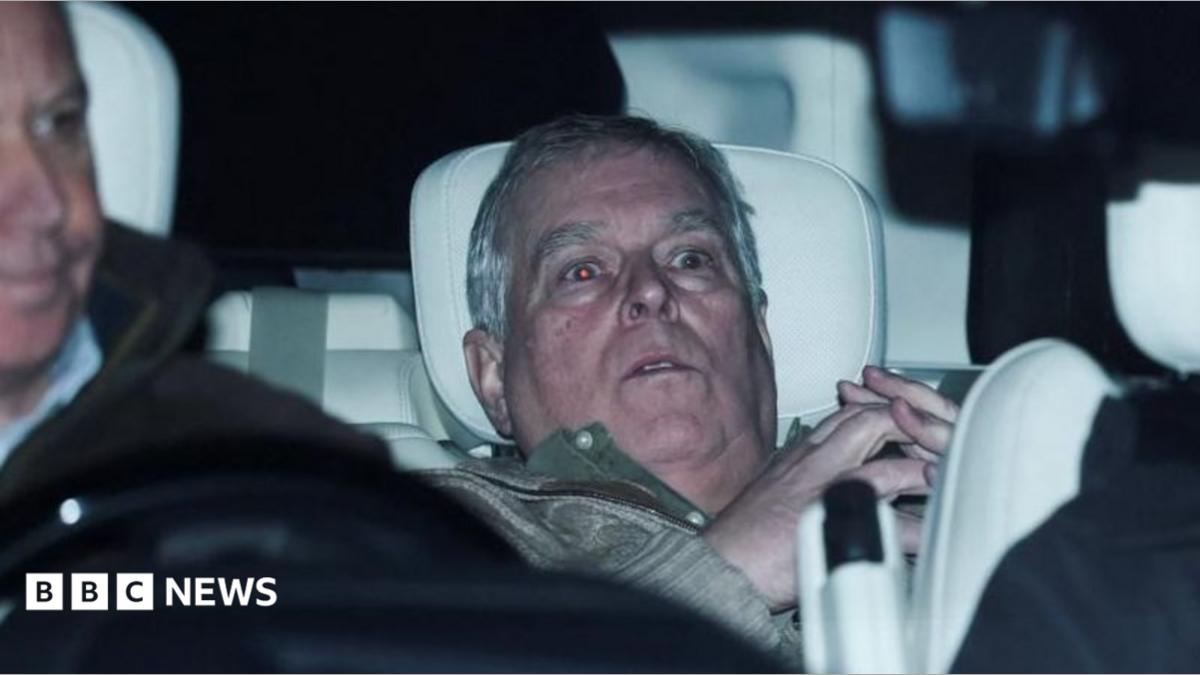
The next stage in this legal dispute will be a behind-closed-doors hearing over whether the police can still retain material seized from Mountbatten-Windsor’s homes under alternative powers designed for situations like this.
The error that has led to Thames Valley Police accepting the search warrants were unlawful relates to the particular power the judge permitted the force to use when its officers raided the properties.
Strict legal safeguards on searches bar the police from automatically seizing sensitive material without thinking through in advance the need to take it.
Examples of that material include advice from a suspect’s lawyer or material which does not really belong to them, such as copies of confidential work-related papers from an employer.
In practice, if the police find such material during a search, they should return it rather than use it in their investigation.
The category of search warrant that was granted by the court in this instance did not take into account the possibility of such protected material being seized.
However, the law says police can in fact seize that kind of material – or potentially retain it in the event of an error – providing they pass some extra tests.
Thames Valley Police must now convince a judge that the material is likely to be of “substantial value” to their investigation into Mountbatten-Windsor and, ultimately, potential evidence to present to a court.
So while the force has conceded the search warrant was unlawful, a judge will have to decide whether this alternative search power, with its extra safeguards, justifies them keeping and using the material after all.
Rescuers halt operation off the coast with no survivors found, following a Black Sea attack that also damaged a second vessel.
Published On 7 Oct 20267 Oct 2026
Bulgarian authorities have ended search operations after confirming no survivors were found following a drone strike that sank a ship off the country’s coast.
“There is no trace of the sailors,” Rumen Nikolov, the head of the country’s Maritime Search and Rescue Coordination Centre, told reporters on Wednesday.
The search stopped late on Tuesday and would not continue, he added.
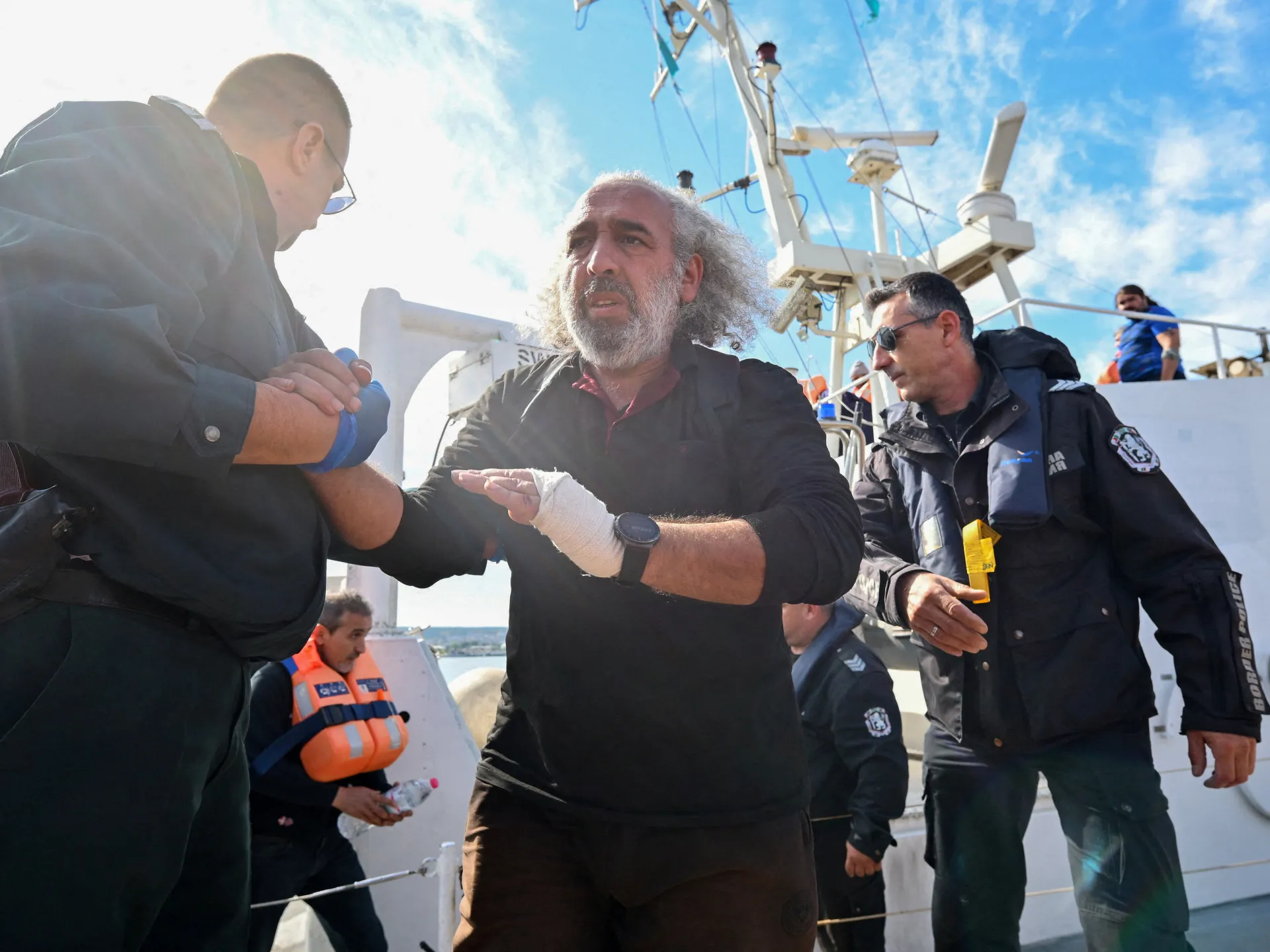
Eighteen Turkish and Indian crew members were rescued from the ship that caught fire, but the crew members from the vessel that sank remain missing.
Authorities have not said how many people are missing, but according to the Maritime.bg specialised website, 10 people were on board the ship.
Nikolov said the incident occurred in a so-called “responsible search and rescue zone” and not in the country’s territorial waters, which extend to 12 nautical miles off the coast.
“What was found from the sunken ship was one overturned boat, three life rafts and debris from the ship’s equipment that was floating on the surface of the sea,” he said.
Asked whether any debris from the drones had been recovered, Nikolov said: “I have no information about drone debris.”
Prime Minister Rumen Radev has described the attack as “absolutely unacceptable”.
European Union chief Ursula von der Leyen has also condemned the incident.
Bulgarian authorities have said they are not yet able to determine the origin of the drones.
A distress beacon signal from the ship that sank was received at 2:54am on Tuesday (23:54 GMT on Monday), while the distress signal from the other ship was received at 3:23am (00:23 GMT), Nikolov said.
Both commercial ships were managed by Turkiye-based companies, according to the Equasis merchant shipping database.
They were hit about 80 nautical miles (150km) east of the Bulgarian coastal town of Byala.
The strikes came a day after another ship caught fire and sank off the Romanian coast on Monday, killing two people. Ukraine blamed Russia for the drone attack.
I arrived in Verona, I admit, without a particularly clear idea of what aperitivo meant. In Italy, the ritual – broadly, a drink and something small to eat before a meal – speaks a different dialect in every city.
Milan has turned it into a polished after-work institution. In Venice, it is more itinerant: an ombra (a small glass of wine) along with a cicchetto (a bite-size snack) and then on to the next bacaro (one of the city’s traditional wine bars). Verona follows another logic.
Veronese wine writer Angelo Peretti has described the osteria (the traditional tavern at the heart of the city’s drinking culture) as a Verona institution: somewhere its social life takes shape over a gòto (the local word for a glass of wine), usually with something small to eat at the counter, often while standing.
I thought I understood. Then, at about 9.30am one morning, while drinking coffee opposite the Teatro Filarmonico, I noticed that aperitivo had already begun without me. A woman ordered a bianchetto, a small glass of white wine. A couple, already defeated by the heat, asked for two spritzes. Two friends shared a bottle of sparkling wine.
Nobody had announced that it was “aperitivo time”. More strikingly, nobody seemed to find any of this unusual.
That was when my search really began. I decided not to look for one type of bar, or even one type of drink. What mattered was whether I would actually stop there for an aperitivo – alone, with friends or simply while waiting for dinner.
Photograph: Gabriele Pasca
At Monte Baldo, which opened in 1909, the counter was still being set up, with a man I took to be the owner assembling the day’s tartine (small open sandwiches with various toppings). A very young waitress offered to help me choose a wine. There were more than 30 wines by the glass, mostly priced between €5.50 and €11. I chose an alta langa, a traditional-method sparkling wine from Piedmont, partly because the bottle was still unopened. They opened it without hesitation.
With lunch ahead, I ordered two tartine: baccalà mantecato (Veneto’s creamy stockfish spread whipped with olive oil) and boiled egg with anchovy. Both were excellent: fresh bread, generous toppings, clearly just made. The tartine cost €4.60; the wine €7.
As I was leaving, a man walked in carrying a motorcycle helmet. Before he had time to order came the question: “Your usual?” However many tourists pass through Verona, somebody still has a usual. 8.5/10
Photograph: Gabriele Pasca
This is one of Verona’s great wine institutions. I arrived before 7pm, as the tartine counter was being filled. The mood was formal: staff in crisp uniforms and a queue of slightly bewildered tourists. With one person serving, it moved slowly as he explained the wines, €3 tartine and where to eat them – at the bar, at small indoor tables, or outside.
I chose an €8 glass of franciacorta, Lombardy’s traditional-method sparkling wine, with two tartine: pancetta coppata (cured pork neck wrapped in pancetta) and gorgonzola cream. Both were generously topped, though the bread, while perfectly decent, wasn’t anything to write home about. Total: €14.
As I drank, nearby tables were laid for dinner and reserved signs appeared. I asked whether I should move. “Absolutely not.” Those few aperitivo tables, I was told, stay for drinkers unless the place is exceptionally busy. 6.5/10
Photograph: Gabriele Pasca
A sommelier I trust at one of Verona’s grander restaurants sent me to Tor-Tor, perhaps revealing more interest in wine than in the finer points of aperitivo. Still, it seemed worth a punt. Tucked down a side street behind the Arena, every outdoor table was taken; inside, a regular occupied the counter, deep in wine talk with the owners.
The blackboard and a small wooden menu board revealed a serious selection of natural wines, with plenty from Veneto. I went for a €7 orange wine – white grapes fermented in their skins – which came with popcorn, then added two €2 polpette (small savoury balls, one meat, one aubergine) plus €1.50 olives dressed with oil and chilli.
The polpette did the job nicely; the wine was excellent and expertly recommended. The crowd was overwhelmingly local, and the regular at the counter was still talking wine when I left. 8/10
Just across the Adige river in Veronetta, on the edge of Verona’s main tourist circuit, Ai Preti feels like a neighbourhood local. It is large, with dark wood throughout, and has the sort of retro look that comes from never having tried to look retro.
Two counters divide the food between cold tartine and hot snacks. I chose one with baccalà mantecato, another with caramelised onions, and a horse meat polpetta. Tartine cost €2, the polpetta slightly less; with a €4 glass of wine, the whole aperitivo came in under €10.
By 7.45pm, both displays were almost bare, although my polpetta seemed freshly cooked. The crowd looked entirely local, paying far more attention to one another than to the labels. Magazines lay around for anyone drinking alone. Here, aperitivo felt like the working day quietly unwinding. 7/10
Photograph: Gabriele Pasca
I was early for dinner. The restaurant next door was still closed and I had half an hour to kill. Filling the gap before dinner is, after all, the primary function of the aperitivo.
Velvet occupies part of a 15th-century palazzo. There is a handsome counter with stools, though I chose a small table. Three nearby tables were already occupied by a more dressed-up crowd than I had encountered in Veronetta, drinking and talking without much hurry.
There was plenty of wine on the list, but I went for a €12 negroni. It arrived with fried plantain crisps, cashews and little savoury pastries with tomato – at no extra cost. A separate food menu offers more substantial bites, including edamame falafel and chicken wings.
By the time I’d finished my drink, the restaurant next door was open. Half an hour neatly accounted for. 8/10
Photograph: Gabriele Pasca
Morandin was the only place I visited twice. My first visit was almost accidental – a glass of wine became dinner – so I returned a week later, just before 9pm, to make sure I hadn’t simply got lucky. On paper, its long afternoon closure, from 2.30 to 7pm, had been my only doubt.
It was another punishingly hot evening in Veronetta. Every outside table was taken and the fans inside did little more than move the heat around. I was wearing absurd red-and-blue striped trousers. A man I took to be one of the owners, there as a customer, noticed our near-matching trousers and came over for a high five. “They say we look like we’re in pyjamas. They don’t understand fashion.”
Wines run from €2.50 to €6 and, even at that relatively late hour, the cicchetti display was the fullest I had seen: battered vegetables, frittata, prawn skewers, €1.30 meatballs with tastasal (seasoned pork mince) and €1.80 tartine. I chose a durello, the crisp local sparkling wine from the Lessini hills, a meatball and a tuna-and-egg tartina.
The waiters were run off their feet; regulars greeted one another and foreign voices were scarce. Fifteen minutes later, I asked about dinner. “Full.” Ten minutes on, a table appeared. Aperitivo had not replaced dinner; it had made staying for it irresistible. 10/10
Debris found off Nantucket island after the air ambulance disappeared while flying from Bermuda to Boston.
Published On 5 Oct 20265 Oct 2026
The United States coastguard has suspended its search for six people on board a medical transport jet that crashed while flying from Bermuda to Boston.
“Suspending a search is not an easy decision,” Rear Admiral Matthew Lake, commander of the coastguard’s Northeast District, said in a statement on Sunday.
Recommended Stories
list of 2 itemsend of list
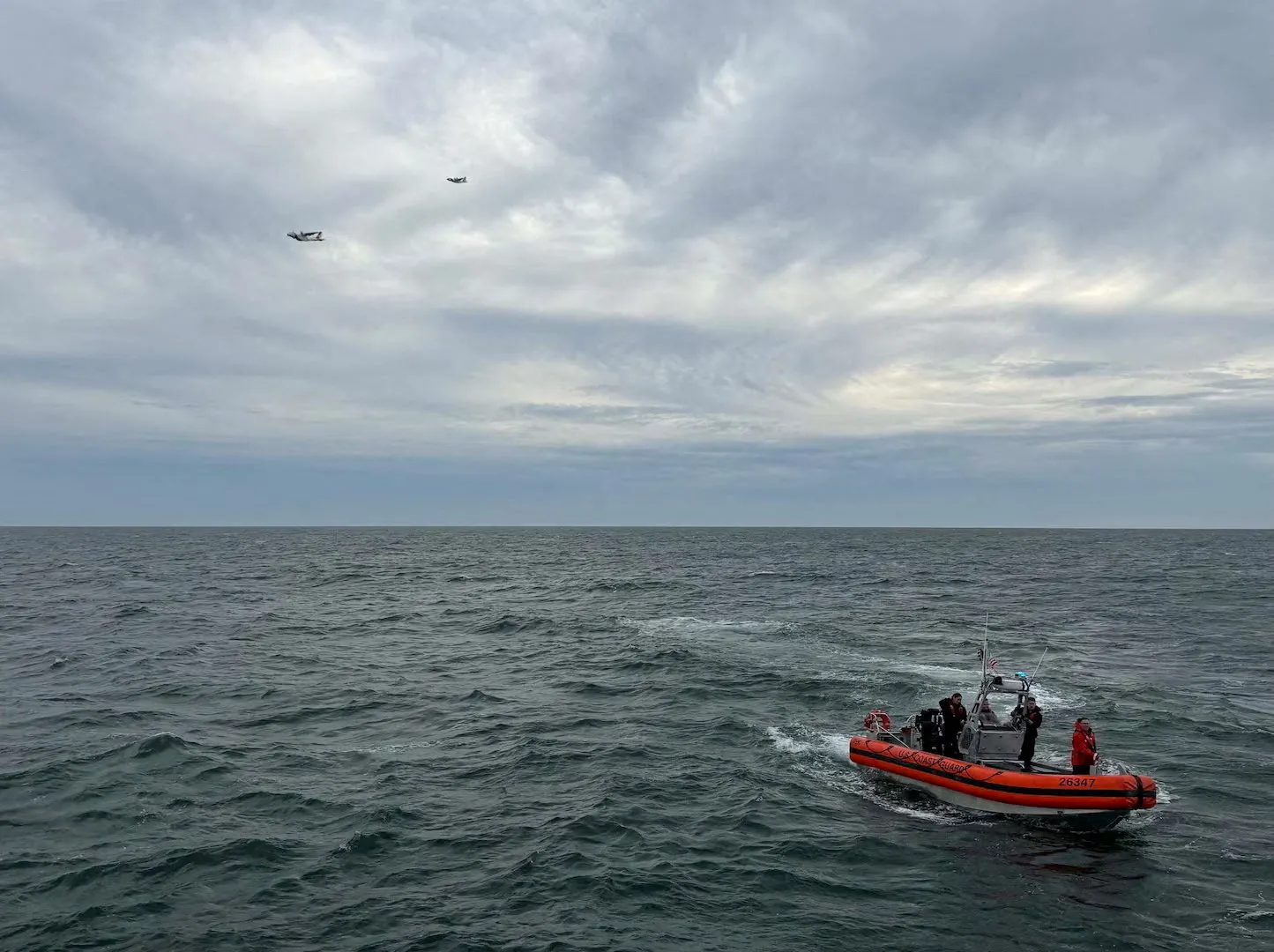
The search was called off after teams spent about 66 hours covering 4,445 miles (7,150km) by air and sea and confirmed that debris found off the shore of Massachusetts’s Nantucket Island came from the aircraft.
The Gulfstream G100 carried two pilots, two medical staff, a patient and a relative, Clarence Togeretz, director of flight operations at Canada-based Latitude Air Ambulance, told Canada’s public broadcaster CBC.
The four crew members were Canadian, and the two passengers were Bermudian, according to authorities.
In a statement on Sunday, Latitude Air Ambulance said, “Given the information shared by authorities and the conclusion of the search-and-rescue phase, we must now face the heartbreaking reality that the four members of our Latitude team, our patient and the patient’s family escort, who were aboard Heartbeat 104, are presumed to have died.”
Attention has turned to what happened in the jet’s final minutes, when flight-tracking data showed a steep descent and air traffic controllers struggled to re-establish contact.
Authorities have not determined what caused the aircraft to come down.
The aircraft had flown to Bermuda to collect the patient and was heading to Boston Logan International airport.
The US Federal Aviation Administration alerted the coastguard at about 2am on Saturday (06:00 GMT) after contact with the jet was lost.
Lake said at a Sunday news conference that the water around the debris was about 80 to 90 feet (24-27 metres) deep.
He offered condolences to the families of those on board and thanked the agencies involved in the operation.
Latitude Air Ambulance specialises in medical evacuation and repatriation flights, carrying patients home from other countries.
The company says its missions are normally staffed by two pilots and medical personnel.
The body of a newborn baby has been found along a shoreline in north Wales.
North Wales Police have appealed for the mother who maybe “extremely vulnerable” to come forward.
A member of the public found the remains on the Menai Strait shoreline near Siliwen Road on Sunday shortly before 17:00 BST.
During a press conference, Director of Midwifery and Women’s Services for Betsi Cadwaladr health board Fiona Giraud has appealed directly to the mother to come forward.
“I want you to know that our immediate concern is for your health, safety and wellbeing. We recognise that you may be feeling frightened, overwhelmed or unsure about what to do next,” she said.
Giraud said they “have real concerns for the health of the mother”.
“We recognise that she is likely to be extremely vulnerable. She may be fearful of seeking the support she needs through fear of identifying herself.
Speaking directly to the mother, she added: “You may feel you have nowhere to turn, or that you cannot speak to anyone about what has happened. Please do not feel that you have to face this alone.
“We don’t yet know all the circumstances surrounding your baby’s death but what is important right now is that we find you, make sure you are safe, and ensure you receive any medical attention and support you may need.
“I am asking you personally, to please get in touch with us. You can speak to a healthcare professional, approach a police officer or attend a police station.
“If you are watching or listening to this appeal, please know that we want to hear from you. Please take the first step and contact us. There are people to help you.”
This breaking news story is being updated and more details will be published shortly. Please refresh the page for the fullest version.
There’s a saying in Cologne, repeated with the mild smugness of people who know they’re right: kölsch is the only culture you can drink. It sounds like a line lifted straight from the tourist board’s brochure. Then you spend a day working your way around the city’s traditional brewhouses and realise it’s a statement of fact.
Since 1997, kölsch has held a protected geographical indication within the EU, guaranteeing that any beer bearing the name is brewed within 50km of the city and made strictly to the Kölsch-Konvention. That agreement, signed in 1986, defined the style as “a light, highly attenuated, hop-accentuated, clear, top-fermenting ‘vollbier’ [full-beer]”, restricting production exclusively to the local area. It is, in effect, the champagne of pale ales: locally adored and tied to a city that has always insisted on doing things its own way.
The delivery is as ritualised as the brewing itself. You sit. A köbes – the traditionally deadpan, blue-aproned brewhouse waiter – arrives carrying a kranz (a circular tray) holding a ring of stangen, narrow 200ml glasses designed to keep the beer cold and effervescent long enough for you to drain one before the next takes its place. You drink. He marks a tally on your beer mat with a stub of pencil. You never order a second; you never need to. The conveyor belt only stops when you place your beer mat on top of your glass.
Ten hours, seven brewhouses and an inadvisable number of tally marks later, I had formed some very firm opinions about Cologne’s legendary liquid culture.
Photograph: Scott Antcliffe
The twin spires of Cologne cathedral are visible from the doorway of this brewhouse. So, unfortunately, is the gift shop and a tour group from Ohio. Früh am Dom, arguably the most internationally recognisable kölsch brand, is housed in a sprawling warren of vaulted dining rooms, cellars and long oak bars. It is enormous and boisterous, yet the kölsch, poured at speed to a rotating cast of daytrippers, lacks the crisp clarity found elsewhere. Being on the cathedral’s doorstep makes this prime real estate, but the footfall turns the room into something closer to a transit lounge, where most visitors drop in for a quick photo with their stange before rushing off. 4.5/10, €2.50
Photograph: Scott Antcliffe
Founded in 1912 and heavily renovated since, Sion merges a contemporary interior with old-world charm. The result is the slickest room on this list: warm mood lighting, clean lines and a menu that reaches beyond the usual brewhouse staples of fried pork and potatoes. The kölsch itself is technically flawless and refreshing, though it lacks the rustic bite of the city’s smaller producers. It’s a fine spot for a proper sit-down dinner rather than a session – and even the köbes here shows genuine warmth, a demeanour that feels either refreshing or faintly suspicious depending on how strictly you hold to Rhenish brusqueness. 6/10,€2.60
Photograph: Mauritius Images /Alamy
Beyond the tourist centre, in the lively and historic Friesenviertel district, is the hallowed Päffgen. Operating on Friesenstraße since 1883, this is one of the last hausbrauereien(brew pubs) that refuses to bottle for supermarket shelves; if you want Päffgen, you come here or haul a wooden keg home yourself. The beer is tapped straight from wooden barrels on the counter, giving a pour with a floral, grassy hop aroma, a hint of stone fruit and a crisp bitter finish. The room feels untouched by time – look out for the old wooden beichtstuhl (“confessional”), the elevated booth where the innkeeper once oversaw the floor and counted the day’s takings. One of the köbesse, sliding a fresh stange across the counter without breaking stride, put it more bluntly than any brochure could: “Kölsch is not a drink, it is a religion. And this is the church.” With its gruff, lightning-fast staff and a leafy beer garden out the back, Päffgen is the gold standard of kölsch culture. 9.5/10, €2.60
Photograph: Alan Kolnik/Alamy
Tucked into the historic old town, Peters is what the cathedral-adjacent halls wish they were. It strikes the finest balance in central Cologne, fiercely popular with local people while remaining welcoming to passing travellers. The interior is gorgeous – stained-glass skylights throwing amber light across scrubbed, decades-old wooden tables, dark wainscoting framing the chatter of the room. The kölsch is beautifully balanced: smooth, clean and poured properly cold. We might have come at a bad time, though, as it wasn’t particularly busy and lacked atmosphere. 7/10, €2.50
Sitting on the edge of the historic Heumarkt, Malzmühle is the second-oldest brewery in Cologne, operating on this spot since 1858. Destroyed almost entirely in the second world war, only the stone portal survived; you now pass through that same archway into a sprawling hall of rustic brickwork and heavy oak benches. Malzmühle brews Mühlen Kölsch, a pour favoured by the former US president Bill Clinton, who declared “Ich bin ein Kölsch” on a visit in 1999. It is slightly darker and maltier than its peers, with a gentle honey note against a solid bitter backbone. The atmosphere is unapologetically noisy and authentic – a meeting ground where workers in hi-vis vests share benches with executives in suits. We spoke to one of the köbesse, Carl, who told us he’d worked here for 38 years: “This is the place to be. These walls have seen so much and heard so many conversations. I wouldn’t work anywhere else.” 8.5/10, €2.50
Photograph: Scott Antcliffe
Gaffel is a heavy hitter among local people, distributed widely across the city’s bars and football stadiums. Its flagship hall, opposite the central station, is handsome and impeccably run, with high ceilings and sweeping arches giving it real metropolitan energy. The kölsch is consistently good – bright, sharply carbonated and noticeably hop-forward, exactly as the Konvention prescribes. Knowing this same beer is sold at the gate in Cologne Bonn airport slightly undercuts the local romance, though; it’s reliable in a high-volume, commercial way. The kitchen redeems it somewhat with a stellar himmel un ääd – crispy black pudding with smooth mash and stewed apples – comfort food good enough to justify the visit alone. 6.5/10, €2.50
Photograph: Scott Antcliffe
Down a cobbled alley in the old town, Sünner im Walfisch is pure historical theatre. Housed in a striking 17th-century step-gabled building, dismantled and rebuilt brick by brick on its current site, it serves as the old town outpost for Sünner, Cologne’s oldest operating kölsch brewery. Inside, narrow timber-framed rooms and low ceilings transport you back to medieval Rhineland. The beer is fantastic – crisp and dry with a peppery hop finish that makes it dangerously easy to drink – and it’s quieter and more intimate than the echoing halls near the station, its köbesse still delivering drinks with a wink of humour. A favourite for decor and character, if not quite for atmosphere. 8/10, €2.50
Scott Antcliffe’stravel to Cologne was provided byViking as part of its 8-dayRhine Getaway, from £1,695
WASHINGTON — The Supreme Court on Friday upheld President Trump’s expanded use of government data to spot non-citizens who are registered to vote.
The justices granted an emergency appeal from Trump’s lawyers and set aside a judge’s order that blocked use of this data on the grounds it was error-prone, particularly for naturalized citizens.
Justices Ketanji Brown Jackson, Sonia Sotomayor and Elena Kagan dissented.
The decision will aid states that seek to scrub their voter rolls and remove those who are not citizens.
Several Republican-led states including Texas and Florida supported the administration’s appeal.
The use of the new database “allowed Texas to more efficiently, promptly, and economically ensure the accuracy of its voter rolls,” the state said. It was “able to run its entire list of 18 million voters” through the expanded system of checks “in bulk and for no cost.”
It’s not clear the decision will have much impact in California and other Democratic-led states. It is likely to have a limited impact in the month ahead because the law forbids states from purging their voter rolls in the 90 days prior to an election.
The court, in an unsigned opinion, said the law supported use of the data.
“The federal Government has an obligation to respond to requests from state and local election officials seeking to verify the citizenship of voters,” the court said. “The order below prevents the federal government from using the program it believes is best suited to the task.”
The administration said the Department of Homeland Security can respond to more than 1 million requests per day to check if a person appears to be a citizen or not based on Social Security records and other data files.
If not, state or county election officials may require these suspect voters to furnish proof of their citizenship.
However, states and local election boards are not required to conduct these searches. The administration also said its data reports are not final proof of citizenship.
Upholding these data searches “would not require states, candidates, parties, or voters to do anything,” Solicitor Gen. D. John Sauer told the court. “It would simply make available to states additional information. … States that wish to use that information in the course of ensuring that only eligible citizens cast ballots this November should be free to do so.”
In dissent, Jackson said the court’s order creates the “risk that states might cancel the voter registrations of at least some recently naturalized citizens or force such persons to provide proof of citizenship before voting.”
The new system of voter checks is based on the 40-year-old Systematic Alien Verification for Entitlements, or SAVE, that was created by Congress. Then, the goal was to check if applicants were entitled to receive federal benefits.
Last year, Trump issued an executive order directing Homeland Security to expand the reach of SAVE to provide states “access to appropriate systems for verifying the citizenship or immigration status of individuals registering to vote or who are already registered to vote.”
It is a federal crime for non-citizens to register and vote.
Trump has long maintained that non-citizens are voting, but he has had little evidence to support that claim.
Voting rights advocates sued, contending the new “mass verification” system was not authorized by Congress and relied on data that is protected as private under the law.
In June, U.S. District Judge Sparkle Sooknanan, a Biden appointee, agreed and blocked use of the expanded searches. The administration has “trampled on the privacy rights of American citizens in a manner that threatens the sacred right to vote,” she said.
On Sept. 4, the U.S. court of appeals by a 2-1 vote refused to overturn her ruling, prompting the administration’s fast-track appeal.
The voting rights advocates, led by the League of Women Voters, had urged the court to stand aside.
“The government has recklessly created an error-laden master citizenship database that endangers millions of Americans’ privacy and voting rights,” they said.
The data searches are flawed, they argued, because they “only reflect a person’s citizenship status when they applied for a Social Security number. That status does not automatically update if the person later naturalizes.”
Texas admitted that the mass checks yield “some inaccurate information.” It said 2,724 people were cited as “potential non-citizens” among its 18 million registered voters.
In response, county officials had to check further to confirm the citizenship of these voters, the state said.
Last week, the Supreme Court dealt Trump a defeat when it blocked use of his proposed postal rules that could have prevented millions of voters from casting ballots by mail.
In a brief order, the court said Trump’s claims of power over states and their voting were “unlikely to succeed.”
But in the case of the expanded data files, the court said the law appears to favor the administration.
Dispatch calls reveal supermodel Cindy Crawford’s son, Presley Gerber, who died Sunday, suffered an apparent overdose while staying at a luxury outpatient rehab facility.
After Santa Monica police received a call reporting a cardiac arrest and another call for an overdose, officers responded to Resolutions Living, a $7.7-million, seven-bedroom mansion that operates as a rehabilitation home, at about 9:35 a.m., a law enforcement source told The Times.
Paramedics pronounced Gerber dead at 9:45 a.m. Sunday. The onetime Calvin Klein model had checked into the facility just hours before, around 10 p.m. Saturday.
On Monday, the L.A. County medical examiner’s office said that it was in the early stages of investigating the 27-year-old model’s death and that limited information was available.
An autopsy was performed Monday, but the cause and manner of death have been deferred, “which means additional testing and/or studies were requested in order to make a determination.” Due to the ongoing investigation into Gerber’s death, the medical examiner’s office cannot disclose what testing and/or studies were requested.
It could take a few months for a cause of death to be determined, the statement continued.
Police say that, at this time, there is no indication of foul play, but they are also investigating Gerber’s apparent overdose. According to the law enforcement source, police are attempting to track where and whom the drugs came from.
According to Resolution Living’s website, it operates as a partial hospitalization and intensive outpatient program for the treatment of myriad mental health issues, including depression, trauma and addiction, and offers dual diagnosis treatment for co-occurring disorders.
Gerber had been candid about his mental health struggles for years through various podcast appearances and his social media, and revealed that he’d sought treatment through various rehab facilities from the time he was a teenager.
In 2023, he told “Studio 22” podcast that he wanted to use his own experience to help others battling the same issues.
“Having struggled with mental health, depression and some other things that come along with that,” he said, “I think that whether I help one person or 100 people get out of that place that I was in at one point in my life, that’s all I need to do.”
Search and rescue are ongoing after Virgo Transport 8, with 243 people on board, lost contact with its operator.
Published On 13 Sep 202613 Sep 2026
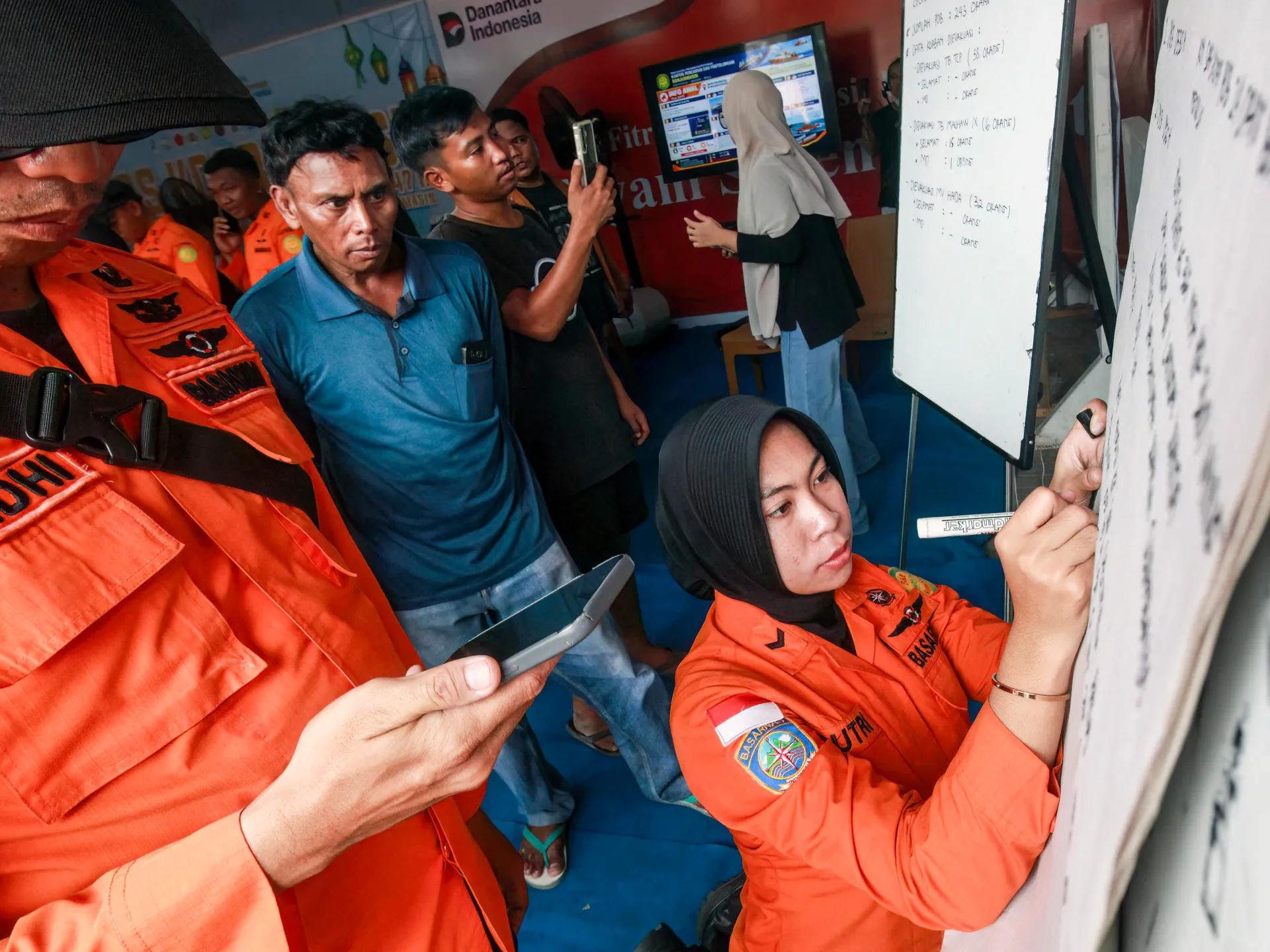
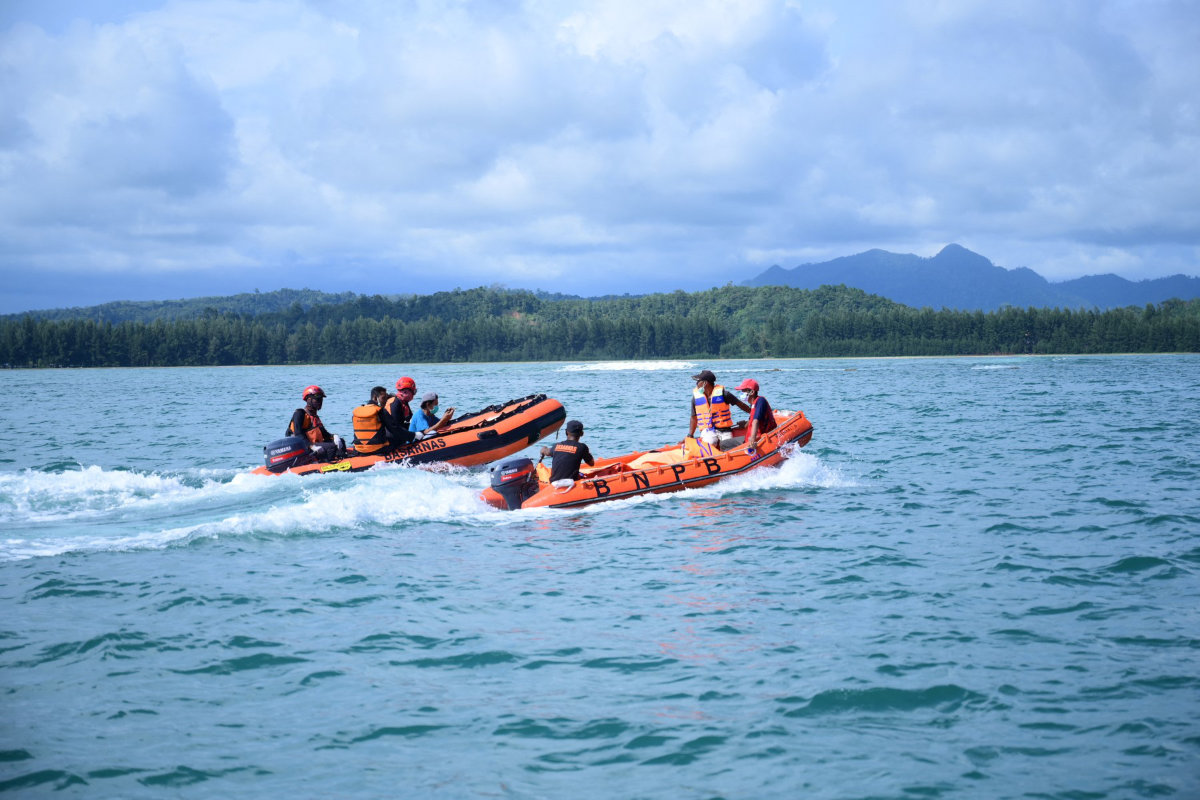
Rescuers are searching for 140 people from an Indonesian passenger ship that sank in the Java Sea after 103 others were evacuated, one of whom has died, a search and rescue agency official said.
The Virgo Transport 8, with 243 people on board, lost contact with its operator in the early hours of Sunday, according to Indonesia’s search and rescue agency.
Recommended Stories
list of 2 itemsend of list
It had sailed from Surabaya on the Indonesian island of Java on Saturday and was heading for Banjarmasin, a port city on Borneo.
Rescuers are searching for the remaining passengers and crew.
The ship encountered rough weather, said I Putu Sudayana, head of the local search and rescue office in Banjarmasin.
The ferry’s last known position was in the Java Sea, about 81 nautical miles (150km) from Banjarmasin, the AFP news agency reported.
Rescue ships and a helicopter have been searching the area, where Sudayana said waves as high as 2.5 metres (8.2 feet) have hampered the operation.
“It is extremely risky for vessels. Even our Basarnas vessel, which is 40 metres [131 feet] long, is at great risk,” Sudayana told reporters, referring to the country’s search and rescue agency.
Last month, a fire on a ferry sailing between Bali and Lombok killed one person and left five missing. In July, a ferry carrying more than 70 people sank near Selayar Island, south of Sulawesi.
JAKARTA: Indonesian rescuers launched a search operation Sunday after a passenger ship carrying at least 240 people lost contact in the Java Sea while traveling from East Java to South Kalimantan on Borneo island, officials said.
The Search and Rescue Office in Banjarmasin, the capital of South Kalimantan province, said they received a report the Virgo Transport 8 had experienced a communication failure while en route to the city from Surabaya, Indonesia’s second largest city in East Java province.
Initial information indicated the vessel’s last known position was in the Java Sea, about 148 kilometers (92 miles) from a pier in Banjarmasin. The ship’s manifest said it was carrying 241 passengers.
There were no immediate reports of casualties.
Arianto Ardi, operations chief at Banjarmasin’s rescue agency, confirmed the loss of contact with the vessel and said rescue personnel had been dispatched to the area.
“We have established an operations post at Trisakti,” Arianto said.
Authorities said the ship’s operator reported the incident after receiving information that the vessel had encountered bad weather.