scraps

Major airline scraps free cabin bag policy with new £13 rule

The airline says it’s going to start charging passengers for ‘priority carry-on’ so it can stop weighing every piece of luggage at the gate just before departure

A major budget airline is ending its free overhead cabin bag policy and replacing it with a new £13 rule.

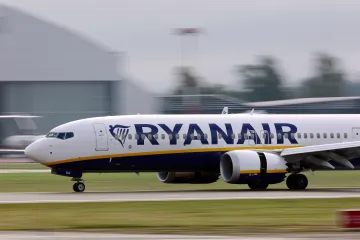
From the start of February 2027, passengers flying with Jetstar will only be able to bring a small bag that must fit under the seat in front of them for free. The new rules end Jetstar’s free overhead luggage policy, which was limited to 7kg, and now mirrors the baggage restrictions used by European budget airlines Ryanair and easyJet.

Previously, every piece of luggage set to be taken onboard a Jetstar flight was weighed by airline staff at the gate, with anyone with overweight bags forced to pay fees in order to board with their bags.

The Australian airline, which flies across Australia, New Zealand, south-east Asia, and even as far as Japan and South Korea, says the new rules have been brought in to stop this practice.

“We know that weighing carry-on bags at the gate can be frustrating for our customers and for our crew,” said CEO Stephanie Tully.

“To make packing easier we’ve decided to remove the 7kg weight limit, so from February, the main thing customers will need to think about is the size of their carry-on.”

The new rules mean passengers who want to take more luggage than the free under-seat bag must purchase a ‘priority carry-on’ fare to access the overhead lockers. This fee costs at least another A$25 (£13, as of August 5, 2026).

Ms Tully explained why Jetstar decided to charge extra: “By giving customers an underseat bag with the option to add Priority Carry-on, we can make better use of overhead locker space, streamline boarding and help more flights depart on time.”

“Our new carry-on baggage model provides more choice to customers while helping to keep our fares low. You only pay for what you need – travelling with less means paying less, and you can always add more if you need.”

While fees start at just A$25, they climb dramatically for longer and more popular flights. It will cost A$33 (£17.30) for its most popular route, Sydney to Melbourne, A$39 (£20.45) from Perth to popular holiday destination Denpasar in Bali, and A$52 (£27.27) from Cairns to Tokyo Narita.

New size limits have also been confirmed for carry-on luggage. Underseat bags must be smaller than 40 × 30 × 20cm, while overhead bags can be up to 56 × 36 × 23cm large.

Source link

FIFA World Cup plan fallout: AFC reacts as Infantino scraps investment push | World Cup News

Asian Football Confederation says FIFA future must be ‘shaped through proper consultation’ after World Cup plan fallout.

Asian Football ‌Confederation (AFC) President Sheikh Salman bin Ebrahim Al Khalifa has ⁠welcomed FIFA’s ⁠decision to walk back plans to sell a stake in the World Cup and stressed the need ⁠to discuss all such moves with transparency in the future.

FIFA’s plan was to raise up to $4.2bn by ⁠selling about a 20 percent stake to private investors in a new unit that would run FIFA events, including the World Cup.

Recommended Stories

list of 4 itemsend of list

The proposal, first announced on Tuesday, had faced a storm of ‌opposition from regional confederations, including the AFC, which said they were blindsided by the announcement.

Following the backlash, FIFA President Gianni Infantino said world football’s governing body had scrapped the plans after listening “carefully to all the views”.

In a letter posted on the AFC’s website on Saturday, Sheikh Salman ⁠said he expects “any initiative that has the ⁠potential to impact global football will be presented and discussed with the Confederations, the FIFA Council, Member Associations and other stakeholders in a timely, ⁠transparent and meaningful manner”.

“The future of global football must always be shaped through proper ⁠consultation, collective dialogue and respect for ⁠the established governance structures of our game,” he said.

On Thursday, Sheikh Salman, in a letter to member associations, had said the way the FIFA proposal had been made was “totally unacceptable“.

The Kuala Lumpur-based AFC is one of FIFA’s six confederations and is responsible for running ‌regional ‌club and national team competitions across continental Asia, the Middle East and Australia.

Source link

Fifa World Cup plans: Governing body scraps Gianni Infantino’s private investment proposal after widespread opposition

Fifa president Gianni Infantino says he has scrapped the controversial plan to sell off stakes in the governing body’s major competitions, following widespread opposition.

Infantino said it had become clear the project had “created divisions” that are “no longer in the interest” of its original objective.

The Swiss added: “As a result, this proposal will not proceed.”

Infantino had offered all 211 member associations $40m (£30m) if they backed a proposal for private investment in its tournaments, including the men’s and women’s World Cups.

European football’s 55 member associations, Uefa, voted on Thursday to boycott World Cups if the plans went ahead.

Fifa’s chief operating officer Kevin Lamour said the governing body’s own administration had been “deceived” about the project.

Carlos Cordeiro – Infantino’s senior adviser on global strategy and governance – resigned over the mater, saying the proposal was “a bad deal for football” and would “mortgage football’s future”.

That came after two other major confederations spoke out against the plans.

Concacaf, which governs football in North, Central America and the Caribbean – and hosted this summer’s World Cup – said its members “rejected” the proposal, with sources saying the vast majority of associations from the region are losing, or have lost, faith in Infantino.

The Asian Football Confederation (AFC) said it stood in “solidarity” with Uefa and Concacaf, while UK Prime Minister Andy Burnham said Infantino was “the wrong man” to lead Fifa.

Infantino, 56, is now under immense pressure as he seeks re-election for a fourth term as president at the Fifa Congress in March.

He said he now intends to “bring all interested parties back together” in the “spirit of shared interest” in football.

More to follow.

Source link

Why your food scraps travel more than 100 miles — and how an L.A. council member wants to stop it

Bob Blumenfield would like to see Angelenos’ old banana peels and moldy bread stay local.

On Tuesday morning, the City Council member told a small crowd of waste advocates in front of city hall that he was introducing a motion to reduce the city’s greenhouse gas emissions by strengthening local composting infrastructure and decreasing reliance on distant facilities.

Currently, when city residents separate their food waste and yard clippings, chances are it’s being trucked to faraway processing facilities in Bakersfield or Lancaster.

The motion would help the city meet targets set by California’s Short-Lived Climate Pollutant Reduction Strategy, or Senate Bill 1383, which phases out sending green waste to the landfill, because it is a major source of the powerful climate pollutant methane.

It also would help meet Mayor Bass’ Climate Action Plan, which aims to use at least 50% of locally produced compost and mulch within Los Angeles by 2030. Currently, only 25% to 30% of the city’s material is applied to land locally.

The city produces approximately 350,000 tons of organic material a year, Blumenfield told the crowd, which he said equates to roughly 1.2 to 1.5 million metric tons of carbon dioxide.

“That’s a big number, and when you do the math,” he said, that’s roughly the same amount of carbon dioxide released by the entire country of Belize, the entirety of Humboldt County or the equivalent of burning 1.6 billion pounds of coal per year.

As the announcement was underway, in the background a fire burned for a sixth day in a Boyle Heights warehouse, where 85 million pounds of frozen food was thawing and beginning to rot.

Signed into law in 2016, the state’s composting bill mandated a gradual increase in the amount of organic waste that must be diverted away from landfills. It required 50% of all green and food waste be diverted by 2020; by 2025, that number was supposed to hit 75%.

But it hasn’t. Although Los Angeles has pushed to get a residential curbside bin program in place — recall the “Great Green Bin Apocalypse of 2025” — it has struggled to get people to comply.

According to reports for the recycLA program, a commercial and multifamily waste collection franchise program, only about half of households and business are separating their compostable waste.

Alex Helou, assistant general manager of L.A. Sanitation & Environment, provided a much brighter picture of the city’s food waste situation. L.A. is the first major city to provide green bins to 750,000 residential customers, he said. The city has “exceeded expectations” in food recovery, he said, saving 80 million meals that would have been thrown out and redirecting them to people in need.

Helou said Blumenfield’s motion completes the loop by keeping food waste close to home, creating more local composting and reducing greenhouse gas emissions from transporting waste outside of the city. It doesn’t directly affect the city’s compliance with SB 1383, but that isn’t necessary, he said. “We’re meeting that and exceeding that at multiple fronts.”

Blumenfield’s initiative directs the Bureau of Sanitation to develop a plan for expanding local composting across the city. It would also increase the use of locally produced compost and mulch.

For instance, the motion would encourage using the compost on urban farms and at community gardens and city parks. It also would be used to replace artificial grass and turf.

It will support a “citywide transition away from artificial turf and towards nature-based solutions, such as California native plants and natural grass plant fields, and ensure everyone has access to safer, cooler, and sustainable parks, schools, and communities,” said Terry Saucier, a Tarzana resident and member of the Neighborhood Council Sustainability Alliance and the Tarzana Neighborhood Council.

The state’s composting law has proved challenging on several fronts.

The Antelope Valley has become a dumping site for many of the city’s haulers looking to cut transport and facility costs — causing concern among environmentalists and others who say the material is destroying fragile ecosystems.

Complying has been particularly difficult for Los Angeles and much of coastal Southern California, where there are few large composters and low demand for compost. Unlike areas to the north, there is little agricultural demand for compost and mulch.

Experts say dumping in the desert has always been a problem, but the law made it worse by making it more expensive and difficult to deal with.

In addition, composters are struggling with the amount of plastic and other debris that people and businesses put in the food waste bins.

According to a report by Closed Loop Partners, which partners with companies such as Pepsico and McDonald’s, nearly 4% of food waste is contaminated with other materials — most of it plastic. State law requires that finished compost contains no more than 0.5% by dry weight of physical contaminants.

Source link