Science and Technology

SpaceX IPO debuts in US markets, Musk becomes world’s first trillionaire | Financial Markets News

SpaceX lands on public markets as the sixth largest US company by market value.

SpaceX has debuted on US markets with a market valuation of more than $2 trillion, minting CEO Elon Musk as the world’s first trillionaire.

Shares are set to open on Friday at $150 per share, marking a 6.6 percent increase from the initial public offering (IPO) price, valuing the company at $1.96 trillion putting the aerospace company on track to become the sixth-largest company in the United States.

Recommended Stories

list of 4 itemsend of list

The company sold $75bn in shares, immediately valuing it at $1.77 trillion. The IPO was oversubscribed four times higher than was otherwise expected, according to the Reuters news agency.

Of the institutional investors allocated, according to Bloomberg News, as much as 70 percent went to what are called long-only investments — a strategy in which holders buy assets based on the expectation that their value will grow over time — and sovereign wealth funds, including those from Saudi Arabia and Kuwait as well.

SpaceX President Gwynne Shotwell and Chief Financial Officer Bret Johnsen rang the Nasdaq MarketSite in New York City opening bell at 9:30am local time as US markets opened.

On Thursday, protesters gathered outside the MarketSite to protest the IPO amid continued allegations that Grok, part of xAI, a subsidiary of SpaceX, allowed users to create non-consensual deepfake sexualised images before the IPO debut.

Shares of SpaceX did not trade until the middle of the trading day as the exchange collected buy and sell orders and underwriters delayed trading until supply and demand were balanced.

“We would expect SpaceX to see an immediate pop in trading due to the hype around the deal, north of 20 percent perhaps,” said Samuel Kerr, global head of equity capital markets at Mergermarket. “Anything lower would actually make me nervous.”

Exchanges and trading firms are eager to avoid the technical mishaps that marred Meta’s 2012 debut. With SpaceX widely viewed as a dress rehearsal for a new generation of mega-listings, market participants will also be watching for signals on investor appetite in advance of forthcoming IPOs for AI heavyweights Anthropic and OpenAI.

The landmark listing cemented Musk’s status as the first trillionaire ever and propelled SpaceX into the ranks of the world’s most valuable companies — even though the firm posted a loss of nearly $5bn last year and generated only a fraction of the revenue brought in by similarly valued tech giants.

The surge comes amid growth driven by its Starlink subsidiary, which drives as much as 80 percent of its revenue.

On Friday, SpaceX launched its Falcon 9 rocket with 29 satellites into space from Cape Canaveral in Florida.

Source link

Anthropic urges AI labs to pause, warns humans risk losing control | Technology News

Anthropic is proposing that the world’s top artificial intelligence companies come up with a coordinated way to pause development of advanced AI systems, warning that the technology is improving so quickly that there’s a risk humans would lose control.

The company behind the Claude chatbot said in a blog post on Thursday that, as cutting-edge AI gets increasingly faster at carrying out tasks, “it would be good for the world to have the option to slow or temporarily pause” its development.

Anthropic said its internal research institute plans to explore the issue in collaboration with others and “take actions” to help build the systems for a credible slowdown or pause, without being more specific.

Anthropic rival OpenAI argued for a different approach in a report published on Wednesday, saying that “democratic governments — not private companies acting alone — must ultimately determine the rules, safeguards, and accountability mechanisms”.

“Our view is that decisions about the pace of AI innovation should not be left to any one lab, company, or special interest group,” it said.

AI models are getting faster, with rapid increases in how quickly they can carry out software tasks like coding on their own, Anthropic said in its post. Based on current trends and given enough computing power, an AI system could be able to design and develop its own successor, in what is known as “recursive self-improvement”.

Self-building AI would be a major technological milestone that would bring benefits in science, healthcare and other areas, Anthropic said, but it “also might increase the risks of humans losing control over AI systems”.

Some tech industry figures have long warned of such a scenario.

Anthropic’s post comes after a different warning this week from a team of researchers at the University of Toronto who showed how AI tools could be used to create a new kind of AI “worm” that adapts its hacking strategy as it spreads from device to device and takes over a vast computing network.

“I think it’s really important that people understand that it’s not just the biggest, most powerful language models that pose the security concerns,” lead researcher Nicolas Papernot said in an interview.

The authors of the Anthropic post, company cofounder Jack Clark and Marina Favaro, head of its research institute, said the pause would be used to enable “societal structures and alignment research” to keep up with AI advances. Alignment is industry shorthand for making sure the technology matches human values and intentions.

The proposed coordination would let advanced AI labs verify that global rivals have actually stopped or slowed their work, “and that a bad actor could not use the auspices of a coordinated slowdown to jump ahead in secret”.

The company said a coordinated global mechanism is needed because, without it, a slowdown in AI development could let the “least cautious” players catch up and add to pressure on companies and governments as they make tough choices about AI safety.

Fears that advanced AI systems may get out of human control and cause societal harm have risen as the technology becomes increasingly capable. Anthropic’s own Mythos model sent shockwaves through industries, including banking and software, earlier this year with its ability to find vulnerabilities in existing code.

But regulation has been slow, especially in the US, where most leading AI labs are based. A Trump administration executive order earlier this week put the onus on the labs themselves, asking them to voluntarily submit their most capable models for government cybersecurity testing before public release.

Safety focus

AI researchers have also urged a pause before, but have had little success. Elon Musk, who owns AI lab xAI, was among the backers of a 2023 push by the non-profit Future of Life Institute to halt AI development for six months to allow time for safety guardrails.

Anthropic has long positioned itself as a safety-focused AI lab. Earlier this year, it refused to let the US military use its models for domestic surveillance and fully autonomous weapons, prompting backlash from the government, which put it on a national security blacklist, set to take effect later in 2026.

Anthropic’s post comes as the company and ChatGPT-maker OpenAI race to sell shares on the stock market, in an IPO that could value Anthropic at nearly a trillion dollars.

Papernot notified Canadian cybersecurity authorities prior to releasing his report, which shows how researchers developed the worm in a laboratory by using an “open-source” AI tool that is easy for software developers to cheaply access and modify.

“In the past, cyber attackers would focus on targets that are very high value,” he said. “Banking systems, hospitals, electricity grids, water treatment systems, schools.”

Papernot agreed that there should be more collaboration between companies, government agencies and academic researchers to develop countermeasures as AI-powered hacking tools supercharge the search for computer vulnerabilities.

“That old laptop you have in your basement that you don’t check on regularly doesn’t seem like a very high-value target, but it can be used as a launch pad to attack these higher-value targets,” he said. “Anything connected to the internet is now at risk because of how low the cost has become to mount these cyberattacks.”

Source link

AI giant Anthropic files for US IPO as investors bet big on AI future | Technology News

Anthropic, which operates AI chatbot Claude, did not disclose the size or the terms of the offering.

Artificial intelligence giant Anthropic has confidentially filed for an initial public offering (IPO) in the United States, teeing up what could become a watershed moment for Wall Street’s AI frenzy.

The move, announced on Monday, sets up a high-stakes test of whether investor appetite for the AI revolution that has reshaped white-collar work around the world can match the sky-high expectations surrounding the booming sector.

Recommended Stories

list of 4 itemsend of list

Anthropic, which operates AI chatbot Claude, did not disclose the size or the terms of the offering. Confidential submissions let companies advance IPO preparations while shielding sensitive financial details from rivals and the public.

Anthropic last raised $65bn at a post-money valuation of $965bn in late May, putting it ahead of rival OpenAI. The company said at the time it was making annualised revenue of $47bn from selling its technology to people and organisations using Claude to write code and do other work and personal tasks on their behalf.

The crucial step towards a listing comes on the heels of SpaceX’s mega-IPO, which is on course to rewrite the record books as the Elon Musk-led company pursues a $75bn offering at a $1.75 trillion valuation.

Anthropic was formed in 2021 by ex-OpenAI leaders, and now both AI firms, along with Elon Musk’s rocket and AI company SpaceX, are all expected to become publicly traded. All three are also still losing more money than they make, fuelling concerns of an AI bubble.

OpenAI and Anthropic have become the face of the AI boom that has redrawn corporate strategies, sparked a global arms race for computing power and talent, and turned AI-linked companies into some of the market’s most richly valued firms.

Anthropic’s rapid rise in early 2026 rattled markets, triggering sharp sell-offs in software and IT stocks as investors worried its increasingly autonomous AI tools could upend traditional business models and accelerate disruption across industries.

“OpenAI and Anthropic are in a race to go public before capital runs out,” said analyst Gil Luria from the investment firm DA Davidson.

“The other reason for Anthropic to try to beat OpenAI out to the public market is that they will get to set the agenda for how a frontier model reports financials and do so in a way that is favourable to their financial model.”

OpenAI is also preparing to confidentially file for a US IPO in the coming weeks, adding to a wave of blockbuster ‌listings anticipated in the year ahead.

A market milestone

As many blockbuster listings race towards public markets, companies from SpaceX to AI giants are competing for a finite pool of investor capital.

“The combined demand for capital from SpaceX, OpenAI and Anthropic will be so considerable that it is likely to create disruptions in the capital markets, so going early will be a great advantage,” Luria said.

The listing would represent one of the most consequential stock market debuts in years, potentially reshaping benchmark indexes, investor flows and the broader narrative driving US equities.

At close to a $1 trillion valuation, Anthropic would vault into the top tier of the S&P 500, alongside a handful of elite companies that dominate global equity markets.

An Anthropic debut would be a major boost for the long-sluggish IPO market, though experts and bankers warn an offering of such scale could drain liquidity and investor attention from smaller listings.

Source link

Nvidia unveils new chip to bring AI directly to personal computers | Technology News

Nvidia is set to bring artificial intelligence to laptop and desktop computers with brands like Microsoft and Dell later this year as the US tech giant broadens its AI presence.

The Santa Clara, California-based AI chipmaker unveiled on Monday at its annual Nvidia GTC event in Taipei new powerful chips that would bring advanced AI functions to laptops and desktop computers.

Recommended Stories

list of 4 itemsend of list

CEO Jensen Huang said that the new development is “going to reinvent the PC [personal computer]”.

The changes come amid three years of collaboration between Microsoft and Nvidia and pit the latter against companies like chipmaker Advanced Micro Devices and personal computer brands Intel and Apple.

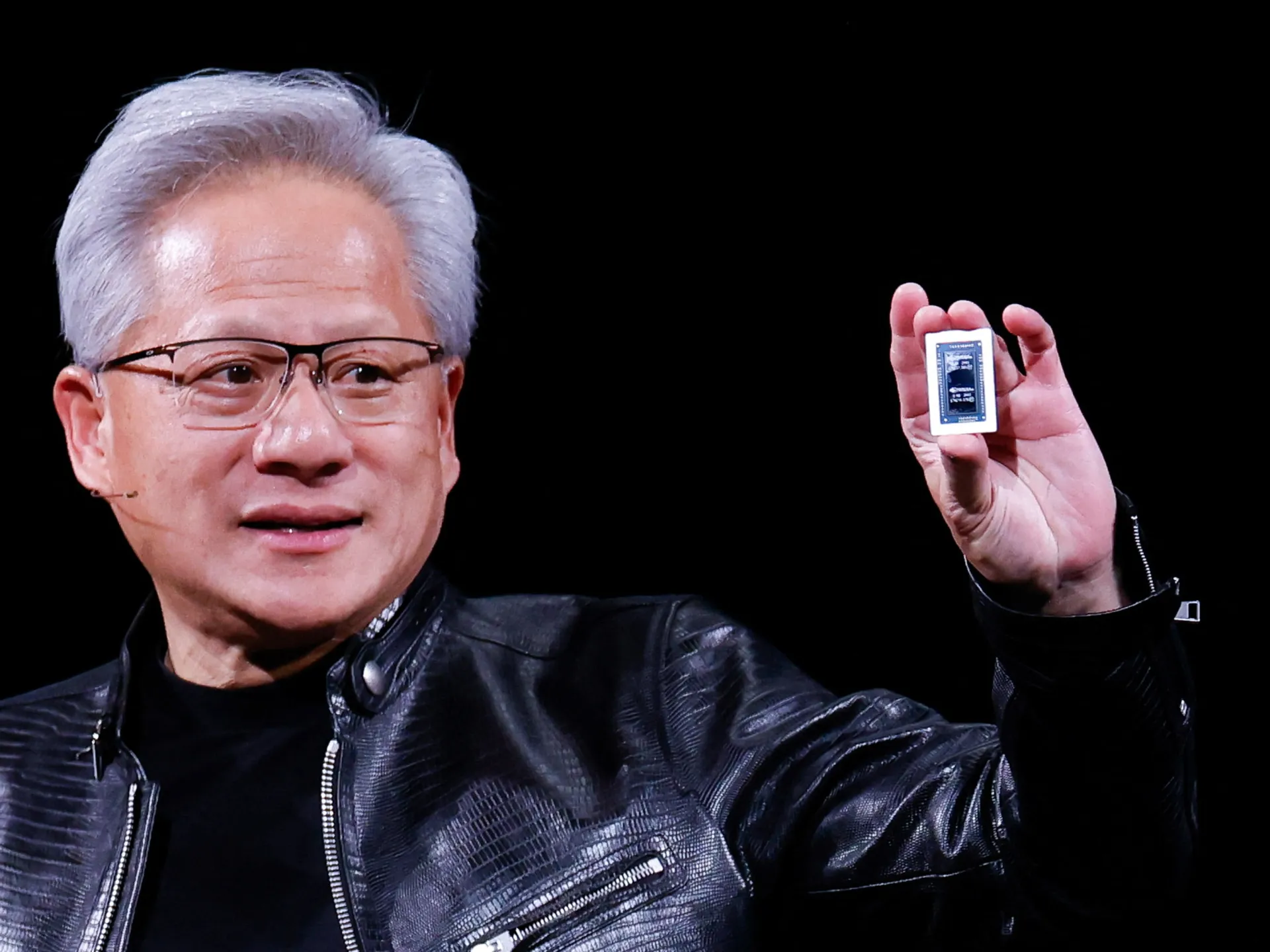
“This is going to be the new PC,” Huang said as he unveiled Nvidia’s RTX Spark superchip — which combines CPU, or central processing unit, and GPU, or graphics processing unit, capabilities — that would power new Windows laptop and desktop computer models in what the company called “AI personal computers”, expected to debut in the fall of this year.

The chip, developed with Taiwan’s MediaTek, will be in compact desktops from Dell, HP, Lenovo, ASUS, Microsoft Surface and MSI, with models from Acer and GIGABYTE to follow.

Nvidia, which is already the world’s most valuable company, said the reinvention will be for creating and gaming.

“When it has an autonomous [AI] agent, an agent that’s helping you, that understands you, you could talk to it. It could look at you. You could ask it to read files, go help you do some research. It could do a lot more,” Huang said.

Microsoft said in a separate statement that the personal computers running on Nvidia’s RTX Spark superchips would be able to support “highly capable AI models” and complex workloads. With the new superchips, these personal computers can run AI agents locally, Nvidia said.

“This is the first across the lineup of PC reinvention for 40 years,” Huang said.

Nvidia’s move is significant at a time when demand is growing for the use of personal AI agents, said Lian Jye Su, chief analyst at the technology research and advisory group Omdia.

“For consumers, it means more choices, which is always a good thing,” Su said.

Neil Shah, analyst and co-founder of Counterpoint Research, described Nvidia’s announcement as a move that’s “revolutionising how PCs would look like in the next 10 years”.

The new laptops and desktop computers “will drive agentic AI applications in every home”, Shah said, with an aim of having an “AI supercomputer” in each household.

Also during Monday’s speech, Nvidia’s Huang said its new Vera CPUs for data centres are in full production and are “going to be our new major growth driver” on the boom of AI agents, with early customers including Anthropic, OpenAI and SpaceXAI.


Huang also revealed a humanoid robot reference design that could act as a blueprint for future research, especially within the higher education sector. Nvidia said its “Isaac GR00T” stands nearly 1.83 metres (6 feet) tall and has the humanoid chassis of Chinese robot maker Unitree’s H2. It is equipped with five-fingered dexterous hands, made by Singapore-based robotics startup Sharpa, that are capable of finely controlled movements.

Reception for AI PCs has been mixed so far. HP reported last week that the devices helped prop up quarterly sales, but Dell said earlier this year that demand had fallen short of initial expectations. Qualcomm, looking to capitalise on AI demand, has also been offering AI PCs with Microsoft.

On Wall Street, Nvidia stock rose nearly 4 percent on the news in midday trading. Microsoft ticked up 2.5 percent and Dell surged 9.3 percent. Competitors AMD and Intel, on the other hand, are on the decline. AMD is down 0.1 percent from the market open, and Intel is down by 2.5 percent.

Source link

US Congress moves to deepen military ties with Israel: Why it matters | Military News

Lawmakers in the United States are quietly advancing a proposal that could deepen military ties between the US and Israel in unprecedented ways, at a time when public support for Israel among Americans is increasingly fractured.

Among the provisions included in the 2027 National Defence Authorisation Act (NDAA) released this week is Section 224, the “United States-Israel Defence Technology Cooperation Initiative”.

Recommended Stories

list of 4 itemsend of list

The NDAA, which Congress passes annually to set military policy and authorise defence spending, will undergo further debate and amendments before becoming law. Some legislators have already signalled opposition, with Representative Thomas Massie saying he would seek to remove the provision if it reaches the House floor.

The measure remains at an early stage, but analysts say if passed, it would limit political oversight over the defence relationship.

Analysts added that it could mark a significant shift in the US-Israel relationship, moving beyond a model centred on American military aid towards deeper institutional integration between the two countries’ defence industries and militaries.

Critics argue that such a move would make support for Israel less a matter of political choice and more a structural feature of US national security policy, embedding the relationship within joint military and industrial programmes that would be difficult to unwind.

What does the proposal include?

Section 224 incorporates elements of the US-Israel Future of Warfare Act legislation introduced by Representative Ronny Jackson, according to Track AIPAC. While the legislation did not advance as a standalone bill, key elements of it were instead folded into the NDAA.

The provision would require the US defence secretary to designate an official responsible for coordinating military cooperation between the two countries. According to the text, that official would be tasked with “synchronising cooperative efforts between the United States and Israel”, including “bilateral defence technology research, development, testing, evaluation, integration and industrial cooperation”.

The legislation envisages cooperation across a wide range of military technologies. It specifically identifies as priority areas; “counter-unmanned systems including aerial, maritime and ground platforms”, “anti-tunnelling and subterranean threats”, and “missile and air defence technologies”.

The proposal also seeks to deepen collaboration on emerging technologies, including “artificial intelligence, quantum machine learning and autonomous systems”, as well as “directed energy and advanced sensing”, “cyber defence, electronic warfare and digital resilience”, and “biotechnology, biomanufacturing, and medical defence”.

The inclusion of “network integration” and “data fusion” has drawn particular attention because it suggests significantly closer integration of military information systems between the two countries.

The United States and Israel already cooperate on defence projects, including missile defence systems such as Iron Dome. However, analysts say that Section 224 would expand cooperation into nearly every major area of emerging military technology, and could create a “lock-in” between the two countries military infrastructure.

Mark Hilborne, a senior lecturer, the School of Security Studies at King’s College London, told Al Jazeera the proposal goes well beyond the traditional foundations of the US-Israel defence relationship.

“While historically, the US-Israel defence relationship has included US military aid and weapons transfers, joint missile defence programmes such as Iron Dome, David’s Sling and Arrow, and intelligence and operational cooperation, the proposed agreement increases cooperation to include a wider set of emerging technologies,” he said.

“So this all suggests a much tighter integration – less about provision and perhaps sharing technologies and capabilities, and more about jointly developing these.

“It would point to a more institutionalised relationship, and perhaps one that might survive changing administrations in the US, as some of the development cycles could be very long and would become entrenched,” he said.

Why is it controversial?

The proposal comes amid growing debate in the US over military support for Israel, particularly as Israel’s genocidal war on Gaza continues, and concerns mount over the use of US-made weapons.

Human rights organisations and United Nations experts have repeatedly raised concerns about Israeli military actions in Gaza, where despite a so-called ceasefire in place since last October, at least 850 Palestinians have been killed. Israel is also advancing into southern Lebanon, where it has killed more than 3,000 people since the beginning of March.

These wars have led to increasing scepticism among Americans towards unconditional support for Israel, recent opinion polls suggest.

A New York Times poll in May found that only 30 percent of respondents believed Donald Trump made the right decision in ordering military strikes against Iran, while 64 percent said it was the wrong decision.

An Institute for Global Affairs poll released last week found that only 16 percent of Americans support continuing weapons transfers to Israel without additional restrictions. Thirty-eight percent said the US should stop supplying weapons entirely, while 24 percent said military aid should be conditioned on how the weapons are used.

Opposition has also emerged from parts of the Republican Party, which traditionally has always been aligned with Israel.

Former Representative Marjorie Taylor Greene criticised the proposal on social media, writing: “This is what complete capture to a foreign government looks like, and there hasn’t been a single shot fired.”

Massie, who has opposed military aid to Israel, likewise pledged to introduce an amendment removing the provision from the NDAA. The Republican senator was defeated in the primary elections last month, highlighting the financial and political influence of pro-Israel lobby groups in the US.

Influential conservative commentator, Tucker Carlson, has increasingly criticised US support for Israel, reflecting divisions within the broader MAGA movement. Criticism has also intensified among left-wing Democrats, with many calling for restrictions on military aid to Israel.

What could it mean in practice?

Critics of the measures warn that the proposal could create a form of institutional “lock-in” that makes both countries simultaneously reliant on each other for military development and procurement.

Some analysts say such integration would move key aspects of the US-Israel relationship away from highly visible aid votes or commercial contracting, and into the less transparent world of defence procurement and industrial partnerships at a state-to-state level.

Hilborne from the King’s College said the initiative could also have direct implications for Palestinians. “If joint R&D produces more effective technology, then systems related to surveillance, autonomous vehicles, AI and targeting, and various counter-drone or counter-missile technology would be improved, providing a capability boost to Israeli forces operating in Gaza or the West Bank,” he said.

“This enhanced integration would further embed US technology into Israeli forces. These would all be concerns from a Palestinian perspective.”

Critics also point to the economic implications, where expanded co-production agreements could lead to new manufacturing facilities and defence jobs in the United States, creating a further reliance on Israel.

Hilborne also argued that deeper integration could reduce Washington’s leverage over Israel. “The deeper integration may also mean that the US loses some degree of leverage over Israel, as it would be less able to withhold certain capabilities from Israel,” he said.

“As a consequence, Israel might be emboldened in its policies.”

The proposal could also have implications beyond the US-Israel relationship, according to Imad Salamey, an international relations professor at the Lebanese American University. “The proposed US-Israeli defence integration can be seen as the next phase of the Abraham Accords: moving from normalisation toward a US-backed regional security regime centred on Israel as the dominant military and technological hub,” he told Al Jazeera.

Such a framework would strengthen efforts to contain Iran, limit Turkiye’s independent regional influence and deepen security cooperation with Arab partners, he said.

“For Lebanon and Gaza, it may translate into greater pressure to accommodate Israeli-led security arrangements as part of a broader emerging Middle Eastern order.”

Whether Section 224 survives the legislative process is uncertain.

But its inclusion in the NDAA shows how some politicians, many backed by the pro-Israel lobby group AIPAC, are attempting to bind the two countries’ militaries closer together, creating long-term industrial links that future administrations may find difficult to reverse.


Source link

Blue Origin’s New Glenn rocket explodes on launchpad in Florida | Science and Technology News

The incident is the latest setback for Jeff Bezos’s space venture as it seeks to narrow the gap with Elon Musk’s SpaceX.

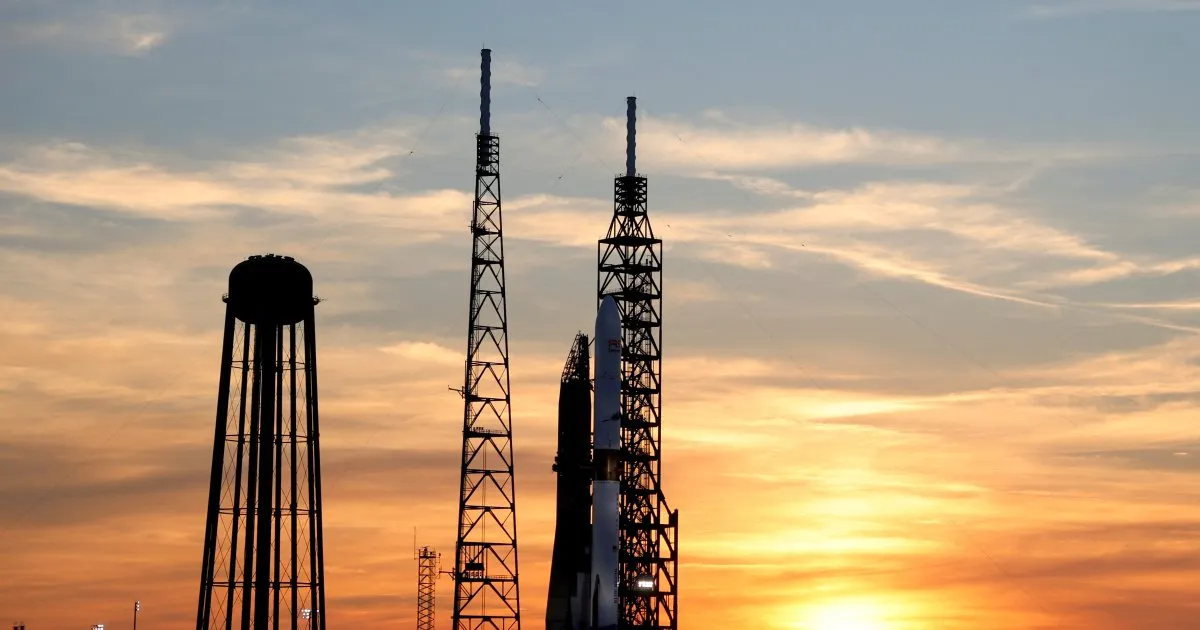
Blue Origin’s New Glenn rocket has exploded on the launchpad during a test in the US state of Florida.

The incident on Thursday evening is the latest setback for Jeff Bezos’s space venture as it seeks to narrow the gap with Elon Musk’s SpaceX.

Recommended Stories

list of 4 itemsend of list

Footage of the incident shows smoke emerging from underneath the rocket before it erupts into a massive fireball that billows skyward, sending a towering plume of flames and smoke into the air.

Emergency crews remained at the scene more than an hour later, but officials said there was no threat from fumes or other potential hazards.

No injuries have been reported.

“We experienced an anomaly during today’s hotfire test,” Blue Origin said in a brief statement posted on X, adding that “all personnel have been accounted for”.

A hot-fire test is where a rocket engine is fired up while anchored to the ground.

In a separate X post, Bezos said it was “too early to know the root cause” of the incident.

“Very rough day, but we’ll rebuild whatever needs rebuilding and get back to flying. It’s worth it,” Bezos added.

US House Representative Mike Haridopolos, whose Florida district includes the launch site at Cape Canaveral, said in a statement on X that he has been in contact with NASA Administrator Jared Isaacman regarding the explosion.

“I am grateful there were no reported injuries and thankful for the first responders, engineers, and launch crews who acted quickly,” Haridopolos said.

Blue Origin is preparing the New Glenn rocket to launch 48 Amazon Leo satellites into low-Earth orbit, part of efforts to build a broadband constellation to rival Musk’s Starlink network.

Musk responded on X to a video of the New Glenn explosion, saying: “Most unfortunate. Rockets are hard.”

Last month, the New Glenn rocket failed a mission to deliver a communications satellite into the correct orbit, prompting an investigation.

Source link