PARIS — A founder of global gaming company Ubisoft, maker of “Assassin’s Creed,” was killed in a plane crash in western France, authorities said Saturday.
Claude Guillemot, co-founder of the company and president of the Guillemot Foundation, died in an accident, Ubisoft said in a statement to the Associated Press. It did not elaborate.
A Cessna plane carrying Guillemot and one other person crashed Friday evening in a field just before landing at La Baule Airport on the Atlantic coast, a La Baule airport official said. The official spoke on condition of anonymity because they were not authorized to be publicly named.
Local media said both people aboard were killed.
Guillemot and four brothers founded Ubisoft in 1986. In addition to the popular “Assassin’s Creed” franchise, Ubisoft’s games include “Just Dance,” and the “Rayman” and Tom Clancy game franchises.
CHICAGO — Dodgers superstar Shohei Ohtani stepped into the Rate Field batter’s box for the first time this series on Saturday, greeted by a smattering of boos from White Sox fans.
He took his first swing at the second pitch of the game. And he sent it into the right-field stands. A no-doubter, proclaiming that his availability was no longer in doubt.
Ohtani returned to the lineup for the Dodgers’ 7-1 win against the White Sox on Saturday, after exiting the Dodgers’ game Thursday against the Pittsburgh Pirates and missing Friday against the White Sox because of inflammation in his left knee.
“I felt good waking up in the morning,” Ohtani said through interpreter Will Ireton after going one for three with a home runs and three walks Saturday. “I feel good now. So I’m pretty confident that I’ll be able to stay healthy, and should be good to go [Sunday] as well.”
Ohtani also tested his knee playing catch before the game Saturday. And the Dodgers will continue to monitor him as he prepares to take the mound Wednesday against the Tampa Bay Rays at Dodger Stadium.
“It wasn’t 100% today,” Ohtani said. “But with the next three, four days, I feel pretty confident, with enough recovery, that I should be able to make the next start.”
Even Ohtani said he hasn’t been able to pinpoint the cause of the swelling. But he has a theory.
“All I can really know for sure is that I think my mechanics weren’t quite great in terms of my pitching side,” he said, “so I believe that had something to do with this.”
Even before Ohtani’s knee swelled the Dodgers planned to have him pitch the day before their Thursday off day.
They switched Ohtani and left-hander Justin Wrobleski in the rotation order, having Wrobleski pitch Thursday on regular rest.
That remains the plan, even after Wrobleski was hit in the leg by a comebacker during his start Thursday. He left the game after that play in the fifth inning with a bruised right hamstring.
The Dodgers considered bringing in a spot starter, manager Dave Roberts said, in order to keep the full rotation on extra rest.
Shohei Ohtani leads off the game with a home run to spark the Dodgers to a 7-1 win over the White Sox on Saturday.
(Matt Marton / Associated Press)
“But considering how Wrobo’s start went short, feels good after it, we feel the four days’ rest will be fine for him,” Roberts said. “And then where Shohei is at, we feel good about just leaving it status quo.”
Ohtani returned Saturday without restrictions in his designated hitter role — except one request from his manager, after a couple days of parsing whether a steal attempt that was snuffed out by a foul ball had contributed to Ohtani’s injury.
Though they didn’t find a clear cause for the injury, Roberts made it clear Saturday: “There will be no basestealing.”
CHICAGO — Fans around Rate Field rose to their feet as Yoshinobu Yamamoto embraced his teammates before walking off the mound.
Of course, the Dodgers fans stood. But fans clad in White Sox jerseys joined them, waving White Sox hats in the air, acknowledging the brilliance they’d just witnessed.
In the Dodgers’ 7-1 win against the White Sox on Saturday, Yamamoto carried a perfect game bid into the eighth inning and a no-hit bid into the ninth.
Dating back to Yamamoto’s last start, against the Angels, he retired 45 straight batters, one shy of the major-league record set by Yusmeiro Petit in 2014.
In an eventful game, which included Shohei Ohtani returning to the lineup to homer in his first at-bat, a two-homer performance from Max Muncy, and a team-effort bounce-back after getting blown out the night before, Yamamoto’s performance on the mound stole the show.
Yamamoto, who exited with one out in the ninth inning and a pitch count of 109, was efficient even within each out. A 10-pitch strikeout in the third inning showed how Yamamoto wasn’t going to give in.
The Dodgers right-hander was one pitch away from striking out Jacob Gonzalez for seven straight pitches. But Gonzalez kept fouling off anything close to the strike zone.
For the 10th pitch of the at-bat, Yamamoto challenged Gonzalez with a cutter over the plate. And finally, Gonzalez swung through it.
The next inning, Yamamoto retired the side in eight pitches.
The only thing that slowed his roll was the mound itself. Yamamoto asked for the grounds crew to fix it in the sixth. And then he kept cruising.
Dodgers catcher Dalton Rushing slaps hands with Dodgers pitcher Yoshinobu Yamamoto in the ninth inning Saturday against the White Sox.
(Zoe Davis / Getty Images)
He had help from a steady defense behind him for much of the game.
The sixth inning included two highlight-worthy plays. Tristan Peters hit a sharp ground ball up the first-base line, and first baseman Freddie Freeman made a sliding stop, tossing the ball to Yamamoto at first to complete the play. Then left-fielder Alex Call ran into the retaining wall in foul territory to catch Edgar Quero’s fly ball for the final out of the inning.
For the most part, Yamamoto made it look easy. The hardest contact against Yamamoto came the third time through the lineup. In the seventh, he pumped a heater to the top rail against Miguel Vargas, who stayed on top of the pitch to send a line drive to left field — and right to Call.
In the eighth, he fell behind Colson Montgomery 3-1. But he worked back to a full count. Montgomery then scorched a line drive up the first-base line — into Freeman’s glove.
His perfect game bid ended two batters later, with two outs, on an error.
Yamamoto got Chase Meidroth to chase a slider, hitting a ground ball to shortstop Mookie Betts. But Betts mishandled the hop. The ball shot to his left, where second baseman Santiago Espinal tried to salvage the play but couldn’t pick up the ricochet cleanly.
The no-hit bid was next to fall. Yamamoto piped a fastball down the middle to Peters, who sent it over the wall in right field.
Yamamoto stayed in for one more batter, inducing Quero to fly out, before handing the ball over to manager Dave Roberts. Left-hander Alex Vesia took over for the final two outs.
Ohtani returns, hits home run
Dodgers star Shohei Ohtani runs the bases after hitting a home run against the White Sox on Saturday.
(Matt Marton / Associated Press)
Before Yamamoto took the mound, Ohtani’s return was the big story of the day.
As Ohtani stepped into the batter’s box for the first time, he was greeted by a smattering of boos.
He took his first swing at the second pitch of the game. And he sent it into the right-field stands. A no-doubter, proclaiming that his availability was no longer in doubt.
Ohtani returned to the Dodgers lineup after exiting against the Pirates on Thursday because of inflammation in his left knee.
“I think Shohei drove it,” Roberts said of the decision to play. “Training staff drove it. We took him out of the game the other night just for precautionary reasons. Yesterday, treated it up. Today he feels great. All the confidence that he can go out there and hit, feel good, not regress at all.”
The Dodgers (45-26) will continue to monitor Ohtani’s knee as he prepares to take the mound Wednesday against the Tampa Bay Rays at Dodger Stadium.
“I think we’re full go,” Roberts said before Ohtani threw on flat ground Saturday. “But I do think once he’s out there playing catch and we see how his knee responds to the pressure, the torque will be some good information.”
Even before Ohtani’s knee swelled (it’s still unclear what caused the inflammation) the Dodgers planned to have him pitch the day before their off-day on Thursday.
They switched Ohtani and left-hander Justin Wrobleski in the rotation order, with Wrobleski set to pitch Tuesday on regular rest.
That remains the plan, even after Wrobleski was hit in the leg by a comebacker Thursday. He left the game with a bruised right hamstring.
The Dodgers considered bringing in a spot starter, Roberts said, in order to keep the full rotation on extra rest.
“But considering how Wrobo’s start went short, feels good after it, we feel the four days’ rest will be fine for him,” Roberts said. “And then where Shohei is at, we feel good about just leaving it status quo.”
Ohtani returned without restrictions in his designated-hitter role — except for one request from his manager, after a couple days of parsing whether a steal attempt that was snuffed out by a foul ball had contributed to Ohtani’s injury.
Though they didn’t find a clear inciting incident, Roberts made it clear Saturday: “There will be no base stealing.”
There’s nothing like taking a cool dip after a hot day, especially in L.A. summer weather. As peak swimming season kicks off, the Hansen Dam Aquatic Center pool in Lake View Terrace reopened Memorial Day on weekends after being closed for the season. It will be open daily for swim and play starting Saturday.
The popular San Fernando Valley aquatic center spans 40 acres that include a massive 1.5-acre pool lined with sand like a beach. There’s also a nine-acre lake used for fishing and nonmotorized boat activities.
1
2
3
1.Jaylia Martinez, 5, left, is splashed with water by Elijah Santillana, 6.2.The height chart for the water slide at the Hansen Dam Aquatic Center.3.Visitors enjoy the pool at the Hansen Dam Aquatic Center.(Kayla Bartkowski / Los Angeles Times)
“As one of the largest pools in the U.S., capacity [being] 3,500, we get so many people from all over the city, all over the county, people coming from out of state to this place,” Edwin Realegeno, aquatic facility manager of the center, said.
Along the pool’s sandy shores, individuals can use the volleyball courts and teqball table. There are also different levels of shallow water for young swimmers and toddlers.
Share via
Paty Santillana, a Van Nuys resident, has visited the Hansen Dam Aquatic Center for the last 15 years. “It’s perfect for little kids. I have a 5-year-old and also a 21-year-old, who we used to come here with,” Santillana said. She adds that her grandchildren are ecstatic every time she mentions a visit to the pool.
Idalia Fraga, a 12-year-old swimmer who has been to the pool twice since its reopening on Memorial Day weekend, said she enjoys the pool for its affordability.
“Prices are very cheap … it really helps those families who struggle,” Fraga said.
After some renovations to its large water slide that will be reopening Saturday, the pool is open to swimmers for an admission fee of $4 for adults and children 17 and under for $1. The center takes cash only.
The recreational lake is open year-round and is restocked with fish from the California Department of Fish and Wildlife.
Christopher Lopez relaxes by regularly fishing at the Hansen Dam Recreation Lake on the weekends.
(Kayla Bartkowski / Los Angeles Times)
Along the lake, people enjoy walking the surrounding grassy pathway and fishing. Christopher Lopez, a Pacoima resident, who also goes by the nickname Squid, goes to the lake for the latter.
Lopez started fishing nearly two months ago with his longtime friend from elementary school. “[It’s about] getting out of the house and having something to do on the weekends and being able to enjoy the day,” he said. “Spending our time out here I think is just a great addition.”
For Lopez, catching bass or trout and enjoying the occasional breeze is a perfect day to absorb the beauty of nature.
Lifeguards Israel Orozco, left, and Ian Zabel, right, watch the pool as visitors cool off at the Hansen Dam Aquatic Center.
(Kayla Bartkowski / Los Angeles Times)
The recreational center is hosting fundraising 1K and 5K runs on Sunday followed by a party with free access to the pool. Realegeno said the fundraiser is to help fund public pool centers across L.A. County and to promote swimming safety lessons.
Saturday Kitchen presenter Matt Tebbutt has been at the helm of the BBC cookery show for almost a decade
Matt Tebbutt has been at the helm of the BBC cookery show for almost a decade (Image: BBC)
Saturday Kitchen host Matt Tebbutt has revealed a major confession nearly a decade after succeeding James Martin as the face of the BBC cookery programme.
Speaking exclusively to Express.co.uk at Jeremy Clarkson‘s FarmFest during the May Bank Holiday weekend, he confessed he now finally considers himself a TV chef.
“I think it is fair to say now I am probably a TV chef. I originally started as a working chef doing all the hours for 14 years. That’s a tough game. TV cookery isn’t.
“It comes with other pressures. There are time pressures. Conformity. I mean I’ve always been a chef but I think now it’s veered into ‘TV chef’,” he acknowledged. Discussing his position on the long-standing cookery programme.
He explained, “My job is to make food and cooking look really accessible. We have our guest chef’s on and they’re the kind of the aspirational ones.
“My job is to do those dishes that people will look at and go ‘I could get out of bed now and go to the supermarket and buy those ingredients and make that’.”
“Whether they do or not I don’t know but it is there for them,” he chuckled.
One philosophy Matt is particularly passionate about is the “farm to fork” approach, which was amongst the key reasons he was supporting Farm Fest.
He made an appearance at the festival on Sunday, 24 May, where he delivered a cookery demonstration, gave a talk and even took on the role of judge at the dog show, despite confessing he keeps two cats at home, reports the Express.
“It’s absolutely [great] to be able to support British farmers at a time when the government isn’t and to highlight [what they go through],” he said shortly after his arrival.
“I mean, you see it around you,” he added, gesturing towards the nearby stalls.
“People who are committed to supporting farming and where the food comes from. It’s marvellous. So if I can show support, I will.
“I live in a rural part of Wales, so you see it on a daily basis. You are in pubs with farmers chatting to them, and you know the sort of problems that they are trying to overcome right now, so it is great to support this.”
Saturday Kitchen airs at 9am every Saturday on BBC One and iPlayer
SARATOGA SPRINGS, N.Y. — The Belmont Stakes is less than 34 hours away, and Cherie DeVaux is feeling stressed.
Not about the race. DeVaux has done what she can do to prepare her 3-year-old colt, Golden Tempo, for Saturday’s third leg of the Triple Crown. Questions about post position, track bias, even the increasing threat of potentially severe thunderstorms before the evening post time (4:04 PDT, Fox) are brushed aside because, as she said, those are all out of a trainer’s control.
No, it’s her makeup bag.
She forgot to bring it with her to Saratoga Race Course and she has a Fox Sports TV interview scheduled right after she finishes speaking with a reporter inside her small office adjacent to Barn 83.
“I have to be on national TV, and I have not a stitch of makeup on right now, all the while having to try to make sure I enter my horses and not forget and mess that up too badly,” DeVaux said, smiling. “So it’s been a lot.”
Golden Tempo’s trainer Cherie DeVaux kisses a trophy after winning the Kentucky Derby.
(Michael Reaves / Getty Images)
The coolest?
“We won the Derby,” she said. “I don’t know if there’s anything cooler than that.
“There have been a lot of really neat opportunities,” she added. “A lot of different people have reached out. But you know, just the whole experience itself.”
Winning the Derby changes anyone’s life, but it’s magnified when you make history, as DeVaux did by becoming the first female trainer to win the world’s most famous horse race. It began a whirlwind that included more than 65 TV interviews and dozens upon dozens of text messages and phone calls.
And, truthfully, there was one experience that, for a college softball player and lifelong New York Yankees fan, exceeded the others.
“I did get to throw the first pitch out at a Yankees game, which I thought was amazing,” DeVaux said. “To stand on the field and look at the cheap seats [where I sat] when I was a kid. … And I’ve had much better seats in recent times, but to really sit there and have that dichotomy of that was where you started and this is where you are, was really a profound feeling.”
Kentucky Derby winning trainer Cherie DeVaux and jockey Jose Ortiz throw out the first pitch at Yankee Stadium on May 7.
(Ishika Samant / Getty Images)
Technically she’s back home for the Belmont, which is being run at Saratoga for the third and final year while Belmont Park is rebuilt. But she has few memories of Saratoga as a child; the family moved to Florida when she was 9 and she lived there until she was 19. Much of her family, including her parents and several siblings, live in the area, though, and DeVaux, who spends most of the year in Kentucky, said she’s been able to enjoy some time with them this week.
The big question is whether her large cheering section will be able to celebrate another victory. Handicappers are more than a bit pessimistic. Saturday’s Daily Racing Form has 1-2-3-4 selections by 19 experts, and not one selected Golden Tempo. Just two picked him second and five had him third. The consensus was he would not finish in the top four.
His chances in Kentucky were aided by a fast pace that tired out the front-runners, and on paper the Belmont figures to be run at a more moderate pace, which doesn’t always help a late-running horse. But he is a colt who relishes the distance and he has improved his Beyer Speed Figure with every start.
DeVaux is excited for the race, obviously, but she’s also eager for this “season” to end. She knows life will never be the same as it was before May 2, but she’d like to slow down a bit, in part, so she can enjoy the feeling of winning the Derby.
“I couldn’t prepare myself,” said DeVaux, who had never had a Derby starter. “I didn’t really think about winning the race. I thought Golden Tempo was going to run really well. I thought he would hit the board, … but I never allowed myself to think that he would win and what that would look like.
“And I’m one of those people I want to think about, you know, we win the race, what does that look like? But I was just so excited to be at the Derby and I wanted to just really be present, that it really didn’t cross my mind what would happen if we won the race.”
Golden Tempo’s trainer Cherie DeVaux holds her nephew while speaking to reporters after winning the Kentucky Derby on May 2.
(Andy Lyons / Getty Images)
Others weren’t prepared, either. DeVaux was carrying one of her nephews on her hip immediately after the Derby, and some people watching on TV immediately praised her for being a working mom. One problem: She doesn’t have children of her own (her husband has full custody of a teenage girl).
“Can I just not be a really good horse trainer that did something really profound and amazing in a short amount of time after I had to work my rear end off for it?” DeVaux said. “Like, why can’t that just be the story?”
Etc.
The Belmont is the 13th race on a 14-race card that begins at 8 a.m. PDT. The first seven races will be on FS2 before coverage shifts to Fox at noon (the Belmont show starts at 1). A separate handicapping-oriented show will air from 1-4:30 p.m. on FS1.
There are five Grade 1 races scheduled, including Bob Baffert’s Nysos against Michael McCarthy’s Journalism in the Met Mile (2:32 p.m.) and Baffert’s Crude Velocity against DeVaux’s Englishman in the Woody Stephens (1:52 p.m.). The Belmont is slated to start at about 4:10 p.m.
Huntington Beach is making the most of its second chance in postseason high school baseball.
Eliminated in the third round of the Southern Section Division 1 playoffs last month, the Oilers accepted an invitation to the Division I Southern California Regional and advanced to Saturday’s championship game with an 11-3 victory over Corona on Thursday.
Dane Cunningham hit a two-run home run, Maxx Hopkins homered and Jared Grindlinger had a triple, single and two RBIs. Tanner Brown struck out six in five innings.
Huntington Beach will face the winner of Friday’s game between La Mirada and Cathedral Catholic on Saturday.
In Division II, Newport Harbor will host Bakersfield Christian in the championship game on Saturday at 2 p.m.
Division III
Kaiser will play the winner of Friday’s game between Glendora and Westview for the Division III title. Kaiser defeated Helix 7-5 in the semifinals. Tino Cuellar hit a two-run home run in a 7-5 win over Helix.
Division IV
North Torrance defeated Central Valley Christian 6-0 in the semifinals behind Mason Matsumoto, who thew six scoreless innings. They will face the winner of Friday’s game between South El Monte and Francis Parker.
Division V
Coastal Academy has won the Division V title by forfeit after Verdugo Hills and Roosevelt got involved in a bench-clearing brawl in the bottom of the sixth inning with Verdugo Hills ahead 5-1. Under CIF rules, players have to sit out the next game when leaving the bench. Verdugo Hills won’t be able to advance.
Softball
La Habra knocked off St. Paul 8-7 to advance to the Division I final, where it will play at Chula Vista Mater Dei. La Habra went to the seventh inning down 7-6 and won on a walk-off, two-run single by Milee Valencia. Alyssa Hernandez had a three-run home run.
Division II
Riverside Prep defeated Redwood 4-3 and will host Saturday’s final against the winner of Great Oak and Garces.
Division V
Rivals Arroyo Valley and San Bernardino will meet on Saturday at Arroyo Valley. San Bernardino defeated South East 18-2. Arroyo Valley defeated La Jolla 12-8.
Matt Brown, who starred with his family in the Discovery reality television show “Alaskan Bush People,” was found dead in the Okanogan River in Washington state, law enforcement officials said Sunday.
Brown’s body was discovered Saturday by a group of private citizens who were conducting a search, the Okanogan County Sheriff’s Office said in a statement.
Brown’s brother, Bear Brown, said in a video posted Saturday on social media that fellow brother Noah had been with the search team, helped pull the body out of the river and identified him.
The official cause and manner of death is still to be determined by the coroner, the sheriff’s office said. But the Brown family believes Matt Brown died by suicide, Bear Brown said in the video.
Witnesses said they saw Matt Brown in or near the river and that he “took his own life,” Bear Brown said on social media.
“I would have never suspected he would hurt himself, honestly,” Bear Brown said in the emotional video. “He struggled for a long time.”
Bear Brown said his brother had battled with alcohol and drugs and that Matt Brown told him in their last conversation that he had “fallen off the wagon.”
The Brown family and their life in the Alaskan wilderness were the subject of the reality TV show “Alaskan Bush People,” which ran on the Discovery Channel from 2014 to 2022.
Suicide prevention and crisis counseling resources
If you or someone you know is struggling with suicidal thoughts, seek help from a professional or call 988. The nationwide three-digit mental health crisis hotline will connect callers with trained mental health counselors. Or text “HOME” to 741741 in the U.S. and Canada to reach the Crisis Text Line.
CLOVIS — Jurupa Valley senior AB Hernandez placed third in the CIF state championship long jump on Saturday, medaling in the event for the second consecutive year.
Hernandez, who is transgender, has faced harassment and ire from anti-trans protesters and conservative pundits during the past two years. She jumped 20 feet, 2 1/4 inches on Saturday, behind first-place finisher Ellie McCuskey-Hay of St. Ignatius (20-3½) and Gianna Gonzalez of Moorpark (20-3½).
Under CIF policy, transgender athletes who place at the state championships receive medals but do not displace cisgender girls in the final standings. The federation announced last year that the policy would apply specifically to the long jump, triple jump and high jump — the three events Hernandez competed in — and the rule remained in effect for her three events this weekend.
Hernandez shared her third-place podium with St. Mary’s Berkeley jumper Corrine Jones, who reached 19-9 ½.
Hernandez secured her place in Saturday’s finals on her opening long jump attempt Friday, posting a mark strong enough to hold the top qualifying position. She passed on her remaining two attempts after safely locking up advancement.
The atmosphere surrounding the state championships was notably calmer than a year ago, when demonstrations over Hernandez’s participation drew national attention. On Friday, the most visible protest activity came before the meet, when Republican California gubernatorial candidate Steve Hilton held a news conference outside Veterans Memorial Stadium, noting that the primary election was just four days away.
Standing before signs reading “Hey, CIF: Girls’ Sports Girls Only” on Friday, Hilton criticized the California Interscholastic Federation’s policies governing transgender athletes.
On Saturday, the Rainbow Families Action group hosted a news conference outside in support of Hernandez. Counter-protesters showed up toward the end and shouted toward the Hernandez supporters and the two sides exchanged some words before dispersing.
Inside the stadium, however, the focus largely remained on the competition. Spectators cheered as Hernandez began her long-jump approach, and some fans wore bracelets bearing the message “We Stand With AB.”
Event organizers prohibited signs inside the venue. Unlike last year, when advocacy groups on both sides staged more visible demonstrations, the off-track theatrics were largely absent.
Meanwhile, Democrat Tom Steyer released a video on X on Friday featuring a previous conversation with Hernandez, in which he expressed support for her participation in high school athletics.
The 17-year-old arrived in Clovis after sweeping all three of her events at the Southern Section championships.
Entering the state meet, Hernandez ranked among the nation’s top 10 performers in all three events. She shared California’s best high jump mark, was tied for second in the long jump and ranked second in the triple jump. She will compete in the high jump and triple jump later Saturday.
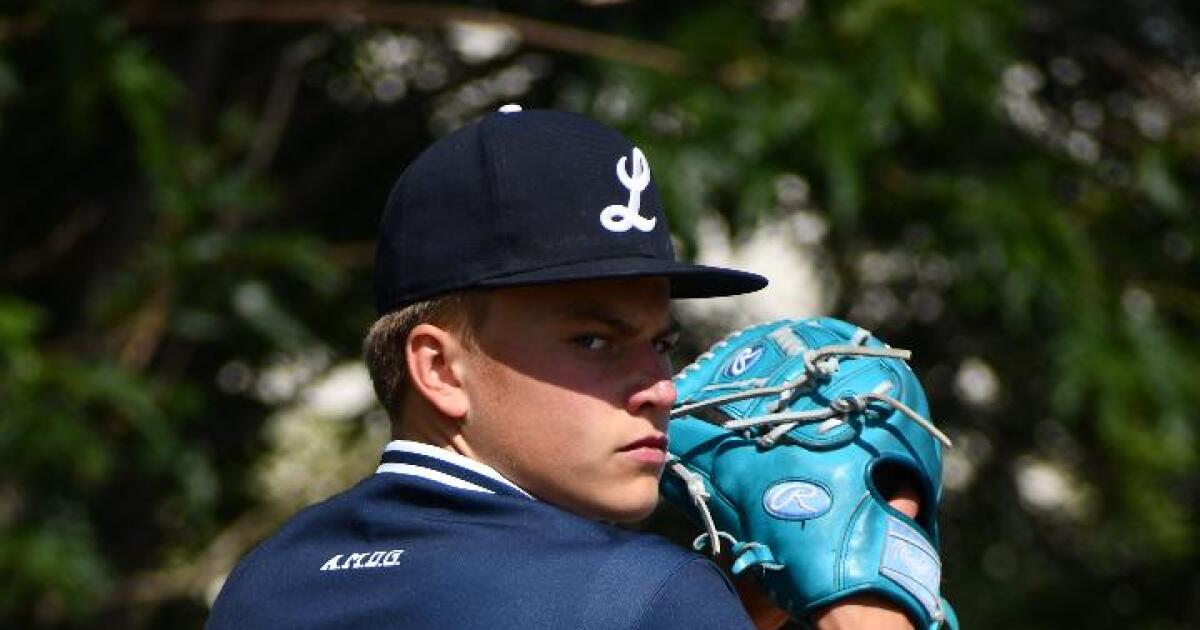
Week by week, freshman left-handed pitcher Sheriff Hall of Loyola High has gotten better and better. It sets up for an intriguing Southern Section Division 2 baseball final on Saturday when Hall goes against Ganesha at 5:30 p.m. at the Rancho Cucamonga Quakes’ diamond.
Whatever happens, Hall is ready. Coach Keith Ramsey has been preparing him for this moment. Hall is 7-3 with a 2.53 ERA while pitching mostly in the tough Mission League.
If Hall ever needs someone to put together a highlight tape, he knows whom to ask. His father, Jason, is a screenwriter and director who also played a recurring character in “Buffy the Vampire Slayer.”
Let’s see if Hall can be his own slayer on Saturday.
This is a daily look at the positive happenings in high school sports. To submit any news, please email eric.sondheimer@latimes.com.
The 21-year-old man shot and killed after opening fire on U.S. Secret Service agents near the White House was a Maryland resident, according to online records.
Following Saturday’s shootout, the Associated Press identified the suspect as Nasire Best. According to virtual records, Best lived in the Prince George’s County suburb of Glenarden with his family.
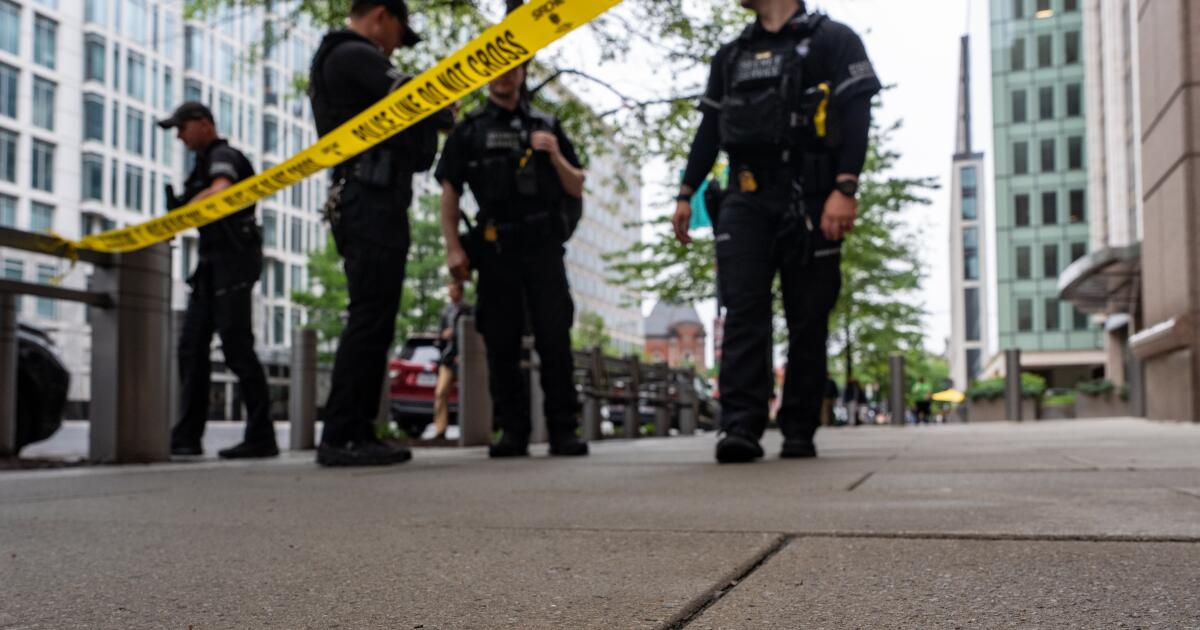
The shooting occurred near a White House security checkpoint shortly after 6 p.m., according to a social media post from the Secret Service, which alleged that Best “pulled a weapon from his bag and began firing.”
Secret Service Uniformed Division officers returned fire, striking Best, who was taken to a hospital where he was pronounced dead a short time later, the post said. The Secret Service said no officers were injured, but a bystander was struck by gunfire and remained in serious but stable condition Sunday, according to the Associated Press.
The Secret Service said the bystander, who has not been identified, suffered a gunshot wound described as not life-threatening, the AP reported. It was not clear how the person was shot.
The Secret Service post also noted that President Trump was in the White House during the incident and was not harmed.
A person listed as having the same name as Best has three failure-to-pay rent cases for a dwelling in the Foundry by the Park Apartments in Dundalk, Md., from as recent as November. The Baltimore Sun could not confirm whether the cases are linked to the person killed Saturday.
The AP reported that Best was identified as the suspect by a law enforcement official who spoke on condition of anonymity due to not being authorized to discuss the investigation.
The AP noted that court documents indicated that Best was arrested in July 2025 after he attempted to enter a White House checkpoint without authorization. It wrote that the court records said Best did not heed officers’ commands to stop, “claimed he was Jesus Christ” and told officers he wanted to be arrested.
The court issued Best a “pretrial stay away order,” which typically requires defendants not to go near a person or area before a trail, the AP reported. In August, a bench warrant was issued against Best after a notice of “noncompliance.” He did not appear for a subsequent hearing, the AP reported.
The shooting remains under investigation, and additional information will be release as it becomes available, according to the Secret Service.
Saturday’s shooting was the third time in the last month that shots were fired near the president, including at the White House Correspondents’ Assn. dinner in late April and near the Washington Monument earlier this month.
Hubbard writes for the Baltimore Sun. This story was distributed by the Associated Press via Tribune News Service.
MILWAUKEE — Looking back, Alex Vesia can say that when was traded from the Miami Marlins to the Dodgers with fellow pitching prospect Kyle Hurt in 2021, he had “no idea” what it actually meant to trust the process.
Sure, it’s a cliche, and one most strongly associated with the Philadelphia 76ers’ rebuild in the NBA a decade ago. But it’s had staying power in the sports lexicon for a reason.
The mantra clicked for Vesia in his first season with the Dodgers.
“When I first heard of it, it was just like, OK, I know what a process is,” he said before the Dodgers’ 5-1 win against the Milwaukee Brewers on Sunday. “But then watching it over the course of the year — where fastballs need to be placed, where sliders need to go, just trusting the information. That when a guy swings a lot at sliders and misses them, trusting that when you throw yours, he will miss it.
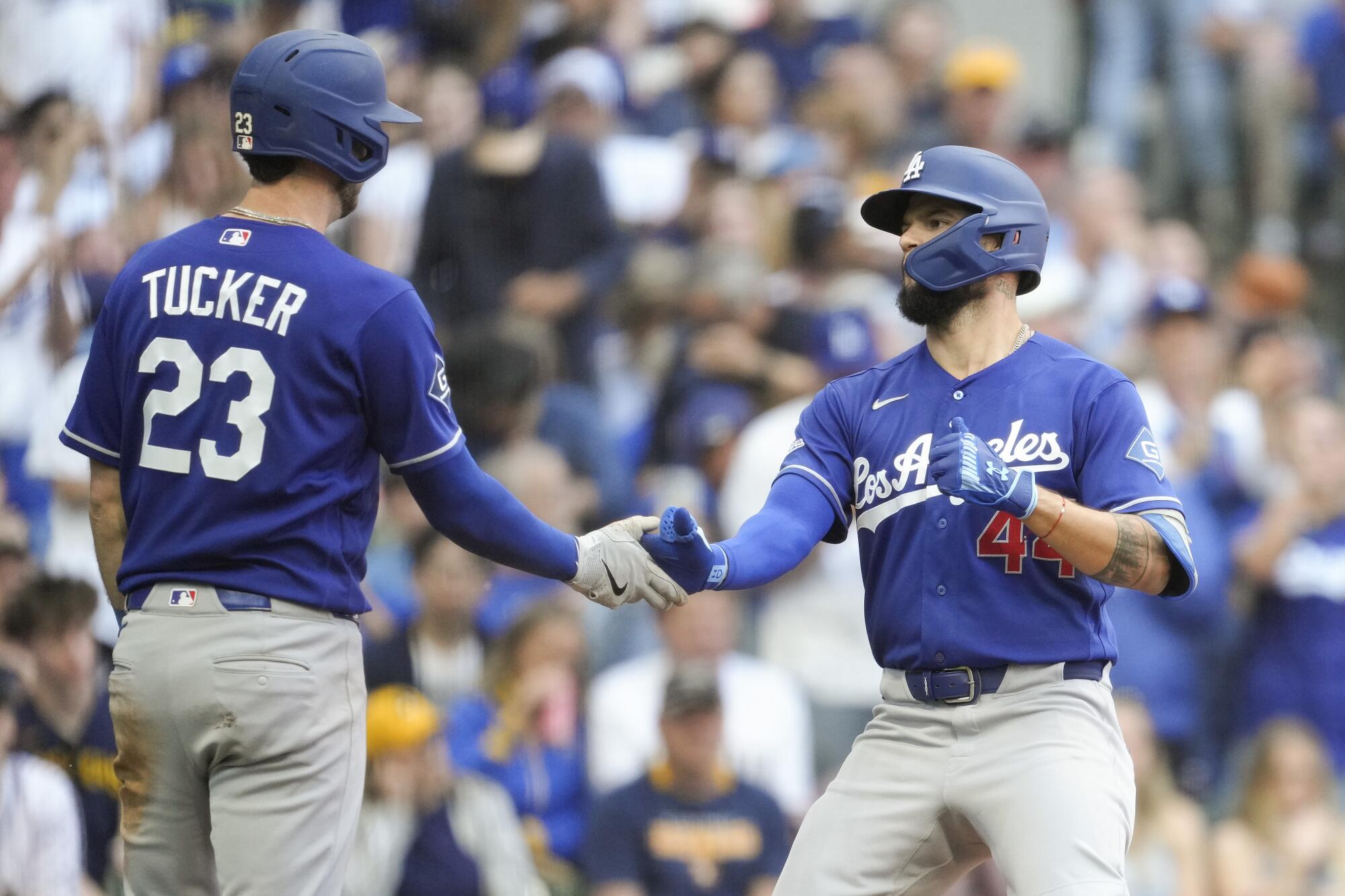
The Dodgers’ Andy Pages celebrates his two-run home run with teammate Kyle Tucker during a win over the Brewers Sunday in Milwaukee.
(Patrick McDermott / Getty Images)
“And then over the course of a few outings, when you see those results, it’s like, ‘OK, I can do this’ more and more and more.”
Vesia is now one of the veteran leaders in a Dodgers bullpen that set a franchise record Saturday with 36 consecutive scoreless innings, surpassing the mark of 33 set in 1998. The Dodgers extended the streak to 38 on Sunday.
“Last night was awesome,” Vesia said Sunday, a day after a dominant 11-3 win. “It was a really great game because it showed how versatile our bullpen can be, that we don’t need a set inning for the guy.”
Instead, manager Dave Roberts could play matchups — having left-handers Vesia and Tanner Scott face the more heavily left-handed heart of the order, and Hurt check in for the right-handers at the bottom and top — until the Dodgers’ offense made it a blowout.
On Sunday, the bullpen had only to cover two innings, thanks to a steady performance by Yoshinobu Yamamoto, who limited the Brewers to one run through seven innings. And the Dodgers relievers had a four-run cushion to work with, thanks to a fifth-inning rally that included a two-run triple from Kyle Tucker and a two-run homer from Andy Pages.
Right-hander Will Klein retired the top of the order in a clean eighth inning, and Scott set down the next three Brewers, putting the finishing touches on a series win in a rematch of last year’s National League Championship Series.
Dodgers shortstop Mookie Betts turns a double play during a win Sunday in Milwaukee.
(Kayla Wolf / Ap Photo/kayla Wolf)
As Roberts reflected on the 7-2 road trip to Anaheim, San Diego and Milwaukee, he highlighted the bullpen’s impact: “There’s a lot of different guys that are the reason why they’ve been so successful recently.”
Entering the season, much of the chatter surrounding the bullpen centered on the addition of closer Edwin Díaz. But he’s been on the injured list (elbow surgery) since April 20, and the relief corps has been on a roll.
Without a closer, the Dodgers’ circle of trust in close games includes a good mix of veteran arms and budding talent, from Scott, Vesia and Blake Treinen to Hurt, Klein and Jack Dreyer (on the 15-day IL because of left shoulder discomfort).
“It’s a bunch of selfless guys who know that the job is to throw up a zero and give it to the next guy,” Klein said. “I think we’re all just trying to give our offense a chance to do what we know they can do. And I think that showed up last night, and it showed up a lot the last two weeks. They’ve been playing really well, and so I think we know if we just go out there, put up a zero, they’ll do it the next inning — and if they don’t, we try again.”
The bullpen’s scoreless streak stretches back through the eighth inning of a 6-2 loss to the San Francisco Giants on May 12. It covers a bullpen game, when the group filled in for Blake Snell after he was scratched from his start in Anaheim, and the series in San Diego, where the Dodgers relievers outperformed the Padres’ renowned bullpen.
“We’ve got to give credit to the starters and the hitters, and the guys playing great defense too,” Hurt said. “So, it’s not just us.”
Though good defense and some luck is involved in any scoreless streak this long — opponents entered Sunday with a .147 batting average on balls in play against Dodgers relievers since their shutout performance on May 13 — it’s no fluke either. The Dodgers bullpen still leads the majors in the Fielding Independent Pitching category (2.35) in that time.
So, what’s the secret stuff?
“The secret stuff is, there is no secret stuff,” Klein said. “Sometimes when you look for an answer, or you look for the magic to fix things, that’s when you overdo it and things start spiraling. But I think everyone knows that it’s one pitch at a time, and if you think about the result, you’re not as ingrained in the process.”
That was the moral in “Space Jam” too.
The ripple effects of that consistency have been clear.
“It frees up the offense a little bit,” Roberts said. “Regardless of who comes into a ballgame, I think they have the confidence now to go up and put up a zero. And it makes my life easier because you trust a lot more guys. And that’s what these guys have earned.”
Pack up the car and get ready for temperatures in the upper 80s this coming weekend in Clovis and Fresno, where CIF state championships will be held in track and field and boys’ volleyball.
Buchanan High School is the site Friday and Saturday for the track championships, where City Section record-holder Lawrence Kensinger will try to win a state title in the shotput after his astonishing mark of 65-11 at the City finals broke a record established in 1973. Running events begin at 5 p.m. Friday to qualify for Saturday’s finals.
Servite sprinters will try to put on a show in the 4×100 relay, the 100, 200 and 400 races. Sherman Oaks Notre Dame high jumper JJ Harel will try to defend his state title. At the Southern Section finals, he cleared a career-best 7-1.
Fresno City College is the site for the volleyball championships on Saturday.
Tickets are available only through gofan.co.
This is a daily look at the positive happenings in high school sports. To submit any news, please email eric.sondheimer@latimes.com.
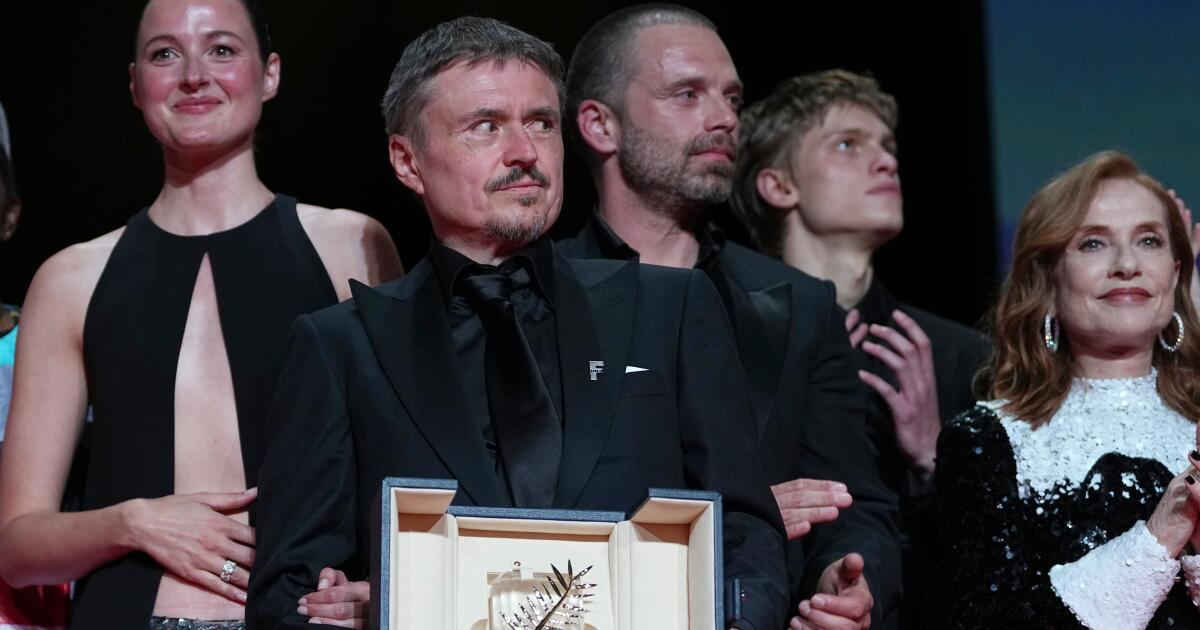
In a squeaker race for Cannes’ top prize, Romanian director Cristian Mungiu prevailed on Saturday, taking the Palme d’Or for his tense community drama “Fjord.”
The movie, a widely admired conversation-starter at the festival, stars Sebastian Stan and Renate Reinsve as religious parents who come into conflict with the child protection services of their tiny Norwegian town where they have relocated with their family.
Mungiu, a previous winner of the Palme for his controversial 2007 abortion drama “4 Months, 3 Weeks and 2 Days,” now joins an exclusive group of 10 filmmakers who have won the Palme twice — an achievement shared by Francis Ford Coppola (1974’s “The Conversation” and 1979’s “Apocalypse Now”) and Ruben Östlund (2017’s “The Square” and 2022’s “Triangle of Sadness”), among others. No one has ever won a third Palme d’Or.
Neon will release “Fjord” in the fall, with an extensive awards campaign to follow.
This year’s nine-member main competition jury, led by Korean director Park Chan-wook and studded with notables including “The Substance” star Demi Moore, Stellan Skarsgård and “Hamnet” director Chloé Zhao, seemed intent on spreading the wealth among as many winners as possible. There were three ties at Saturday’s awards ceremony.
The award for actress was shared by Virginie Efira and Tao Okamoto, co-stars of Ryusuke Hamaguchi’s “All of a Sudden,” a movie pegged by many to potentially go all the way. Similarly, the prize for actor was bestowed on both Emmanuel Macchia and Valentin Campagne, co-stars of Lukas Dhont’s World War I romantic drama “Coward.”
The prize for directing went to three people — and two movies — with a joint win for Javier Calvo and Javier Ambrossi (better known as Los Javis) for their century-spanning queer historical drama “The Black Ball,” as well as to director Paweł Pawlikowski for his exquisite post-World War II psychodrama “Fatherland.” (Pawlikowski half-joked at the podium, “This was a disastrous piece of mise-en-scène” after the awkward award presentation had him waiting in the wings.)
Claiming this year’s Grand Prize (essentially second place) was “Minotaur,” the rapturously received comeback film of Andrey Zvyagintsev, a Russian director who had been sidelined with a near-fatal bout of long COVID that put him in a coma. His new movie, about a wealthy Moscow family, is both an erotic thriller and an indictment of amoral oligarchy detached from the war with Ukraine.
The festival’s third-place Jury Prize went to the borderland German drama “The Dreamed Adventure,” directed by Valeska Grisebach.
VIENNA — Vienna’s famed coffeehouses have embraced the Eurovision Song Contest. They have also been touched by tensions over Israel’s inclusion in the sequin-drenched pop music competition.
When officials announced a list of “Eurofan Cafes” — Vienna coffee shops offering food and music from competing countries — Israel was initially left out.
MQ Kantine, a modern café in the city’s arty museums quarter, offered to step in. Now it has falafel, bagels with lox and kosher wine on the menu, a string of small Israeli flags hanging from the ceiling — and a police officer outside the door.
Security is tight across Vienna during the international music contest, whose “United by Music” slogan rings sightly hollow this year. Five countries are boycotting because Israel is taking part. Pro-Palestinian activists are planning a protest concert — one of several Eurovision alternatives across Europe — and an anti-Israel march before Saturday’s grand final.
At MQ Kantine, volunteers take turns to monitor for potential trouble. But so far the mood has been supportive, said Daniel Kapp, a PR consultant and pro-Israel campaigner.
“It’s beautiful,” he said, as people drank coffee and beer on the café terrace in the spring sunshine, though he noted that the police officer on duty showed that all is “not entirely normal.”
“My feeling is that Austria to a certain degree has learned from its history,” Kapp said, referring to the deadly antisemitism under the Nazis before and during World War II. “Which is why the support for Israel is a lot more normal than it is in other countries.”
Israel has competed in Eurovision for more than 50 years, and won four times. But its participation has been contested since it launched a war in Gaza after 1,200 people were killed in a Hamas-led cross-border attack on Oct. 7, 2023. More than 73,000 Palestinians have been killed since the war began, according to the territory’s Health Ministry, which operates under the Hamas-run government and whose detailed records are viewed as generally reliable by the international community.
Israel’s government has repeatedly defended its campaign as a response to the Oct. 7 attack. But a number of experts, including those commissioned by a United Nations body, have said that Israel’s offensive in Gaza amounts to genocide. Israel, home to many Holocaust survivors and their relatives, has vigorously denied the claim.
The latest Israel-Hezbollah war in Lebanon and the U.S.-Israeli war on Iran have driven tensions still higher.
The 2024 Eurovision contest in Malmo, Sweden, and last year’s event in Basel, Switzerland, saw pro-Palestinian protests that called for Israel to be expelled. Five countries — Iceland, Ireland, the Netherlands, Slovenia and Spain — pulled out of the 2026 contest after organizers allowed Israel to compete.
Partying amid tight security
The tensions have produced a Eurovision of two halves. An upbeat party atmosphere prevails inside the Wiener Stadthalle arena and in the separate Eurovision Village fan zone. But getting in means passing through a ring of steel, with searches, scanners and a ban on all bags inside the arena. Armed police are a very visible presence on the streets.
Awareness of risk from terror plots is high in the city after a 21-year-old Austrian man accused of pledging allegiance to the Islamic State group pleaded guilty to plotting to attack a Taylor Swift concert in Vienna in 2024.
Israeli singer Noam Bettan told Israeli media that, like last year’s Israeli competitor Yuval Raphael, he practiced performing while being booed. There were scattered shouts amid the cheers when he performed in the first Eurovision semifinal on Tuesday. He secured a spot in Saturday’s final by being one of the top 10 finishers in voting by viewers and national juries.
Organizers said four people were removed from the 10,000-strong audience for disruptive behavior.
Austrian Eurovision fan Ivo Herzl, who attended the semifinal, said “the vibe was incredibly positive.” He is showing support for Israel by making and selling Mazel Lov T-shirts — a play on “mazel tov,” a Hebrew and Yiddish phrase of congratulations.
“Vienna has always been a city of tolerance,” Herzl said. “It’s the city of music and we’ll always do everything possible for everyone to enjoy a musical event.”
Some Israeli fans said they were reassured by the tight security. Oz Yona, attending his first Eurovision, said he had experienced “no hate” and felt Austria took antisemitism seriously.
He came with friends to cheer for Israel, though he was not optimistic about Bettan’s chances — for musical rather than political reasons.
“I don’t think he will win,” Yona said. “Finland is better this year. Greece is better this year. We have a good song, but not a winning song.”
Birgitta Peterson and Kristina Nilsson, who wear matching pink bomber jackets and call themselves the Swedish Ladies, love to explore new cities and meet up each year with their “Eurovision family” of fellow fans. They plan to wave Israeli flags at Saturday’s final, after Swedish contestant Felicia said earlier this year that she didn’t think Israel should be in the contest.
They say tensions over Israel have divided a fan community long known for its friendliness and embrace of diversity.
“The wounds are very deep at the moment,” Nilsson said.
“This event should really be about ‘united by music’ and happiness,” she added. “That’s what Eurovision is all about.”
Year 3 in charge of St. John Bosco High’s offense is about to begin for quarterback Koa Malau’ulu, who will be a junior this fall.
St. John Bosco is hosting an eight-team seven-on-seven passing tournament on Saturday starting at 9:30 a.m. It’s one of three big passing tournaments this weekend, with Dana Hills and Long Beach Millikan also hosting tournaments.
Malau’ulu won’t have All-American receiver Madden Williams (now at Texas A&M), but class of 2028 receiver DJ Tubbs showed last year he’s ready to take on a leading role. Corona Centennial is also competing, which will mark the debut of Cathedral transfer Jaden Jefferson at quarterback.
Dana Hills has a 16-team tournament that includes Oxnard Pacifica, Laguna Beach and Crean Lutheran. Each of those schools returns big-time quarterbacks. Pool-play games begin at 8 a.m.
Games at Long Beach Millikan begin at 9 a.m.
This is a daily look at the positive happenings in high school sports. To submit any news, please email eric.sondheimer@latimes.com.
He introduced Gary Lamont, Lisa McGrillis and Emily Atack from the series and asked them all about their characters and what they get up to in the Jilly Cooper adaptation.
After speaking to the Rivals cast, Saturday Kitchen’s Matt Tebbutt addressed viewers, explaining one star’s absence from the line-up.
Helen McGinn, wine expert and presenter, had not been able to take part in the show as Matt said: “Now, Helen McGinn had to stay at home today because last night she had a binge-watch party with her neighbours in the leafy gated community of Hampshire.
“And seriously, she is too much of a fangirl to sit here today; her jaw would be on the floor. She can’t believe she’s missing out on our Rivals special.”
“So guys, please say hello to Helen.” The cast then waved and blew kisses, with Lamont saying, “Wish you were here.”
“Are you hungover, Helen?” McGrillis added cheekily as Matt joked, “Probably is. Helen, drop us a text, let us know what you are up to.”
Viewers took to X noticing her absence, with one sharing: “Rivals dropped last night, and Helen is not doing the wine this morning. Coincidence? #SaturdayKitchen”
Will Murray, Jake Croft and Kate Jenkins were on hand to serve up some culinary delights inspired by 80s classics in homage to Rivals.
Ollie Smith served up some classic cocktails, which were also in tribute to the Disney+ “bonkbuster” series.
Tebbutt and Smith spoke to the Rivals cast about the new season with the show’s host bingeing the first two episodes.
“It’s absolutely brilliant,” Tebbutt said. “And I have to say, none of you looks anything like you do.” Later in the episode, Tebbutt expressed his surprise at the stars’ transformations in the series.
Saturday Kitchen airs on BBC One on Saturdays at 10am
Note: Boys finals in all divisions Friday, May 15 at Fred Kelly Stadium (times TBA); Girls finals in all divisions Saturday, May 16 (times TBA) at Fred Kelly Stadium.