Power, politics and a $2.8-billion exit: How Paramount won Warners
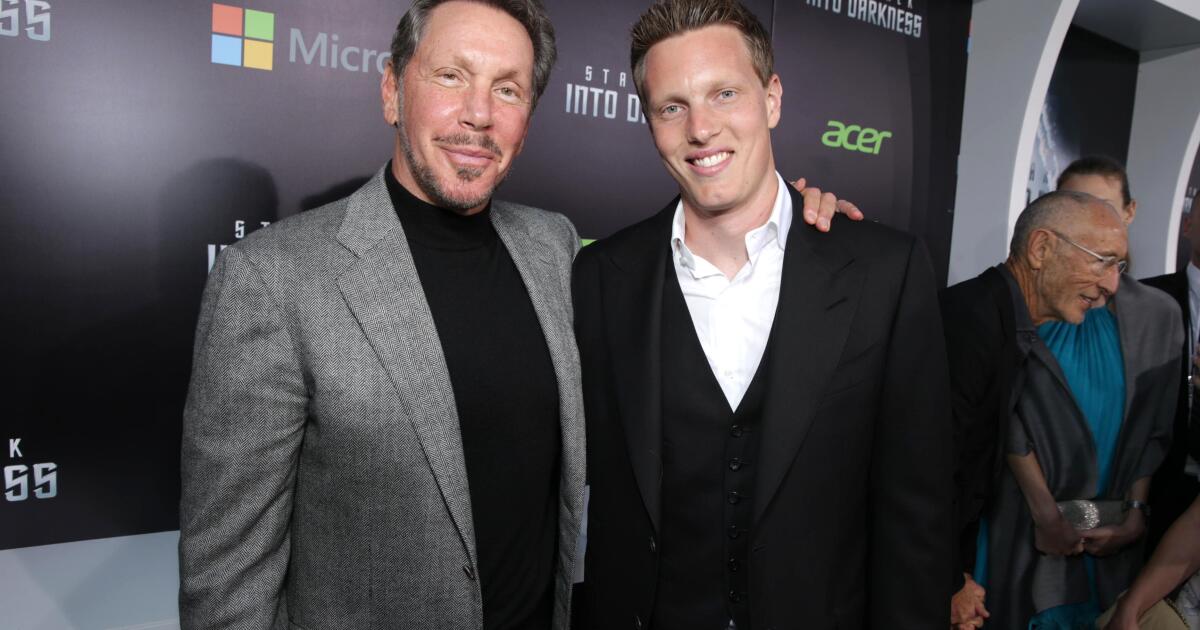
The morning after Netflix clinched its deal to buy Warner Bros., Paramount Skydance Chairman David Ellison assembled a war room of trusted advisors, including his billionaire father, Larry Ellison.
Furious at Warner Bros. Discovery Chief David Zaslav for ending the auction, the Ellisons and their team began plotting their comeback on that crisp December day.
To rattle Warner Bros. Discovery and its investors, they launched a three-front campaign: a lawsuit, a hostile takeover bid and direct lobbying of the Trump administration and Republicans in Congress.
“There was a master battle plan — and it was extremely disciplined,” said one auction insider who was not authorized to comment publicly.
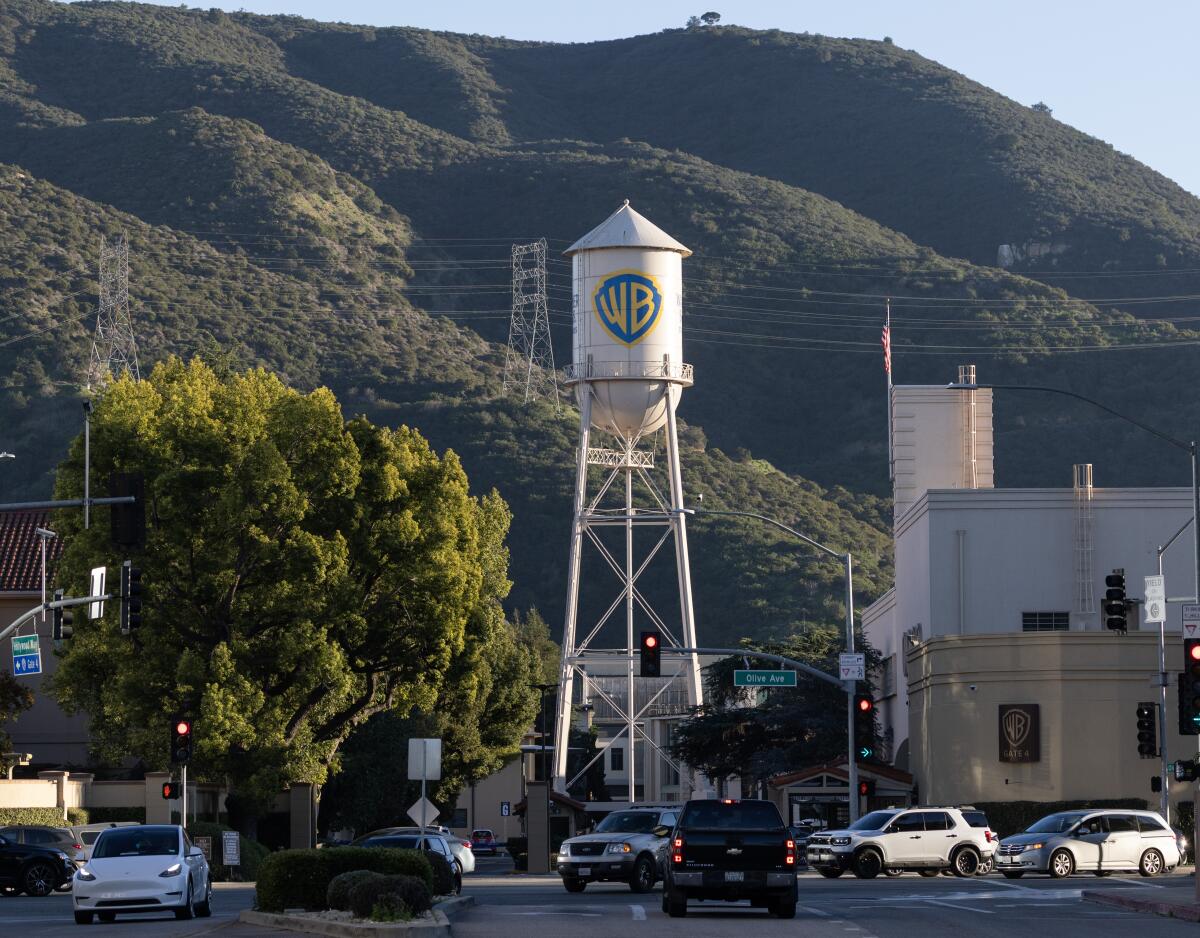
Netflix stunned the industry late Thursday by pulling out of the bidding, clearing the way for Paramount to claim the company that owns HBO, HBO Max, CNN, TBS, Food Network and the Warner Bros. film and television studios in Burbank. The deal was valued at more than $111 billion.
The streaming giant’s reversal came just hours after co-Chief Executive Ted Sarandos met with Atty Gen. Pam Bondi and a deputy at the White House. It was a cordial session, but the Trump officials told Sarandos that his deal was facing significant hurdles in Washington, according to a person close to the administration who was not authorized to comment publicly.
Even before that meeting, the tide had turned for Paramount in a swell of power, politics and brinkmanship.
“Netflix played their cards well; however, Paramount played their cards perfectly,” said Jonathan Miller, chief executive of Integrated Media Co. “They did exactly what they had to do and when they had to do it — which was at the very last moment.”
Key to victory was Larry Ellison, his $200-billion fortune and his connections to President Trump and congressional Republicans.
Paramount also hired Trump’s former antitrust chief, attorney Makan Delrahim, to quarterback the firm’s legal and regulatory action.
Republicans during a Senate hearing this month piled onto Sarandos with complaints about potential monopolistic practices and “woke” programming.
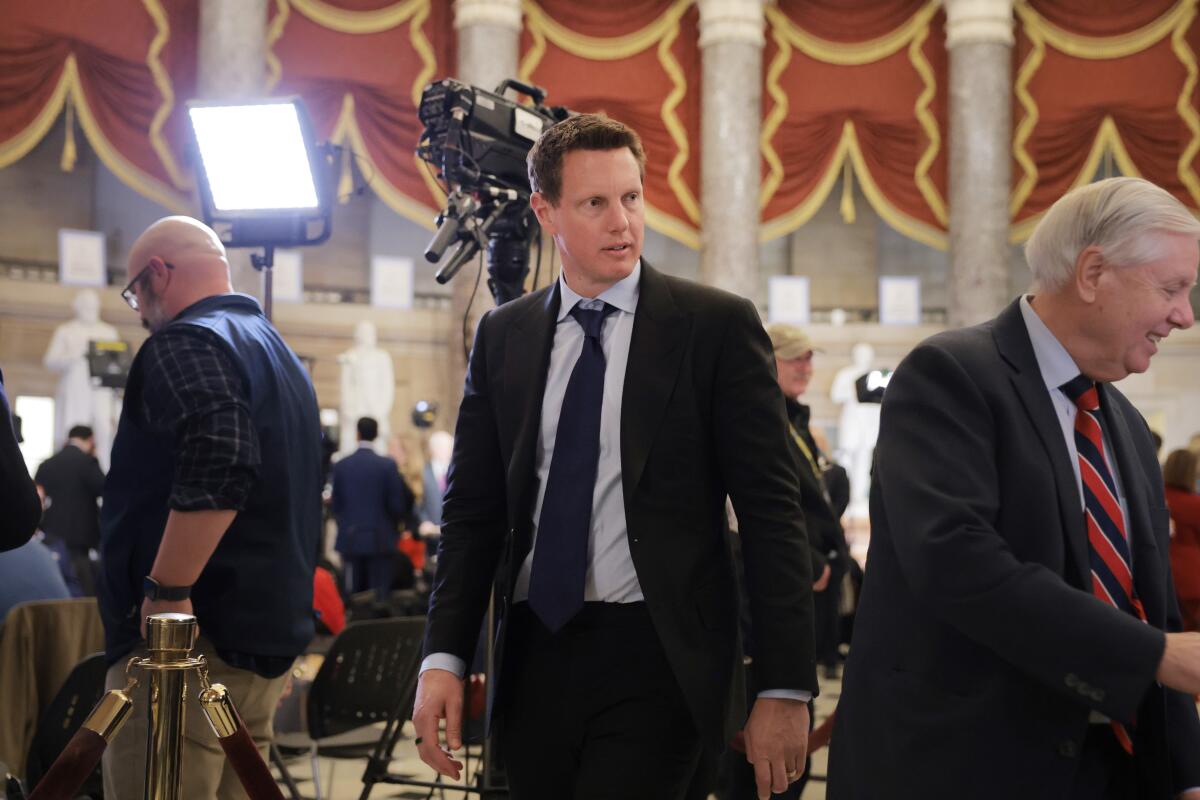
David Ellison skipped that hearing. This week, however, he attended Trump’s State of the Union address in the Capitol chambers, a guest of Sen. Lindsey Graham (R-S.C.). The two men posed, grinning and giving a thumbs-up, for a photo that was posted to Graham’s X account.

David Ellison, the chairman and chief executive of Paramount Skydance Corp., walks through Statuary Hall to the State of the Union address at the U.S. Capitol on Feb. 24, 2026.
(Anna Moneymaker / Getty Images)
On Friday, Netflix said it had received a $2.8-billion payment — a termination fee Paramount agreed to pay to send Netflix on its way.
Long before David Ellison and his family acquired Paramount and CBS last summer, the 43-year-old tech scion and aircraft pilot already had his sights set on Warner Bros. Discovery.
Paramount’s assets, including MTV, Nickelodeon and the Melrose Avenue movie studio, have been fading. Ellison recognized he needed the more robust company — Warner Bros. Discovery — to achieve his ambitions.
“From the very beginning, our pursuit of Warner Bros. Discovery has been guided by a clear purpose: to honor the legacy of two iconic companies while accelerating our vision of building a next-generation media and entertainment company,” David Ellison said in a Friday statement. “We couldn’t be more excited for what’s ahead.”
Warner’s chief, Zaslav, who had initially opposed the Paramount bid, added: “We look forward to working with Paramount to complete this historic transaction.”
Netflix, in a separate statement, said it was unwilling to go beyond its $82.7-billion proposal that Warner board members accepted Dec. 4.
“We believe we would have been strong stewards of Warner Bros.’ iconic brands, and that our deal would have strengthened the entertainment industry and preserved and created more production jobs,” Sarandos and co-Chief Executive Greg Peters said in a statement.
“But this transaction was always a ‘nice to have’ at the right price, not a ‘must have’ at any price,” the Netflix chiefs said.
Netflix may have miscalculated the Ellison family’s determination when it agreed Feb. 16 to allow Paramount back into the bidding.
The Los Gatos, Calif.-based company already had prevailed in the auction, and had an agreement in hand. Its next step was a shareholder vote.
“They didn’t need to let Paramount back in, but there was a lot of pressure on them to make sure the process wouldn’t be challenged,” Miller said.
In addition, Netflix’s stock had also been pummeled — the company had lost a quarter of its value — since investors learned the company was making a Warner run.
Upon news that Netflix had withdrawn, its shares soared Friday nearly 14% to $96.24.

Netflix Chief Executive Ted Sarandos arrives at the White House on Feb. 26, 2026.
(Andrew Leyden / Getty Images)
Invited back into the auction room, Paramount unveiled a much stronger proposal than the one it submitted in December.
The elder Ellison had pledged to personally guarantee the deal, including $45.7 billion in equity required to close the transaction. And if bankers became worried that Paramount was too leveraged, the tech mogul agreed to put in more money in order to secure the bank financing.
That promise assuaged Warner Bros. Discovery board members who had fretted for weeks that they weren’t sure Ellison would sign on the dotted line, according to two people close to the auction who were not authorized to comment.
Paramount’s pressure campaign had been relentless, first winning over theater owners, who expressed alarm over Netflix’s business model that encourages consumers to watch movies in their homes.
During the last two weeks, Sarandos got dragged into two ugly controversies.
First, famed filmmaker James Cameron endorsed Paramount, saying a Netflix takeover would lead to massive job losses in the entertainment industry, which is already reeling from a production slowdown in Southern California that has disrupted the lives of thousands of film industry workers.
Then, a week ago, Trump took aim at Netflix board member Susan Rice, a former high-level Obama and Biden administration official. In a social media post, Trump called Rice a “no talent … political hack,” and said that Netflix must fire her or “pay the consequences.”
The threat underscored the dicey environment for Netflix.
Additionally, Paramount had sowed doubts about Netflix among lawmakers, regulators, Warner investors and ultimately the Warner board.
Paramount assured Warner board members that it had a clear path to win regulatory approval so the deal would quickly be finalized. In a show of confidence, Delrahim filed to win the Justice Department’s blessing in December — even though Paramount didn’t have a deal.
This month, a deadline for the Justice Department to raise issues with Paramount’s proposed Warner takeover passed without comment from the Trump regulators.
“Analysts believe the deal is likely to close,” TD Cowen analysts said in a Friday report. “While Paramount-WBD does present material antitrust risks (higher pay TV prices, lower pay for TV/movie workers), analysts also see a key pro-competitive effect: improved competition in streaming, with Paramount+ and HBO Max representing a materially stronger counterweight to #1 Netflix.”
Throughout the battle, David Ellison relied on support from his father, attorney Delrahim, and three key board members: Oracle Executive Vice Chair Safra A. Catz; RedBird Capital Partners founder Gerry Cardinale; and Justin Hamill, managing director of tech investment firm Silver Lake.
In the final days, David Ellison led an effort to flip Warner board members who had firmly supported Netflix. With Paramount’s improved offer, several began leaning toward the Paramount deal.
On Tuesday, Warner announced that Paramount’s deal was promising.
On Thursday, Warner’s board determined Paramount’s deal had topped Netflix. That’s when Netflix surrendered.
“Paramount had a fulsome, 360-degree approach,” Miller said. “They approached it financially. … They understood the regulatory environment here and abroad in the EU. And they had a game plan for every aspect.”
On Friday, Paramount shares rose 21% to $13.51.
It was a reversal of fortunes for David Ellison, who appeared on CNBC just three days after that war room meeting in December.
“We put the company in play,” David Ellison told the CNBC anchor that day. “We’re really here to finish what we started.”
Times staff writer Ana Cabellos and Business Editor Richard Verrier contributed to this report.