Newsom vows to move forward with Delta water tunnel in California
SACRAMENTO — Gov. Gavin Newsom said his administration is “moving forward aggressively” to continue laying the groundwork for a giant tunnel beneath the Sacramento-San Joaquin River Delta to replumb the state’s water system.
“We got to move faster. Move faster,” Newsom said to regulators during a speech Thursday at a conference held by the Assn. of California Water Agencies. “We all have to be held to a higher level of accountability.”
California’s 40th governor provided a chronological look back at his water policies since taking office in 2019 and asserted the need to continue his effort to modernize state infrastructure to provide for cities and farms into the future.
Newsom cast the tunnel as a “climate adaptation project,” noting that climate change is projected to shrink the amount of water the state can deliver with its current infrastructure.
With his term expiring at the end of the year, Newsom acknowledged that he will soon “pass the baton” on water policy to the next governor. Democrat or Republican, that person could decide the fate of his signature water project.
“The Delta Conveyance, if we had it last year alone, would have provided enough water, in terms of what we could have captured with an updated system, enough water for 9.8 million Californians’ needs for over a year,” Newsom said. “We’ve got to get that done.”
Water has been a focus of the Newsom administration since his first day in office, when the governor took his cabinet to Monterey Park Tract, a rural Central Valley community that lacked access to safe drinking water.
Described by Newsom as “the forever problem” in California, water policy is also among the most politically contentious issues in the state.
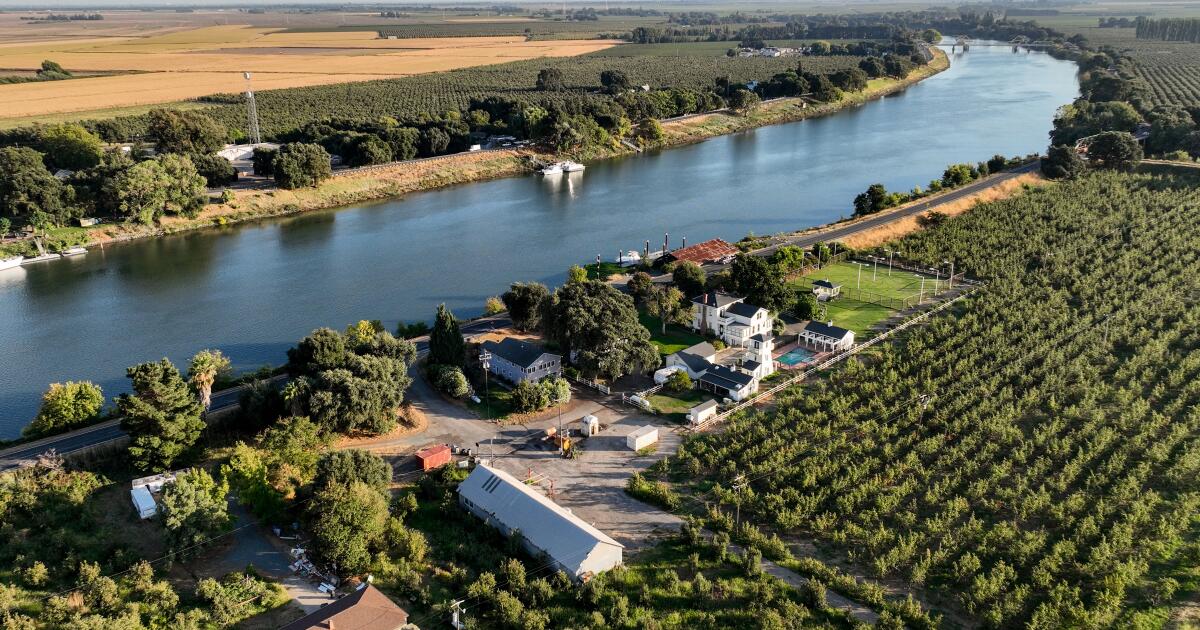
The tunnel would create a second route to transport water from new intakes on the Sacramento River to the south side of the Delta, where pumps send water into the aqueducts of the State Water Project.
The project is particularly acrimonious, drawing out geographical battles between north and south and thorny fights between officials who want to build the tunnel and environmentalists and Delta residents seeking to protect the local ecosystem and their way of life.
Newsom and other supporters have said the tunnel would protect the state’s water system as climate change intensifies severe droughts and deluges. Opponents call the project a costly boondoggle, arguing it’s not necessary and would destroy the Delta.
It’s been mired with regulatory hurdles and other challenges for years.
The State Water Resources Control Board is considering a petition by the Newsom administration to amend permits so water could be tapped where the tunnel intakes would be built.
There have also been other complications. A state appeals court in December rejected the state’s plan for financing the project, and the California Supreme Court in April declined to take up the case. The state Department of Water Resources said it still plans to issue bonds to finance the project.
Other court challenges by Delta-area counties and environmental groups are also pending.
Whether the project is ultimately built may hinge on whether large water agencies, including the Metropolitan Water District of Southern California, decide to participate and pay for its building.
State officials have said that the tunnel, called the Delta Conveyance Project, ultimately would be paid for by participating water agencies.
The state estimated in 2024 that the tunnel would cost $20.1 billion, while opponents say it could cost three to five times more than that.
In the last seven years, California has invested $11 billion in water infrastructure, Newsom said.
The Democratic governor reflected on other parts of his water policies, saying he has prioritized securing funds to provide clean drinking water to more communities where Californians live with contaminated tap water.
He said while there has been progress in bringing safe drinking water to more communities, there is still “a lot more work to be done.”
Newsom touted his administration’s investment in replenishing groundwater in the Central Valley and its efforts supporting plans to build the Sites Reservoir near Sacramento.
Newsom said the Sites Reservoir is critical for the state’s future, and he indicated some frustration about the pace at which it’s advancing.
“We’ve got to do the groundbreaking at Sites,” he said. “If you can’t agree to an off-stream investment in this world of weather whiplash, we’re as dumb as we want to be.”
He said his administration has also made progress on environmental projects including restoring wetlands around the shrinking Salton Sea, removing dams on the Klamath River, and developing a strategy to help salmon, which have suffered major declines in recent years.
Touching on issues that generate heated debate, Newsom talked about a controversial plan for new water rules in the Delta that relies on so-called voluntary agreements in which water agencies would contribute funding for wetland habitat restoration projects and other measures.
Newsom described the approach, called the Healthy Rivers and Landscapes program, as a solution to break away from the traditional conflict-ridden regulatory approach and improve the Delta’s ecological health.
“Got to maintain the vigilance on these voluntary agreements. At peril, we go back to our old ways,” he said.
Environmental advocates argue that the proposed approach, which is widely supported by water agencies, would take too much water out of the Delta and threaten native fish that are already in severe decline.
Newsom said climate change is increasingly driving “weather whiplash” in California and that the state must prepare. He noted that his tenure included the extreme drought from 2020-22, followed by extremely wet conditions in 2023, which revived Tulare Lake on thousands of acres of farmland.
He said the state needs to manage water differently because the effects of climate change have been apparent over the last several years: “The hots were getting a lot hotter, the dries were getting a lot drier, and the wets were getting a lot wetter.”