
Ryans

GOP approves Paul Ryan’s austere, balanced budget

WASHINGTON – The austere House budget drafted by Rep. Paul D. Ryan (R-Wis.) that has come to define the Republican Party was approved Thursday on a strict party-line vote, as the GOP argues that a balanced budget should now be Washington’s top goal.

The blueprint is merely a proposal, without the force of law, but its overhaul of the Medicare program and steep reductions to other social safety net spending serves as the GOP’s opening salvo in renewed budget negotiations with President Obama. It was approved, 221 to 207, with no Democrats and 10 GOP defectors, largely conservatives or congressman in swing districts.

Republicans are anxious to reopen the debate over government spending with the White House even though some attribute the party’s setbacks in the November election to the plan from Ryan, the party’s former vice presidential nominee.

Ryan achieved the party’s goal of balancing the budget in 10 years, a promise House Speaker John A. Boehner (R-Ohio) made to restive conservatives to win their votes on other matters.

To bring revenues and spending into balance by 2024, Ryan relied on deeply reducing federal spending as well as new revenue coming from the New Year’s tax deal that raised income tax rates on the wealthy.

The centerpiece of the GOP plan would turn Medicare into a voucher-like program for the next generation of seniors, those younger than 55. When they become eligible, at age 65, those seniors will be offered a voucher that can be applied either to the purchase of private health insurance or toward the cost of Medicare, though the voucher may not cover all the costs of the policy chosen.

The Ryan budget also cuts Medicaid, the health program for the poor and seniors in nursing homes, as well as food stamps, welfare programs and student loans, while largely preserving money for defense accounts.

While Ryan temporarily counts the tax hikes from the New Year, his plan would ultimately lower top tax income rates from 39.6% to no more than 25%, while closing loopholes and deductions. The top corporate rate would also be dropped to 25%. Ryan believes that lower taxes will spur economic growth and essentially pay for themselves; but critics say the lower rates cannot be achieved without asking middle-income families to give up popular income-tax deductions or else adding to the deficit.

Before approving the Ryan budget, the House dismissed alternative proposals, including one from the Democratic minority that sought to raise taxes on corporations and wealthier Americans, while putting that new revenue toward infrastructure and state jobs, as well as decreasing the deficit. Also rejected was a more conservative budget that would have balanced in four years, as well as proposals from the progressive caucus and the Congressional Black Caucus.

The Senate, which has not approved a budget in four years, is set to do so later this week. The blueprint from the Democrats is a similarly partisan document, and passage will put the House, Senate and White House on another collision course as they begin budget talks toward the next deadline, in summer, when Congress will be asked to raise the nation’s debt limit.

Follow Politics Now on Twitter and Facebook

lisa.mascaro@latimes.com

Twitter: @LisaMascaroinDC


Source link

‘Unprecedented’ warning to anyone flying as airports across UK affected

Airports outside London are set to be ‘most extreme’ as they face ‘unprecedented’ rises

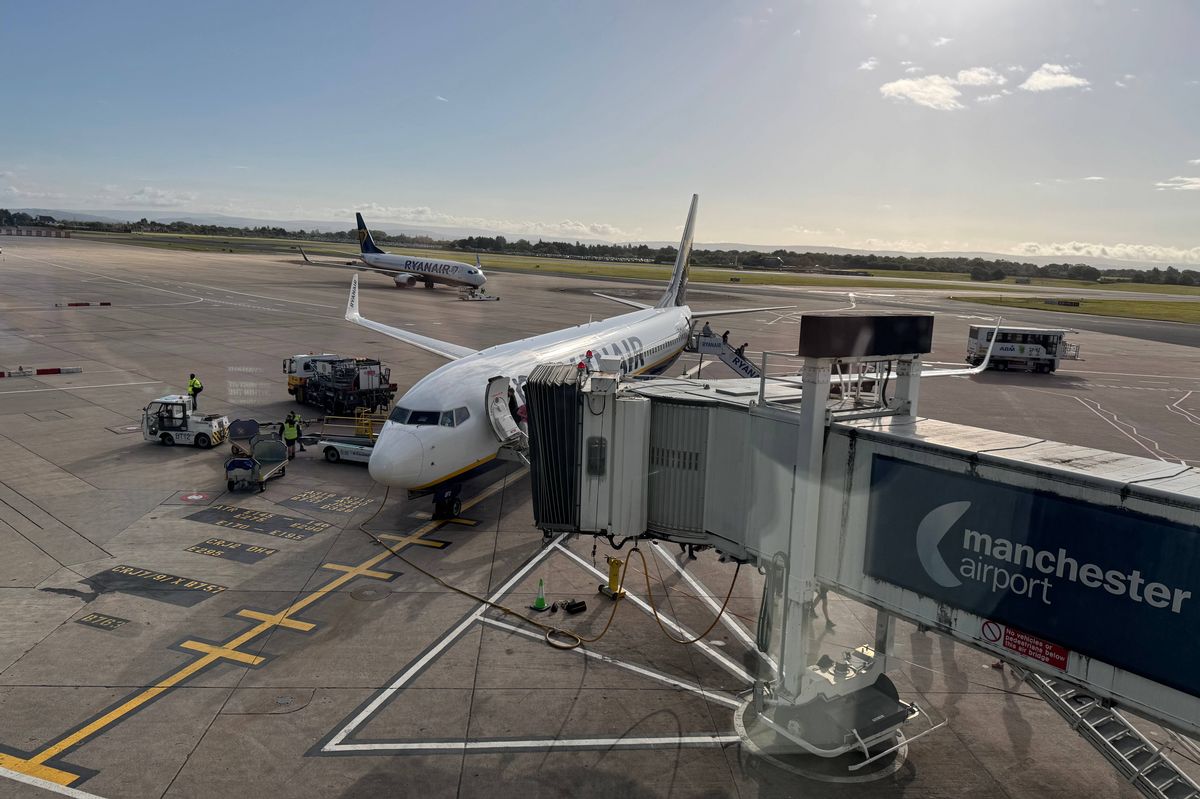
Air travellers are being urged to prepare for soaring ticket prices as regional airports throughout the UK brace for “unprecedented” property tax increases next year. An examination of official Government figures for the Press Association has shown that regional airports are among those confronting the sharpest business rates rises of any industry in the UK during a comprehensive overhaul of property assessments that determine the levy.

While London’s Heathrow and Gatwick are also being hammered with staggering business rates increases, the data reveals that the most severe cases are concentrated beyond London, with regional airports poised to bear the brunt. Global tax consultancy Ryan’s analysis of Valuation Office Agency (VOA) figures discovered that rateable values have rocketed more than six times over in certain instances during the latest property reassessment, causing tax demands to skyrocket.

Despite so-called transitional relief, which caps rises at 30% next year, regional airports will still face some of the most substantial cash hikes nationwide. The majority of airports will witness their bills more than treble over the coming three years.

Manchester Airport stands among the hardest hit, with its business rates demand poised to leap by £4.2 million to £18.1 million next year, Ryan’s figures show. Bristol Airport will experience a £1.2 million jump to £5.2 million, whilst Birmingham International Airport anticipates a £1.8 million surge to £7.6 million.

Newcastle International Airport faces a £244,755 rise to £1.1 million. Alex Probyn, who leads property tax practice for Europe and Asia-Pacific at Ryan, said: “With an unprecedented 295% sector-wide uplift, regional airports simply cannot absorb a cost shock of this magnitude. These increases will inevitably flow through the system: first into airport charges, then into airline costs, and ultimately into ticket prices.”

Airport operators have raised concerns that this tax hike could stifle investment in the sector.

A spokesperson from Manchester Airports Group said: “Airports were already some of the highest rates-payers in the country and were prepared to pay significantly more. But increases of more than 100% mean we have to look again at our plans to invest more than £2 billion in our airports across the UK over the next five years.

“It is inevitable air travel will become more expensive as the industry absorbs these costs. That impacts hard-working people throughout the country and makes global trade harder for businesses.”

AirportsUK, the trade group representing the sector, is formulating a response to the Treasury’s consultation on the business rates plan, which concludes in February. It criticised the plans as “short-sighted” and warned they will “have a knock-on effect for the businesses that depend on airport connectivity in all areas of England”. This threatens to “negatively impacting local economies that depend on the supply chains, tourists and connections their airports provide”, the organisation warned.

The group emphasised the significance of government intervention: “That is why the long-term review into how airport business rates are calculated, also announced by Government, is so important and we will engage with Treasury to ensure this delivers the positive outcome airports need to drive investment and economic growth.”

Additional regional airports bracing for colossal rate hikes include Liverpool Airport facing a £233,100 surge to £1 million, East Midlands International Airport confronting a £437,895 leap to £1.9 million and Bournemouth Airport dealing with a £102,398 jump to £443,723.

Source link

Is Zoe Slater leaving EastEnders? Michelle Ryan’s future on soap after ‘killer’ twist

Is Zoe Slater leaving EastEnders? Michelle Ryan’s future on soap after ‘killer’ twist – The Mirror


reach logo

At Reach and across our entities we and our partners use information collected through cookies and other identifiers from your device to improve experience on our site, analyse how it is used and to show personalised advertising. You can opt out of the sale or sharing of your data, at any time clicking the “Do Not Sell or Share my Data” button at the bottom of the webpage. Please note that your preferences are browser specific. Use of our website and any of our services represents your acceptance of the use of cookies and consent to the practices described in our Privacy Notice and Terms and Conditions.

Source link