The director of one of the best films of 2025 that’s up for several Oscars is working on a highly anticipated revival of an iconic series
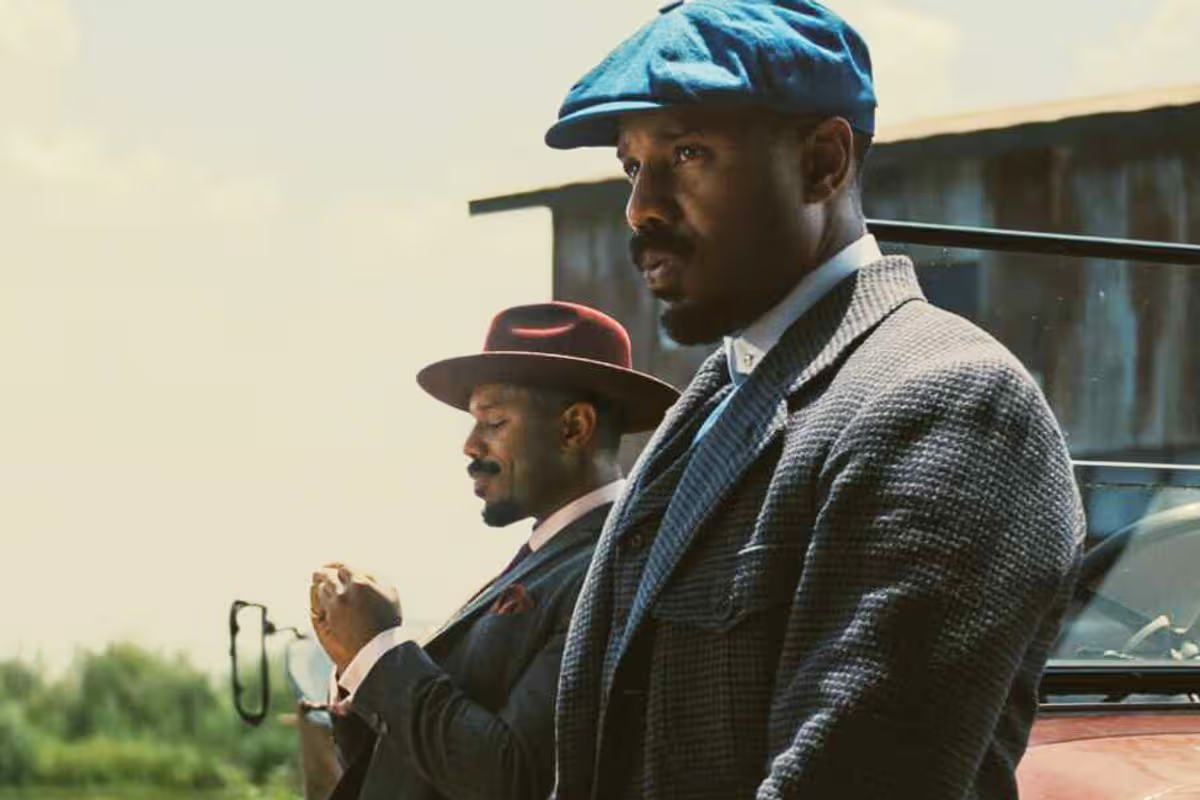
Michael B Jordan as Smoke and Stack in the hit film Sinners(Image: WARNER BROS)
Ryan Coogler’s The X-Files reboot has just been given a thrilling update.
The revamped sci-fi mystery drama was first announced back in 2023, with the acclaimed director releasing his hit period horror blockbuster Sinners in the meantime.
Nearly three years later, the project has finally been given a pilot greenlight by streaming service Hulu, with Jennifer Yale (The Copenhagen Test) coming on board as showrunner.
Black Panther filmmaker Coogler will write and direct the first episode, which will star Danielle Deadwyler (The Piano Lesson) as an FBI agent investigating the paranormal.
A synopsis via Deadline confirms the series will follow “two highly decorated but vastly different FBI agents — one played by Deadwyler — [who] form an unlikely bond when they are assigned to a long-shuttered division devoted to cases involving unexplained phenomena.”
Deadwyler has a big year ahead as she’ll next be seen in the HBO comedy series Rooster with Steve Carell as well as the third season of Euphoria. Her X-Files co-star has yet to be confirmed.
The original series starred David Duchovny and Gillian Anderson as agents Fox Mulder and Dana Scully, a believer and a skeptic who investigate unsolved cases known as X-Files.
Originally airing from 1993-2002 over nine seasons, the series is widely considered one of the greatest shows of all time, with Radio Times calling the first episode ‘the greatest pilot in TV history’. It returned for two new seasons in 2016 and 2018.
One Redditor claimed it’s “never to be dethroned”, and someone else agreed: “This show is my #1 of all time. It has its flaws but this is the show I go to every night.
“If TV died as a whole entirely and I was stranded on a desert island, this would be my one and only choice.”
And an X user called it “literally the best show ever made, so beautifully shot and a killer soundtrack!”
The reboot certainly has a daunting legacy to live up to, though thankfully director Coogler has more than enough credentials to meet fans’ high expectations.
His latest film, Sinners, starring Michael B Jordan as twin gangsters who encounter a chilling cult of vampires in 1930s Mississippi, was named the best film of 2025 by the African American Film Critics Association.
The critics consensus on Rotten Tomatoes reads: “A rip-roaring fusion of masterful visual storytelling and toe-tapping music, writer-director Ryan Coogler’s first original blockbuster reveals the full scope of his singular imagination.”
Teasing his next project on the Last Podcast on the Left, Coogler said: “I’ve been excited about that for a long time, and I’m fired up to get back to it. Some of those episodes, if we do our jobs right, will be really f***ing scary.
“We’re gonna try to make something really great and really be something for the real X-Files fans, and maybe find some new ones.”
He also revealed that he had spoken to Anderson about the revamped series, though her and Duchovny’s involvement is currently unconfirmed.
For the latest showbiz, TV, movie and streaming news, go to the new **Everything Gossip** website.
Ensure our latest headlines always appear at the top of your Google Search by making us a Preferred Source.** Click here to activate**** or add us as your Preferred Source in your Google search settings.**
Six months and 16 Oscar nominations ago, Delroy Lindo hopped on a Zoom call with the awards consultants running the campaign for Ryan Coogler’s genre-defying American horror story, “Sinners.” Actors don’t often participate in these meetings. But Lindo had received so much love for his turn as bluesman Delta Slim since “Sinners” premiered in April, he figured, “Why not sit in?” Mostly, he just wanted to ask one simple question: How can we make the most of this moment?
“I don’t know what their answer was, but it seems to have worked,” I tell him over lunch recently.
Lindo starts rapping on the wood table separating us and doesn’t stop until I ask if he’s a man given to superstition.
“Can I tell you where I think it comes from?” he asks. “I’m acutely aware absolutely nothing is promised. There’s no such thing as a sure thing. Anything can happen. So in knocking wood, one is trying to increase one’s chances that the outcome will be what one wants.”
So you’ve been knocking on wood for the last six months?
Now I’m the one who’s laughing, which Lindo appreciates. But he has more to say on the subject.
“You have to understand something,” he continues. “When an actor does a piece of work and it really touches people and has an impact like it did with Delta Slim and ‘Sinners,’ you can’t help but think how it might be broadened. I try to maintain an emotional distance because I have no control over much of it. Awards season.” He shakes his head. “So …” Lindo pounds on the table again. “Knock … on … wood.”
You want an illustration of the unpredictable nature of the acting profession? Lindo and I wouldn’t be at this table talking and rapping and toasting the first Oscar nomination of his long career if one particular cut of “Sinners,” the version Coogler showed him at the Imax headquarters in Playa Vista more than a year ago, had gone out into the world.
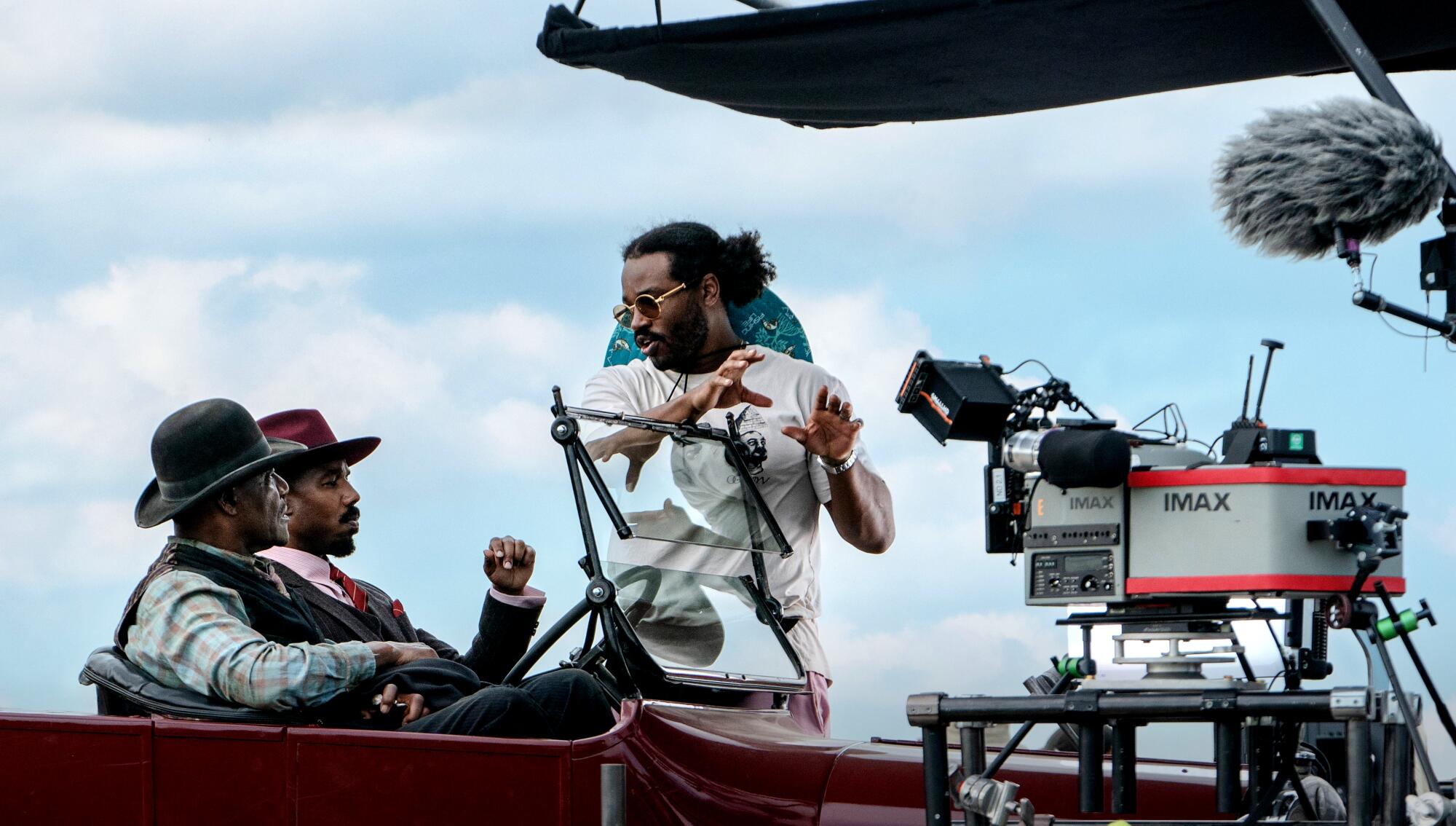
Lindo, left, on the set of “Sinners” with co-star Michael B. Jordan and writer-director Ryan Coogler.
(Eli Ade / Warner Bros. Pictures)
If you’ve seen the film, you’ll no doubt remember Delta Slim delivering a monologue in the car riding to the juke joint with Stack (Michael B. Jordan) and Preacher Boy (Miles Caton) where he recalls the lynching of a fellow musician. The scene ends with Lindo breaking into a guttural humming and drumming, expressing pain that transcends words.
When Lindo saw the movie that first time, the monologue had been truncated, and the scene preceding it, where their car passes a chain gang and Delta Slim stands and exhorts the prisoners to “hold your heads,” was gone too.
After the credits finished rolling and the lights came up, Coogler asked Lindo what he thought of the film. Lindo looked at him. “Can we talk, man?” They went outside, and Lindo laid out in his steady, resonant baritone why he thought Coogler needed to reinstate the chain-gang scene, which reveals Delta Slim’s origin story — and surely, since the chain-gang scene is intertwined with the monologue in the car, that should go back into the movie too.
“What Ryan did so brilliantly is he took the time to introduce all of the main characters in their native environments so the audience gets invested in them and what they mean to the community,” Lindo says. “For Delta Slim, those scenes were the fundamental building blocks.”
“The Delta Slim monologue had a lot of ‘Is it in, is it out?’ debate,” “Sinners” film editor Michael P. Shawver says. “But I knew in my heart and soul I was never going let the movie out without that being in it.”
Coogler, it turns out, saw it that way too.
Delroy Lindo.
(Bexx Francois / For The Times)
“I couldn’t imagine making a movie about the blues without giving some deeper context on what that music really signifies,” Coogler writes in an email. “It’s easy to get lost in the rhythm and the artistry of it all, but the blues was born from a lot of pain and adversity in a particular time and place. When I wrote the script, I felt like I needed a living, breathing embodiment of that, and Delroy nailed it.”
“We could have filmed that monologue a thousand different times and it would have taken on new life with each take,” Coogler continues. “The gut-punch way he ends it, going from telling the story of a lynching to drumming along and humming … it’s macabre, sorrowful and beautiful all at the same time. It shows you exactly why Delroy’s such a masterful actor. If you ever needed to give someone the world’s fastest lesson in what the blues is about, he gives it to you right there.”
“God bless him,” Lindo says.
“Working for the camera, we’re at the mercy of the editing process,” Lindo notes. He speaks slowly, deliberately, always choosing his words carefully because language is important to him. It’s his currency.
How does he feel about that loss of control?
“It’s scary,” Lindo says. “One had better make one’s peace with that very quickly. If you don’t, you will get your feelings hurt. It’ll be a problem.”
Asked to pinpoint when he came to terms with that, Lindo remembers “Clockers,” the 1995 Spike Lee crime drama in which he played the intimidating drug kingpin Rodney Little. It was his third collaboration with Lee, following “Malcolm X” and “Crooklyn,” and the two enjoyed a mutual respect and rapport. But Lee still cut three of Lindo’s scenes, which Lindo understood — “kind of, sort of.” Lee was looking at the larger story. Those scenes weren’t essential.
“Making one’s peace with it is not the same as accepting it and being happy with it,” Lindo says, raising an index finger, a gesture he often makes when telling you something he considers important. “It’s just the way it is. It’s a fact of life.”
When talking about his career, Lindo, 73, tells me more than once that “it’s not where you start, it’s where you finish.”
The first time he tells me this we are talking about one of his early lead acting turns, starring in the 1983 Yale Repertory Theatre production of “A Raisin in the Sun,” the story of a struggling Black family dealing with discrimination in 1950s South Chicago. Lindo played the frustrated patriarch, Walter Lee, and won some strong reviews. But he felt like he was the “weak link” in the production. In a GQ profile, it was written that Lindo, born in London, couldn’t convince himself that the African American experience was his to interpret.
“Nope,” Lindo says. “I did not say that.” Again, the index finger. “You’re giving me the opportunity to set the record straight.” He pauses and closes his eyes. “Doing that play, I had an inner monologue playing in my head that cast doubt on my ability to play the part successfully. And it continued and it grew. It became a tape and then an album and then a series of albums. It eroded my confidence.”
“You know what it was?” he continues. “It was a self-esteem issue. It was an issue of me saying to myself, ‘You’re not good enough. You want to do one of the great parts in the theater? No. You don’t have it.’ Now, what’s the root of all that?” Lindo laughs, clasps his hands together and raises them. “The roots of that are food for myself and a therapist.”
But there is a happy ending to the story. Lindo was cast once more as Walter Lee, for a production of “A Raisin in the Sun” mounted at the Kennedy Center in 1986. Lloyd Richards again was directing, indicating to Lindo that maybe he wasn’t as bad as he thought he had been. Richards did tell Lindo that he needed to jettison some of the neurotic choices he was making as an actor.
“Those are the words he used, ‘neurotic choices,’” Lindo says, shaking his head. He pauses. “Man, I’m giving you a lot here. But it’s OK. You know why it’s OK?”
Because you’re enjoying our conversation? I venture.
Delroy Lindo.
(Bexx Francois / For The Times)
“No,” Lindo says. “I’m not particularly enjoying telling you about my failures. But this was an absolute period of growth for me as an actor all because I learned the most important thing: preparation, preparation, preparation.”
For his reprise of “A Raisin in the Sun,” Lindo called musical multihyphenate Oscar Brown Jr. and asked if he could fly to Chicago and pick his brain about life on the city’s South Side in the 1950s. Lindo walked the streets where “Raisin” playwright Lorraine Hansberry lived, steeping himself in what it meant to exist in that place and time. After that, the tape was no longer playing in his head, even when co-star Esther Rolle’s face fell after she realized that Lindo had been cast as Walter Lee. She thought she’d be headlining with Glynn Turman, but Turman had dropped out.
“Eight days, maybe nine into rehearsals, Esther turned to me — and this is when I knew it was going to be all right — and she said, ‘You’re a nice actor,’” Lindo remembers, smiling.
Preparation, preparation, preparation. For Delta Slim, Lindo read books on the blues, listened to Son House, Muddy Waters and Howlin’ Wolf and immersed himself in the culture of the Mississippi Delta. When it came time to shoot that monologue in the car, he was ready. On the next-to-last take, Lindo improvised, letting music take the place of words. Jordan went with it, turning to Caton in character, saying, “You got that guitar in your hand, don’t you, boy?” Caton begins playing.
“Man, we were all in the work,” Lindo says.
Where did that improvisation come from? I ask.
“It’s the musical manifestation of the pain I’m feeling,” Lindo says. “It’s the only thing I know how to do in that moment.”
It’s the blues.
“It’s the blues, man,” Lindo says. “I’ve heard it said numerous times: That’s where the blues comes from. And as an actor who participated in that moment, communicating that is extraordinary and profoundly gratifying.”
To say the mood at Ryan Coogler’s production company Proximity Media has been euphoric would be an understatement.
You too would be more than euphoric if your film landed in the year’s box office top 10 and set the all-time record for most Oscar nominations.
But “Sinners” wasn’t built in a day. It’s been a slow and steady ascent — call it, well, one success after another — since Coogler founded the company in 2018 with his wife Zinzi (they married in 2016) and USC film school buddy Sev Ohanian. And the director is unstinting in his praise for his partners.
“Zinzi is meticulous and detail-oriented and the one that keeps it all together,” Coogler wrote in an email to The Envelope. “She is humble and observant but is the smartest person I know and knows me extremely well. Sev is exceptional at strategy, and the most experienced producer of the three of us, which is invaluable. … Together, they act as a bridge between the creative and the business, which allows me to stay focused on the film.”
The three have been working together since Coogler’s 2013 feature debut, “Fruitvale Station,” based on the true story of Oscar Grant, a young Black man shot to death by a transit police officer in an Oakland BART station.
Bringing audiences in close proximity to stories and subject matter often overlooked forged the name of the company, which now includes feature film, television, nonfiction, music and podcasting departments.
Past film projects include the Oscar-winning “Judas and the Black Messiah,” “Space Jam” and “Creed III.”
“They are on a fast rocket with an upward trajectory for almost any project they bring to the marketplace,” said Andrew Goldman, adjunct professor of film and television at New York University’s Tisch School of the Arts. ”Every company in town will want a Proximity/Ryan Coogler project. They have cracked a formula of both critical acclaim and box-office successes.”
A recent installment of the podcast “In Proximity” featured Michael B. Jordan and Ryan Coogler getting in the weeds about the production of “Sinners,” including how Jordan distinctly portrayed twins Smoke and Stack.
Moving forward, it looks like Proximity’s sights are set on stories based on another duo: “The X-Files’” Mulder and Scully, the iconic opposites-attract FBI agents who forged a deep personal partnership while investigating strange and paranormal cases over 11 seasons on Fox, beginning in 1993 and stretching until 2018.
Warmly displaying their camaraderie and creative interdependence, Zinzi Coogler and Ohanian spilled more about their company over Zoom, including their early days, people who inspired them and how they’re adapting to the shifting media landscape.
This interview has been edited for length and clarity.
Michael B. Jordan, left, and Miles Caton in “Sinners.”
(Warner Bros. Pictures)
What is the origin story of how Proximity Media formed?
Ohanian: It officially became a company on April 6, 2018, over lunch in San Francisco, but the roots go back to 2008 at USC film school, where I first met Ryan Coogler. We became friends working on student films and reconnected when Ryan and Zinzi were finishing “Black Panther.” Around that time, I had just produced “Searching,” and we started talking seriously about forming a company together.
Zinzi, what made you want to partner with Sev and Ryan formally?
Coogler: After years of working with Ryan unofficially, especially on “Fruitvale Station,” we knew we wanted to make it official. Sev had always impressed me with his creativity and relentless work ethic. When Ryan and I discussed founding a company, Sev was the only person we wanted to approach. Luckily, he said yes — and that’s how Proximity really began.
Did you ever imagine Proximity would grow as it has?
Ohanian: Honestly, no. Back when we were making “Fruitvale Station,” we were just trying to get the movie finished. But looking back, it feels inevitable because we’ve put in years of steady work and built strong relationships in the industry.
Coogler: We couldn’t have foreseen this success. But the foundation of our collaboration — our shared belief in storytelling and craftsmanship — has never changed since those early days.
What projects are you most excited about now?
Ohanian: Last year was a landmark one. We released “Sinners,” had streaming hits like “Ironheart” and “Eyes of Wakanda,” and launched Season 3 of our “In Proximity” podcast. We also have several documentaries and new TV shows in development, plus a long-rumored “X-Files” project that’s close to launching.
Tell us about the atmosphere within the company.
Coogler: There’s a lot of laughter between the three of us — Ryan, Sev, and me. In our early days, someone once asked, “Can I get the real name of your company?” We cracked up at that and recorded the moment. It keeps us humble and reminds us how far we’ve come.
How did you approach producing “Sinners?”
Coogler: It was our first time being sole producers on something Ryan wrote and directed. We saw it as a big moment for Proximity — a chance to support Ryan’s creative vision from start to finish.
Do you have defined roles within Proximity?
Ohanian: Roles shift depending on the project. We each bring different strengths — Ryan as director, me from the indie film side, and Zinzi with her broad experience and steady leadership. We’ve built a team of about 20 people who’ve grown with us, including some who started as assistants and are now producers.
Did other production companies serve as an inspiration?
Coogler: We’ve leaned on amazing mentors — Jim Morris at Pixar, Kevin Feige and Lou D’Esposito at Marvel, and Charles King at Macro. Their guidance shaped how we lead and structure our company.
Looking ahead, how is Proximity adapting to the changing media landscape?
Ohanian: Change has been constant since day one — recessions, strikes, streaming shifts. We stay adaptable through yearly retreats, often at Pixar, to reassess our strategy and think creatively about the future.
How do relationships like the one with Michael B. Jordan influence your work?
Coogler: Michael’s family to us. We’ve been through so much together — from “Fruitvale Station” to “Creed III” and “Sinners.” That trust and history make the work special every single time.
This season’s Oscar nominees for film editing have one thing in common: coping with trauma. The Envelope invited editors from each film to break down a pivotal scene that showcased their craft.
‘F1’
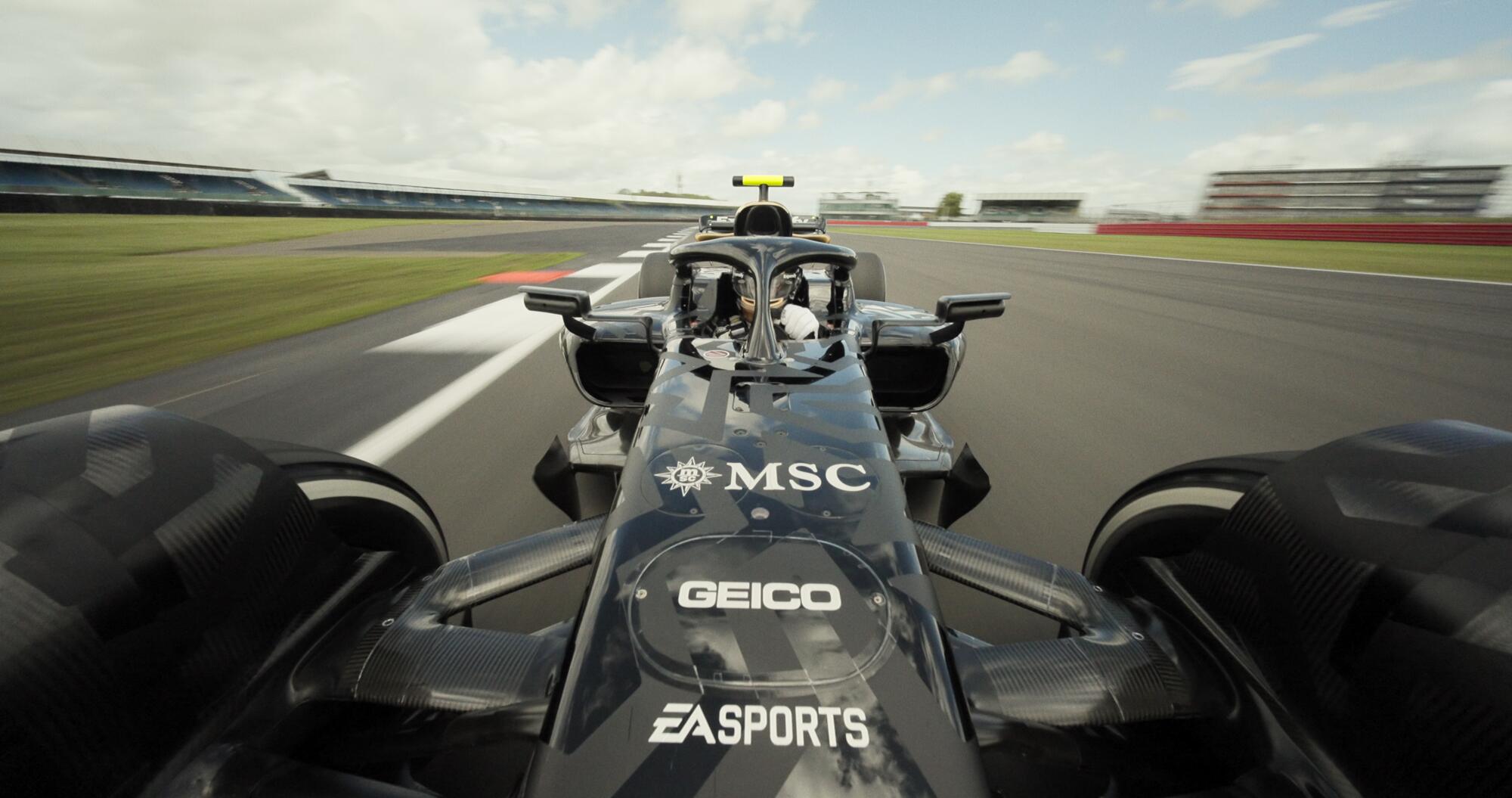
“F1” builds momentum for its underdog tale with an intricately constructed racing montage.
(Warner Bros. Pictures)
Editor: Stephen Mirrione Scene: The montage in which Brad Pitt’s washed-up racer Sonny Hayes begins his winning streak through a momentum-building Grand Prix swing.
“There were more than a dozen structural versions of how we were getting through this story,” said Oscar winner Mirrione (“Traffic”). The three-minute, high-octane montage benefited from 5,000 hours of footage, captured with 20 cameras around the tracks. It was treated like a massive puzzle, with the racing order moved around for maximum impact. The key was seamlessly integrating in-camera footage with broadcast footage from actual races that offered happy accidents such as rain and a crash. “At one point, it was more focused on rookie driver Joshua [Damson Idris],” added Mirrione. “But then we realized that Sonny was more interesting, visually, in terms of his arc about dealing with the trauma of his near-fatal crash. And then once we saw it in context, it was not just about the two of them and their rivalry but also the team coalescing around Sonny.”
‘Marty Supreme’
A dinner in “Marty Supreme,” starring Timothée Chalamet as Marty Mauser, leads to a startling flashback.
(A24)
Editors: Ronald Bronstein, Josh Safdie Scene: The jarring dinner scene/Holocaust flashback introducing nasty businessman Milton Rockwell (Kevin O’Leary)
In this scene from the 1950s-set psychological drama, we get a glimpse of Marty’s (Timothée Chalamet) motivation for his obsessive pursuit of table tennis: Jewish pride and survival instinct. “The adversarial impulse of the Rockwell dinner scene involves several characters, each with a distinct subjective agenda,” said Bronstein. “The act of cutting the scene [with close-ups and extreme close-ups] became inseparable from its sensations and emotions.” Yet Bronstein pushed it to extremes with the bizarre Auschwitz flashback involving Marty’s dinner guest, Béla (Géza Röhrig). Thanks to his table tennis prowess, Béla disarms bombs for the Nazis in the woods. But when he discovers a beehive, he shares the honey with his fellow prisoners by smearing it over his body. “That’s like a carrot on a rope that’s hanging in front of me at all times, and when I get to the end of that exchange, I’m allowed to break free and go into an entirely new set of tools, which are much more expressive,” added Bronstein.
‘One Battle After Another’
Leonardo DiCaprio as Bob Ferguson, nearing the conclusion of “One Battle After Another’s” climactic car chase.
(Warner Bros. Pictures)
Editor: Andy Jurgensen Scene: The climactic roller-coaster car chase
Jurgensen assembled the best VistaVision car chase in history for Paul Thomas Anderson‘s turbulent father-daughter actioner. That’s where teenage Willa (Chase Infiniti) becomes the hero by outsmarting and killing the hired muscle (John Hoogenakker), who chases her up and down the rolling hills followed closely by Willa’s flummoxed ex-revolutionary dad, Bob (Leonardo DiCaprio). Shot at shaky high speeds, the scene actually took shape as a result of the unique San Diego location called the Texas Dip, which looks epic in the 8 perf/35mm horizontal format. The Hitchcockian cross-cutting among the three cars, favoring Willa’s POV, was achieved with close-ups from rearview and side mirrors. The layering of the propulsive soundscape and Jonny Greenwood’s percussive score completed the adrenaline rush. But the tender father-daughter reunion at the end required reshooting. “The moment Bob pulled up to the crash site, when we first did the scene, he ran over to her right away, and they embraced,” Jurgensen recalled. “When we watched the dailies, it just didn’t feel authentic. So we reshot it with more meat: Willa second-guessing everybody and Bob having to earn her trust by proving his identity with the secret code.”
‘Sentimental Value’
Renate Reinsve’s Nora plays a part in her father’s new film in “Sentimental Value.”
(Kaspar Tuxen Andersen)
Editor: Olivier Bugge Coutté Scene: Actor Nora Borg’s (Renate Reinsve) early stage fright breakdown
Joachim Trier’s family drama finds Nora confronting the Borgs’ generational trauma when she reunites with her estranged director father, Gustav (Stellan Skarsgård). After an opening montage on the layered history of their Oslo home, which Nora once wrote about in a school essay, our introduction to the adult Nora is conveyed by the chaos and humor of her panic attack before a performance. But finding this arresting sequence first required trimming a very long setup of patrons entering the theater and sitting down, and the camera discovering Nora, frozen in fear, in the back of the dark stage. “It was so boring,” Coutté insisted. “But here we’re starting right on Nora’s face. Where are we? Has she become an actress? And then you slowly understand. There are no rules; just rhythm.”
‘Sinners’
Jayme Lawson performs “Pale, Pale Moon” in a pivotal scene from “Sinners.”
(Warner Bros. Pictures)
Editor: Michael P. Shawver Scene: Pearline’s (Jayme Lawson) violence-inducing “Pale, Pale Moon” performance
In Ryan Coogler’s Imax spectacle, where the blues collides with vampires, the monstrous transformation commences with Pearline’s siren call: “Pale, Pale Moon.” This was Shawver’s boldest sequence, cross-cutting her mesmerizing performance with the rhythmic crowd stomping, the brutal beating of a card cheater and newbie vampire Mary (Hailee Steinfeld) seducing and murdering Stack (Michael B. Jordan). “When this was first cut together, it was about three or four times as long as the actual song that had been recorded and performed,” explained Shawver. “And so Ryan watched it and he liked what he saw, but he wanted to cut it to the length of the song. That first moment I wondered if I was the right editor, but that fear and anxiety gives you a bit of freedom to find those spiritual connections that built to this climax at the end. It was really just about Ryan’s ability to engage audiences on a personal level and unlock those things and find the ways that they can go together.”