The incident is the latest suspected Russian drone incursion, as fears grow that the war in Ukraine could spill over.
Published On 5 Oct 20265 Oct 2026
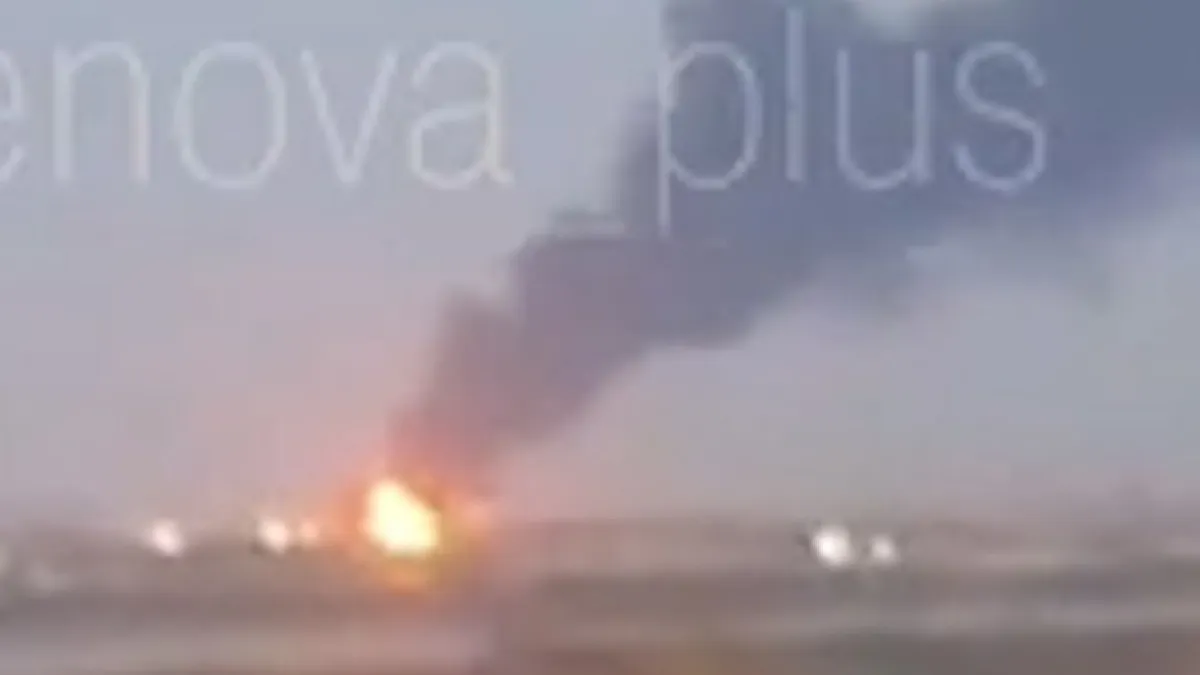
Ukraine’s President Volodymyr Zelenskyy has blamed a Russian drone attack for the sinking of a ship in Romania’s section of the Black Sea.
Romania reported that two people were killed and 11 rescued when a grain ship caught fire and sank in its waters on Monday. The Ukrainian president’s claim suggests the incident is the latest in a series of suspected incursions along NATO’s eastern flank, and will fuel concerns that Moscow’s war in Ukraine could spill over.
Recommended Stories
list of 4 itemsend of list
“A horrific strike by two Russian drones on a civilian vessel in neutral waters carrying corn and owned by Turkiye,” Zelenskyy wrote on social media.
According to the Romanian Ministry of Internal Affairs, the coastguard was alerted at about 11am local time (08:00 GMT) that a fire had broken out on the ship, adding that it was in the country’s “exclusive economic zone”.
The ministry did not identify the cause of the fire.
Azerbaijani and Indian citizens were on board the ship at the time of the attack, it is reported.
A Romanian F-16 fighter jet flies amid heightened security concerns over cross-border drone incursions, on August 17, 2026 [Andreea Alexandru/AP]
Romania is among several NATO members to have reported incursions this year, as Russia and Ukraine have increasingly turned to launches of hundreds of drones and missiles.
In May, a Russian drone hit an apartment building. In June, a stray Ukrainian maritime drone exploded in the Black Sea port of Constanta. In July, Bucharest summoned Russia’s ambassador after air defences intercepted three drones within the span of one week.
Incursions by Russian drones into eastern European airspace are seen by some as a test of NATO and the European Union’s defences and response capabilities.
The Baltic states have also seen drones enter their airspace throughout the war, with airspace violations contributing to the collapse of Latvia’s government in late May after a dispute over how to respond to the incursions.
The incursions have also prompted Poland to bolster its air defence posture after accusing Moscow of violating its airspace in September. Suspected drones were shot down twice in Moldova.
Romania’s Ministry of National Defence said the Romanian Naval Forces had destroyed nine drifting sea mines in the Black Sea since the start of the war.
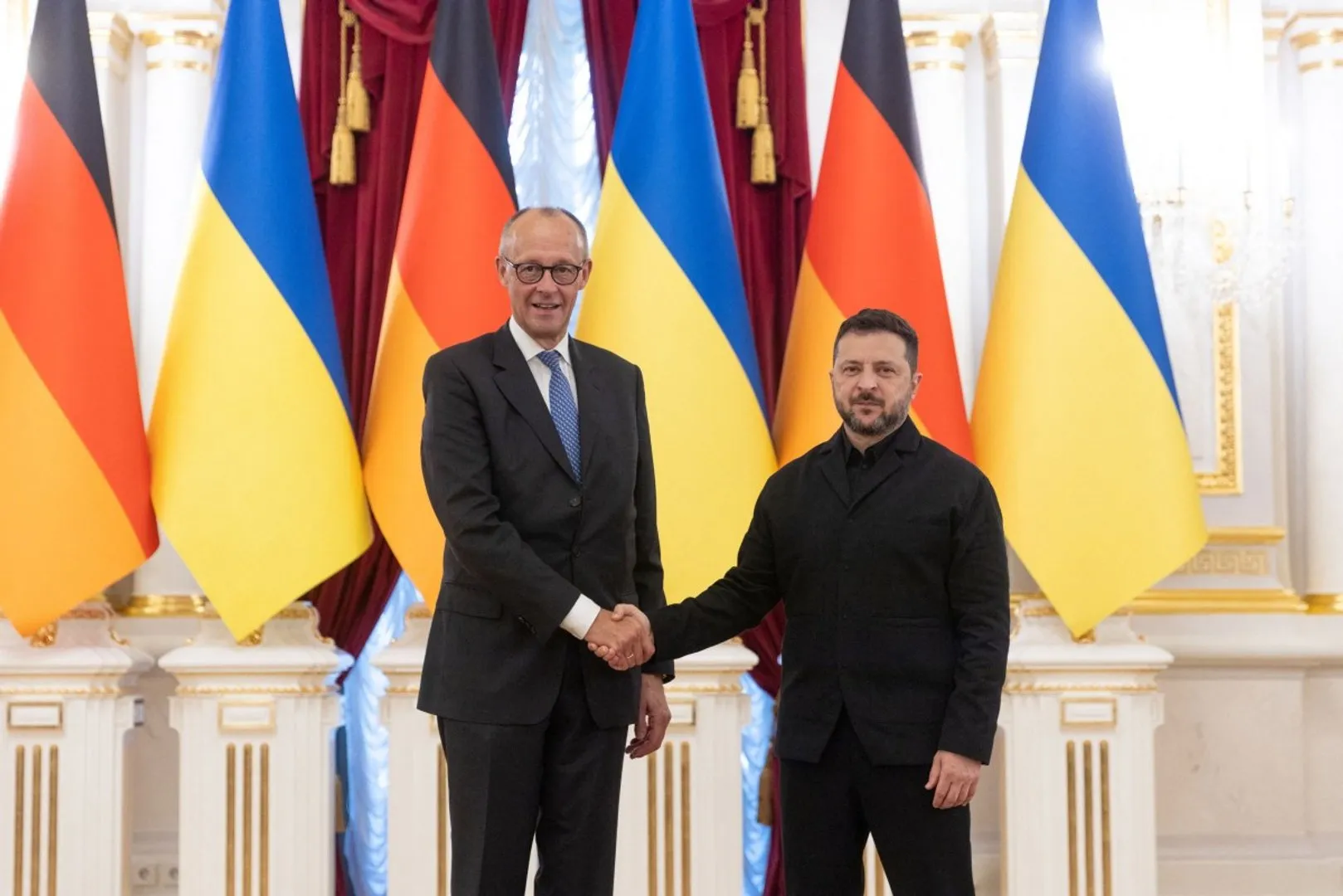
German Chancellor Friedrich Merz, on a surprise visit to Kyiv, announced $1.5 billion in military and reconstruction aid and expanded drone cooperation with Ukraine, giving Kyiv greater capability to strike deeper inside Russia. He also urged Russian President Vladimir Putin to end the war.
Trilateral talks could happen this month in UAE or another US-proposed venue, says the president.
Published On 4 Oct 20264 Oct 2026
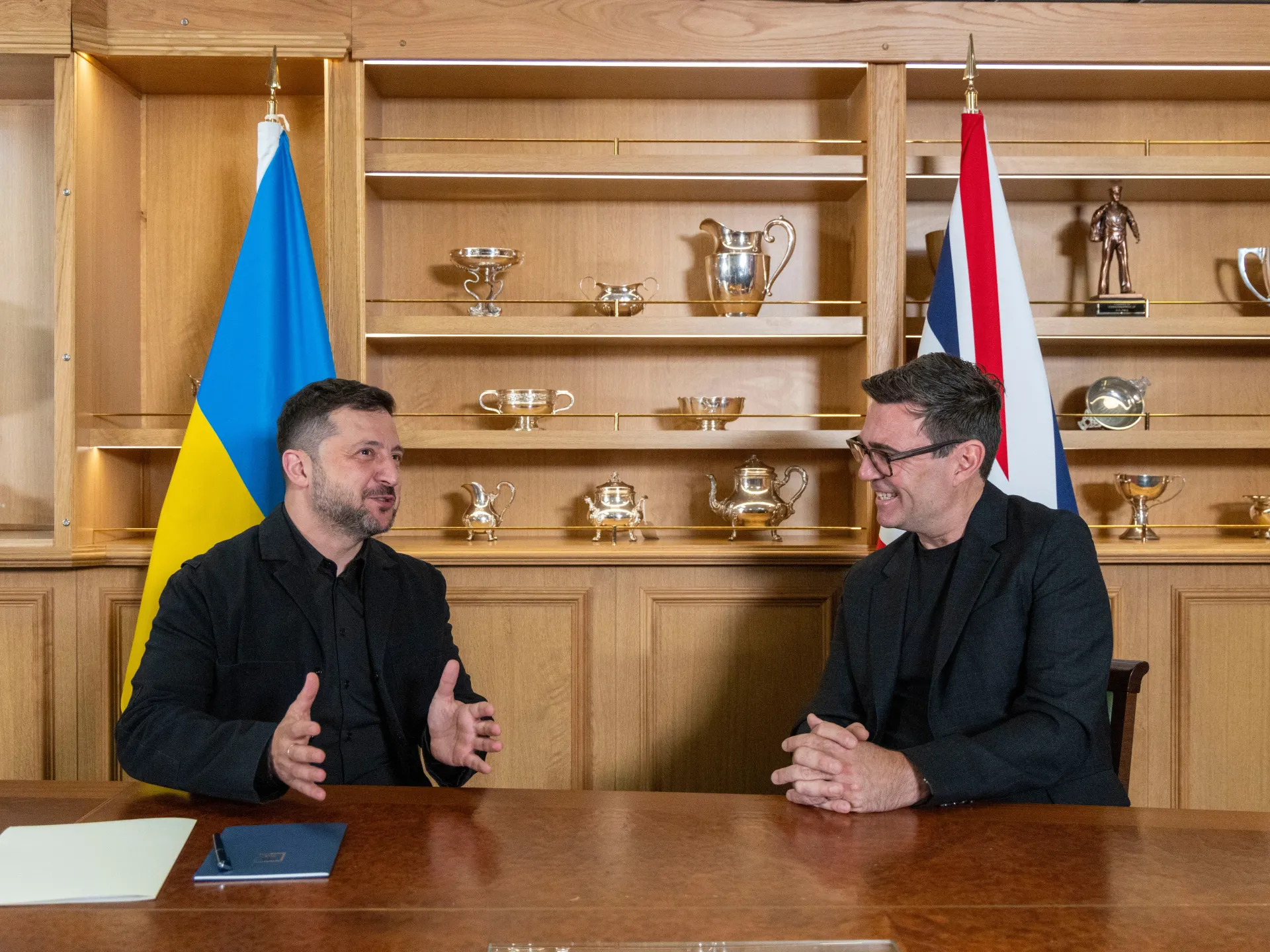
Ukraine is ready to hold trilateral talks with the United States and Russia this month, President Volodymyr Zelenskyy has said.
The Ukrainian president made the comments on Sunday during a news conference alongside German Chancellor Friedrich Merz in Kyiv. He said Ukraine supports a swift timeline for returning to talks to try to end the war fought for over four and a half years.
Recommended Stories
list of 3 itemsend of list
US efforts to broker a ceasefire have been paused since Washington launched its war on Iran. However, Washington is now pushing for technical-level talks by the end of October, Zelenskyy said.
He confirmed earlier reports that the United Arab Emirates, which has hosted previous talks, could again be the setting for a meeting.
“I confirmed to [the US] that our side is ready to support this timeline,” Zelenskyy said, adding that Kyiv is open to meeting in the UAE or “another country proposed by the American side”.
Washington had also been in touch with Moscow about the plan, Zelenskyy said. The Kremlin said last month that it did not rule out the possibility of three-way talks this month.
Despite suggestions of their willingness to discuss an end to the conflict, both Russia and Ukraine have also said they will ramp up long-range attacks on military and related targets.
Moscow has said it is targeting Ukraine’s energy sector as winter approaches. Last year, similar attacks knocked out power and heating for days on end as temperatures plummeted to minus 20C.
Zelenskyy on Sunday said he was “amazed” by Russia’s “savage desire to escalate the situation every day”.
He yet again accused Moscow of targeting “civilian infrastructure, including data centres and mobile network facilities”.
“Honestly speaking, I am not surprised by this approach to the war – by Russia’s hatred towards Ukraine – but I am surprised by the specific tactics used”, the Ukrainian leader said.
Alongside the return of the US to efforts to broker a ceasefire, India on Sunday said that it aims to step up its efforts to play a larger role in mediating an end to the conflict.
Speaking at the Munich Security Conference in New Delhi, Foreign Minister Subrahmanyam Jaishankar said his country had become more involved in recent months, specifically regarding shipping in the Black Sea, which has been plagued by mines and attacks on commercial vessels.
India was also “going beyond that,” said Jaishankar, including with discussions on grain and energy exports and “on non-attack possibilities,” he said.
German chancellor visits Kyiv amid air raid sirens, pledging strong support as Russian strikes disrupt the capital.
Published On 4 Oct 20264 Oct 2026
Russia has struck a key bridge in Kyiv just as German Chancellor Friedrich Merz arrived in the Ukrainian capital to meet President Volodymyr Zelenskyy.
The unannounced visit, marked by the sound of air sirens and explosions, came on Sunday to underscore Germany’s support for the nation at a time when Russian attacks on Ukrainian cities are increasing.
Recommended Stories
list of 3 itemsend of list
In a written statement, Merz said he “travelled to Kyiv today because Ukraine needs all our support in the coming weeks”.
“If Russia is not stopped, its war machine will sooner or later turn against us,” he said.
Ukraine’s President Volodymyr Zelenskyy meets German Chancellor Friedrich Merz at the memorial of fallen Ukrainian soldiers at Independence Square in Kyiv, October 4, 2026 [Dan Bashakov/AP Photo]
Merz and Zelenskyy met at the National Academy of Sciences, which was struck by a Russian drone on September 28.
Zelenskyy told Merz that Kyiv’s citizens are going through “terrible nights and days” due to the ongoing Russian attacks.
Merz was accompanied by his economy minister, as well as executives from several large German companies, such as Siemens Energy and Diehl Defence.
Ukraine and Germany are also expected to finalise a deal to produce drones and other weapons together that can travel more than 600 miles (965.6km) in an effort to strike deeper into Russia.
Germany has been one of Ukraine’s staunchest supporters. In April, the two countries signed a military pact worth more than $4bn. On Sunday, a $1.1bn military aid package is set to be announced, alongside $394m to repair damage to Ukraine’s energy sector.
Merz’s visit comes a day after Russia warned foreign diplomats and nationals to leave the capital to avoid getting hurt.
Russia’s Ministry of Defence promised to intensify strikes on Ukraine after Zelenskyy said in an interview with the Reuters news agency that it is doubling down on targeting Russian oil refineries after several civilians were killed and wounded over the weekend.
The strike that hit the Northern Bridge over the Dnipro River on Sunday also damaged a road and the supply of hot water in the area, according to a social media statement from Kyiv Mayor Vitali Klitschko. It is the second bridge in the capital to be hit this weekend.
Russia’s all-out war on Ukraine is in its fifth year. Both sides have increased the number of drone and missile attacks on infrastructure, logistics and military sites in recent months.
Putin warned the West he would deploy nuclear weapons if necessary to defend the Russian Baltic exclave of Kaliningrad.
Published On 1 Oct 20261 Oct 2026
Russian President Vladimir Putin has ruled out a ceasefire on long-range strikes with Ukraine as Moscow steps up its campaign of aerial attacks on Kyiv.
“We are told: ‘Let them stop striking your refineries, and you will stop striking their ships.’ It is simply ridiculous,” Putin said on Thursday at the Valdai political forum in Moscow.
Recommended Stories
list of 3 itemsend of list
The remarks followed a meeting between United States President Donald Trump and Ukrainian President Volodymyr Zelenskyy in New York on September 22, when Zelenskyy said Kyiv was ready to cease strikes on Russian oil refineries and other energy facilities if Moscow also stopped its attacks on Ukrainian energy infrastructure.
Speaking at the forum of the Moscow-based think tank, Putin said Ukraine had “partially achieved its objectives” with these strikes, with attacks on Russian oil refineries having cost the country 1 percent of its gross domestic product (GDP), but added that Russia was now responding in kind.
Russia has ramped up long-range strikes, targeting Ukraine’s steel companies as well as supply chains, notably in the rail sector. Ukraine accuses Moscow of deliberately hitting civilian targets and keeping Kyiv on a near-constant state of alert as it braces for another tough winter.
A Russian drone struck a school in Kyiv on Thursday, according to city officials, as the Ukrainian capital endured relentless aerial attacks. No casualties were reported as children and staff at the school were in shelters when the drone hit.
Putin added that Russia would prefer to end the conflict in Ukraine through talks and wanted it to be a neutral country after the end of hostilities.
The nuclear option
He warned the West not to escalate the standoff over Ukraine by threatening the Russian exclave of Kaliningrad, which is wedged between Poland and Lithuania, and pledged to defend it with nuclear weapons if necessary.
“If it comes to a direct attack on the Russian Federation – in this case, we are referring to Kaliningrad, and perhaps other territories as well – the question of the Russian Federation deploying all the weapons at our country’s disposal will, of course, inevitably and immediately be on the agenda,” he said.
Putin’s comments followed a diplomatic note which NATO said this week it had received from Russia, warning the Western military alliance it would be ready to resort to nuclear weapons if NATO attempted to cut off Russia’s Baltic exclave.
Putin warned that cycles of escalation in international conflict could quickly lead to dangerous scenarios. “We must realise that the moment when nothing can be changed any longer may come very quickly and unexpectedly for everyone. The logic of escalating, increasingly harsh retaliatory measures leads to a fatal point of no return,” he said.
On the contrary, in the event of a “favourable scenario”, Putin said the assets of Western companies that Moscow had seized could potentially be returned. Putin last month ordered the seizure of businesses and assets of Swiss food giant Nestle, French retailer Auchan, the former Leroy Merlin DIY chain and German wholesaler and food retailer Metro.
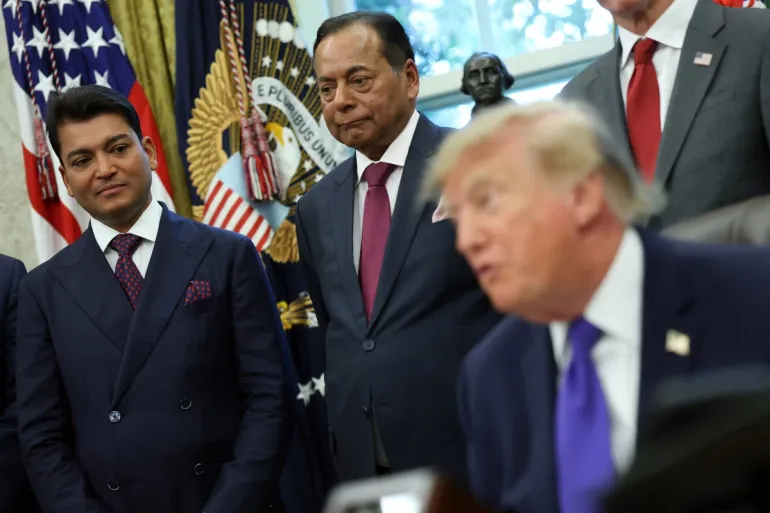
As US President Donald Trump announced a $15bn steel megaplant while seated at his Oval Office desk on Monday, he had a lineup of mostly US politicians standing behind him – from cabinet members to elected representatives from Iowa, where the mill is to be built. There was one exception: an Indian man with a receding hairline and a lilac pocket handkerchief, standing behind the US president’s right shoulder.
Ravi Ruia is a cofounder of the Essar Group, which owns Mesabi Metallics, the Minnesota-based firm that’s building the steel mill, which is expected to be the United States’s largest once it is complete. A decade earlier, in October 2016, his brother Shashi was in the photo frame with a different president during the signing of another major deal: Russian leader Vladimir Putin.
Steel and metallics aren’t Essar’s only association with minerals and natural resources. The conglomerate had been involved for years with oil, before it sold one of India’s largest private oil refineries to a Russian-led consortium in 2016 for nearly $13bn. Essar Oil was rebranded as Nayara Energy.
Today, Nayara Energy is half-owned by Russian gas major Rosneft, which is under heavy US and European sanctions over Moscow’s war on Ukraine. Nayara has also emerged as a supplier of petroleum products to Russia at a time when the country is facing a fuel crisis following multiple Ukrainian attacks on its oil and gas depots.
And as part of a 99-year deal, Nayara is continuing to use Essar’s branding in India, where the company runs thousands of petrol stations. Nayara is under European Union sanctions.
The White House is touting the Iowa steel project, unveiled just before the US midterm elections, as a major economic win for Americans, promising hundreds of jobs and billions of dollars in revenue. And there is no evidence that the steel project is in violation of any Russia-specific US sanctions.
But Trump’s announcement of a mega project with an Indian firm closely tied to Russian investments under Western sanctions underscores how the US has struggled to isolate Moscow economically despite an unprecedented economic pressure campaign.
And the timing of the steel mill announcement raises questions, because it comes days after Trump signed a law that empowers him to punish countries that buy Russian oil with up to 100 percent tariffs. India is Russia’s second-largest oil buyer. But the legacy Indian conglomerate that best epitomises the country’s links to Russian energy is now also behind the US’s biggest steel factory.
Rewant Ruia, left, chairman of Mesabi Metallics, and Ravi Ruia, centre, board member of Mesabi Metallics and director of Essar Capital, listen as US President Donald Trump delivers remarks in the Oval Office at the White House on September 28, 2026, in Washington, DC [Kevin Dietsch/Getty Images]
What’s the steel factory project about?
The new project would integrate its iron ore mining operations in Minnesota’s Mesabi Iron Range with the upcoming steel complex in Iowa.
The White House and the company’s announcements said that the Iowa steel plant is expected to create at least 1,750 permanent jobs – “while continuing to work with suppliers and businesses throughout Iowa and the Midwest” – and support up to 6,000 construction jobs.
Washington also noted that the mill will produce 7.5 million tonnes of steel per year in its first phase, expected to rise to 10 million tonnes. First steel production is expected in 2030.
The first phase of the project is expected to generate $95bn in total economic impact during construction and its first 10 years of operation, according to the White House.
Trump’s commerce secretary, Howard Lutnick, told the reporters that “these are your 232 tariffs, the steel tariffs at work.” He added: “Without those tariffs, this mine and steel plant doesn’t get built.”
Trump chipped in, too. “Soon after my inauguration, I imposed powerful 50 percent tariffs on all foreign steel, and now our steel industry is roaring back to life,” Trump said. “Everyone’s building their plant here because they don’t want to pay tariffs.”
But the steel project is also evidence of how countries and companies have skirted US economic pressure – and how it gives them leverage to continue to do so.
An Essar petrol station with pumps showing no fuel in Stanley, County Durham, UK, September 27, 2021 [Lee Smith/Reuters]
What are Essar’s ties to Russia?
Essar Oil, the group’s energy arm, began refining crude in 2008 at its refinery in Vadinar on the coast of the western Indian state of Gujarat.
But by 2016, the company was in deep debt, listed as a defaulter by the Reserve Bank of India, the country’s central bank, and desperately looking for a buyer who would take over its oil operations. The timing was opportune. President Putin in Russia was at the time trying to get Rosneft, his country’s energy giant, to offload some stakes in exchange for foreign capital.
Indian Prime Minister Narendra Modi played matchmaker, helping stitch together a series of deals between 2014 and 2016 that helped Rosneft and Essar. First, Indian public sector oil majors bought stakes in Rosneft, giving it the cash it needed. Rosneft, in turn, joined hands with other investors to buy the Vadinar refinery, freeing Essar from its debts.
Essar Oil became Nayara Energy – a company in which Rosneft owns a 49 percent stake, and United Capital Partners, a Russian asset management company, owns another 49 percent. The buyers paid Essar $12.9bn for the deal. As part of the agreement, Nayara got to use Essar’s branding – including on thousands of petrol stations across India – for 99 years.
Logo of Nayara is seen at its fuel station on the outskirts of Ahmedabad, India, November 16, 2022 [Amit Dave/Reuters]
Is Nayara under Western sanctions?
Yes. The European Union imposed sanctions on Nayara in July last year as part of the broader 18th package of sanctions against Russian oil.
The sanctions banned the import of petroleum products processed using Russian crude oil and restricted the refinery’s access to EU shipping insurance, as well as financial and other services.
Nayara’s Vadinar refinery in western India has been processing only Russian oil since other suppliers backed out following the sanctions. Since then, Nayara has relied on international traders to import crude and export refined fuels.
In July this year, Nayara Energy sold petroleum to Russia as Ukrainian attacks targeted oil refineries across the country, triggering a fuel crisis.
In recent months, Ukrainian forces have targeted Russian oil facilities, setting them ablaze and causing long lines for fuel across the country, including in the capital, Moscow. The fuel crisis, unprecedented for Russia, a country that is one of the world’s biggest energy producers, has led to rationing in many regions.
These Russian links have brought Nayara Energy under wider scrutiny, prompting companies, including SAP, to suspend services to the refiner, citing sanctions and obligations under EU law.
Nayara challenged the move in the Delhi High Court, which ordered SAP India to restore its services earlier this month.
Are Essar or the steel plant violating any sanctions?
While Nayara is under EU sanctions, Essar does not face any US or EU sanctions.
In October 2016, after Essar struck its deal with Rosneft and United Capital Partners to sell the Vadinar refinery, the US – at the time under the Barack Obama administration – said that the agreement was not in violation of any sanctions.
“I don’t think we see any violation of any US-EU sanctions stemming from this deal,” State Department spokesperson Mark Toner said at the time. Essar also said that the deal was compliant with US sanctions.
There is no evidence of any sanctions breach in Essar’s investment in Mesabi, or in the planned investment to set up the steel factory in Iowa.
But Essar’s relations with Russia have nevertheless attracted scrutiny, including in the United Kingdom, where the Ruia brothers have long had major investments.
At the time of the sale of the Vadinar refinery to Russian buyers, the Russian bank VTB also gave Essar a $3.9bn loan for debt reconstruction.
The bank was hit by major US and EU sanctions in February 2022, right after Russia’s full-fledged invasion of Ukraine. Essar, reporting published in April 2026 by The Guardian and investigative journalism platform SourceMaterial, showed, moved the VTB loan to Mauritius, a tax haven, allegedly to avoid the sanctions. Essar owns the Stanlow oil refinery in the UK.
US President Donald Trump waves as he walks to board Marine One as he departs from the South Lawn of the White House in Washington, DC, on September 26, 2026 [AFP]
Why is the timing of the steel plant announcement significant?
Trump’s Republican Party is heading for crucial midterm congressional elections in November, while his approval rating has been plumbing all-time lows in the face of voter concerns about inflation, the cost of living, and the war on Iran.
In his second term, Trump has made tariffs and a revival of US manufacturing a cornerstone of his economic vision, claiming that higher barriers to imports will drive investment back to the US.
Moreover, Washington introduced legislation that would allow the president to impose tariffs of up to 100 percent on imports from countries that continue economic engagement with Russia or Iran, aiming to put pressure on countries that continue buying Russian energy.
New Delhi is particularly exposed since it became one of the largest buyers of discounted Russian crude after the invasion of Ukraine in 2022. Trump imposed an additional 25 percent tariff on Indian imports in 2025 over the issue, before removing it in February 2026 after India committed to stop buying Russian crude.
Russia has remained India’s largest source of crude, although purchases have declined as the threat of US penalties has grown. The news agency Reuters reported that India imported approximately 2.1 million barrels per day of Russian crude in August.
There is also a recent parallel to underscore the incentives for investment in Trump’s US. In May this year, Washington moved to dismiss the criminal fraud and bribery charges against Indian billionaire Gautam Adani, while his lawyers had told the Justice Department that Adani was prepared to invest $10bn in the United States. A federal judge subsequently dismissed the criminal case in August.
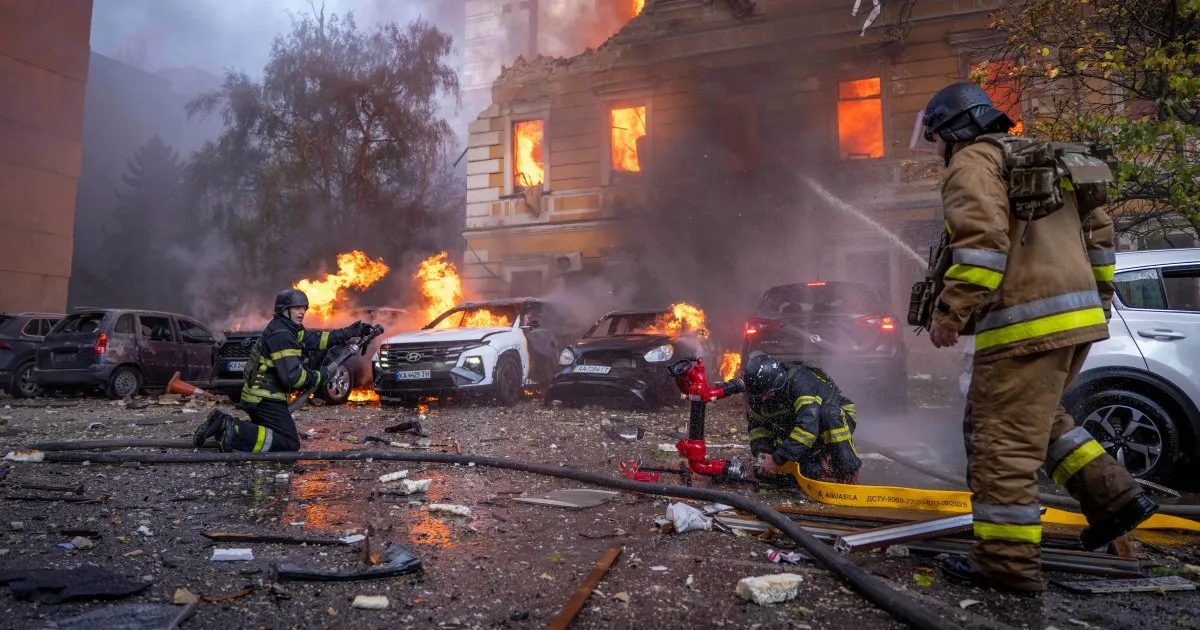
Russian forces have again struck the Ukrainian capital, Kyiv, hours after a drone hit the National Academy of Sciences in the historic centre of the city, killing at least two people.
Explosions were heard across Kyiv early on Tuesday, with Mayor Vitali Klitschko saying missile debris had fallen in the courtyard of one building while a second had caught fire in another part of the city.
Recommended Stories
list of 3 itemsend of list
The attacks come as Russia has begun hitting Kyiv and other Ukrainian cities with faster, high-flying jet drones.
Emergency officials said the strike on the National Academy of Sciences on Monday killed two people, with one person’s body recovered from the rubble later in the evening.
Video shared online appeared to show a fast-moving drone slamming into the building at a steep angle and exploding, sending smoke into a clear sky. People were seen leaning out of windows as bright orange flames engulfed part of the building.
Volodymyr Horbulin, a former secretary of Ukraine’s National Security and Defence Council, told the public broadcaster Suspilne that he was at work at the academy when it came under attack. He said his assistant, who was near the building, was killed and that he was also slightly wounded.
The academy is near the German Embassy, a cathedral, the national opera and government buildings.
In a statement, the academy called the attack “Russian terror” and “barbarity” aimed at “peaceful people who were simply at their workplaces”.
Foreign Minister Andrii Sybiha accused Russia of cynicism for hitting a scientific institution during the workday.
“Russia is deliberately expanding the boundaries of what it believes the world will tolerate,” he said in a statement, urging Ukraine’s allies to provide more air defences.
Jet-powered drones
Ukrainian President Volodymyr Zelenskyy said Russian forces also hit a medical facility in Kyiv on Monday. He said at least nine people had been killed in Russian drone strikes throughout the country, while more than 80 people were wounded.
In his nightly video address, Zelenskyy said Ukraine was still having difficulty countering the faster, high-flying Russian jet-powered drones.
“New interceptors are being actively tested,” he said. “Some combat groups are using them, but, of course, some details still need to be refined to achieve enough effectiveness and scale. We are speeding up the developers.”
According to the Ukrainian president, 90 of 120 drones fired on Ukraine on Monday were jet-propelled, rather than propeller-driven, with an interception rate for this type of drone at 57 percent.
Widening targets
Officials said the Russian strikes on Kyiv also targeted a pharmaceutical company and petrol stations. In other cities and regions, civilian facilities, businesses and communications infrastructure were hit.
In the southeastern city of Dnipro, a Russian drone attack on a business centre killed three people and wounded 19, according to officials. Another person was killed in a logistics office in Synelnykove, southeast of Dnipro, the regional governor said.
Emergency services said an attack on infrastructure in the southeastern city of Zaporizhzhia wounded 32 people.
Al Jazeera’s Jonah Hull, reporting from Kyiv, said Russia has been hitting economic targets across Ukraine “in a rolling series of strikes that have been ongoing for six days now”, during the day and night.
“Data centres increasingly being hit, as well as digital and communications infrastructure,” he said. “Kyiv Star, the country’s biggest cell provider, was hit on Sunday, as was the second biggest, Vodafone Ukraine. The government is said to be preparing for the worst: a total blackout in communications should that come.”
The Russian attacks have brought Kyiv “firmly into the eye of this war”, Hull added.
Ukraine has also increased attacks on Russia, targeting oil refineries as well as online retailers to try to undermine revenues and support for Moscow’s war effort.
Zelenskyy said on Monday that Ukraine struck Russian oil facilities in the Krasnodar region and two defence plants.
Both sides have denied deliberately targeting civilians.
South Korea’s presidential office criticises Ukraine for denying POW nondisclosure agreement.
Published On 27 Sep 202627 Sep 2026
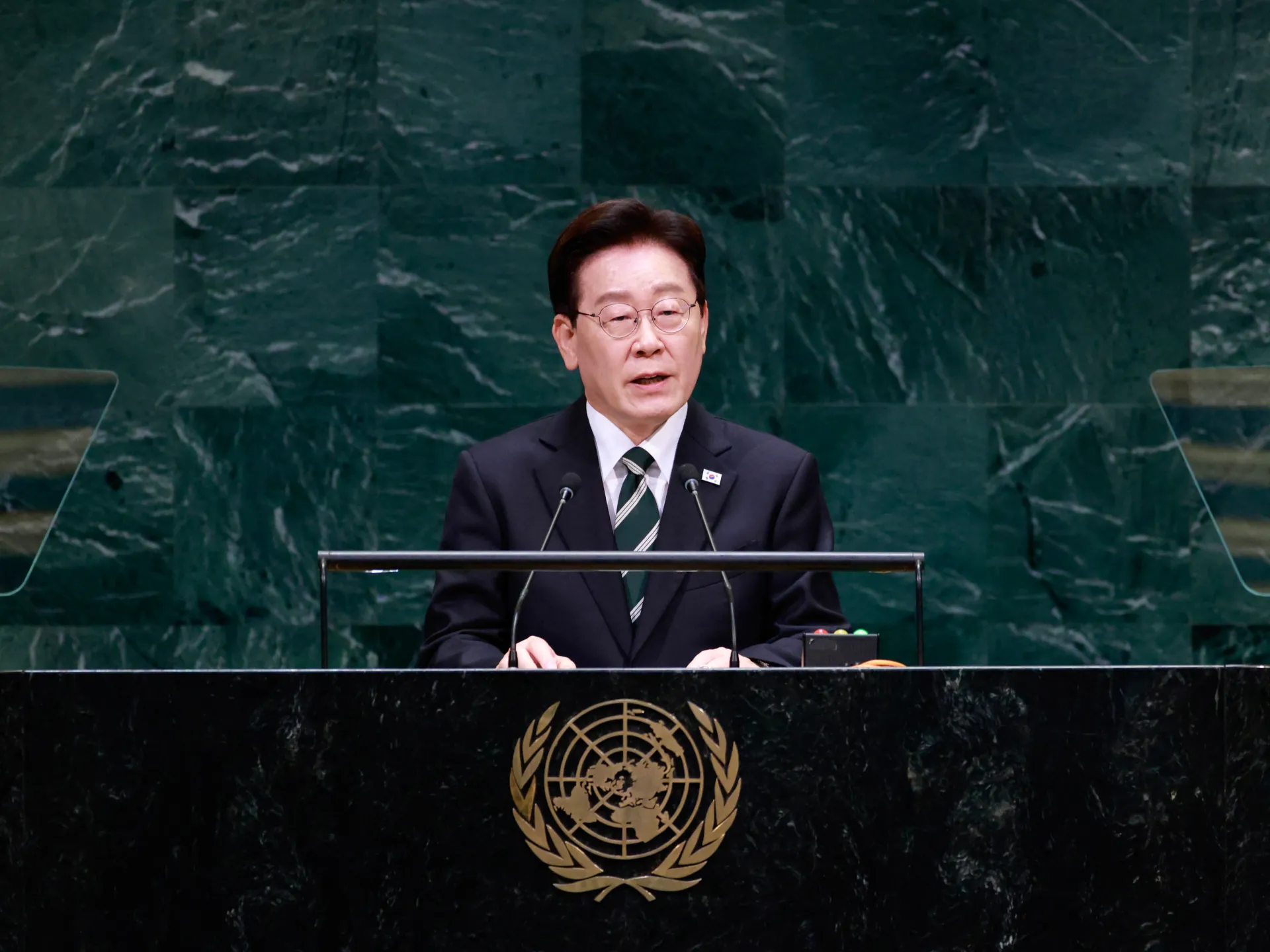
The South Korean president’s office has expressed “strong regret” over Ukraine’s disregard for a nondisclosure agreement with Seoul in the transfer of two North Korean prisoners of war (POWs) to Seoul, South Korean media reported.
Last week, Ukraine’s President Volodymyr Zelenskyy said in an address to the United Nations General Assembly (UNGA) that his country transferred two North Korean POWs to South Korea.
Recommended Stories
list of 3 itemsend of list
President Lee Jae Myung’s office “expresses strong regret over Ukraine’s unilateral disclosure [of the transfer] and its subsequent false announcement that there had not been a non-disclosure agreement”, the Yonhap news agency quoted Seong Ghi-hong, South Korea’s senior presidential secretary for public relations, as saying in a statement on Sunday.
The office said the nondisclosure agreement aimed to safeguard the soldiers from dangers they could face if their transfer were to be disclosed, in accordance with international law and humanitarian principles.
According to Yonhap, a South Korean media outlet, the Ukrainian presidential office said it had disclosed the transfer of the POWs without extensive details on the process, claiming that it would have been strange to keep the entire transfer a secret. Ukrainian media outlets reported a Ukrainian presidential source as denying the existence of a confidentiality agreement with Seoul, Yonhap said.
The South Korean presidential office said the Ukrainian presidential office’s “false” denial of the confidentiality agreement “seriously hampers” bilateral trust and causes serious disruptions to bilateral friendship.
Seong Ghi-hong said the government was considering additional measures over the issue, if necessary, Yonhap added.
North Korean POWS
Ukrainian forces captured the two North Korean soldiers in Russia’s Kursk region in January 2025.
Mounting evidence, including from intelligence reports and testimonies of defectors, has indicated that North Korean soldiers resorted to self-detonation or other forms of suicide rather than be captured.
In his UN address, Zelenskyy said, “These guys are not easy to capture alive.” He added, “One of them, when he realised he was going to be taken prisoner, tried to kill himself. And he was shocked that fate did not let him die.”
South Korean media reported that the two captured soldiers had expressed their desire to defect to South Korea.
The issue of North Korean prisoners of war was a key topic during the NATO summit in Ankara, Turkiye, where Lee met Zelenskyy in July.
Senior presidential spokesperson Kang Yu-jung stated afterwards that both leaders agreed to resolve the status of North Korean POWs in accordance with international law. This built on a prior agreement reached during the South Korea-Ukraine foreign ministers’ meeting in March, where both nations pledged to cooperate on the POW issue.
According to South Korean intelligence, North Korea is estimated to have deployed approximately 14,000-15,000 soldiers to support Russia’s efforts in its war with Ukraine since 2024, primarily in the Kursk border region. South Korean, Ukrainian and Western officials said they suffered heavy casualties, with more than 6,000 North Korean soldiers killed in the fighting.
The transfer comes as South Korea has backed efforts to revive dialogue with North Korea, while United States President Donald Trump has renewed his willingness to engage with Pyongyang.
Ukraine has targeted an industrial plant in Russia’s Perm region with a massive drone swarm. Russian authorities say they also repelled strikes headed towards Moscow.
Russian President Vladimir Putin has cast the vote as a test of support for his ongoing war in Ukraine.
Published On 20 Sep 202620 Sep 2026
Polls have closed in Russia’s first wartime parliamentary elections, with the ruling United Russia party on course to win the tightly controlled vote.
The Kremlin wants the elections, the first parliamentary vote since the start of the full-scale invasion of Ukraine in 2022, to showcase popular support for the war and legitimise its action.
Recommended Stories
list of 3 itemsend of list
Russian government officials accused Ukraine of trying to disrupt voting after Kyiv launched hundreds of drones at Moscow and other regions in what the TASS state news agency said was the biggest attack of its kind since the war began.
The drone strikes on Sunday killed at least three people in the Moscow region and two more in the Russian-held part of Ukraine’s Kherson region, including an election official, according to the region’s governor and the election commission.
Initial results showed the United Russia party comfortably ahead, and Russia’s Central Election Commission said turnout at the close of polls stood at 56.66 percent.
The first official results and turnout are expected on Monday morning.
Voting in Russian-held Ukrainian areas
The vote, which began on Friday for 111 million eligible voters, included residents of four Ukrainian regions that Moscow illegally annexed after the war began, but still doesn’t fully control, as well as those in Crimea, the Black Sea peninsula that was illegally annexed by Russia in 2014.
Authorities in Kyiv denounced the voting in the Russian-held areas as illegal and urged foreign governments not to recognise the result. The European Union on Friday called the action a “blatant violation of international law”.
Voters cast two separate ballots, filling half of the lower house’s 450 seats by selecting political parties listed on the ballot. The rest are contested in single-seat constituencies, with voters choosing individual candidates.
The main Kremlin party, United Russia, is widely expected to retain its overwhelming control of the State Duma. Several smaller parties of the “systemic opposition” that vote in sync with Putin’s views on all key issues are also expected to maintain their presence.
A massive state media campaign and tight control over the elections in the absence of genuine opposition all but assure the Kremlin will keep tight control of Russian politics amid mounting economic costs and increasing Ukrainian drone attacks deep inside the country.
The liberal Yabloko party, the only registered political entity that dared to publicly criticise the war, was removed from the ballot last month by Russia’s Supreme Court. It only has a few dozen candidates in the single-constituency races.
Additionally, some anti-war politicians were imprisoned or forced to flee abroad ahead of the campaign.
Russia didn’t invite election observers from the Organization for Security and Cooperation in Europe. The Russian Foreign Ministry has accused the body of “double standards” for its criticism of Russia.
Acclaimed Russian film director who won 2026 Grand Prix award at Cannes, has been critical of the war in Ukraine.
Published On 18 Sep 202618 Sep 2026
The winner of a prestigious Cannes Film Festival award has been declared a foreign agent by Russian authorities for his criticism of Moscow’s war in Ukraine.
Acclaimed Russian film director Andrey Zvyagintsev was designated a “foreign agent” by the Kremlin on Friday, according to state news agency TASS.
Recommended Stories
list of 3 itemsend of list
Zvyagintsev won the 2026 Grand Prix at the Cannes Film Festival for, Minotaur, a film depicting a Russian businessman who is forced to decide which of his employees should be mobilised to go and fight in Ukraine.
“Millions of people on both sides of the front line dream of only one thing: for the massacres to stop,” Zvyagintsev said in his acceptance speech, adding that Russian President Vladimir Putin was the only person capable of ending the war.
Moscow has kept casualty numbers from the fighting in Ukraine heavily restricted and has not provided timely or complete public updates, but estimates of Russian soldiers killed in the four-year war range from anywhere from 200,000 to half a million.
Russia’s Ministry of Justice on Friday accused Zvyagintsev of disseminating “false information about decisions taken by the public authorities of the Russian Federation and the policies they pursue”.
“He interacted with foreign agents and resides outside the Russian Federation,” it said.
The 62-year-old director, who has lived outside Russia since the COVID pandemic, is known for a series of other films including, The Return, The Banishment, and, Leviathan, a bleak portrayal of life in rural Russia.
People listed as foreign agents are subjected to onerous bureaucratic requirements and restrictions on their income in Russia.
They are barred from holding public office and forced to register their activities with the authorities.
They also have to add warnings on everything they publish, including on social media, that the content was produced by a foreign agent.
The label adds connotations of espionage to numerous people, including public figures, whom it deems to be engaging in anti-Russian activity with support from abroad.
Previously, writer Boris Akunin and rock musician Boris Grebenshchikov have been labelled as foreign agents by Moscow.
Kremlin calls UK’s support for Ukraine an endorsement of ‘terrorism’ after recent escalation of weapons supplies.
Published On 18 Sep 202618 Sep 2026
Russia has stepped up pressure on Ukraine’s allies, summoning Britain’s top diplomat in Moscow over arms shipments to Kyiv and seizing Russian assets of several Western firms.
The Russian Ministry of Foreign Affairs summoned Britain’s charge d’affairs, Danae Dholakia, on Friday, issuing a formal protest over the UK’s “further increase” in weapons to Ukraine.
Recommended Stories
list of 3 itemsend of list
“London is placing itself in the position of an accomplice to the bloody atrocities committed by the Kyiv regime, which can only be characterised as terrorism and war crimes,” the ministry said in a statement.
Britain has maintained its support for Ukraine and says it will stand “shoulder to shoulder” with Kyiv and will provide whatever military equipment it needs, saying just last month that it will share classified weapons information.
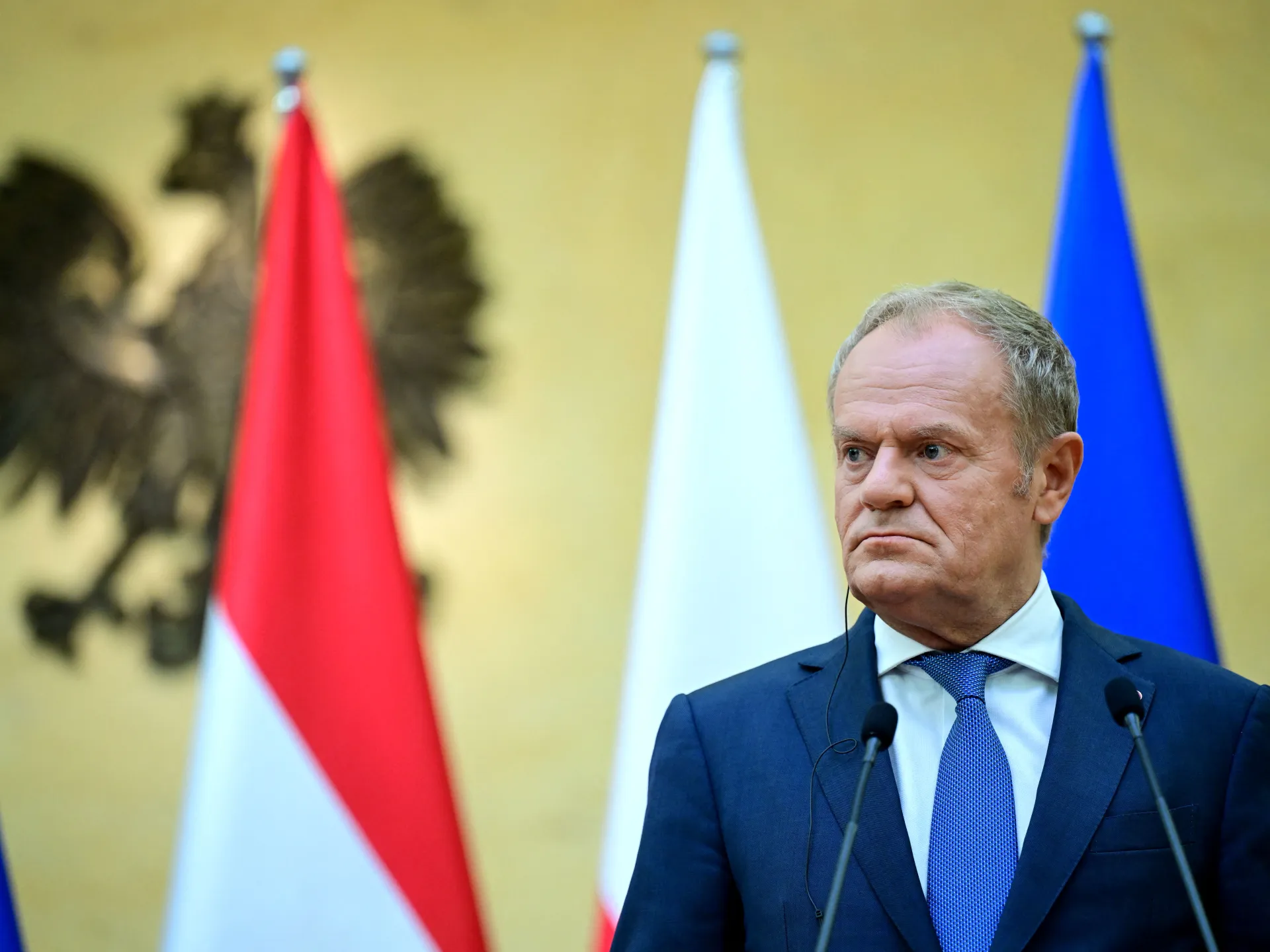
Moscow’s move comes the day after Polish Prime Minister Donald Tusk warned that Russia might be preparing to launch hybrid drone and missile strikes against countries that support Ukraine, including Poland. He said that such attacks would be framed as accidental, with the intention of weakening NATO states’ resolve to invoke collective defence provisions in the event of an attack on one of its countries.
French President Emmanuel Macron said on Friday that the threat posed by Russia’s shadow operations was growing across Europe and that Moscow had targeted France with hybrid attacks in the past few weeks.
“The Russian hybrid threat against Europeans and against France has intensified,” he said after a meeting with French political leaders.
France’s interior minister had met regional prefects to step up “vigilance in response to the Russian hybrid attacks”, Macron said, adding that he had ordered “the government to prepare a plan to protect our critical infrastructure” and the “most sensitive” defence industry and technology sites against drone and cyber-attacks.
Moscow seizes French, Swiss firms
As Russia steps up pressure on Ukraine’s political allies, it is also targeting Western companies.
Moscow has ordered the seizure of Russian businesses and assets of Swiss food giant Nestle and three French firms: retailer Auchan, DIY chain Lemana Pro (formerly Leroy Merlin) and logistics firm FM Logistics.
President Vladimir Putin signed a decree late on Thursday that changed the firms’ Russian operations to a new entity, LEV Management, which is managed by a Russian Ministry of Interior general, according to Novaya Gazeta Europe.
Nestle said it was still “assessing” the situation and its options but it remains “committed to taking all necessary steps to protect its rights”.
Kremlin spokesman Dmitry Peskov told reporters on Friday that one of the reasons behind the decision was because Nestle and Auchan are companies from “unfriendly” countries.
Their assets are only under “temporary administration” and that no decisions have been taken as of yet, Peskov added.
Overnight Russian strikes hit multiple regions in Ukraine, sparking several fires across the country, as President Volodymyr Zelenskyy is to host the inaugural Carpathian Eight summit of several European countries.
They include Romania, Poland, Slovakia, Czech Republic, Austria, Hungary and Serbia, with the European Union also set to discuss regional cooperation.
Hungary and Slovakia have refused to send Kyiv direct military assistance in the past, though Poland and Romania remain staunch allies.
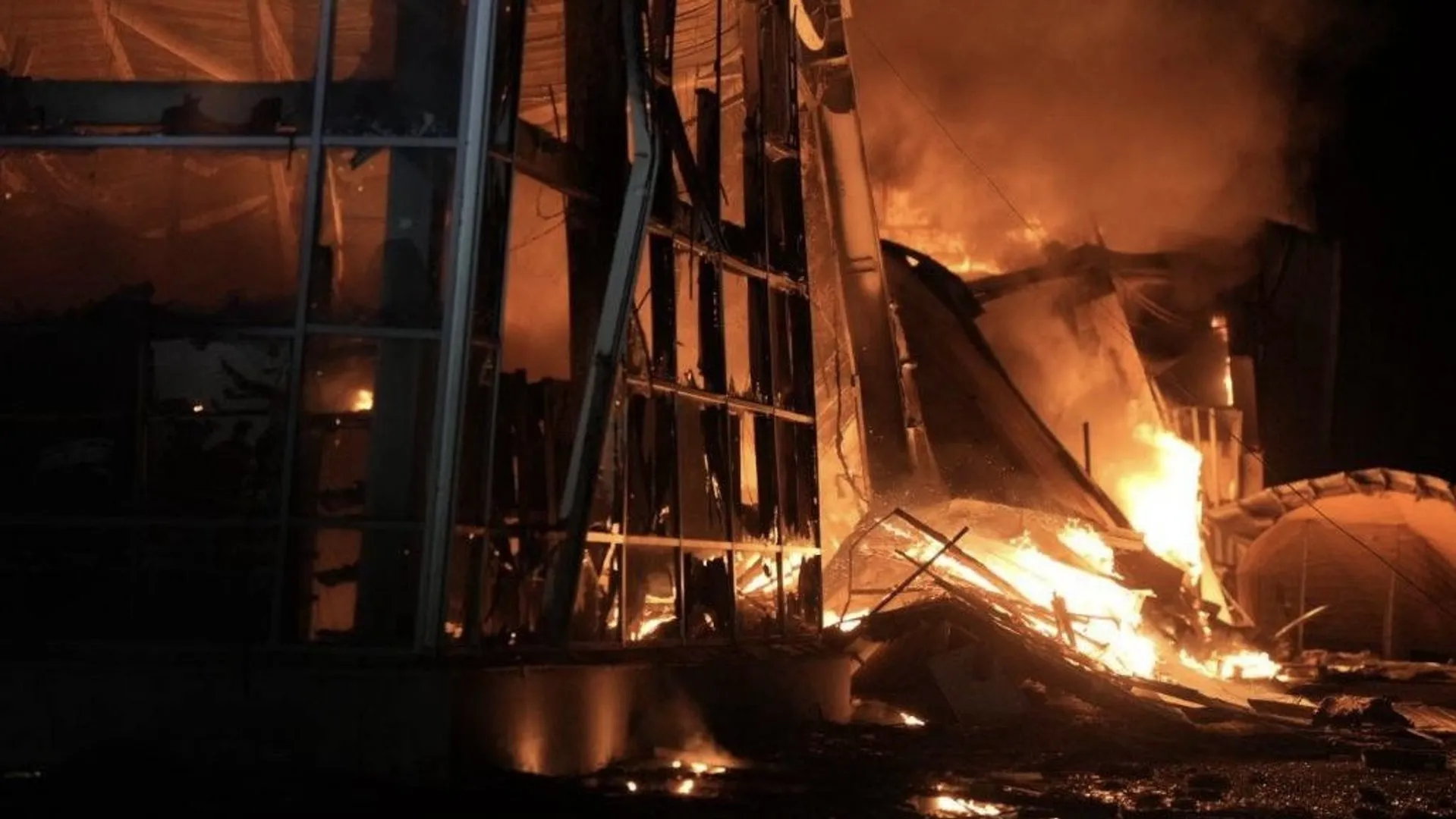
A Russian strike hit a shopping centre in Zaporizhzhia, southeastern Ukraine, sparking a major fire. Peace talks between Ukraine and Russia remain stalled, even as the US broker a pause in the fighting.
Warsaw also says it has scrambled military planes in response to a Russian attack in western Ukraine, close to its border.
Published On 17 Sep 202617 Sep 2026
Polish Prime Minister Donald Tusk says that intelligence information suggests Russia plans to launch drone and missile attacks against countries supporting Ukraine.
Warsaw’s leader outlined the assessment during an address to parliament on Thursday, saying that the attacks will be meant to weaken NATO’s ability to act collectively in response.
Recommended Stories
list of 4 itemsend of list
“According to intelligence assessments, Russia’s plan … includes hybrid drone and missile strikes against countries supporting Ukraine, including Poland,” Tusk said.
European countries suspect Moscow of being behind a series of acts of sabotage in recent months to put pressure on the allies, especially Germany, helping Kyiv in its bid to resist Russia’s full-scale invasion – something the Kremlin has vigorously denied.
“These potential strikes would be quote-unquote ‘accidental’ in nature, intended to paralyse or at least weaken the resolve of NATO states to invoke the relevant NATO provisions in the event of aggression against a member country,” Tusk added.
He did not elaborate on which intelligence agencies had provided the warning.
He also said such attacks by Russia could coincide with “political changes in certain European countries granting power – or at least a powerful voice – to those who, increasingly invoking noble slogans of peace, pacifism and needless casualties, will call for peace – or rather, the total capitulation of Ukraine”.
Tusk appeared to be referring to the advance of more Russia-friendly parties such as Alternative for Germany (AfD) and National Rally in France.
Air raid near border with Poland
Earlier on Thursday, Poland said it had scrambled military planes in response to a Russian attack in western Ukraine, close to the Polish border.
Airports in Rzeszow and Lublin were temporarily closed, and residents of two eastern regions of Poland received air raid warnings. Local media reported that sirens had sounded and that pupils in some schools had sought shelter.
“Very close to the Polish border, not far from Dorohusk, a petrol station was most likely attacked again,” Tusk said.
On Sunday, a Russian drone hit a passenger train in Ukraine, just two kilometres (1.6 miles) from the Polish border.
Defence Minister Wladyslaw Kosiniak-Kamysz said Poland was strengthening airspace protection.
“We have increased F-16 and helicopter activity, and are reinforcing our air defence and rapid response systems,” he wrote on X.
Tusk said he would visit Ukrainian President Volodymyr Zelenskyy on Friday to discuss cooperation within the Integrated Anti-Ballistic Missile Coalition, a group of European countries developing an air defence system with Ukraine as a cheaper alternative to the US-built Patriot.
Tetiana Bubynets collapsed on the asphalt after a Russian drone exploded at a gas station in the southern Ukrainian city of Zaporizhzhia.
Despite the violent shockwave and blast of drone shrapnel produced by the attack on July 6, the 18-year-old accounting student had no visible wounds except for a nosebleed.
Recommended Stories
list of 3 itemsend of list
She was rushed to hospital and pronounced dead shortly after, alongside two other civilians, aged 41 and 48.
One of her lecturers, Tetiana Melikhova of Zaporizhzhia National University, said Bubynets was an only child and that her mother “lost the meaning of life” after she died.
“She couldn’t speak. At the funeral, she just lay on the coffin; she couldn’t let her child go,” Melikhova told Al Jazeera.
The strike that killed Bubynets was the first recorded case of Russia’s use of a fully autonomous attack drone powered by artificial intelligence (AI), according to a New York Times analysis.
While drone strikes have hammered Ukraine since Russia launched its full-scale invasion in February 2022, Ukrainian officials who examined the wreckage found the unmanned vehicle to be unlike others.
In place of an antenna, it featured an AI-powered minicomputer sold commercially by US technology company Nvidia, which rendered it capable of directing itself to the type of target it was programmed to spot – likely propane tanks in this case – lock on to it and proceed to strike.
AI-powered drones are the tip of the iceberg as Russia and Ukraine race towards boosting tech infrastructure aimed at coordinating reconnaissance and attack, according to analysts.
“It’s not about a drone having AI in it, and then seeing something and striking,” Marina Miron, researcher at the defence studies department at King’s College London, said. “Rather, it’s the drone seeing something, communicating to a software complex which knows how to map the GPS coordinates on a live battlefield map, and notifying the closest artillery unit.”
Referred to as reconnaissance-strike architecture, these unified battlefield management systems act like a central command. They track the location of friendly forces and identify enemy positions.
AI acts as the accelerator, instantly processing massive amounts of data collected through sensors in drones or any other military products, including interceptor missiles or artillery units.
The tactical advantage on the battlefield is given by the system’s ability to compress the kill chain – meaning coordinating and distributing the intelligence to military assets on the ground to find, track and destroy targets in a matter of minutes.
In such an ecosystem, AI-powered automated drones are just pieces of a broader puzzle.
Ukraine is known to be developing its system, which it named DELTA. Following operational trials in late 2025, Russia has been rolling out its version, the Svod Tactical Situational Awareness Complex, to front-line units.
Both sides claim that once the battlefield data is processed, a decision support system (DSS) presents a military commander with options to choose from, keeping a human in the decision-making loop, said Miron.
“In how far that is true is, of course, impossible to find out,” she added.
Acknowledging full AI autonomy would provoke ethical and legal questions.
Even if humans were to retain final decision-making authority, research has shown AI systems subtly shape choices, predetermining outcomes.
“Under time and pressure, commanders often do as AI suggests,” said Miron, whose research focuses on military AI and remotely piloted and autonomous systems.
Towards full automation
Coordinated AI-powered military systems are the next frontier of modern warfare, said Serhiy Beskrestnov, a Ukrainian Ministry of Defence adviser on loitering munitions, known by his callsign Flash.
“That’s what it will all come to,” he posted on his Telegram channel on July 1. “Navigation, search for a target, and attacks will be fully autonomous.”
Drones with some autonomous capabilities are already being deployed at scale.
Heorhii Volkov, commander of Ukraine’s Yasni Ochi drone strike unit, said this is currently mostly used in the final phase of long-distance strikes, where first-person view (FPV) drones are likely to lose radio connection due to electronic warfare or the curvature of the Earth.
The use of AI in so-called last-mile operations solves this battlefield hitch. If the signal is lost, an integrated AI-enabled onboard module takes full control of the unmanned vehicle, autonomously locks on the target and carries the strike to completion.
Yaroslav Azhnyuk, founder of Ukrainian technology company The Fourth Law, which develops AI-powered autonomy software for unmanned vehicles, said Russia and Ukraine were working to deploy a wider range of autonomous systems.
“This is not simply a race to demonstrate a fully autonomous drone. It is a race to make autonomy reliable, affordable and deployable at scale,” Azhnyuk told Al Jazeera. “Electronic warfare, increasingly long engagement distances and the growing number of drones are making human-controlled systems less sufficient. Autonomy solves exactly these constraints.”
Azhnyuk believes autonomy will become a game-changer over the next six to 12 months.
“The decisive advantage will belong to the side that can deploy reliable autonomy across tens or hundreds of thousands of systems, not just demonstrate it in prototypes,” he said.
Kateryna Bondar, senior fellow at the Center for Strategic and International Studies (CSIS), noted the dangers of AI’s reliance on algorithms.
“The system doesn’t understand what it’s doing; it’s just following the algorithm and the rules which people created,” said Bondar, who works at the CSIS’s Wadhwani AI Center. “AI has to be trained to recognise targets and engage these targets,” but writing code that distinguishes between a bus and a tank is easier than between a Russian and a Ukrainian soldier.
Additionally, cost-effective FPV drones have low-quality cameras and their resolution can be lowered further by adverse atmospheric conditions.
Military units using autonomous systems therefore “delegate the decision to a very imperfect technology that cannot distinguish between a civilian and a military person, combatant or non-combatant”, Bondar said.
“This is why there is a conversation around who makes a decision and who has responsibility for mistakes and errors.”
The first naval battle between two Unmanned Surface Vessels (USVs) has taken place in the Black Sea. The Ukrainian Navy said on Saturday that one of its naval drones sank a Russian vessel.
Second day of strikes on fuel stations suggest a new campaign focused on civilian areas in the Ukrainian capital.
Published On 11 Sep 202611 Sep 2026
Russian drone attacks on two fuel stations in Kyiv have killed two people and injured others, as Moscow continues to target civilian areas.
They were struck early on Friday within ten minutes of each other in the capital’s Obolonskyi and Dniprovskyi districts, shortly after emergency sirens rang out, Mayor Vitali Klitschko said in a statement.
Recommended Stories
list of 3 itemsend of list
Russia also targeted fuel stations in Kyiv on Thursday, suggesting a new campaign focused on civilian areas in the capital. Ukrainian authorities have warned people to avoid filling up when air raid sirens sound.
One person died at the scene of one of the attacks, Klitschko said, while the other died in hospital. Six people required hospital treatment.
While fuel stations near the eastern and southern battle lines have been hit regularly for months, authorities have long warned that the attacks could extend to the capital as an intimidation strategy.
Russia and Ukraine both deny targeting civilians as the conflict – started with Moscow’s invasion in February 2022 – has developed into a series of daily attacks with missiles and drones.
Other Russian drone strikes overnight hit near a shopping mall in Pavlohrad, leaving five dead and 67 injured, while a mother and son were injured in Zaporizhzhia when a drone hit an apartment building and a mall.
Ukraine’s Minister of Foreign Affairs, Andrii Sybiha, declared Friday a day of mourning.
On Thursday, he condemned Russia for attacking civilian areas in a bid to sow fear.
“Russia is systematically attacking places where it knows people will be spending their time going about their daily lives, seeking to maximise casualties, spread fear and put pressure on Ukrainian society,” he stated.
Ukraine unleashed its own large-scale drone attack through the night, with Russia’s Ministry of Defence reporting that its forces shot down 777 drones in 16 regions.
Two people were killed and three injured in Tula, to the south of Moscow, local authorities reported.
Ukraine launches one of its deepest strikes to date, targeting gas plants in Russia’s Arctic region.
Published On 10 Sep 202610 Sep 2026
Russian forces have launched attacks across Ukraine, killing at least seven people, according to Ukrainian officials, as Kyiv claimed responsibility for a drone attack that set off a fire at a natural gas plant deep in Russia’s Arctic region.
Four people were killed in a Russian attack in Mykolaiv in southern Ukraine overnight on Thursday, while three were killed in a drone attack on a shopping centre in the northeastern city of Sumy, according to Ukrainian authorities.
Recommended Stories
list of 3 itemsend of list
Heorhii Reshetilov, the acting governor of the Mykolaiv region, said the Russian strikes there hit both civilian and industrial infrastructure, killing two men and two women. At least 19 others were wounded, he said on Telegram.
The attack in Sumy left at least 14 people wounded, according to Oleh Hryhorov, head of the Sumy Regional Military Administration. Three of the victims were children, he said on Telegram.
The Russian Ministry of Defence confirmed the attack in Mykolaiv, but said it targeted a drone warehouse. The ministry said it also hit the Ukrainian port of Chornomorsk and two vessels near Odesa on the Black Sea.
The targets of the strikes were being used for military purposes, the ministry claimed.
The attacks came after Russian authorities said Ukrainian forces had launched a drone attack on the country’s Yamal-Nenets region, which is located some 2,800 kilometres (1,700 miles) from the Ukrainian border.
Dmitry Artyukhov, the region’s governor, said the attack targeted an industrial facility in Novy Urengoy. The attack was repelled, but falling debris from the drone caused a fire, he said on Telegram.
“The main thing is that there were no deaths or injuries. The extent and nature of the damage are being determined,” he added.
Artem Zhoga, the Kremlin’s envoy to the Urals, said Wednesday’s strike was the first ever to hit the Arctic part of the region.
Ukraine’s Special Operations Forces (SOF) confirmed the attack in a series of posts on X.
“For the first time! Deepest strike of the war: Ukrainian SOF hit critical russian plants more than 3,000 km away,” it said. “Ukraine’s Special Operations Forces carried out the deepest strike inside russia since the beginning of the full-scale war.”
In the posts, the Ukrainian force claimed it “successfully struck” two gas plants, Novy Urengoy and Purovsky.
“Until today, the area was considered a safe rear zone for the aggressor,” it added.
The Ukrainian force said the facilities play a key role in Russia’s gas industry, processing large volumes of condensate from gas fields across the Yamal region, processing millions of tonnes of condensate per year.
Gazprom used to export gas from Yamal as far as Western Europe until relations broke down following the start of Russia’s war in Ukraine in 2022.
It estimated the region’s gas resources at 26.5 trillion cubic metres as of 2020, enough to cover global demand for more than six years.
Ukraine has escalated its long-range strikes on Russia in recent months, in retaliation for daily Russian bombardment of Ukrainian towns and cities.
Earlier this month, Ukrainian President Volodymyr Zelenskyy said his country’s drones would make Russian airspace “completely unsafe” for the duration of the war.
Strikes resume in Russia and Ukraine after a three-day pause during US envoys’ visits to the countries’ capitals.
Published On 8 Sep 20268 Sep 2026
Russia has struck Kyiv after a three-day pause in attacks on the Ukrainian and Russian capitals expired, following a visit by two US envoys that yielded no tangible progress towards peace.
Two residential buildings were damaged by Russian air raids early on Tuesday, city officials in Kyiv said. Drones hit buildings in the capital city as well as in the Boryspil and Fastiv districts on the outskirts of Kyiv, according to the State Emergency Service of Ukraine.
An air raid alert, published by the Kyiv city military administration, urged residents to take shelter due to the threat of an “enemy” drone attack.
Following the reported attacks in Ukraine, Russian regional Governor Roman Busargin said a Ukrainian drone attack injured several people after hitting civilian infrastructure in Saratov, nearly 1000km from Moscow. The number of casualties from both incidents remains unconfirmed (621 miles).
Russia and Ukraine pledged to halt strikes on each other’s capitals for three days as Washington dispatched envoys to Moscow and Kyiv. However, fighting continued elsewhere.
Attacks paused after leaders Vladimir Putin of Russia and Volodymyr Zelenskyy of Ukraine announced the ceasefire during the visits by US President Donald Trump’s envoys, Steve Witkoff and Jared Kushner, to Moscow and Kyiv over the weekend.
Russia’s state news agency TASS confirmed that the three-day suspension Putin had ordered for his forces expired on Monday evening local time.
Witkoff and Kushner held talks with officials in Moscow and Kyiv regarding ending the conflict. Kremlin aide Yury Ushakov called the more than three-hour meeting in Moscow on Saturday “highly useful”.
Russian President Vladimir Putin welcomes Trump’s son-in-law Jared Kushner (left) and special envoy Steve Witkoff (second left) during their meeting at the Kremlin in Moscow, Russia, on September 5, 2026 [Gavriil Grigorov Sputnik/Kremlin/EPA]
After talks with Ukraine’s Zelenskyy, Witkoff said: “We’ve had a very meaningful discussion, substantive, important, and we are very encouraged, and we look forward to continuing this as long as it takes.”
Witkoff also raised the prospects of reviving three-way negotiations to end the war.
A White House official told the Reuters news agency that the next steps regarding the war, which Russia began with a full-scale invasion of its neighbour in February 2022, would be announced in the coming weeks.

![A Romanian F-16 fighter jet flies amid heightened security concerns over cross-border drone incursions, August 17, 2026 [Andreea Alexandru/AP Photo]](https://i0.wp.com/occasionaldigest.com/wp-content/uploads/2026/10/AP26219409679050-1791212123.jpg?w=640&ssl=1)



![US President Donald Trump waves as he walks to board Marine One as he departs from the South Lawn of the White House in Washington, DC, on September 26, 2026 [AFP]](https://i0.wp.com/occasionaldigest.com/wp-content/uploads/2026/09/1790693783_407_afp_6ab7d4f7ee67-1790432503.jpg?w=640&ssl=1)


![Russian President Vladimir Putin (R) welcomes Trump's son-in-law Jared Kushner (L) and US Presidential Envoy Steve Witkoff (2-L) during their meeting at the Kremlin in Moscow, Russia, 05 September 2026. [Gavriil Grigorov Sputnik/Kremlin/EPA]](https://i0.wp.com/www.aljazeera.com/wp-content/uploads/2026/09/epa_6a9f6f8e2a59-1788833678.jpg?w=640&ssl=1)