Rubio

EU warns of possible action after the U.S. bars 5 Europeans accused of censorship

The European Union’s executive arm on Wednesday warned that it would take action against any “unjustified measures” after the U.S. State Department barred five Europeans it accuses of pressuring U.S. technology firms to censor or suppress American viewpoints.

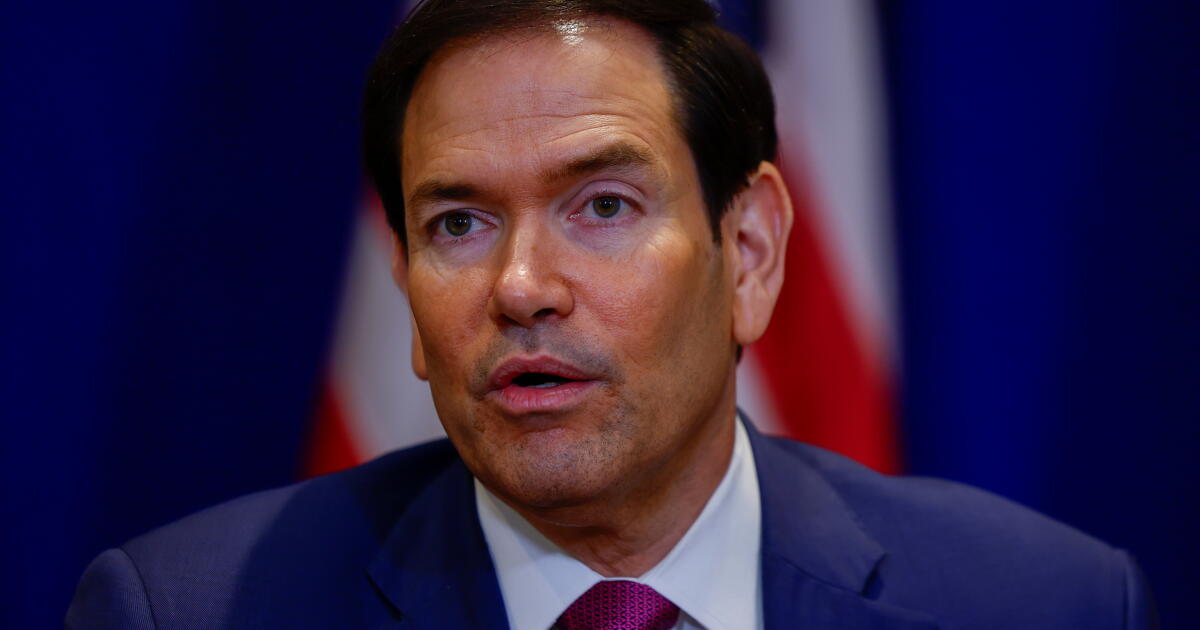
The Europeans were characterized by U.S. Secretary of State Marco Rubio as “radical” activists and “weaponized” nongovernmental organizations. They include the former EU commissioner responsible for supervising social media rules, Thierry Breton.

Breton, a businessman and former French finance minister, clashed last year on social media with tech billionaire Elon Musk over broadcasting an online interview with Donald Trump in the months leading up to the U.S. election.

The European Commission, the EU’s powerful executive branch and which supervises tech regulation in Europe, said that it “strongly condemns the U.S. decision to impose travel restrictions” and that it has requested clarification about the move. French President Emmanuel Macron also condemned it.

“If needed, we will respond swiftly and decisively to defend our regulatory autonomy against unjustified measures,” the commission said in a statement, without elaborating.

Rubio wrote in an X post on Tuesday that “for far too long, ideologues in Europe have led organized efforts to coerce American platforms to punish American viewpoints they oppose.”

“The Trump Administration will no longer tolerate these egregious acts of extraterritorial censorship,” he posted.

The European Commission countered that “the EU is an open, rules-based single market, with the sovereign right to regulate economic activity in line with our democratic values and international commitments.”

“Our digital rules ensure a safe, fair, and level playing field for all companies, applied fairly and without discrimination,” it said.

Macron said that the visa restrictions “amount to intimidation and coercion aimed at undermining European digital sovereignty,” he posted on X.

Macron said that the EU’s digital rules were adopted by “a democratic and sovereign process” involving all member countries and the European Parliament. He said that the rules “ensure fair competition among platforms, without targeting any third country.”

He underlined that “the rules governing the European Union’s digital space are not meant to be determined outside Europe.”

Breton and the group of Europeans fell afoul of a new visa policy announced in May to restrict the entry of foreigners deemed responsible for censorship of protected speech in the United States.

The four others are: Imran Ahmed, chief executive of the Centre for Countering Digital Hate; Josephine Ballon and Anna-Lena von Hodenberg, leaders of HateAid, a German organization; and Clare Melford, who runs the Global Disinformation Index.

Rubio said the five had advanced foreign government censorship campaigns against Americans and U.S. companies, which he said created “potentially serious adverse foreign policy consequences” for the United States.

The action to bar them from the U.S. is part of a Trump administration campaign against foreign influence over online speech, using immigration law rather than platform regulations or penalties.

In a post on X on Tuesday, Sarah Rogers, the U.S. under secretary of state for public diplomacy, called Breton the “mastermind” behind the EU’s Digital Services Act, which imposes a set of strict requirements designed to keep internet users safe online. This includes flagging harmful or illegal content like hate speech.

Breton responded on X by noting that all 27 EU member countries voted for the Digital Services Act in 2022. “To our American friends: ‘Censorship isn’t where you think it is,’” he wrote.

Cook writes for the Associated Press. AP journalist Angela Charlton contributed to this report from Paris.

Source link

Secretary of State Marco Rubio: Russia-Ukraine conflict is ‘not our war’

Dec. 19 (UPI) — U.S. Secretary of State Marco Rubio said Friday that U.S. negotiators have made “progress” attempting to end the war between Russia and Ukraine, but ultimately “it’s not our war.”

The Russian invasion of Ukraine was one of several global issues Rubio addressed during his 2-hour year-end news conference with reporters. He said despite the progress in negotiations, “we have a ways to go” to end the nearly four-year war in eastern Europe.

“And obviously, the hardest issues are always the last issues,” he said during the briefing.

“Maybe that happens this week, maybe that happens next month, maybe that’s not ready for a few months,” Rubio said of a deal.

His comments came ahead of a weekend meeting in Miami between U.S. and Russian negotiators. He said that while the United States is trying to work on a deal that would make both parties happy, he’s not willing to force a plan.

“It’s not our war. It’s a war on another continent.

“We can’t force Ukraine to make a deal. We can’t force Russia to make a deal. They have to want to make a deal.”

White House officials said they were optimistic this weekend’s meeting would result in an agreement. Previous talks resulted in about “90%” consensus on terms, the officials told The Hill.

Those terms included a multi-national force deployed to Ukraine to respond to acts of aggression against the country in the future. Earlier this week, European leaders pledged to provide military support to Ukraine in protection against Russia, however Ukrainian President Volodymyr Zelensky conceded over the weekend his country may have to give up its dream of joining NATO to end the war.

As peace talks have gone on, U.S. negotiators have put pressure on Ukraine to make more concessions to Russia, which has remained staunch in its demands, which including giving up land. Politico reported that the Trump administration believes Russia will accept EU membership for Ukraine as well as offers of mutual defense from the United States and European countries.

President Donald Trump holds a signed executive order reclassifying marijuana from a schedule I to a schedule III controlled substance in the Oval Office of the White House on Thursday. Photo by Aaron Schwartz/UPI | License Photo

Source link

Rubio fields questions on Russia-Ukraine, Gaza and Venezuela

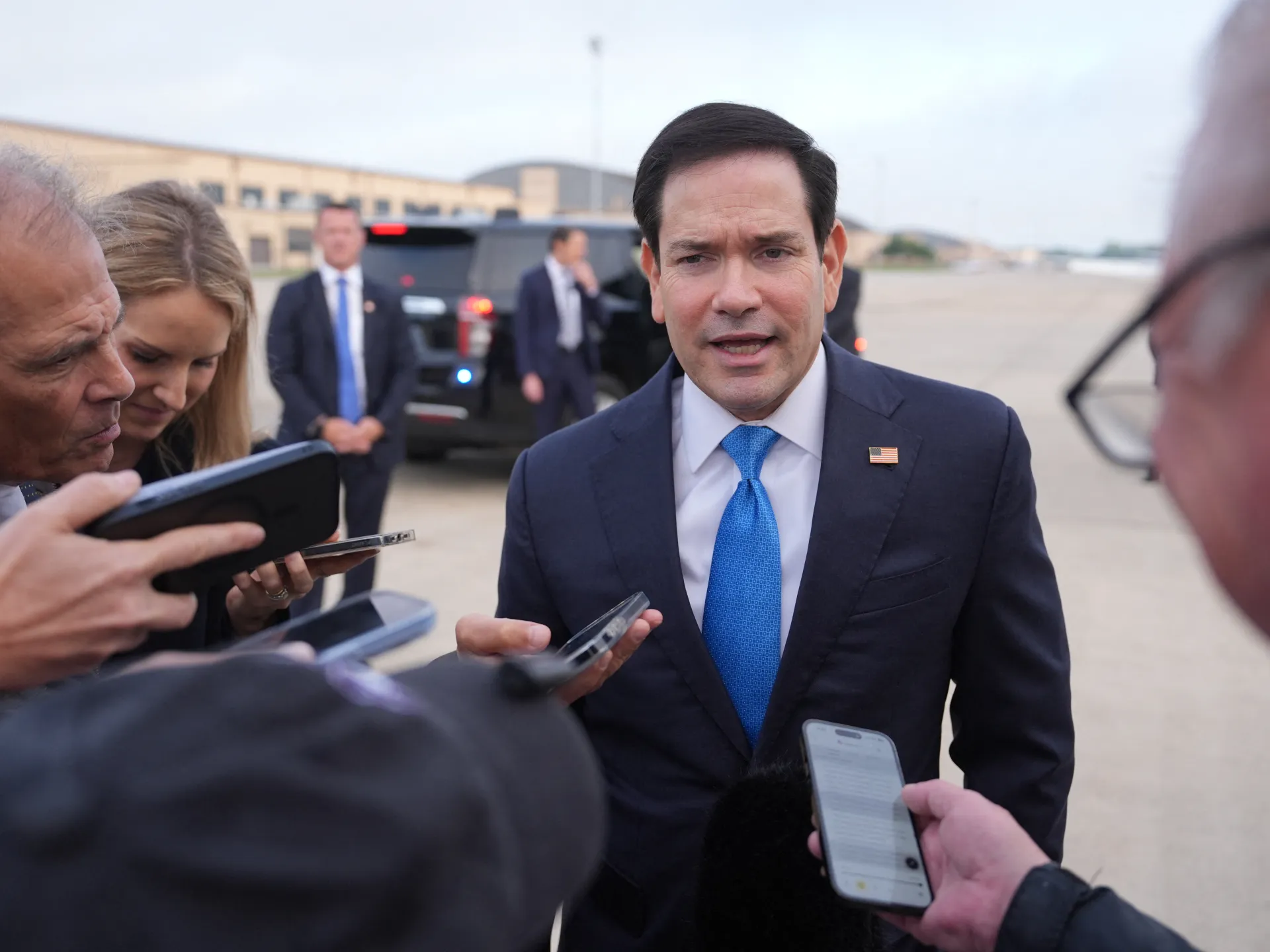
Secretary of State Marco Rubio weighed in on Russia-Ukraine and Israel-Hamas peace efforts and defended the Trump administration’s increasing military pressure on Venezuela during a rare, end-of-year news conference Friday.

In a freewheeling meeting with reporters running more than two hours, Rubio also defended President Trump’s radical overhaul in foreign assistance and detailed the administration’s work to reach a humanitarian ceasefire in Sudan in time for the new year.

Rubio’s appearance in the State Department briefing room comes as key meetings on Gaza and Russia-Ukraine are set to be held in Miami on Friday and Saturday after a tumultuous year in U.S. foreign policy. Rubio has assumed the additional role of national security advisor and emerged as a staunch defender of Trump’s “America First” priorities on issues ranging from visa restrictions to a shakeup of the State Department bureaucracy.

The news conference is taking place just hours before Trump’s special envoy Steve Witkoff meets with senior officials from Egypt, Turkey and Qatar to discuss the next phase of the Republican president’s Gaza ceasefire plan, progress on which has moved slowly since it was announced in October.

Witkoff and other U.S. officials, including Trump son-in-law and informal advisor Jared Kushner, have been pushing to get the Gaza plan implemented by setting up a “Board of Peace” that will oversee the territory after two years of war and create an international stabilization force that would police the area.

On Saturday, Witkoff, Kushner and Rubio, who will be at his home in Florida for the holidays, are to meet with Russian President Vladimir Putin’s adviser Kirill Dmitriev in Miami to go over the latest iteration of a U.S.-proposed plan to end the Russia-Ukraine war.

Rubio said there would be no peace deal unless both Ukraine and Russia can agree to the terms, making it impossible for the U.S. to force a deal on anyone. Instead, the U.S. is trying to “figure out if we can nudge both sides to a common place.”

“We understand that you’re not going to have a deal unless both sides have to give, and both sides have to get,” Rubio said. “Both sides will have to make concessions if you’re going to have a deal. You may not have a deal. We may not have a deal. It’s unfortunate.”

The U.S. proposal has been through numerous versions with Trump seesawing back and forth between offering support and encouragement for Ukraine and then seemingly sympathizing with Putin’s hard-line stances by pushing Ukrainian President Volodymyr Zelensky to agree to territorial concessions. Kyiv has rejected that concession in return for security guarantees intended to protect Ukraine from future Russian incursions.

On Venezuela, Rubio has been a leading proponent of military operations against suspected drug-running vessels that have been targeted by the Pentagon in the Caribbean Sea and the eastern Pacific Ocean since early September. The Trump administration’s actions have ramped up pressure on leftist Venezuelan President Nicolás Maduro, who has been charged with narco-terrorism in the U.S.

In an interview with NBC News on Friday, Trump would not rule out a war with Venezuela. But Rubio and Defense Secretary Pete Hegseth have publicly maintained that the current operations are directed at “narco-terrorists” trying to smuggle deadly drugs into the United States. Maduro has insisted the real purpose of the U.S. military operations is to force him from office.

Rubio sidestepped a direct question about whether the U.S. wants “regime change in 2026” in the South American country.

“We have a regime that’s illegitimate, that cooperates with Iran, that cooperates with Hezbollah, that cooperates with narco-trafficking and narco-terrorist organizations,” Rubio said, “including not just protecting their shipments and allowing them to operate with impunity, but also allows some of them to control territory.”

Rubio defended Trump’s prerogatives on Venezuela and said the administration believes “nothing has happened that requires us to notify Congress or get congressional approval or cross the threshold into war.” He added, “We have very strong legal opinions.”

Trump has spoken of wanting to be remembered as a “peacemaker,” but ceasefires his administration helped craft are already in trouble due to renewed military action between Cambodia and Thailand in Asia and Rwanda and the Democratic Republic of the Congo in Africa. Rubio, however, said those deals helped create a list of commitments that can now be used to bring both sides back to peace.

“Those commitments today are not being kept,” Rubio said of the Thailand-Cambodia conflict, which now threatens to reignite following Thai airstrikes. ”The work now is to bring them back to the table.”

Rubio’s news conference comes just two days after the Trump administration announced a massive $11-billion package of arms sales to Taiwan, a move that infuriated Beijing, which has vowed to retake the island by force if necessary.

Trump has veered between conciliatory and aggressive messages to China since returning to the Oval Office in January, hitting Chinese imports with major tariffs but at the same time offering to ease commercial pressure on Beijing in conversations with China’s President Xi Jinping. The Trump administration, though, has consistently decried China’s increasingly aggressive posture toward Taiwan and its smaller neighbors in disputes over the South China Sea.

Since taking over the State Department, Rubio has moved swiftly to implement Trump’s “America First” agenda, helping dismantle the U.S. Agency for International Development and reducing the size of the diplomatic corps through a significant reorganization. Previous administrations have distributed billions of dollars in foreign assistance over the last five decades through USAID.

Critics have said the decision to eliminate USAID and slash foreign aid spending has cost lives overseas, although Rubio and others have denied this, pointing to ongoing disaster relief operations in the Philippines, the Caribbean and elsewhere, along with new global health compacts being signed with countries that previously had programs run by USAID.

“We have a limited amount of money that can be dedicated to foreign aid and humanitarian assistance,” Rubio said. “And that has to be applied in a way that furthers our national interest.”

Lee and Klepper write for the Associated Press. AP writer Bill Barrow contributed to this report.

Source link