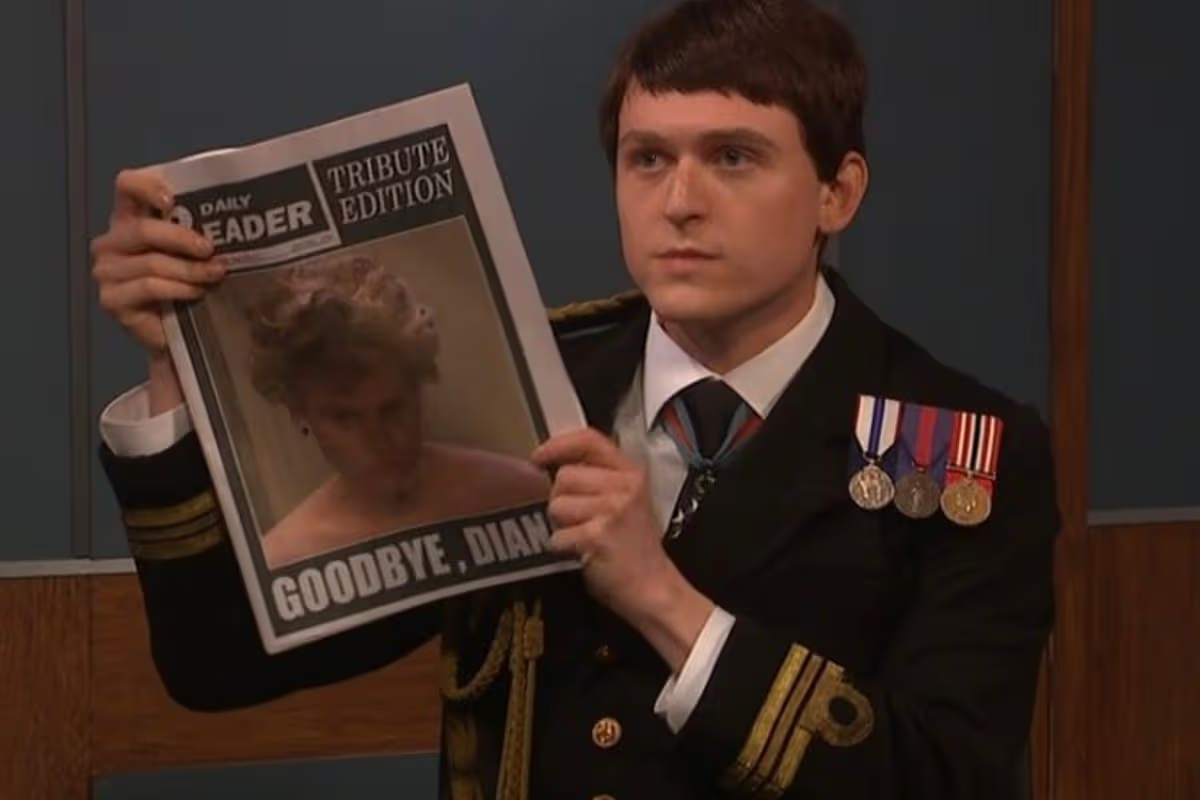
Today’s cold open showed Andrew, played by the comedian Jack Shep, taken into an office by MI5 in the wake of Princess Diana’s death in 1997.
22:35, 28 Mar 2026Updated 23:09, 28 Mar 2026
Jack Shep appears as Prince Andrew in a sketch set in 1997
The former Prince Andrew, Sarah Ferguson and Peter Mandelson were skewered in tonight’s opening Saturday Night Live UK sketch. It saw Andrew, played by comedian Jack Shep, taken into an office by MI5 in the wake of Princess Diana’s death in 1997.
It was quickly hailed as “incredible” by fans. One wrote: “I fear it’s already genius.” Another said: “Oh god perfect cold open on Andrew.”
Agents sit him down and tell him: “No one knows better than us how charming, capable, fiercely intelligent and morally upstanding you are. You are a credit to princes everywhere. Since the death of Diana the public have turned on Prince Charles but still one day he will be King. We need to make him look good.”
Another added: “We have deduced that the only way to increase the likability of our future king is to decrease the likability of everyone around him.”
Andrew replies: “I see. Well, I love my brother, I love my country and I’m willing to do whatever it takes.” The agents tell him, passing him an enormous dossier: “We have prepared a 29 year plan.”
He is seen flicking through nervously, asking: “And you actually need me to do all of this stuff? Even the part about befriending a notorious paedophile? Before and after he is convicted? And there is absolutely no other way to make my brother look good?”
The Andrew character adds: “This all seems very high risk. Oh god, I’m sweating. Surely you can’t make everyone around Charles unlikeable. What about William? He’s so handsome.” The agents tell him: “We’re seeing to that.”
“And Harry?” asks Andrew. They tell him: “He’s going to marry a woman 98% of the UK public will find it impossible to have a normal conversation about.”
The Andrew character replies: “Goodness, this will kill mummy when the news comes out.” They tell him: “Turn to page 72, it will.”
Things go up a gear again when they say: “”Send in Agent Mandelson.” Larry Dean emerges as Peter Peter Mandelson with Emma Sidi as Sarah Ferguson, who have also been brought in to make Charles look good.
The agents tell Andrew: “Your Highness, if you’re ever in too deep, just say the code word and we’ll step in to save you.” When he asks what that is, he’s told: “Pizza Express, Woking.”
The second episode of Saturday Night Live UK was hosted by actor Jamie Dornan, following on from Tina Fey’s appearance in the debut.
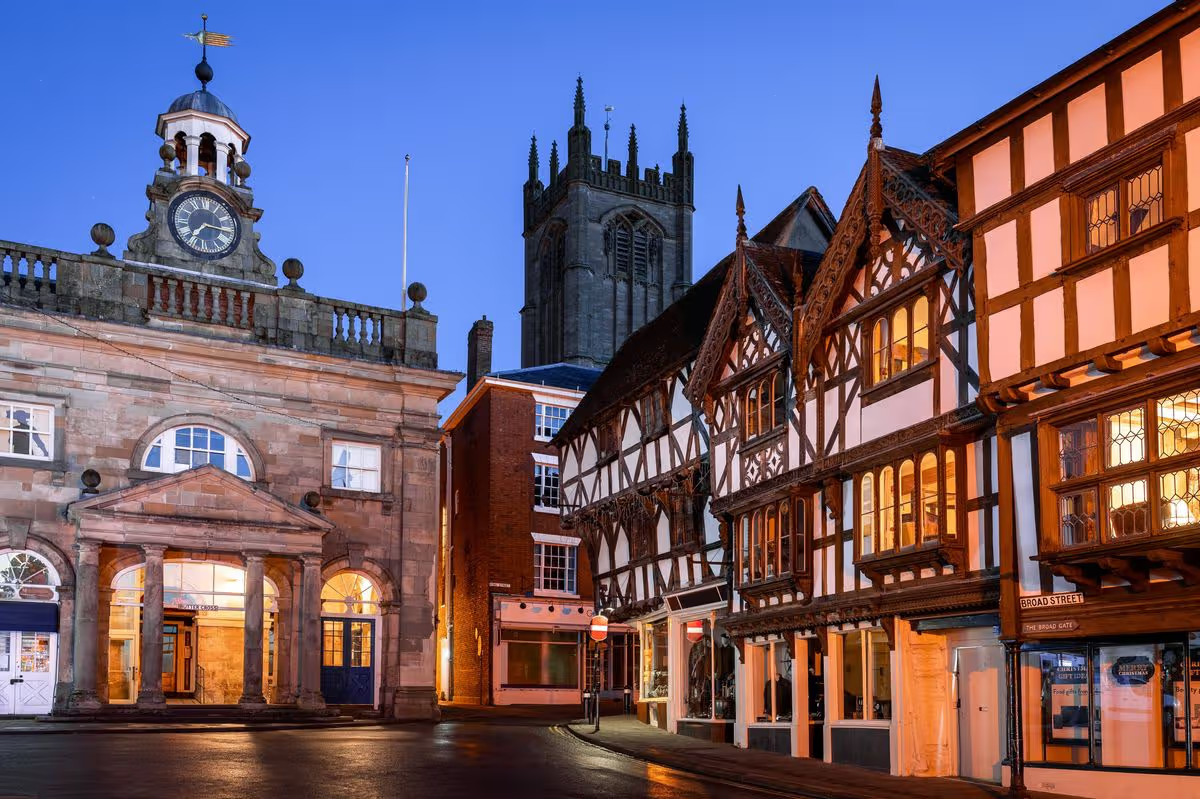
This historic Shropshire market town is bursting with history and has more than 500 listed buildings to explore, plus a vibrant food scene and festivals
The town has over 500 listed buildings(Image: joe daniel price via Getty Images)
Brimming with heritage, this charming market town makes for the perfect weekend escape, boasting over 500 listed buildings to discover and its renowned culinary scene.
Numerous visitors flock to Ludlow for its closeness to excellent hiking and cycling spots, while history enthusiasts adore it for its ancient churches, castles and mediaeval landmarks.
As the town has developed through the years, it now provides a lively atmosphere with its own market, independent retailers and regular festivals showcasing local talent.
Ludlow is situated along the River Teme, with its most ancient area being the mediaeval walled town, tracing as far back as the 11th century.
This section of the market town lies on the eastern bank of the river, whilst the castle perches on a hill and the remaining streets slope downwards towards the water.
Best holiday cottage deals in Wales
This article contains affiliate links, we will receive a commission on any sales we generate from it. Learn more
Wales is renowned for its stunning mountains, picturesque coastline and rich Celtic history. Sykes has a wide and varied collection of holiday cottages, houses and apartments across the country. Prices start from £35 per night with current deals.
Ludlow Castle
As one of the primary tourist draws in the region, Ludlow Castle stands as an uninhabited, partly ruined medieval fortification. Its origins are traced as far back as 1066 – subsequently, it became the residence of Prince Edward from 1473 to 1483, and for centuries it remained under the care of the crown.
By 1760, the government had contemplated demolishing the structure but, owing to substantial costs, opted instead to lease it, and thus the Earl of Powis started his residency in 1711.
From that point onwards, the magnificent castle started to draw tourists, with their appreciation for the picturesque style, and walking routes were established exploring the grounds and neighbouring areas.
Following the success of this venture, the Earl acquired the castle in 1811, and it has remained under the guardianship of the Trustees of the Powis Castle Estate ever since, who hold ownership on behalf of the family.
One visitor commented on TripAdvisor: “Lovely morning exploring the castle; so much to wander around even though it was very cold. The views were amazing from the top of the towers. You could feel the history come alive whilst walking around.”
Another said: “The main attraction in Ludlow – a site of enormous historical significance. The castle covers a very extensive area with amazing views from the top. In the castle shop do go upstairs to the gallery; it has some very interesting information.”
The fortress, perched proudly atop that very same hill, continues to welcome the public to discover and understand its significance to the town. Opening hours may fluctuate, though the castle can generally be expected to be accessible from 10am until 4pm daily.
Admission tickets can be purchased upon arrival – though advance booking online is usually recommended. Adult admission costs £10, whilst a child ticket is £5 and family tickets are £28.
Stokesay Castle
The remarkable buildings don’t end there, as Stokesay’s magnificent manor house continues to captivate passers-by with its timber-framed features.
Constructed like a fortress, though in reality it is a mansion, completed in 1291, and with minimal signs of alteration or modernisation ever since.
Owned by English Heritage, the protected structure has been meticulously maintained to reflect its original state and provides guided tours for those eager to discover more.
The property was originally established by Laurence of Ludlow, a celebrated wool merchant, actually one of the finest in the nation, and it stayed within his family until the 16th century.
The building’s architecture and design offer valuable insights into the period and continue to serve as a portal to the past. It welcomes visitors from Thursday to Sunday, 10am to 4pm, with adult admission priced at £9 and children’s tickets at £5.40.
One guest commented: “The castle that is not a castle! Thoroughly enjoyed our visit. The audio guide provided us with an amazing amount of useful information. A must-visit whilst in the area.”
Dining options
Ludlow boasts a strong reputation as a haven for food lovers, frequently dubbed the culinary capital of Shropshire. It’s earned this accolade through its excellent range of local produce, with countless independent suppliers and premium artisan food, all highlighted at the yearly food festival.
Taking place over one weekend in September, this year on 11-13, the festival features a vibrant programme of live events, including culinary demonstrations, workshops, talks and, naturally, showcases produce you can purchase to take away.
Naturally, the area also boasts numerous pubs and restaurants that garner considerable acclaim in their own right. Topping the rankings on TripAdvisor is The Blue Boar, a beautifully restored Grade II listed pub located on Mill Street.
A recent visitor commented: “Wonderful cosy, homely, friendly pub. Called twice on our little getaway, food was excellent, service was professional and friendly, and we would definitely recommend it to all our friends and family. Can’t wait for our next trip to Ludlow just to visit here again.”
Additional dining establishments include The French Pantry, Old Downton Lodge, The Queens, and the Michelin restaurant, known as The Charlton Arms Restaurant.
Its historic cathedral, central attractions and pedestrian-friendly streets make it perfect for a UK staycation, especially now that it’s starting to warm up.
Nicola Roy Multimedia content creator and Esther Marshall
03:00, 22 Mar 2026
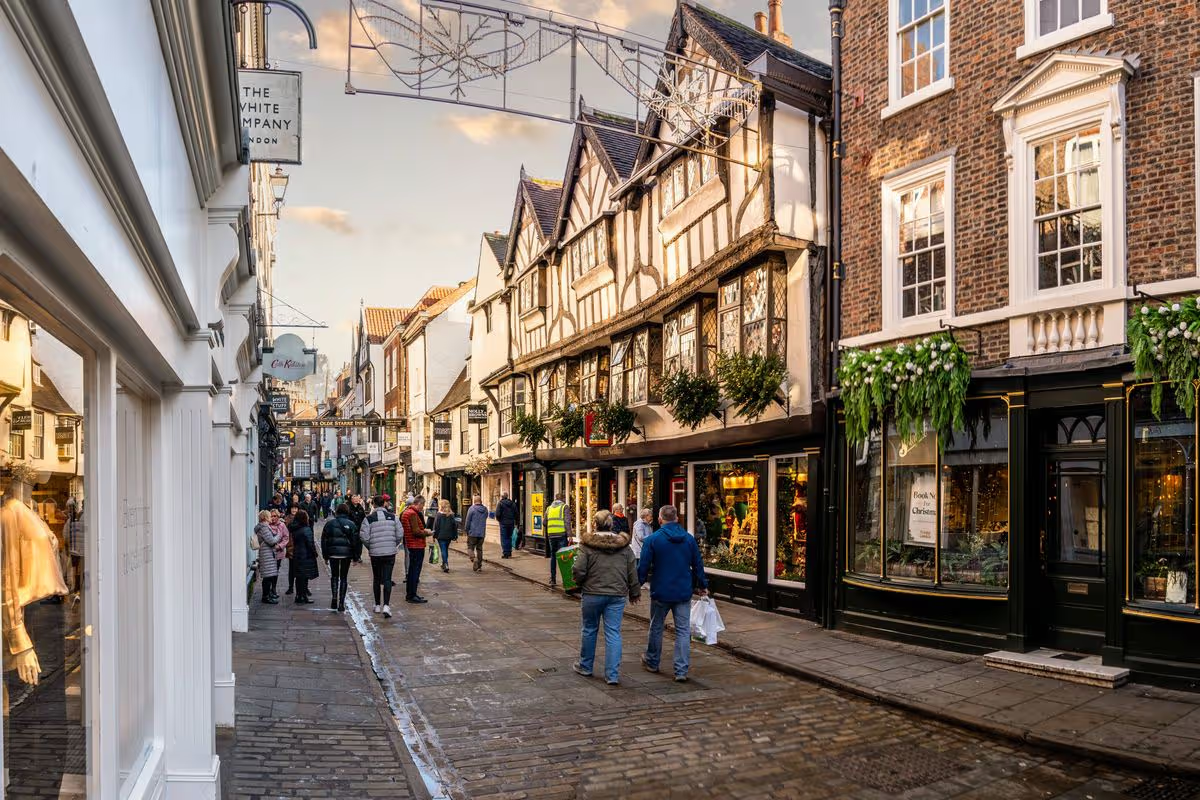
The city is very easy to walk around (Image: Teamjackson via Getty Images)
Spring has almost sprung, and now that the weather is getting slightly better here in the UK, there are more chances to get out and explore and enjoy the sun. You can’t beat a day or weekend trip somewhere new, and if you haven’t visited York before, consider this your sign to go this spring.
The stunning historic city earned the title of the UK’s most walkable city in 2023, according to LateRooms. Since then, it’s still considered one of the most pedestrian-friendly places in Britain, reports the Express.
There’s so much to do and see in York, from quaint cobbled streets lined with independent shops and eateries to a rich historical scene and plenty of green spaces too.
Among York’s highest-rated attractions is York Minster, which was previously crowned England’s most beautiful building.
One visitor wrote on Tripadvisor: “Tremendous place to visit and to marvel at what humans can achieve. You could spend a lifetime here and still find new pieces of craftsmanship.”
Visitors can also see one of the UK’s finest pieces of Royal history at the remarkable British landmark. York Minster houses one of the UK’s only statues of Queen Elizabeth II, which was installed to commemorate the Platinum Jubilee.
Also in York, you’ll find the Shambles – a medieval preserved street lined with timber-framed buildings and shops that feels like being frozen in time.
If you’re keen to spend some time in nature, Rowntree Park is a must-visit. With play parks for kids, tennis courts, skate parks and a gorgeous lake, it’s the perfect place to relax and soak up the sun this spring.
Taking to Tripadvisor, one fan wrote: “A beautiful well kept Victorian park with lots to do and see. Children’s areas, flower beds, arboretums, statues, and ponds. Lots of local wildlife. Excellent for a picnic.
“Cafe and toilets, all just a stone throw from York city centre and the racecourse. Well worth a visit.”
Brighton secured the second position on the list of walkable cities. Visitors can wander the seaside city’s Lanes before heading for an invigorating stroll along the promenade. Following a lengthy walk, there’s nothing better than a fish and chip supper on the beach with stunning sea views.
Bath claimed third spot on the list and is renowned for its remarkable Roman history and ancient baths. While tourists can’t bathe in the Roman baths, they will be able to unwind at the city’s spa instead.
Bristol was the greenest city on the list whilst London boasted some of the most city-centre attractions. Brighton, Inverness and Cambridge had the lowest levels of air pollution of any of the cities in the rankings.
Matt Fox, CEO and co-founder of LateRooms.com, said: “UK city breaks are as popular as ever and with spring around the corner, impromptu weekends away offer a great way to see and experience somewhere new.
“Getting to see all of the best sights somewhere has to offer in a short space of time can be hard work, but doing it on foot guarantees you’ll see so much more and stay active in the process too.
“All of Britain’s varied and historic cities offer something different and you can pack so much in without needing to set foot in a vehicle in almost all of them.”
Meanwhile Glasgow, Cardiff, Newcastle and Coventry were the least walkable cities in the top 20 rankings.
This place deserves far more recognition – it has amazing views, a real sense of community, and a fascinating history too.
Nicola Roy Multimedia content creator
04:01, 21 Mar 2026
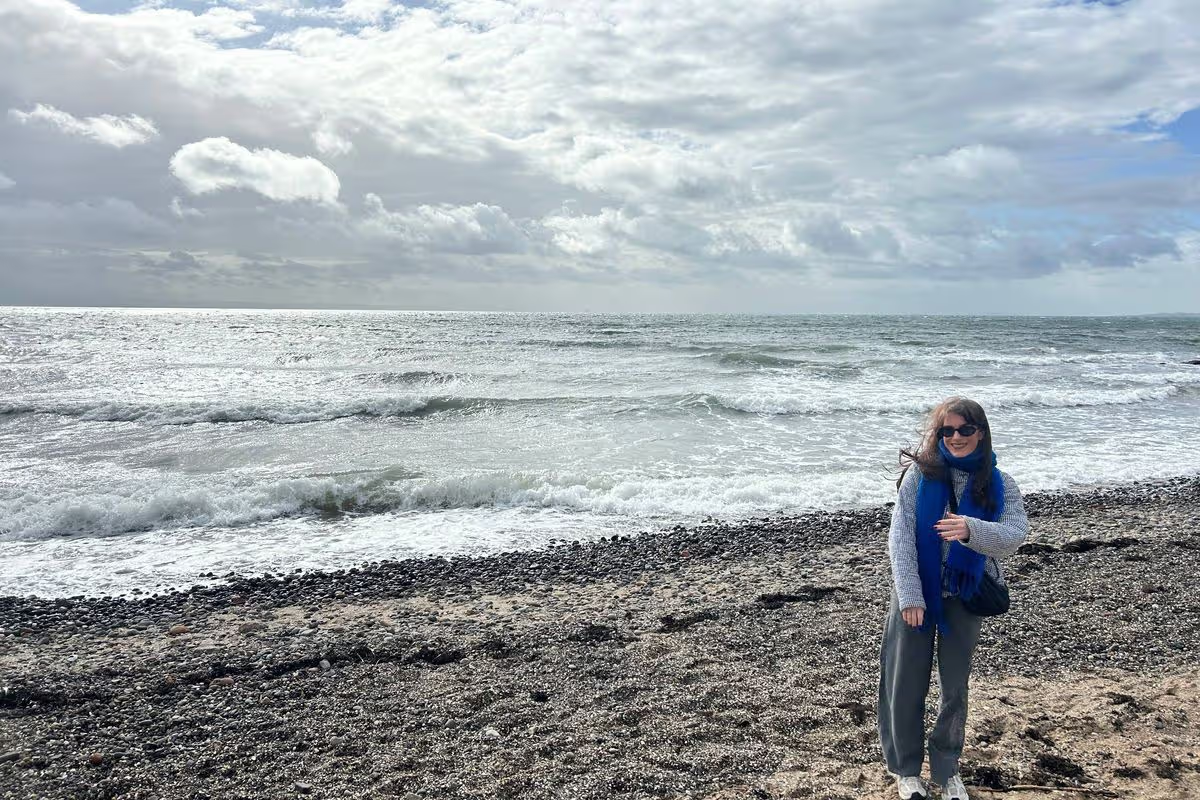
This coastal spot is a true hidden gem(Image: Nicola Roy)
There’s genuinely nothing better than those first sunny spring days as we leave winter behind. It immediately makes you crave a visit the seaside, even if there’s still a slight chill and it’s not quite swimming weather yet.
Last weekend, I chose to take advantage of my renewed enthusiasm and positivity for life, and drove to a stunning coastal village that many people have never heard of. Admittedly it’s tiny, and there’s barely anything there, but there’s a welcoming pub and restaurant, breathtaking sea views , and it’s near to another popular seaside destination too. Lower Largo in Fife has a population of approximately 2,300, and it’s one of the most picturesque places I’ve seen.
The compact village overlooks Largo Bay, on the northern side of the Firth of Forth in Scotland. It required roughly an hour and a half to drive from Glasgow, and from Edinburgh, it’s just an hour’s drive away.
Largo is a historic fishing village, divided into two separate sections – Lower and Upper, with the small village of Lundin Links just to the left. Here, you won’t discover amusement arcades or crowds of holidaymakers, and it boasts a far more peaceful atmosphere than other coastal villages I’ve visited lately.
But don’t let the lack of attractions put you off. The more relaxed rhythm of life here was captivating, and already I’m eager for my next opportunity to return.
Waking up to those stunning views was an instant mood-booster, especially when the sun was shining brightly. The chilly temperature didn’t matter – the setting looked perfect, and the fresh coastal air felt wonderfully revitalising, reports the Express.
Lower Largo’s shoreline consists of sand and rocks, and it’s pristine. We noticed plenty of dog walkers enjoying the area, and even saw one brave soul taking a plunge in the sea, which must have felt incredible once she got past the initial cold shock.
The surrounding streets were equally delightful to explore. It’s fairly peaceful, meaning you’ll hardly encounter any traffic, but you will discover some impressively decorated front gardens. The nautical theme ran strong throughout, with garden gates featuring pirates, fish and mermaids.
We had breakfast at The Aurrie, a delightful cafe set within a converted church that offered such a warm and inviting ambience. Artwork from local artists lined the walls and was available to purchase, alongside an excellent range of hot dishes, coffees, and a cake display packed with tempting options. I chose the veggie haggis and potato scone roll with a flat white, and it was absolutely lovely.
During our visit, we also ate at The Crusoe, another wonderfully welcoming four-star hotel featuring a restaurant and pub. It serves all the traditional pub favourites you’d anticipate, from mac and cheese to fish and chips, and my entire family really enjoyed the experience.
Just over the way is the Railway Inn, another pub boasting a real fire that I didn’t manage to pop into, but my parents assured me it was fantastic and the ideal place for a post-dinner drink.
The pub enjoys a prime location right next to an impressive viaduct, now disused but still standing tall. It spans the Keil Burn, and was constructed to serve a section of the Fife Coast Railway Line. It’s been out of service since 1965 due to the reorganisation of British railways known as the Beeching cuts, but it remains a significant landmark and is well worth a look.
Another fascinating aspect of Lower Largo’s past is that it’s actually the birthplace of the man who inspired Daniel Defoe’s Robinson Crusoe – hence the hotel’s name.
Born in 1676, Alexander Selkirk was born in the village, and the house that now occupies his birthplace at 99-105 Main Street showcases a life-sized statue of him gazing out towards the horizon.
A signpost at the harbour points in the direction of the Juan Fernández Islands, some 7,500 miles distant, where he spent over four years shipwrecked.
I’m already looking forward to my next trip to Lower Largo. The overall atmosphere of the place was so welcoming, and it’s clear it has a strong sense of community.
It’s the ideal spot to enjoy a peaceful few days, but if you fancy exploring further afield, the beloved coastal town of St Andrews is just a 20-minute drive away.
While it’s best known for its golfing heritage and as the location where Prince William and Princess Catherine first crossed paths, there’s also a wealth of excellent pubs and eateries, bookshops and cafés to discover.