K-pop singer Samuel honors his Latino roots with flair in ‘Samuelito’
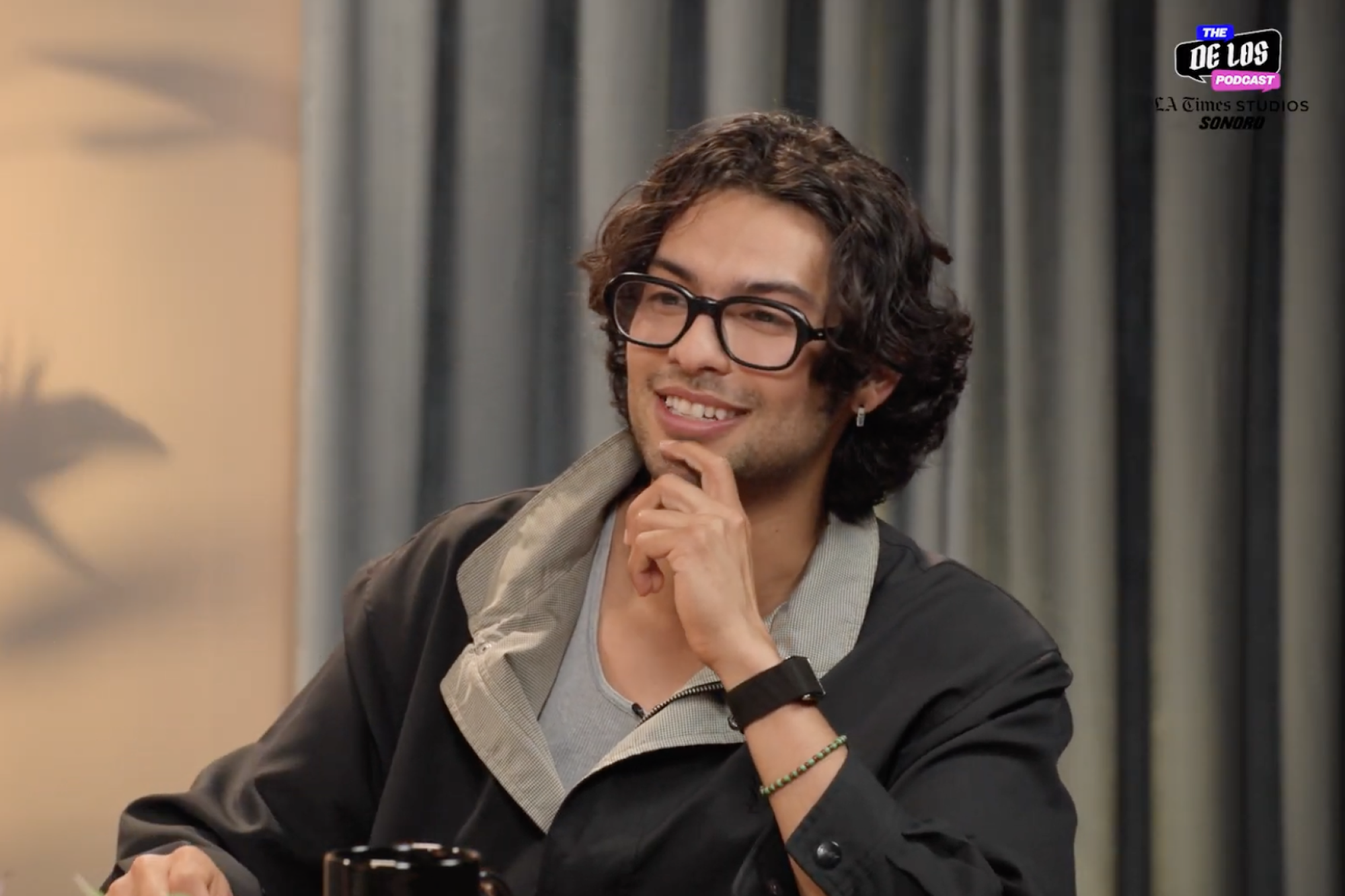
At only 24, Samuel Kim Arredondo, better known as Samuel, has lived through nearly every iteration possible in a K-pop idol’s career.
As a child growing up in L.A.’s Koreatown, he attended Wilshire Park Elementary School — but by the fifth grade he had moved to South Korea with his mother, Kyung-ju, with dreams of K-pop stardom. There, he became a trainee under Pledis Entertainment.
Now a subsidiary label of Hybe — parent company of K-pop superstars BTS — Pledis was forming what became one of the most successful “third generation” K-pop groups of all time: Seventeen. Samuel, who was in the running to debut with the group, is even captured in early footage from their “Seventeen TV” variety show.
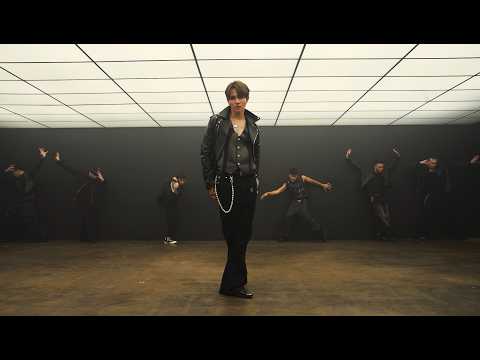
Though he didn’t make the cut, he remained close with the members and helped write lyrics for their 10-year anniversary album. Just last week, he filmed a dance challenge with singer-MC Mingyu for the reggaeton-infused pop number “Zigi Zigi Zigi” — the lead single off of his new EP, “Samuelito,” which dropped June 8.

After leaving Pledis, Samuel — who is fluent in both English and Korean — signed to a new agency, Brave Entertainment, then formed one half of a short-lived hip-hop duo, 1Punch. (He was Punch, the other kid was One.)
In 2017 he competed on the second season of Produce 101, a globally popular Korean competition franchise, where he made it to the penultimate episode before the debut of the group Wanna One. That same year, he released his first solo album, “Sixteen,” fully showcasing his outstanding dance ability, youthful swagger and velvety tenor.
Yet before he could finally make headway, he suffered a devastating loss.
Samuel’s father, José Arredondo, who came to the U.S. from Michoacán as a child, died tragically in a 2019 case that made national and local headlines. After having spent years apart from his father while living in Korea, Samuel spent quality time with him shortly before his death.
José was a pillar of his community; he rose from washing cars to owning his own car dealership, alongside other businesses in Bakersfield. A precocious young Samuel can still be found showing off his dance and Spanish skills in an old commercial for the dealership. (“Volkswagen me hace bailar,” he says before busting a move.)
The loss of his father was made more harrowing when the news went public, Samuel recalls over a Zoom interview from Seoul, where he is promoting his new album.
“The articles went out first,” he explains. “It was everywhere before I even wanted to talk about it, so I had no choice to keep it private … of course it’s definitely hard for me.”
In the aftermath, Samuel went under the radar — but after a year or two, he started to pave a way forward. After getting out of the contract with his former label, and with the support of his mother, he launched his own company, Samuel Music Group.
“If I kept on staying in the past, I think no one would like it — even my dad wouldn’t like it,” he says. “I learned a lot through that emotion as well. Always be grateful, always be thankful every time, and try to say ‘thank you’ always, especially to parents.”
Composed of three songs and one interlude, “Samuelito” takes its name from the childhood moniker some know him by today. As the follow-up to his 2024 EP, “Now,” it is his second record release since he became independent. It’s also his first record sung predominantly in Spanish — along with the occasional sprinkle of English and Korean. (Take the onomatopoeic “Ddook Ddak,” which is Korean slang for “just like that.”)
Singing in Spanish for the first time, he tells me, to music he created himself, made his “heart race.”
“Samuelito” is not so much an exploration of Mexican musical traditions, but of Latin-influenced rhythms and sounds filtered through his uniquely multicultural lens. In the future, he dreams of working with genre-spanning Latino pop artists who crossed over culturally, like Selena Gomez, Camila Cabello and Rauw Alejandro.
In an Instagram reel from earlier this year he described his efforts as “K-tone” — a Latin and reggaeton fusion, powered by K-pop discipline. The comments below were peppered with encouraging responses from fans in multiple languages.
Wrote Liz Zeledon, from Oceanside: “As a Korean-Nicaraguan who grew up with exposure to both cultures, I love hearing Latin influences in K-pop… Korean Latines are so underrepresented in the Korean music industry.”
Reached by phone, Zeledon is a K-pop fan who has kept tabs on Samuel since his Seventeen trainee days; she is also a child of immigrant parents.”Representation is so important, because existence and visibility are not the same thing,” she says.

In the lead-up to the album’s release, Samuel posted photos and videos of himself as a young child. In one, his dad holds him up as a baby, dressed in all-white with a tam hat. Though Samuel says the EP is not an on-the-nose tribute to the elder Arredondo, his spirit resonates through the lyrics of the poignant downtempo track, “Never Say Goodbye.”
“Gritos que yo sé/Que llegan hasta El Cielo/Gotitas en el suelo/Y se me cae el mundo entero,” he sings. (“Cries that I know/Reach all the way to Heaven/Little drops on the ground/And my whole world comes crashing down.”)
“I used to listen to a lot of Spanish music while I was growing up … I used to eat a lot of Mexican food too,” he says. “While I was in the studio last year, I had [this] big vision: [‘What if] I bring back my roots and just be the true me and call this album “Samuelito?”’ It just felt fresh.”
Samuel started songwriting and producing for himself in the making of “Now.” On his new album, only three writers are credited, including himself — which is somewhat of a rarity these days in K-pop. One of them is Canadian Mexican singer-songwriter Andrea Rocha.
From her new home in L.A., Rocha said the main goal was to seamlessly blend two distinct musical cultures. Although Samuel came to the studio with the structure for his songs already in place, they worked on melodies and writing in Spanish together, since this was his first time penning lyrics in the language.
Rocha says she was taken aback by Samuel’s professionalism. “I’d be like, ‘Oh, what about this melody?’ And then he would sing it perfectly,” she says. “I did ask him about his K-pop training, because it sounds really intense. I think it shows how hard he’s worked in those years because he’s got all the star qualities. Compared to a lot of newer artists that I work with, I’m like, ‘Ooh, they’ve [done] a lot of work to get to that level.’”
These days, Samuel splits his time between Seoul and Los Angeles — once again calling Koreatown his permanent home. He also continues to spend time with his dad’s side of the family in Bakersfield.
“I think the biggest thing that I am happy about is getting back to my roots, where I started,” says Samuel.