rollout

Labor leader urges careful rollout of ‘Yellow Envelope’ law

Ryu Je-gang, head of Policy Division 2 at the Korean Confederation of Trade Unions, speaks during an interview with Asia Today at the union’s office in Seoul on Feb. 23. Photo by Asia Today

March 8 (Asia Today) — A senior labor official said South Korea’s revised labor law should be implemented carefully, emphasizing precise enforcement rather than rapid expansion when it takes effect Monday.

Ryu Je-gang, head of Policy Division 2 at the Korean Confederation of Trade Unions, said the success of the legislation will depend largely on how enforcement decrees and interpretation guidelines function in practice.

“The success of the system depends less on the articles themselves and more on how enforcement rules work in the field,” Ryu said in an interview with Asia Today. “Refining the scope of application, criteria and support systems should take priority over expanding the law too quickly.”

The legislation, commonly known as the “Yellow Envelope Law,” revises Articles 2 and 3 of South Korea’s Trade Union Act and will take effect Monday.

Supporters say the amendment expands the concept of employer responsibility, allowing subcontracted workers to demand negotiations with a principal contractor even without a direct employment contract.

Ryu described the change as opening “the door for negotiations with the primary employer.”

Previously, restructuring measures such as mergers, divisions or asset transfers were often excluded from collective bargaining on the grounds they were management decisions, he said. The new framework could help address disputes related to layoffs and restructuring.

Business groups have warned the legislation could increase labor disputes by limiting corporate claims for damages or asset seizures against unions during strikes.

Ryu rejected those concerns, saying the provisions largely reflect existing court precedents rather than introducing entirely new rules.

“I do not expect a dramatic increase in labor disputes simply because of this change,” he said.

However, he acknowledged the law may face practical limitations. Workers will still need to prove employer responsibility, and procedures such as unified bargaining channels and requests to separate bargaining units could make negotiations difficult.

“The procedural barriers remain high,” he said. “If negotiations themselves are difficult, expanding labor disputes will not be easy.”

Ryu also warned the amendment may not fully protect some categories of workers, including special employment and platform workers who often lack traditional labor contracts.

In the short term, he said the law could lead to increased demands for negotiations with companies previously seen as responsible but not directly engaged in collective bargaining.

Over the longer term, however, the changes could help ease tensions created by complex subcontracting systems.

— Reported by Asia Today; translated by UPI

© Asia Today. Unauthorized reproduction or redistribution prohibited.

Original Korean report: https://www.asiatoday.co.kr/kn/view.php?key=20260309010002098
Source link

S. Korea begins GPU rollout to boost AI research, industry

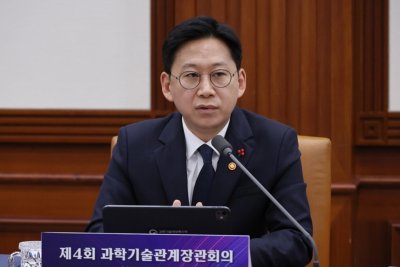
Science and ICT Minister Bae Kyung-hoon, who doubles as deputy prime minister for science affairs, speaks during a meeting of science and technology-related ministers at the government complex in Seoul, South Korea, 28 January 2026. File. Photo by YONHAP / EPA

March 3 (Asia Today) — South Korea’s Ministry of Science and ICT said Tuesday it has begun distributing graphics processing units to industry, academia and research institutions as part of a government push to expand domestic artificial intelligence capacity.

The ministry said it will supply about 4,000 GPUs starting this month from a pool of 10,000 units secured through last year’s supplementary budget. It selected recipients for the first batch and said the GPUs will be used to support 159 projects.

Under the initial allocation, 2,624 GPUs will go to universities and other academic institutions, 1,288 to industry and 312 to research institutes, the ministry said.

A previous call for proposals drew 514 applications. The ministry said the selected projects will be deployed immediately for AI research and development, including services and model development, based on expert evaluations of factors such as expected technological impact, societal impact and contribution to the domestic AI ecosystem.

The ministry said it will conduct periodic monitoring after allocation. If improper use is found, it said the GPUs could be reclaimed and reassigned to other users.

The ministry also said it plans an additional call for proposals later this month, including 4,000 GPUs for industry users such as small and midsize companies and startups and about 1,000 more for academia and research institutions.

In future rounds, the ministry said it will give greater consideration to applicants based outside the capital area and seek to prevent allocations from concentrating on specific companies or institutions.

Choi Dong-won, the ministry’s director general for AI infrastructure policy, said the GPU program is intended to serve as a catalyst for strengthening AI capabilities and expanding AI services, creating additional demand for infrastructure in a self-reinforcing cycle.

— Reported by Asia Today; translated by UPI

© Asia Today. Unauthorized reproduction or redistribution prohibited.

Original Korean report: https://www.asiatoday.co.kr/kn/view.php?key=20260303010000523

Source link

Mizuho to cut 5,000 clerical jobs as AI rollout expands

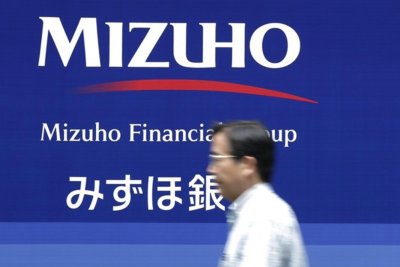
A pedestrian walks past the corporate logo of Mizuho Financial Group Inc. displayed outside the headquarters of Mizuho Bank Ltd., its banking unit, in Tokyo, Japan. Photo by KIYOSHI OTA / EPA

Feb. 27 (Asia Today) — Mizuho Financial Group said it will reduce up to 5,000 clerical positions over the next decade as it accelerates the adoption of artificial intelligence across its operations, in a bid to improve profitability.

The Japanese megabank plans to shrink its nationwide administrative workforce of about 15,000 by as much as one-third through automation, organizational streamlining and natural attrition.

Under the plan, its core unit Mizuho Bank will deploy AI systems to handle document verification for account openings and fund transfers, as well as customer data registration. The bank aims to sharply reduce manual tasks such as document review and data entry.

An executive at the group said AI use could render “most clerical work unnecessary,” as automated systems take over scanning, analyzing and validating customer applications.

The AI platform will be designed to review document accuracy, ensure consistency in customer information and check compliance with regulations and internal rules – processes that previously required multiple staff members.

The bank said it will avoid direct layoffs and instead reassign affected employees to revenue-generating areas such as branch sales, corporate client analysis and operational support. The group will also expand reskilling programs to help workers transition into new roles. Staff reductions will rely on hiring freezes, retirements and voluntary departures.

Mizuho has already cut about 10,000 clerical jobs over the past decade through digitalization and expansion of online services. The latest plan signals a further shift away from back-office-heavy operations toward a leaner, AI-driven structure.

As part of an organizational overhaul set for April, the group will rename its “Administrative Group” to “Process Design Group,” reflecting a stronger emphasis on efficiency and digital process management.

The bank plans to invest up to 100 billion yen ($670 million) over three years from 2026 through 2028 to develop and implement AI systems. In addition to back-office automation, the investment will support the development of AI assistants for asset management. The tools are expected to analyze customers’ assets, risk profiles and cash flows to generate personalized investment and cash management proposals for retail and corporate clients.

Among Japan’s major megabanks, Mizuho is seen as the most aggressive in restructuring its clerical workforce around AI. Industry observers say the move could accelerate similar changes across the country’s financial sector.

— Reported by Asia Today; translated by UPI

© Asia Today. Unauthorized reproduction or redistribution prohibited.

Original Korean report: https://www.asiatoday.co.kr/kn/view.php?key=20260227010008338

Source link