Derrin Horton’s first job was in public address announcing. His first passion was the Lakers. The longtime sports broadcaster’s new job is the marriage of both.
Horton will take over the mic as the Lakers’ home public-address announcer, the team announced Thursday, stepping into the role for legendary Lakers announcer Lawrence Tanter, who died last week.
“There’s no way you can fill his shoes,” Horton said in an interview with local reporters. “And so you just come here with a passion and a goal to be informative and entertaining and be a part of Showtime.”
Tanter, who provided the smooth, baritone soundtrack for Lakers home games for 43 seasons, suffered a stroke on March 17 and missed the final six regular-season home games and the playoffs last season. Tanter announced his retirement in June, transitioning to a game-day advisory role with the team. Horton, a former KTLA broadcaster who has worked as an anchor, reporter, host, play-by-play announcer and voice actor, reached out to the team about the opportunity.
Horton showed up to his audition and instinctively tried to emulate Tanter’s signature baritone voice. He wanted to sound like what he thought the classic PA announcers should sound like. Lakers president and chief business officer Lon Rosen stopped the tryout in mid-sentence.
“He said, ‘Hey! Knock it off! I want to hear your voice,’” Horton said. “And so I just was myself.”
Horton’s new role is a return to his roots. Before carving out a career in sports broadcasting and voice acting, Horton was just a teenaged high school basketball reject. Not good enough to play on the team, he found his first job in communications as the PA announcer for Holy Cross High in Queens. The New York City-raised Syracuse alumnus has been enamored with the Lakers since the Showtime Era. He doesn’t think enthusiasm will be a problem; Horton considers himself a diehard Lakers fan.
And he knows what Lakers fans want at a game.
“They’re there to see the Lakers,” Horton said. “So what I do is just try to enhance the experience like a little salt and pepper. Season it up a little bit.”
The Lakers have their first home preseason game Oct. 8 against the Sacramento Kings. Horton said he is focused on informing fans and mastering the fundamentals. He has been working on player names and practiced at several Sparks games to understand the rhythm of professional basketball. The broadcaster said he favors understated and professional PA announcing. The style that made Tanter famous.
Horton considered the Lakers announcing legend a friend. Tanter even recorded an introduction for Horton’s wedding, announcing the newlyweds as they entered the reception: “‘For the very first time,’” Horton said, dropping his voice low like Tanter’s “‘Mr. Derrin and Elise Horton!’”
Horton wished he could have spoken to Tanter ahead of the first game.
“We’re going to miss him,” Horton said, “and I hope I do him proud.”
Scouting department change
The Lakers hired Pooh Jeter as director of pro scouting, The Times confirmed Thursday. The L.A. native was the Portland Trail Blazers’ player development coach and the assistant general manager of the team’s G League affiliate Rip City Remix.
After an ownership change in 2025, the Lakers have worked to build out their front office, following the lead of the Dodgers. After adding more than 15 people to the front office, president of basketball operations Rob Pelinka said, the Lakers were still focused on adding more scouts.
Staff writer Broderick Turner contributed to this report.
CNN Chairman and Chief Executive Mark Thompson could remain in his role at the news network after Paramount completes its deal to acquire the news network’s parent company, Warner Bros. Discovery.
Thompson, 69, is said to be in early stages of a discussions with Paramount Skydance Chief Executive David Ellison about continuing in the job he has held since April 2023, according to two people familiar with the matter who were not authorized to discuss it publicly.
The Wall Street Journal was first to report Thursday that Thompson has been approached by Ellison about staying with the network. A representative for Paramount declined to comment.
Retaining Thompson in his role would provide short-term relief to CNN staffers who are concerned about the change in ownership. As Paramount pursued its $111-million deal to acquire Warner Bros. Discovery — which is moving forward following a judge’s decision to settle an antitrust suit filed by state attorneys general who wanted to block the deal — the Ellison family have reportedly had discussions with President Trump about altering the network’s coverage, which he has often deemed as unfair.
As part of the settlement, Paramount agreed to the formation of an editorial oversight board that will monitor adherence to editorial independence from its owners and shareholders. The editorial board is part of an agreement to end the states’ antitrust fight that threatened to delay the completion of the deal for months.
Keeping Thompson at CNN raises questions of how CBS News Editor-in-chief Bari Weiss will be integrated into the new company.
Weiss, who joined the storied news division after Paramount acquired her contrarian digital news site the Free Press last year, has made major changes at “CBS Evening News” and the top rated newsmagazine “60 Minutes,” with no audience gains to show for it.
CNN insiders have been skeptical over how Weiss could take over the vastly larger and more profitable news organization based on her CBS track record so far.
CNN and CBS News are expected to consolidate some of their operations, such as its overseas bureaus. But there are obstacles to a rapid consolidation, as many CBS News employees work under union contracts. Most of CNN is not unionized.
But if Thompson remains, its likely he we will have the task of reducing costs, as the traditional TV audience that provides the bulk of revenues for both CNN and CBS News continues to shrink.
Thompson has been behind a major effort to generate more revenue from CNN’s digital operations, which now include a subscription streaming service that makes the channel available without a cable or satellite TV package. He oversaw the New York Times’ successful transformation into a dominant digital news product during his run as president and chief executive from 2012 to 2020.
The Paramount-Warner deal will close soon after a judge signed a settlement that ended the antitrust lawsuit brought by Calif. Atty. General Rob Bonta and 11 other attorneys general. The detente , however, has not cooled tensions between CNN and the White House.
CNN was scheduled to provide press pool coverage of Trump’s trip to Texas and Oklahoma on Thursday. But the White House removed the network from the pool, despite a judge’s order last week to block the administration’s attempt to ban access for some media outlets.
Last week, CNN, MS NOW and Politico were banned from White House grounds. Trump cited the outlets’ ongoing negative coverage of him as the reason for the ban. The administration later tried to argue in court that their coverage was a threat to national security.
SYDNEY Sweeney fans have been left lost for words after realising that she has also appeared in a late 2000s teen drama.
The actress, 29, is arguably best known for her roles in Euphoria and White Lotus.
The actress, 29, is arguably best known for her roles in Euphoria and White LotusCredit: Shutterstock EditorialThe actress starred in 90201 in the 2000sCredit: Paramount+
But in 2010 she appeared on our screens during the sixth episode of the third season of 90201.
Although it was only a small part, in the scene, her character can be seen approaching a shirtless Liam (Matt Latner) and asks him for help.
Sign up for the Showbiz newsletter
Thank you!
Her character tells him: “We’d like to look at those jeans but they are too high up for us to reach.”
As he reaches for the trousers, her character cheekily touches his bum and she starts giggling to her friends.
The star appeared in a scene with Matt LatnerCredit: Paramount+Sydney has played Cassie Howard in Euphoria since 2019Credit: HBOSydney has appeared in various other TV shows and films since thenCredit: GettyShe owns her own lingerie brandCredit: Instagram/Syrn
The episode is called How Much Is That Liam in the Window.
One fan shared the scene on TikTok and said: “Sydney Sweeney before she was Sydney Sweeney.”
Many rushed to the comments section to share their shock over the fact they never noticed her before on the show.
One said: “I had no idea!”
Another confessed: “I didn’t recognise her so much she’s dressed.”
A third chimed in: “Omg I just watched this episode and didn’t even recognise her.”
90210 aired on The CT between 2008 and 2013.
It starred the likes of Rob Estes, Shenae Grimes, Jessica Stroup, Lori Loughlin, Michael Steger, Jessica Lowndes, Matt Lanter, Trevor Donovan, Gillian Zinser, Tristan Wilds, Tristan Wilds, Dustin Milligan and Ryan Eggold.
Sydney has appeared in a number of films over the years including Anyone but You, Spiders 3D, Clementine, Along Came the Devil, Eden and The Housemaid.
Meanwhile she’s landed telly roles including Grey’s Anatomy, Pretty Little Liars, Robot Chicken, Family Guy, Kickin’ It and Criminal Minds.
The United States-led Board of Peace (BoP) has said the United Nations agency for Palestinian refugees (UNRWA) will have no role in Gaza – echoing a longstanding Israeli demand to sideline the organisation considered a lifeline for millions of Palestinians.
The board, which has been tasked with overseeing the “ceasefire” and Gaza’s reconstruction, said on Friday it would work only with partners it deems reliable and who it believes can meet the needs of Gaza’s population – a standard it says UNRWA does not meet.
Recommended Stories
list of 3 itemsend of list
The move comes as the BoP unveiled a multibillion-dollar plan on Wednesday aimed at beginning Gaza’s reconstruction, nearly a year after a so-called “ceasefire” came into effect in the devastated Palestinian territory.
The plan, presented on the sidelines of the UN General Assembly (UNGA), comes as key elements of the “ceasefire” remain stalled, including the withdrawal of Israeli forces and the disarmament of Hamas.
UNRWA was established in 1949 to cater to tens of thousands of Palestinians displaced from their homes by Jewish militias from areas that currently form part of Israel.
BoP’s stance on UNRWA comes as Israel’s genocide in the coastal enclave continues, with Palestinians facing nonstop attacks, severe restrictions on humanitarian aid and stalled reconstruction plans.
So what has BoP said about UNRWA, and does it keep toeing the Israeli line on the future of Gaza?
What did the Board of Peace say?
The BoP unveiled a 66-project reconstruction blueprint on the sidelines of the UNGA, with $2.4bn proposed for projects aimed at beginning Gaza’s recovery.
UNRWA was left off the list of UN agencies the board identified as partners.
“The Board of Peace’s policy as it relates to UNRWA’s involvement in Gaza is unchanged,” the BoP said in a post on X on Friday.
“We will only work with trusted partners who will deliver for the people of Gaza and contribute to a deradicalised Strip. UNRWA fails on those litmus tests.”
However, a BoP official, speaking to The Associated Press news agency on condition of anonymity, confirmed that board members had met UNRWA officials several times.
The official said the agency’s programmes could continue if they served Gaza’s residents well, but maintained that “UNRWA’s days are over”.
The BoP, which US President Donald Trump launched earlier this year, was conceived to oversee the rebuilding of Gaza after nearly three years of Israel’s genocidal war on the Strip.
What has UNRWA said?
In an indirect response, UNRWA acting Commissioner-General Christian Saunders said on Friday in Gaza, “UNRWA remains an institution of considerable humanitarian and strategic value, with capabilities and expertise that are difficult to replicate today.”
“To disregard these capabilities at a moment of such profound need is neither logical nor responsible,” Saunders said in a statement.
Former UNRWA chief Philippe Lazzarini on Thursday warned that removing the agency would have a “devastating” effect on Palestinians.
“They want to get rid of the agency, but on the other hand they know that if you get completely rid of the agency today, it might have a further … devastating impact on the population,” Lazzarini told AP on Friday.
In a separate statement on X, Lazzarini said, “grandiose plans are what the Board of Peace does best”, noting widespread suffering across Gaza amid Israel’s ongoing genocide.
The agency has about 11,000 Palestinian employees in Gaza and remains heavily involved in healthcare, education, water and sanitation services. Its exclusion is particularly significant given the scale of displacement and the continuing restrictions on aid entering Gaza.
UNRWA has for decades provided aid and education services to Palestinians in Gaza, occupied East Jerusalem and the West Bank as well as Jordan, Syria and Lebanon – the neighbouring countries where the Palestinian refugees have been living.
Palestinians see the agency as safeguarding their right of return to their homeland, while Israel wants it dismantled.
Palestinians receive aid distributed by UNRWA, in Nusairat refugee camp, Gaza [File: Abdel Kareem Hana/AP photo]
What has been Hamas’ response?
Hamas accused the BoP of adopting Israel’s position.
Spokesperson Hazem Qassem on Saturday called the decision to exclude UNRWA “a complete alignment with the Zionist [Israeli] position”, saying it was aimed at ending the agency’s operations, preventing it from delivering aid and undermining Palestinian refugees’ right of return.
Qassem said it was “strange for the peace council to adopt this hostile stance towards UNRWA while simultaneously failing to provide aid to Gaza or compel the occupation to abide by the ceasefire agreement and halt the daily killings of Palestinians in the Strip”.
Does the Board of Peace toe the Israeli line?
Experts say the workings and demands of the BoP align closely with Israel’s vision of the Gaza Strip and the Palestinians.
UNRWA
Israel has for years sought to remove UNRWA from Gaza, accusing the agency of being infiltrated by Hamas.
The International Court of Justice, in an advisory opinion in October, said allegations that “a significant part of UNRWA’s employees are ‘members of Hamas … or other terrorist factions’” had not been substantiated.
The BoP’s position strengthens the Israeli efforts to dismantle the UN agency.
Hamas disarmament
Hamas and other Palestinian factions agreed in July to a roadmap under which weapons would be surrendered in stages as Israeli forces gradually withdrew. The two processes were explicitly linked.
But following an August meeting between Nickolay Mladenov, the BoP’s director-general, and Israeli Prime Minister Benjamin Netanyahu, the board said Israeli forces would not withdraw beyond the “Yellow Line” until Hamas’s decommissioning was complete, including “light weapons, heavy weapons, and the tunnels alike”.
Hamas maintains that it will not implement its obligations unless Israel fulfils its own.
Israel currently occupies more than 60 percent of Gaza while most of the territory’s 2.3 million people remain displaced.
Reconstruction
Article 17 of the BoP plan calls for “temporary reconstruction” beginning in areas designated free of Hamas control, including humanitarian compounds for unarmed civilians.
The proposed system would direct reconstruction, aid and shelter towards areas outside Hamas’s control while Israeli forces remain behind the so-called “Yellow Line”.
However, Israel has refused to allow the Palestinian technocratic committee into Gaza, open crossings or begin reconstruction until Hamas is completely disarmed.
After unveiling the reconstruction plan on the sidelines of the UNGA, BoP high representative Mladenov said once again the proposed plan depends on Hamas’s disarmament.
Displaced Palestinians live in a school run by UNRWA on Monday, June 23, 2025. Hundreds of UNRWA schools were destroyed or damaged in Israeli attacks [File: Jehad Alshrafi/AP Photo]
What is the situation in Gaza?
Almost a year after the October 2025 ceasefire, reconstruction has yet to begin on any meaningful scale and Israeli forces continue to occupy large parts of the Strip.
At least 1,451 Palestinians have been killed and 4,953 wounded in Israeli attacks since the “ceasefire” began in October 2025, according to Gaza’s Ministry of Health.
The healthcare system is on the verge of “total collapse”, the ministry said last week, while shortages of fuel, medical supplies and spare parts have disrupted hospitals, water and sanitation services.
The scale of destruction is also immense. More than half of Gaza’s hospitals and clinics remain nonfunctional, less than 1.5 percent of cropland is accessible and undamaged, and reconstruction needs have reached an estimated $71.5bn.
Nearly 84 percent of Gaza’s population – more than 1.76 million people – are living in displacement sites or damaged and inadequate shelters, the UN has said.
Palestinian children gather in the backyard of an UNRWA school in Sidon, Lebanon, on September 12, 2023 [File: Mohammed Zaatari/AP Photo]
Kyle MacLachlan is living up to his reputation as the Internet’s Dad.
It’s an especially warm day in August, and the bespectacled actor, best known for his many projects with the late auteur David Lynch, is approaching with a coffee (black, naturally) in one hand and a massive cookie in the other. The snack, it turns out, is meant for us to share.
On the Shelf
Fictional Selves: A Memoir
By Kyle Maclachlan Crown: 320 pages, $34
If you buy books linked on our site, The Times may earn a commission from Bookshop.org, whose fees support independent bookstores.
“Whatever it is, it’s very healthy,” he says when I ask what sort of confection he chose. “It’s cranberry, oatmeal and gluten-free. Who knows if there’s any sugar in there?”
At 67, MacLachlan isn’t necessarily a health nut. But he is highly amenable and willing to roll with my vegan cafe selection, which is conveniently located near our photo shoot location. “I come from Eastern Washington state — it’s a desert,” he says assuringly when I offer to move us to an indoor seat with air conditioning. Later, as we prepare to leave for the shoot, he clocks my car, a rare station wagon, and dubs it “spec-TAC-u-lar.”
That’s MacLachlan for you — all it takes is one word (he also drops an “Aces!” during our meeting) or enthusiastic gesture (very likely a swooping thumbs up) to channel the type of eccentric and upbeat characters he’s spent the last 40 years playing. Now, with the release of his thoughtful new memoir, “Fictional Selves,” MacLachlan gives us a much closer look at the man behind the chin-jutting grin, and, in doing so, introduces us to his doppelganger, “Other Kyle,” an image-conscious shadow figure constantly trailing behind, questioning his choices.
“There’s definitely another entity, an observer, the ego, the harder self,” MacLachlan says of how he would describe Other Kyle, whom ghostwriter Jon Sternfeld first identified after noticing the way MacLachlan tended to fall into conversation with himself while recounting his life. “[He’s] the kind of person that I’m not comfortable leading within the world. But he’s definitely in there commenting on the things that I do.”
Other Kyle first began to taunt MacLachlan after he saw himself on a gargantuan billboard for “Dune” in Times Square. (In his early 20s, MacLachlan was famously plucked from obscurity to lead David Lynch’s 1984 adaptation of Frank Herbert’s sci-fi epic.)
Well before his alter ego materialized, and well before Hollywood found him, MacLachlan was prone to anxiety and fears of never fitting in. Born in Yakima, Wash., MacLachlan grew up the oldest of three boys; his parents were solidly middle-class, with his father working as a lawyer, and then stockbroker. His mother was a homemaker known in the community for her civic involvement, particularly in local arts programs. In fact, it was MacLachlan’s mother who first encouraged him to try a “Teen Theater” program, drawing him in with the promise that there might also be girls in attendance.
But it took a minute for MacLachlan to genuinely embrace his calling. As a young adult, his father pushed him to study business, while his mother urged him to try PR or communications. His studies at the University of Washington weren’t going well, so he dropped out and worked at a manufacturing plant back in Yakima. It wasn’t until a girlfriend recommended a summer theater program in North Carolina that MacLachlan leaned back into his first real passion, eventually returned to school with a newfound focus, and was accepted into the University of Washington’s professional acting program.
Kyle MacLachlan at the glass and mirror shop LA Mirror Man on La Cienega Boulevard.
(Christopher Patey / For The Times)
Fast-forward 40 years, it’s impossible to imagine that MacLachlan would have anything else for Other Kyle to latch onto. For one, his acting resume is the stuff of thespian fantasy. Sure, “Dune” infamously flopped hard upon arrival, and all planned sequels were immediately canceled. But it wasn’t long before MacLachlan had teamed back up with his mentor, with whom he had developed an almost telepathic bond on “Dune,” to lead Lynch’s much more kindly received 1986 neo-noir arthouse entry, “Blue Velvet.” A few years later, the overwhelming success of the TV mystery series “Twin Peaks” propelled the actor to the upper stratosphere of celebrity.
“When we were working together creating Jeffrey in ‘Blue Velvet’ or [Coop in] ‘Twin Peaks,’ we would sit and talk or not talk, we melded together in some weird way, we were like one person,” MacLachlan says of his bond with Lynch, who died in early 2025 of cardiac arrest due to chronic obstructive pulmonary disease. “It was this very symbiotic kind of thing in front of the camera,” MacLachlan continues. “It was like this weird circular energy. … He’s the only director I share that with.”
And yet, breaking out of what MacLachlan refers to as “The Black Suit,” worn by his unceasingly chipper “Twin Peaks” character, Special Agent Dale Cooper, proved challenging. By the time “Twin Peaks” left the air in 1991, MacLachlan had grown ambivalent about the job that changed his life, partially because he felt Lynch didn’t fight hard enough to keep artistic control of the show’s second season, which saw the network upping its creative involvement and Lynch distancing himself until the final few episodes.
MacLachlan longed to diversify his output — to show that he was capable of being a mainstream Hollywood leading man, one who could interface with a variety of directors. In the book, he writes about jobs he comes so close to booking — roles in Robert Redford’s “A River Runs Through It” and Francis Ford Coppola’s “Dracula” — but losing out at the last minute.
Kyle MacLachlan explores his alter ego “Other Kyle” in his new memoir.
(Christopher Patey / For The Times)
He took these rejections hard at the time. Many decades later, however, he can see how he was the one holding himself back. “I felt like people were only seeing the black suit,” MacLachlan says. “Now, the truth is, they would probably have been more than happy to see me as somebody else, but I was not able to deliver. … I think there was a lot of insecurity,” he continues. “I was like, ‘Maybe it’s not the suit. Maybe it’s me.’”
As the 1990s played out, MacLachlan fought an on-again, off-again existential crisis regarding the type of actor he was really meant to be. His friend and former “Doors” co-star Val Kilmer urged him to accept a lead role in a BBC adaptation of Kafka’s “The Trial,” which didn’t move the cultural needle in the States, but did put him in the same room as enormously pedigreed actors like Anthony Hopkins and Alfred Molina. He snagged a role in a Paul Verhoeven film about topless dancers — a career risk he hoped would pay off but ultimately felt like “walking into a buzz saw,” as he writes in the book.
Despite the cult reappraisal of “Showgirls,” and the lasting popularity of “Sex and the City,” Other Kyle had a few things to say about both of these roles, but the Kyle sitting across from me has a much more measured approach, particularly to “Showgirls.”
“I think it’s fun that it’s still around,” MacLachlan says. “I’ll still argue with anyone that [says] it’s a good movie. It’s not a good movie, but it’s definitely an appreciated movie, and that is kind of where I leave it.”
In the early 2000s, his wife, Full Picture founder and chief executive Desiree Gruber, pushed him to accept a role in HBO’s “Sex and the City,” playing an Upper East Side doctor with erectile issues.
Portraying Trey MacDougal was a mixed bag for MacLachlan. On one hand, he was thrilled to be part of such a cultural juggernaut, and he delighted in the emphasis the show placed on female friendship and sexual agency.
“I want to keep being challenged,” says Kyle MacLachlan, looking ahead to the next chapter of his 40-year career.
(Christopher Patey / For The Times)
At the same time, he had mixed feelings about playing an old-money mama’s boy with a Freudian Madonna-whore complex. Not to mention the sheer ridiculousness of the things the writers would have him do: One scene had him bent over a bathroom sink, masturbating to a pornographic magazine. A passage of “Fictional Selves” also recalls the cringe-inducing moment when Trey gives his wife, Charlotte (Kristin Davis), a cardboard cutout of a baby in an effort to make light of their struggle to conceive.
In the book, MacLachlan recalls being utterly dumbfounded at having been asked to do something so oblivious at best and cruel at worst. Eventually, however, he writes that he realized the writers just needed a way to foist him off the show. (His and Davis’ characters get divorced soon after the cardboard baby incident.)
“Every time I got a script, I’d be like, ‘Oh boy, OK, what’s going to happen here?’” MacLachlan says. “And then it would be, like, whatever they’ve come up with, ‘how can I shape it? What is it that [Trey’s] wrestling with? What are the issues here? Then, you know, realizing that in some cases it was just going to be a sight gag. Like, the Juggs magazine is going to be a sight gag. And as I said in the book, in my mind, I would sort of float away. I would be like, ‘That’s not really me. I don’t know who that is down there doing that.’”
As MacLachlan moved into middle age, he gradually grew more comfortable with the clean-cut oddball characters he’d so often be asked to play: a refined but possibly murderous dentist on “Desperate Housewives,” an idiosyncratic boat obsessive on “How I Met Your Mother,” an over-the-top civic leader on “Portlandia,” and, once again, Special Agent Dale Cooper (plus his doppelgängers) on “Twin Peaks: The Return.”
The 2017 “Twin Peaks” reboot would be the last big project MacLachlan would work on with Lynch, but MacLachlan would frequently visit the director in their shared Hollywood Hills neighborhood. “It’s many things,” MacLachlan says when I ask what he misses most about his friend and mentor. “The voice on the phone — ‘HEY, KALE! Come on up for coffee!’” he continues in a pitch-perfect Lynch imitation. (“Kale” became Lynch’s nickname for MacLachlan, referencing “Dune” producer Dino De Laurentiis’ Italian pronunciation.)
“Towards the end, I would go to visit him, and I would sometimes take my phone and record things. I still have these stories loaded in my iPhone — about ‘Dune,’ or a story about a moment in ‘Blue Velvet,’ or a story about when he met John Huston, or when he got a kiss from Elizabeth Taylor. … I have these little gems, and I savor those.”
Lately, Other Kyle has been replaced by Online Kyle, a goofy, lighthearted version of MacLachlan who primarily lives on TikTok and Instagram — thus the wholesome, Gen Z title of “Internet’s Dad.” And when he’s not playing a father to Ella Purnell on Prime Video’s hit “Fallout,” or interviewing a younger generation of entertainers on his podcast, “What Are We Even Doing,” MacLachlan is also someone’s real dad. One of the most endearing moments in our afternoon happens when his teenage son, Callum, calls looking for something around the house. “Oh, it’s in the fridge in the gym. In a foil. And there’s chicken in the fridge. Love you too,” MacLachlan tells his son.
There’s certainly no doubt that this Kyle doesn’t get in his head — or in his own way — the way earlier versions did. He’s still eager to test his limits as an actor, but he’s comfortable with the thought that there is no plan. “I want to keep working with interesting people,” he says with his trademark buoyancy. “I want to keep doing fun things. I want to keep being challenged. … I don’t really know where I’m going, but something will excite me, and I’d be like, ‘OK, what the hell?’ And I jump in.”
Brodsky is an L.A. culture and music writer. Her biography of Stevie Nicks “Lessons & Lace” is out now.
It’s stunning to comprehend how much has changed since Russia began its invasion of Ukraine. The conflict quickly turned into one dominated by artillery, with both sides scrambling to source shells wherever possible. Drones have since replaced tubed artillery as the ‘king of battle’ along the front, but cannons still have an important place on the battlefield. The commander of a new combined drone-artillery brigade offered some fresh insights into how his guns are now being deployed to achieve effects that drones still can’t provide.
As we have frequently documented, the ubiquity of drones has changed the nature of combat, especially when it comes to artillery. Not only can drones hold artillery positions at risk, many are cheaper than shells and easier to produce at scale. Most types are also precision guided munitions capable of hitting moving targets with pinpoint accuracy and can also provide battlefield surveillance. However, they are not a panacea, especially amid the cat-and-mouse game of electronic warfare countermeasures and improving kinetic and passive defenses.
In a recent interview with the Ukrainian Oboronka news outlet, Lt. Col. Vitalii Korniienko, commander of the 7th Artillery Brigade, talked about the changing nature of artillery warfare. Korniienko, whose unit is part of the Ukrainian National Guard, explained what is being done to keep his array of domestically produced Bogdana 155mm systems, donated weapons like M777 howitzers, remaining Soviet-era 2S7 Pion 203mm self-propelled howitzers and other guns, relevant. Here are some takeaways from that discussion.
How The Game Changed
“Guns used to be massed at positions to create an ‘artillery wall’ and a barrage of fire,” the lieutenant colonel said. “That practice is gone now. So, how effective is artillery today? We can create an artillery barrage, but what is the point of mindlessly churning up the earth? I’d rather send 20 FPV drones to destroy the target. The cost of that mission is $20,000.”
A soldier from the 13th Khartiia Brigade of Ukraine’s National Guard hones his FPV drone piloting skills during a training flight in the Kharkiv region, Ukraine. (Photo by Viacheslav Madiievskyi/Ukrinform/Future Publishing via Getty Images) Future Publishing
“Alternatively, I could fire 200 shells, but the cost would be astronomical,” he pointed out. “Plus, if we fired 100 shells from a gun in a single day, it likely wouldn’t survive until evening. The sky is full of drones; every shot gives away the position, leading to detection and an attempt to dismantle it using every available means. Nowadays, a typical mission involves a series of up to 10 shots. First, 3–5 shells for ranging, followed by fire on the target. That’s a minimum of five shells, with each costing at least $2,000.”
What Does The Drone-Artillery Brigade Do Differently?
“It is a concept of ours that was approved: combining artillery and drones within a single brigade,” Korniienko said. “Drones take out enemy artillery and logistics, while our guns provide cover for the infantry, destroy targets, and pin the enemy down in their dugouts. This way, we mitigate the limitations of both systems and boost overall effectiveness.”
Ukrainian troops firing a domestically produced 2S22 “Bogdana” self-propelled howitzer against Russian forces near the front line in the Zaporizhia direction. (Photo by Maksym Kishka/Frontliner/Getty Images) Frontliner#VIDEO
“Our primary operations are focused within the corps’ area of responsibility—targeting positions 10 kilometers deep or farther behind enemy lines. Of course, we will also engage closer targets if requested by the brigade holding the defense. In addition, we are shifting logistics tasks from pickup trucks to ground-based robotic systems. They are already transporting ammunition to drone and artillery positions, as well as food and fuel for generators.”
What Artillery Can Do That Drones Can’t
“Let’s be honest: 95% of strikes right now are carried out by drones,” Korniienko explained. “Yet, we cannot simply abandon artillery. The focus of our operations has shifted from merely striking the enemy to destroying, suppressing, and halting the actions of assault groups and armored columns—and the need for that remains as critical as ever. There are tasks that only artillery can handle.”
“For instance, we currently have several enemy targets in the Kupyansk sector that drones cannot reach due to electronic warfare (EW) interference, while slow fiber-optic drones are simply shot down,” the officer noted. “What do we do? We call in artillery. Nothing affects its shells. Fog, strong winds, snow, or headwinds—it makes no difference to artillery; it will operate regardless.”
Preparing Artillery For The Modern Battlefield
“At the beginning, both we and the Russians might have had two or three guns at a single position,” Korniienko proffered. “The enemy was doing this as late as 2023. Then it tapered off, because if you deployed six guns, an hour later they’d be gone. No one drives out into an open field anymore. Today, a gun wouldn’t even make it to the position without being spotted.”
Ukrainian National Guard troops prepare a ‘Bogdana-BG’ artillery installation from a dugout position. (Photo by Sofiia Bobok/Anadolu via Getty Images) Anadolu
As a result, the artillery crew’s deployment “is prepared in advance,” the officer stated. “First, anti-aircraft drone teams ‘clear’ the sky above the site of enemy reconnaissance assets. The position itself is a fully underground-dugout caponier with well-camouflaged access routes. We put a lot of effort into ensuring the artillery doesn’t get destroyed. Losing a gun is a huge blow to us.”
Short Range Versus Long Range Shells
“There is currently an ongoing debate about phasing out ‘short’ shells and switching entirely to long-range variants,” the officer stated. “This is intended to protect artillery from drone strikes.”
“What exactly is a ‘short’ shell, and should we stop using it?” he asked rhetorically. “The M107 155mm round is what is known as a ‘short’ shell. It is inexpensive and mass-produced; all our allies—and even our own country—manufacture it. We have sufficient stocks of them for combat operations. While accurate, its range is limited to 14–18 km, depending on the propellant used.”
Army
Long-range options “include the M795 and its foreign equivalents,” Korniienko explained. “These are longer, heavier, and significantly more expensive. With high-quality propellant, they can reach 30 km, or even further if equipped with a base-bleed unit. However, both these shells and the necessary propellants are in short supply.”
Army
“I do not believe abandoning the M107 is the right move,” the officer suggested. “Long-range shells cause faster barrel wear and compromise position concealment; firing a long-range charge produces a massive burst of flame from the muzzle—visible for kilometers at dusk or dawn.” “Besides,” he added, “18 km is a respectable range. If the gun is positioned 15 km back, it still has a 3-km margin to spare. That is sufficient for engaging frontline infantry. In my view, the ideal mix for most brigades would be 60% long-range shells and 40% standard M107 rounds.”
Big Versus Small Guns
“I operated 105mm guns in the Serebryanka area, on the Kharkiv axis,” Korniienko noted. “Based on intercepted communications, the enemy thought it was a mortar and searched for it within a five-to-six-kilometer range. But the howitzer was positioned eight or nine kilometers away and fired out to 10–12 kilometers.”
“There is almost no muzzle flash, just a bit of dust,” he added. “The shell arrives, and the enemy doesn’t even hear the sound of the shot. It’s compact and lightweight—you can transport it on a pickup truck. So yes, it would be useful.”
An L119 lightweight towed howitzer. (Via X)
“I’d also like to see the development of 203mm artillery; why move away from that caliber?” the officer wondered aloud. “Our ‘Pion’ systems fire a massive 100-kilogram shell capable of punching through at least two floors of a building or a bunker. And it’s reasonably accurate, too. You wouldn’t want to be on the receiving end when guns like that are firing at you. Overall, I believe we need competition. Right now, the ‘Bogdana’ is evolving under wartime conditions, which is good. But in a few years, momentum could stall. They might just keep producing the same system without significant upgrades because there’s no incentive to innovate. Yet, the nature of war doesn’t stand still.”
Wary Of Asian Shells
“We have a wide range of shells from different countries, and the ones coming from the West are fine,” Korniienko said. “However, their counterparts produced in certain Asian countries… the quality is frankly poor.”
“What is wrong with them?” queried Korniienko, who did not name the country in question. “On paper, the shell weight is listed as 46 kilograms, but when we weigh them, we find 46.9 or 45.4 kg. And that half-kilogram difference—give or take—has a huge impact on where the shell lands.”
As a result, “we no longer trust the standard firing tables provided with the shells; instead, we compile our own for each manufacturer. We weigh every batch and sort them by weight so that the difference between the ‘piles’ is minimal, ensuring a reasonably tight grouping. I can’t afford to make a mistake that causes a shell to land 2 kilometers off-target—right where our infantry guys are positioned. I should add that our artillerymen are actually wary of shells from one specific country. There have been instances where they tore off the muzzle brake or even caused the barrel to burst. A barrel burst is a disaster.”
Homegrown Is The Best
Korniienko said his unit was one of the first to test the Bogdana system, adding that he prefers it to other guns.
“We tested them and provided feedback to the manufacturer, which was then used to refine the design,” he explained. “It is a solid gun now, and it is my preferred choice. It might not be the absolute best, but I am very satisfied with the support and service.”
“If there’s a breakdown, the gun is back in position within a day or two,” he pointed out. “For instance, a gun broke down today, and we needed a repair team from the manufacturer. I know I’ll have it fixed by the day after tomorrow. They arrive in the morning, and by midday, the gun is ready. Then it takes another day or two to get it back to the position. That is very fast.”
That’s a very different experience than what he sees with donated weapons like the U.S.-made M777.
Ukrainian soldiers prepare to fire an M777 howitzer at Russian forces. (Photo by Diego Herrera Carcedo/Anadolu Agency via Getty Images) Anadolu
“As for the Western partners helping us—we are deeply grateful,” the officer avowed. “However, by the time you actually receive a part—say, a sensor—the gun might have been sitting idle for six months. And you can’t try to fix it yourself, because that would void the warranty.”
While artillery may no longer be the reigning weapon of war, as far as Ukraine is concerned, it has not been relegated to the dustbin of history yet either.
France will have a new face on the touchline for the first time in 14 years when they face Turkey on Friday.
Zinedine Zidane replaced Didier Deschamps after France’s fourth-place finish at the World Cup, but his appointment had been an open secret long before Les Bleus’ third-place play-off loss to England.
Talks between the former Real Madrid manager and the French football authorities kicked off as early as February 2025 – after Zidane’s former team-mate Deschamps announced a few weeks earlier he would step down following the 2026 World Cup.
When he was unveiled in Paris, Zidane was keen to highlight the time he had spent waiting on the sidelines and preparing for the job.
“I had several offers in the last four or five years, but I turned them all down,” an emotional Zidane said. “The national team is the only thing I wanted.”
While his enthusiasm at taking the job was the overarching theme of his first news conference in the French capital, the midfield legend offered few clues to France fans as to how he would approach the role.
Even a question on Kylian Mbappe’s captaincy was bypassed: “The most important thing for him now is to rest, we’ll have the chance to speak in September.”
Mbappe, speaking to Spanish newspaper AS, has since said having the former Real Madrid star as his national team coach was “like a film”.
When asked about his preferred style of play, Zidane opted against going into tactical detail.
“I can’t explain to you in just a couple of words how we’re going win. I have to arrive, meet with the players, and explain my plans to them. After that, it’ll be up to me to keep this team winning.”
However, Zidane confirmed his intention “to do things differently” and he has called up five uncapped players for this international break.
He went on to signal that there would be a degree of “continuation” from the work of his predecessor, which he made sure to praise.
“I’m going to try do what I know how to, but it won’t be a complete break either.”
Sean Gunn has no plans to continue his motion capture role for “Guardians of the Galaxy” character Rocket raccoon.
The physical demands involved in creating Marvel Cinematic Universe’s masked bandit often included the 52-year-old actor being in a catcher’s crouch position, which hurt his ankles and feet due to constant pivoting, Gunn revealed in an interview on “The Brandon Davis Show.”
“I think it had a little bit of an effect on my physiology. My knees are fine, but since I turned 50 a couple years ago, I am retired from playing Rocket,” Gunn said in the podcast episode published Monday. “I don’t think I can do the motion reference anymore for Rocket. I think I’m too old.”
The veteran actor is now ready to pass on his deadly laser cannon to another rising star. Rocket’s creators should “give a younger actor a shot at it, right?” he said.
While actor Bradley Cooper has voiced the small, sharp-tongued creature since the first “Guardians of the Galaxy” film in 2014, Gunn has worked alongside animators behind the scenes to capture the subtle actions with motion capture technology, or mocap, which animates 2D or 3D computer characters using the actor’s physical movements.
Gunn described the process as a relay race in a 2024 interview with Adam Lupis; once a script is handed to him, he passes the baton to the visual effects team, who then tie it all together with Cooper’s voice acting.
“Rocket is sort of a character by committee in that way. I think he’s a good microcosm for movies where they get this whole community of people coming to make something with love and care,” Gunn shared in the interview with Lupis. “It’s been a crazy process.”
Alongside his role as on-set Rocket, Gunn also portrayed Ravager Clan space pirate Kraglin Obfonteri in “Guardians of the Galaxy”; its two sequels, “Vol. 2” and “Vol. 3”; “Avengers: Endgame”; and “Thor: Love and Thunder.” Rocket also appeared in 2018’s “Avengers: Infinity War.”
Former “Today” show host Billy Bush feel from grace a decade ago when a tape leaked of him giggling on a hot mic while then “Apprentice” star Donald Trump boasted about grabbing women.
This week it was announced that Bush was joining Fox News Media as a contributor covering pop culture, entertainment, and cultural issues.
Bush joins other right-leaning personalities who’ve rebuilt their careers at Fox following scandals elsewhere.
It’s not surprising that former “Today” host Billy Bush joined Fox News as a regular contributor this week. What is surprising is that it took so long.
Ten years have passed since Bush, cousin to former President George W. Bush, was caught on a hot mic giggling while then-“Apprentice” star Donald Trump boasted about grabbing women “by the pussy.” The “Access Hollywood” clip, filmed in 2005 when Bush hosted the entertainment news program, was leaked a month before the 2016 presidential election, meaning just about everyone in America saw it.
A disgraced Bush lost his job and reputation. Trump won the White House.
Once known for his boyish charm and impressive collection of cowboy boots, Bush spent a decade re-ingratiating himself to the public on the syndicated television news magazine “Extra,” a considerable step down from the “Today” show. He reported on Hollywood and celebrity culture before launching his own digital show and podcast more than a year ago.
Now he finally has gone where popular conservative public figures go following scandals, stumbles or mishaps that all but destroy their livelihoods: Fox News. Rupert Murdoch’s crown jewel has given a second chance to more than a few successful, right-leaning personalities who have been shamed by mainstream media or canceled by a public who doesn’t find sexual assault boasts particularly funny.
Jeanine Pirro’s political career was derailed in 2006 after tapped phone calls she had with former New York City Police Commissioner Bernard Kerik were revealed. She had been plotting to bug her then-husband’s yacht in an attempt to catch him in an affair. After the transcripts went public, she lost the race for state attorney general to Andrew Cuomo. The scandal marked the end of her political career in New York — but the start of her career as a Fox News contributor and host. She stayed with the network for two decades. Pirro left last year when Trump nominated her to serve as the U.S. attorney for the District of Columbia. She subsequently was confirmed by the Senate.
Pete Hegseth joined Fox News as a full-time host in 2017 after reportedly being forced out of leadership positions at two prominent veterans advocacy nonprofits, Veterans for Freedom and Concerned Veterans for America. Multiple disturbing accusations were made within the organizations about his sexual impropriety, financial misconduct and heavy drinking. Hegseth left Fox in 2024, when Trump announced him as the nominee for secretary of Defense. He subsequently was confirmed by the Senate.
The pipeline from scandal to Fox News to Capitol Hill was noted when Bush, now 52, made his debut Tuesday night on “Jesse Watters Primetime.” Host Watters joked that “Trump might hire you for the Cabinet” now that he had joined Fox News. Bush suggested a role for himself as White House press secretary. Watters countered that, saying, “Trump is expected to hire a woman.”
Bush joked that he has “female energy.”
The joke was tone deaf, even if Bush does deserve a second chance for his part as the dumb sidekick to Trump’s abhorrent comments during that “Access Hollywood” segment so long ago.
In a statement about his new role at the network, Fox said Bush would host “as a contributor, where he will appear across all platforms” The press release failed to mention his 2016 hot mic leak but managed to name-check Bush’s digital talk show and video podcast, “Hot Mics With Billy Bush.”
Bush may have dashed his chances of moving into Trump’s inner, or even outer, circle when on his “Hot Mics” show he said this of the president: “I had two relatives who served in that role and both had deep, deep, deep reverence for that office. The man that’s in there now has turned it into a bordello.”
He was taking issue with Trump’s ban on CNN, Politico and MS Now. The trio of news networks was denied access to the White House complex last week and had their press badges revoked after the president took issue with their coverage of him. In an unusual display of solidarity across the industry, more than 50 media organizations called for the immediate reversal of the ban. Bush praised the networks — including Fox — for their show of support.
How will Bush navigate his dislike for Trumpian policy at a news organization that’s devoted years of coverage to propping up Trump? By walking a fine line, apparently.
“I’m excited to join FOX News Media and its loyal audience to share my perspective on the people, ideas and moments shaping today’s culture … as well as the ones trying to undo it!” Bush said about his new job shaping culture.
When the 52nd season premieres on Saturday at the usual time, usual place, “Saturday Night Live,” with host Jalen Brunson (of the champion Knicks) and musical guests Katseye, will again make history as the longest-running sketch comedy and variety show on television.
But week to week — multiplatform 50th-anniversary celebrations aside — the entertainment institution that is “SNL” does not dwell much on its history, focusing instead on trying to earn laughs sketch by sketch, moment by moment. Even when alumni like Tina Fey or Will Ferrell show up, it’s usually in the service of something topical, like a political cold open for a very recent event or happening. “SNL” lives in the now, and that can be a blessing and a curse, like when you feel like you’ve seen the same cold open lampooning President Trump 15 times already. James Austin Johnson is a brilliant impressionist, but read the room, guys.
“SNL” is the rare show for which quality is beside the point. As creator Lorne Michaels has said to cast members like Tina Fey, “The show doesn’t go on because it’s ready; it goes on because it’s 11:30.”
That focus on effort over polish has, surprisingly, helped it survive. For every online hater who tediously comments that “SNL” hasn’t been good since the Dana Carvey era or earlier, there are enough of us stalwarts who will every week obsess about the future of “Weekend Update,” rate the monologue (sometimes harshly) and wait breathlessly at the start of every new sketch, hoping we’re about to watch an all-timer.
For those in that camp — who never give up hope that a great sketch is just a commercial break away — here’s what you can expect from the new season.
The first four episodes
Season 52 will kick off with Knicks point guard Jalen Brunson as the first guest host.
(Rosalind O’Connor / NBC)
New “SNL” episodes usually arrive in batches of three and then the show takes a break for a few weeks. For Season 52, not only was the first trio of hosts and musical guests announced but also the lineup for a Halloween episode.
In addition to Brunson, who might bring along famous friends like Mariska Hargitay or Taylor Swift, actor Dakota Johnson will host, with rock group Turnstile as the musical guest on Oct. 3. On Oct. 10, “SNL” will roll the dice a third time with comedian Shane Gillis, who did not fare too well the last twotimes he hosted. He’ll be joined by musical guest Rosalía.
The Halloween episode will be hosted by newly minted horror queen Inde Navarrette from the hit film “Obsession,” joined by musical guest Gracie Abrams.
Cast changes and new faces
Over the summer, cast member Chloe Fineman — who had a knack for impressions of celebrities like Timothée Chalamet and Melania Trump — departed the show after seven seasons. It won’t be long before we see her onscreen again: She’s been cast in Netflix’s upcoming Harlan Coben adaptation, “Myron Bolitar.” Also departing was writer Martin Herlihy, the second member of the Please Don’t Destroy video trio to exit, leaving only Ben Marshall, who’s listed as a featured player. Last season, Herlihy did a few self-hosted video segments that tended to run late in the show.
Bowen Yang departed midway through Season 51, while Chloe Fineman announced her departure in July.(Jason Armond / Los Angeles Times)(Michael Loccisano / Getty Images)
Bowen Yang extended his run on “SNL” as his star was quickly rising in projects like “Wicked” and the “Las Culturistas Culture Awards,” but left midway through Season 51. Unlike previous transitions between seasons, no one was cut from the show, and those who left stepped away on their own.
Saidah Belo-Osagie, left, and Grace Reiter are the newest “Saturday Night Live” cast members.(Mike Klubeck)(Jill Petracek)
Reiter has already had a supporting role in Tim Robinson’s “The Chair Company” on HBO, and she stars in “Minimum Wage,” which started as a web series and is coming to Netflix in October for a 28–episode run. She was also the star of the very funny “The Hunger Games (But Better),” a low-budget re-creation of the series made over four days by a group of friends.
“SNL” tends to thrive in the run-up to national elections, and with the midterms upon us, the show has its pick of hot-button topics on the campaign trail, from the Iran war to gas prices to the backlash against data centers and AI billionaires.
Johnson’s impression of Trump is likely to be at the center of a lot of these sketches, but the show does well when he serves as a ringleader for characters like Defense Secretary Pete Hegseth (Colin Jost), Vice President JD Vance (Jeremy Culhane) and FBI Director Kash Patel (celebrity guest Aziz Ansari).
Jeremy Culhane as JD Vance, left, and James Austin Johnson as President Trump in a cold-open sketch.
(Lloyd Bishop / NBC)
Last season, Ashley Padilla emerged as a breakout star, carrying a heavy load of women’s roles after the departures of Ego Nwodim and Heidi Gardner. Even when she was giggling with Ryan Gosling because of a writers’ prank, Padilla was hilarious. She’s finally been upgraded to a repertory player and is likely to continue to play the lead in sketches featuring her grounded, emotionally shaky characters, some of whom have terrible haircuts.
Of the new featured players added last season, the two most likely to keep scoring are Culhane — who already has two great “Weekend Update” characters: Mr. On Blast and a masterful Tucker Carlson impression — and Veronika Slowikowska, who proved versatile whether she was portraying a “Guy’s girl” or a dryer with Sabrina Carpenter. Expect them both to be in more sketches this season.
Tommy Brennan, left, Jane Wickline and Ashley Padilla during the “Mom Confession” sketch featured in Season 51.
(Will Heath / NBC)
Marshall, the Please Don’t Destroy writer who joined the cast, has been fine as a utility player and straight man in sketches, but it’s hard to remember anything he was in last season apart from his role as Ron in “Heated Wizardry.”
Tommy Brennan and Kam Patterson both seem like they need to make their mark in sketches and do more than just perform as themselves in “Weekend Update” segments. Unless one or both of them is being groomed as a future “Update” co-host, time’s running out.
As for cast member Jane Wickline, who’s been described as “polarizing” but was also upgraded to repertory, we’re rooting for her. She brings musical talent, which the show needs plenty of, and her awkward vibes frequently add a different and unexpected dimension. An out-on-a-limb prediction: She’s going to have a great season.
What about Lorne?
Every discussion about the state of “SNL” must include a mention of how much longer the show’s steward, who is 81, will remain at the helm. This ongoing Lorne Watch, with predictions of his retirement and potential successors, began around Season 40 and continues. Many thought he’d exit at the end of Season 50, neatly capping an epic TV run.
That did not happen.
Creator Lorne Michaels has been at the helm of “Saturday Night Live” for much of its run.
(Jason Armond / Los Angeles Times)
So now the talk has shifted to what happens if Michaels’ run is interrupted because, you know, something happens to him?
The names suggested (and bet on) as potential replacements, should anything happen, continue to include producers like Steve Higgins; former cast members like Fey and Seth Meyers, who’ve stayed close to Michaels’ orbit; as well as Conan O’Brien and John Mulaney, all of whom seem like good comedic shepherds who could lead the show into its next era. Michaels himself has said publicly that Fey could “easily” do it. But, they all have their own careers and may not want the all-consuming grind that running “SNL” entails. It may take multiple people.
One outlier pick would be Kenan Thompson, the longest-running “SNL” cast member, starting his 24th season on the show this week. For sheer longevity, having been around for nearly half of “SNL’s” run, and because he’s probably not leaving anytime soon, Thompson might be the pick that makes the most sense.
Britain is seeking a closer economic relationship with the European Union by asking to participate in the bloc’s “Made in Europe” industrial strategy, as Prime Minister Andy Burnham argues that the UK and EU face many of the same economic and industrial challenges.
Travelling to New York for his first United Nations General Assembly as prime minister, Burnham said Britain would seek to become a “trusted partner” in the initiative, which is intended to strengthen European production and reduce dependence on Chinese components.
“Europe’s argument is not with us,” Burnham told reporters on Monday. He said Britain and the EU faced similar pressures, particularly in industries such as steel, and argued that the UK should not face unintended consequences from a policy aimed at addressing dependence on China.
The British government has warned that excluding UK companies could disrupt established supply chains and create additional trade barriers between Britain and EU member states.
Stay ahead of the geopolitical week.
MD Briefing delivers expert analysis across five global fronts — the Indo-Pacific, energy, geoeconomics, European security, and the Middle East — every Monday morning. Free.
Why Britain wants access
The EU’s Made in Europe initiative is part of a broader effort to increase domestic industrial capacity and reduce reliance on overseas supply chains, particularly those involving China.
For Britain, exclusion could have consequences for sectors that remain closely integrated with European markets. The automotive industry, for example, relies on supply chains that cross the English Channel in both directions. Industry representatives have warned that excluding British manufacturers from European incentives and procurement opportunities could affect the competitiveness of both British and European companies.
British officials therefore want the EU to treat the UK as a partner in the initiative rather than as an external supplier.
Burnham has argued that British participation would reflect the practical connections that remain between the UK and European economies despite Brexit.
A wider attempt to rebuild UK EU ties
The dispute over Made in Europe is taking place as Burnham’s government seeks to deepen Britain’s relationship with the EU.
The UK government has already been pursuing closer cooperation with European countries in areas including defence, technology and manufacturing. Finance Minister John Healey recently urged EU counterparts not to exclude Britain from the bloc’s industrial strategy.
The government has also been seeking greater cooperation on European security. However, negotiations over British participation in the EU’s SAFE defence fund broke down, creating another obstacle to the government’s efforts to expand cooperation with Brussels.
Burnham has said he wants to move further and faster in rebuilding ties with the EU. His government has also been working toward a UK EU summit that was delayed following the change in prime minister.
The challenge inside Europe
Britain’s request for access is not simply a matter of negotiating with EU institutions. Member states also have different interests in how far the bloc’s industrial policies should extend to non member countries.
The proposed policy is intended to direct European economic activity toward European production and strengthen industrial resilience. Extending its benefits to British companies could therefore raise questions about what obligations Britain would have in return and how EU based businesses would compete with UK firms.
There are also broader questions about the meaning of the UK’s post Brexit relationship with the bloc. The British government is seeking closer economic and security cooperation without reversing the country’s decision to leave the EU.
That creates a difficult balance. London wants greater access to European programmes and markets, while Brussels must determine the conditions under which a non member state can participate in policies designed partly to strengthen the EU’s own industrial base.
What comes next?
Burnham’s immediate objective is to secure British participation in the Made in Europe framework while avoiding new barriers for industries whose supply chains remain closely connected to the continent.
The issue could become part of wider negotiations over the future of UK EU relations. Burnham has said his focus is on a renewed summit with European leaders, which he hopes can take place before the end of the year.
The outcome will indicate how far Britain and the EU can move toward closer economic cooperation without reopening the fundamental question of Britain’s membership.
For London, the argument is that Britain and Europe face shared challenges from global supply chain disruption and dependence on foreign production. For the EU, the question is how to strengthen European industrial capacity while determining the appropriate role for a neighbouring non member economy.
The debate over Made in Europe therefore reflects a broader post Brexit question: how closely can Britain integrate with European economic and security structures while remaining outside the bloc?
The actor is making his debut in the second episode of the new ITV drama, airing Monday, 21 September. He plays young police detective Lewis, set on helping Michelle’s character DI Emma Crane uncover the truth about the death of a young girl.
The six-part series dramatizes corruption and systemic misogyny in the police force, after shockwaves are sent through a quiet town when a teenager’s body is found in the woods. With officers turning on each other, DI Crane and Douglas’ character DI Tom Radley dig deeper and are left reeling at the secrets they discover within a tangled web of lies and cover-ups.
“As the clock ticks and trust fractures, Crane must navigate both a murder investigation and the treacherous politics inside her own team,” the synopsis goes on to tease.
Nathan stars as DC Lewis Brimah, which marks his first TV role after working in commercial modelling and brand campaigns. Ahead of the new series airing, he teased his role on social media, writing: “GOD IS GOOD!!! First TV Series Job. Excited to get into this one with such an amazing cast.”
“Biggest congrats Nathan,” one fan replied. Another follower said: “Congratulations!! Bravo.” A third added: “wow! such a great cast, congrats,” while someone else wrote: “Yesss Nathannnnnn.”
Introducing his role in a Q&A during a press event, Nathan shared: “Lewis is a good guy, in fact, he’s a great guy… He’s coming to the system, going through the fast-track graduate scheme which means he hasn’t had the experience that a lot of the other officers and other detectives have.
“But he’s ambitious and he just wants to do a good job, like that is his focus. He’s by the book and he wholeheartedly believes in the job.
“He believes in the system, he believes in the people that he works with, and he has a very strong moral compass. He’s a very simple man, he believes things are black and white, there’s right and wrong, good and bad.
“For me, what I found really interesting is seeing someone like Lewis placed in an environment that is morally complicated, and how he navigates those areas without losing his integrity.”
Nathan went on: “He felt like me, like the new guy coming in, not necessarily seasoned but working with the vets. He just wants to do a good job and he really cares.”
The six-part series also marks the first time Michelle has played a police officer, as she revealed she couldn’t believe she’d not played one before. She previously shared a personal link to her role in The Blame, saying: “The thing is, my dad was in the police force, he was an inspector since he was 17.
“So I used to go to him and go, ‘Dad, what do you think about this?’ And when I was doing the meeting scenes, it was quite a high-up rank, so I was like, ‘How would you talk to people in the police force and how was your body language?’ I used to go to him quite a lot for resourcing.”
Michelle elsewhere revealed she was “hooked” on The Blame from the moment she read the script, and hailed her character as being “a strong female in a male-dominated environment”.
She went on: “She’s one of those girls that will take no nonsense, and it just felt exciting. We love to see it on screen and there’s not enough of it on screen.”
The Blame continues on Monday, 21 September at 9pm on ITV1 and ITVX
Denmark, Greenland and the United States are set to sign a security agreement that Copenhagen says will give NATO a larger role in protecting the Arctic, potentially shifting responsibility beyond the United States and Denmark alone.
The agreement is expected to be signed at the United Nations General Assembly in New York on Tuesday. Its full contents have not been made public, although US President Donald Trump has described it as giving Washington “permanent control” over Greenland’s security.
Denmark and Greenland have not endorsed Trump’s description. Both have said the agreement will benefit Greenland while respecting the island’s sovereignty.
The deal follows months of pressure from Trump, who has repeatedly argued that the United States should control Greenland and at times declined to rule out military or economic measures to acquire the semi autonomous Danish territory.
Stay ahead of the geopolitical week.
MD Briefing delivers expert analysis across five global fronts — the Indo-Pacific, energy, geoeconomics, European security, and the Middle East — every Monday morning. Free.
His demands triggered a diplomatic crisis within NATO and pushed Copenhagen and Nuuk into negotiations with Washington to address US security concerns while maintaining Greenland’s status within the Kingdom of Denmark.
A broader NATO role
Danish Foreign Minister Lars Lokke Rasmussen said the agreement would change the way Arctic security is handled.
“It will be in a form where responsibility for security in the Arctic is not only Danish or American,” Rasmussen told Danish broadcaster TV2 on Sunday. He added that NATO would play a major role in protecting the region.
A NATO spokesperson said the alliance welcomed the agreement, describing it as a step that could advance security, stability and cooperation in the Arctic.
Rasmussen travelled to New York for the signing but has declined to disclose the agreement’s details.
He said Denmark had been open from the beginning to addressing what he described as legitimate US security interests.
The negotiations therefore appear to have focused on finding a framework that can accommodate Washington’s strategic concerns without formally transferring Greenland’s sovereignty to the United States.
Trump’s claim raises questions
Trump has offered a different description of what the agreement means.
In a post on Truth Social on Friday, he said the deal gives the United States “permanent control over security, and all other needs” in Greenland. He also said no US adversary would be able to establish a base or military presence on the island without Washington’s written approval.
Copenhagen has not publicly responded to that characterization.
The difference between Washington’s description and Denmark and Greenland’s public statements leaves important questions about the agreement unresolved.
Among the most significant is whether it changes the 1951 US Denmark defence agreement, which provides the legal basis for the American military presence in Greenland.
The document’s provisions on US access, military infrastructure and the role of NATO have not been made public.
Greenland at the centre
The agreement comes as Denmark acknowledges that it underinvested in Greenland’s defence for decades.
Copenhagen has since pledged to increase its military presence on the island and strengthen Arctic surveillance, including through greater NATO involvement.
Greenland’s government has sought to reassure residents that the negotiations do not compromise the island’s sovereignty.
Erik Jensen, an opposition lawmaker in Greenland, said on Facebook that he had read the draft agreement and felt reassured by its contents. He also praised Greenland’s foreign minister for handling the negotiations.
For Greenland, the issue is particularly sensitive because the island has extensive autonomy within the Kingdom of Denmark and has long maintained a political debate over eventual independence.
What the agreement could mean for the Arctic
The deal could mark a significant change in the security architecture of the Arctic.
Greenland occupies a strategically important position between North America and Europe, making it valuable to the United States and NATO as competition over the Arctic increases.
A larger NATO role could provide a multilateral framework for responding to concerns about military activity and strategic infrastructure in the region. At the same time, the agreement’s precise legal and operational arrangements will determine how far that shift actually goes.
Until the text is released, it remains unclear whether the agreement represents a substantial restructuring of Greenland’s defence arrangements or primarily a political framework for closer cooperation.
What is clear is that the negotiations have moved Arctic security from a dispute centred on US ambitions for Greenland toward a broader discussion about NATO’s collective role in one of the world’s increasingly contested strategic regions.
For a decade, the United Nations’s most visible role in the Sahel was its peacekeeping mission in Mali.
The United Nations Multidimensional Integrated Stabilization Mission in Mali (MINUSMA) was established by the Security Council in 2013. Its mandate was terminated in June 2023 at the request of Mali’s transitional government, and the mission completed its withdrawal by the end of that year.
But the end of MINUSMA did not end the UN’s engagement with the region.
Its political work continues through the UN Office for West Africa and the Sahel (UNOWAS), while the wider UN system remains involved in humanitarian and development work.
What has changed is the space in which that engagement takes place.
Burkina Faso, Mali and Niger formally left the Economic Community of West African States (ECOWAS) on January 29, 2025. The three countries have also deepened cooperation through the Alliance of Sahel States (AES), putting sovereignty and strategic autonomy at the centre of their political message.
The humanitarian pressures, meanwhile, have not eased.
Displacement, insecurity, food insecurity and other pressures continue to cross borders, even as governments increasingly insist on handling their security and political affairs on their own terms.
The question is what influence the UN can exercise after the departure of the peacekeeping force that once represented its most substantial presence in the region.
What does the UN’s presence look like now?
The UN’s role today is less about troops and more about diplomacy, mediation, humanitarian assistance and development.
UNOWAS is a special political mission rather than a peacekeeping operation. Its work includes preventive diplomacy, good offices, political mediation, conflict prevention and support for political dialogue.
“The influence the UN can actually exercise is narrow. The AES states have stripped away the mechanisms that once gave outside institutions leverage, leaving ECOWAS and the Rome Statute, and building their own confederation and joint force instead,” said Mubarak Aliyu, a political and security analyst in Nigeria.
In February 2026, the Security Council extended UNOWAS’s mandate until January 31, 2029, while requesting an independent strategic review of its mandate and activities, to be finalised by September 30, 2026.
The review comes as West Africa’s political landscape is being reshaped by military governments, new regional alliances and a stronger emphasis on sovereignty.
Russia has also become an important part of that changing security picture.
“What has actually shaped events this year is Russia’s Africa Corps, which helped Mali’s and Niger’s military governments survive shocks the UN was never positioned to influence, functioning mainly as regime protection rather than counterinsurgency,” Aliyu said.
UN continues its engagement in a Sahel where governments are placing greater emphasis on sovereignty and strategic autonomy [File: Timothy A Clary/AFP]
“Moscow’s leverage extends into the Security Council chamber too, since its veto shapes what collective action the Council can attempt on Mali in the first place.”
Kabir Adamu, founder and managing director of Beacon Security and Innovations Limited, an Abuja-based firm that provides security solutions in Nigeria, the Lake Chad Basin and the Sahel, said the UN should shift its approach away from large deployments of UN troops to diplomatic and towards diplomatic and development solutions.
“Looking ahead, the UN’s priorities in the Sahel should promote effective security sector governance and security sector reform. This will mean pivoting from traditional, large-scale peacekeeping to deep-rooted and core preventive strategies and diplomacy that addresses the root causes of fragility, conflict and violence, as well as instability,” Adamu said.
For the United Nations, diplomacy has become more important as governments turn to other security partnerships and regional arrangements.
How has sovereignty changed the political space?
Burkina Faso, Mali and Niger have made sovereignty and strategic autonomy central to their political outlook and built the AES as a framework for closer cooperation.
Their departure from ECOWAS has changed the regional architecture through which West African governments have traditionally dealt with political and security crises.
The UN still works with regional organisations, including ECOWAS and the African Union, but governments no longer share one political framework or the same approach to external engagement.
Consequently, for the UN, maintaining vital political channels has become potentially more difficult.
Adamu said the fragmented security architecture means the UN should seek to work with and through regional organisations and groups, rather than establishing its own large-scale forces.
“As national security structures remain weak and extractive, and regional security architecture fragments, marked by the rise of the Alliance of Sahel States and shifting ECOWAS dynamics, the UN should prioritise pragmatic, inclusive mediation to bridge divides between Sahelian and coastal states, while actively bolstering alternative, functioning frameworks like MNJTF [Multinational Joint Task] and the Accra Initiative,” he said.
Have the problems in the Sahel gone away?
The retreat of peacekeepers has not removed the pressures that brought international organisations into the region in the first place.
Displacement, armed violence, organised crime, food insecurity and climate pressures continue to overlap across the Sahel.
Climate change is perhaps not the root cause of the instability, but environmental and economic pressures can add to existing vulnerabilities, particularly where state institutions are weak and communities are already dealing with conflict and displacement.
For the UN, humanitarian work remains one of the areas where engagement can continue, even when governments reject large-scale military intervention.
Humanitarian work also places greater emphasis on local and regional capacity.
“Crucially, the UN must double down on the core UNISS pillars of governance, resilience, and security by integrating climate-peace initiatives and empowering local capacities, ensuring that international engagement remains flexible, locally owned, and focused on sustainable, multidimensional stability rather than solely militarised responses,” Adamu said.
While the UN cannot determine the security partnerships of sovereign governments or force political processes on authorities that reject them, it can still facilitate dialogue, support humanitarian operations and raise regional crises before the wider international community.
What does UNGA 81 mean for the Sahel?
The 81st session of the United Nations General Assembly opened on September 8, 2026, with its General Debate due to begin on September 22.
The UNGA meets with no UN peacekeeping mission in Mali and with Burkina Faso, Mali and Niger outside ECOWAS, while the AES has become a separate framework for their political and security cooperation.
“That leaves the UN closer to an advocate and service provider than a shaper of outcomes,” Aliyu said. “It can report, brief, fund aid operations and press for access, but it cannot compel it or offer the regime security that has made Russia indispensable to the military governments.”
Yet for the Sahel, insecurity, displacement, humanitarian needs and economic and climate pressures remain.
In the changed regional environment, the UN’s influence is more likely to come through diplomacy than force, through access rather than authority, and through regional relationships rather than a large international security presence.
The staging is simple. A circle of nine stately wood chairs on a bare stage. Four actors, affixed with in-ear monitors, occupy different seats as testimony is elicited, provided and undermined.
The Senate Judiciary Committee is back in session in “The Ford/Hill Project,” now at REDCAT through Saturday. What follows is some of the most riveting and distressing testimony ever delivered in such a setting.
Anita Hill and Christine Blasey Ford are called back to testify under oath about the Supreme Court nominations of Clarence Thomas and Brett Kavanaugh, respectively. This documentary drama, created by Elizabeth Marvel and director Lee Sunday Evans, is composed from the verbatim transcripts of these painful proceedings.
In 1991, Hill testified that Thomas had repeatedly sexually harassed her when he was her supervisor at the U.S. Equal Employment Opportunity Commission and the Department of Education. In 2018, Ford testified that she had been sexually assaulted in 1982 by a 17-year-old Kavanaugh when she was 15.
Marvel and Evans create a double helix from excerpts of these two hearings, which are separated by nearly 30 years yet reveal highly entrenched patriarchal patterns. Two women, summoning the courage to tell what they know about two men who are about to be entrusted with the most consequential governmental power, are put through the wringer as the political machine shifts into gear.
The actors wear in-ear monitors that feed them edited clips from the real audio of the hearings.
(Angel Origgi / REDCAT)
Marvel, one of the treasures of New York theater, takes on the role of Ford at the Brooklyn Academy of Music in a run that ends Sunday. (The piece premiered at Woolly Mammoth Theatre Company in 2024.) At REDCAT, the superb Rosemarie DeWitt assumes Marvel’s place, standing in for Ford but never attempting anything as crass as an impersonation.
The production, under Evans’ precise direction, manages to find a tone that might be paradoxically described as emotionally resonant neutrality. Those in-ear monitors that the actors are wearing feed them edited clips from the real audio of the hearings.
Ford, a psychology professor with an expertise in biostatistics, answers prosecutorial questions about a life-altering trauma in a manner that leans on her scientific training for security. Hill, a Yale-educated lawyer asked to elaborate on the prurient conduct she was chronically subjected to at work, never loses her professional composure.
“Indelible in the hippocampus is the laughter,” Ford tells Sen. Patrick Leahy when asked about the strongest memory she has of the incident. (Ford’s voice, resounding at the start of the production, keeps the brutality of the assault at the forefront of our minds.)
Hill, played by Betty Gabriel, describes the threatening nature of the unwanted advances that created such a toxic work environment. Aware of the damage that Thomas could inflict on her young career, Hill was determined to do what she could to salvage an extraordinary legal opportunity.
At times during Thursday’s performance, Gabriel appeared to stumble on her lines, but it was hard to tell because Hill is speaking extempore in the most difficult of public forums and she doubles back on her sentences, carefully parsing out her words. What both DeWitt and Gabriel honor exquisitely in their performances is the quiet integrity of these women as they willingly expose themselves to political attacks for the sake of causes greater than themselves — the truth, first and foremost, but also gender equality and the Senate’s advisory role as a cornerstone of American democracy.
The actors change not only their seats but also their roles.
(Angel Origgi / REDCAT)
Dulé Hill channels the presence of Thomas, who eventually theatrically hijacks the hearing by referring to the experience as a “high-tech lynching for uppity Blacks.” Rich Sommer gives us the voice of Kavanaugh extolling the pleasures of beer and barking at senators who pointedly ask about the extent of his drinking.
The actors change not only their seats but also their roles. The interrogated become the interrogators in a way that gets a little blurry when the focus initially shifts from Hill and Ford to Thomas and Kavanaugh. But the murkiness doesn’t last long in a production that achieves an admirable balance between objectivity and emotion, abstraction and representation.
The restraint imposed by the production adds to its power. There’s no need to editorialize. The proceedings skewer themselves.
When Sen. Alan Simpson quotes from “Othello” in defense of Thomas, he uses Shakespeare’s lyrical authority but fails to realize that he is in fact invoking the false words of the tragedy’s villain, Iago. Not that the easily impressed senators, eager to exculpate a favored man, took note of the irony.
The patriarchy cares mostly about shoring up its own power. Thomas and Kavanaugh were part of the Supreme Court majority that voted to overturn Roe vs. Wade.
The ending, the only time when Evans’ direction loses its poise, blares “make it right,” performed by the Tune-Yards, as Thomas and Kavanaugh, adorning themselves in black robes, find their seated place according to seniority among the nine chairs. The theatrical flourish seems jarring, but so too is the historic moment.
“The Ford/Hill Project” filled me with sadness but not despair. The bravery of Hill, who educated a nation on sexual harassment, and the emotional strength of Ford, who bared her trauma for public enlightenment, live on in the American consciousness as it progresses, in fits and starts, toward justice.
In an abandoned warehouse in Barcelona, the diva concealed her face beneath a helmet. Her hair moved like a black waterfall as she strutted, bare feet arched, as if in heels. The heels do appear later, click-clacking as the camera reveals a screen on her pelvic region, and as she reveals her face, growling a provocative verse from “Taconeando” — “Yo sé que tu quieres que me venga.”
Throughout the course of her July 27 “XXXXX” livestream, which beamed her first album in five years to the world, the artist-producer Alejandra Ghersi Rodríguez, best known as Arca, bathed in the warm hue of red light and strobes — and later, what seemed to be blood.
She blew kisses to the camera and toward the sky. She let out vocoded screams as she writhed on an industrial floor and lay resplendently upon a mountain of sand. She covered her bikini-clad body in peonies, visually echoing anAna Mendieta “Silhueta.”
It would be too simplistic to label “XXXXX” as a return to form for the expansive Venezuelan artist; this record is more than a pop-timized syncretization of her previous electronic experimentations, such as her 2013 debut EP “&&&&&,” or the hourlong single “@@@@@.”
Lest we forget her celebrated self-titled album in 2017, which was the first time we heardArca’s voice untreated to the doleful melody of a tonada, the Venezuelan folk genre popularized by llanero troubadourSimón Díaz; or the wildly ambitiousfive-album “Kick” cycle, in which she indulged in the Caribbean sounds of dembow and reggaeton, then melded them together into one ambient stream, with her signature glitchy flair.
The album cover of “XXXXX,” which calls to mind one of Swiss artist’s H.R. Giger’sbiomechanoid machine-human chimeras, nods to the much-ness inherent here: specifically the post-humanist conceit of “diva as technology” that lies at the bloody, beating heart of this record.
What best captures her ambitions on “XXXXX” is the aptly named song “Everything,” which centers a soft-hard sequence of percussion that threatens to consume you — and if it does, you let it.
When every color of paint is mixed together, a dark color emerges. When every sound is blended together, what does it become? An orchestral flourish slowed to a whisper as in “Finisher?” An explosion, like in the fast-rattling crackle of “Syncope?” Or a hand on your hookup’s throat, telling them they know exactly what you want from the interaction as in “Fxck?”
The alchemy on “XXXXX” doesn’t always go down smoothly. Arca’s never been an artist to be easily swallowed and thrown back into the ouroboros of the pop machine; if she’s always been the sand in the cog, what happens when the underground diva herself surfaces to mainstream superstardom? These are problems to ponder in the shadows of a club.
The diva as a concept is already rooted in transformation. A beautiful, powerful woman flaunts her voice dramatically onstage, reaching new heights and incarnating — to paraphrase Wayne Koestenbaum’s observations on operatic divas, like Maria Callas in his seminal text “The Queen’s Throat” — an airy sense of freedom.
Arca — a nonbinary trans woman who makes uncategorizable music and embodies unquestionable glamour — anchors her divahood in a mutation of body, soul and sound. It’s a concept she has been playing with since hersecond album, “Mutant,” which alsogave her fanbase a name.
Still, attempting to situate her in any tradition is moot.
Her divahood exists in the context of Venezuelan underground electronic music, where Arca was the youngest of a generation of DJs and producers. This includes theraptor house don DJ Babatr; hard fusion father DJ Yirvin; Luis Garban (who plays as Cardopusher andSafety Trance); MPeach; and Phran.
Arca is now the kind of artist who could be seen walking runways in Berlin, or seated front row at the Saint Laurent show at Paris Fashion Week. Last month in Iceland, Arca served as the high priestess of Echolalia: an eclipse rave helmed by longtime collaborator Björk and a coterie of local acts.
Arriving in a summer defined by pop divas switching gears —Charli XCX turning to rock music (in a sense),Madonna leaning hard into nostalgia after a career of refusing to repeat herself, and the ever-smileyKarol G surrendering to her saudade — Arca’s “XXXXX” is similarly an invitation to transmute.
But if we can locate Arca’s divahood in a lineage, it might be in the modern tradition of the anonymous and enigmatic doll at the rave: ready to let her ego dissolve into the bass.
You listen to the quiet internal world Arca conjures on “Raver,” with its jangling and haunted electronic keys. You can see her clearly there: lost under the strobes, eyes turned up toward heaven, letting herself sway, sweaty, between moments of euphoria, completely in her body. Has anyone ever been more enraptured and glorious? Every raver has, in a sense, wandered gladly to oblivion with “eyes closed and heart open,” as Arca says on “Cinch.”
We may get drugged up to forget it all; or we go sober with earplugs and water and good sneakers and coffee, or cold yerba mate toward the music. Yet all of us seek to get lost in the sound, to cinch our waists and let the bass move through us — to have the transcendental experience of “[letting] the beat f— you,” as Australian scholarMcKenzie Wark describes halfway through her essential book, “Raving.”
The aesthetics of ravers reaching the mainstream — and into the hands of normies through the rise of so-called “corporate raves” — has allowed for the creation of depictions that exist outside of the real, silent moments of transcendence. It’s the communion, after so much ceremonial dance, with the divine.
For all the modernity of its rave philosophy and sci-fi metallic soul, “XXXXX” has a connection to an ancient divinity — to older technologies, from ritual to radio.
Near the beginning of “XXXXX,” the song “Willow” ushers us into this new world, with a clanging that evokes the sound of church bells in space. After a minute of this, the crash of hi-hat punctures the silence. Arca’s pitched-up vocals seep through, matching the beat in a disjointed chant: “Willow tree blowing in the wind, let it fall.” The song continues flourishing with the deconstructed trap beat and dark synthesizers that call to mind the classic sounds ofwitch house. It’s the opening of the ceremony, the energetic cleansing of the space.
The album’s loose framework as a transmission from an intergalactic underground radio station, “Diva Experimental FM,” is a structure she’s been playing withfor years in the form of a show streamed on NTS. She launched this new era with another mix for the show called “Airdoll,” a storm of baile funk with currents of ambient music, R&B and Gregorian chants. These various sonic streams fuel the mechanical but witchy futurist soul of “XXXXX.”
In their multi-genre 2025 book “Dysphoria Mundi,” Spanish trans philosopher and activistPaul B. Preciado points to gender dysphoria as a symptom of the world’s broken state and the utopia that could well rise from the ashes.The constant procession ofnatural disasters — and the indifferent leaders and the violent bloodthirsty systems they work under — push society to mutate into something better. As with Arca the artist, “XXXXX” is a curse-breaker, a cultural palate cleanser and a call to evolve.
It’s never too late to run away and join the circus.
That’s a major theme of the Tony-nominated musical “Water for Elephants,” and living proof is on stage at the Hollywood Pantages Theatre an hour before the curtain rises on opening night. The show — about a traveling circus — boasts an ensemble with as many acrobats as actors, all of whom must warm up prior to performing. This nightly routine is a show in and of itself, with acrobats stretching, tumbling and throwing one another in the air. Another ensemble member is juggling nearby as someone spins in a giant hoop at an unnatural speed.
The night includes a special treat: The company is breaking in a new piece of equipment known as the Chinese pole, a nearly 20-foot-high cylinder the performers climb up, slide down and generally defy laws of gravity on. This pole won’t be used just yet — it arrives with a texture that can be slick or uneven, so the troupe must spend a couple weeks prepping it for better gripping and friction.
Adam Fullick, of the touring production of Broadway’s “Water for Elephants,” practices using a Cyr wheel on stage at the Hollywood Pantages Theatre.
(Ariana Drehsler / For The Times)
There’s an almost comically blasé way in which the performers — who are used to such spectacles — go about their work an hour before thousands of audience members will gasp and clap at the same tricks. That’s not to mention the gorgeous puppetry work done by another set of performers as the play reveals a series of detailed circus animals.
“It’s really fun to hear the audience react to this show,” says Serafina Walker, an actor and acrobat in the ensemble who also serves as circus captain. “There’s a lot of moments that come as a surprise, you can definitely hear the audience reaction, and that is what fuels us on stage as performers.”
Walker got into competitive gymnastics at the age of 3, and at 13 she began working with a Vermont-based traveling youth circus called Circus Smirkus. She graduated from École Nationale de Cirque in Montreal a year ago and is now on her first musical tour. She is one of several performers who play the roles known collectively as “Kinker & Roust,” slang terms for acrobats/aerialists and “roustabouts,” a.k.a. circus laborers. It’s a deceptively simple title for a role that will soon have her spinning from hoops and being thrown high into the air — not to mention singing, dancing and acting alongside the ensemble.
Actor and acrobat Serafina Walker backstage at the Pantages.
(Ariana Drehsler / For The Times)
Walker is one of many performers who has to blend specialty skills with traditional acting to form one flawless company. Co-choreographer Jesse Robb comes from a concert and theater background while his co-choreographer/circus designer Shana Carroll emerged from the circus world, having directed and choreographed for Cirque du Soleil. Carroll is also a co-founding artistic director of the acclaimed circus collective the 7 Fingers
“What makes the collaboration so special is that we don’t simply bring our separate perspectives to the table—we truly meld into each other in the work,” Robb says. “The boundaries between circus, Broadway, and concert language become fluid, and something new emerges from that intersection.”
Based on Sara Gruen’s 2006 novel, “Water for Elephants” tells the story of Jacob Jankowski, a 93-year-old man who reflects on his time in the 1930s with a traveling circus. As a young veterinarian student, Jacob loses his parents in a tragic accident and jumps a moving train that just happens to belong to the Benzini Bros. Circus. He is hired by the owner and ringmaster August Rosenbluth, but complications ensue when Jacob falls for August’s wife, Marlena, as they work together to train a stubborn elephant named Rosie for their star act.
Helen Krushinski and Zachary Keller perform in the touring production of “Water for Elephants” at the Pantages, which has as many acrobats as it does actors in its ensemble.
(Matthew Murphy)
The story was previously adapted into a 2011 film before being reworked as a musical with music and lyrics by PigPen Theatre Company, a book by Rick Elice and directed by Jessica Stone. After an Atlanta run in 2023, “Water for Elephants” hit Broadway in March 2024, where it earned seven Tony nominations, including best musical. The first national tour is in Los Angeles through Sept. 27 before playing the Segerstrom Center for the Arts in Costa Mesa Nov. 10-22.
Also displaying massive versatility is Summer Severin, who, in addition to being an ensemble swing member, serves as dance captain and understudies the role of Marlena. While Severin had an extensive background in acting, singing and dancing, she has found herself learning skills she never imagined, from standing on people’s shoulders to aerial work.
Dance captain and ensemble swing member Summer Severin in her Pantages dressing room.
(Ariana Drehsler / For The Times)
“I’ve never trained in acrobatics or circus or anything,” says Severin, who had to learn a trapeze act for her part as Marlena. Severin says she came in “completely raw” and took four weeks to learn the routine. And while one might think her background in movement helped, she says it actually provided a challenge. “That was the most difficult thing to learn because, as a dancer, you have such a relationship to the floor and you have to dance with an apparatus that doesn’t quite move with you.”
Fortunately, Severin says everyone has been more than generous with their time and knowledge. “Circus performers are not gatekeepers in any way,” she notes. “They want to share what they love with everyone else, and it’s completely mutual. All of the different worlds [this show] bridges, it’s infectious.”
Co-choreographer Robb gives much of the credit for cast synchronicity and camaraderie to the director. “Our fearless leader, Jessica Stone, always believed that ‘Water for Elephants’ should feel like one company,” he says. “Everyone needed to feel like they were part of the same circus troupe traveling across the country. There weren’t separate camps of actors, circus artists, dancers, musicians, puppeteers or singers. ”
Tyler West juggles on stage ahead of the production.
(Ariana Drehsler / For The Times)
This philosophy also extended to his collaboration with Carroll. Though they had both worked with Cirque du Soleil, the two had never met when they entered into what he jokingly calls “an arranged marriage.” Fortunately, it worked. “We were constantly looking for the place where our disciplines could overlap and strengthen one another. The whole production became an exercise in that same idea: Take what you know, learn what you don’t, and trust the people around you enough to try something new.”
It’s one of the reasons the performers say they always feel safe, despite some of the death-defying acts seen on stage. While Walker admits two-show days can be tiring and she spends a lot of time concentrating on “energy conservation,” the performance itself is a joy.
Severin agrees, “There’s never really scary moments,” she says. “You know somebody’s going to catch you. I trust all of these people with my life, every day. It’s built into the choreography. It’s built into the nature of the show.”
Water for Elephants
Where: Hollywood Pantages Theatre, 6233 Hollywood Blvd., L.A.
When: 7:30 p.m. Tuesdays-Thursdays; 8 p.m. Fridays; 2 and 8 p.m. Saturdays; 1 and 6:30 p.m. Sundays. (Check schedule for exceptions.) Ends Sept 27
Poorna Jagannathan has played everything from a ruthless gangster (“Deli Boys”) to an overbearing immigrant mom (“Never Have I Ever”). Now with HBO’s “Lanterns,” she adds an all-powerful galactic android to her acting resume.
Her character’s identity was a secret for much of HBO’s DC Comics series until a reveal in Episode 4 that a rancher’s trophy wife, Zoe Macon (Jagannathan), was, in fact, the deadly Manhunter. Then another great surprise rocked the “Lanterns” universe Sunday when in Episode 5, she is killed by Lantern trainee, John Stewart (Aaron Pierre).
“She is dead, for sure. Maybe …” teases Jagannathan, who had to take a crash course in Green Lantern lore before assuming the role in the eight-episode series from showrunner and co-creator Chris Mundy (“Hell on Wheels,” “True Detective,” “Ozark”).
Jagannathan’s character belongs to an ancient, shape-shifting race created by the Guardians of the Universe as the galaxy’s first police force, but they’ve since gone rogue and are now out to eliminate the human race. Green lanterns are interstellar peacekeepers who wear rings that give them extraordinary powers. When veteran Lantern Hal Jordan (Kyle Chandler) and his mentee Stewart are tasked with solving a murder in rural Nebraska, they trip upon a great mystery that included ferreting out which resident in the small town of Rushville is the Manhunter.
The series has been lauded for elevating the superhero genre while presenting as a gritty crime drama. In this edited conversation, Jagannathan explains the demise of the Manhunter, how she morphed into a comic book villain for the role and what it’s like to feel all powerful at this stage in her career.
John Stewart (Aaron Pierre) and Zoe Macon (Poorna Jagannathan) in a scene from Episode 5 of “Lanterns.”
(HBO)
How much did you know about the DC universe before taking on this role?
I didn’t understand a lot of this world, but I did grow up on Wonder Woman. I twirled my way into my teens. So at least there’s that. It’s such a huge property, so there’s a lot to learn. But I realized that there’s a lot of similarities between Lucky (the gangster she played in “Deli Boys”) and Zoe. Lucky was originally written for a man. So with “Lanterns,” when I was first reading the script, I just kept looking at the cast of characters and thinking who might it be? I just expected a man would be playing the Maneater.
Maneater?
I mean Manhunter. I kept messing up and saying that when we started working on the show, too. It’s the name of an old Hall & Oates song. [Jagannathan hums, “She’s a man eater… .”]
Explain who or what a Manhunter is.
Manhunters were created by the galaxy as part of a police force, and then they went rogue. They were created to enforce justice, but it was a very particular kind of justice. There was no gray in the Manhunter. No emotion. It was either right or wrong, and they would eliminate what was wrong. But then they started feeling things.
The guardians saw it was an operation that went wrong so they closed it down. She [Zoe] is a sole survivor. She runs away to a place where she adapts quickly to the creatures around her, and learns how to feel. So she’s this feeling machine that battles against her own programming, but at the end of the day she can’t help her programming. When there’s a conflict, she resolves it by killing half the population.
Jagannathan on her character in “Lanterns”: “She’s a sole survivor. She runs away to a place where she adapts quickly to the creatures around her, and learns how to feel.”
(Christina House / Los Angeles Times)
Manhunters morph to fit in with the population around them, but the skin your character chooses is that of a brown Indian woman. She does not look like anyone else in the small, predominantly white town of Rushville. Her explanation of why she made that decision — to essentially not fit in — is really powerful. Can you recall what she said?
I remember that monologue. [John Stewart] asks, “Why did you choose this skin?” I say, “Power.” “How do you conquer a civilization and a people?” You come to it from the outside. “How do you learn about things from the outside?” In your world, you don’t want obstacles, but in my world, I need those obstacles to get a higher vantage point, to see a deeper purpose.
The absolute outsiderness is a relatable point. I did ask Chris about it and he basically said that as an Indian woman in Nebraska, you’re an outsider. You’re already alien. People are not going to ask you a lot of questions. You’re not going to be part of any power structure. So she just is an anomaly, and there’s no more questions around it.
Did you know Zoe would turn out to be the Manhunter when you first auditioned for the role?
No. The scenes that I got were the one at the bar where I’m picking up Stewart, and the scene right before I die, which is [when we’re] in bed and I’m trying to get him to leave. Like “You gotta go or you’ll die!” They didn’t indicate she was extraterrestrial in anyway. There was no E.T. flair to [the dialogue]. It was so grounded that it was easy to inhabit this character. I’m happy because if I had had even an inkling she was the Manhunter, I might have brought an alien touch to the scene. But I couldn’t quite figure out her place in the story. Definitely not during the audition, and definitely not till I read the last [scene].
Your first big breakthrough on American television was in 2016’s “The Night Of.” That was 10 years ago. Now you’re landing all these powerful, commanding and sometimes villainous roles.
I’m telling you, it’s like I couldn’t have imagined a future like this. If you’d asked me back then what kind of role do you want, I’d have no idea. Between Zoe and Lucky, they’re my two favorite TV baddies. Then Nalini (the overbearing mom in “Never Have I Ever”) and Salma (who has an affair with the title character in “Ramy”). All these characters are very strong women.
What is it that you channel to embrace these powerful roles?
The second I turned 50, I just felt an inexplicable comfort in my own skin that I never felt before. A belonging in my own skin. That translates into belonging in different spaces where I could have been uncomfortable in before, so it’s a great time to inhabit these characters. Before I would have really s— myself with a character like Lucky or Zoe, but now it feels a lot more accessible.
1
2
1.Jagannathan as Aunt Lucky in Hulu’s “Deli Boys.”(James Washington/Disney)2.Maitreyi Ramakrishnan as Devi, left, and Jagannathan as Nalini in Netflix’s “Never Have I Ever.”(Isabella B. Vosmikova/Netflix)
Do you see similarities between the characters you’ve played over the past few years?
They’re untethered, powerful women. They will do anything to keep their power. Their north star is power over anything else. Usually with female characters, everything always hearkens back to the family. Zoe is older. She is confident. She weaponizes her femininity right away, and she’s unafraid. She does it with nonchalance. She appears to not give a [damn].
All villains and warriors have an Achilles’ heel, and for female roles in particular, it’s usually sacrificing themselves to protect their family. Family is their kryptonite.
But a character like Zoe is willing to destroy everything, including her family, to keep power. She’s untethered from love and responsibility. You always expect a very masculine force to come in with this kind of power, and the fact that it never does with “Lanterns” is so unique.
You spoke on a “Lanterns” panel at San Diego Comic–Con? Describe the experience.
The [people who come in costume] are better humans than I am. To go somewhere and have your entire family dressed in Spider-Man regalia, roaming the streets of San Diego. It’s a manifestation of pure, unbridled passion from youth then passed down through generations. I wish I too had a passion like that.
“The second I turned 50, I just felt an inexplicable comfort in my own skin that I never felt before,” Jagannathan says. “That translates into belonging in different spaces where I could have been uncomfortable in before, so it’s a great time to inhabit these characters.”
(Christina House / Los Angeles Times)
Were you terrified somebody would ask you a complicated question …
… about Green Lantern?
Yes.
I had to be really upfront and honest and explain that I know so little. It’s Aaron [Pierre] who is really into comic books. He really got into this world. I did speak to a Green Lantern expert as part of the preparation for the role. I do remember him telling me how special John Stewart was in the universe. One of the first introductions of a Black superhero [in mainstream comics] was in Green Lantern, so it holds a very sacred space in comic book history.
Can you talk about your forthcoming Apple TV drama series, “Nocturne.”
It comes out Oct. 30, and it’s basically like if “Silence of the Lambs” was a documentary on Florence Nightingale. That makes it seem so tame, but it’s so, so frightening. The serial killer genre is new for me. I read the book [it’s based on] and had to install a security system in my home. I couldn’t sleep anymore! It’s with Stephen Graham, Liev Schreiber and Zazie Beetz. I play an overworked FBI agent who was brought in to help solve a crime that [law enforcement] initially tried to deal with internally and they messed it up. So they decided they decided to bring in the big guns.
You said earlier that Zoe is an outsider. Did you consider yourself an outsider, too?
Growing up, we moved around a lot. I was literally changing languages every three years. I needed to adapt quickly to whoever was around me, and it often came at the expense of never really knowing myself. You just had to quickly read the society. The language. The gestures. You had to decode quickly in order to fit in.
Even as an adult, I was not fully settled into a point of view until my 40s. That was maybe the allure of acting — getting to show a little bit of my insides through acting. It’s finding out who you might be.
STOCKHOLM: Sweden began voting Sunday in a general election after a tight race that will see either the far-right enter government for the first time or the left-wing opposition reclaim power.
Opposition leader Magdalena Andersson of the Social Democrats was among the first to cast her ballot after polling stations opened at 8:00 am (0600 GMT).
Clad in a pale blue suit, the 59-year-old who in 2021-2022 became the first woman to serve as Sweden’s prime minister voted with her husband at a school in her home municipality of Nacka, south of Stockholm.
Opinion polls have long credited the four parties in her left-wing bloc with a comfortable lead over conservative Prime Minister Ulf Kristersson’s four-party alliance, which includes the far-right Sweden Democrats.
But the gap narrowed to a dead heat in the final days of the campaign.
“It is now up to the Swedish people to decide which direction our country should take. Should we have a government entirely dominated by the Sweden Democrats? Something that has never happened in Sweden before? Or should we have a government led by me, which will steer Sweden in a new spirit of cooperation?” Andersson told reporters after voting.
Her party, which governed the Scandinavian country for the better part of the 20th century and remains Sweden’s largest, has pledged to bolster the welfare state and help struggling households cope with rising costs.
‘Make Sweden great again’
Outgoing Prime Minister Kristersson has meanwhile vowed to focus on improving Swedes’ everyday lives now that his government’s clampdown on organised crime and immigration has begun to show results.
Deadly shootings and bombings by organised crime networks have decreased significantly in recent years, and asylum applications are at a record low.
“We want to use our new and far better preconditions to improve the lives of ordinary people… to make Sweden great again,” Kristersson told AFP before the vote, borrowing Donald Trump’s famous catchphrase.
His three-party minority coalition cut a deal in 2022 with the Sweden Democrats giving them influence over government policy, in particular on immigration and crime, in exchange for their support in parliament.
Over the past two decades, far-right leader Jimmie Akesson has steered the party with neo-Nazi roots into the mainstream.
It is now hoping to enter government. Kristersson has promised the far right key cabinet posts if the right-wing wins the election.
“I think it’s a very important election this year, and hopefully a lot of people will realise that we have to change course… so that everyone will feel included in society,” store manager Linda Eriksson, 48, told AFP as she voted at a polling station.
Ingrid Rudien, a 64-year-old assistant secretary, said she hoped the country “can unite together as a nation even though we may have a close result”.
‘We’ve already won!’
Akesson was confident of victory at a final election rally on Saturday in the Swedish capital.
“We’ve already won!” the 47-year-old said to thunderous applause in Stockholm’s Kungstradgarden Park.
“Sweden is becoming safer, better, and more Swedish,” he said, surrounded by blue and yellow campaign posters blaring “Make Sweden Sweden Again”.
Agneta Andersson, a 78-year-old pensioner attending the rally, told AFP she was voting for the far right.
“Like Jimmie, I want it to be like it was when I was young, in the old Sweden. I can’t cope with all this violence in society.”
Voting stations close at 8:00 pm (1800 GMT) when exit polls were to be published, with the first reliable results expected several hours later.
Some eight million people are eligible to vote in the election, in a country of 10.6 million where voter turnout regularly tops 80 percent.
Around half of voters have cast their ballots in advance.
If the right wing were to win the election, the formation of a new government would be fairly straightforward.
But as the four left-wing parties are splintered ideologically, tough negotiations would be needed to form a government even if they hold a majority.
Jake Slaughter’s teammates could only laugh as the rookie center was swarmed by reporters asking him questions in the Chargers’ locker room.
“I don’t think he does too good with the cameras and stuff,” Isaiah World said as he recorded the spectacle with his phone. “He’s real old school.”
Whether he minds it or not, the precocious 23-year-old is living in the spotlight. Slaughter enters the Chargers’ season opener against the Arizona Cardinals as the starting center.
The second-round pick out of Florida took over the role after Tyler Biadasz, who signed a three-year deal with the Chargers last offseason, tore an anterior cruciate ligament in practice last month.
“Jake didn’t bat an eye,” offensive tackle Rashawn Slater said. “The way he’s built … he’s not going to hesitate.”
The 6-foot-4, 308-pound Slaughter, who started 33 games at center at Florida, is ready for his moment.
“You’re kind of foolish if you go into a football season not thinking you’re going to be the guy at some point,” Slaughter said. “You got to prepare like you’re going to play every snap of every series, every game … and that’s kind of been my approach since I’ve been here.”
At the time of Biadasz’s injury, Slaughter was a leading candidate in the team’s left guard competition. But the Chargers knew from the day they drafted him that he was fully capable of playing center if needed.
“Truthfully, I was like, dude, he’s going to be able to do either one,” general manager Joe Hortiz said.
Chargers defensive end Akheem Mesidor isn’t surprised by Slaughter’s seamless adjustment to center. The former edge rusher at the University of Miami remembers Slaughter’s time at Florida well.
“When we would scout him … it was always like … ‘I don’t like him,’” Mesidor said. “But then you get to meet him in person — he’s a great guy, bro. … Nothing like we portrayed him.”
Slaughter has shown the most important trait in new offensive coordinator Mike McDaniel’s system: conviction.
Grasping all of McDaniel’s concepts is no easy feat — even if they’re all Slaughter knows at the professional level. Yet the Chargers’ newest playcaller has been impressed with Slaughter’s comprehension and attention to detail.
“You can’t really compliment him. Not because he turns it down; he’s just not interested in hearing about his good play,” McDaniel said. “He wants to be corrected, and he wants to do the job right for the team. I feel like he’s wise … where he gets that regard, respect and trust of veterans — the end-all, be-all for rookies; he understands that.”
“You can tell he’s confident out there,” offensive tackle Joe Alt added. “We trust him. He trusts us.”
Chargers quarterback Justin Herbert built trust with Slaughter this preseason.
(Ryan Sun / Associated Press)
Slaughter also has built trust with the franchise’s most important player: Justin Herbert.
The Chargers need to do a better job of protecting the seventh-year quarterback — and Slaughter needs to play a key role in that effort.
“He’s been awesome,” Herbert said. “He’s done such a great job of picking up the offense and playing like a veteran out there. Great to have a guy like that. He’s playing a lot earlier than I think he would have thought, but that hasn’t slowed him down.”
Slaughter credits his teammates and coaches for getting him up to speed after he was thrown into the fire.
Wide receiver Ladd McConkey said the locker room has “bought into” the Chargers’ new starting center. Offensive lineman Trey Pipkins III, meanwhile, took his praise for Slaughter a step further.
“He might be one of the smartest rookies I’ve ever seen,” Pipkins said.
Slaughter, however, earned veteran approval long before any cameras were crammed in his face. Coach Jim Harbaugh insisted he knew Slaughter was a starting-caliber player in early August.
“You know when you see it,” Harbaugh said.
But before the rookie can lose himself in any pressure or nerves on Sunday, he’s simply happy for the opportunity.
“That’s an experience I hope I’ll never forget,” Slaughter said about his upcoming NFL debut. “Something I really never thought I’d get to do growing up. It’s a really unique honor, and I’m really thankful I can be out there and play ball.”
What do you do when a creative team mounts an acclaimed production of a beloved play, breaking box office records as one of the most successful shows in your theater’s more than 100-year history? For the Pasadena Playhouse, the answer was clear. You get them back on the boards as soon as possible — say, six months later.
Which is how it came to pass that more than a dozen creatives behind Peter Shaffer’s “Amadeus,” including director Darko Tresnjak and actor Jefferson Mays, have returned to the historic theater for a new production of Swiss dramatist Fredrich Dürrenmatt’s revenge tragicomedy “The Visit,” running through Oct. 4.
“It feels like we just cleaned out our dressing rooms and we’re moving back in,” notes Mays.
The cast and crew of the adaptation of Friedrich Durrenmatt’s “The Visit,” at the Pasadena Playhouse. Many have returned to the venue after helping stage the hit production of “Amadeus” there in April.
(Carlin Stiehl / For The Times)
“Amadeus,” which ended its run in April, was a critical and box office hit, so popular that after tickets were gone, additional shows were added — which also quickly sold out. Danny Feldman, producing artistic director of the Pasadena Playhouse, puts it simply: “Theater is a team sport, and when you’ve got a winning team, you want to keep playing together.”
It was during tech for “Amadeus” that Tresnjak told Feldman of his love for “The Visit,” which he first directed in college. “I quite literally found my calling in life because of it,” says Tresnjak.
Feldman was also a fan — of both the play and working with Tresnjak — and quickly scheduled the show for the new season.
“Our job is to give artists a home where they can stretch and take risks,” says Feldman. “Audiences got to experience this artistic synchronicity during ‘Amadeus,’ and we’re so excited they get to deepen their relationship with these artists as they watch ‘The Visit.’ ”
The respect is mutual. Mays, who has won almost every major theater award in existence including a Tony and an Obie, says the Playhouse is one of the best he’s ever worked at. “It’s certainly the most healthy,” he notes. “They are unabashed theater fans and lovely people.”
Only days earlier, Mays had given what could be perceived as a backhanded compliment. “I said, ‘You don’t run a theater at all, you run a high school drama club,’ ” Mays recalls. “I meant that in the way it’s infused with joy and a sense of play and support and that we can do anything with impunity and embarrass ourselves and they will be there to pick us up and dust us off. It’s just a gorgeous feeling.”
While Mays brought Tresnjak to “Amadeus,” this time the director asked the actor to join “The Visit.” Mays admits he wasn’t very familiar with the text. Tresnjak’s production, which utilizes the 1956 adaptation by Maurice Valency, centers on the small town of Güllen, which is facing financial ruin.
Actors Jefferson Mays and Melinda Page Hamilton star in an adaptation of Friedrich Durrenmatt’s “The Visit,”at Pasadena Playhouse.
(Carlin Stiehl / For The Times)
The townspeople are preparing to welcome back former resident and potential patron Claire Zachanassian (Melinda Page Hamilton), who has become the richest woman in the world since leaving. It turns out, Claire is more than happy to help. But there is one condition: Someone must kill her former lover Anton Shill (Mays), who impregnated and abandoned Claire in their youth.
Audiences expecting an easy villain and a clear case of right and wrong will be surprised as the narrative unfolds with an examination of community, complicity and corruption within institutions of power.
Tresnjak says “The Visit” can’t be described as one thing. “I don’t want to call it a feminist revenge fantasy because that belittles it,” he says. “It’s also an inversion of a medieval mystery play where the Earth Mother is not benevolent. It’s also a fun, nifty stage thriller.”
And as relevant as the day it was written, Tresnjak adds. Dürrenmatt penned “The Visit” as a critique of Switzerland’s neutrality after World War II, which he saw as an abandonment of ethics driven by capitalism.
Tresnjak says he recently directed a scene where one townsperson urges the others to hold out against Claire’s proposition of murder, on the same day news broke that the U.S. Department of Education had pressured the American Bar Assn. to end Diversity, Equity and Inclusion efforts. “It made me think how in some ways, the citizens of Güllen are better off than we are,” Tresnjak says
“It really is more timely than ever,” agrees Mays, who wonders if that might keep audiences away. In 2007, he starred in the World War I drama “Journey’s End,” which went on to win a Tony Award for best revival. “It was a beautiful play, but nobody came,” he says. “We were at war with Afghanistan and Iraq, and people had enough of war. Sometimes you hold the mirror up to the world, and it reflects it too well.”
Mays jokes he said yes because “it was only fair after I hornswoggled Darko into ‘Amadeus.’ ” The actor is known not just for his versatility but for displaying it in rapid succession. He won the 2004 Tony Award for playing more than 40 characters in “I Am My Own Wife,” and his 2022 adaptation of “A Christmas Carol” saw him take on more than 50 characters.
Mays admits the role of Anton is “a strangely passive and reactive role that I’m still not sure I’m entirely right for,” even going so far as to say, “I can name 10 actor friends who would be better.” But he was bowled over by the director’s passion. “It’s so thrilling when someone approaches you with something they are burning about, and I couldn’t say no.”
Indeed, Anton has a lot to react to; Hamilton’s Claire is the proactive role, forcing the action at every turn. Hamilton is known to TV audiences for her roles on “Mad Men” and “Desperate Housewives,” but she previously worked with Tresjnak on “Bell, Book and Candle” and “Rear Window” and is a big admirer of his work.
Melinda Page Hamilton plays Claire in an adaptation of Friedrich Durrenmatt’s “The Visit.” She is one of a handful of cast and crew that didn’t appear in “Amadeus” this spring.
(Carlin Stiehl / For The Times)
“I also tried to see ‘Amadeus,’ but I couldn’t get tickets,” she says with a laugh. She was thrilled to get a call from Tresnjak, who felt it was important to cast L.A. actors and enjoys working with previous collaborators — to the point where he didn’t hold auditions.
“I think traditionally Claire has been portrayed as crazy and evil, and that didn’t interest Darko,” Hamilton says. “I also think post-Epstein, post-#MeToo, post sheer volume of terrible behavior that men get away with, it has a different resonance today.”
Tresnjak says the role of Claire has long been special to him. “This is a woman who owns everything she is, who never tells a single lie or tries to obscure what she wants,” he says. “She is simply making society look at itself.”
Tresnjak’s upbringing was largely influenced by his mother, Maria, an immigrant from Yugoslavia (now Serbia) who served as a military skydiver in World War II. “My mother was a very strong woman, a woman who fought for what she believed in,” he says. “I have no interest in doing something like ‘Streetcar,’ where a woman is being driven out of her mind. I enjoy characters with agency.”
Director Darko Tresnjak has long wanted to stage a production of Friedrich Durrenmatt’s “The Visit,” a play dear to his heart for many years.
(Carlin Stiehl / For The Times)
And he’s thrilled to have found a home that supports his vision, praising Feldman and associate artistic director Jenny Slattery, who was his student when he taught at UC San Diego. “They’re not afraid of big swings and of taking chances, and not only do people seem to appreciate that, they’re coming to see it,” he says.
With two productions in a year, is it too early to hope that this team has found a recurring home at the Pasadena Playhouse? Tresnjak demures, “I wouldn’t want to put that pressure on Danny and Jenny,” but admits he would be thrilled to return. “Of course, I’m very happy here.”
Mays is equally game. “It’s such a rare and wonderful thing in this country to have a sense of company,” he says. “To have so many actors and designers back from ‘Amadeus’ and to return to a place of such support; it feels like something that rarely exists anymore.”
The Visit
Where: Pasadena Playhouse, 39 S. El Molino Ave., Pasadena
When: 7:30 p.m. Wednesdays and Thursdays; 8 p.m. Fridays; 2 and 8 p.m. Saturdays; 2 p.m. Sundays; 7:30 pm Sept. 22; and 7 p.m. Oct 4. Ends Oct. 4.
Comedian Nick Mohammed, who appeared on Celebrity Traitors towards the end of last year, will act as host in the new stage production based on the hit game show
17:45, 10 Sep 2026Updated 17:47, 10 Sep 2026
Nick Mohammed sworn in as host of The Traitors Act of Betrayal
Nick Mohammed will take on the role of the host in the new stage show The Traitors – Acts Of Betrayal at the Gillian Lynne Theatre, London.
The comedian and Ted Lasso actor, 45, was a contestant on The Celebrity Traitors where he reached the final but lost to fellow comedian Alan Carr. The Traitors host Claudia Winkleman formally swore Mohammed in during a video filmed at Ardross Castle in the Scottish Highlands, where the BBC show is filmed.
In the video, former Strictly Come Dancing host Claudia says: “Nick Mohammed, you stand before me. You have been chosen to take this game to the West End. Eight shows a week, no retakes, no edits, no mercy.”
She then pronounces him a Traitors host and hands him a cloak At the end of the clip, she jokingly says: “I’m out of a job.”
Written by John Finnemore and directed by Robert Hastie, The Traitors – Acts Of Betrayal is a cycle of five new plays, each playing out an entire game of The Traitors, traitors chosen, players banished and murdered, a winner crowned, in one evening.
Nick Mohammed said: “At first, I didn’t want to believe that a series of fictional plays based on The Traitors could ever contain as many brilliant twists and turns as the real thing – or be quite as compelling.
“But John Finnemore has crafted an absolute masterpiece: a cycle of five plays that are each as funny as they are moving, and of course, deeply, deeply unpredictable!
“And under the direction of the brilliant Robert Hastie, I couldn’t be more delighted to be joining such an original and wildly ambitious show.
“To take on Claudia’s role, as it were, is not just a privilege but a real challenge as an actor – I simply don’t have enough hair! But I will do my utmost not to disappoint.
“Either way, this time round, I promise not to let down the whole nation right at the very end. Now let the game begin…”
The production also does something television cannot: it answers the question of who would have won if different players had been chosen as the Traitors.
From Monday to Friday the story begins identically but takes five different paths. Characters banished or murdered early in one version emerge victorious in another.
On Saturdays the audience decides who will wear the cloak, and their choice determines which of the five plays unfolds that day. The stage production begins previews from May 11 2027, with opening night on June 8 2027.
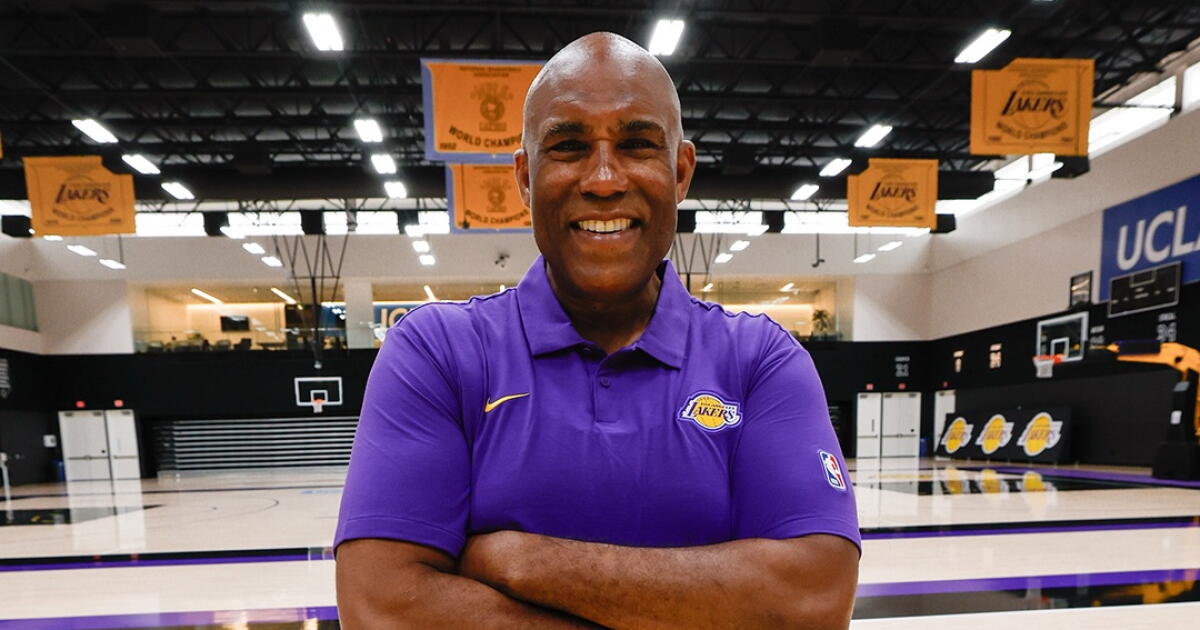







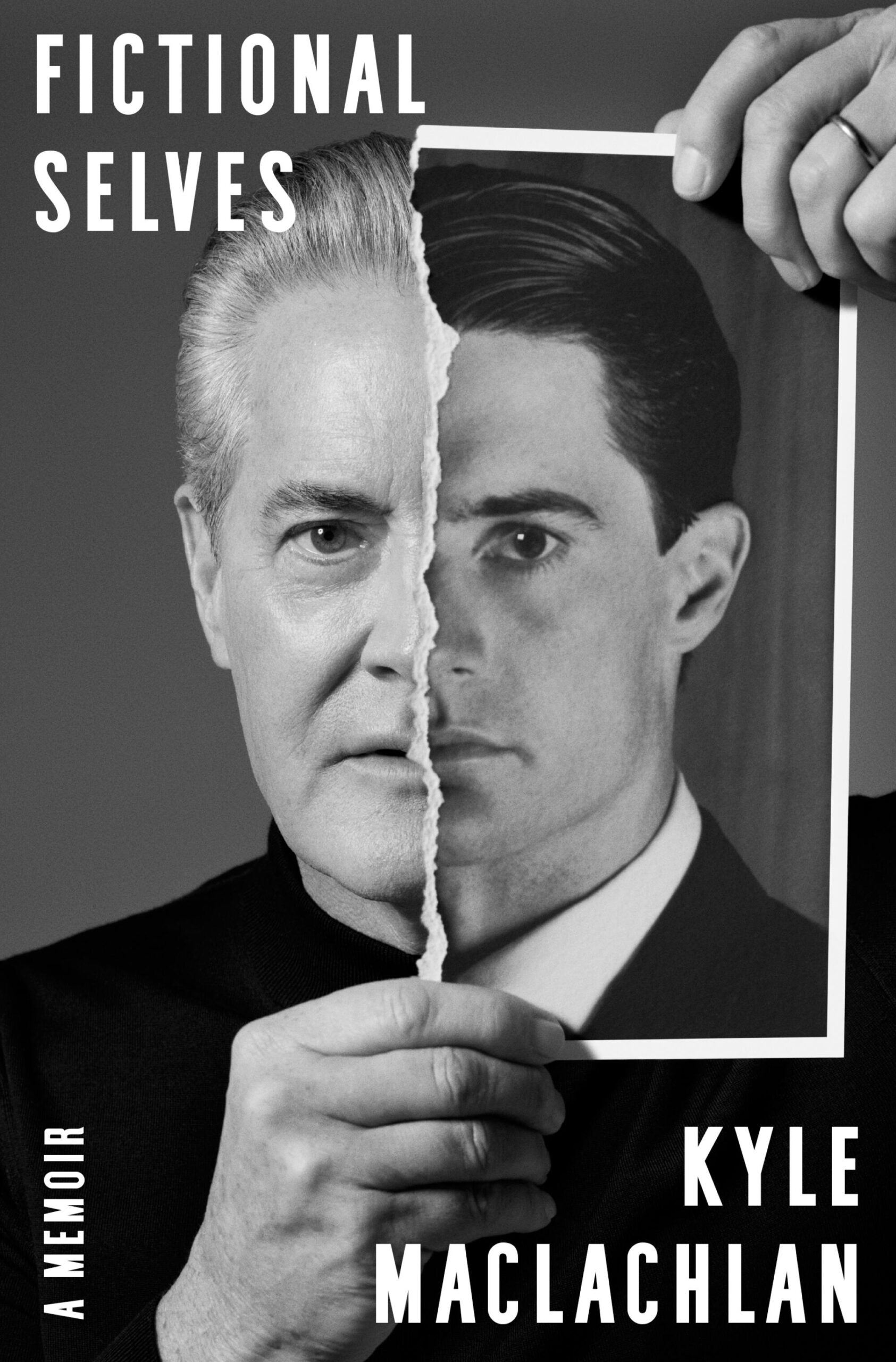





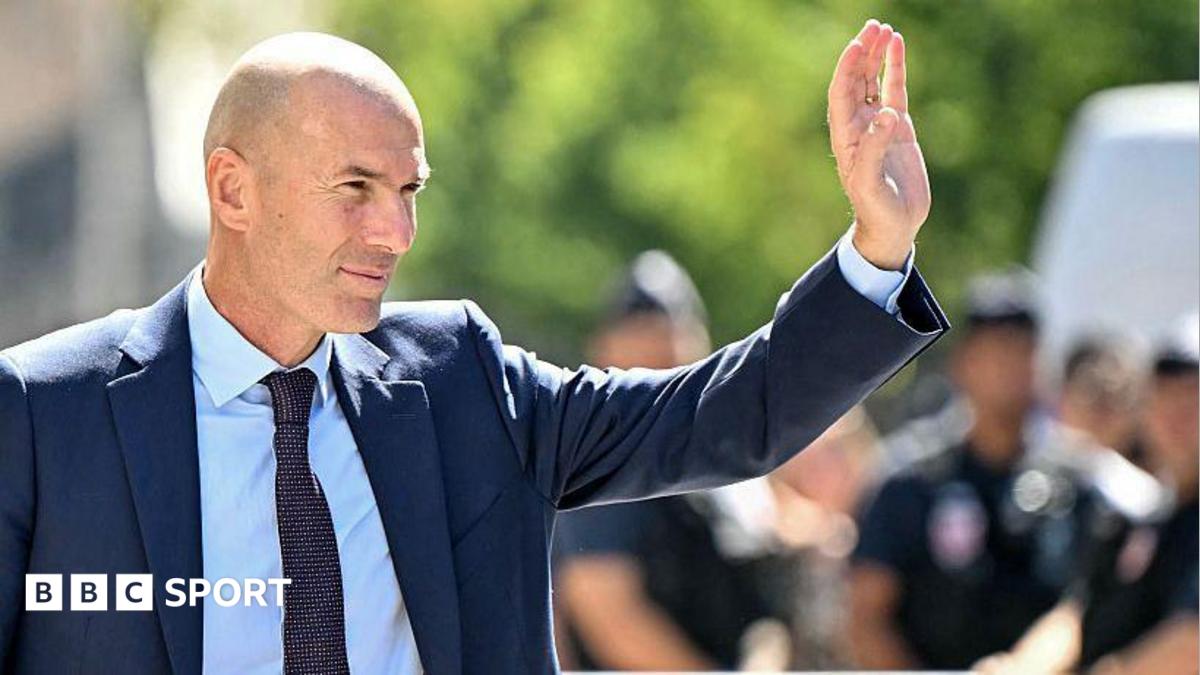


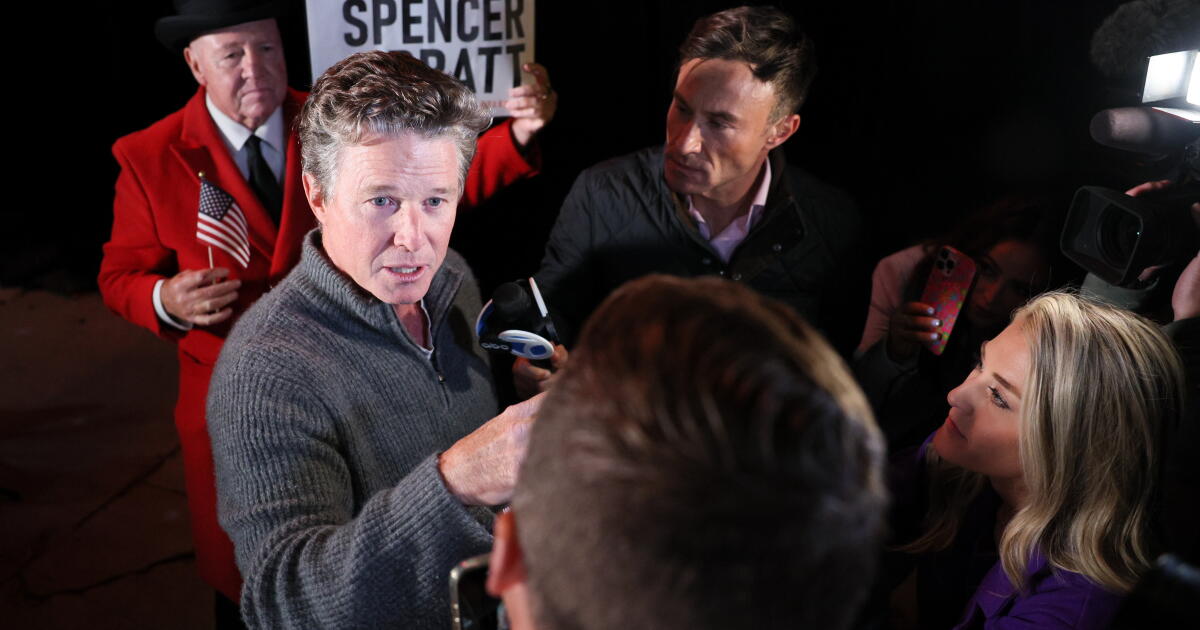
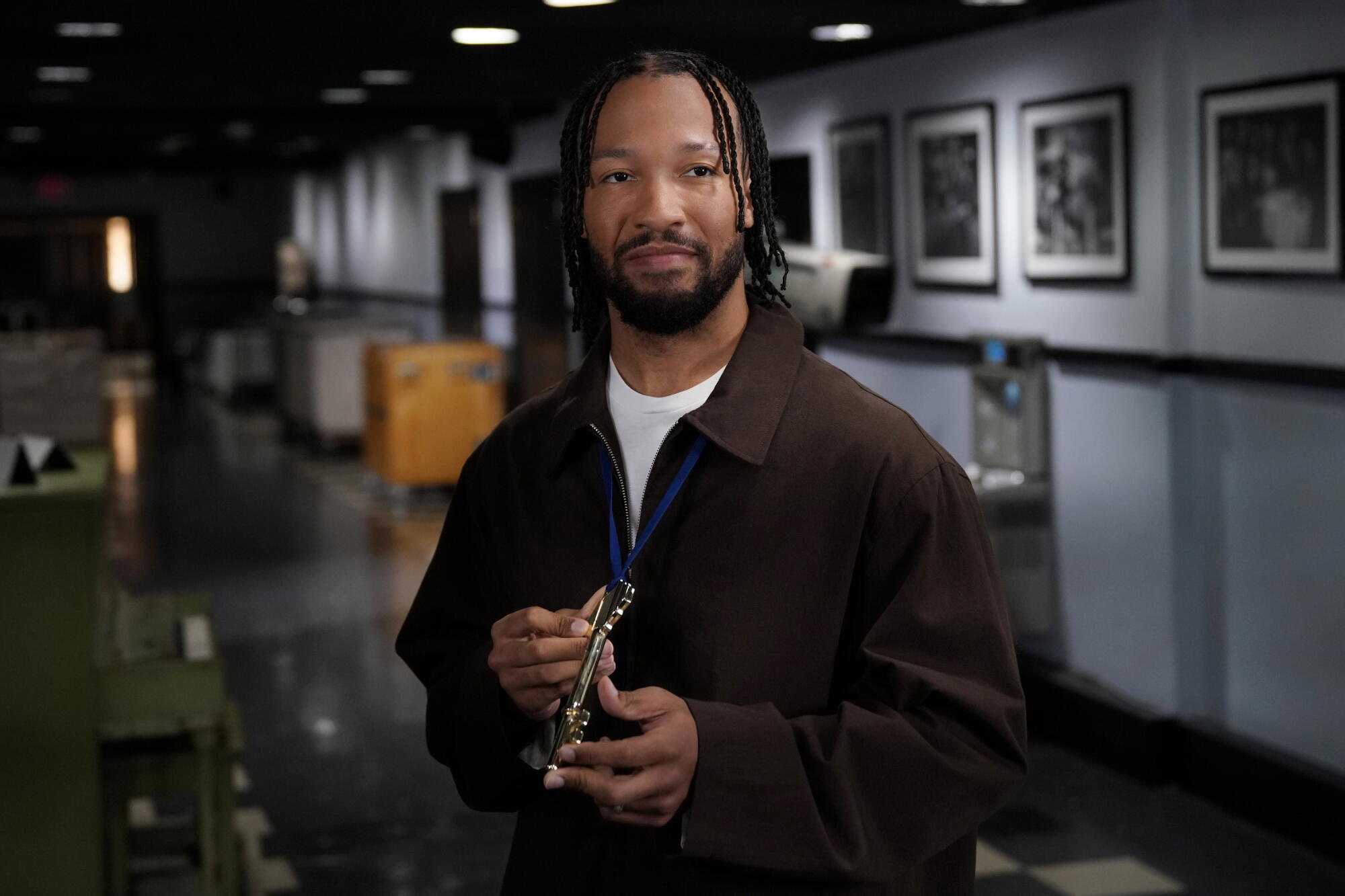



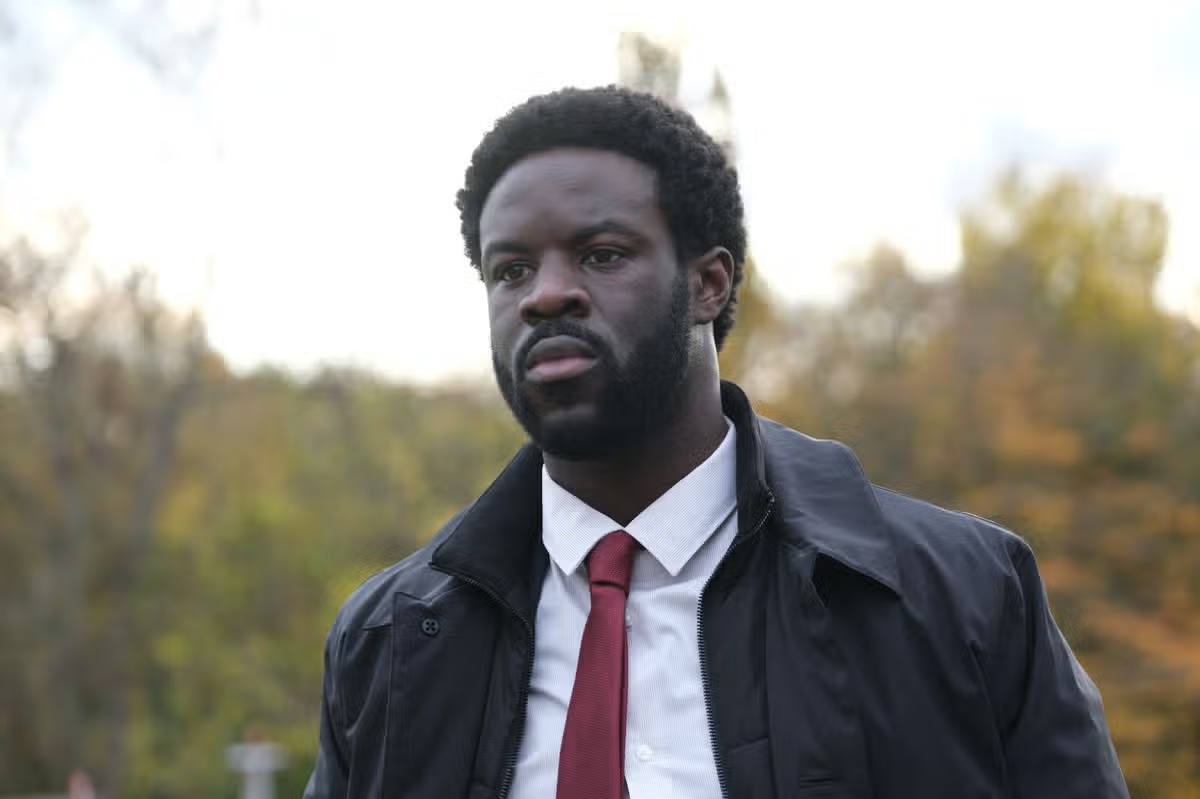

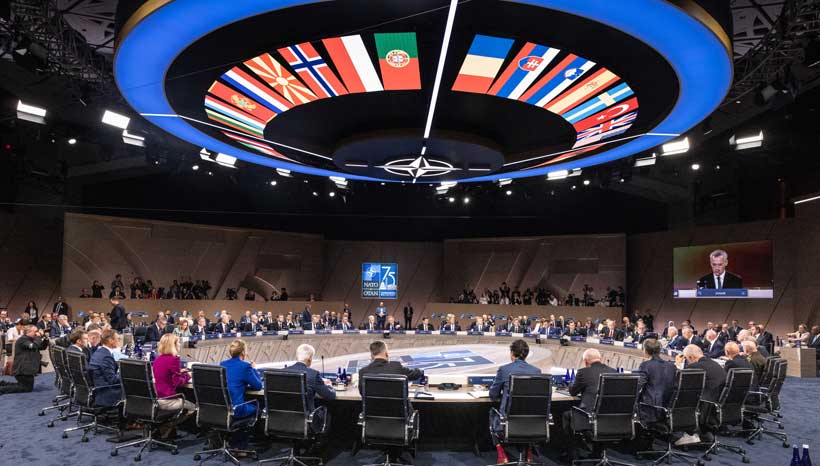
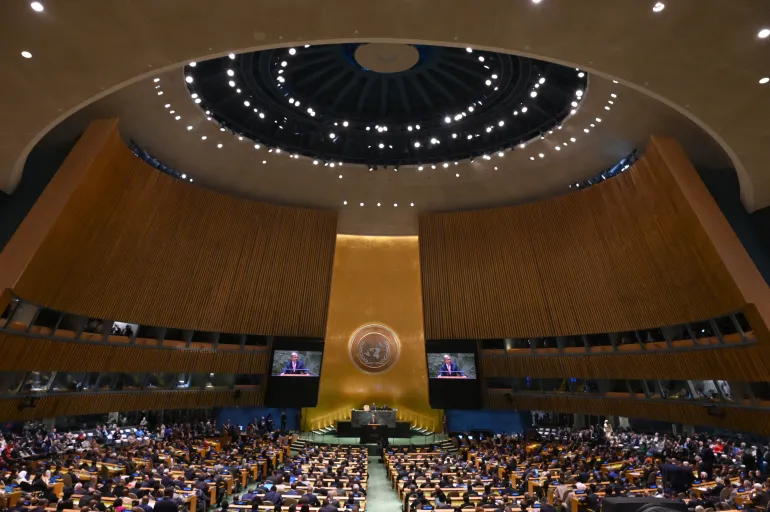
![UN continues its engagement in a Sahel where governments are placing greater emphasis on sovereignty and strategic autonomy [File photo: Timothy A. Clary / AFP]](https://i0.wp.com/occasionaldigest.com/wp-content/uploads/2026/09/33VL2ZN-highres-1695130635.jpg?w=640&ssl=1)