rob

Rob Manfred distances MLB from LA28 chair Casey Wasserman

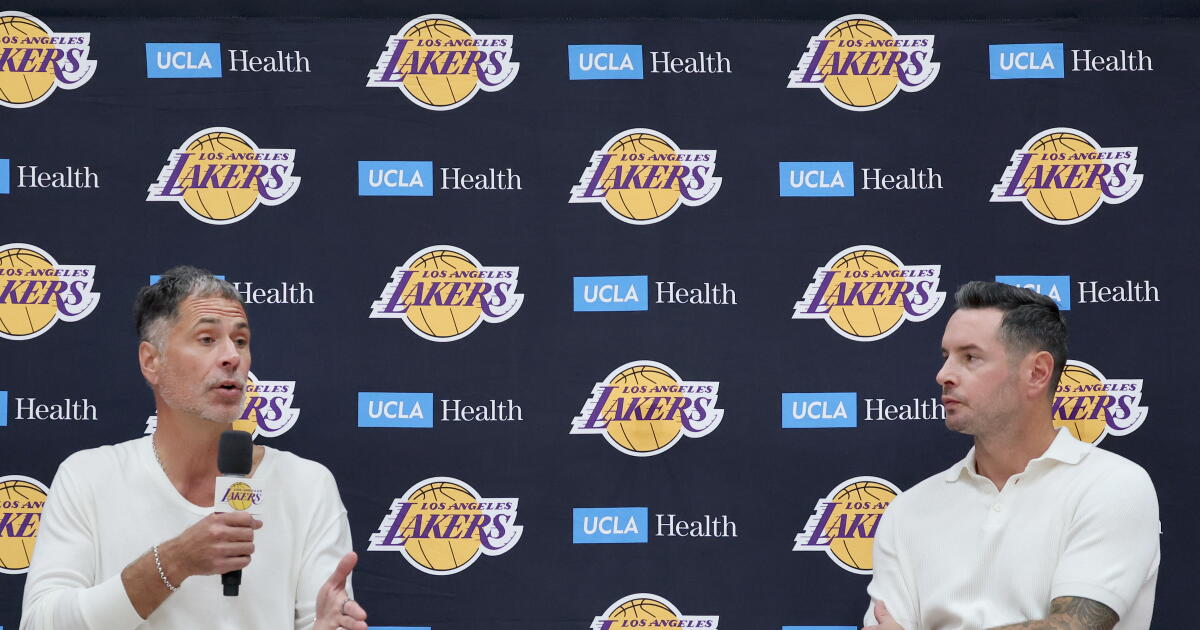
As Major League Baseball closes in on an agreement for its players to participate in the 2028 Olympics, Commissioner Rob Manfred said the controversy surrounding LA28 chief Casey Wasserman would not impact the league’s final decision.

“Our dealings are not with Casey,” Manfred said Thursday at the MLB owners’ meetings. “Our dealings are with the institution of the Olympics.”

On Wednesday, amid a stream of artists dumping Wasserman’s talent agency and a growing list of civic leaders calling on him to resign, the executive committee of the LA28 board issued a statement backing Wasserman.

In recently released emails, Wasserman was linked to Jeffrey Epstein and his associate, Ghislaine Maxwell. The board retained a law firm to investigate, the statement said, and the review did not uncover any behavior beyond what was already known: a “single interaction with Epstein” on a plane flight for a humanitarian mission and raunchy emails with Maxwell, both two decades ago, before the “deplorable crimes” of both became public.

“Based on these facts, as well as the strong leadership he has exhibited over the past ten years, Mr. Wasserman should continue to lead LA28 and deliver a safe and successful Games,” the committee statement said.

Epstein died by suicide after his indictment on sex trafficking charges in 2019. Maxwell was convicted of sex trafficking in 2021.

Manfred declined to say whether he was concerned that an association with Wasserman could be detrimental for baseball.

“I’m going to pass on that one,” Manfred said. “People much closer to that situation are better to opine on that.”

Mark Attanasio, the Los Angeles-based owner of the Milwaukee Brewers, is a member of the LA28 executive committee. Attanasio said he would let the statement speak for itself.

While baseball is not new to the Olympics, the participation of major leaguers would be. In past Olympics, MLB declined to interrupt its season so its players could travel halfway around the world, and Team USA featured minor leaguers and college players.

MLB players already travel to Los Angeles every summer, and Wasserman has pitched Manfred and MLB owners in a variety of meetings on the benefit of using major leaguers at a time the league is focused on broadening its international appeal.

“What an incredible opportunity to elevate the sport in a city where you have one of the great cathedrals of the sport,” Wasserman told The Times last year. “There is no better chance to tell the global story of baseball than from the Olympics in Los Angeles.

“They understand that. We could have another Dream Team, or two, depending on the countries. That is a vehicle to tell the story of baseball around the world, and that is really powerful.”

MLB and LA28 officials have worked out a tentative timeline under which the All-Star Game would be played in its usual mid-July spot in 2028, most likely in San Francisco, followed by a six-day, six-team Olympic baseball tournament at Dodger Stadium.

“I think people have come to appreciate that the Olympics on U.S. soil is a unique marketing opportunity for the game,” Manfred said Thursday. “We’ve got a lot of players interested in doing it, and I feel pretty good about the idea we’ll get there.”

Are the Dodgers good for baseball?

Outfielder Kyle Tucker adjusts his Dodgers cap during his introductory news conference at Dodger Stadium on Jan. 21.

Outfielder Kyle Tucker adjusts his Dodgers cap during his introductory news conference at Dodger Stadium on Jan. 21.

(Ronaldo Bolaños/Los Angeles Times)

The Dodgers’ signing of outfielder Kyle Tucker – for $60 million per year – revived the debate over whether the big-spending, star-studded, back-to-back champions are good for baseball.

“I think great teams are always good for baseball,” Manfred said. “I think, with respect to this particular great team, it added to what we have been hearing from fans in a lot of markets for a long time about the competitiveness of the game. But great teams are always good for baseball.”

MLB officials have cited that fan concern repeatedly over the last year, prelude to an expected push for a salary cap. Manfred declined to discuss the owners’ labor strategy but said he expected negotiations on a new collective bargaining agreement to begin after Opening Day and said he would not talk about MLB proposals until they are presented to the players’ union.

The current agreement expires Dec. 1, and a lockout is widely expected.

Where can you watch the Angels?

Angels star Mike Trout celebrates after hitting a solo home run against the Houston Astros on Sept. 28 in Anaheim.

Angels star Mike Trout celebrates after hitting a solo home run against the Houston Astros on Sept. 28 in Anaheim.

(Wally Skalij / Associated Press)

The Angels already are in spring training, and yet their fans have no idea where to watch their games on television this season.

The Angels have agreed that MLB will provide a streaming option, and a team official confirmed they are still deciding whether to let MLB sell their telecasts to cable and satellite distributors or reinvent what remains of the FanDuel Sports channel already part-owned by the team, with the Kings joining the Angels.

The Angels’ situation is not unique. Three years ago, MLB did not provide broadcast services to any team. Today, amid the collapse of the cable and satellite universe, MLB provides broadcast services to 14 of its 30 teams — 15, if the Angels go that way.

In 2028, Manfred would like to sell national streaming packages, in the hope that more bidders would mean more revenue, a particularly acute need for the teams losing revenue as guaranteed rights fees are cut or eliminated altogether. The challenge: how to convince the Dodgers and other big-market teams to sacrifice their still-lucrative local rights so MLB can sell a 30-team package.

“Ideally, I’d love to get there,” Manfred said. “I don’t need to get all the way there to accomplish most of what I am thinking about.”

On Thursday, Manfred cited one way he could get close enough: have rival owners vote to expand the number of games — for the Dodgers or anyone else — that would be classified as national rather than local.

“We can take as many games as we want from any club in a national package,” Manfred said, “with a majority vote of the clubs.”

Source link

Rams offensive tackle Rob Havenstein announces his retirement

For nearly all of his 11 seasons, Rob Havenstein was a Rams mainstay at right tackle.

He started two Super Bowls, winning one, and provided sage wisdom and experience for younger players in what would be his final season in 2025.

On Tuesday, Havenstein, 33, announced he was retiring.

“What a ride it’s been!” Havenstein wrote in a post on Instagram. “I can look back on my career and smile knowing I have given everything I had and more to the game I love.

“In saying that, I am officially retiring from the NFL.”

Havenstein, the longest-tenured Rams player on the roster last season, thanked his teammates and coaches, the Rams organization and his parents and wife for their support.

The 6-foot-8 Havenstein, grew up in Maryland and was a second-round pick by the Rams out of Wisconsin in 2015.

He started 13 games as a rookie, and then moved with the team from St. Louis to Los Angeles.

Havenstein started 148 regular-season games and 13 playoff games, including the Rams’ victory over the Cincinnati Bengals in Super Bowl LVI at SoFi Stadium to cap the 2021 season.

Due to injuries, Havenstein was limited to 14 games in 2023, 11 in 2024 and seven this past season.

Yet the four-time captain was a constant presence, and helped Warren McClendon Jr. develop into a consistent starter.

After the season, coach Sean McVay described Havenstein and tight end Tyler Higbee, who also completed the final year of his contract, as “all-time Rams.” McVay said the team would give the players time to digest the season and decide what might be next.

For Havenstein, that is retirement.

“As this chapter ends,” he wrote, “I couldn’t be more grateful, hopeful, and excited to see what comes next!”

Source link

‘The ‘Burbs’ remakes a cult film with a new mom and secretive husband

Keke Palmer can make Jack Whitehall blush.

We’re sitting in the green room at the 92nd Street Y on the Upper East Side of Manhattan, just before Palmer is set to host a live edition of her podcast, “Baby, This Is Keke Palmer,” with Whitehall and their other co-stars from the Peacock series “The ‘Burbs,” premiering Sunday.

In the show, Palmer and Whitehall play Samira and Rob, new parents who move back to Rob’s hometown of Hinkley Hills, a beautiful suburb where Samira immediately suspects something is amiss.

Palmer has kicked off her high heels and tucked her feet under her on the couch where she sits next to Whitehall as I ask them about their chemistry read.

“He was making me — not just me, everybody — laugh,” she remembers. “It was like, yeah, I can see how you fall in love with this guy because he’s just so funny and he’s so sweet. It’s so true, Jack. Seriously.”

Whitehall’s face turns red, which I point out. He admits that’s the case through giggles. Palmer interjects, “He knows how I feel. That’s my boo.”

The ‘Burbs” reimagines the 1989 Joe Dante movie starring Tom Hanks for a modern era. In the original, Hanks’ character is driven to madness, imagining that his neighbors in the creepy house across the street might be murderers.

A man and a woman pushing a baby stroller outside a home with a white picket fence.

Jack Whitehall as Rob and Keke Palmer as Samira in “The ‘Burbs,” a series that reimagines Joe Dante’s 1989 film.

(Elizabeth Morris/Peacock)

Developed by Celeste Hughey, this version puts Palmer’s Samira, a lawyer on maternity leave, at the center. Though initially ill at ease among the carefully manicured lawns, she develops a fast friendship with a group of gossipy wine guzzlers on her block (played by Julia Duffy, Paula Pell and Mark Proksch). When a creepy man (Justin Kirk) moves into the dilapidated Victorian mansion across the street, she starts to wonder whether it has something to do with the disappearance of a teenage girl years ago. And then she starts to ponder how Rob might be involved. Is it a case of paranoia thanks to new motherhood? Or is there something really amiss in this paradise?

Initially, Brian Grazer of Imagine Entertainment, which made the original, and Seth MacFarlane’s Fuzzy Door Productions had teamed up to do a new film version of “The ‘Burbs.” During the COVID-19 pandemic, MacFarlane thought that the title might make sense for the “dark, humorous, creepy vibes of our shared fear inside our own communities,” Fuzzy Door president and show executive producer Erica Huggins explains in a phone interview. After it was reconceived as a series, they reached out to Hughey.

“When I thought about it for a modern take, I really wanted to center an outsider,” Hughey says, adding, “I grew up in Boston, a very white suburb, as a mixed kid; I wanted to center it on a Black woman who has a new baby, a new husband, in a new neighborhood kind of unwillingly and seeing it through her eyes.”

Palmer was always who Hughey wanted to play Samira, and Grazer had the same idea.

A woman in a black jacket with an arm across her waist and the other near her face.

Keke Palmer says she was attracted to the idea of playing a mom having experienced the realities of being a new mom herself.

(Jason Armond/Los Angeles Times)

“She’s so versatile,” Grazer says, adding she could be “really funny and really pretty and she could be the average person. Like, you could live through her and that’s a big thing. What was so great about Tom Hanks is you could live through him.”

It turns out the timing was perfect. Palmer wasn’t all that familiar with the 1989 version, but she identified with Hughey’s vision, especially given that her son, Leo, was around 1 year old at the time.

“Thinking about playing a mom and now being a mom and also being able to use horror and comedy to play with the realities of what it feels like to be a new mom all felt very exciting to me,” she says.

Once Palmer signed on, Hughey and her team needed to find someone to match her infectious energy. Hughey says she imagined Rob as a “fully supportive partner” whose childhood guilt is putting a wedge in their marriage. She and her collaborators landed on Whitehall, a British stand-up comedian who has had stints in blockbusters like 2021’s “Jungle Cruise.”

Whitehall flew into Atlanta from the U.K. to meet Palmer, who was shooting the upcoming Boots Riley film “I Love Boosters.” He tells me he has had bad experiences coming to the U.S. to read with potential co-stars before, but Palmer immediately put him at ease.

“I think I’m just genuinely curious, trying to get to know him, because at the end of the day we’re going to be together every single day and we’re going to be making out and kissing and hugging,” she says. “We gotta be married. Is this my Desi? Am I his Lucy?”

A man in a black blazer and white T-shirt leaning against a brick wall.

Jack Whitehall, who is also a parent, says he found elements of the script relatable.

(Jason Armond/Los Angeles Times)

Whitehall also understood the nuances of the part because he had a young child as well. His daughter Elsie is now 2 and a half. (Leo is about to turn 3 when we speak.)

“So many elements of the script were really relatable, with the character of Rob and the slight guilt that he has that he’s going back to work and his wife is feeling trapped and wanting to be a protector and to be helpful, but then also not not quite knowing where his place is and how he can be sort of useful and caring,” Whitehall says.

For Palmer, portraying Samira’s unease wasn’t just about highlighting the disconnect between her and Rob, it was also about portraying the specific fears of living in a postpartum state.

“You’re always kind of having this anxiety,” she says. “And I don’t want to say it’s disproportionate, but to a certain degree it is. You’re constantly filtering out, is this real danger? You are kind of constantly gaslighting yourself.”

Throughout the eight-episode season, which ends on a major cliffhanger, “The ‘Burbs” is always trying to make its audience question what is really going on. That specifically relates to Rob, who is keeping a lot of secrets that may or may not be nefarious. It’s an aspect of the character that attracted Whitehall, though he notes, “I think at one point in this series the finger is pointed at literally every single member of our cast.”

“The ‘Burbs” sets out to subvert expectations, and that also applies to the way it deals with Samira’s race.

“It was really important to me that we didn’t make it a cliché,” says Palmer, who is also an executive producer. “It’s expected that we play up the ‘Get Out’ aspect. So I think it was about not being untrue to that reality and how that plays a role in the story but to talk about the bigger thing where it’s really just about being a fish out of water.”

Samira finds a true community among the other neighborhood oddballs, which is true to Palmer’s experience of growing up in Robbins, Ill., outside of Chicago. Whitehall, meanwhile, says he grew up in the “British equivalent of Hinkley Hills” in a town called Putney, on the outskirts of London.

“It was just full of very proper people, but very judgmental, and there were secrets on the street,” he says. “There was scandal as well.”

During our interview it’s clear that Palmer and Whitehall have an easy rapport. They go on tangents about Palmer introducing Whitehall to the 1997 film “Soul Food,” which Whitehall proceeded to reference on set. Palmer grabs Whitehall in exuberance as they speak. While they have different styles of deliveries, their senses of humor are the same, according to Palmer. And they figured out how to make everything click in the show.

“I think we found our timing together and we let each other have our moments,” Palmer says. “Like very telepathic. Like, ‘Time for the bit.’ We can feel each other’s pacing. I guess we just really work well together.”

Source link

How Fab Morvan of Milli Vanilli mounted one of the greatest comebacks in Grammy history

This time 36 years ago, Fabrice Morvan was preparing for his first Grammy Awards. It had been a wild few years for the 23-year-old Parisian and his best friend Robert Pilatus from Germany. The duo known as Milli Vanilli had rocketed to fame, going from obscure dancers in Munich to dominate the pop music scene. Not only were they nominated for best new artist, but they were expected to perform live. Underneath it all, the pair were quickly reaching their breaking point.

Don Henley’s “The End of the Innocence” was nominated for both song and record of the year. Indeed, for the tens of millions of Milli Vanilli fans who bought their records, the 1990 Grammy ceremony marked an end of innocence of sorts. To this day, Milli Vanilli are the only artists in the history of the Grammys to have their award revoked.

Pop duo Milli Vanilli in berets and leather jackets

L-R: The pop duo Milli Vanilli comprised of Fab Morvan and Rob Pilatus, the subject of the Paramount+ documentary Milli Vanilli, streaming on Paramount+ beginning October 24, 2023.

(Ingrid Segeith/Ingrid Segeith/Paramount+)

“Rob and Fab,” as they were known, never sang — live or in studio — on any of the smash hit singles from their 6x platinum debut North American album, “Girl You Know It’s True.” Their Grammy performance was them lip-synching to a playback.

The real singing was done by paid session vocalists John Davis, Brad Howell and Charles Shaw while Rob and Fab captivated with their charisma, athletic dance moves and eye for style. In the wake of the fallout, Milli Vanilli remained steadfast that what they did was wrong. There was, in fact, plenty of blame to go around even if Rob and Fab suffered the brunt of it.

“They removed the platinum records from the wall at Arista,” says Morvan, now 59. He is perched on the edge of a poolside lounge chair from a boutique hotel in the heart of Hollywood. It’s a sunny December day, but he’s dressed all in black with glasses to match, slim fingers adorned with a custom silver skull ring. He loves the sunshine, but offers for my sake to move somewhere in the shade. Able to pass for decades younger, he now basks in life on the other side of infamy.

Man standing in front of a cityscape

“They say the truth will set you free. The truth takes the stairs while the lies take the elevators. And that is true,” Morvan said. “So finally, after 35 years, my truth comes to the surface.”

(Stephen Shadrach)

Now, in a redemption as astounding as his rise, Morvan is back in the running for the 2026 Grammys as the only person in Recording Academy history nominated after a prior revocation.

This time, the voice is unmistakably his. Nominated in the audio book, narration, and storytelling recording category for his memoir “You Know It’s True: The Real Story of Milli Vanilli,” Morvan’s lilting French dialect and soft tone are hypnotizing and he has a natural knack for storytelling. The recording was performed alone in his home studio.

“They say the truth will set you free. The truth takes the stairs while the lies take the elevators. And that is true. So finally, after 35 years, my truth comes to the surface,” he contends. “And people, they get it, they understand that.”

Sadly, Rob Pilatus isn’t here to see it. Unable to handle the fallout and struggling in addiction, he died in 1998. In one of the more moving parts of his memoir, Morvan speaks to his former partner, laying bare for the first time some of the more unhealthy aspects of their relationship but in a way that makes clear his love for Pilatus runs deep.

After Pilatus’ death, Morvan tried his best to move on. He taught French at a Berlitz school for a while when not performing at small venues. “I’m not even looking at becoming big,” he told Times journalist Carla Rivera in a 1997 profile. He even had a stint on radio hosting “Fabrice’s Fabulous Flashbacks” for KIIS-FM. But he always returned to making music.

“Music was always there with me,” he says, his excitement building. So when it came to moving forward in life, and, I said, ‘OK, what am I going to do?’ Music kind of popped up and said, ‘Hey, show me how much you love me.’ And then I worked on that, and I learned how to play guitar, and I learned how to produce, and I learned how to write … it allowed me to take the pain away, to remove it.”

But after 20 years in Los Angeles, Morvan felt it was time to leave “Hotel California,” as he calls it, for opportunities in Europe. In a follow-up Zoom call from his home in Amsterdam, he confides that he almost felt like giving up, but figured maybe a change of scenery was what he needed.

“I was very disillusioned,” he says, headphones crowning his dreadlocked updo. “I found a producer that I could work with and build something with, but due to certain circumstances, it didn’t come together. So I met some Dutch people that wanted to launch a fashion line. And I heard that Holland was a place where dance music was evolving.”

Becoming a DJ, he played festivals and kept Milli Vanilli’s legacy alive, performing with a live band.

Morvan with his wife Tessa van der Steen and their four children

Morvan with his wife Tessa van der steen and their four children

While preparing for a project about 15 years ago, Morvan met his current partner, Tessa van der Steen, who is Dutch and works as a health and fitness coach and alternative medicine practitioner. Together, they have four children: a 12-year-old boy, 9-year-old girl, and a set of 4-year-old twin boys.

During Milli Vanilli’s heyday, powerful male (mostly white) figures held the cards, but in this phase of his life it’s women who play big roles. Not mentioned in his book is Kim Marlowe, who Morvan says, in the 1997 Times article was his manager and best friend. They at one point married; Marlowe quietly filed for divorce in L.A. in 2024.

Van der Steen, however, is the love of his life. She had no idea who he was when they first met, he was simply “Fabrice.” And according to Morvan, she is fiercely protective. “Fab is the most loving partner and father I could ever imagine,” Van der Steen writes over email. “We are soulmates. We have been together for more than 15 years. We understand each other, and it happens often that we are thinking of the same things, without saying a word.” She champions his efforts to release original music and continue performing.

In recent years, changes in culture, technology and the music industry have opened up conversations casting Rob and Fab in a more sympathetic light. Morvan himself took part in the well-received 2023 Paramount+ documentary “Milli Vanilli.” That same year, “Girl You Know It’s True,” a well-made biopic directed by Simon Verhoeven, came out.

And Morvan was caught off guard when Ryan Murphy featured Milli Vanilli prominently in his 2024 series on the Menendez brothers, a move introducing the group to new generations unfamiliar with the story. Motivated by the renewed interest, he recorded a stripped down, acoustic version of the Diane Warren-penned hit “Blame It on the Rain.”

As recently as November, Milli Vanilli came up in the zeitgeist, sparked by a comment on X by veteran producer Jermaine Dupri commenting on AI “artists” charting on Billboard.

Of course there are still detractors, but in an era in which public cancellations abound and apologies are scrutinized for any whiff of inauthenticity, Milli Vanilli’s wrongdoings can now seem quaint.

Benjamin Matheson, assistant professor at the University of Bern’s Institute on Philosophy, studies collective shame and writes on celebrity apology. He offers the startling thought that certain fans might be more willing to forgive a moral wrong, even an egregious one like unlawful intercourse with a minor in the example of director Roman Polanski, as opposed to artistic deception because it can be seen as more authentic.

“I think that perhaps,” Matheson writes over email, “Milli Vanilli suffered because they were an early ‘created’ pop band, and the public hadn’t been acclimatized to this kind of music. Whereas now I think people are much more comfortable with autotuning, AI music, and so on — though I’d love it if there was a bit more push back on this kind of thing.”

Morvan has plenty of thoughts on the state of the music industry past and present. He welcomes the change in perspective, and while he doesn’t live in regret, looking back, he would give his younger self a little advice.

“Keep working on your craft now. No matter what, and don’t ever start drugs. And don’t let your buddy Rob start with that. With those two, things would have been different.”

The pop duo Milli Vanilli comprised of Rob Pilatus(left) and Fab Morvan

The pop duo Milli Vanilli comprised of Rob Pilatus(left) and Fab Morvan are the subject of the Paramount+ documentary Milli Vanilli, streaming on Paramount+ beginning October 24, 2023.

(Paul Cox/Paramount+/Paul Cox/Paramount+)

When the Los Angeles Tribune editorial staff selected “Girl You Know It’s True” as its movie of the year, Morvan met Parisa Rose, his co-writer and executive producer for the recording of the memoir. Rose, a first-time author and mother of two, first met Morvan when she interviewed him for the quirky paper — now in its fourth revival. She is now chief operating officer of the Tribune, which has expanded to include a publishing house.

Rose, who grew up in Pasadena, helped Morvan reckon with parts of his background he had long buried. One of the most compelling parts of the memoir is when he breaks the fourth wall, narrating letters to individuals from his past.

“You need to say everything you have never said before to them that you’ve always wanted to say,” she says of the exercise they conducted for the interludes. “You need to know that this is the last conversation you will ever have with them. And you need to imagine they are sitting across from you now.” Reached over the phone, Rose said she also helped with research, uncovering details on the seaside sanatorium in France where Morvan spent much of his early childhood.

A great part of Morvan’s motivation for the memoir was to leave a legacy for his kids. His oldest son is getting into music and recently found an old Milli Vanilli vinyl and plays it along with Daft Punk and Michael Jackson. Remaining “zen” about the idea of winning, he’s enjoying the moment. And the big dreams never die. He plans to tour in the next year and come back to perform in America. And who knows? Maybe one day he can play Coachella.

He’s particularly thrilled over his Grammy outfit, a collaboration with Spanish designer Helen López, whom he previously worked with on a Milli Vanilli-inspired line. “When you’ll see what I’m wearing … you’ll see that I don’t play,” he says with a twinkle in his eye. “No matter what the outcome in life, you have to just be, be in the moment. Enjoy the moment. Whatever happens will lead you to something else. I have no expectations.”

Source link