riot

Buchanan Links L.A. Riot to Immigration Problems

Amid accusations that he is inciting racial tensions, Republican presidential hopeful Patrick J. Buchanan charged again Wednesday that illegal immigrants were responsible for much of the disorder that rocked Los Angeles earlier this month.

Citing U.S. Atty. Gen. William P. Barr’s estimate that one-third of the first 6,000 people arrested in the riots were illegal immigrants, Buchanan told reporters that “foreigners are coming into this country illegally and helping to burn down one of the greatest cities in America.”

Buchanan repeated the accusations in Orange County, one day after he made similar comments while touring the U.S.-Mexico border, when he called for the construction of new ditches and fences as well as a doubling of U.S. Border Patrol personnel.

“I can’t understand why this Administration fails to enforce the laws and close that border,” Buchanan told an audience of about 150 people, mostly senior citizens, at Leisure World in Seal Beach. “If I were President, I would have the (Army) Corps of Engineers build a double-barrier fence that would keep out 95% of the illegal traffic. I think it can be done.”

Buchanan continues his tour of Orange County today with a series of events that begin with a breakfast in Newport Beach followed by a visit to Taft Elementary School in Santa Ana and a speech to another Leisure World audience, this time in Laguna Hills.

At this point Buchanan’s campaign is little more than symbolic: President Bush already has more than enough delegates to guarantee a first-ballot victory at the GOP convention in August. But Buchanan said Wednesday that a strong showing in California would force his anti-immigration proposals onto the White House’s agenda.

“If I got a third of the vote in the Republican primary in California, Mr. Bush would be building that fence in July and August,” Buchanan told reporters after a brief tour of the Los Angeles County Central Jail.

For Buchanan, even such a modest showing would be a major improvement: On Tuesday he won just 14% of the vote in Nebraska and only 15% in West Virginia. Buchanan insisted that his comments about illegal immigrants were not meant to incite discrimination against Latinos. But some Latino leaders maintain that with Los Angeles still smoldering in the wake of the riots, Buchanan’s highly charged rhetoric amounts to putting out fires with gasoline.

“I think he’s scaring people,” said Richard Martinez, executive director of the Southwest Voter Registration Education Project. “He is appealing to literally a dark side of the soul, a fear of the other.”

Wednesday afternoon, when Buchanan addressed students at Whittier College, sophomore Lawrence Collins leveled similar accusations against the conservative columnist and asked him how he would defuse racial tensions. Buchanan responded with a brisk denunciation of affirmative action.

“How would I unite the American people? I would do away with this idiotic thing called group rights and get back to rights that inhere to individuals,” he said. “You’ve got to get back to judging people not by race and color but by consideration of excellence and ability.”

To some extent, Buchanan’s appearance at Whittier College was a sentimental journey: Richard M. Nixon, the school’s most famous alumnus, employed Buchanan in his White House. On the other hand, Nixon publicly called on Buchanan to quit the GOP race almost two months ago.

On other subjects, Buchanan said that he looks favorably on Gov. Pete Wilson’s state ballot initiative to eliminate further welfare payments for women who have additional children while on public relief.

Buchanan also praised most of the urban initiatives Bush has advanced in response to the Los Angeles riots, including a plan that would give government assistance to parents sending their children to private or parochial schools.

But Buchanan raised concerns about proposals to create urban enterprise zones that provide tax breaks and regulatory relief for companies locating in certain inner-city neighborhoods. “If cutting capital gains taxes and cutting regulations are a good idea and they encourage investment and stimulate the economy, why don’t we do it in the whole country and make it an enterprise zone for the world?” Buchanan said.

Times political writer Dave Lesher contributed to this report.
Source link

Sri Lanka prisoners riot leaving 3 dead, 23 injured in chaos | Prison News

Authorities suspect narcotics dealers and gang rivalries are behind prison violence at several facilities in Sri Lanka.

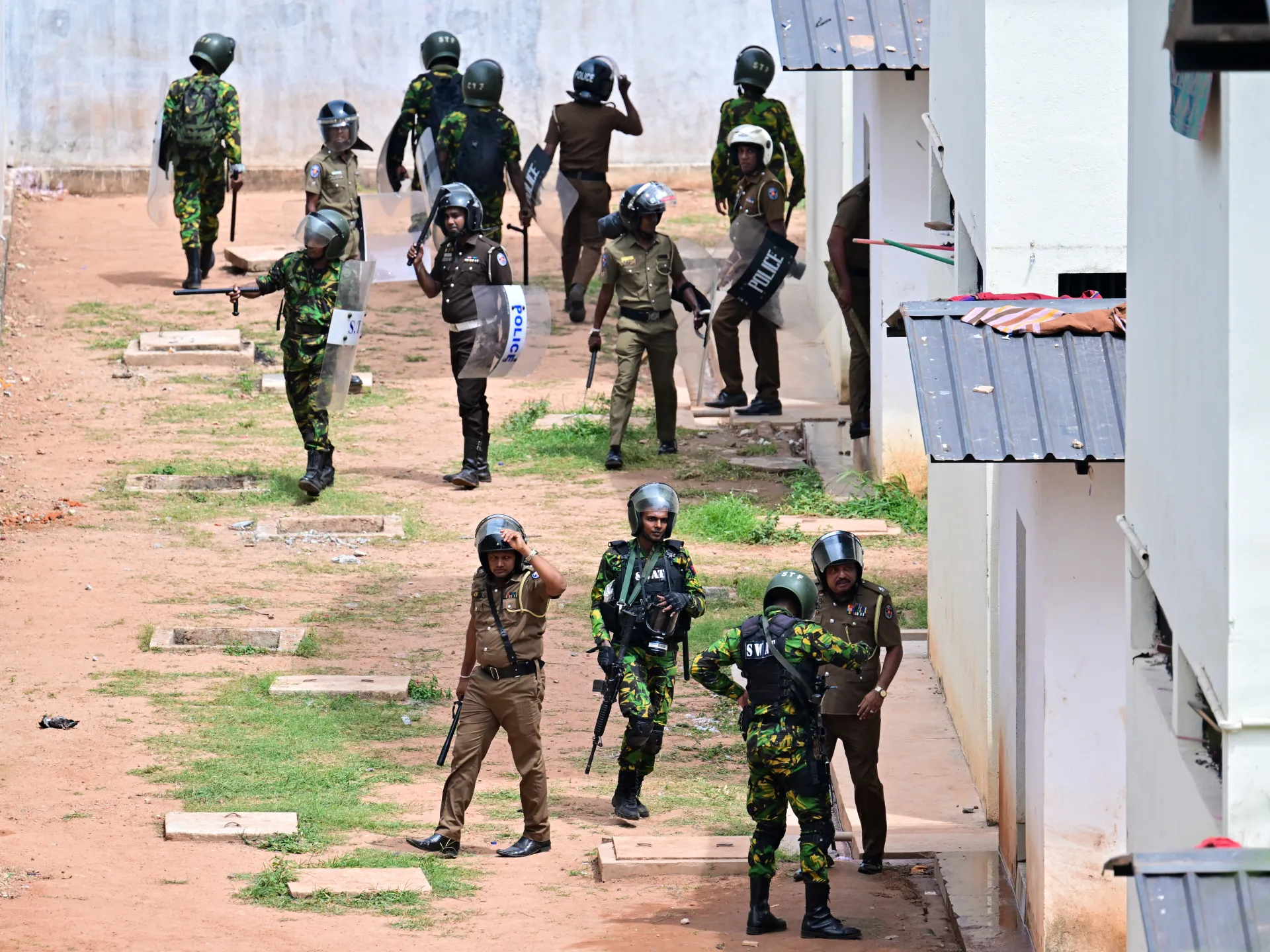
Police and riot squads have been deployed after three inmates were killed and nearly two dozen others were injured in separate prison riots across Sri Lanka.

Public Security Minister Ananda Wijepala told parliament on Friday that one prisoner was killed when 40 inmates broke out of their cells at the New Magazine Prison in the capital, Colombo, late on Thursday.

Recommended Stories

list of 2 itemsend of list

Two more prisoners were killed on Friday morning during a second riot at Kuruwita prison, about 80km (50 miles) from the capital, he said.

Between the two incidents, 23 inmates were injured and admitted to hospitals, Wijepala said, adding that police and special forces ‌brought both riots under control.

Additionally, police told the Reuters news agency that officers fired tear gas at protesting inmates at an open prison in the coastal town of Negombo, about 40km (25 miles) from Colombo, to bring the situation there under control on Friday.

Riot police at all three prisons worked to return prisoners who had climbed onto rooftops or moved into open areas back to their wards, the minister said.

Wijepala told parliament the violence was related to narcotics dealers and rival criminal gangs.

He said the government is trying to find out if the riots were coordinated.

“When you take all ⁠these incidents together, it appears that there is planning behind these and an attempt at sabotage. But we can only say ⁠anything further after a comprehensive investigation,” Wijepala said.

The prison disturbances happened a month after 10 ⁠prison officials and 20 prisoners died in two days of fighting at a prison in Negombo.

One inmate also died and several others ‌were injured in a riot last weekend at a prison in Mahara, about 14km (8.6 miles) from Colombo.

Overcrowding in Sri Lanka’s prisons is at crisis levels.

Facilities are highly congested, with more than 39,000 inmates crowded into a system with a total capacity of just 10,000, according to a recent speech in parliament by Justice Minister Harshana Nanayakkara.

“The number of prisoners in Sri Lanka today is four times the capacity,” said Senaka Perera, president of the Committee for Rights of Prisoners. “In fact, they have been patient for so long.”

A large number of inmates are suspects awaiting trial for alleged narcotics-related offences. Recent laws tightening bail conditions have resulted in prison overcrowding, Perera said.

Sri Lanka is planning to amend its constitution ‌to extend superior court judges’ tenure by two years, as part of efforts to clear a backlog of more than one million court cases and reduce prisoner numbers.

Source link

Capitol Police chief apologizes for failures in D.C. riot

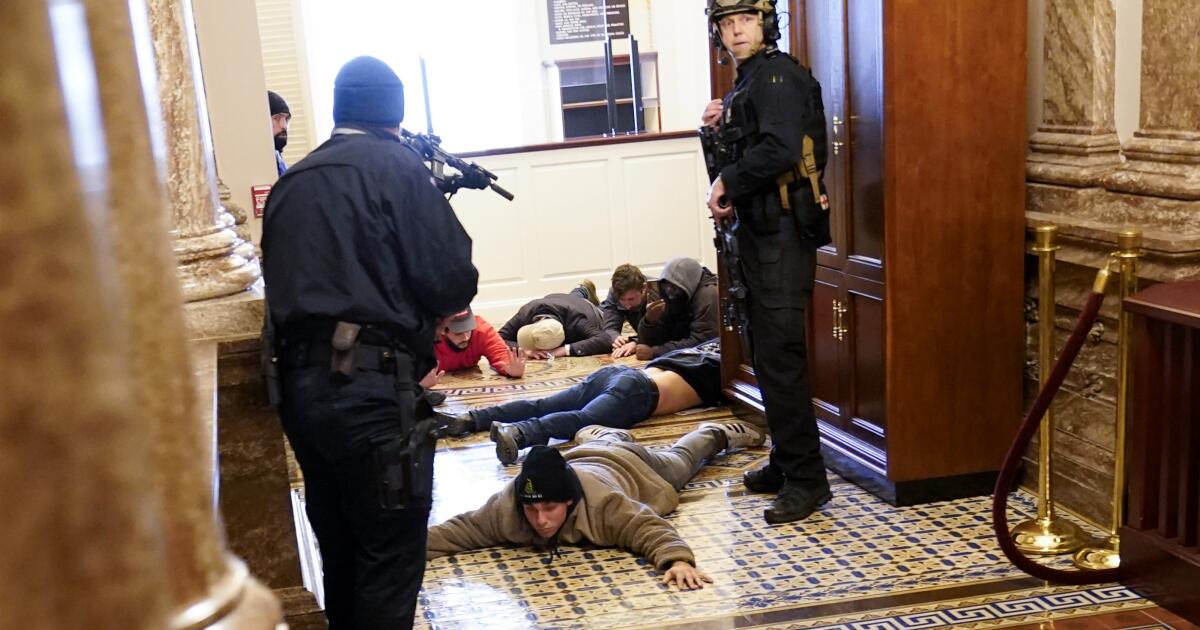
The interim chief of the Capitol Police apologized Tuesday for failing to prepare for what became a violent insurrection despite having warnings that white supremacists and far-right groups would target Congress.

Yogananda Pittman, in prepared testimony before Congress, said the Capitol Police “failed to meet its own high standards as well as yours.” She listed several missteps: not having enough manpower or supplies on hand, not following through with a lockdown order she issued during the siege, and not having a sufficient communications plan for a crisis.

“We knew that militia groups and white supremacists organizations would be attending,” Pittman wrote. “We also knew that some of these participants were intending to bring firearms and other weapons to the event. We knew that there was a strong potential for violence and that Congress was the target.”

Her admissions come as U.S. law enforcement investigates a number of threats aimed at members of Congress and as the second impeachment trial of former President Trump gets underway. A law enforcement official told the Associated Press that authorities have detected ominous chatter about killing legislators or attacking them outside the Capitol.

Trump supporters tore down fences and broke through doors and windows after an event in which the now-former president called on them to “fight” and “stop the steal.”

Inside the building, Congress was certifying the victory of President Biden. Five people died, including Capitol Police Officer Brian Sicknick, who was hit in the head with a fire extinguisher. A sixth person, another Capitol Police officer, later died by suicide.

The day after the riot, then-Capitol Police Chief Steven Sund said his force “had a robust plan established to address anticipated 1st Amendment activities.” Sund has since resigned, as have the sergeants at arms for the House and Senate.

Officers who have spoken to the AP described being overrun by insurrectionists who in many cases were more armed than they were. The officers said they were given next to no plan beforehand or communication during the riot.

There are conflicting accounts of why the Capitol Police did not have more backup. Pittman’s statement provoked a new round of finger-pointing.

In her testimony, Pittman said Sund asked the Capitol Police Board, which oversees the department, to declare a state of emergency and allow him to request National Guard support, but the board declined. The Defense Department has said it asked the Capitol Police if it needed the Guard, but the request was denied.

A member of the Capitol Police Board denied Pittman’s claim after her testimony was released. J. Brett Blanton, the architect of the Capitol, said that Sund didn’t ask him for help and that there was “no record of a request for an emergency declaration.”

Several law enforcement and congressional reviews are underway.

Both Pittman and Timothy Blodgett, the acting House sergeant at arms, told Congress on Tuesday that they need stronger communications and more fortifications around the Capitol building. Blodgett called on Congress to prepare for future emergencies and offered training for any offices that requested it.

“You want people to have some level of access to the government,” said Rep. Tim Ryan (D-Ohio). But he noted that it’s also important that lawmakers feel protected and positioned to respond quickly to anything that might happen.

Source link