Rican

Costa Rican president signals openness to domestic US military operations | Crime News

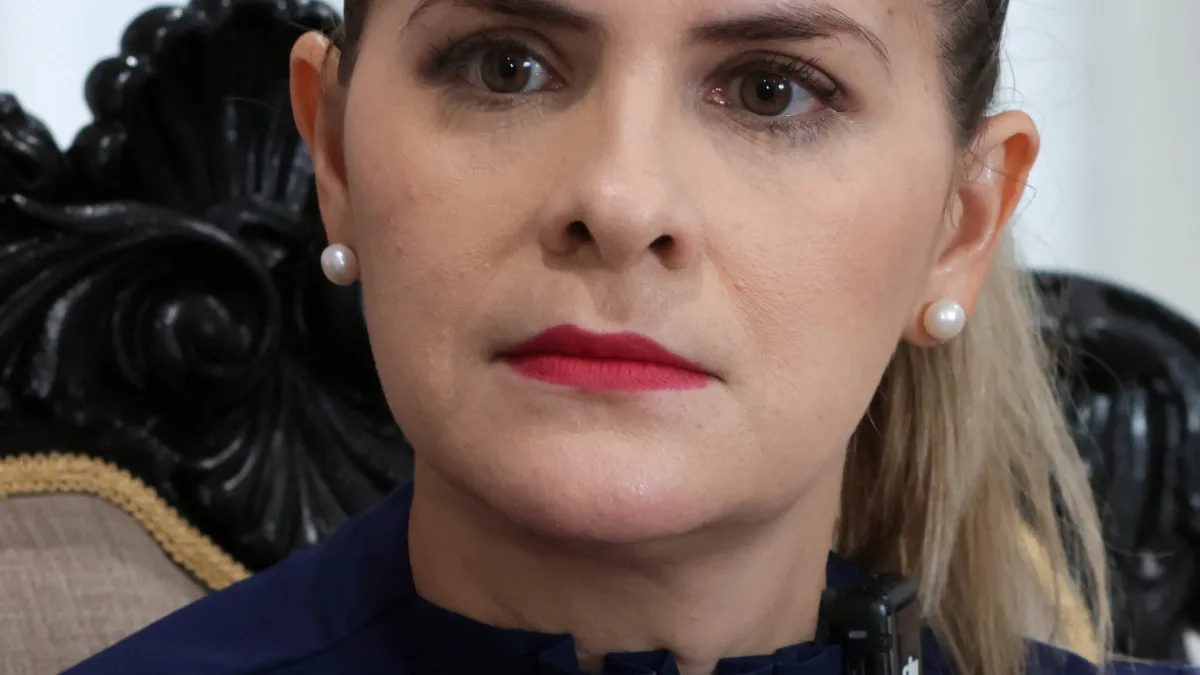
Costa Rican President Laura Fernandez has suggested that United States military operations in the country’s territory could bring national security benefits.

But she added caveats. In an interview published on Friday, Fernandez emphasised to the news service Reuters that such measures would require approval from the national legislature.

Recommended Stories

list of 3 itemsend of list

She also added there were no plans in the works for US forces to operate in the country.

“It would obviously be very good for national security if it were about pursuing a common objective against transnational crime, transnational drug trafficking, transnational terrorism,” said Fernandez, a right-wing populist who took office in May.

Fernandez succeeded her mentor, former President Rodrigo Chaves, after a February election in which concerns about security and rising violence in the Central American country played a prominent role.

Though she ran on a tough-on-crime platform, Fernandez has said that she is not currently considering a state of emergency to address the problem.

Such emergency declarations typically suspend key constitutional rights, in favour of giving police or the military added powers to crack down on violence.

That model has been popularised under the right-wing president of El Salvador, Nayib Bukele.

But critics point out that the states of emergency are meant to be short-term measures, not permanent ones. El Salvador has been under an emergency declaration since 2022, with the government extending it dozens of times.

Crime has become a top voter concern in Costa Rica. The Central American country’s homicide rate has doubled in the last decade, reaching 17.2 per 100,000 inhabitants in 2023.

That figure still places the country’s average well below many others in the region, but the change, partly attributed to increased drug trafficking activity, has startled many residents.

Fernandez’s remarks also reflect growing pressure from the US to reduce crime across the Western Hemisphere.

Since returning to office for a second term, US President Donald Trump has pushed to expand his country’s influence across Latin America, notably through military engagements.

Earlier this year, he launched the “Shield of the Americas”, also known as the Americas Counter Cartel Coalition (ACCC), to bring together right-wing leaders across the region to address drug trafficking.

Trump used the inaugural meeting to encourage Latin American governments to embrace a military-driven approach to crime, despite concerns about human rights.

He has also carried out and threatened military operations in sovereign countries, on the premise of combatting crime.

Some countries, such as Mexico, have baulked at the prospect of US military forces carrying out operations on their territory. Critics point to Washington’s long record of interventions and rights abuses in the region.

But other countries have been more receptive. US forces, for instance, have recently carried out military operations with the right-wing government of Ecuador, in an effort to lower crime rates.

Ecuador’s armed forces, however, have been accused of crimes such as torture and enforced disappearance, abuses that experts warn could be worsened by support from the US.

A July report from Human Rights Watch warns that the military collaboration between Ecuador and the US has already had dire consequences.

Ecuadorian fishermen have reported facing attacks at sea, and in one case, Ecuadorian soldiers allegedly detained and tortured four Colombian farm workers, using methods such as mock executions, beatings and electric shocks.

That incident reportedly took place during a raid near the border carried out with US support.

“The two countries’ security relationship is deepening at a moment when both governments have engaged in serious human rights violations fueled by their insistence on framing their confrontations with organised crime groups as a kind of war,” the report says.

Those raids come after Ecuadorian voters rejected a referendum last year that would have allowed foreign countries to set up military bases in the country.

Source link

This Puerto Rican couple made history with their new film ‘Esta Isla’

Famous for its walls bearing scribbles and sketches left behind by patrons for over 60 years, El Batey, a bar in Old San Juan, is a Puerto Rican institution serving locals and tourists alike.

It was inside this famed establishment that filmmakers Lorraine Jones Molina and Cristian Carretero first met one night back in 2008. Since then, the two have joined forces in both life and art; they are a married couple, as well as parents and close collaborators on film projects.

Their first feature, “Esta Isla,” which is now available on VOD, made history as the first Puerto Rican film to win at the Independent Spirit Awards in February, taking home the John Cassavetes Award honoring a production made for under $1 million. At the 2025 Tribeca Film Festival, it received three prizes, including best new narrative director.

A politically charged, coming-of-age road-trip movie, “Esta Isla” follows Bebo (Zion Ortiz), a young man from the “caserios,” or projects, and Lola (Fabiola Victoria Brown), a well-off girl unhappy in her bubble of privilege. Violence forces Bebo to run away to the mountains. Lola tags along and together they come across a series of people who expand their worldview.

There’s a grounded, earthy lyricism to the images captured in “Esta Isla” that show a Puerto Rico that’s at once lush and entrancing but also undiscovered and unseen in cinema.

Fabiola Brown, pictured above, plays "Lola" in the new Puerto Rican film "Esta Isla."

Fabiola Brown, pictured above, plays “Lola” in the new Puerto Rican film “Esta Isla.”

(Experimento Ludico)

Key to their professional success thus far, the filmmakers believe, is their loving personal bond. “We’re always together and talking about ideas. When we were working on ‘Esta Isla,’ it helped a lot to really dig deep and have long conversations about certain details and topics,” Carretero says during a recent video call. “We do mostly everything ourselves, just me and Lorrie. Sometimes I do camera, Lorrie does sound. We keep it pretty small.”

In 2010, Carretero and Jones Molina founded the production company called Experimento Lúdico in the western town of Mayagüez with the intent of decentralizing production on the island. Most opportunities for filmmaking are still based in the San Juan metropolitan area.

“I’m from Arecibo, from the north, and Cristian is from here, from Mayagüez. That’s part of who we are, and we want to tell these stories from here. It’s part of resisting. It feels like somebody has to do this,” Jones Molina says with a laugh, while sitting next to Carretero.

Lorraine Jones Molina and Cristian Carretero are the filmmakers behind "Esta Isla."

Lorraine Jones Molina and Cristian Carretero are the filmmakers behind the Puerto Rican road trip movie “Esta Isla.”

(Experimento Ludico)

When Carretero and Jones Molina first met, it was the documentary scene that sustained Puerto Rican cinema because those stories could be told with fewer resources. Karen Rossi’s 2007 environmentalist doc “Isla Chatarra,” for example, inspired Jones Molina.

She and Carretero later directed the 2016 medium-length doc “Seeds, Chronicles of the Earth,” about GMO experimentation on the island.

Most of the fiction production on the island then pertained to Hollywood films, such as “Pirates of the Caribbean: On Stranger Tides” (2011). In the 2010s, however, a string of fiction films, including Ari Maniel Cruz’s “Under My Nails” (2012) and “Before a Rooster Crows” (2016) and Ángel Manuel Soto’s “La Granja” (2015), pushed local storytelling forward.

And while those movies, just like “Esta Isla,” don’t address the socioeconomic issues facing Puerto Ricans didactically, their mere existence is in itself a statement. “Making Puerto Rican films in Puerto Rico is political,” says Jones Molina. “Talking about who we are, our identity, our culture, our history and saying that we are here and we exist is political.”

Residents in San Juan are currently experiencing a water crisis, and while the scarcity hasn’t directly affected Jones Molina and Carretero in Mayagüez, this problem is not new and has only turned more urgent in the aftermath of Hurricane Maria.

That’s why they deliberately wrote a scene in “Esta Isla” showing people getting water from a water truck.

“It’s crazy that we filmed that a couple of years ago to talk about that issue, and it’s just gotten worse,” says Carretero. “Now we have a drought, and you have to have water rationing. It’s something that is reflective of a bigger problem in the island: the neglect of the most important needs of the citizens.”

Puerto Rico’s status as a colony of the U.S., where the interests of corporations supersede the well-being of the local population, is the source of many of its challenges. And for a long time, even referring to Puerto Rico as a colony was taboo. A history of persecution on behalf of the U.S. government ingrained fear in Puerto Ricans.

“The FBI would keep ‘carpetas,’ or files with information on regular people, who were suspected of organizing or fighting for independence,” Carretero says. “People were being surveilled by the FBI, and they’d pay family members or people they knew to survey them.”

“Esta Isla” touches on the troubled relationship between Puerto Rico and the U.S. via Lola’s deceased father, who is a stand-in for Filiberto Ojeda Ríos, a Puerto Rican revolutionary and leader of the pro-independence militant group Los Macheteros. After years on the run, the FBI assassinated him in 2005. In the film, the character Cora (Teofilo Torres) lives in the mountains and works the land. The location used for his house carries great significance.

“The inside shots, with the bullet holes, and the windows, and the books, all of that is from Filiberto’s actual house where he was assassinated,” says Jones Molina. “When you go there, you see all those bullet holes; it’s heavy.”

To that, Carretero adds: “There’s an inferiority complex that the colony perpetuates, which has to do with not knowing where you come from. Once you know all these names and all the stories of women and men who’ve worked for the good of Puerto Rican people, here and in the States, it opens up this whole other space for inspiration that’s from our ancestors”

Carretero and Jones Molina found the core concept for “Esta Isla” on the first page of Octavio Paz’s seminal novel “The Labyrinth of Solitude,” where the Mexican author discusses adolescence as a moment in a person’s life where they open up to the world, while at the same time noting that societies themselves also go through a coming-of-age.

Zion Ortiz plays "Bebo" in the new Puerto Rican film "Esta Isla."

Zion Ortiz, pictured above, plays “Bebo” in the new Puerto Rican film “Esta Isla.”

(Experimento Ludico)

“Puerto Rico is still an evolving organism. It’s a country, a people and a culture still evolving,” Carretero explains. “We’re still trying to understand who we are and where we’re going. Are we a country? Are we not? Are we part of the U.S., or not? Are we Americanos, or somos latinoamericanos? Tantas preguntas that are still unresolved.”

Jones Molina continues: “There’s this idea that you have to just be grateful that you’re a part of the United States and don’t complain. But when you question that, and when you want to really look at why you love and care about your country and your culture and want to educate yourself, then you’re definitely going through this kind of coming-of-age.”

For this filmmaking couple, reaching maturity as artists forged in the complex context of a modern colony hinges on acknowledging their limitations and still persevering.

“We also wanted to show that you can make films with very little; you don’t have to wait for the perfect moment or all the different resources. That’s what we call tropical realism. Not only the style of the filmmaking, but it’s also the means, and how that matches your reality,” explains Carretero. “We cannot pretend to be something that we are not. We have to develop our own language, our own way of filming, our way of telling our stories.”

Source link