One of the hottest tickets for the events surrounding Super Bowl LX in February was a party thrown at the Cow Palace in San Francisco by Sports Illustrated, where attendees could hang with Justin Bieber, Kevin Hart and Travis Kelce.
The magazine’s logo and a team of models from its latest annual swimsuit issue were present at another pre-game bash at the Michelin three-star restaurant Quince.
Sports Illustrated journalists were getting requests from peers looking to score invites to the gatherings, which symbolized a turnaround at the 72-year-old title. Just two years earlier, many of its writers were told their jobs were being eliminated.
But Authentic Brands Group, the New York-based company that purchased Sports Illustrated in 2019 for $110 million, says the title is now thriving after reducing its reliance on advertising and circulation revenue. The privately held firm — which expects $38 billion in global retail sales this year, up from $35 billion in 2025 — does not break out the finances for its businesses but says SI is highly profitable after a rocky period. Less than half of SI’s revenue comes from its media business.
“It took us a little while and we had a couple of bumps along the way,” Daniel W. Dienst, executive vice chairman for Authentic, said in a recent interview from his New York office, where a photo of baseball legend Hank Aaron taken by acclaimed SI photographer Neil Leifer hangs on the wall behind his desk.
For decades, SI was where every sports journalist aspired to work, hoping to become the next Frank DeFord or Gary Smith, whose 32-year career at the magazine is highly revered. Cover images of Muhammad Ali, Michael Jordan and other superstars are emblazoned in the memories of fans who eagerly awaited the title to arrive in the mail each week. For athletes and sports institutions, the cover remains a coveted honor.
“You go to LeBron James’ office in Akron, it’s got his 30 covers on the walls,” Dienst said. “You go to USC, they’ve got 21 covers with their athletes and coaches all over their athletic department.”
Now a monthly magazine, the flagship business of Sports Illustrated is no longer the first stop for fans looking for game analysis or profiles of athletes, many of whom have asserted greater control over their images through social media and podcasts.
Like other print magazines, SI has seen a sharp falloff in its circulation, currently at 400,000, down from 3 million in 2010. Authentic says SI has 52 million users a month on its web site and 21 million social media followers. ESPN had 229 million digital users in November.
But the famous SI name still resonates with generations of consumers and Authentic has sought ways to capitalize on it, from selling replica covers to opening branded resort hotels in Chicago and Nashville. International editions of the magazine have been launched in Germany, China and Mexico, with plans to launch in France and the U.K.
In January, Sports Illustrated launched its own free ad-supported streaming TV channel called SITV that features live shows with its journalists and includes films and shows from an archive stocked with documentaries and swimsuit issue specials going back decades.
The channel, which along with the other SI assets is managed by New York-based Minute Media, will also carry live sports coverage including college basketball. While Minute Media did not reveal early viewership figures, the company said the audience for the channel has grown 60% since its launch.
Cincinnati Bengals quarterback Joe Burrow on the cover of Sports Illustrated.
(Clay Patrick McBride)
The streaming channel is a major media initiative for brand that has seen more activity in other sectors.
In 2023, Authentic put the SI name on Lunatix, a sputtering ticket marketplace. Now called Sports Illustrated Tickets, the business has signage deals with 13 venues around the world including a New Jersey-based stadium — the home of the New York Red Bulls soccer team. The service expects to generate $500 million in revenue this year.
Authentic also uses Sports Illustrated-sponsored events such as the ones held at the Super Bowl to entertain clients for its other businesses and makes tickets available to the public. SI will host an event for Authentic at the Masters golf tournament in Augusta this week and has a permanent high-end, track-side hospitality space at Churchill Downs in Kentucky called Club SI.
Authentic specializes in acquiring and investing in famous retail properties that have foundered. The firm has acquired such names as the outerwear retailer Eddie Bauer, Brooks Brothers and Reebok, and in January took a 51% share in the fashion brand Guess.
ABG enlists outside operators to run the brands. Those operators pay an ongoing license fee to ABG, which also takes a cut of the revenues.
That was the plan when Authentic bought Sports Illustrated from Meredith Corp., now known as People Inc.
After the purchase, Authentic entered a $15-million-a-year licensing agreement with Arena Group (at the time known as Maven) to run Sports Illustrated. A New York-based digital media company, Arena operated such well-known titles as Men’s Journal, Parade and TheStreet. But the partnership unraveled when Arena used AI for sponsored content on Sports Illustrated’s website, which sounded alarm bells at the esteemed publication.
Sports Illustrated’s 2026 Super Bowl party at the Cow Palace in San Francisco.
(Sports Illustrated)
The Arena Group acknowledged it hired an outside firm to create product reviews that used fake bylines. The scandal coincided with the termination of its chief executive, Ross Levinsohn, who once held a leadership role at the Los Angeles Times.
The relationship with Authentic worsened when Arena’s majority owner, Manoj Bhargava, took over as interim chief executive. The founder of 5-Hour Energy, Bhargava tried to fire Sports Illustrated’s unionized editorial staff and renegotiate a lower licensing fee from Authentic. He also used the magazine’s editorial pages and website to promote his energy drink business.
The SI media business was unprofitable under Bhargava and Arena missed a payment to Authentic on its licensing deal. In March 2024, Arena announced it was shutting down the print edition of SI.
Around the same time, Authentic hired Minute Media, which runs the digital sites Fansided and Players’ Tribune, to take over Sports Illustrated. Bhargava didn’t go quietly; according to legal filings, he threatened to delete Sports Illustrated’s archive of intellectual property.
Authentic sued Arena for breaching the SI licensing agreement, which was settled. Many of the title’s laid-off journalists were rehired.
The experience with Arena was a harsh lesson for Authentic, which never had owned a media property before.
“The minute I make that phone call or anybody perceives that Authentic could control the newsroom, forget it, game over,” Dienst said, referencing Bhargava. “We had to move on.”
Minute Media has gotten high marks from the SI staff for its repair work on the media side of the business.
“It’s been a long time since we felt like we had an operator and support from the very top to not just grow what we’re doing day to day, but to grow what Sports Illustrated is going to look like 10 years down the road,” said Steve Cannella, editor in chief of Sports Illustrated.
SI’s union representing editorial employees praised Minute Media when it took over, and is close to agreeing on a new contract deal with the company.
Minute Media is aiming to expand the SI brand‘s reach across other media platforms to make up for the time lost under previous regimes.
“I’ve asked, ‘guys, what are all the things you wanted to do that you haven’t been able to do?’ ” said Minute Media President Rich Routman. “If we’re not trying new stuff, we’re failing.”
Some sports media types believe SI is largely a nostalgia play in a landscape where young fans go elsewhere for game highlights and turn to provocative hosts such as Pat McAfee on YouTube. But awareness goes beyond the audience of baby boomers and Gen Xers who grew up with the brand.
Lisa Delpy Neirotti, who leads the sports management program at George Washington University, recently conducted a study with her students on their media consumption habits. She said she was surprised to see high recognition of Sports Illustrated with the Gen Z crowd, and credits SI for Kids, the spin-off publication for younger readers launched in 1989.
“They would remember getting it in the mail, and it was the first thing that got them interested in sports,” Neirotti said. “There are a lot of positive memories that keep the brand alive.”
Dienst said the audience for SI has gotten younger under Authentic’s ownership. But he doesn’t disregard the oldsters who grew up with it.
“They’re very affluent and they’re super loyal,” he said.
Earnings Call Insights: NIKE, Inc. (NKE) Q3 fiscal 2026
Management View
“Last quarter, we said we were in the middle innings of our comeback. Since then, we have continued to take meaningful actions to improve the health, quality and foundation of our business.” (CEO, President & Director Elliott
Seeking Alpha’s Disclaimer:This article was automatically generated by an AI tool based on content available on the Seeking Alpha website, and has not been curated or reviewed by humans. Due to inherent limitations in using AI-based tools, the accuracy, completeness, or timeliness of such articles cannot be guaranteed. This article is intended for informational purposes only. Seeking Alpha does not take account of your objectives or your financial situation and does not offer any personalized investment advice. Seeking Alpha is not a licensed securities dealer, broker or US investment adviser or investment bank.
Earnings Call Insights: Innventure, Inc. (INV) Q4 2025
Management View
Roland Austrup, Chief Growth Officer, stated, “This is the earnings call we have been building toward…for the first time in Innventure’s history, every part of this platform is firing at the same time, and the
Newsletters for Every Investor
Get daily, sector-specific newsletters packed with expert insights, fresh ideas, and new opportunities.
Subscribe to Newsletters
Seeking Alpha’s Disclaimer:This article was automatically generated by an AI tool based on content available on the Seeking Alpha website, and has not been curated or reviewed by humans. Due to inherent limitations in using AI-based tools, the accuracy, completeness, or timeliness of such articles cannot be guaranteed. This article is intended for informational purposes only. Seeking Alpha does not take account of your objectives or your financial situation and does not offer any personalized investment advice. Seeking Alpha is not a licensed securities dealer, broker or US investment adviser or investment bank.
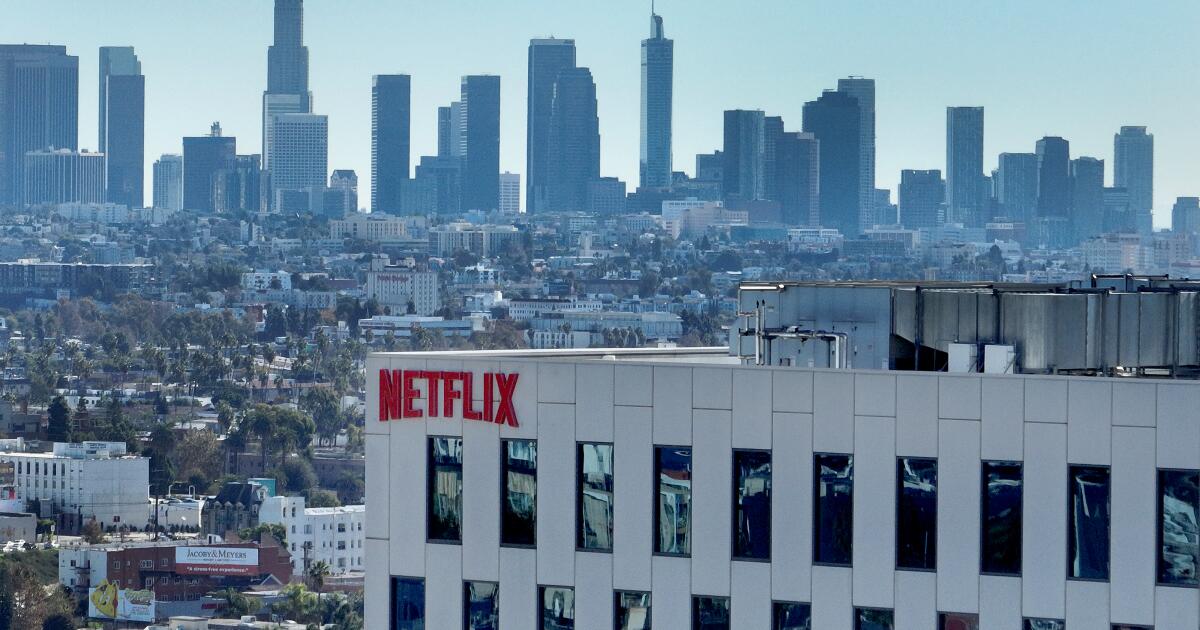
Global streaming revenue surged to $150 billion last year, driven largely by an increase in prices by Netflix and other streamers, according to a new report.
In 2025, global streaming subscription revenue grew by 14%, reaching a total of over $157 billion, the report from Ampere Analysis found. In the last five years, revenue has tripled from the $50 billion seen in 2020.
Streamers continue to dominate the digital distribution market with rising monthly subscription fees , more consumers choosing subscriptions with ads, and platforms expanding their global reach.
“As the streaming market matures, the emphasis is no longer on pure subscriber growth but on extracting greater value from existing audiences,” said Lauren Liversedge, a senior analyst at Ampere Analysis. She noted that the growth is happening “particularly in the most competitive markets.”
Over the next five years, Ampere Analysis estimates subscription revenue will grow by another 29%, potentially reaching over $200 billion worldwide by 2030.
The U.S. is the largest driver of this revenue growth, as the country accounts for 50% of 2025’s global streaming subscription revenue, per Ampere Analysis. Netflix accounted for the largest revenue share in the U.S. at 14%. Last week, the company also announced a price hike, where its premium tier costs $27 a month. This marks the second time in a little over a year that the streaming service raised its fees.
“Our approach remains the same: We continue offering a range of prices and plans to meet a variety of needs, and as we deliver more value to our members we are updating our prices to enable us to reinvest in quality entertainment and improve their experience by updating our prices,” said a Netflix spokesperson in a statement.
It’s not the only streaming service to increase its prices, as Disney+, HBO Max and Apple TV made similar moves last year.
Recent data from Deloitte highlights some of the price sensitivity U.S. streaming audiences are experiencing. More than two-thirds of streaming subscribers are now opting for ads, marking a 20% increase from 2024.
That cost-conscious sentimentexpands beyond North America, reaching Western Europe, according to Ampere Analysis. The total revenue from ad tiers has risen rapidly across these markets over the past five years, up from less than 5% in 2020 to 28% in 2025.
But even as consumers demonstrate their willingness to pay less and watch ads, streaming platforms still benefit, making money from both subscription fees and advertising. When accounting for that ad revenue, streaming services generated closer to $177 billion in global revenue last year. Advertising is expected to become an even more important revenue stream for these companies, as ads alone could add $42 billion in annual revenue by 2030, per Ampere Analysis.
Then the Professional Women’s Hockey League was born in 2023 following many players defecting from the National Women’s Hockey League to form the Professional Women’s Hockey Players Assn., then merging with the Premier Hockey Federation until a historic bargaining agreement.
The National Women’s Soccer League announced a new CBA in the summer of 2024 that included giving players agency on where they are traded and abolishing expansion and collegiate drafts.
That momentum put considerable pressure on WNBA negotiations. Could the players set a new benchmark for future contract negotiations across women’s pro sports leagues?
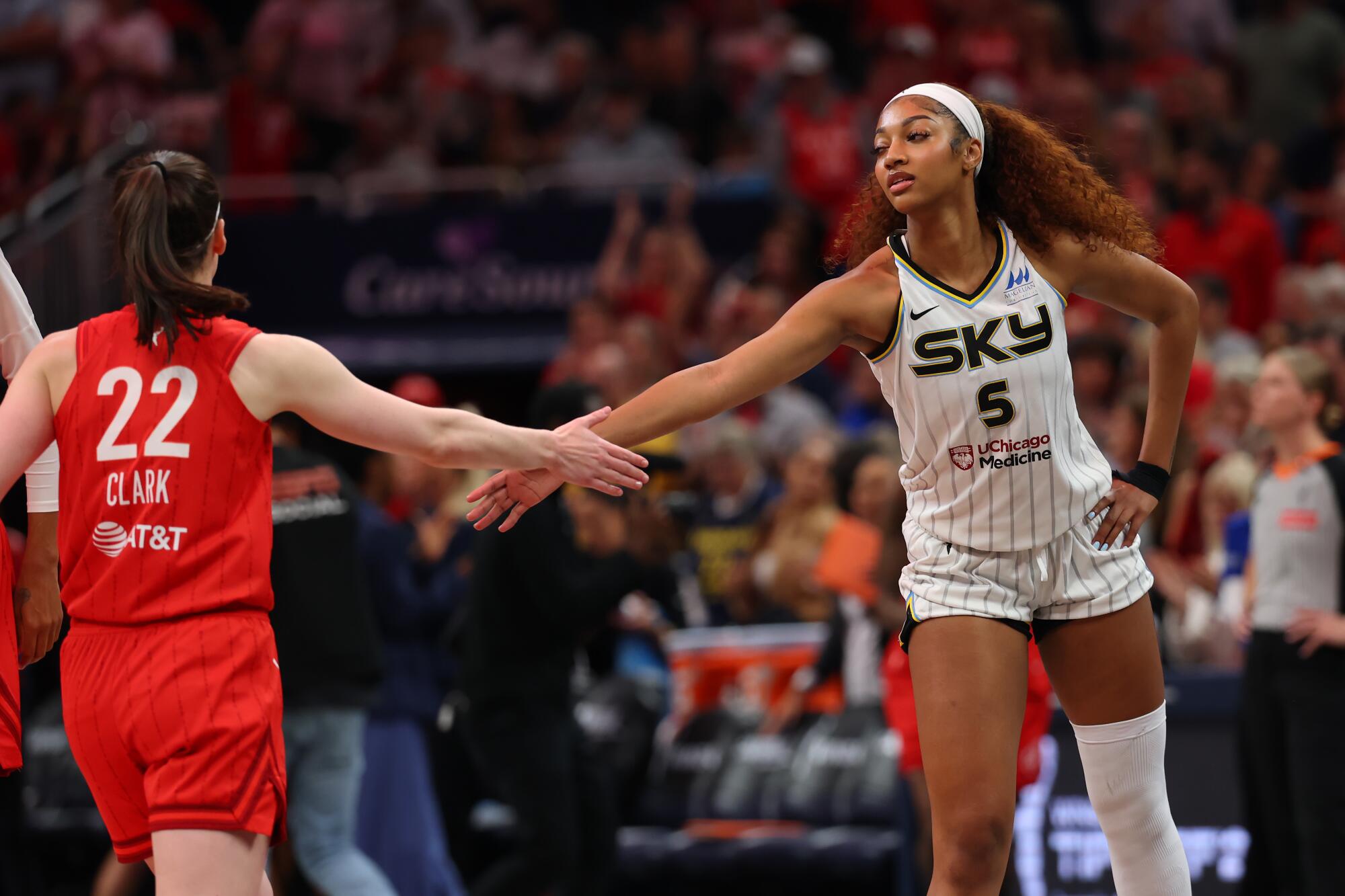
The Sky’s Angel Reese and the Fever’s Caitlin Clark shake hands before a game at Gainbridge Fieldhouse on May 17.
(Gregory Shamus / Getty Images)
The WNBA’s CBA was a flashpoint because of the boom in popularity in supporting women’s sports, with players such as Caitlin Clark and Angel Reese becoming household names. Last season, the WNBA made enough revenue to trigger revenue-sharing for the first time and this season marks the start the league’s new 11-year, $2.2-billion media rights deal.
Unlike in the NBA, where players get around 50% of the league’s revenue before expenses, the WNBA’s first revenue-sharing kicked in only after the league hit a benchmark determined by a formula of revenue targets, which had been difficult to achieve since the start of the deal was the 2020 COVID season played in front of empty stands.
The WNBA broke its single-season attendance record in 2025. As league interest grew, so did the tension between the league and the players’ union.
Many viewed this negotiating cycle as an opportunity to pounce on the increased visibility, and in a lot of ways, the union did. Players are going to be paid significantly more and they got a win in revenue sharing, earning 20% of the league’s revenue before expenses — a big jump from the previous 9% share.
The average player salary before revenue-share payments will be around $584,000.
But was it as much as they should have gotten?
Tamika Tremaglio, former NBPA executive director and advisor to the WNBPA during the 2020 CBA negotiations, said observers were less concerned about the start of training camps looming on April 19 and more focused on whether negotiations would end with a stable deal that would hold for the length of the agreement as market conditions evolve. Increased salaries are always celebrated, but both sides agreeing to a new revenue sharing model was a consequential step forward for players.
“The real story is the revenue share,” Tremaglio said. “At the end of the day, that’s what is going to drive the future.”
The fallout from the new deal will take months or years to fully understand. Free agents will be able to begin signing with teams in April, and since 80% of the players are eligible for free agency, there will be higher figures being floated around than ever.
A’ja Wilson and her Las Vegas Aces teammates celebrate while holding the 2025 WNBA championship trophy.
(Chris Coduto / Getty Images)
That might affect what talent comes to the league, too.
“More European players might come into the league,” a WNBA team consultant not authorized to speak about the league publicly told The Times. “Now that the money is better, that might knock out several college players in the draft.”
There are some WNBA-level players who have stayed in Europe due to restrictive prioritization rules that force players to participate in all WNBA practices and games even if they conflicted with international league obligations. Many WNBA players compete in international leagues during the offseason and prefer the option to keep playing in lucrative foreign leagues if there is an overlap with the WNBA season.
While the new rules for international play in the WNBA CBA are not yet clear, compensation changes could open the door for more players to choose to prioritize the league.
The general consensus among people operating within the WNBA is relief that a deal is in place.
“It’s huge,” one player agent told The Times. “They made big strides. This is important for women’s basketball.
Sparks players Dearica Hamby, Rickea Jackson, Azura Stevens, Kelsey Plum and Julie Allemand talk during a game against the New York Liberty at Crypto.com Arena on Aug. 12.
(Katelyn Mulcahy / Getty Images)
“Anytime both sides don’t get everything they want,” the agent added, “that’s a good deal.”
That agent also noted that this CBA will set the precedent for the next negotiations to continue to raise the revenue-sharing if the league continues to make more money.
Under the new CBA, the 20% revenue-sharing is tied to the league’s gross revenue, a significantly different number than the net revenue, which is calculated after all expenses are taken into account. The players were fighting for a percentage of the gross revenue, even if it is a smaller percentage than the net revenue the league offered because it is guaranteed.
The NBA first reached 53% of gross revenue in their CBA in 1983 and has stayed around that number ever since.
“If it was net, you’d have all these other expenses and you sort of lose control of the actual expenses,” Tremaglio said. “You have no control from the perspective of where the players are. But now, you don’t even have to go look at the minutia of auditing every single expense line item. That’s what makes such a difference.”
More details around the CBA, including player housing, expansion draft format and roster spots, will become clearer as the deal reaches ratification.
For now, even if 20% revenue sharing is less than the 40% the players first proposed, the deal represents a significant, stable increase in player compensation.
“This will impact women’s sport globally, not just the game of basketball,” Tremaglio said. “This will impact everything, soccer, everything.”
WASHINGTON — The Trump administration is stepping up its ambitious effort to replace about $1.6 trillion in lost tariff revenue that was eliminated by the Supreme Court’s decision to strike down a range of the president’s import taxes.
Recovering that lost revenue, which the White House was counting on to help offset the steep, multitrillion-dollar cost of its tax cuts, is possible but will be challenging, experts say. The administration has to use different legal provisions to impose new import taxes, and those provisions require longer, complex processes that U.S. companies can use to seek exemptions. It could be months or more before it is clear how much revenue the replacement tariffs will yield.
“I wouldn’t bet against this administration being able to get back on paper the same effective tariff rate they had before,” said Elena Patel, co-director of the Urban-Brookings Tax Policy Center. But the new approach will “make it easier for people to contest the tariffs, which is going to put a big asterisk on the revenue until all that is settled.”
On Wednesday, U.S. Trade Representative Jamieson Greer said the administration will investigate 16 economies — including the European Union — over whether their governments are subsidizing excessive factory capacity in a way that disadvantages U.S. manufacturing. The investigation will also cover China, South Korea and Japan, Greer said.
In addition, he said, there would be a second investigation of dozens of countries to see whether their failure to ban goods made by forced labor amounts to an unfair trade practice that harms the United States. That investigation will also cover the EU and China, as well as Mexico, Canada, Australia and Brazil.
Both investigations are being conducted under Section 301 of the 1974 Trade Act, which requires the administration to consult with the targeted countries, as well as hold public hearings and allow affected U.S. industries to comment. A hearing as part of the factory capacity investigation will be held May 5, while a hearing on the forced labor investigation will occur April 28.
It’s a far cry from the emergency law that President Trump relied on in his first year in office, which allowed him to immediately impose tariffs on any country, at nearly any level, simply by issuing an executive order.
Moments after the Supreme Court’s ruling, Trump imposed a 10% tariff on all imports under a separate legal authority, but that duty can only last for 150 days. The president has said he would raise it to 15%, the maximum allowed, but has yet to do so. Some two dozen states have already challenged the new taxes. The administration is aiming to complete its Section 301 investigations before the 10% duties expire.
The effort underscores the importance that the Trump White House has placed on tariffs as a revenue-raiser at a time when the federal government is facing huge annual budget deficits for decades into the future. Previous administrations, by contrast, used tariffs more sparingly to narrowly protect specific industries.
Erica York, vice president of federal tax policy at the Tax Foundation, noted that the first investigation covers roughly 70% of imports, while the second would cover nearly all of them.
“That breadth suggests the goal isn’t to address the issues at hand, but instead to re-create a sweeping tariff tool,” she said.
Trump portrays tariffs as a way to force foreign countries to essentially help pay the cost of U.S. government services, even though all recent economic studies find that American companies and consumers are paying the duties, including analyses by the Federal Reserve Bank of New York and economists at Harvard University. In his State of the Union address last month, Trump even touted his tariffs as a potential replacement for the income tax, which would return the United States’ tax regime to the late 19th century.
Trump also wants tariffs to help pay for the tax cuts he extended in key legislation last year. The tax cut legislation is expected, according to the most recent estimates by the nonpartisan Congressional Budget Office, to add $4.7 trillion to the national debt over a decade, while all Trump’s import taxes, including ones not struck down by the court, were projected to offset about $3 trillion — or two-thirds of that cost.
The high court’s ruling Feb. 20 that he could no longer impose emergency tariffs eliminated about $1.6 trillion in expected revenue over the next decade, according to the CBO.
Some of Trump’s import taxes remain place, including previous tariffs on China and Canada that were imposed after earlier 301 investigations. The administration has also imposed tariffs on some specific products, including steel, lumber and cars. Those, combined with the 10% tariff for part of this year, should yield about $668 billion over the next decade, the Tax Foundation estimates.
“It’s going to take a really big patchwork of these other investigations to make up for the [lost] tariffs,” York said.
The administration’s efforts are also unusual because they reflect an overreliance on tariffs to bring in more government revenue. Trump has also said the import taxes are intended to return manufacturing to the United States — manufacturing jobs, however, are down since he returned to office — and he has used the tariffs to leverage trade deals.
“What makes this really different,” said Kent Smetters, executive director of the Penn Wharton Budget Model, “it is really the first time tariffs have been mainly used as a revenue raiser.”
Patel, meanwhile, argues that raising revenue can be done more reliably and straightforwardly by Congress. Laws like Section 301 are traditionally intended to be used to address specific trade policy concerns in particular countries.
“It’s not supposed to be there to raise revenue,” she said. “If we want to raise revenue through tariffs, then Congress should impose a broad based tariff.”
It has been nearly three years since Hollywood writers went on a historic strike that lasted 148 days and ushered in an extraordinary period of labor unrest that virtually shut down the film and TV business.
Now, writers are poised to commence another round of bargaining with the major studios on a new three-year film and TV contract. Few observers think the union is girding for another showdown, especially at a time when many of its members are struggling to find work amid media consolidation and belt-tightening.
But in advance of negotiations that begin on Monday , union leaders are eager to dispel any perception that they might have scaled back their demands.
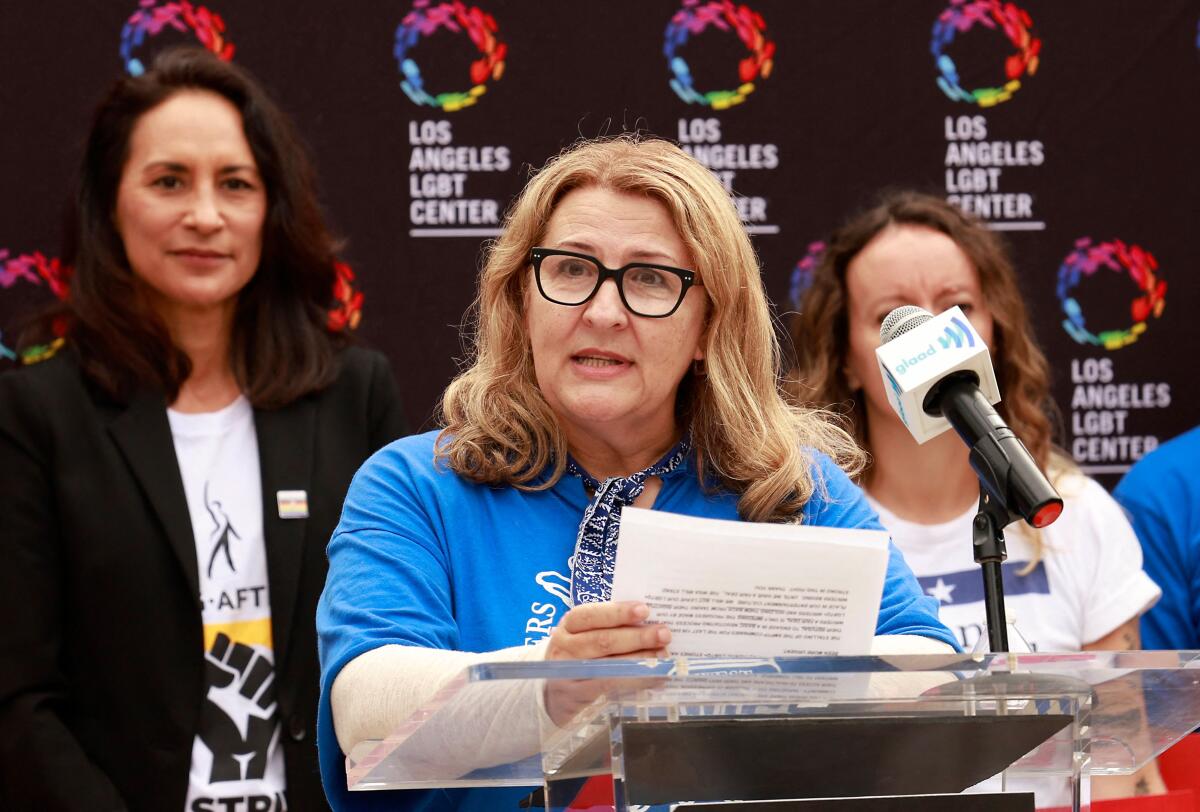
“Our members have shown many times that they’re willing to fight for what we need as a collective group,” WGA West President Michele Mulroney said in an interview. “And there’s no exception here.”
With its current contract expiring on May 1, the WGA hopes to improve its members’ healthcare plans, increase streaming residuals and expand AI protections.
Michele Mulroney speaks as the Screen Actors Guild (SAG-AFTRA) and Writers Guild of America (WGA) join GLAAD in releasing the 11TH Annual GLAAD Studio Responsibility Index at The Village at Ed Gould Plaza Los Angeles LGBT Center in Los Angeles, California, on September 14, 2023.
(Michael Tran/AFP via Getty Images)
Ellen Stutzman, the union’s executive director, said despite popular belief, the studios have weathered the transition from cable television to streaming “very well,” citing their efforts to maximize revenue with streaming bundling, rising subscription fees and advertising revenue.
“Writers are watching as Netflix and Paramount are fighting it out to acquire Warner Bros… Paramount is spending $81 billion,” said Stutzman. “There’s money for a fair deal for writers.”
The union leaders agree that this year’s negotiations are all focused on the sustainability of a writer’s career.
A spokesperson from the Alliance of Motion Picture and Television Producers, which represents the major studios in negotiations, said in a statement that they look forward “to engaging in a constructive and collaborative bargaining process with the WGA. Through continued good-faith dialogue, we are confident we can reach balanced solutions that support talented writers while sustaining the long-term success and stability of our industry and its workforce.”
A top priority for the WGA is to increase the caps that companies contribute to the union’s healthcare plan. Union officials say the current cap has remain unchanged for two decades as healthcare contributions have steadily declined due to fewer writers working.
“AI is using [studios’] IP, which is stuff that we wrote to license these models,” said John August, the co-host of the “Scriptnotes” podcast and WGA’s negotiating committee co-chair. “With the Sora deal, it seems clear that the companies intend to monetize this IP for use with AI.”
August says the union will be skeptical toward arguments that it’s still too early to seek more safeguards around such a nascent industry, citing the union’s past history with the rise of DVDs and the internet and how profoundly those technologies changed the compensation for writers.
“If you’re taking the work that we created to generate AI outputs, we are owed money. They’re using our work to do something down the road,” added August.
WGA’s negotiating committee also is looking to boost streaming residuals, expand the minimum number of people allowed in a writers’ room and add protections for scribes working on pilots.
“We very much hope that lessons were learned in 2023 and that the AMPTP will come to the table ready to take our proposal seriously and to make a fair deal, and to do that quickly,” Mulroney said. “It provides stability for the companies and for our membership. It’s better for everybody.”
WGA is entering contract negotiations nearly a month after the actors’ union, SAG-AFTRA, began its bargaining sessions. Last week, the AMPTP said it was extending negotiations another seven days.