retaliatory

Blasts shake Qatar, UAE, Kuwait as Iran’s retaliatory strikes continue | News

Tehran’s retaliatory attacks on US assets in the Gulf region continue for a third day as fears of a prolonged conflict rise.

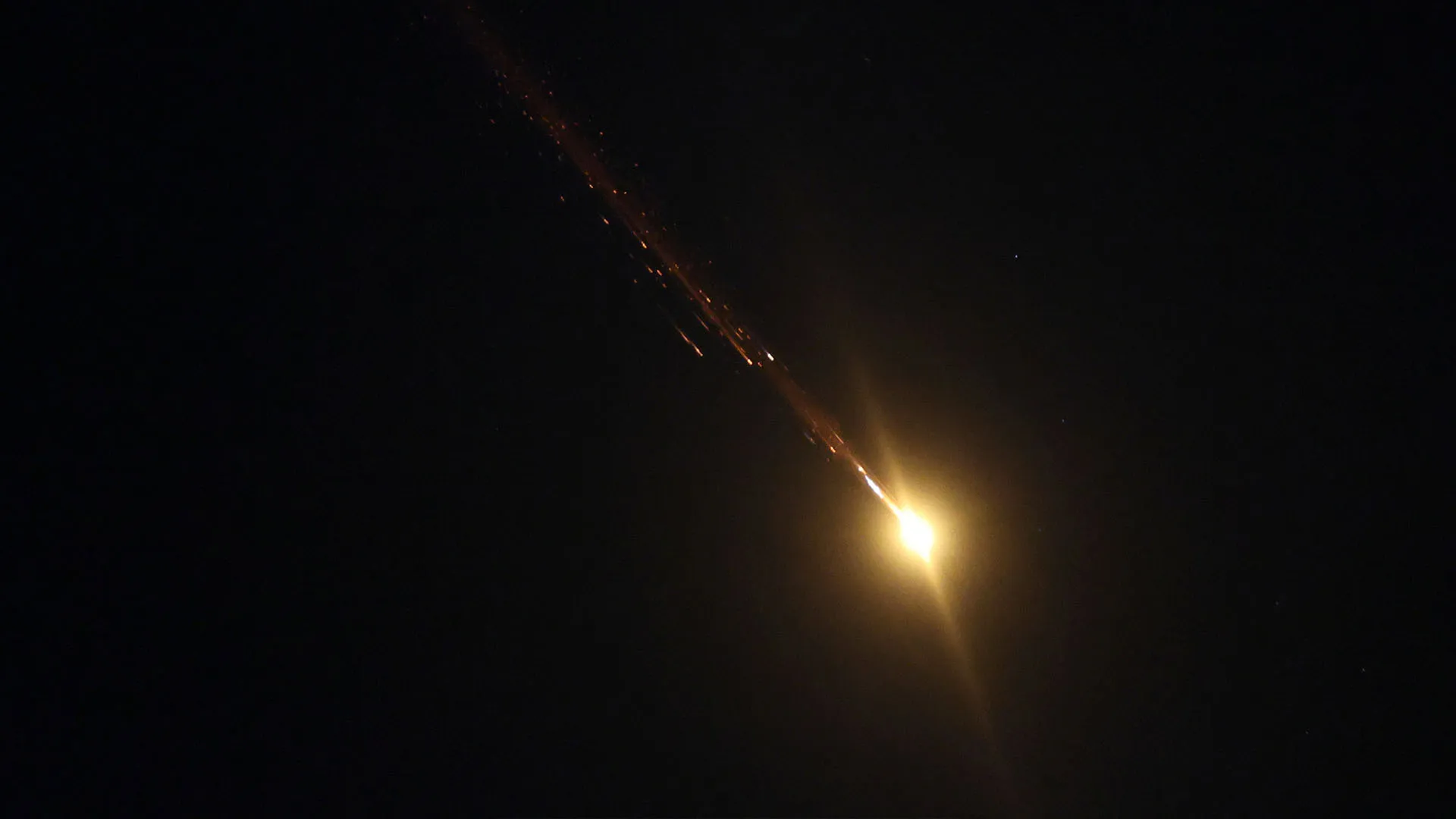
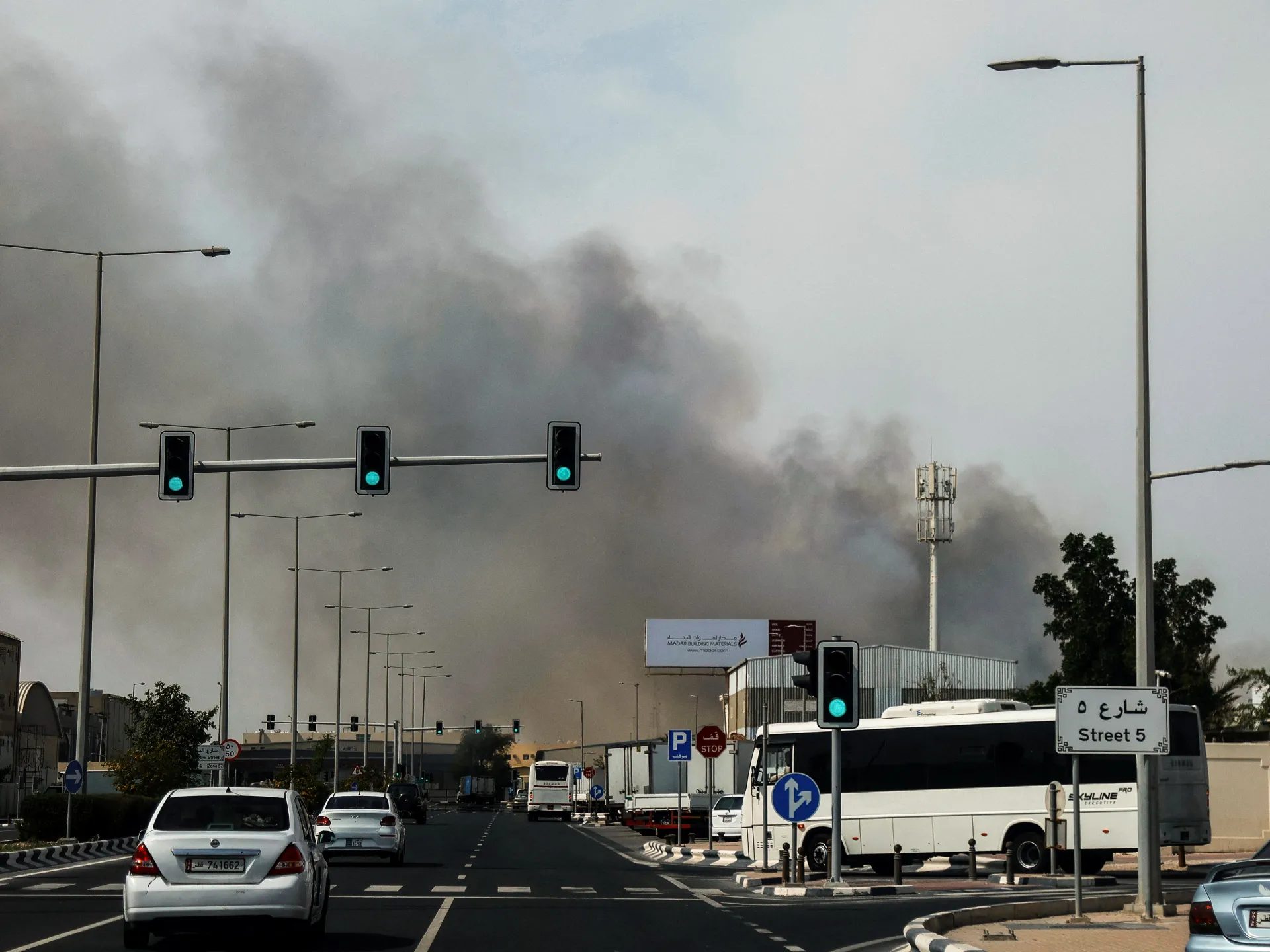
Loud explosions were heard in Dubai in the United Arab Emirates and the Qatari capital ‌of Doha for a third consecutive day of ⁠Iranian retaliatory strikes on neighbouring Gulf states in response to ongoing attacks by the United States and ⁠Israel on Iran.

Loud bangs and sirens were also heard in Kuwait early on Monday morning, with a witness quoted by Reuters news agency saying smoke was seen rising from near the US embassy.

Recommended Stories

list of 4 itemsend of list

Kuwaiti air defences intercepted the majority of the ⁠drones near Rumaithiya and ⁠Salwa neighbourhoods, the state-run Kuwait News Agency reported, quoting the director general of civil defence.

Tehran said it ⁠would target US military assets in the region after the ⁠US-Israeli ⁠strikes on Iran continued for the third day on Monday.

Iran has hit a range of civilian and commercial areas across ‌Gulf cities, widening the conflict’s impact on key regional aviation and trade hubs.

Meanwhile, Bahrain’s Ministry of Interior said it activated air raid alerts and urged residents to head to the nearest safe place.

It said the Shaikh Khalifa bin Salman Bridge linking the capital, Manama, to nearby towns was closed and urged “residents to use main roads only when necessary”.

At least one person has been killed in Kuwait, three have been killed in the UAE, and 16 people have been injured in Qatar.

Meanwhile, at least 201 people have been killed in Iran in US-Israeli attacks, with 747 wounded, while at least nine have been killed and 121 wounded in Israel.

Iran ‘attacking American targets’

The US, Bahrain, Jordan, Kuwait, Qatar, Saudi Arabia and the UAE issued a joint statement on Sunday condemning Iranian attacks across the region and affirming their right to self-defence.

Gulf countries “will take all necessary measures to defend their security and stability and to protect their territories, citizens, and residents, including the option of responding to the aggression”, the statement released after a meeting said.

However, Iranian Foreign Minister Abbas Araghchi on Sunday stressed that Tehran is not seeking confrontation with its Gulf neighbours, telling Al Jazeera that Tehran has “no problem with the countries on the other side of the Persian Gulf”, referring to the Gulf, which is also known as the Arabian Gulf.

Iran maintains “friendly and good neighbourly relations with all of them”, which it is determined to continue, he added.

“What we are doing is in fact an act of self-defence and retaliation to the American aggression against us,” Araghchi said.

“We are not attacking our brothers in the Persian Gulf, we are not attacking our neighbours, but we are attacking American targets,” he added.
Source link

Three U.S. troops killed in Kuwait in retaliatory Iranian strike

March 1 (UPI) — Three members of the U.S. military were killed and five were seriously wounded in the Iranian response to U.S. and Israeli strikes the day before.

President Donald Trump said in a video statement Sunday that the nation grieves “for the true American patriots who have made the ultimate sacrifice for our nation,” while repeating the warning he made Saturday in announcing the strikes that more U.S. troops may die.

“Sadly, there will likely be more before it ends,” he said. “Likely be more.”

The service members killed were part of an Army sustainment unit based in Kuwait, which is one of several American bases in the Middle East that Iran has targeted amid its response to Operation Epic Fury, which started early Saturday morning, NBC News and The New York Times reported.

“America will avenge their deaths and deliver the most punishing blow to the terrorists who have waged war against, basically, civilization,” Trump said.

U.S. Central Command announced in a post on X on Sunday morning that the troops had been killed in action and wounded as the military continued to hit targets, while also receiving counterattacks from Iran.

Several other troops also “sustained minor shrapnel injuries and concussions — and are in the process of being returned to duty,” CENTCOM said in the post. “Major combat operations continue and our response effort is ongoing.”

“The situation is fluid,” the post noted, adding that the names of the deceased troops would be withheld until 24 hours after their next of kin have been notified.

Iran has also targeted other countries nearby, including Cyprus, the United Arab Emirates and Qatar.

CENTCOM on Saturday refuted Iranian claims that at least 50 U.S. service members had been killed, as well as other claims that a U.S. Navy ship had been struck by missiles and that severe damage was seen at “multiple U.S. bases.”

Through the first day-and-a-half of Operation Epic Fury, the United States and Israel have said that they hit dozens of military and government sites throughout Iran.

CENTCOM has specifically announced the sinking of Iranian naval vessels, sending B-2 stealth bombers to hit Iran’s ballistic missile facilities and various communication, air defense and command and control centers.

Trump early Saturday announced that Iranian spiritual leader, Ayatollah Ali Khamenei, was dead — along with other high-ranking leaders of Iran — in U.S. and Israeli airstrikes.

U.S. intelligence and military assets had been tracking Khamenei for months and opted for a rare daylight strike on the meeting because of the opportunity to hit multiple targets, including Defense Minister Gen. Aziz Nasirzadeh, Revolutionary Guard Corps head Gen. Mohammad Pakpour and Khamenei’s defense adviser, Ali Shamkhani.

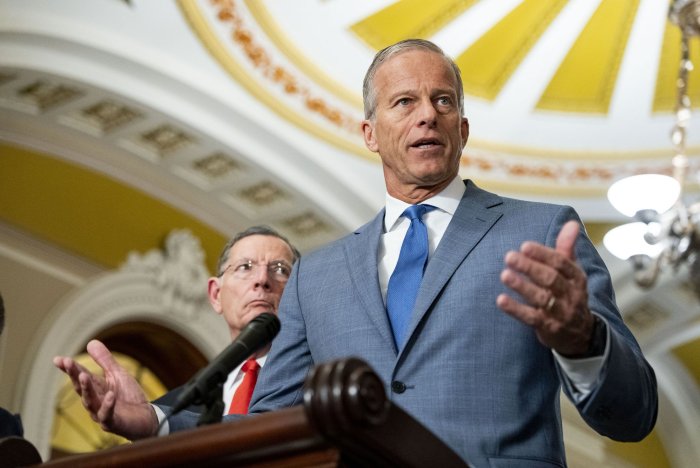
Senate Majority Leader John Thune, R-S.D., speaks during a press conference after the weekly Republican Senate caucus luncheon at the U.S. Capitol on Wednesday. Photo by Bonnie Cash/UPI | License Photo


Source link

Iran’s Foreign Ministry defends retaliatory strikes, slams US betrayal | News

Spokesman Esmaeil Baghaei says Iran’s attacks on US targets across the region are legitimate defensive actions.

Iran is entitled to defend itself from Israeli and US attacks, the spokesman for Iran’s Ministry of Foreign Affairs has stressed.

“We have every right in accordance with international law, with the UN Charter, to defend ourselves with all might”, Esmaeil Baghaei said in an interview with Al Jazeera on Saturday.

Recommended Stories

list of 3 itemsend of list

The US and Israel launched a wave of attacks across multiple Iranian cities, including Tehran, on Saturday, in what US President Donald Trump described as “major combat operations”.

At least 201 people have been killed, according to Iranian media, citing the Red Crescent.

Iran
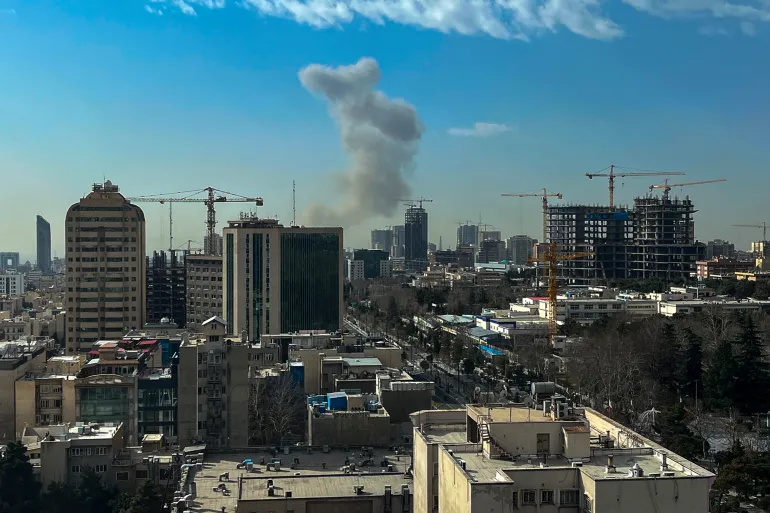
A plume of smoke rises following a reported explosion in Tehran on February 28, 2026 [AFP]

Iran responded by firing missiles towards Israel and US military targets in multiple countries, including Bahrain, Iraq, Jordan, Kuwait, Saudi Arabia, Qatar and the United Arab Emirates.

Baghaei said the country’s armed forces “are defending national sovereignty and the territorial integrity of Iran against these barbaric acts of aggression”.

The US-Israeli attacks came after a third round of indirect negotiations on Iran’s nuclear programme between the US and Iran ended on Friday.

“We were supposed to meet on Monday to talk about technical aspects of any possible deal on [the] nuclear issue,” Baghaei said. “And the Americans themselves acknowledged that these negotiations went quite well. The mediator, [the] foreign minister of Oman, qualified this round of negotiations as being of significant progress.”

It was the second time in less than a year that diplomacy had been scuttled by an attack on Iran, Baghaei noted. Iran and the US had engaged in several rounds of negotiations last year, when Israel launched a 12-day war on Iran in June, which the US briefly joined, despite Trump saying he was committed to a diplomatic resolution.

Baghaei said the US “launching an act of aggression against another member of the United Nations” also threatened the international body, as its main pillar, “the UN Charter, is the provision of the use of force.”

“So, I think what is at stake is not only the security and peace of the region and that of Iran, but also the whole fabric of international law. And the normative system that has been created by the United Nations Charter,” he added.

Friends in the region

Baghaei defended Iran’s retaliatory attacks in several countries across the region.

“Under international law, any place, any location, any logistical support that are given to the aggressor [is a] legitimate target for the victim state,” he said. “So, we are not attacking any country in the region. We are friendly with all countries of the region. What we are doing is just taking defensive actions.”

“We have proven that we trust our friends in the region,” Baghaei said. “That’s why we try to get together with the countries of the region in furtherance of this diplomatic process. The problem is that the United States is conducting this war of aggression at the cost of everyone, including the countries of the region.”

Source link

UN’s Guterres condemns US-Israeli strikes, retaliatory attacks by Iran | United Nations

NewsFeed

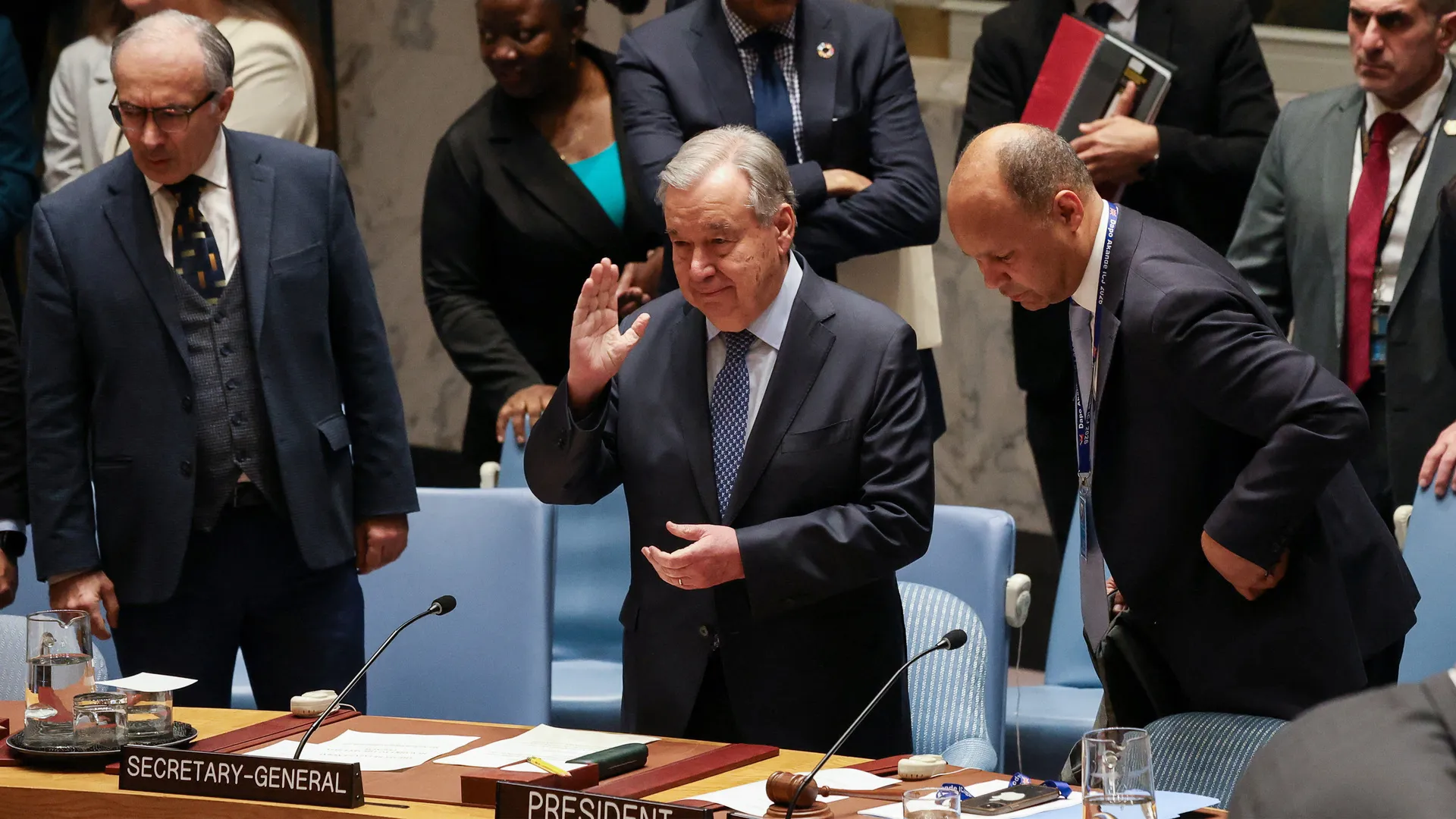
United Nations Secretary-General Antonio Guterres is calling for “genuine dialogue and negotiations” after the US and Israel launched massive military strikes across Iran, calling the attacks a grave threat to “international peace and security.”

Source link