restriction

Supreme Court temporarily extends access to a widely used abortion pill

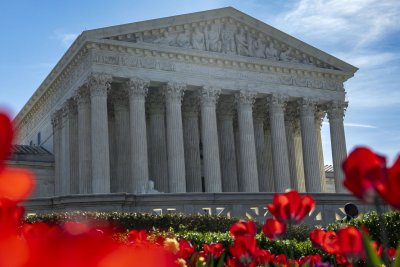
The Supreme Court is leaving access to a widely used abortion pill untouched until at least Thursday, while the justices consider whether to allow restrictions on the drug, mifepristone, to take effect.

Justice Samuel A. Alito Jr.’s order Monday allows women seeking abortions to continue obtaining the pill at pharmacies or through the mail, without an in-person visit to a doctor. It prevents restrictions on mifepristone imposed by a federal appeals court from taking effect for the time being.

The court is dealing with its latest abortion controversy four years after its conservative majority overturned Roe vs. Wade and allowed more than a dozen states to effectively ban abortion outright.

The case before the court stems from a lawsuit Louisiana filed to roll back the Food and Drug Administration’s rules on how mifepristone can be prescribed. The state claims the policy undermines the ban there, and it questions the safety of the drug, which was first approved in 2000 and has repeatedly been deemed safe and effective by FDA scientists.

Lower courts concluded that Louisiana is likely to prevail, and a three-judge panel of the U.S. 5th Circuit Court of Appeals ruled that mail access and telehealth visits should be suspended while the case plays out.

The drug is most often used for abortion in combination with another drug, misoprostol. Medication abortions accounted for nearly two-thirds of all abortions in the U.S. in 2023, the last year for which statistics are available.

The current dispute is similar to one that reached the court three years ago.

Lower courts then also sought to restrict access to mifepristone, in a case brought by physicians who oppose abortion. They filed suit in the months after the court overturned Roe.

The Supreme Court blocked the 5th Circuit ruling from taking effect over the dissenting votes of Alito and Justice Clarence Thomas. Then, in 2024, the high court unanimously dismissed the doctors’ suit, reasoning they did not have the legal right, or standing, to sue.

In the current dispute, mainstream medical groups, the pharmaceutical industry and Democratic members of Congress have weighed in cautioning the court against limiting access to the drug. Pharmaceutical companies said a ruling for abortion opponents would upend the drug approval process.

The FDA has eased a number of restrictions initially placed on the drug, including who can prescribe it, how it is dispensed and what kinds of safety complications must be reported.

Despite those determinations, abortion opponents have been challenging the safety of mifepristone for more than 25 years. They have filed a series of petitions and lawsuits against the agency, generally alleging that it violated federal law by overlooking safety issues with the pill.

President Trump’s administration has been unusually quiet at the Supreme Court. It declined to file a written brief recommending what the court should do, even though federal regulations are at issue.

The case puts Trump’s Republican administration in a difficult place. Trump has relied on the political support of antiabortion groups but has also seen ballot question and poll results that show Americans generally support abortion rights.

Both sides took the silence as an implicit endorsement of the appellate ruling. Alito is both the justice in charge of handling emergency appeals from Louisiana and the author of the 2022 decision that declared abortion is not a constitutional right and returned the issue to the states.

Sherman, Mulvihill and Perrone write for the Associated Press. Mulvihill reported from Haddonfield, N.J.

Source link

U.S. bars entry to 26 people as visa restriction policy expands

April 16 (UPI) — The Trump administration on Thursday announced visa restrictions on 26 people across the Western Hemisphere as the State Department unveiled a “significant expansion” of an existing policy to deny entry to those accused of working with U.S. adversaries to undermine Washington’s interests in the region.

Those blacklisted were not identified in the State Department release, which said they were being punished for destabilizing U.S. regional security efforts, undermining U.S. economic interests, conducting influence operations targeting the sovereignty and stability of nations in the region or enabling adversaries to acquire or control key assets and strategic resources in the hemisphere.

“President Trump’s National Security Strategy makes clear: this Administration will deny adversarial powers the ability to own or control vital assets or threaten the security and prosperity of the United States in our region,” a State Department spokesperson said.

“The Department of State is working to advance American leadership in our hemisphere, protect our homeland and ensure access to vital routes and areas throughout our region.”

The blacklisting was permitted as the State Department said it was announcing “a significant expansion” of an existing visa restriction policy, one first announced in early September, permitting the Trump administration to deny visas to Central American nationals accused of undermining the rule of law in the region on behalf of China.

The move comes as the Trump administration seeks to expand its influence in the Western Hemisphere. Under what some administration officials have called the “Donroe Doctrine,” Trump has sought to reassert U.S. dominance in the region in the Western Hemispher and push back on foreign influence, invoking a modern corollary to the Monroe Doctrine of the 1820s.

That initial policy specifically targeted those in Central America who collaborated with the Chinese Communist Party, while the expansion includes anyone in the Western Hemisphere who aids any of the United States’ adversaries.

China protested the earlier version of the policy in November. In a statement from its embassy in Washington, Beijing said the United States imposed visa restrictions on nationals from Panama and other Central American nations over their ties to China.

“Turning visas into political leverage runs against #UN Charter and the principles of sovereign equality and non-interference,” the embassy said. “Central America is no one’s backyard.”

Secretary of Defense Pete Hegseth speaks during a press briefing at the Pentagon on Wednesday. Yesterday, the United States and Iran agreed to a two-week ceasefire, with the U.S. suspending bombing in Iran for two weeks if the country reopens the Straight of Hormuz. Photo by Bonnie Cash/UPI | License Photo

Source link

Moroccan court jails rapper who has criticized ties with Israel

A Moroccan court sentenced a rapper known for his criticism of the country’s ties with Israel and accusations of government corruption to eight months in prison, the latest in a string of penalties against young musical artists.

Souhaib Qabli’s songs sharply criticize Morocco’s 2020 decision to normalize ties with Israel in an accord brokered by the first Trump administration. His lyrics also call out problems with public services and restrictions on freedom of speech, grievances also voiced by Morocco’s Gen Z protesters last year.

The judge ruled Thursday that Souhaib Qabli, a 23-year-old rapper, was guilty of insulting a constitutional body, his attorney Mohamed Taifi told the Associated Press. Qabli, who is a member of Al Adl Wal Ihsane, a banned but tolerated Islamist association, was also fined $106.

“The court did not clarify what it meant by a constitutional body. No specific party was identified in the case file, and there are many constitutional institutions,” Taifi said.

The attorney said that his client is appealing the verdict. He also said Qabli was cleared of other charges, including insulting public officials and disseminating false allegations.

Before the public hearing, dozens of supporters gathered outside the court in Taza, a city in north-central Morocco about 160 miles from the capital, Rabat, holding banners calling for Qabli’s release. Rights groups in the North African kingdom have described the case as a political measure aimed at curbing freedoms.

Qabli, known by the stage name L7assal, was arrested earlier this month and remained in custody until the court delivered its verdict. He was studying refrigeration and air conditioning at a vocational training institute in addition to his music career.

His attorney said that Qabli was questioned in court about his songs and social media posts. Qabli said he had no intent to insult any constitutional body and was expressing his views through his music.

His songs include “No to the Normalization,” referring to Morocco’s decision to normalize ties with Israel in the U.S.-brokered Abraham Accords in 2020, in exchange for Washington’s recognition of Morocco’s claim to the disputed Western Sahara territory.

The move was criticized by Morocco’s pro-Palestinian supporters and sparked large protests in several cities. While authorities allowed the rallies, they have arrested activists who criticized the decision.

Morocco’s constitution generally guarantees freedom of expression, and the country is seen as relatively moderate compared with others in the Middle East. Yet certain types of speech can trigger criminal charges, and Morocco has seen tightening restrictions on dissent, including against journalists and activists.

Source link

California considers restrictions on social media for kids

Meta, YouTube and Snapchat are already under scrutiny for risks they pose for young people. Now they are facing another hurdle in their home state.

California lawmakers are considering legislation to restrict social media use for teens and children under 16 years old. Assemblymember Josh Lowenthal (D-Long Beach) and others introduced a bipartisan bill that would bar social media platforms from allowing users under 16 years old from creating or maintaining accounts.

The legislation comes amid mounting concerns about how social networks impact the mental health of young people. Anxiety among parents and lawmakers has heightened as platforms and AI chatbots become more intertwined with people’s daily life.

Last month, tech executives, including Meta’s chief executive and co-founder Mark Zuckerberg, testified in a landmark trial in Los Angeles over a lawsuit that alleges social media is addictive and harms children.

The trial centers on whether tech companies such as Instagram, which is owned by Meta, and YouTube can be held liable for allegedly promoting a harmful product and addicting users to their platforms.

California has passed legislation before aimed at making social media platforms and chatbots safer but faced pushback from tech industry groups that have sued to stop new laws from taking effect. Tech companies are have responded by releasing more parental controls and restrictions for young users.

Other countries have been moving forward with restrictions on social media. Last year, Australia barred children under 16 years old from having social media accounts.

TechNet, whose members include Meta and Google, said in a statement that it hasn’t taken a position on the California bill but doesn’t believe a ban will effectively achieve the Legislature’s goal’s.

“We support balanced, evidence-based solutions that strengthen protections for young people, equip parents with meaningful tools, and ensure accountability across platforms. Our companies have made significant investments in teen safety and parental controls, and we remain committed to building on that progress,” said Robert Boykin, TechNet Executive Director for California and the Southwest in a statement.

The use of social media by young people has divided tech executives.

Pinterest Chief Executive Bill Ready wrote in an op-ed in TIME published on Friday that governments should follow Australia’s lead and ban social media for kids under 16 years old if tech companies don’t prioritize safety.

“Social media, as it’s configured today, is not safe for young people under 16,” he said.”Instead, it’s been designed to maximize view time, keeping kids glued to a screen with little regard for their well-being.”

Lowenthal’s bill cited social media’s dangers such as “exposure to harmful content, compulsive use patterns, exploitation, and adverse impacts on mental health and well-being.”

“Existing age-based restrictions that rely primarily on user self-attestation have proven ineffective and place an unreasonable burden on children and families rather than on the entities that design, operate, and profit from social media platforms,” the bill states.

A spokesman for Lowenthal didn’t immediately respond to a request for comment.

Source link