Dread is usually the first sensation Angelenos conjure when they hear “LAX.” It doesn’t have to be this way, L.A.
You might be preparing to check in toward a faraway destination, or doing what is often called the ultimate expression of love here: driving someone to or from one of the busiest airports in the world. Either way, if timed right, your journey can become a satisfying dip into the culinary scene surrounding our vice for the airborne, our awkward beauty, El Ay Ex.
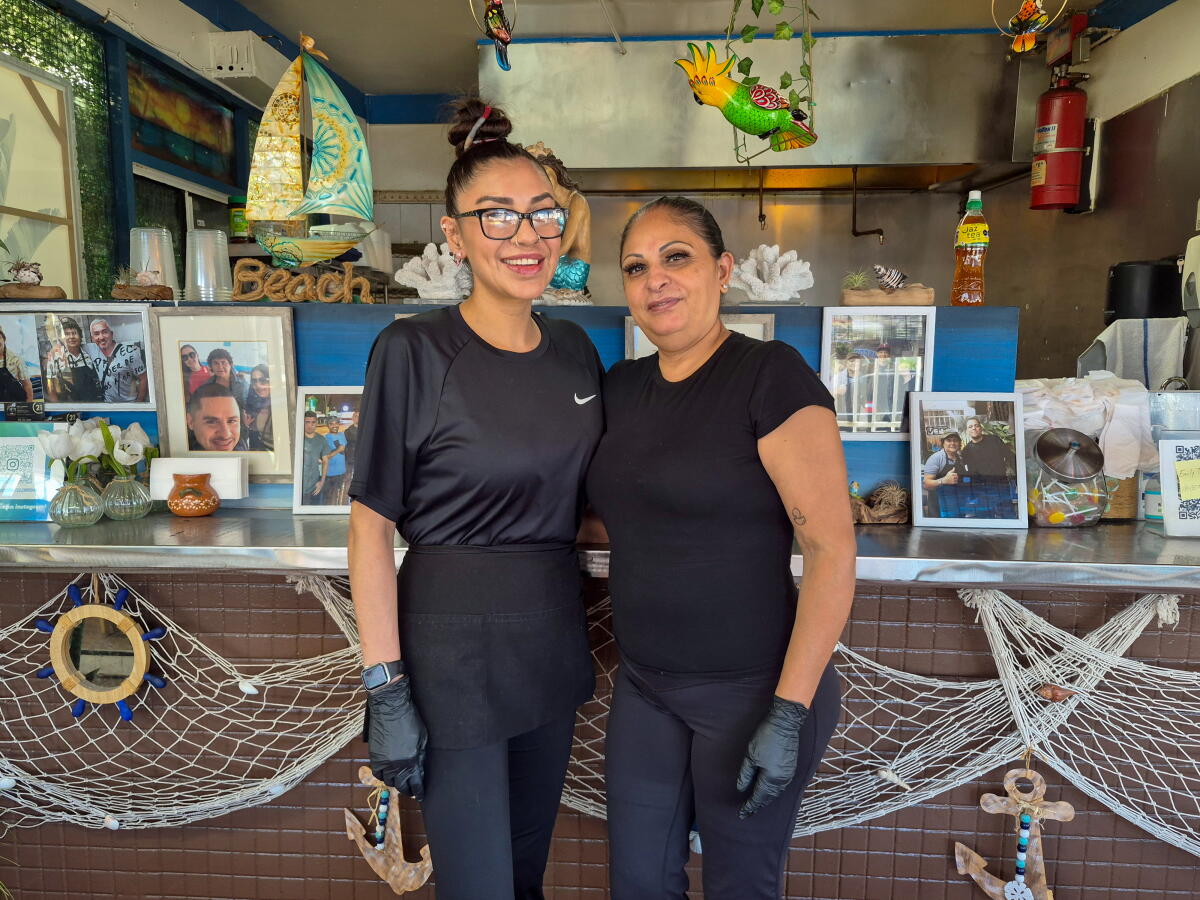
Mariscos El Chente staff members Denise Miranda and Maria Peñuelas.
(Daniel Hernandez / Los Angeles Times)
No, you don’t have to limit yourself to the touristy In-N-Out on Sepulveda Bouelvard. Skip Randy’s Donuts if you’ve done it before. For this guide, we’re zeroing in on local favorites in the quietly robust scene of dining and drinking within one mile of the airport’s perimeter. No hotel restaurants or lounges.
A tight proximity to the runways means you’re mostly surrounded by busy LAX workers and hardcore locals from the communities of Westchester, El Segundo, Lennox, Hawthorne and Inglewood. Sprinkle in people who’ve just landed from just about anywhere in the world, and the magic of the LAX cultural orbit comes alive. I’m no longer kidding or holding my secret: Because of the restaurants and bars, I actually love hanging out around the airport.
This makes me part of a low-key membrane of Angeleno who enjoys watching jetliners serenely glide their passengers through the sky, landing a kiss away from the gleaming Pacific, as we sip a nice lager or chomp into a mulita. I can trick my brain on any day into thinking I’m just about to take off myself.
Last year chef Debbie Lee debuted her long-awaited pocha in Highland Park: Yi Cha, one of L.A.’s best new bars, where Lee serves modern Korean bites that pair with artful cocktails and imported soju. Now she’s opened Mokja, a tandem cafe and market for Korean-leaning coffees, sandwiches, pastries and pantry goods. Enter Mokja through Yi Cha’s back alley and find sweet corn iced lattes, coffees topped with misugaru cold foam, and banana matcha lattes served alongside oxtail hand pies, Seoul-style breakfast plates, gochujang short rib onigiri, tomato-muchim pork belly BLTs, and a DIY ramyun station. In a hurry? Grab Lee’s premade bibimbap, mayak eggs, mandu, japchae and more from the refrigerators. If you’re shopping for your home, find coffee, mochi mixes, ice cream, hot sauce, black sesame spreads and other goods from local makers, plus imported Korean Oreos and chips, on the shelves around the cafe.
Named among the world’s five coolest neighbourhoods, it packs cafés, international food and welcoming pubs into a small pocket of a major city.
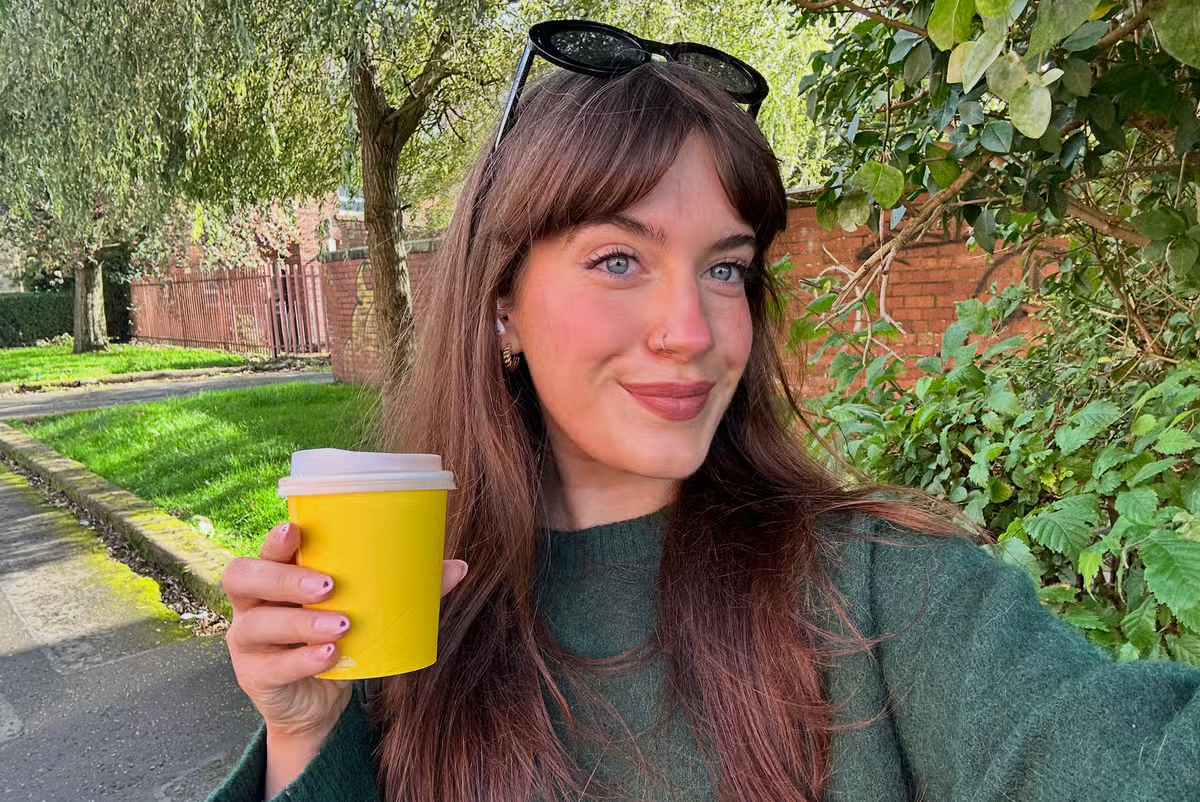
The neighbourhood is jam-packed full of coffee shops, pubs and restaurants(Image: Nicola Roy)
A £4.60 oat milk mocha might not be everyone’s idea of a bargain. But at Zennor in Govanhill, I’d argue it’s worth every penny – and the surrounding streets offer plenty of reasons to stay after the last sip.
The neighbourhood on Glasgow’s south side earned a place among the world’s five coolest neighbourhoods in Time Out’s annual list. Its appeal goes well beyond fashionable coffee shops, with a diverse mix of people, cultures and businesses shaping the area.
From Turkish börek to Pakistani street food, independent cafés to a pub named after a footballing legend, there’s plenty to explore. Some may say it’s all new coffee shops and no substance, but they couldn’t be more wrong.
A neighbourhood best explored on foot
Victoria Road is a natural starting point. Busy with dog walkers, friends catching up and people carrying takeaway coffees, it leads towards the green space of Queen’s Park.
Govanhill is one of Scotland’s most diverse neighbourhoods, reflected in its cafés, bakeries, takeaways and gift shops. You could easily spend hours browsing and stopping for something to eat.
Options include a flat white from a Transylvanian coffee shop or traditional Turkish börek from Pistachio. For me though, Zennor was the destination of choice.
On the corner of Langside Road and Dixon Avenue, Zennor’s second Glasgow location combines Scandi-inspired light wood and stainless steel décor with paper lanterns and the smell of freshly ground coffee.
Zennor’s seasonal specials are really where they excel, but I didn’t spot anything on there that caught my eye on this occasion, so I opted for a mocha. And you can’t pop in here without grabbing a sweet treat, such as their dark chocolate and sea salt cookie – utter bliss.
With oat milk, my coffee order totalled £4.60. It pains me to admit, but I don’t think that’s too steep these days, particularly when it’s this good. And it’s worth every penny in my opinion.
Where to head for a pint or a plate of pasta
Directly opposite Zennor is the Rose Reilly, my favourite pub in Govanhill. Named after the legendary footballer, it offers a welcoming atmosphere, a good choice of drinks and plenty of outdoor seating for sunny days.
For something more substantial, I recommend Pakistani Street Food for a samosa, Bar Vini for a generous serving of pasta and Errol’s Hot Pizza for the best pizza you’ll ever eat.
Together, these venues offer plenty of scope to turn a quick coffee visit into a longer afternoon or weekend exploring the neighbourhood.
More than a ‘coolest neighbourhood’ label
Govanhill’s fashionable reputation is only part of its story. The area faces challenges, and residents hold differing views about how it has changed, with gentrification a particularly contentious issue.
My view, however, is that its mix of people and cultures is what makes it such a lively and fascinating place to discover. The coffee may provide a reason to stop, but it is far from the only attraction.
There’s also libraries, craft spaces, workshops, community projects and events, and with great public transports links too, you’re never too far from other parts of the city. Other nearby neighbourhoods in Glasgow’s south side, like Pollokshields, Strathbungo and Mount Florida, are also full of fun things to do.
I RAISE my fork to my mouth and lock eyes with Stevie. My heart stops. He’s 6ft, super-muscly and has a cracking set of teeth.
He spends the next hour watching me eat by candlelight, and he’s there again at breakfast the next morning.
The Maldives is widely known as the world’s most romantic honeymoon hotspotCredit: SuppliedUnderwater restaurants allow visitors to enjoy the diverse ocean life without getting their feet wetCredit: Supplied
But far from being my husband or an admirer, Stevie is a blacktip reef shark simply enjoying his natural habitat at Oblu Xperience Ailafushi — a four-star resort on a tropical island in Male Atoll of the Maldives.
The country is known as the world’s most romantic honeymoon hotspot, but I was there to check out its wilder side,
Sign up for the Travel newsletter
Thank you!
Of course, this included dining at Only Blu, the largest underwater restaurant in Asia.
Sitting 22ft below sea level, it’s a way to enjoy the diverse ocean life, without getting your feet (or hair) wet.
It’s not included in Ailafushi’s all-inclusive “Fushi” plan, but it’s well worth splashing out on (prices start from £95 per person).
I was just inches away from blue powder surgeonfish, humbug damselfish and dozens of parrotfish as I tucked into my decadent five-course meal — though I did feel slightly guilty as I stuffed forkfuls of the “reef catch of the day” into my mouth. I hoped I wasn’t eating any of their brothers or sisters!
As several sharks swam by, including the one I nicknamed Stevie, “oohs” and “aahs” spread like a Mexican wave.
This kind of restaurant could be gimmicky. But the food — which included pistachio scallops, tuna poke bowls and decadent chocolate desserts — was genuinely delicious.
There were so many fish displaying vivid colours, it was like being inside a Windows screensaverCredit: SuppliedMy over-water villa was stunning — exactly what you picture when you think of a Maldivian suiteCredit: Supplied
Just a 20-minute complimentary speedboat ride from Male airport, Ailafushi is a more affordable choice than many Maldives resorts, with all-inclusive packages starting at £160 per person per night.
But for the comparatively bargain price (most four-star resorts average at £300), you don’t miss out on the luxury.
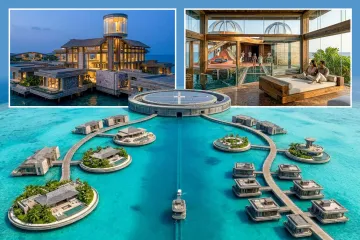
My over-water villa was stunning — exactly what you picture when you think of a Maldivian suite, with an outdoor shower, private sundeck and stairs that drop you straight into the pale blue Indian Ocean.
Each night, I drifted off to the soothing sound of the waves beneath my floorboards. And every morning, I threw off my pyjamas and jumped directly into them.
It was the same at Ailafushi’s more upmarket five-star sister hotel, Oblu Select at Sangeli, where there’s even a window in the floor for 24-hour ocean life viewing.
But if the idea of sleeping and showering above sharks and stingrays gives you the creeps, both resorts offer beach houses and family suites far enough from the shore to put your mind at ease.
You should get out on the water, though, if your fears allow. Especially as guests can pick up a snorkel and fins to use for free throughout their stay.
I’ve never seen such amazing sea life, with reef sharks, unicorn fish, eagle rays and turtles just feet away.
The tropical resorts have their own spas for guests to feel even more relaxed – including free treatmentsCredit: GettyGuests can book local island excursions, fishing trips and moonlight cruisesCredit: Getty
Like many reefs around the world, the coral is sadly bleached. But there were so many fish displaying vivid colours, it was like being inside a Windows screensaver.
If you’d rather stay above the waves, though, there’s still plenty to see and do on dry land and boat.
Guests can book local island excursions, fishing trips and moonlight cruises.
My favourite was the sunset dolphin cruise. They might be wild animals, but they certainly put on a show, leaping in the air and gliding along the side of the boat.
At one stage, there were so many gasps and pointed fingers, it felt like I was watching a fireworks display. Guests also have access to free pedalos, kayaks and stand-up paddle boards.
And both resorts also have their own spas, ELE|NA Ayur — perfect for while your partner, kids or hungover pals are napping.
At Sangeli, where guests get a free 45-minute treatment for every four nights they stay, a stress-buster massage melted away the tension I built up during the 14-hour journey to get there from London Heathrow via Dubai.
Equally dreamy was the full-body Balinese treatment at Ailafushi, where prices start at $50.
Ailafushi is a more affordable choice than many Maldives resorts, with all-inclusive packages starting at £160 per person per nightCredit: SuppliedAlice tried out a sunset line-fishing trip and reeled in a giant remoraCredit: Supplied
Life is equally indulgent at the more peaceful Sangeli.
Alongside couples’ massages and intimate dinners, there’s a phenomenal free kids’ club with puppet making, cupcake decorating, palm leaf crafts and scavenger hunts.
There’s also a slide that plops you directly into the sea — fun for all ages. I howled with laughter as I sped round the tight bends before crashing into the gentle waves at the bottom.
If you’re feeling energetic — or simply want to work up an appetite for your next meal at one of each resort’s four restaurants — try the over-water gym with one of the best views in the world.
You could also attempt a sunrise yoga class, if you haven’t had too many of the hotel’s unlimited cocktails the night before.
By this point, you’ve probably seen plenty of fish from your villa, perhaps snorkelled with several and spotted them during a boat trip. So why not try catching a couple on a sunset line-fishing trip?
Whether you’re a seasoned fisherman or, like me, have never picked up a rod in your life, it’s the perfect way to spend an early evening.
And you might surprise yourself. I went in thinking I’d have no luck at all, but ten minutes before our time was up, I felt a hard tug on my line and eventually reeled in a giant remora.
I squealed with delight (and perhaps a little fear) as it flapped about in front of my face. But I quickly threw him back into the shimmering water.
Despite being a Muslim country where alcohol is all but banned, booze is freely available at all tourist resorts.
They also take international holidays incredibly seriously.
I’m told Christmas is an extravagant affair with Santa Claus arriving on a flyboard or parasail before descending to the beach with gifts.
I was there for Halloween and they did not hold back — think eyeball cupcakes, a terrifying haunted house, and dark red cocktails served in blood bags.
Four waiters dressed as zombies even carried a “body” in a coffin through the restaurant at dinner.
Yes, it costs more to get there (return flights start at £785 with Emirates) than Ibiza and your hotel will be a little more expensive, but you’ll barely spend a thing once your feet hit the white sands. And truly, it’s worth it.
Forget the White Isle — make the Maldives your next trip.
GO:
GETTING/STAYING THERE: A seven-night all-inclusive getaway to OBLU Xperience Ailafushi is from £1,831pp based on two sharing an Ocean View Room and including flights from Gatwick on November 11. See destination2.co.uk.
A seven-night stay at OBLU Select Sangeli in a Beach Villa is from £2,915pp including flights from Gatwick on November 18. See kenwoodtravel.co.uk.
From the chequerboard restaurant chairs to the disco ball-glittered bar and leopard print-cushioned bedrooms, this 41-bedroom hotel has more than a hint of Alice’s Adventures in Wonderland about it. The 2026 winner of Visit England’s gold award for best small hotel, the Tempus recently opened eight wooden cabins overlooking the estate’s lake, and runs stargazing breaks in partnership with nearby Kielder Observatory. This month sees the launch of wellness experiences, combining gentle yoga and sound baths, while foraging workshops celebrate the estate’s wild bounty. Alnwick, Bamburgh and kipper-smoking Craster are close by. Doubles from £121 B&B, thetempus.co.uk
The Old Bridge Inn
Aviemore, the Cairngorms
Photograph: Rupert Shanks
You can walk, cycle, swim or kayak straight from the door of this pub and bunkhouse on the banks of the River Spey in outdoorsy Aviemore. This mellow gastropub serves smoked haddock chowder and Caribbean lamb curry pies along with Cairngorm Brewery’s ales – and you’re likely to catch some live folk music too. Fresh from a recent revamp, its seven vintage-inspired bedrooms are decorated in autumnal shades of gold, green, rust and teal. Ranging from simple dorms to en suite doubles and family rooms, they come with access to a shared kitchen and dining room for DIY dinners and breakfasts. Family rooms for up to fivefrom £80 room-only, oldbridgeinn.co.uk
The Black Horse
Amberley, Sussex
Photograph: Dave Watts
Food is the big draw at this new pub with rooms in the South Downs. Run by farm-to-fork restaurateurs the Gladwin brothers, the 12-bedroom inn is their first venture outside London, and their first with accommodation. One thing they are deeply familiar with is local producers – not least their own family. Beef comes from their farm, wines from their vineyard, Nutbourne, and some of the pub’s artwork has been painted by family matriarch Bridget. Stay over and you can wake to breakfasts of homemade brioche with just-laid eggs, farmhouse sausages or trout gravadlax. Stroll around the village, with its castle hotel and pottery, or hike over to Arundel then catch a train back to Amberley. Doubles from £125 B&B, blackhorse-pub.com
The Abergwaun
Fishguard, Pembrokeshire
Pembrokeshire is home to spectacular beaches, but if an autumn storm blows in, it’s great to have galleries, cafes, pubs and cinemas where you can take cover. That’s where Fishguard comes in. This small harbour town has quietly blossomed over the last couple of years. The latest opening is the Abergwaun, a bistro with rooms launched in July by the folk behind the nearby Red Onion cafe. Feast on locally line-caught seabass with kelp beurre blanc, then drift off to sleep in one of five smart, latte-coloured bedrooms. The next day, take in a pottery workshop at Tŷ Clai, hike along the Pembrokeshire coast path for a Sunday roast at the Sailor’s Safety, or catch a gig at Ffwrn. Doubles from £140 B&B, theabergwaun.co.uk
The Lister Arms
Malham, Yorkshire Dales
Photograph: Jo Ritchie/The Guardian
Malham is one of the Yorkshire Dales’ great hiking hubs, with Malham Tarn, the amphitheatrical cliffs of Malham Cove, and Janet’s Foss and Gordale Scar waterfalls within easy reach – and staying in the village became a little easier this summer with the opening of Lister Farmhouse. Its 13 bedrooms pair smart taupe, olive and blueberry fabrics with warm wood and leather. Part of the expanded Lister Arms, which includes rooms at the inn itself and at a nearby barn conversion, the new farmhouse bedrooms are two minutes’ walk away, beside sister pub the Buck Inn. For breakfast, stroll across a packhorse bridge to the pub. Doubles from £135 B&B, listerarms.co.uk
The Great Decoy
Hurstbourne Tarrant, Hampshire
Photograph: Dave Watts
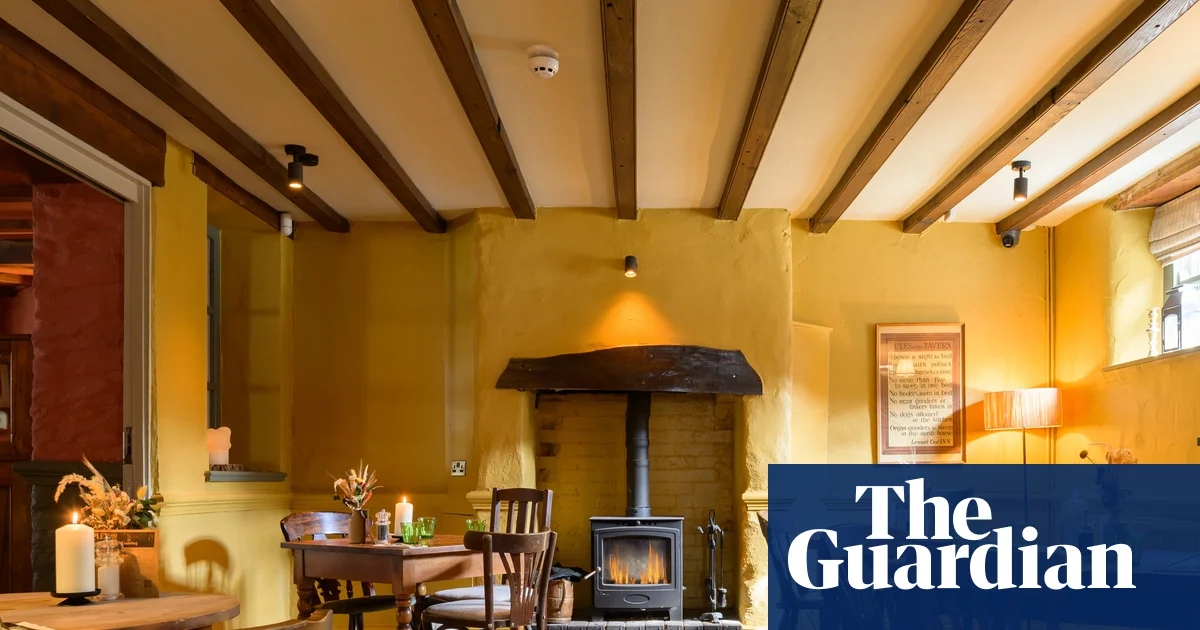
Formerly the George & Dragon, when this Test valley pub with rooms opened in June, its name was changed to the Great Decoy in a nod to the area’s second world war history, when the surrounding countryside was used as part of a network of decoy sites to draw enemy bombers away from strategic targets. These days, a tempting mix of pub bangers (venison steak frites, wood-fired pizzas), plump-pillowed bedrooms and affordable rates is luring a more peaceful crowd. The pub is a low-beamed, candlelit haven and its eight bedrooms mix antiques with bright modern art and jauntily striped, scalloped headboards. Doubles from £90 B&B, thegreatdecoy.co.uk
The Riverside Inn
Ross-on-Wye, Herefordshire
It was in Ross-on-Wye in the late 18th century that the artist and writer Rev William Gilpin set the blueprint for British tourism. Popularising the picturesque, he encouraged travellers to explore the local landscape for pleasure, helping to establish the idea of the British scenic escape (albeit infamously suggesting that “a mallet judiciously used” might improve the ruined charm of Tintern Abbey). More than two centuries later, five elegant new bedrooms have just opened at the Riverside Inn, giving modern-day visitors a suitably comfortable base from which to explore the area’s antiques and salvage shops, and stroll the leafy riverside pathways around Symonds Yat. Named after Charlie Mackesy characters, the rooms are decorated with finds from Baileys Home Store and other local businesses. Doubles from £180 B&B, riversideinn-wyestreet.com
The William Cecil
Stamford, Lincolnshire
On the edge of the Burghley estate, along one of Stamford’s cute-as-a-bonnet Georgian streets, this treasured hotel underwent a major renovation two years ago. Named after Lord William Cecil, chief advisor to Elizabeth I, the 18th-century building is home to 26 bedrooms decorated in Bridgerton-meets-Babington chic, all chalky pink and sage green stripes, ginghams, velvets and chintz. The latest addition is Wild Floral, a botanical-inspired room launched this summer in collaboration with Lincolnshire designer Sophie Allport. Head out to explore the copper-flecked parkland of Burghley House, then return for pheasant kiev and blackberry tart at Milly’s, the in-house bistro. Doubles from £155 B&B, thewilliamcecil.co.uk
Corsham House
Corsham, Wiltshire
Photograph: Dave Watts
It was no surprise that Corsham was chosen as a backdrop for the recent TV dramatisation of Jilly Cooper’s Rivals – the market town is a primetime destination. Wild peacocks roam its Georgian streets, a “secret” garden unwinds behind stately Corsham Court – home to one of Wiltshire’s finest private art collections – and independent shops and cafes rule. In the centre of it all is Corsham House, a new brasserie and bottle shop with rooms that opened in July. Once a bank, it’s now profiting from the town’s “Bath in miniature” credentials, serving its signature Corsham chips with chicken salt alongside fat rump cap steaks, and putting guests up in 11 small but daintily designed bedrooms painted in shades of rose, damson and beech. Doubles from £111 room-only, corshamhouse.com
The Copley Arms
Hessenford, Cornwall
Just off the A387, between Plymouth and Looe, this riverside pub with rooms is worth detouring off the beaten Cornish track for. Recently taken over by the couple behind Lydford’s award-winning Castle Inn, its 17th-century core has been elegantly refurbished. Fill up on fish tacos or the catch of the day, then head upstairs, or into the cottage just behind the inn, to slumber in one of eight earthily coloured, softly lit bedrooms (the cottage rooms are the quietest). The following morning, wake to a full Cornish before hiking a loop through the woods of the Seaton Valley or strolling a section of the South West coast path over to Looe. Doubles from £100 B&B (two nights for £160 from Sept-April), copleyarms.co.uk
The Swallow Falls Inn
Betws-y-Coed, Eryri (Snowdonia)
Photograph: Tinman Photography
Just across the road from its namesake waterfall, this former coaching inn reopened last year after a major overhaul, offering visitors a comfortable and affordable base for exploring Eryri national park. Its 38 bedrooms are painted in warm, muted shades and bookended by floral wallpapers, tongue-and-groove panelling and bright, metro-tiled bathrooms. Family rooms come with sturdy wooden bunk beds and, downstairs, you can order lasagne or sausage and mash in a space framed by fringed lampshades, floral curtains and mossy green paintwork. From the inn, you can follow a riverside trail into the village of Betws-y-Coed or soak up the autumn colours on one of the waymarked paths in the nearby Gwydir forest park. Doubles from £76 B&B, inncollectiongroup.com
The Crown
Bildeston, Suffolk
Photograph: Lucy Toms
Estate-to-plate dining is the cornerstone of this sunshine-hued Tudor inn between Bury St Edmunds and Ipswich. One of several Suffolk pubs and hotels owned by the Nedging Hall estate, who completed a sympathetic makeover this spring, it has 13 smartly understated new bedrooms. It’s fully plugged into the estate’s homegrown supply chain; the owners also operate a butchery, kitchen garden and East Anglia’s oldest brewery, Mauldons (for which they grow malt barley). Head out on a gentle three-mile loop walk to neighbouring Chelsworth, then take a seat by the dining room’s open fire to feast on treacle-cured pork ribeye with garlic croquettes, and deliciously wibbly Basque cheesecake. Doubles from £195 B&B, thebildestoncrown.com
The Customs House
Bowling, West Dunbartonshire
Photograph: Iain Masterton/Alamy
A hop, skip and jump (or 30-minute train ride) north-west of Glasgow, this stylish new hotel sits at the western end of the Forth and Clyde canal. Well-placed for towpath walks and cycles, it’s a grand reimagining of what was built in 1790 as the customs house for Bowling harbour. There are seven tweed-hued bedrooms in the main building, each with a view of the water and each named after a different cargo, and a floating lodge suite was added this summer, along with a sauna and cold plunge. When the restaurant opens in a neighbouring building next year, it will operate as a full-service hotel but, for now, staff are only on site during the day; evening arrivals are self check-in and continental breakfasts self-serve. Doubles from £120 B&B, thecustomshousebowling.co.uk
Le Strange Arms
Old Hunstanton, Norfolk
Photograph: Matt Keal Photography
Close to the RSPB reserve at Snettisham and the nature reserve at Holme Dunes, this stretch of north Norfolk coastline is a prime destination for spotting waders and waterfowl as they stop to rest on their way south, and is similarly restorative for humans. Follow a day of beach walks and sky-gazing with dinner at newly renovated gastropub the Ancient Mariner – menu highlights include Barsham’s beer-battered fish and chips, and cheeseboards ripe with local favourites Norfolk Dapple and Binham Blue – before walking across to sister hotel Le Strange Arms to sleep. Its more affordable standard rooms have yet to be updated, but recently renovated self-catering lodges and apartments put a modish mustard and navy spin on seaside chic. Doubles from £91 room-only, lestrangearms.co.uk
Wild Duck
Ewen, the Cotswolds
Photograph: Chris Terry
Open fires? A scene-stealing, carved wood bar? Plates of buttery chicken and chips? Double Diamond ale on tap? If you were Pinterest-boarding the fantasy Cotswolds pub after a yomp through the fields (or along the river – the Thames Path starts 10 minutes’ drive away), it would be something like the Wild Duck. Just south of Cirencester, this 16th-century gardeners’ cottage turned coaching inn has been stylishly overhauled by local hospitality luminaries Sam and Georgie Pearman. Reopened in March, it now has five bedrooms above the pub and 14 others in a new wing, each decorated with heritage wallpapers, Edward Bulmer paints, antique finds and custom-designed rugs. Doubles from £150 B&B, countrycreatures.com
Prices are for October-November and were correct at time of publication