Huw Edwards has said he will ‘challenge the misleading or fabricated’ claims surrounding him after he pleaded guilty to making indecent images of children
Daniel Bird Assistant Celebrity and Entertainment Editor
12:22, 02 Apr 2026Updated 12:33, 02 Apr 2026
Huw is plotting his next move(Image: PA)
Huw Edwards vows to “challenge” claims about himself. The disgraced BBC News anchor will “challenge the misleading or fabricated claims” made in recent coverage, and will “produce my own account”.
Edwards was one of the BBC’s highest-paid newsreaders, known for presenting the BBC’s News At Ten for decades, before pleading guilty to making indecent images of children in July 2024.
He was handed a six-month prison sentence, suspended for two years. Edwards was placed on the sex offenders’ register for seven years after his sentence.
The disgraced broadcaster was offered “naughty” images of somebody described as “ying [sic]”, to which he replied “go on”. Edwards was also the subject of a recent Channel 5 drama about his downfall, starring Doc Martin actor Martin Clunes.
He said in a statement: “Much has been written and reported in the past week following Channel 5’s one-sided account. Other opportunities will arise later this year for me to state my case and to challenge the misleading or fabricated claims made in recent coverage.
“A number of serious questions still remain to be answered, and not just by me. It will now take some time for me to produce my own account, and until then, I do not intend to comment any further.” It is understood that Edwards intends to make his own documentary or podcast series about the events.
Edwards previously claimed the production company behind the 5 drama, Wonderhood Studios, failed to check the “truth” of the narratives shown in the series, relating to allegations made by The Sun in July 2023, which claimed that a “top BBC star” paid a teenager more than £35,000 for sexual pictures.
Days later, Edwards’ wife named him as the presenter at the centre of the scandal. He resigned from the BBC in April and was charged in June 2024 following a Metropolitan Police investigation.
In a previous statement, he said: “[They] made no attempt to check with me the truth of any aspect of their narrative before going ahead with the production. They belatedly asked for a response after the drama had been made, while reserving the right to edit any such response. They also refused to disclose whether any of those making allegations had been paid for their contributions. Channel 5’s ‘factual drama’ is hardly likely to convey the reality of what happened.
“My deep regret and remorse for the crimes I committed were expressed in court. In pleading guilty at the earliest opportunity, I took full responsibility for my reprehensible actions. I am repelled by the idea that some people enjoy viewing indecent images of children. Every image represents an innocent victim. I offer my sincere and profound apologies for what I did.
“I am making an effort to produce my own account of these terrible events. This is a slow process, given the fragile state of my health. have been open about my struggle with persistent mental illness over a period of 25 years. What is less well known is the severity of that condition, which was managed successfully until the downward spiral which led to an appalling outcome.
“Mental illness is misunderstood by many, but can never be an excuse for criminality. It can, however, at least help explain why people sometimes behave in shocking and reprehensible ways, and why things fell apart for me in the way they did.”
A previous statement from Channel 5 said: “Power: The Downfall Of Huw Edwards is based on extensive interviews with the victim, his family, the journalists who revealed his story, text exchanges between the victim and Edwards, and court reporting.
“It has been produced in accordance with Ofcom’s Broadcasting Code. All allegations made in the film were put to Huw Edwards via his solicitors six weeks before transmission.”
People Power Party leader Jang Dong-hyuk, front row center, and other participants take part in a ceremony launching the party’s Central Next-Generation Women’s Committee at the National Assembly Museum in Seoul on Sunday. Photo by Asia Today
March 23 (Asia Today) — People Power Party leader Jang Dong-hyuk on Sunday criticized a parliamentary probe plan led by the ruling party, along with the government’s real estate policy and its response to the Iran crisis.
Speaking at a party leadership meeting at the National Assembly, Jang questioned the need for an investigation into alleged prosecutorial misconduct during the previous administration.
“If a fabricated indictment can be proven through a parliamentary probe, it would be much faster to obtain an acquittal in court,” he said. “The investigation will ultimately only confirm that the prosecution and trial were justified.”
Jang also invoked remarks previously made by President Lee Jae-myung, saying, “If a president commits a crime, he should go to prison,” adding that he was “returning those words as they are.”
The conservative party boycotted the National Assembly plenary session a day earlier and held a protest rally outside the chamber. A brief confrontation occurred with ruling party lawmakers after the probe plan passed.
Jang criticized the government’s real estate policy, accusing the president of centralizing decision-making while excluding public officials from the process.
“By that logic, the president, who is facing multiple trials, should step away from judicial policy,” he said.
He also warned against expanding fiscal spending in response to the Iran crisis, citing concerns over inflation, exchange rates and rising oil prices.
“With a triple shock of high exchange rates, inflation and oil prices, releasing an additional 25 trillion won, about $18.7 billion, would push prices and the currency higher,” he said. “This is not the time for cash handouts but for stabilizing the economy.”
Floor leader Song Eon-seok echoed the criticism, accusing the administration of attempting to consolidate power and warning against what he described as excessive control over parliamentary committees.
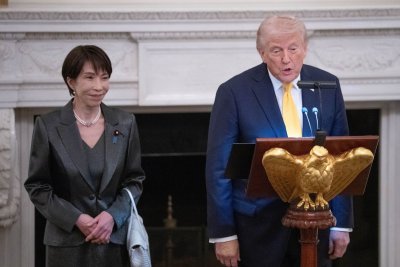
President Donald Trump (R) makes remarks as he stands with Prime Minster Sanae Takaichi of Japan during a dinner in the State Dining Room of the White House in Washington, DC, on Thursday, March 19, 2026. Earlier in the day, the President and Takeuchi exchanged views on Iran, energy, and issues in the Indo-Pacific region. Photo by Aaron Schwartz/UPI | License Photo
March 22 (Asia Today) — South Korea should maintain “strategic ambiguity” in responding to U.S. pressure over the Middle East crisis, experts said, as tensions surrounding Iran and the Strait of Hormuz intensify.
The call comes after Donald Trump urged allies including South Korea, Japan and European partners to play a greater role following U.S. and Israeli strikes on Iran, raising concerns in Seoul about balancing its alliance with Washington and broader diplomatic interests.
South Korean officials said they are taking a cautious approach and have not received formal requests from the United States regarding potential military deployment to the Strait of Hormuz.
The government is focusing on assessing the intent behind Trump’s remarks while weighing the risks of deeper involvement in the region.
The Strait of Hormuz, a critical global energy shipping route, has long been vulnerable to disruption. Analysts say any effort to secure maritime traffic would likely require multinational coordination rather than unilateral action.
Foreign ministers from the Group of Seven nations recently condemned Iran’s attacks on civilian infrastructure and said they are prepared to take steps to support global energy supplies, though the timing of any direct action remains unclear.
A Foreign Ministry official said stability in Middle Eastern shipping lanes is vital for South Korea and other major economies, noting that ensuring safe passage is a challenge that cannot be addressed by a single country.
Experts pointed to Japan’s approach under Sanae Takaichi as a potential model. Tokyo has prioritized its alliance with the United States while limiting direct military involvement, balancing energy security, international law and domestic public opinion.
Lee Ki-tae, a senior researcher at the Sejong Institute, said South Korea should similarly avoid automatic military intervention and instead preserve flexibility.
“Maintaining strategic ambiguity allows South Korea to uphold its alliance while avoiding immediate alignment with any one side,” he said.
Park Won-gon, a professor at Ewha Womans University, said logistical and political constraints also support a cautious stance. He noted that deploying naval forces would require parliamentary approval, a process that could take about two months.
He added that evolving and sometimes inconsistent messaging from Washington further underscores the need for careful deliberation.
Ryanair have shared their brutal opinion on passengers who miss their flights and then complain to the airline, and people have said their video was ‘accurate’
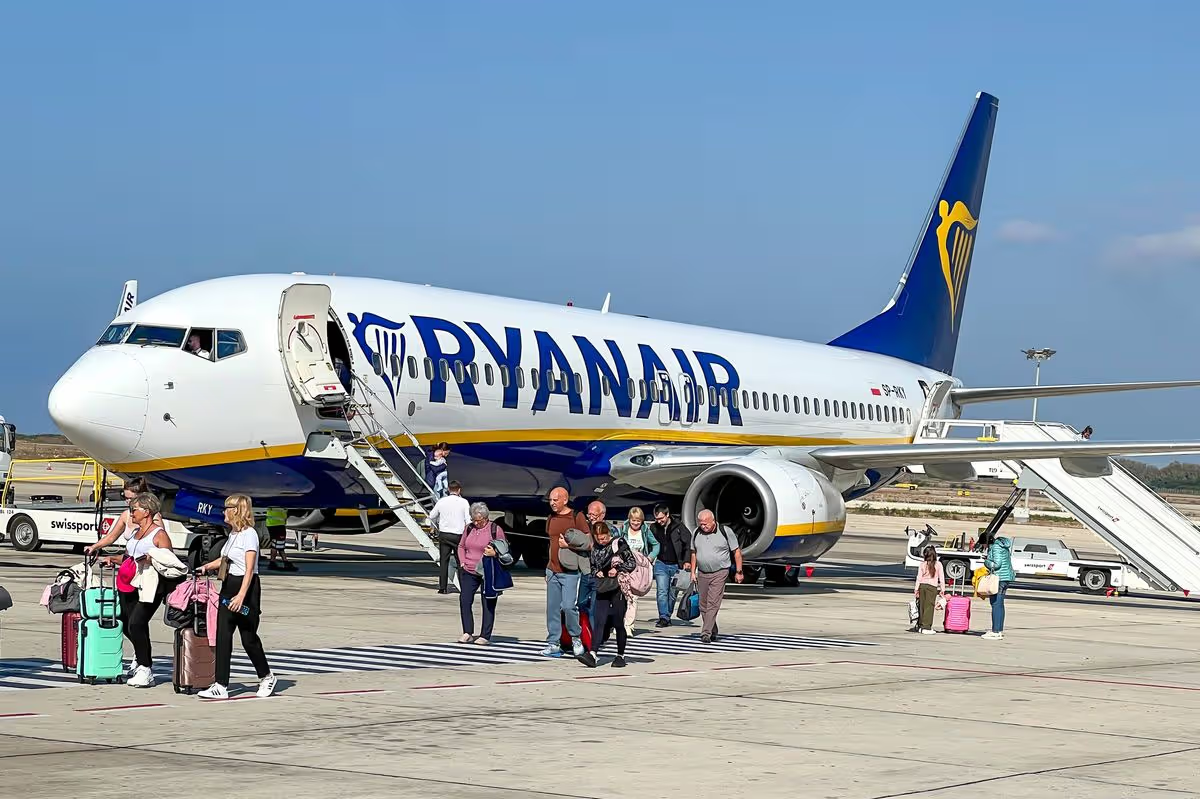
Ryanair shared a hilarious video online (stock photo)(Image: rparys via Getty Images)
Missing your flight can prove an enormously frustrating ordeal, particularly when the hold-up is completely beyond your control. Delays can occur due to security complications, last-minute boarding gate changes requiring you to trek across the entire airport, or even a late taxi journey to the terminal.
However, occasionally the blame lies squarely with the traveller themselves. It’s widely understood that arriving at the airport with ample time to spare is essential to accommodate these possible setbacks, and opting to turn up at the eleventh hour or lingering so long in duty-free that you miss boarding entirely isn’t the airline’s responsibility.
And in a cheeky video, Ryanair have been refreshingly blunt about their views on such passengers. The Irish budget carrier shared a clip on Facebook in which they mockingly demonstrated what travellers who miss their flights apparently expect the aircraft to do to accommodate them.
The footage depicted a man reaching the airport precisely as his plane departed from the tarmac. He yelled in desperation and dashed onto the runway, whereupon the aircraft looped back and employed some kind of science fiction film-style beam to teleport the man aboard whilst still airborne.
Ryanair captioned it: “What passengers that miss their flight expect us to do.”
Ryanair’s candid video had commenters in stitches, with many responding with laughing emojis. Some expressed bafflement at how frequently travellers lose track of time in airports, ignoring boarding announcements and then becoming irate when the plane departs without them.
One individual commented: “Accurate!”
Another chimed in: “I would work for free in this marketing team.”
A third shared: “I watched four people chatting for like two hours in front of me whilst their gate was open and they waited until everyone boarded the flight, and then went to the gate after it was closed and started shouting at the employees. The whole time they were sitting and chatting, 10 steps, literally, from the gate!”
What to do if you miss your flight
If you find yourself missing your flight, the first course of action should be to ring the airline you’re booked with as soon as you realise you’re going to be late. This could be due to traffic en-route to the airport, other travel disruptions, or lengthy queues at security once inside the airport.
According to Which?, this can boost your chances of being rebooked onto another flight at no extra cost, or if a fee is required, it may be less than the price of purchasing a new ticket. Some airlines offer a “rescue fare” or a “rescue fee” for missed flights, but the conditions for this will vary depending on the airline you’re flying with.
You may also incur a “no-show fee” from certain airlines if you fail to turn up to the airport at all, so if you’re running behind schedule, you should still attempt to reach the airport, even if you don’t manage to board the plane.
Certain travel insurance policies might also provide cover if you miss your flight, but this will be dependent on your policy, and numerous policies don’t offer protection if it’s down to lengthy queues at the airport.
The most effective way to reduce the risk of missing your flight is to allow ample time to journey to the airport and pass through security, taking into account any possible delays.
Weekly insights and analysis on the latest developments in military technology, strategy, and foreign policy.
British Armed Forces assets continue to flow into Cyprus, as the United Kingdom bolsters its military presence in the eastern Mediterranean in response to the war in the Middle East. While the British government has not taken part in direct military action against targets within Iran, the expanding conflict has also put Cyprus under direct threat. Meanwhile, the rush to bolster the U.K.’s military capabilities in the region has highlighted some glaring deficits in the British Armed Forces.
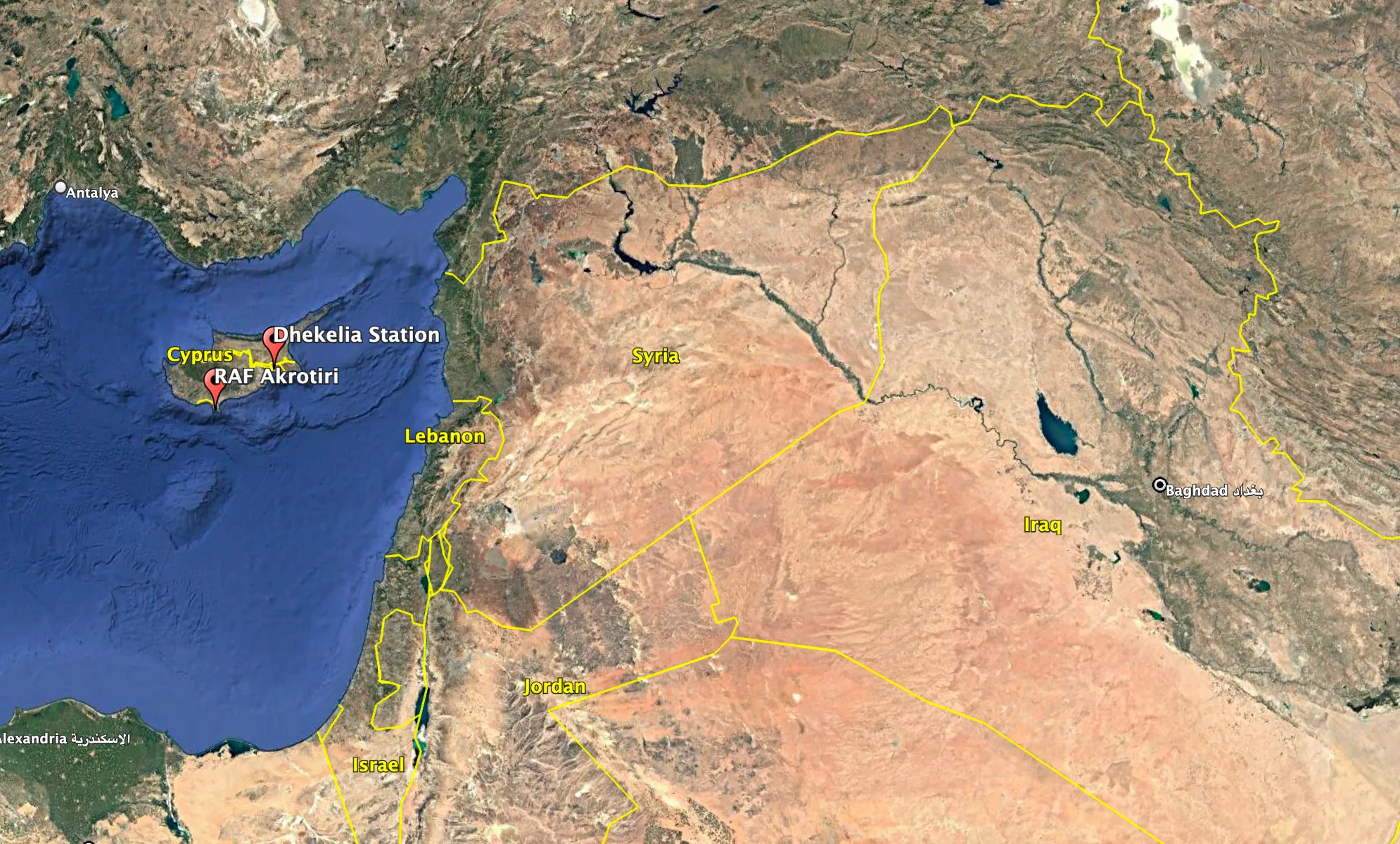
The British military response to the conflict in the Middle East has centered on the island of Cyprus in the eastern Mediterranean, which has long been home to a U.K. Armed Forces presence. As well as providing a ‘landing pad’ for British forces operating in the region, for example, during the counter-ISIS mission, Cyprus has long been used by the British for training and exercises. The so-called Sovereign Base Areas on Cyprus comprise the airbase of RAF Akrotiri and Dhekelia Station (a former airfield), which have been in British hands since the Republic of Cyprus was established in 1960.
British bases in Cyprus in relation to the wider eastern Mediterranean. Google EarthRAF Akrotiri. Google Earth
Fighter assets
Before the Iran war began, eight Royal Air Force Typhoon multirole fighters were already deployed to Akrotiri, where they were still operating on the U.K. counter-ISIS mission, Operation Shader. Other U.K. Armed Forces personnel were also in Iraq under Shader.
In the wider region, there was also an existing RAF Typhoon footprint in Qatar, where a squadron of the jets is operated jointly with the Qatar Emir Air Force. This unit was strengthened in January, when another four Typhoons deployed there from the United Kingdom, specifically for air defense.
Today, we can confirm we are sending four additional @RoyalAirForce Typhoon jets to Qatar, to support defensive operations in the region.
These aircraft are in addition to the existing jets from the UK-Qatar Joint Typhoon Squadron that we deployed in January to reinforce… pic.twitter.com/WZZDEj3Vfa
Typhoons from No. 12 Squadron, the joint U.K.-Qatar Typhoon squadron, conduct a flypast over Doha. Crown Copyright AS1 Tomas Barnard RAF
In February, six RAF F-35B Lightnings were sent to Akrotiri in Cyprus, joining the Typhoons already deployed there.
As Iran and its proxies have launched drones and missiles at countries across the region, the U.K. Armed Forces have been active in intercepting drones (and potentially also cruise missiles).
The real wakeup call came overnight on March 1, when a drone launched by Hezbollah in Lebanon hit Akrotiri. There were no reported casualties and only “minimal damage,” although this was, significantly, an impact that tore a hole in the hangar used by the U.S. Air Force U-2 Dragon Lady spy planes that are also regularly detached to Cyprus. Two more drones heading toward Cyprus were reportedly intercepted the same day.
Another two drones heading for Cyprus were intercepted on March 4, according to a Cypriot government spokesperson.
The U.K. Ministry of Defense has confirmed that the four Typhoons in Qatar, as well as the Cyprus-based F-35Bs, have since been active in bringing down hostile drones. The F-35B achieved its first air-to-air victories in British hands when one of the fighters shot down a pair of Iranian drones, announced on March 3.
The pilot involved in that historic engagement was a Royal Navy aviator embedded within the RAF’s joint-force No. 617 Squadron, the “Dambusters.”
The pilot fired two infrared-guided Advanced Short-Range Air-to-Air Missiles (ASRAAM) in the space of 20 minutes, each from a range of less than a mile, to destroy the Shahed-type drones over Jordan. They subsequently toldThe Telegraph:
“Your adrenaline is pumping pretty hard, you’re working down low at night above the desert in unfamiliar terrain. Emotionally, those things get pushed aside in the moment. It’s not until after landing that it begins to settle in.”
An F-35B jet conducts Quick Reaction Alert training, operating from RAF Akrotiri. Crown Copyright AS1 Amber Mayall RAF
Lt. Col. Mike Carty, commanding officer of No. 617 Squadron, added: “The tempo of flying here is greater than anything the Lightning Force has embarked upon before. The sheer amount of sorties and flying hours is quite high. People are being stretched and working incredibly hard, but nobody is under any particular strain. We are set up here to be able to sustain this.”
The continued threat posed by Iranian drones and cruise missiles has also seen the decision made to send another four Typhoons to Qatar. RAF Typhoons have also successfully shot down drones targeting Bahrain, Jordan, and Qatar.
Destroyer deployment
The United Kingdom has also elected to beef up its defensive capabilities in the eastern Mediterranean with the deployment of a Type 45 destroyer. This was the subject of considerable debate before it was finally announced that HMS Dragonwould sail for the region. The warship departed yesterday for a voyage that will take around 10 days.
HMS Dragon departs Portsmouth Harbour, U.K., to head to the eastern Mediterranean to bolster British defences in the region today, on March 10, 2026. Crown Copyright LPHOT Tim Lombard
However, the Type 45 is the United Kingdom’s most balanced and capable air defense platform, at least against drones and cruise missiles.
HMS Dragon has begun her journey to the eastern Mediterranean to join the UK’s defensive operations in the region.
Hundreds of well-wishers, including loved ones of the ship’s crew, lined the seawall as the ship sailed from Portsmouth.
The basic Type 45’s weapons fit includes Aster 30 missiles fired from the Sea Viper system, which represents the Royal Navy’s outer air defense layer. According to the Royal Navy, the Sea Viper is able to track “hundreds” of potential threats to an individual ship or task group at ranges up to 250 miles, using Aster 30 missiles to eliminate them when they close to “around 70 miles.” Other sources suggest the Mach-3 missile has a range of more than 75 miles.
HMS Dragon fires a Sea Viper missile against a supersonic sea-skimming target. Crown Copyright LPhot Oliver Leach
There is also the Aster 15 with a range of around 18 miles, optimizing it for close-in and local-area and point defense. For aerial threats even closer to the warship, the Type 45 can call upon a pair of Phalanx close-in weapon systems (CIWS) armed with 20mm ‘Gatling’ cannons, 30mm guns, and various machine guns.
When it comes to ballistic missile defense, the Type 45 is much more limited, however.
While HMS Diamond did shoot down one of the Houthis’ anti-ship ballistic missiles (ASBMs) in 2024, this is an easier threat to deal with than the medium-range ballistic missiles (MRBMs) that Iran is currently launching toward Israel.
“Smoke” (infrared) decoy employment aftermath seen from HMS Diamond’s bridge during the ballistic missile engagement. One of the decoy launchers can be seen beneath the 30mm gun sponson, loaded with the by now familiar mix including Chemring Large Payload Carriers. pic.twitter.com/1TgWrgrDzP
Also in 2024, the U.K. Ministry of Defense announced that it would invest around $515 million to upgrade Sea Viper, making it “even more lethal against new and growing threats from hostile drones and missiles.”
Under the upgrade, the Aster 30 missile will be modernized to improve its capabilities against ASBMs, with an enhanced warhead plus new guidance and seeker software. The upgrade will also address the Sampson multi-function radar as well as the command-and-control system and combat management system.
A second phase will see the evaluation of a new missile, the Aster 30 Block 1NT, currently under development by France, Italy, and the United Kingdom. This missile features a new seeker, which would further improve the ballistic missile defense capabilities of the Type 45. In particular, Block 1NT will be better equipped to intercept MRBMs carrying maneuverable reentry vehicles (MaRVs), which you can read more about here.
However, these upgrades are yet to be fielded.
More generally, there have long been questions about the availability of the Type 45s, despite their undoubted capabilities. These six vessels are still very modern, but they have spent a notably long time in maintenance. Typically, only two are actually available to deploy at any given time. With one of the warships normally earmarked for the North Atlantic and Russia, and another needed to escort one of the U.K. aircraft carriers when that is at sea, there is very little capacity left to play with.
This also brings us to the question of the two British aircraft carriers of the Queen Elizabeth class. With the war entering its second week, HMS Prince of Wales appeared poised to deploy, with the crew at five days’ notice to sail. Earlier this week, however, the Prime Minister’s official spokesman gave the following statement: “HMS Prince of Wales has always been on very high readiness. The MoD is increasing the preparedness of the carrier — reducing the time it would take to set sail for any deployment — but there is no decision taken to deploy her.”
HMS Prince of Wales and HMS Queen Elizabeth are pictured at sea for the first time together in 2021. Crown Copyright HMS Prince of Wales and HMS Queen Elizabeth pictured at sea for the first time. Wednesday 19 May 2021 saw a historic moment in Britain’s carrier renaissance as HMS Queen Elizabeth and HMS Prince of Wales met at sea for the first time. Petty Officer Photographer Jay Allen
Critics of the hugely costly aircraft carrier program might ask why these warships, which are designed to respond to just this kind of crisis, are being held back.
U.S. President Donald Trump also used the lack of carrier deployment as a stick with which to beat the U.K. government. On his Truth Social platform, Trump said that the United States did not need Britain’s carriers in the conflict and suggested they would have been useful had they deployed before the war began.
Short-range air defense
To help cover short-range air defense over Cyprus, the United Kingdom has deployed two Royal Navy Wildcat helicopters armed with Martlet missiles. On the plus side, each helicopter can carry up to 20 of these missiles, which are ideal for bringing down drones. On the other hand, the missiles have a range of only around five miles, and with just two ‘cabs’ available, the Wildcat deployment is really only capable of providing limited point defense.
A Royal Navy Wildcat HMA2 lifts off for a training flight after arrival at a British base in Cyprus on March 8, 2026. Crown Copyright AS1 Joshua Whiting
With that in mind, it’s somewhat surprising that the British Army hasn’t deployed any of its Sky Sabre short-range air defense systems to Cyprus, or anywhere else in the region. The Sky Sabre is intended to bring down aircraft, as well as drones and cruise missiles. However, it’s unclear how many batteries are currently deployable. One is stationed in the Falkland Islands, and another has been deployed on NATO’s eastern flank, in Poland, and the 12 batteries on order are still being delivered.
The Sky Sabre fires the Common Anti-Air Modular Missile, or CAMM, also known as the Land Ceptor. The same CAMM missile is also used in naval applications — including aboard Royal Navy warships — as the Sea Ceptor. Fitted with an active-radar seeker, the CAMM is derived from the aforementioned ASRAAM. The CAAM has a reported range of more than 15 miles and is said to be able to tackle a wide range of threats, including low-observable targets, high-speed missiles, drones, and precision-guided air-to-ground weapons.
The British Army Sky Sabre air defense system. Sky Sabre comprises three separate components: the Agile Multi-Beam Surveillance Targeting radar (Giraffe, pictured left), the Battle Management Command & Control Communications (not shown), and the Land Ceptor CAMM (Common Anti-Air Modular Missiles) missile launcher vehicle (right). Crown Copyright Corporal Adam J Wakefield
Meanwhile, the ability to surveil the airspace around Cyprus received an upgrade yesterday with the arrival of a Royal Navy Merlin HM2 Crowsnest helicopter, with airborne surveillance and control (ASaC) capabilities.
The Merlin brings a look-down sensor capability, making it something of a ‘pocket’ version of the E-7 Wedgetail. From altitude, the radar has an excellent field of view to spot low and slow-flying targets, even if they are relatively small. This makes it especially useful for tracking drones and cruise missiles.
A Royal Navy Merlin Crowsnest helicopter from RNAS Culdrose, seen here departing for the Middle East on March 7, 2026. Crown Copyright Royal Navy
Other British counter-drone units have also been active in the wider region.
Few details have been provided, but these are likely to consist of non-kinetic systems (like the ORCUS) and man-portable air defense systems (like the Starstreak missile) used by troops who have a limited presence in Jordan and Iraq, where they have been since before the Iran war began.
The Air Defence Troop of 29 Commando, armed with Starstreak, reacts to a simulated F-35 attack during Exercise Green Dagger 25, in California. Crown Copyright LPhot Stainer- Hutchins
Overall, though, the conflict has highlighted the somewhat limited nature of U.K. ground-based air defense capabilities.
More generally, the deployments so far, in a purely defensive capacity, have raised concerns about the breadth, depth, and readiness of U.K. military power and its relevance in international affairs.
The question of “going kinetic”
The United Kingdom initially denied permission for the U.S. military to use its airbases — including Diego Garcia in the Indian Ocean — for strikes against Iran, as we discussed at the time. This was soon revised, with Prime Minister Keir Starmer saying his government had agreed to a U.S. request to use British military bases for “defensive” strikes.
The Prime Minister of the United Kingdom, Keir Starmer, visits RAF Akrotiri in December 2024. Crown Copyright
Were the British stance to change, it is questionable whether RAF jets, as currently deployed, would be able to make a significant contribution, based on their small numbers, their other taskings, and the long distance to targets in Iran.
According to an assessment by the U.K.-based Royal United Services Institute (RUSI) think-tank, realistically, the fighter force at Akrotiri would only have been able to fly 28 strike sorties against Iran, had they been committed to Operation Epic Fury. This is very much a best-case scenario, and would also have required significant tanker support.
A British offensive campaign against Iran would otherwise rely primarily upon the Royal Navy, which operates nuclear-powered attack submarines that can launch Tomahawk Land Attack Missiles (TLAM). However, this is a capability that has suffered from poor availability in recent years. Currently, only one of five in-service Astute class submarines, HMS Anson, is at sea, and it was in the Indo-Pacific region as of January.
HMS Anson arrives in Australia earlier this year for a historic visit to strengthen the U.K.’s commitment to the security of the Indo-Pacific. Crown Copyright LAC Thomas Clarke-Kelly
So far, however, the U.K. government has held back from committing to any kind of direct offensive action against Iran, although there have been voices raised across the political spectrum urging that the United Kingdom should back the United States more actively, including taking part in strikes. Kemi Badenoch, leader of the opposition Conservative Party, berated Starmer this week for not doing more to “stop the people who are attacking us” and said the U.K. Armed Forces should “do more than catch the arrows” and should “catch the archer” — a reference to striking missile and drone facilities directly.
For the time being, the U.K. Armed Forces, ravaged by decades of post-Cold War cuts, are bringing some useful but fairly limited in capacity air defense capabilities to the region. Should the U.K. government’s policy regarding Iran become aligned with that of the United States, then much more serious questions will be answered about the relevance and resilience of British military power in an operation of this kind.
HomeNewsOil Underinvestment Could Hinder US’ Iran-Crisis Response: Here’s Why
No matter how the Iran war gets resolved, the US and other countries will be forced to reckon with a global oil market in complete disarray.
Underinvestment in the oil industry makes the current supply shock much riskier worldwide, industry experts say, forcing the US, the EU, and various Gulf countries into a scramble over where and how to extract.
Prior to the US’ attack on Iran on February 28, the situation had already been precarious. Iran basically controls the Strait of Hormuz, the world’s busiest oil shipping channel. Transportation through this channel is currently closed, despite President Donald Trump’s promise to keep it open. Regardless of how this situation resolves, the broader implications of structural underinvestment across the oil and gas value chain have exposed just how unstable the global energy infrastructure is.
“This is not your father’s energy sector anymore,” Adam Turnquist, Chief Technical Strategist for LPL Financial, says.
Essentially, there was a shift from “drill drill drill” to returning cash to shareholders through dividends and free cash flow, he explained. This change led to better stock performance and improved financial metrics, such as credit spreads and default swaps. But, Turnquist adds, “there’s evidence of under-investment.”
‘A Multi-Million-Barrel Disruption’
Recall the 2011‑2014 time frame when oil prices were above $100 per barrel. Major oil companies like ExxonMobil, Chevron Corp, BP plc, Shell plc and TotalEnergies SE enjoyed strong cash flows, allowing them to generate substantial profits and reward shareholders.
When oil prices collapsed between 2014 and 2016, institutional shareholders pushed hard for capital discipline instead of growth. Corporations, rather than drilling aggressively, returned troves of cash to investors via buybacks and dividends.
In 2023, alone, Exxon, Chevron, Shell, TotalEnergies, and BP returned a record $114 billion to shareholders — 76% higher than their average payouts.
“That translated into lower reinvestment rates, fewer long‑cycle megaproject sanctions, and a bias toward short‑cycle barrels, even as global demand continued to grow,” Benny Wong, Senior Energy Analyst at PitchBook, told Global Finance.
There was also an energy transition, and companies prioritized ESG (environmental, social, and governance) over long-term oil projects, leading major funds to reduce fossil fuel investments.
“The result is a thinner spare capacity buffer and a smaller pipeline of readily deployable projects, which limits the industry’s ability to backfill a sudden, multi‑million‑barrel disruption like the one arising from the Iran conflict,” Wong added.
Oil Prices Spike
So far, the shock is reverberating across the globe. Brent crude, the international benchmark, entered 2026 oversupplied, with forward prices in the $50s, according to Chas Johnston, CreditSights senior analyst.
On Monday, the price of Brent crude spiked to $119.50 per barrel—the highest it has been since the summer of 2022, when Russia invaded Ukraine.
“It’s nearly the same cadence,” Turnquist says, citing Bloomberg data. See the chart below.
West Texas Intermediate (WTI), the U.S. benchmark, also saw similar price spikes, briefly reaching $119.48 per barrel. By late Monday, prices fell back below $90 per barrel, following mixed signals from US leadership, including contradictory statements from Trump and Defense Secretary Pete Hegseth about the conflict’s timeline.
And it could get worse, according to Wood Mackenzie, a consultancy firm for the energy sector. On Tuesday, the firm determined that $200 per barrel “is not outside the realms of possibility in 2026.”
To quell the panic, extreme measures are under consideration. The 32 member countries of the International Energy Agency (IEA) agreed on Wednesday to make 400 million barrels of oil from their emergency reserves available to the market to address the current disruption. That’s double the amount the IEA put into the market in 2022.
Over the weekend, Energy Secretary Chris Wright said the US could potentially release oil from its 400 million barrels of reserve to lower gas prices.
Trump subsequently confirmed that he would ease sanctions on certain countries to help reduce oil prices. This followed a recent 30-day waiver announced by US Treasury Secretary Scott Bessent on sanctions for Russian oil sales to India, due to global supply pressures.
Can Any Country Fill The Gap?
Further complicating matters, oil-producing countries like Bahrain and Kuwait declared “force majeure,” stopping production as storage nears capacity and exports falter. With Iran, Israel, and the U.S. each targeting energy infrastructure and the narrow Strait of Hormuz under threat, it remains unclear which alternative transport routes or supply sources could fill the gap.
Saudi Arabia and the United Arab Emirates remain two key options because they hold most of OPEC’s effective spare capacity. However, analysts still question how much cushion truly exists and how long they can sustain it. Reports already suggest Saudi Arabia and the UAE have begun reducing output by several million barrels per day.
“In other words,” Wong says, “the buffer is meaningful but not unlimited, particularly if the disruption is prolonged or widens regionally.”
West African and Guyanese deepwater projects won’t quickly replace lost supply, either. However, they could strengthen global production over the medium to long term, Wong says. Guyana’s rapidly developing offshore sector, for example, could add more output in the coming years, though expansion will still take time.
Then there’s Namibia, which has had significant offshore discoveries in recent years. BP, Shell and TotalEnergies are among the companies that have set up shop there, but as Wong puts it: “Commercial production is still a few years away.”
US Shale Is Another Issue
As for the US, a rapid ramp now requires more than just a strong price signal.
“Producers are operating with much tighter capital discipline, and scaling quickly requires having available rigs, completion crews, frac sand and pipeline takeaway capacity, all of which can act as bottlenecks,” Wong says.
CreditSights’ Johnston agrees.
“The ability for US producers to respond is also quite limited, because it still takes six to nine months to bring new production online, even from the short-cycle shale industry,” he says.
Until then, the stakes remain high. Wood Mackenzie projects roughly 15 million barrels per day (mbpd) of Gulf oil exports could be lost if the Strait of Hormuz remains disrupted. They note that alternatives like US shale and uncompleted wells might only add a few hundred thousand barrels per day over months — not even close to filling the 15 million‑barrel gap.
The circumstances are enough to give analysts pause, given the cavalier attitude coming from the US.
Turnquist echoed a point his firm’s chief macro strategist made during a recent call: “You can’t shake the hornet’s nest and then put it back away.” Once geopolitical issues ignite, they rarely resolve quickly, he said, pointing to wars in Iraq, Afghanistan and Russia-Ukraine as examples.
“There’s really no concrete signs that it’s going to end anytime soon,” he added.








![Pictured: 9th February 2026 – 617 Sqn F-35B Lightning jets conduct QRA (Quick Reaction Alert) training, operating from RAF Akrotiri. F-35B Lightning, a 5th Generation, multi-role, stealth fighter, is usually based at RAF Marham. The Station is also home to a range of engineering support functions, from maintenance to frontline support. [Names have been blurred from jets and surcoats to protect PERSEC]](https://i0.wp.com/www.twz.com/wp-content/uploads/2026/03/LTNG-20260209-0110-0003-0050.jpg?resize=640%2C960&ssl=1)


