AH, Ibiza. Those heady days of raving until dawn, no kids, and a lot of cocktails.
Take. Me. Back.
Sign up for the Travel newsletter
Thank you!
Veronica took her family to Ibiza for a family holiday to rememberCredit: SuppliedVeronica with husband David and daughters Martha and LylaCredit: Supplied
Well actually, two kids, slightly less dancing and a few less Espresso Martinis later, Tui might just have done it.
We’d tried once before, when our daughters were three and six, with less success, but with Lyla and Martha now 10 and 12, could we have finally hit the sweet spot?
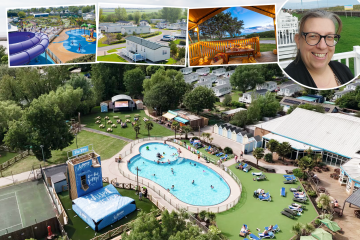
Tui’s Holiday Village Seaview Ibiza is designed for kids, there’s no doubt about it.
With the busiest entertainment, sports and club programme I’ve ever come across, there’s literally about one hour in the day (after breakfast, before 10am) that they’re not catered for.
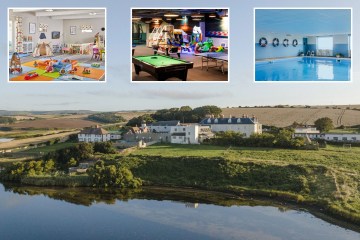
Along with an onsite water park, three pools, snooker tables, an aerial walk, table tennis, arcades, paddle boarding and kayaking, there are also kids’ clubs, and stage, swimming and football academies.
There’s plenty of daytime fun and free games around the resort, too.
And all that is before an entire evening of child-friendly entertainment that begins as the pools close at 6pm.
In fact, it’s so busy, there’s a whole app devoted to the hotel, where you can book slots in advance for anything and everything your children could want to do on holiday.
As you squinted in the sunshine from your sunlounger (which, happily, the resort doesn’t let you reserve with your towel until after 8am) it was almost like watching a group of excitable Oompa Loompas rushing around Willy Wonka’s factory.
But instead of chocolate, they were squealing about the variety of fun they could have.
Although, it’s worth pointing out that as part of the all-inclusive, you can help yourself to free ice creams and afternoon cakes — so it pretty much is like Wonka’s factory.
Children zoomed around the resort, which is like a mini city — and because it felt so safe, my girls could dash between pools and the snack bar unaccompanied, while my husband David and I watched from the loungers.
We had to accompany the girls to the waterpark until we decided that as they were such good swimmers, and there were almost as many lifeguards as kids, we didn’t need to.
‘But what about the adults?’ I selfishly asked myself as we arrived, and I saw what the girls had in store.
Well, that’s exactly where Tui has played its trump card.
Favourite nights ever
Research conducted last year found that 60 per cent of parents miss their child-free clubbing days (like me) and regularly relive them with family kitchen discos (yes I do).
Inspired by this, Holiday Villages called on the youngest ever DJ duo — the brilliantly named Half Punk — to grace the island and give families enjoying their first summer holiday weekend a night to remember.
DJ duo Half Punk put on a storming sessionCredit: Joe Pepler/PinPep
When I heard that the pair were 12 and 10, I wondered if they were actually going to DJ or just play at it.
But lo and behold. To mark 25 years since their namesakes Daft Punk released One More Time, the two properly mixed.
I’m not sure the hordes of children standing staring at the front fully embraced the old-school house music blaring out by the two helmeted youngsters — but the parents certainly did.
Eyes shut in ecstasy and arms were held aloft as confetti cannons blasted, glow sticks shimmered and the bass speakers reverberated around the resort.
You could instantly spot the old ravers who had allowed themselves to be taken back to those carefree days of thumping tunes and dancing like no one was watching.
And then after, a silent disco got all the youngsters involved again — wide-eyed at the adults belting out chart-toppers and throwing shapes like loons.
I’m not sure there’s anything better than properly dancing with your children on a dancefloor — and as we finally sank into our beds, we all decided it had been one of our favourite nights abroad ever.
And don’t think the fun stopped there. We also managed to get up the energy for a Neon Nights disco and an Ibiza Sunset dance while we were there.
The resort is right next to the beautiful sandy Port Des Torrent beach — with pedalos for hire and tavernas to relax in while watching the fabulous Ibiza sunsets.
We were lucky enough to get invited on a Meet The Sea boat trip, which aims to educate kids about the oceans.
The hotel’s amazing water parkCredit: Supplied
Having sailed out to just off an uninhabited island, you snorkel with a marine specialist, who teaches you why the sea is nothing to be scared of.
He’ll even pick up sea anemones and cucumbers from the sea bed and let you hold them, while back on board the chef cooks paella. It’s a truly magical experience.
Plus, you’re just across the bay from San Antonio, so if you do feel the urge for nightclubs, you’re literally a bus ride away.
The hotel’s buffet restaurant was also perfect for the pickiest of eaters, with every kind of food a child could possibly ask for, and theme nights as well, so it didn’t get too samey.
You also get two free meals per week at the speciality restaurants, with Italian, American and grill options.
And as for the reps, I’m not sure I’ve ever seen anyone more smiley and enthusiastic, even as they did the dance routine to Bruno Mars’ APT for the 19th time that day.
Like Butlins on steroids, I knew Tui had hit its mark when our eldest daughter, without any word of a lie, turned to me and said: “This is better than the Maldives.”
Also on the site is an aerial walkCredit: Supplied
GO: FAMILY RAVING, IBIZA
GETTING / STAYING THERE: Seven nights’ all-inclusive at the 4H Holiday Village Seaview Ibiza is from £1,226pp, based on two adults and two children sharing, including flights from Gatwick on May 23, or from £1,184 on August 25, including transfers and 25kg luggage.
For further information and to book, visit tui.co.uk.
After an enormous storm dumped 3 feet of snow on Mammoth Mountain, rookie ski patroller Claire Murphy and a partner scrambled to help make the resort safe for guests ahead of a very busy — and very lucrative — Presidents Day weekend.
In howling wind and blowing snow, the patrollers labored to clear enormous piles of fresh, unstable powder from a steep, experts-only run, one of a group appropriately named the “Avalanche Chutes.”
Ski patrollers use hand-held explosives, and their own skis, to deliberately trigger small slides in the chutes before the resort opens, to prevent an avalanche from crashing down later in the day on thousands of paying customers gliding happily — and obliviously — along the much gentler slopes below.
Mammoth Mountain ski patrol members Claire Murphy, left, and Cole Murphy (no relation) both died while doing avalanche mitigation on the mountain.
(Courtesy of Lisa Apa; Tracy Murphy)
But something went horribly wrong that day. Instead of remaining safely above the sliding snow, Murphy and her partner got caught in it. He was buried up to his neck but survived. She was trapped beneath the collapsing wall of white and got crushed to death against a towering fir tree. She was 25 years old.
The avalanche that killed the young patroller on Feb. 14, 2025, stunned Mammoth’s tight-knit ski community. Her friends and colleagues were consumed with grief, but most regarded it as a freak accident, something that hadn’t happened before and was unlikely to be repeated.
But then, less than a year later, it happened again.
Share via
In late December — after a “Christmas miracle” storm dumped more than 5 feet of snow on the previously parched resort — 30-year-old ski patroller Cole Murphy (no relation to Claire) and his partner were hurrying to clear the same chutes before the busiest week of the year.
They, too, were caught in a deliberately triggered slide. Cole’s partner suffered a serious leg injury, but he survived.
Signs on top of Lincoln Mountain at Mammoth advise skiers that the runs are for experts only.
Cole was swept away and carried hundreds of feet down the mountain, where he suffocated beneath more than a meter of avalanche debris, according to two sources. Both were involved in the effort to save Cole, but asked not to be identified because they are not authorized to speak to the media.
With the sudden deaths of two young patrollers in such a short span, and in such distressingly similar circumstances — Claire and Cole came to rest within a few hundred yards of each other — questions began to swirl.
Were the resort’s managers pushing too hard to open the mountain after major storms? Had training standards slipped, pushing relatively inexperienced ski patrollers into dangerous situations? Are young ski patrollers afraid to speak up, even when they think they’ve been asked to take unreasonable risks?
Lisa Apa, Claire Murphy’s mother, said she begged mountain officials to take a hard look at their training and safety procedures after her daughter’s death — to figure out what went wrong and make sure it never happened again.
They blew her off, she said.
A small memorial remains at a tree, where an avalanche claimed the life of ski patrol member Claire Murphy.
When she heard about the second death, Apa said she immediately fired off a text to a senior ski patrol manager at Mammoth: “You killed another ski patroller … you’ve learned nothing!”
She told a Times reporter last week, “Claire would be f—ing furious if she knew this happened a second time.”
Mammoth Mountain officials have remained measured in their public response.
In a statement emailed to The Times, Mammoth Mountain President and Chief Operating Officer Eric Clark wrote that, after Claire Murphy’s death, the ski patrol had been empowered to “pursue a slower, phased opening of the mountain on storm days.”
After Cole Murphy’s death 10 months later, Clark wrote that resort managers “immediately instituted” measures to “de-pressurize storm mornings,” giving ski patrol more time to work and more latitude to keep chair lifts closed until the mountain is deemed safe.
In a follow-up interview, Clark insisted the pressure on Mammoth’s managers to open quickly after big storms comes from customers desperate to ski fresh powder, not from corporate executives chasing profits.
Chair 22 takes skiers to the top of Lincoln Mountain at Mammoth, where two ski patrollers have been killed by avalanches in the last year.
“Maybe 10 years ago that was different,” Clark said. But after the most recent accident, the message from the resort’s owners — Alterra Mountain Co., a privately held, multibillion-dollar conglomerate that owns 19 resorts across the U.S. and Canada — was to use caution.
“Make sure you’re taking your time,” Clark said they told him.
Apa, who sobbed talking about her daughter, gasped when she heard that.
Of course senior executives offer reassuring words after a tragedy, she said. But as a former business journalist, who once anchored a show called “Street Smart” on Bloomberg TV, Apa said she spent her career around top corporate officers. Anyone who believes profit motive doesn’t drive such decisions is naive, she said.
“Maybe you’re not getting a phone call, or an email, from the CEO saying, ‘get this mountain open today!’” she said. But any manager who develops a reputation as someone who’s afraid to open after a storm, on the busiest day of the year, “won’t be around very long,” she said.
No doubt, many skiers are desperate to hit the slopes after a storm brings fresh powder.
The sensation of floating down the hill with almost no resistance is dreamlike and addictive. No other conditions compare.
That’s why social media is full of influencers bragging about their epic “pow days,” and why hordes of paying customers start champing at the bit when the mountain is covered in a fresh blanket of white, but the ski patrol won’t let them at it.
A former Mammoth ski patroller recalled years of riding lifts with eager customers complaining that the steepest runs with the deepest powder were still closed for avalanche control.
Mammoth Mountain‘s summit is more than 11,000 feet high and averages nearly 400 inches of annual snowfall.
“I’d point to all of the mountains around Mammoth,” he said. There are dozens of beautiful, towering summits in the surrounding eastern Sierra with absolutely no rules and nobody to stop an adventurous soul from climbing up and skiing down.
But there are no chairlifts, so getting up those mountains is a physically exhausting test of will. And there’s no avalanche control, so you’re on your own when it comes to determining which slopes are safe, which are death traps.
“If you’re such an expert, why aren’t you over there,” the ski patroller said he’d ask, usually ending the conversation.
Within the boundaries of commercial ski resorts, avalanche control takes many forms.
At Mammoth, the steepest slopes near the 11,000-foot-high summit are controlled with a howitzer — an actual cannon. When the resort is closed, crews fire explosive shells across a valley up into the highest, heaviest and most threatening piles of fresh snow. Their aim has to be excellent, since stray shrapnel can do serious damage to ski lifts. But it’s a remarkably efficient way to get enormous quantities of snow sliding down the mountain without putting anyone at risk.
The ski patrol office at the top of Lincoln Mountain.
Another option is called a “Boom Whoosh,” which looks like an industrial chimney and is installed just above spots where dangerous piles of snow frequently accumulate. It works by remote control, igniting a mixture of hydrogen and oxygen — like lighting a gigantic camping stove — to create a shock wave that triggers an avalanche. Mammoth has one at the moment, near the summit above a run called Climax, and officials are hoping to install more.
Then there’s the old-fashioned technique: sending ski patrollers into the steepest, most technical terrain with backpacks full of explosives.
That’s what happens in the Avalanche Chutes — known locally as “the avis” — a handful of natural rock and snow slide paths carved by thousands of years of erosion into the side of a 10,000-foot sub-peak called Lincoln Mountain. Patrollers start early in the morning after a storm and ride a snowcat — like a school bus on tank treads — to a plateau just above the chutes.
Big red signs with black diamonds are everywhere on Lincoln Mountain, indicating its trails are for experts only. The chutes are the steepest trails of all, marked on maps with two black diamonds, the highest rating possible. Casual skiers go weak in the knees at the thought of making a wrong turn onto a vertigo-inducing “double-black.”
After hopping out of the snowcat, patrollers divide into pairs and work their way toward the chutes. Sometimes the wind is so strong it scours nearby boulders free of snow, so they have to take off their skis and climb over the bare rocks in their awkward, plastic boots to get to the edge.
Once in place, one of the patrollers tosses a hand-held explosive — it looks like a cartoon stick of dynamite — down the hill. The patrollers cover their ears, wait for the boom, and hope the explosion has loosened the big stuff and sent it sliding.
Then they ski down in carefully choreographed zigzags, sometimes hopping up as they go, to dislodge any remaining loose slabs beneath their feet.
A view of the Avalanche Chutes at Mammoth, where two ski patrollers have died in the last year.
The key to “ski cutting,” as it’s called, is to make sure your partner is anchored in a secure spot, usually off to the edge of the chute and out of the way of a potential slide, before you start moving.
In normal conditions, it’s just another day at the office. But after a massive “atmospheric river” storm, the risks increase.
This season’s Christmas storm was a monster, and it arrived with the biggest crowds of the year.
To keep the customers happy, Mammoth executives opened the lower part of the mountain on Christmas Day, the portion least exposed to avalanche risk. But there was so much fresh snow, patrollers spent the day digging out people who had simply gotten stuck in huge drifts, even on the relatively flat terrain.
And then, in the early afternoon, Raymond Albert, a 71-year-old regular known to fellow skiers as “every day Ray,” was spotted in a pocket of deep, fresh snow beside a well-traveled run near the bottom of Lincoln Mountain.
He had somehow popped out of his skis, which were behind him, and pitched forward, ending up with his head in the snow and his feet in the air, according to a written report of the incident provided to his family.
Looking down one of the Avalanche Chutes at Mammoth Mountain.
It’s unclear how long he was in that position before bystanders dug him out. When ski patrollers arrived he had no pulse. With so much fresh snow on the ground, the patrollers struggled to find a firm enough surface to lay him on his back and perform CPR. They finally used a bystander’s legs as a makeshift platform, according to the report, but could not revive him.
In a normal week, Albert’s death would have been big news, but it received almost no public attention because early the next morning, Cole Murphy and his colleagues headed up Lincoln Mountain to clear the chutes.
It’s still not publicly known what caused the slide that buried Murphy and his partner, but according to two people involved in the effort to save Murphy’s life, witnesses said that an avalanche triggered by an explosive in a neighboring chute might have “propagated” horizontally to where Murphy and his partner were working — taking them by surprise.
Resort officials declined to answer detailed questions about either Claire or Cole Murphy’s deaths, saying their lawyers advised them not to offer specifics during ongoing investigations by the California Division of Occupational Safety and Health.
As soon as Cole Murphy disappeared in that wall of white, the clock started ticking. More than 90% of avalanche victims survive if they can be freed within 15 minutes, according to the Utah Avalanche Center, but the odds drop “catastrophically” after that.
It took Cole’s desperate colleagues 18 minutes to locate him and dig him out, sources said. When they finally pulled him free, his skin was blue and he wasn’t breathing, the sources said.
He was airlifted to a hospital in Reno and pronounced dead days later.
Tracy Murphy, Cole’s mother, said her son loved Mammoth Lakes and the tight bonds he forged on that “little island” of outdoor enthusiasts, surrounded on all sides by hundreds of miles of mountains and desert.
After Claire’s accident, Tracy Murphy said her son was “shaken to the core.”
Cole’s roommate was the patroller in the chute with Claire that day, she said. Last month, the roommate was among the patrollers frantically trying to dig Cole free.
She’s waiting for OSHA’s report, but for now, Murphy said, “I believe that Mammoth would not have knowingly put any patroller in danger. I feel, in my heart, that this was just an extremely unlucky event.”
Her son had been on the job for a few years before his accident; Claire Murphy had been a ski patroller for only a couple of months before hers.
The wind was howling “like a jet engine” that day, according to accounts Apa received from ski patrollers who were there.
The witnesses told Apa that Claire’s partner triggered the fatal avalanche with his skis, and was quickly swallowed by it. But he survived, at least in part because he was about 6½ feet tall and his head remained above the debris.
It’s still a mystery why Claire was in the path of the slide, but the difficulty of hearing and seeing each other amid the wind and blowing snow probably played a part, Apa said.
Seconds after the slide began, it slammed Claire into the tree. When her colleagues dug her out, she was upright, with her back pinned against the trunk. She was facing uphill, Apa said, looking straight at the wall of snow bearing down on her.
Claire probably had no time to react, Apa said, pausing to steady herself before finishing the thought, but she hoped her daughter didn’t suffer. “It kills me to think of her trapped there, scared,” she said.
After hearing about the accident, Apa raced to Mammoth from the East Coast on a private jet provided by the mountain. She implored doctors to keep Claire’s heart beating until she arrived, she said. “I can’t come to a dead body, you have to keep her alive so I can hold her hand,” she begged.
Lisa Apa, left, with her daughter Claire Murphy.
(Lisa Apa)
Apa arrived in time to spend a few days in a Reno hospital with her unconscious daughter. She washed and braided her hair, read her letters from people wishing her well, and thought about what she wanted to say to the other young women on the ski patrol.
“Don’t get out of the snowcat if you’re scared,” she said she told them at Claire’s memorial service and in private conversations. “Go back down the mountain if you think what they’re doing is wrong. You have to say something, you have to.”
But that’s tough, Apa acknowledged, because there are only so many ski patrol jobs in the country, and most of those women had been dreaming about it since they were little girls.
Becoming persona non grata at either of the two big companies that dominate the U.S. ski industry — Alterra and Vail Resorts — could be a career killer, patrollers fear.
Apa said she is still haunted by the possibility that concern for their jobs prevents patrollers from pushing for safer working conditions, and that what happened to Claire and Cole will soon be forgotten.
On a cold, crisp day last week, beneath an almost impossibly peaceful cobalt sky, a reporter skied the Avalanche Chutes with a group of locals including a former patroller and a professional mountain guide who trains clients on avalanche safety.
There had been no significant fresh snow for weeks, so no one was worried about avalanches. Alone on the broad, steep face, the only sound came from the metal edges of skis biting into the hard surface.
The group pointed their skis toward a stand of tall fir trees hundreds of feet below. Some of them had been snapped in half by previous avalanches, one was still caked on its uphill side with thousands of pounds of snow.
And one, just below it, had a recent boot track around its base. A photographer trained his sharp eye on a faded strand of red cloth, light as gossamer, pinned to the trunk at eye level. Dried rose petals hung around it.
On the approach to Arosa in the Graubünden Alps, the road is lined with mountain chapels, their stark spires soaring heavenwards; a portent, perhaps, of the ominous route ahead. The sheer-sided valley is skirted with rugged farmhouses and the road twists, over ravines and round hairpin curves, to a holiday destination that feels like a well-kept secret.
On the village’s frozen lake, young families ice skate, hand in hand. A little farther along, on the snow-covered main street, children sled rapidly downhill, overtaking cars. The resort’s mascots are a happy gang of brown bears. And there are Narnia lamp-posts, which turn the falling snow almost gold every evening. Switzerland is replete with ski towns but none feel quite this innocent and childlike, like stepping into a fairytale.
I am here for a week in an apartment with my wife and two kids, as it’s a place my Swiss partner’s parents and grandparents have been returning to for more than a century. What first drew them here? All say the same thing: Arosa is the Swiss mountain village most Swiss don’t even think to visit; a low-key alternative to the box office of St Moritz, Verbier and Zermatt.
The village sits on a high, terraced plateau one hour south of Chur, Switzerland’s oldest city, and is surrounded by dense fir forests, above which rises an amphitheatre of saw-cut summits. The sense is that the out-of-sight village has been secretly occupied – the pretty-as-pie peaks standing sentry – as if the first farmers here back in the 14th century feared the Habsburgs might return at any moment to take back their territories.
This is also storybook Switzerland to a T. To the north is Heidiland, the farm holiday region where Johanna Spyri set her children’s novels. Also one hour away is Liechtenstein, the pipsqueak principality, which brings to my mind the land of Vulgaria in Chitty Chitty Bang Bang. Two hours to the north is Zurich where we arrived, before borrowing my in-laws’ car. If you fancy taking the train, there are options to do the trip from the UK to Zurich in as little as seven hours, with a change in Paris. Arosa can then be reached on the memorably scenic Rhaetian Railway, a journey with some of the Alps’ most glorious in-seat entertainment. Outside, all the drama is provided by a script of high-definition gorges and glaciers.
The Arosa Bear Sanctuary, at the middle station of the Weisshorn cable car, is a good place to start exploring. Even during the residents’ winter deep sleep, the 2.8 hectare den offers a walk-through education in animal welfare in an unlikely setting, and its wooden platforms offer memorable views of the snow-fuzzed summits and pistes that lead off in every direction like a spreadeagled skier.
The refuge is run in cooperation with global animal charity Four Paws and it provides four rescued European brown bears a species-appropriate home. Once held in appalling conditions, including a private mini zoo in Albania, the bears’ compound is now a place to readjust, to feel safe again. For the full Yogi and Boo-Boo experience, I’d suggest visiting in summer.
Rhaetian railway passing through snow in Arosa. Photograph: Alamy
It’s fair to say my six-year-old daughter fizzes with enthusiasm when the bears are mentioned, but also when we snowshoe later that week into pine forest along the resort’s themed Squirrel Trail. The trail is printed with fresh squirrel tracks and we add our own, feather-pressing our boots into the crisp snow. The flakes fall heavily, as if we’re inside an ornamental snow globe. Then, two red squirrels scurry past with dark-furred yet sparkling tails.
Most days we ski until lunch. All children enjoy one free half-day group lesson for each night’s stay in Arosa with ABC Snowsports School or the Swiss Ski and Snowboard School, but we prefer to explore the mountains as a family. Since 2014, the resort has been connected across the gaping Urden valley with the larger town of Lenzerheide, and like other popular Alpine ski areas, the combined piste map is now a profusion of primary colour squiggles.
But there the similarity ends. British accents are absent. The pistes are largely empty. Strict building regulations, upholding traditional timber aesthetics, mean the village is largely the same now as it was when my relatives first visited. It is Switzerland, but from a half-century ago. At the barn-like Tschuggenstübli, once a cheese dairy on the slopes, everyone crams on to tables to order bündnerfleisch (air-dried beef) and käseschnitte, an upgraded welsh rarebit with melted raclette cheese, pickles and onions.
Afterwards, it’s toboggan time. It strikes me there are almost as many traditional wooden sledges for hire in Arosa as there are pairs of skis, and, from the top of the Kulm Gondola, the only way is down. And at speed. My kids are barely ruffled by the tight, bobsleigh chicanes and, one afternoon, we all howl with laughter as my eight-year-old son hurtles off the track into a marshmallowy drift. He pops back up, grinning, but polar bear white. We repeat the sledge run another half-dozen times.
The Grand Arosa Pop-up Hotel uses a vacant resort hotel. Photograph: Studio Filipa Peixeiro/Le Terrier Studio
Another reason for visiting this winter is to stay at the Grand Arosa Pop-Up Hotel, a one-year experiment inside a vacant resort hotel which is open to the end of this season – the concept will continue next year, though details are yet to be confirmed (they also operate another pop-up hotel in Fribourg and a pop-up hostel in Zurich). Clues as to its aesthetic are in the name – this is not a ski hotel in the traditional sense, and certainly not a vintage chalet brimming with geranium window boxes and mounted antlers. More than that, it is probably the Alps’ largest ever pop-up hotel and its interiors are bathed in pastel pink. If you can find me cooler ski accommodation this year, I’m happy to wait.
With a tech-first approach, there is no reception, but self-check in instructions imposed on a poster of a purple bellboy. What might have once been a telephone operator’s room is reimagined as a walk-in guest book, its fan-print wallpaper covered with whimsical, hand-written comments. Velvet curtains drape two symmetrical elevators, then a cloaked red corridor suggests you are somehow walking backstage at a theatre, before revealing a piano observatory and a vintage design cinema. A Wes Anderson film set has been conjured before you. We only drop in for coffee, but I wish we’d stayed.
At the end of our week, my wife mentions to me how sad she is to be leaving. The kids aren’t too happy about it either. Neither am I. It crosses my mind that Arosa, with its sleepy bears, squirrels and surreal pop-up hotel, isn’t what most people come to Switzerland for. Rather, it’s what we’ve been looking for all along.
The club has become an Ibiza icon in recent years, and many celeb social media feeds have included pictures of the resort’s huge pool parties. This includes Katie Price who was seen posing on a sunbed last summer
The resort’s parties are often attended by celebs(Image: O Beach Ibiza)
Summer may seem like a long way off, but many of us are already making plans to visit warmer, more exciting destinations in the coming months.
One spot that Brits seem to return to year after year is Ibiza. While the party island has many iconic venues, one resort often hits the headlines during the summer season thanks to its decadent parties beloved by celebs. And you can already book a spot at its annual opening party.
O Beach Ibiza is owned by Wayne Lineker, who often posts poolside photos on his Instagram, and the resort can often be seen on social media feeds during the summer. From celebs to famous sports stars and influencers, it’s safe to say that you’re bound to see someone you recognise when you visit.
Last year, Katie Price enjoyed a well-documented trip to Ibiza, which included partying at O Beach in a tiny pink bikini. She reportedly danced with UFC-fighter Conor McGregor and posed for selfies with other celebrity pals.
The most famous part of O Beach is its day club, which opens at 1PM and generally closes by 11PM: perfect timing for those heading out to enjoy Ibiza’s nightlife. The official opening party for 2026 is on May 1, and the club opens nearly every day until mid-October, meaning visitors can make the most of the sunny Ibiza weather.
Guests can book a range of sofas, tables, or day beds to stake out their spot, and can either lie back and enjoy the sunshine while ordering cocktails and champagne, or join in the party. One option is to hire a daybed in the Sunset Garden area, which overlooks the pool and enjoys great views. This area also has its own bar for quicker service. Depending on when you visit, you can enjoy DJ sets, live music, or other poolside entertainment throughout the resort.
O Beach also has a restaurant where you can enjoy al fresco Mediterranean dining in the shade, or you can order poolside food to enjoy at your daybed.
While O Beach used to be just a day venue, last year it launched Bonito Ibiza by O Beach, taking over a hotel just across the road. This means guests are just steps from the party and can easily get back to their rooms in the evenings. The Bonito Ibiza has its own pool with more chilled vibes, and a stylish, neutral décor that’s Insta-perfect.
Staying in the area means you’re just steps from Playa de Sant Antoni, a sandy beach in a shallow bay with clear waters. It’s also just a short walk from San Antonio’s popular clubs, including Eden and Es Paradís, where the party can continue until the sun comes up.
The port town of San Antonio is also famous for its Sunset Strip, where you can watch the sun go down while enjoying its al fresco bars, which play chill music to create the perfect atmosphere. From the port, you can also hop onto a boat trip, whether it’s one exploring the coast or a party boat combining sightseeing with cocktails and unforgettable views.
Have a story you want to share? Email us at webtravel@reachplc.com