republican senator

‘A bridge too far?’: As GOP senators revolt, Trump defends fund and attacks defectors

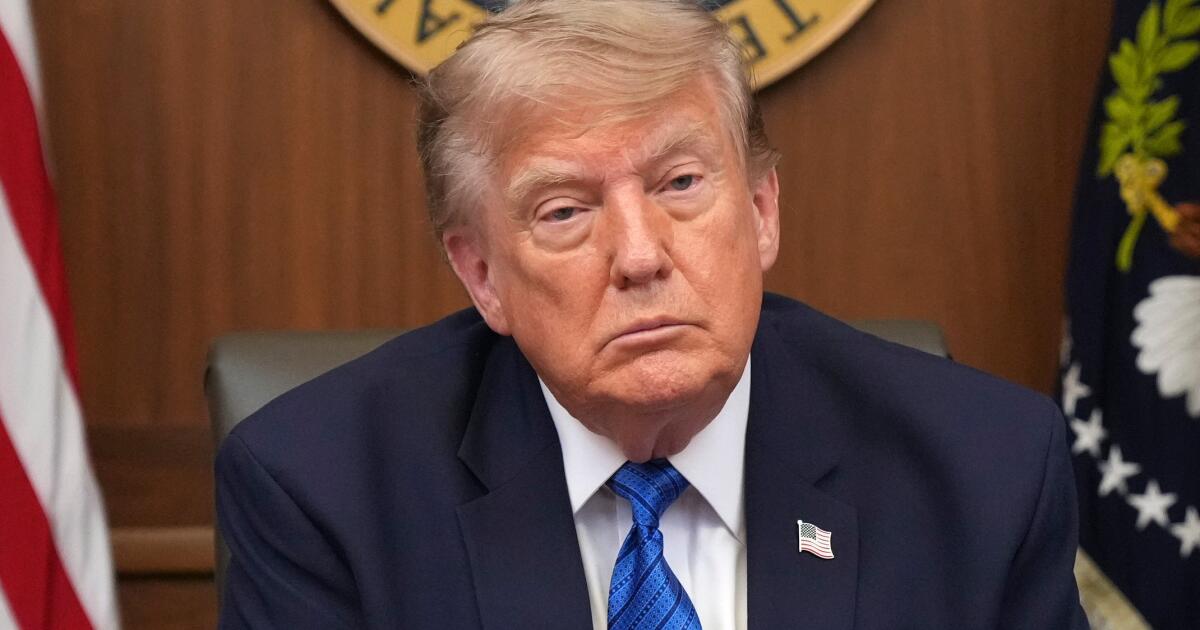
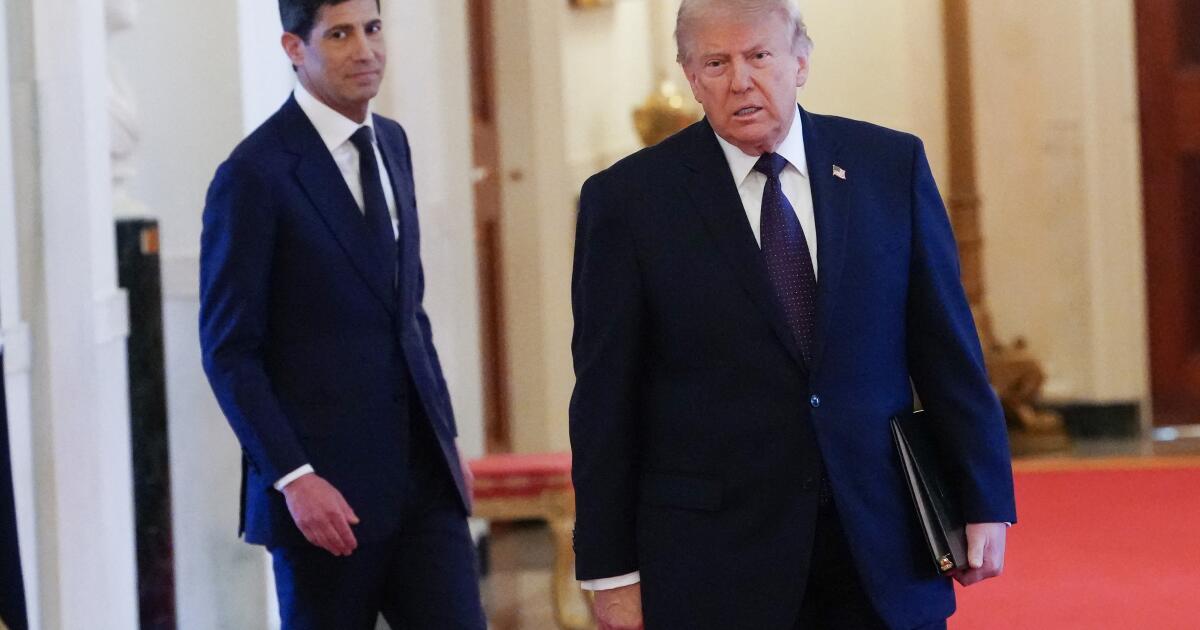
For much of President Trump’s second term, Republican senators have largely stayed in line, wary of the consequences of defying a president with a history of targeting those who cross him. This week, that dynamic noticeably shifted.

Senate Republicans blocked two of Trump’s legislative priorities, angered by the push to create a $1.8-billion federal fund to compensate people who claim to have been politically persecuted, including rioters who assaulted the Capitol on Jan. 6, 2021. The revolt forced Republican leaders to pull a planned vote on legislation to fund the president’s immigration crackdown and security features for the president’s White House ballroom project.

In response, the president defended the fund and lashed out at its critics.

“I gave up a lot of money in allowing the just announced Anti-Weaponization Fund to go forward,” Trump wrote in a post on Truth Social. “Instead, I am helping others, who were so badly abused by an evil, corrupt and weaponized Biden Administration, receive, at long last, JUSTICE”!

The president also called Republican senators who broke with him quitters who are “screwing the Republican Party.”

The friction, which has been building for weeks, is being watched as potential test to the limits of Trump’s grip on his party amid an already tense political environment heading into the midterm elections.

“This is kind of a perfect storm,” former Sen. Jeff Flake (R-Ariz.) said on NBC’s “Meet the Press.” “It may be that this time you can point to it and say this is when the great migration begins, away from some of the president’s policies and away from the fear that the president can target you.”

Whether this week marks the beginning of that moment — or simply another episode of political turbulence that fades — is the central question now handing over Trump’s second term.

Not the first break — but an escalation

This is not the first time Republicans have broken with the president. In November, Congress overwhelmingly voted to force the Justice Department to release of the Jeffrey Epstein files, an effort that Trump unsuccessfully tried to thwart for months.

The Epstein vote showed that on the right issue, under the right circumstances, Republicans could be moved to defy Trump. This week, the creation of the fund changed the circumstances again, and the number of Republican senators willing to act quickly grew.

This moment comes after months of rising costs during the war in Iran, efforts by the president to oust members of his own party and now a set of proposals that are proving hard to defend in an election year.

“What you have is basically a bunch of people who feel a bit under siege,” said Bob Olinksy, the senior vice president of Structural Reform and Governance at the Center for American Progress. “At the same time, they know that most of what the president is doing is unpopular, and they’re the ones who are going to be standing for reelection in November.”

Republicans push back

Senate Republicans leaders are now asking the Department of Justice to reconsider the terms of the fund, underscoring just how politically toxic the idea has become within the president’s own party.

Sen. Kevin Cramer (R-N.D.) told reporters that the politically speaking, the fund is “unexplainable.” Sen. Susan Collins (R-Maine) told the New York Times the fund should be in real trouble. Sen. Mitch McConnell (R-Ky) called the fund “utterly stupid” and “morally wrong.”

Sen. Thom Tillis, a North Carolina Republican whom Trump has singled out for going against him, was equally unsparing, saying he opposed “using billions of taxpayer dollars to compensate convicted felons and thugs who attacked police.” He also criticized the administration for pushing domestic and foreign policy issues that he says are bad for housing and the military.

“If opposing these things makes me a RINO [Republican In Name Only], then I gladly accept that nickname,” Tillis wrote on X. “We need Republicans to do well in November, but the stupid stuff is killing our chances!”

The Republican push back comes as the concern about self-dealing runs deep across the electorate.

A recent poll Economist/YouGov poll found that 59% of Americans believe Trump is using his office for personal gain, though that belief is sharply divided among partisan lines. A CNN poll found that 37% of Americans say Trump puts the good of the country above his personal gain, while 32% say he is in touch with the problems of ordinary Americans.

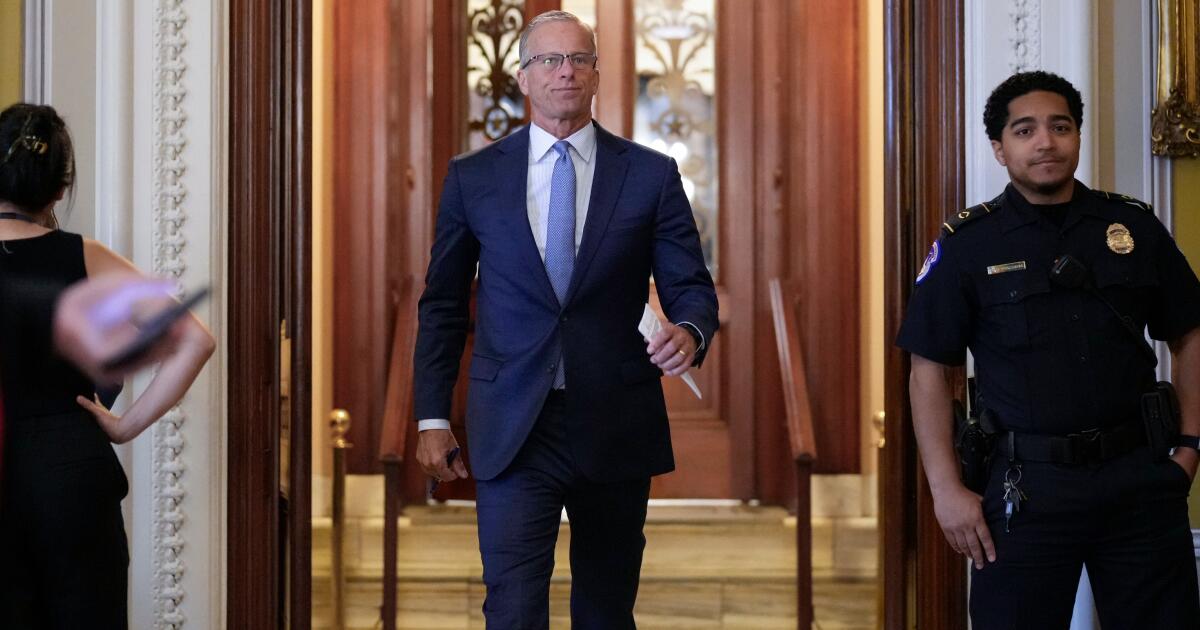
Asked if the political environment influenced the actions this week, Senate Majority Leader John Thune (R-S.D.) told reporters that there is a “political component to everything we do around here.”

Funds and tax immunity clauses

Senate Democrats are wondering if the fund will mark a watershed moment for Republicans.

“Have Republicans finally found a bridge too far?” Sen. Richard Durbin (D-Ill.) told reporters after Republicans left Washington without funding Trump’s priorities.

Democrats have called the fund an illegal abuse of power designed to line the pockets of Trump’s allies with taxpayer dollars. Sen. Chris Van Hollen (D-Md.) called it a “pure theft of public funds.”

The fund was created as part of a settlement resolving a $10-billion lawsuit Trump personally brought against the Internal Revenue Service over the leak of his tax returns. Alongside it, the deal says the IRS is “forever barred and precluded” from pursuing any tax claims against Trump and his businesses.

Under the tax immunity clause, Trump and his family could save more than $600 million, according to an analysis by Forbes.

The fund, however, has been the target of most of the bipartisan ire. Mostly because Trump and administration officials have not ruled out that it could stand to benefit people who carried out violence during the Jan. 6 riot.

The public funds, if disbursed, would come from the federal judgment fund, which is a Congress-approved ongoing appropriation that allows the Justice Department to settle cases and make payouts. In the past, Republicans have taken issue with the fund. The GOP-controlled House Judiciary Committee characterized it an abuse in 2017.

Several of the president’s allies have already talked about tapping into the fund.

Michael Cohen, Trump’s former attorney who served prison time in relation to campaign finance violations, said he plans to apply for compensation.

Former Proud Boys leader Enrique Tarrio, who was convicted of seditious conspiracy and later pardoned by Trump, told CBS News he would seek a payout from the fund.

“I was targeted,” Tarrio said. “And I do believe that this fund does apply to me.”

Source link

Republicans mull dropping $1-billion security money request for the White House and Trump’s ballroom

Republican senators are considering dropping a proposal for $1 billion in security money for the White House complex and President Trump’s ballroom after it has failed to win enough party support on Capitol Hill.

Pressured by the White House, Republicans have tried to add the money to a roughly $70-billion bill to restore funding to U.S. Immigration and Customs Enforcement and the Border Patrol. But the security proposal has met with backlash from some GOP lawmakers who are questioning the cost and the lack of detail from the White House and U.S. Secret Service about how the taxpayer dollars would be used.

Sen. John Kennedy (R-La.) said Wednesday that the bill was “back to square one” without the security money because “the votes are not there.”

Sen. Thom Tillis (R-N.C.) said the effort to add the security package to the bill was a “bad idea” and he does not think there is enough backing to pass it, even if it were reduced.

The text of the bill has not yet been released. But Senate Majority Leader John Thune (R-S.D.) acknowledged “ongoing vote issues” as leaders try to measure Republican support, as well as “ongoing parliamentarian issues” as they try to figure out what will be allowed in the bill under the chamber’s rules.

The wrangling comes as Democrats have criticized Republicans for trying to fund Trump’s ballroom when voters are concerned about basic affordability issues — and as some GOP lawmakers have grown increasingly frustrated with Trump. Several have spoken out against the administration’s $1.8-billion settlement fund designed to compensate Trump’s allies, and many were upset by the president’s endorsement Tuesday of Texas Atty. Gen. Ken Paxton in the party primary runoff next week against Sen. John Cornyn.

“There’s always a consequence with taking on United States senators,” Thune said. Trump “obviously has his favorites and people he wants to endorse and that’s his prerogative. But what we have to deal with up here is moving the agenda, and obviously that can become slightly more complicated.”

Republican opposition blocks Secret Service request

Under the Secret Service request, about $220 million would pay for security improvements related to the ballroom. The rest would go for a new screening center for visitors, training and other security measures.

Tillis said the bill should not have included the other security improvements “because it’s just giving everybody the ‘billion-dollar ballroom.’”

“They need to explain to me why we need this,” Tillis said, noting that Trump had originally said private money would cover the project.

Several other Republicans in the House and Senate have questioned the request, and senators left a briefing with the director of the Secret Service last week saying they needed a lot more information.

People “can’t afford groceries and gasoline and healthcare, and we’re going to do a billion dollars for a ballroom?” asked Louisiana Sen. Bill Cassidy (R-La.), who lost reelection in the GOP primary on Saturday after Trump endorsed one of his opponents.

Sen. Jim Justice (R-W.Va.) said he is supportive of the security money and thinks it is necessary to protect the president. But he acknowledged that the optics are not very good for Republicans, and that they have not communicated about it well.

“We’ve got people out there who are worried about how in the world they’re going to have enough gas to get home,” Justice said.

Tensions rise between Senate and White House

As Republicans challenged parts of his agenda, Trump unloaded on the Senate in a social media post.

He urged Republicans to fire the Senate parliamentarian, Elizabeth MacDonough, who said over the weekend that parts of the $1-billion security proposal cannot remain in the ICE and Border Patrol bill. Trump renewed his long-standing calls for the Senate to pass the SAVE Act, a Republican bill that would require all voters to prove U.S. citizenship, and to end the Senate filibuster.

“Republicans play a very soft game compared to the Dumocrats,” he wrote. “It is their single biggest disadvantage in politics.”

Trump said Democrats would eliminate the filibuster “on the First Day” if they ever get full power in Washington again and that Republicans need to “get smart and tough” or “you’ll all be looking for a job much sooner than you thought possible!”

Republicans have been loyal to Trump on most issues, but they have resisted his repeated calls — even in his first term — to kill the filibuster, which triggers a 60-vote threshold in the Senate.

Hanging over the growing GOP rift is Trump’s surprise endorsement of Paxton. That intervention has Republican senators privately fuming that it could cost them their majority in November as they view the incumbent, Cornyn, as the better candidate in the November general election.

Democrats test Republicans on settlement fund

As Republicans move forward on the immigration enforcement legislation, Senate Democratic leader Chuck Schumer of New York said Democrats plan to force a vote on Trump’s proposed settlement fund.

Democrats have an opening because Republicans are trying to pass the immigration enforcement bill through a complicated budget process that requires a long series of amendment votes. Democrats are considering multiple amendments potentially to block that new fund outright or to ban any payments to Trump supporters who harmed law enforcement officers in the Jan. 6, 2021, attack on the Capitol.

Those amendments, along with others, could pass as a growing number of Republicans speak out against the fund and other parts of Trump’s agenda.

Thune said he was “not a big fan” of the new fund, which the administration announced as a part of a settlement that resolves the president’s lawsuit against the IRS over the leak of his tax returns. Cassidy called it a “slush fund” and said “you can’t just make up things.”

Tillis said he thinks it is a “real risk” that some of the rioters charged — and later pardoned by Trump — in the Jan. 6 attack could get compensation through the fund. He said that would be “absurd.”

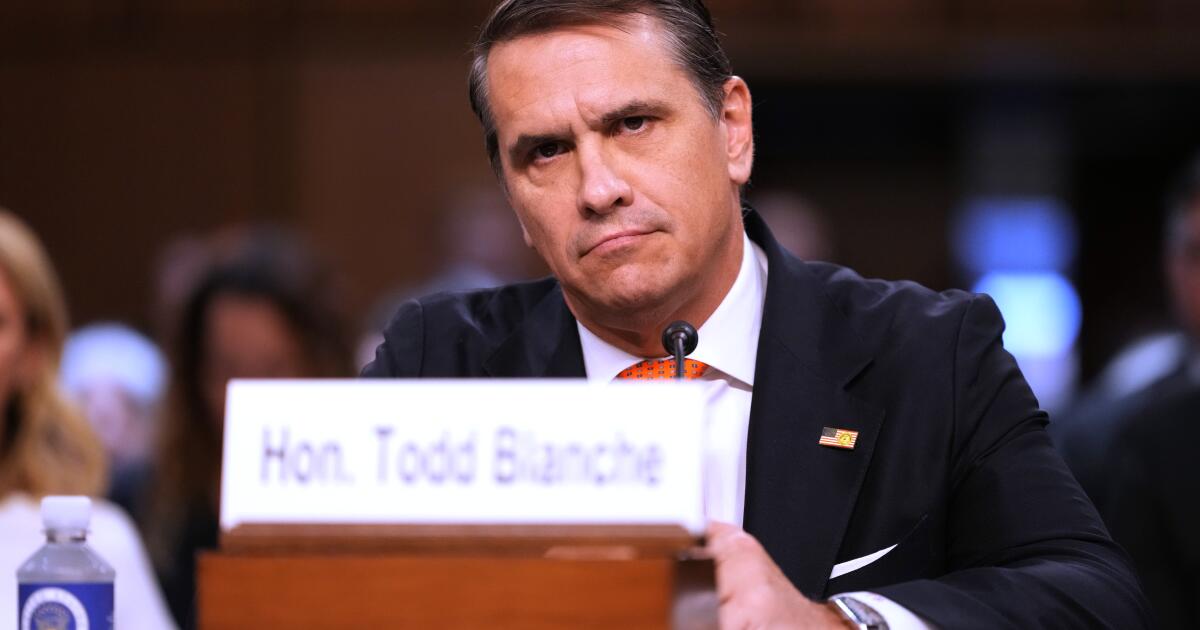
On Wednesday, two police officers who helped defend the Capitol in the 2021 assault sued to block the payouts. Acting Atty. Gen. Todd Blanche, a personal attorney for Trump before joining the Department of Justice in Trump’s second term, would not rule out the possibility that rioters who assaulted police on Jan. 6 would be eligible for compensation when he testified in a Senate hearing this week.

Jalonick, Freking and Cappelletti write for the Associated Press.

Source link

Sen. Cassidy ousted in Louisiana GOP primary, as two rivals advance to runoff

Sen. Bill Cassidy, a Republican who has occasionally asserted his independence from President Trump, failed to advance in Saturday’s GOP primary runoff in Louisiana, as a Trump-backed foe and another candidate finished in the top two spots.

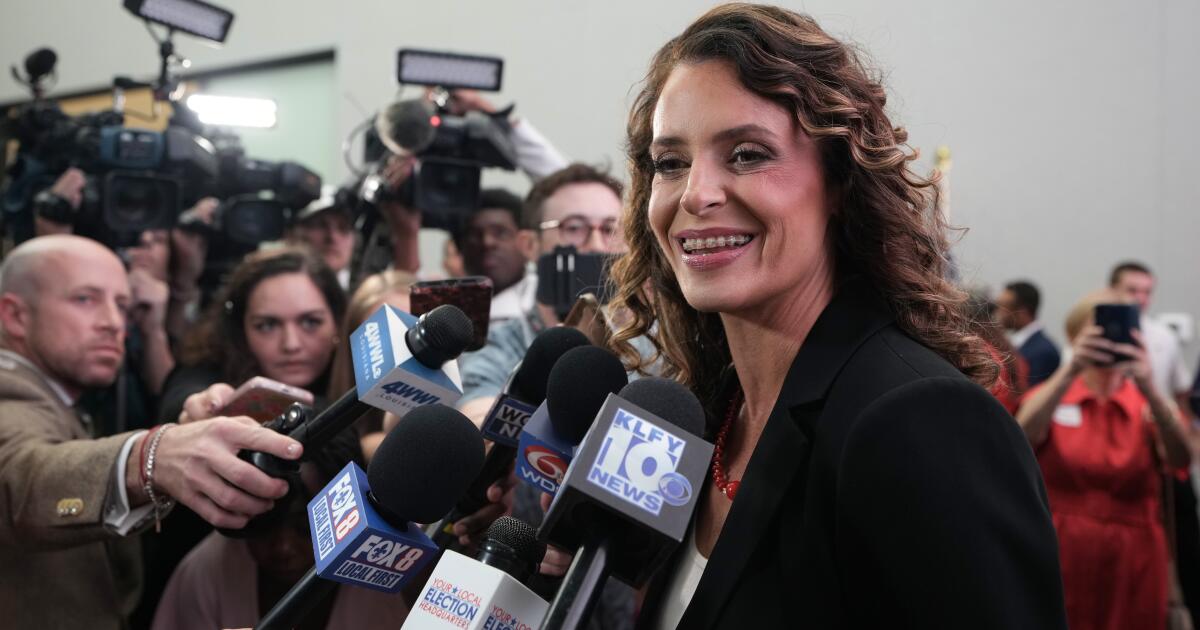
U.S. Rep. Julia Letlow won the most votes, capitalizing on the power of Trump’s endorsement in his latest attempt to purge his party of people he views as disloyal. State Treasurer John Fleming came in second to join her in the next round of voting.

Trump supported Letlow over Cassidy, one of seven Republican senators who voted to convict him during his second impeachment trial over the attack on the U.S. Capitol on Jan. 6, 2021. Cassidy, a doctor, has also clashed with Health Secretary Robert F. Kennedy Jr. over vaccine policy, even though he provided crucial support to help Kennedy get confirmed.

By receiving less than 50% of the vote, Letlow and Fleming, a former U.S. House member and Trump administration official, were unable to avoid the runoff, which will take place June 27. The winner will almost certainly take the November general election because of the state’s Republican leanings.

The Louisiana primary comes in the middle of a month of campaigns by Trump to exact retribution on politicians he views as having crossed him. On May 5 he helped dislodge five of seven Indiana state senators who rejected his partisan gerrymander plan.

Next Tuesday, U.S. Rep. Thomas Massie of Kentucky will face a Trump-backed challenger, Ed Gallrein, in another Republican primary. Massie angered Trump by opposing his signature tax legislation over concerns about the national debt, pushing for the release of the Jeffrey Epstein files and opposing his decision to go to war with Iran.

The president leveled insults at Cassidy on Saturday morning, calling him “a disloyal disaster” and “a terrible guy” on social media. In the evening he followed up with: “Congratulations to Congresswoman Julia Letlow on a fantastic race, beating an Incumbent Senator by Record Setting Numbers.”

Jeanelle Chachere, a 66-year-old nurse, said she considers Cassidy “a phony” and voted for Letlow solely because Trump endorsed her.

“I’m going by what he says, because I like what he does,” she said.

Election changes stir concern

The election was scrambled by a recent U.S. Supreme Court decision focused on Louisiana gutting a part of the Voting Rights Act that affects how congressional maps are drawn. Although the Senate primary is moving forward, Louisiana leaders decided to delay House primaries until a future date to allow them to redo district lines ahead of time, a shift that threatened to cause confusion for voters Saturday.

Mary-Patricia Wray, who has consulted for Republican and Democratic candidates in Louisiana, said before the vote that the change could weigh against Cassidy by dampening turnout among voters who are less fervently pro-Trump.

“Suspending the congressional primaries hurts Cassidy,” she said. “Some people believe the Senate primary is canceled.”

Cassidy also complained that a new primary system enacted last year confused voters by requiring them to ask for a partisan ballot instead of the all-party primary previously in place. He said some called his office to say they had been unable to vote for him.

“The process that was set up was destined to be confusing,” Cassidy told reporters Friday.

Dadrius Lanus, executive director of the state Democratic Party, said his team fielded hundreds of calls from voters statewide who said the changes undermined their ability vote as they planned.

“A lot of the information should have gotten to voters well in advance,” Lanus said. “It’s literally been a whirlwind of confusion.”

A costly primary

Cassidy waged an aggressive campaign to convince voters he should not be counted out. Wray was among the political consultants who, as election day neared, gave the senator a chance of pulling off an upset.

The senator’s campaign was expected to have spent roughly $9.6 million on advertising through May 16, according to the ad-tracking firm AdImpact. And Louisiana Freedom Fund, a super PAC supporting him, was on track to spend $12.3 million.

By comparison, Letlow’s campaign, which launched Jan. 20, spent roughly $3.9 million, while a super PAC backing her, the Accountability Project, spent about $6 million.

Fleming’s campaign spent about $1.5 million.

Cassidy and Louisiana Freedom Fund ran ads attacking Letlow within days of her entering the race for supporting diversity, equity and inclusion initiatives, which Trump has tried to root out of the federal government.

Letlow, a college administrator before her election to the House, said she supported DEI while interviewing for the position of president of University of Louisiana-Monroe in 2020.

The ads, an attempt to characterize Letlow as a progressive trying to pass as a conservative, were one way Cassidy tried to flip the script in a race where he was on the outs with Trump.

Trump’s campaign

The senator’s vote in favor of convicting Trump after his 2021 impeachment has shadowed Cassidy throughout his second Senate term.

John Martin, a 68-year-old retired engineer in south Louisiana, said he would vote for Letlow because he was still upset by Cassidy’s decision. He waved a flier from Letlow’s campaign showing her standing alongside the president.

“I know a lot more about Cassidy than I do about her,” Martin said. “But if she’s endorsed by Trump, I’m going to believe that.”

Cassidy steered clear of Trump’s ire last year, supporting Kennedy to lead the Department of Health and Human Services despite his public reservations about the nominee’s anti-vaccine views.

Mark Workman, a 75-year-old retired infectious disease physician in the New Orleans suburbs, said he backs Fleming. Had Cassidy “stood up and blocked RFK,” Workman said, he would have supported the senator for taking a strong and courageous stance.

“He had the ability to stop him,” Workman said, “and he was too weak to do that.”

As chair of the Senate Health Committee, Cassidy has been more publicly critical of Kennedy, including over funding cuts for vaccine development.

Trump blamed Cassidy for the failed nomination of his second choice for surgeon general, Casey Means, who raised doubts about vaccinating newborns for hepatitis B, a practice Cassidy supports. Trump withdrew the Means nomination and decried Cassidy.

Challenger waited for Trump’s backing

Letlow considered running last year but only entered the race after Trump announced his endorsement in January.

By that time Fleming, who was elected state treasurer in 2023, was already in the race as a Trump devotee. But Landry was looking for a better-known challenger, and he suggested Letlow to the president.

Letlow had an unconventional and tragic entry into politics.

In 2020, while she was a college administrator, her husband, Luke, was elected to the U.S. House but died of COVID-19 before he could be sworn in. Letlow ran for and won the seat in a March 2021 special election and was reelected in 2022 and 2024.

Beaumont and Brook write for the Associated Press and reported from Des Moines and Baton Rouge, respectively

Source link

Louisiana advances plan to eliminate majority-Black U.S. House district after court ruling

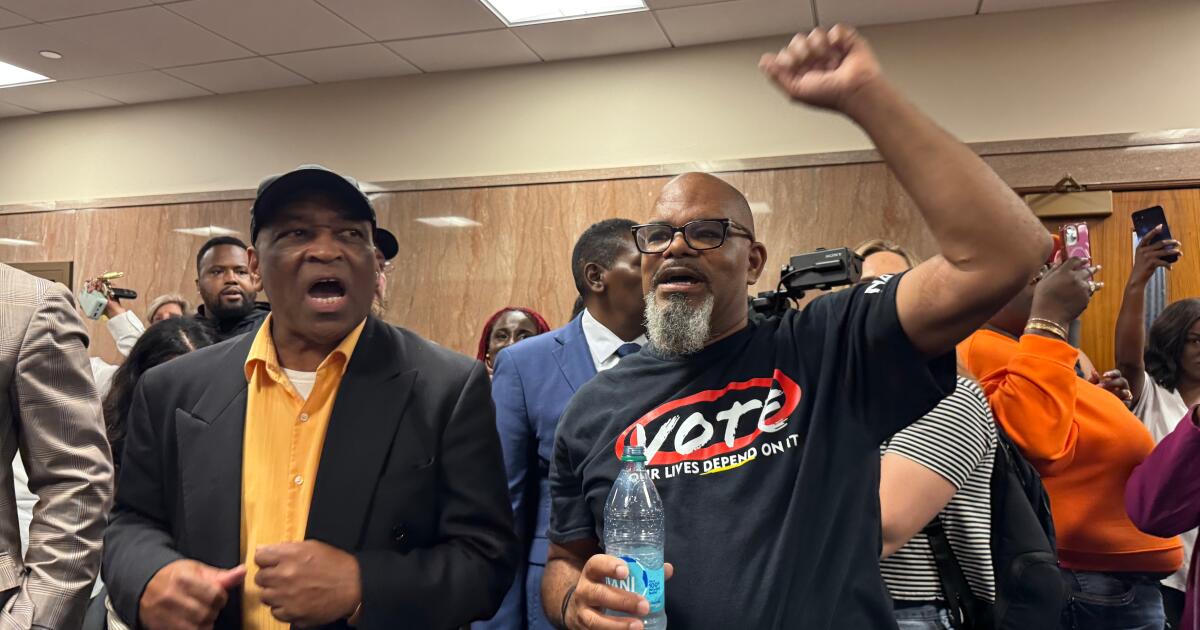
Republican senators in Louisiana advanced a plan Wednesday to eliminate one of two majority-Black, Democratic-held congressional seats following a U.S. Supreme Court ruling that struck down the state’s U.S. House map as an illegal racial gerrymander.

The early morning Senate committee vote came after hours of impassioned testimony from Black residents and Democrats opposed to the move. Republicans opted not to pursue a more aggressive approach, which could have targeted both Democratic seats for elimination.

The Supreme Court’s recent ruling weakening federal Voting Rights Act protections for minorities has prompted Republicans in several Southern states to try to eliminate House districts with large minority populations that have elected Democrats. Tennessee and Alabama already have acted to implement different House maps that could help Republicans win an additional seat. But a similar effort fizzled Tuesday in the South Carolina Senate.

The redistricting efforts to undo minority districts are the latest variation in a 10-month-long national redistricting battle that already has involved about one-third of the states. It gained steam when President Trump urged Texas Republicans last year to redraw House districts in an attempt to win more seats in the midterm elections. Democrats in California responded with their own new districts. Numerous Republican states have redistricted since then.

Republicans think they could gain as many as 15 seats so far from new House maps in Texas, Missouri, North Carolina, Ohio, Florida, Tennessee and Alabama. Democrats, meanwhile, think they could gain six seats from new maps in California and Utah. The Virginia Supreme Court last week struck down a redistricting effort that could have yielded four more winnable seats for Democrats.

Brook and Lieb write for the Associated Press. Lieb reported from Jefferson City, Mo.

Source link