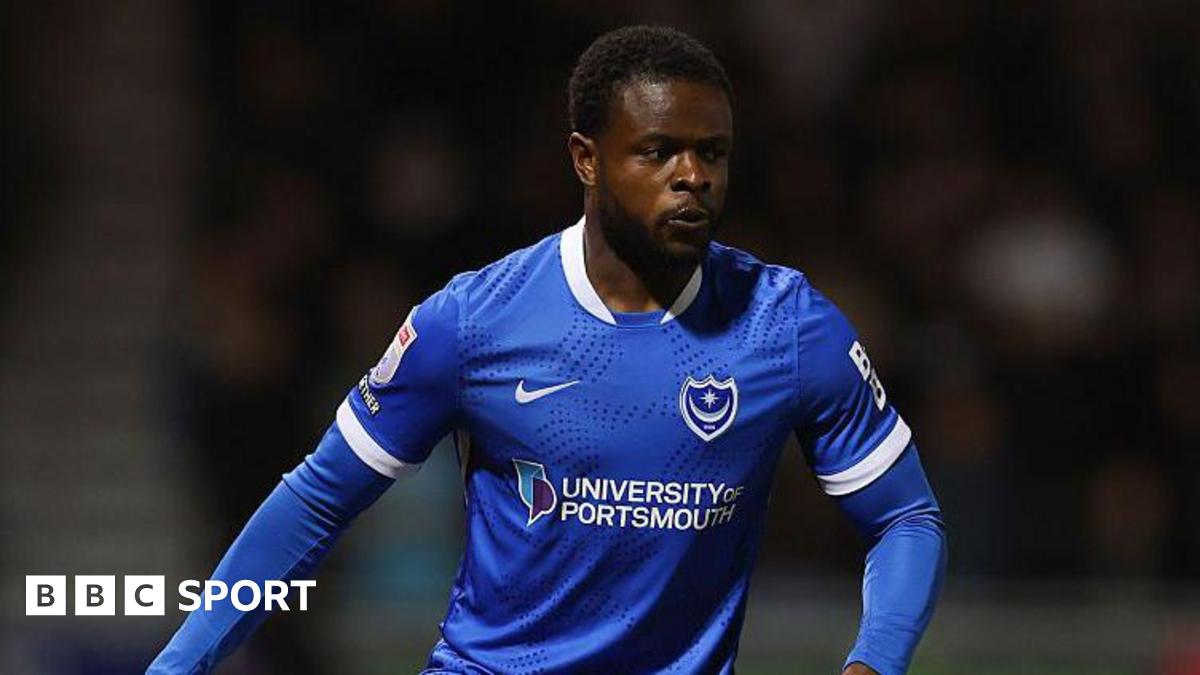
Republic of Ireland manager Heimir Hallgrimsson has called Portsmouth winger Millenic Alli into his squad for Tuesday’s friendly against North Macedonia in Dublin [19:45 BST].
The 26-year-old earns his first call-up to the senior squad and took part in training at Abbotstown on Sunday.
Alli began his career in England playing non-league before signing for Exeter City in 2024, catching the eye of Luton Town who spent £1.5 million to bring him to Kenilworth Road.
The Dubliner scored four goals in the final six games of last season, but the Hatters would suffer relegation to League One.
Despite falling out of favour, Alli was picked up on loan by Portsmouth and he has started all 14 games since his arrival at Fratton Park.
He has scored once in the Championship club’s bid to beat the drop and his performances have caught the attention of Hallgrimsson who brings him into the squad with others unavailable for Tuesday.
Midfielder Jack Taylor has left the squad for family reasons, while Sammie Szmodics has returned to Derby County to continue his recovery from a concussion sustained in Thursday’s World Cup play-off semi-final defeat on penalties by the Czech Republic.
That defeat in Prague saw the Republic of Ireland’s hopes of qualifying for this summer’s World Cup come to an end, while North Macedonia were beaten in their semi-final by Denmark, leaving both nations to face each other in a friendly.
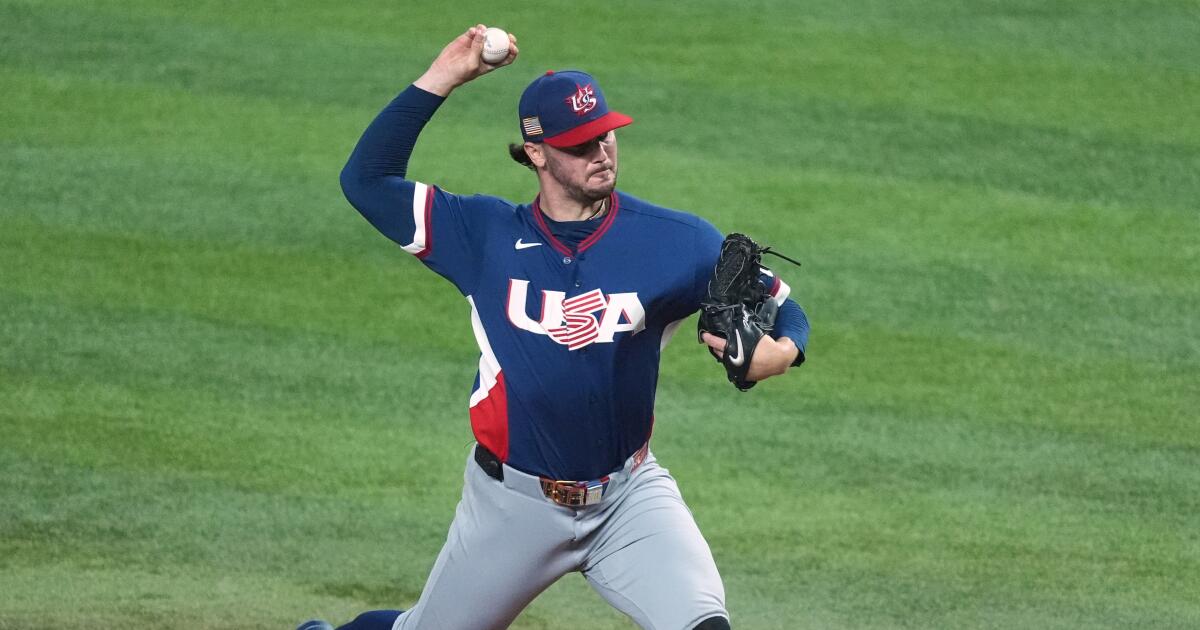
MIAMI — Gunnar Henderson and Roman Anthony homered and the United States limited the Dominican Republic’s electric offense to win a thrilling semifinal 2-1 on Sunday and move one win from capturing its second World Baseball Classic championship.
The loaded American roster, led by National League Cy Young Award winner Paul Skenes and featuring stars Bryce Harper and Aaron Judge, reached its third straight WBC title game after winning in 2017 and falling to Shohei Ohtani and Japan in 2023. The Americans will face the winner of Monday’s semifinal between Italy and Venezuela in Tuesday’s title game.
The Dominicans reached the semifinals for the first time since winning the WBC title in 2013, but missing the championship was not the goal for a roster that featured six players who finished among the top 10 in MVP voting last year and cruised through the early rounds of this WBC.
They faced their biggest test of the tournament against Skenes (2-0), who gave up one run on six hits through 4 ⅓ innings, and the U.S. bullpen, which held the Dominicans scoreless the rest of the way.
The Dominican Republic threatened in the ninth when Julio Rodríguez drew a walk and advanced to third against Mason Miller. With two outs, Miller struck out Geraldo Perdomo for his second save.
Junior Caminero hit a solo drive off Skenes in the second to give the Dominicans a record 15 homers in the tournament, surpassing the mark set by Mexico in 2009. He finished the tournament hitting .350.
The matchup between the two star-studded lineups didn’t fail to deliver big moments, especially on defense.
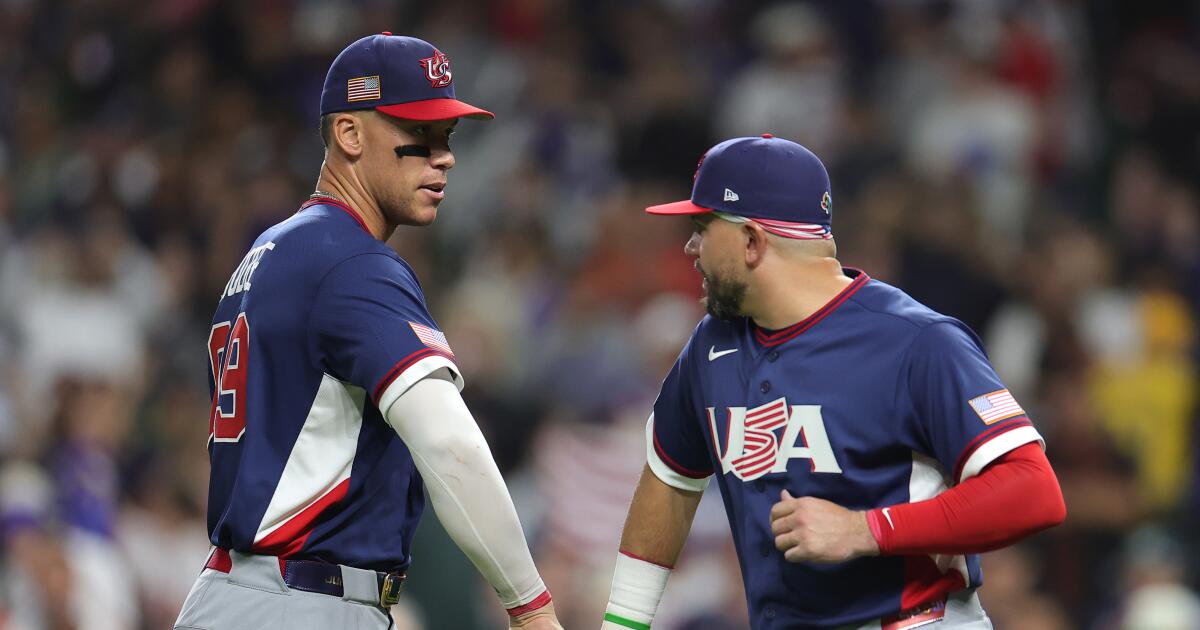
Judge got it started in the third with a 95.7-mph laser from right field to get Fernando Tatis Jr. at third. The Yankees’ All-Star then found himself on the other side of a huge defensive play in the fifth when Rodríguez — an inning after being hit on the wrist by a 98-mph fastball from Skenes — scaled the center-field wall to rob Judge of a home run.
Henderson, starting at third base over Alex Bregman, homered off Luis Severino to tie it in the fourth before Anthony hit the go-ahead homer, connecting on a 3-2 sinker from loser Gregory Soto.
HOUSTON — Aaron Judge doubled and Pete Crow-Armstrong and Brice Turang each had two hits as the United States beat Canada 5-3 on Friday night to reach the World Baseball Classic semifinals.
The U.S. squad rebounded after an 8-6 loss to Italy in pool play left them needing help to advance to this round.
The Americans move on to face the Dominican Republic in a semifinal on Sunday in Miami. It will be the team’s third straight appearance in the semifinals and the fourth overall.
It’s another big win for the U.S. over its neighbors to the north, coming after the U.S. hockey team beat Canada 2-1 in overtime to win the gold medal at the Milan Olympics last month.
Bo Naylor hit a two-run homer in Canada’s three-run sixth that cut the deficit to two runs. But the U.S. bullpen closed it out, capped by Mason Miller striking out the side in the ninth for the save.
Canada, which was in the quarterfinals for the first time, fell to 1-5 against the U.S. in the WBC.
Canada trailed by five runs when Owen Caissie walked with one out in the sixth and moved to second on a groundout by Abraham Toro. Tyler Black’s RBI single off Brad Keller cut the lead to 5-1.
Naylor’s shot to the second deck in right field came on Gabe Speier’s fifth pitch and got Canada within 5-3. It was the 10th home run the U.S. has yielded in five games in the tournament.
Canada had a shot to close the gap in the seventh when it had runners on second and third with no outs. But David Bednar retired the next three batters, with two strikeouts, to escape the jam.
U.S. starter Logan Webb gave up four hits and walked one with five strikeouts in 4⅔ innings.
Bobby Witt Jr. was on with one out in the first when Judge doubled before Witt scored on a groundout by Kyle Schwarber to give the U.S. an early lead. The double by Judge was the only extra-base hit of the night for the U.S.
Canada had a runner on first with two outs in the second when Witt made a leaping catch on a ball hit by Edouard Julien to end the inning.
The bases were loaded with two outs in the third when Alex Bregman singled on a groundball to Toro. His throw to first sailed over Josh Naylor’s head and into the dugout and two runs scored to make it 3-0.
Roman Anthony singled with one out in the sixth before a walk by Cal Raleigh. Turang singled on a grounder to center field to score Anthony and push the lead to 4-0. Crow-Armstrong sent the next pitch into center field for an RBI single before Witt grounded into a double play to end the inning.
Voters in the Republic of Congo will choose their next president on Sunday, although longtime leader Dennis Sassou Nguesso is likely to be elected unchallenged, analysts say.
The central African nation, which has been led almost continuously by Nguesso for more than 40 years, is one of the most politically repressive in the world, with Freedom House giving it a 17 out of 100 rating for freedom.
Recommended Stories
list of 4 itemsend of list
The country is Africa’s third-largest oil exporter. It sells between 236,000 and 252,000 barrels per day, alongside copper and diamonds.
Congo is also highly biodiverse. Sprawling expanses of tropical rainforest in the country form part of the Congo Basin – the second-largest rainforest network in the world after the Amazon. The Nouabale-Ndoki National Park in the north is a UNESCO World Heritage site and is home to elephants, endangered lowland gorillas, and chimpanzees.
Still, the country of 6 million people is racked by economic woes. Corruption and mismanagement, analysts say, contribute to Congo being 171st of 193 countries on the United Nations Human Development Index.
A fractured political opposition, meanwhile, has only allowed Nguesso’s governing Congolese Labour Party (PCT) to consolidate power over the years, although a newcomer is raising hopes.
Here’s what we know about Sunday’s polls:
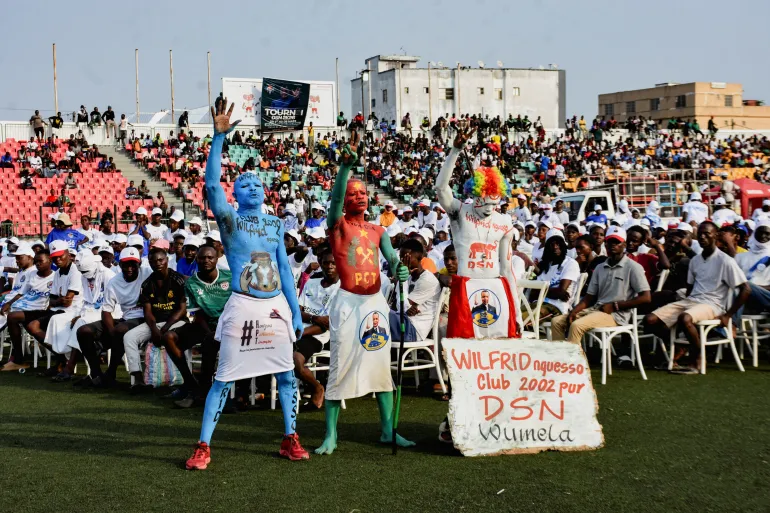
Supporters of outgoing President Denis Sassou Nguesso, who is running for re-election, take part in a campaign rally before the March 15 presidential election, in Brazzaville, Republic of Congo, March 7, 2026 [Roch Bouka/Reuters]
When do polls open?
Polls will open on Saturday, March 15, between 6am (05:00 GMT) and 6pm (05:00 GMT). More than 2.6 million people are eligible to vote; that is, they are more than 18 years old and have been registered.
Voter turnout in 2021 — during the last election — was 67.70 percent according to the International Foundation for Electoral Systems (IFES). Authorities have announced that borders will be closed during voting.
Candidates with an absolute majority usually win the elections, or in rare cases, a run-off will be called between the two top polling candidates.
Presidential terms in Congo are for five years. While the constitution had previously allowed a maximum of two terms and an age limit of 70, those were removed in 2015.
France’s President Emmanuel Macron speaks with President of Congo Denis Sassou Nguesso during the signing of a letter of intent by Denis Christel Sassou Nguesso, Congolese minister of international cooperation and promotion of partnership, and France’s Delegate Minister for Francophonie and International Partnerships Thani Mohamed Soilihi at The Elysee Presidential Palace in Paris on May 23, 2025 [File: Thomas Samson/Reuters]
Who’s running?
Dennis Sassou Nguesso: The 82-year-old was first elected to office in 1979 and led the country for 12 years under a one-party state. He lost elections after opposition lawmakers voted to introduce a multiparty system. On his second attempt in 1997, he seized power in a bloody civil war and has remained in office since. He is Africa’s third-longest serving ruler.
Nguesso’s legacy has been one of gross underdevelopment and corruption, said Andrea Ngombet, the exiled founder of Sassoufit, a group advocating for Nguesso’s exit. In 2015, Nguesso pushed through a controversial referendum that reset presidential term limits from two to three. It also completely removed age restrictions, allowing him to run for the fifth consecutive time in 2021.
A strong hold on the country’s judiciary and the Independent National Electoral Body (CENI) has helped secure Nguesso’s hold, analysts say. His strategic international alliances, from Beijing to Moscow to Paris, have ensured foreign investments and boosted his influence, according to Ngombet. However, since 2013, France has launched investigations into his family’s numerous assets in Europe and the US under pressure from civil society. French authorities seized property belonging to his son, Denis-Christel Sassou Nguesso, in 2022.
Melaine Deston Gavet Elengo: At only 35, Elengo’s candidacy has caused ripples. The oil sector engineer leads the Republican Movement and is the youngest contender in the race. Although a first-time presidential candidate, Elengo appears to be pulling an unusual amount of interest as he presents himself as a departure from the old system. His campaign has emphasised a government built on transparency, an independent justice system, and inclusive development.
“He could secure at least 20 percent of the vote, signalling a generational shift,” Ngombet said.
“His unique advantage lies in the unspoken support from UPADS dissidents frustrated with the boycott,” he added, referring to the opposition party, Pan-African Union for Social Democracy (UPADS), which boycotted the March 21, 2021, presidential election over concerns of integrity. UPADS is doing the same this year but has called on its supporters to go out and vote according to their “conscience”.
Elengo is also closely allied with political heavyweights like the opposition Union of Humanist Democrats, founded by the popular opposition figure, late Guy-Brice Parfait Kolelas, who came second in 2016.
A man walks past a campaign banner of presidential candidate Destin Gavet, before the presidential election scheduled for March 15, in Brazzaville, Republic of Congo, March 11, 2026 [Roch Bouka/Reuters]
Joseph Kignoumbi Kia Mboungou, 73: The veteran lawmaker is the leader of the political party The Chain and represents the southwestern Lekoumou department. He has run several times in the past without much success, with his 2021 bid resulting in just 0.62 percent of the vote. Mboungou’s campaign promised political change and an economy that diversifies from oil, while reducing poverty.
Uphrem Dave Mafoula, 43: The economist is leader of the New Start party. He is making his second bid for the top post after running as the youngest candidate in 2021 and securing just 0.52 percent of the vote. Mafoula’s goal, he says, is to implement governance reforms, create jobs, and reduce inequalities.
Vivien Romain Manangou, 43: The independent first-timer is a university lecturer campaigning on institutional reforms, improving public finances, and promoting national unity.
Mabio Mavoungou Zinga, 69: Running under the opposition coalition Alliance party, the retired customs inspector and former member of parliament promises to tackle corruption and free jailed opposition leaders. It’s his first bid.
Anguios Nganguia Engambe, about 60: The president of the Party for Action of the Republic is running for his fourth time as presidential candidate. In 2021, he won only 0.18 percent of the vote. This time, he has pledged to bridge political divisions in the country and foster better political participation.
Which opposition leaders have been targeted?
Several opposition leaders are either jailed or have fled into exile. Some are:
Jean-Marie Michel Mokoko,78: A former chief of the army and an adviser to Nguesso, who turned against the president and ran for elections in 2016. He called for protests after the results showed that he won 13.74 percent and placed third. He was arrested afterwards on charges of undermining state security and was in 2018 sentenced to 20 years in prison.
Andre Okombi Salissa: a one-time leading member of the governing Congolese Labour Party, and a former minister, Salissa also switched to the opposition in 2016 to contest the polls. He was arrested shortly after, also on security charges. In 2019, he was sentenced to 20 years of hard labour.
What are the key issues?
Poverty despite oil riches
Analysts have long warned that a lack of economic diversification hurts the country’s prospects. As Africa’s third-largest oil producer, Congo earns more than 80 percent of its export revenue from oil, according to the World Bank, making the economy vulnerable to shocks.
Government investment in hydrocarbons has only intensified in recent years. In 2015, authorities aimed to boost daily output to 500,000 barrels of oil per day within three years. Liquefied natural gas (LNG) production and export also began in 2024.
Despite this, around half the population lives below the poverty line. Most live in the main cities of Brazzaville and Pointe-Noire where access to electricity and roads is available but dismal. The situation is even worse in rural areas, analysts say.
While the population is young, with nearly half under 18, job creation is weak. Many young people with degrees have to turn to menial work for survival. The unemployment rate hovers at approximately 40 percent, with inadequate electricity being one of the major barriers for business, according to the World Bank.
Forests and agriculture
Before it began extracting oil in the 1970s, agricultural produce and timber were the biggest revenue generators in Congo.
However, Congo has become reliant on food imports amid the shift to oil.
Although the country has up to 10 million hectares (24 milllion acres) of arable land, only a small percentage is being cultivated, and that’s mostly for low-yield subsistence farming.
The government has touted plans to boost cassava, maize, sorghum, and soy farming, along with developing fisheries and poultry.
Meanwhile, deforestation in the Congo Basin, which encompasses parts of Congo and five neighbouring countries, nearly doubled between 2010 and 2020, compared to the previous decade.
Political freedom and post-Nguesso race
Protests are rare in the country as authorities don’t provide permits and respond with violence when demonstrators gather, according to the Africa Center for Strategic Studies.
Opposition members are routinely jailed. Nguesso appoints national judges himself, meaning the judiciary is not independent.
Many Congolese expect Nguesso to win Sunday’s elections, so much attention is now on who will likely take over leadership in the country in the coming years.
Analysts say an intense succession race is already brewing behind the scenes.
Denis-Christel Nguesso, the president’s son and minister of international cooperation, is the clear favourite, but he faces challenges from the president’s nephew and Head of National Security Jean-Dominique Okemba.
The Nguessos’ cousin, Jean-Jacques Bouya, who is currently the minister of planning and works, is another contender.
Pointe-Noire and Brazzaville, Republic of Congo – In Pointe-Noire, the economic capital of the Republic of Congo, the aisles of the Grand Marche come alive in the early hours of the morning. Among the market stalls, street vendors, and shoppers pushing their way through the crowd, Romain Tchicaya is selling medicines on the sly.
As the price of basics – including pharmaceutical products – rises, and people turn to more affordable unregulated options, merchants like Tchicaya step in to fill the gap while trying to earn a living in a struggling economy.
Recommended Stories
list of 3 itemsend of list
However, the 37-year-old’s background is far from typical for a street vendor.
With a degree in management, he thought he would find a stable job after graduating from university. But like many young Congolese, he found himself facing a tight job market with few opportunities.
“We are told that the country is rich in oil. But I don’t see that wealth in my daily life,” he told Al Jazeera. “Look at Pointe-Noire, formerly nicknamedas Ponton la Belle [Beautiful Pointe-Noire]. Today, the city is unrecognisable.”
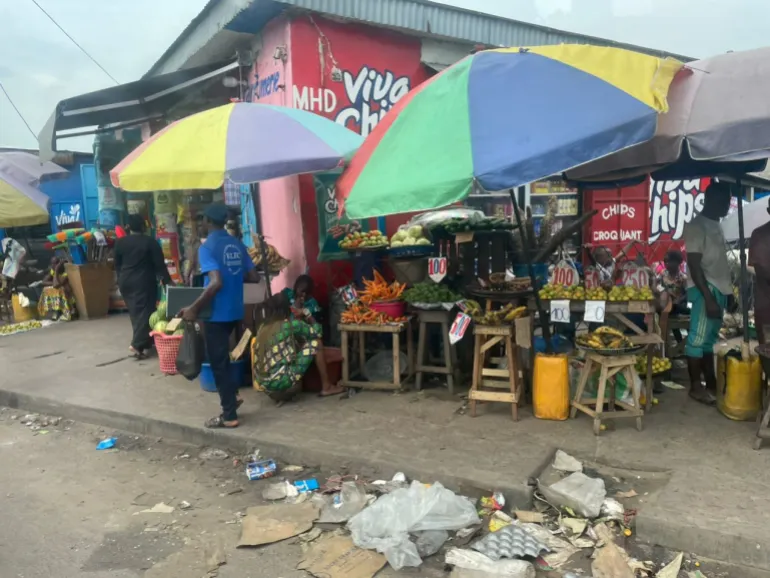
Around the Grand Marche, the main roads are potholed, and when it rains, the streets get flooded, making it almost impossible to drive.
Like Tchicaya, Brice Makaya, in his 40s, has never managed to find a stable job here despite having a degree in computer science.
With no stable employment, he is unable to rent a house and now lives outside the church where he prays.
“I am still underhoused at my age and have no prospects for the future,” he told Al Jazeera. “Without a job, I can’t plan ahead. I’m just trying to survive.”
For many young Congolese, daily life is a paradox: though they live in a resource-rich country – the third largest oil producer in sub-Saharan Africa and a producer of liquefied natural gas (LNG) – nearly half the population live below the poverty line.
This Sunday, Congo goes to the polls in which President Denis Sassou Nguesso, 82, is again seeking another term. For young voters, jobs and the economy are a big concern. But for the government, there appear to be limitations to what is possible.
During one of his speeches in the election campaign, Nguesso pointed out that the civil service could not absorb all job seekers, and urged young people to take charge of their own futures by encouraging self-employment.
A market in the Republic of the Congo before the 2026 presidential election [Al Jazeera]
Oil: ‘Fuel of the political system’
According to the World Bank, oil accounts for about 70 percent of Congo’s exports and nearly 40 percent of its gross domestic product (GDP).
But this wealth does not automatically translate into an improvement in living standards for most of the populace.
The World Bank estimates that more than 40 percent of Congolese people live below the poverty line, despite the country’s significant natural resources.
For economist Charles Kombo, this can be explained in large part by the very structure of the Congolese economy, which is dependent on oil revenues.
“Oil dependency plays a structuring role in many African economies. In what some call a ‘rentier state’, a large part of public resources comes from the exploitation of natural resources rather than taxation,” he explained.
In a rentier state, the country generates substantial revenue from “renting out” natural resources, such as oil, to foreign companies. In exchange for the exploitation rights granted on these resources, the state receives royalties, taxes, or a share of production.
In this type of system, Kombo explains, the management of revenues becomes central to political power.
“Control of this revenue often reinforces institutional centralisation,” he said, explaining that dependence is no longer solely economic, but becomes institutional and sometimes psychological, as it influences budgetary priorities, political strategies, and even perceptions of development.
He points out that when the economy relies heavily on extractive revenues, economic and political resources tend to become intertwined, which can limit electoral competitiveness.
“Oil revenues can generate significant income, but they do not guarantee the structural transformation of the economy,” he said.
This oil dependence also exposes the country to fluctuations in oil prices on international markets.
After the fall in crude oil prices in 2014, the Congolese economy experienced a severe crisis. Public debt exceeded 90 percent of GDP, before being restructured under agreements with the International Monetary Fund and several international creditors.
Although this has helped stabilise the macroeconomic situation, the country remains heavily indebted. According to the World Bank, public debt fell from 103.6 percent of GDP in 2020 to about 93.6 percent in 2024, reflecting a gradual improvement, but also the continued vulnerability of Congo’s economy to fluctuations in global oil prices.
For political analyst Alphonse Ndongo, oil revenues also influence political life in Congo.
“Oil has become the fuel of the political system. It is used to finance parties, co-opt elites, and maintain social balance,” he said.
According to him, “oil money comes easily and quickly”, but this financial windfall has long delayed necessary structural reforms such as economic diversification.
In his view, the steady flow of money from the oil sector can create a sense of complacency within the system, reducing the pressure to pursue deeper structural reforms. As a result, debates around economic diversification tend to emerge mainly during periods of financial stress, when falling oil prices expose the limits of the model. But when revenues rise again, he argues, the urgency to diversify often fades, leaving the economy heavily dependent on the same resource.
A man walks past a campaign banner of first-time presidential candidate Destin Gavet, in advance of the election [Roch Bouka/Reuters]
‘An uphill battle’
As the country’s oil wealth fails to filter to the majority of the population, young people are particularly affected and many face unemployment.
According to data from the World Bank and the International Labour Organization, the youth unemployment rate in Congo is among the highest in Central Africa, while the informal sector absorbs the majority of new entrants to the labour market.
During a news conference on March 4 in Brazzaville, Prime Minister Anatole Collinet Makosso, who is also spokesperson for presidential candidate and incumbent leader Nguesso, said that young people were at the heart of the government’s policy.
“Youth has always been at the centre of Denis Sassou Nguesso’s policies and social projects,” he said, citing investments in education and the construction of universities.
He also claimed that the unemployment rate had fallen from 44 percent to 39 percent in recent years.
But on the ground, many young people remain sceptical.
Landry, 23, a student in the capital Brazzaville who did not want to give his last name, says he has lost faith in political promises.
“Promises of jobs come back every election. It’s become a cycle,” he said.
A months-long strike at Marien Ngouabi University, the country’s main institution of higher education, forced him to interrupt his studies.
“I went back to my parents’ house to wait and see what I could do. Today, I’m seriously thinking about going abroad.”
Another student in Brazzaville, a 26-year-old woman who did not want to give her name, expressed similar frustration.
“The only sector that is really recruiting today is the army. But not everyone can become a soldier. Becoming a civil servant is also an uphill battle,” she said.
Even sectors that are supposed to be structured are not immune to precariousness. Regine, a young journalist who also did not want to provide her last name, said she works without a stable employment contract.
“In the media, many young people live off ‘camora’, one-off payments for services. It’s not a real salary.”
She also lamented the difficulties of everyday life, including infrastructure issues, such as power cuts and inconsistent water supplies, despite repeated government investment plans.
“In the 21st century, people rejoice when the electricity comes back on. And when the water finally flows, everyone rushes to fill buckets,” she said.
President of Congo Denis Sassou Nguesso [File: Minasse Wondimu Hailu/Anadolu Agency]
‘Social time bomb’
Congo’s infrastructure problems are a reminder to Regine and many others that economic difficulties go beyond the issue of employment.
At the same time, the consequences of the country’s youth employment crisis also reverberate more widely and into the social sphere.
Analyst Ndongo sees this as a potentially explosive situation.
“When there are large numbers of young people who are unemployed and have no prospects, it can become a social time bomb,” he said.
This dynamic is already visible in the tensions that emerge when unemployment and inequality intersect, Ndongo explained: As large numbers of young people struggle to find work while wealth linked to the oil sector remains visible, frustration can build among those excluded from economic opportunities.
He says pressure can be contained for a time, but without meaningful job opportunities and stronger education systems, resentment may deepen. Over time, he warns, groups of unemployed and poorly trained youth can become more vulnerable to crime or gang activity.
The Congolese population is very young: more than 60 percent of people are under 25, according to United Nations data. This demographic reality represents both economic potential and a major challenge for the authorities.
For economist Kombo, the issue goes far beyond just unemployment.
“Demographics are a major political factor in many African countries. When the population is predominantly young, expectations for employment and social mobility are particularly high.”
According to him, long-term political stability will depend on the ability to create economic opportunities.
“Development is not distributed,” he said, “it is built.”
Despite the frustrations, political mobilisation remains limited, even as several candidates rally to compete against Nguesso in this weekend’s vote.
Chris Taty, a young student in Brazzaville, says he is not interested in the current election, as it is clear that the president who has already been in power for more than 40 years will once again reign supreme.
“Everyone already knows who is going to win. So why bother voting? I’d rather stay at home and do other things,” he said.
“Sometimes we joke that Sassou [Nguesso] is our grandfather,” the young journalist Regine said. “He has been ruling for so long that many of us have never known another president”
Nguesso has been a dominant figure in Congolese politics for decades, first ruling the country from 1979 to 1992 before returning to power in 1997 following a brief period out of office. His long tenure has enabled him to consolidate influence over key state institutions. Meanwhile, analysts say the country’s opposition remains fragmented and lacks the organisational capacity to pose a strong challenge.
For some potential voters, the perception of a largely predictable outcome has contributed to a degree of political disengagement, which Ndogo says is a “feeling of resignation”.
“Resignation is ingrained in everyone … Students, politicians, intellectuals … everyone is forced to scramble for a piece of the pie,” he said.
“We are all lulled into resignation because we tell ourselves that if we stand up against the established order, against those in power, we risk ending up in prison or even six feet under. It’s risky to oppose the system today.”
This combination of economic frustrations and limited political participation is a main challenge facing Congo, observers say. And the issue of youth unemployment risks becoming a major crisis in the coming years if nothing is done to fix it.
For many educated yet underemployed young people in the oil-rich country, the question is whether or not Congo can transform its natural wealth into concrete opportunities for its people.
“We are not asking for much,” said Regine. “Just the chance to work, to live in our own country with dignity and to believe that our future can be built here, without connections, with equal opportunities for young people, and without conditions.”
A declaration would signal political will for peace and reduce tension on the peninsula, but a declaration may not change the reality there. File Photo by Jeon Heon-Kyun/EPA
March 7 (UPI) —The author prefers to use the lowercase “n” to challenge the Kim family regime’s legitimacy.
Calls for an end of war declaration on the Korean peninsula return with steady rhythm. Each time they appear, they promise a step toward reconciliation.
The latest proposal came when South Korea’s Unification Ministry urged a political declaration formally ending the Korean War as part of a broader effort to restart dialogue with north Korea and move toward a peace regime.
The argument is simple: A declaration would signal political will for peace and reduce tension on the peninsula.
The desire for peace is genuine. Koreans want peace. Americans want peace. Soldiers who have stood watch along the Demilitarized Zone for seventy years want peace.
The real question is not whether peace is desirable. The real question is whether a declaration contributes to peace when the military reality remains unchanged.
Paper and rhetoric do not trump steel.
The Military Reality That Has Not Changed
The Korean War ended in July 1953 with an armistice agreement, not a peace treaty. The armistice halted the fighting but preserved the underlying conflict.
The security architecture that followed rests on deterrence. It rests on the Republic of Korea-U.S. alliance, the presence of American forces in Korea, extended deterrence and the readiness of combined forces.
Across the DMZ sits the fourth largest army in the world, as north Korea fields roughly 1.2 million troops.
More than seventy percent of those forces remain deployed between Pyongyang and the Demilitarized Zone. Their posture is offensive. Their purpose has not changed since 1950.
The Republic of Korea’s forces are organized differently. They are structured for defense. They rely on alliance integration and American reinforcement in crisis. The combined posture has deterred major conflict for seven decades.
None of that changes with a declaration.
Artillery remains within range of Seoul. Ballistic missiles remain deployed. Nuclear weapons remain part of the regime’s strategy.
Words do not move artillery tubes.
The Strategic Misreading Behind the Proposal
Supporters of an end of war declaration often argue that symbolic gestures can change political dynamics in Pyongyang.
The belief is that such a declaration would demonstrate that the alliance is abandoning what the regime calls its “hostile policy.” This signal, the argument goes, might restart negotiations and encourage denuclearization.
This logic rests on a misunderstanding of the Kim family regime.
For more than seventy years the regime has pursued the same strategic objective. It seeks to dominate the Korean peninsula under its rule. The tools have changed over time, but the objective has not.
The regime uses coercion, subversion, diplomacy, and military pressure in combination. Negotiations are not an alternative to this strategy. They are part of it.
When the regime speaks about hostile policy, it does not refer to rhetoric. It refers to the structural pillars of deterrence. The regime defines hostile policy as the ROK/U.S. alliance, the presence of U.S. forces in Korea, and the nuclear umbrella that protects South Korea and Japan.
Removing these pillars is central to the regime’s long-term strategy.
How a Declaration Can Undermine Deterrence
Advocates often describe an end of war declaration as symbolic and not legally binding. That may be correct in a narrow legal sense. In strategic terms, however, symbolism matters.
Politics follows narrative.
Once the war is declared over, critics of the alliance will ask a simple question. If the war is over, why are U.S. forces still stationed in Korea?
The argument will not remain academic. Political factions in both countries will push for reductions in American troop presence. They will question combined exercises. They will challenge extended deterrence.
The declaration would not cause these debates, but it would accelerate them. It would provide rhetorical oxygen to arguments that already exist.
From Pyongyang’s perspective this outcome would be ideal. The regime has long defined the alliance and U.S. military presence as the central obstacles to its objectives. Weakening alliance cohesion through political pressure achieves what military confrontation cannot.
The Political Warfare Dimension
An end of war declaration would not occur in a vacuum. It would unfold in a contested information environment shaped by political warfare.
north Korea, China, and Russia have repeatedly used narrative and diplomacy to shape perceptions about security on the peninsula. If negotiations over a declaration stall, the narrative battlefield will shift quickly.
Pyongyang will argue that peace is blocked by American hostility. Beijing and Moscow will echo that message in international forums. The United States will be portrayed as the obstacle to reconciliation.
Sanctions policy will become the central battleground. north Korea has already signaled that meaningful progress requires sanctions relief. Yet the United Nations Security Council resolutions remain in force precisely because of the regime’s nuclear and missile programs.
If sanctions remain in place, the regime and its partners will claim that Washington refuses to embrace peace. The propaganda line will be clear. The United States talks about diplomacy while clinging to confrontation.
The goal is not persuasion alone. The goal is alignment. By shaping public debate in South Korea and internationally, these narratives seek to weaken alliance unity and pressure policymakers.
This is political warfare conducted through diplomacy, media narratives, and strategic messaging.
Diplomacy Without Illusions
None of this means the United States or South Korea should reject diplomacy. Peace on the peninsula remains the long-term objective of the alliance.
Diplomacy, however, must be grounded in reality.
An end of war declaration can only contribute to security if it is tied to concrete military measures. Negotiations would need to address conventional force deployments near the DMZ. They would need to include ballistic missile programs and nuclear weapons. Verification would be essential.
Absent those steps, a declaration would alter language while leaving the balance of power untouched.
The alliance cannot afford that illusion.
Strategic Theater Versus Strategic Stability
Political leaders understandably seek symbolic achievements that demonstrate progress toward peace.
A declaration ending the Korean War would carry powerful historical meaning. But symbolism is not strategy.
A declaration without corresponding changes in military posture risks becoming strategic theater. It produces headlines but not stability. Worse, it may erode the deterrent structure that has preserved peace for generations.
The paradox is clear. A gesture meant to signal peace could weaken the very mechanisms that prevent war.
If it reduces conventional forces, dismantles nuclear weapons, and abandons its hostile posture, then an end of war declaration could become part of a genuine peace settlement.
If those conditions remain absent, the declaration becomes something else. It becomes leverage in a broader campaign aimed at weakening the alliance.
History suggests caution.
For seven decades the regime has used negotiations to gain concessions while preserving its core capabilities. It has advanced nuclear weapons even during diplomatic engagement.
Why should a symbolic declaration suddenly transform that pattern?
Conclusion
Peace on the Korean peninsula is a worthy goal. It is a goal shared by Koreans, Americans, and the broader international community.
But peace is not achieved through declarations alone.
It is secured through credible deterrence, alliance unity, and diplomacy grounded in the behavior of adversaries rather than hopes about their intentions.
The ROK/U.S. alliance has preserved stability for generations because it rests on credible military power. That credibility depends on readiness, presence, and integration. Until the military threat from the north changes, the war cannot truly be declared over.
Paper and words do not trump steel.
David Maxwell, executive director of the Korea Regional Review, is a retired U.S. Army Special Forces colonel who has spent more than 30 years in the Asia-Indo-Pacific region. He specializes in Northeast Asian security affairs and irregular, unconventional and political warfare. He is vice president of the Center for Asia Pacific Strategy and a senior fellow at the Global Peace Foundation, where he works on a free and unified Korea. After he retired, he became associate director of the Security Studies Program at Georgetown University. He is on the board of directors of the Committee for Human Rights in North Korea and the OSS Society and is the editor at large for the Small Wars Journal.
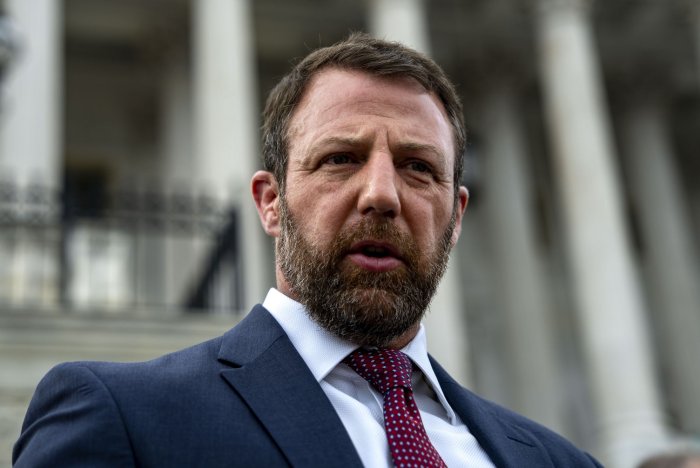
Sen. Markwayne Mullin, R-Okla., speaks to the press outside the U.S. Capitol on Thursday. Earlier today, President Donald Trump announced Mullin would replace Kristi Noem as Secretary of the Department of Homeland Security. Photo by Bonnie Cash/UPI | License Photo