Article content
The company’s annual disclosure unveils its Value Plan 2030+

SA Asks: What's next for Tesla following a tepid EV deliveries report?
Source link
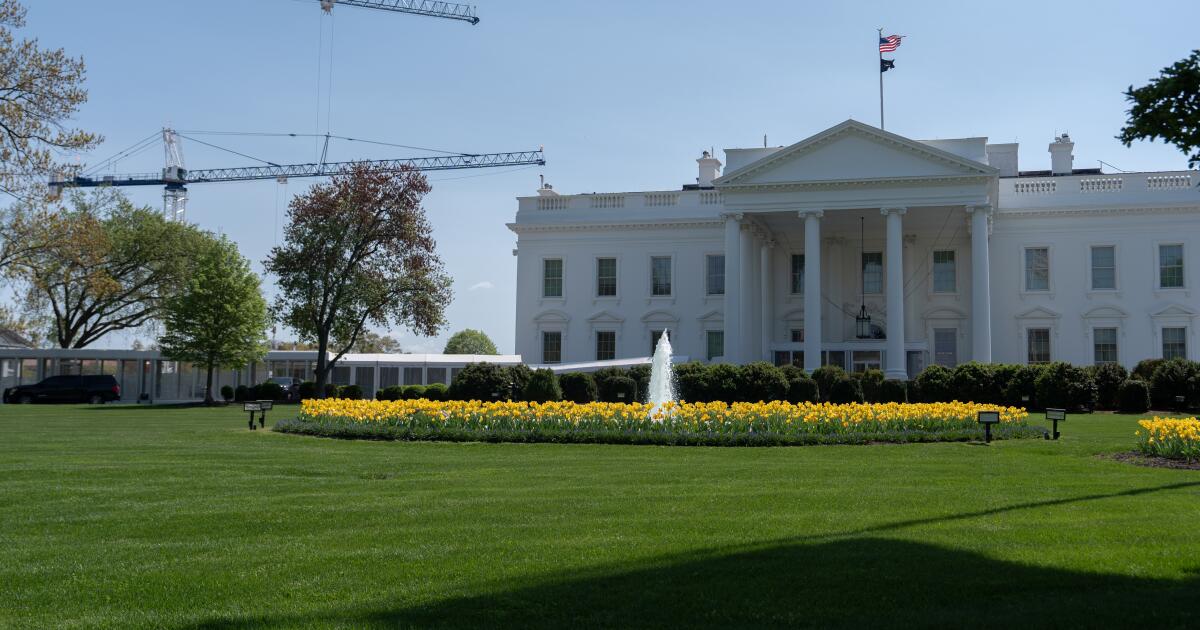
WASHINGTON — The U.S. Secret Service said Sunday it was investigating reports of overnight gunfire near Lafayette Park, which is across the street from the White House.
No injuries were reported and no suspect was found after a search of the park and the surrounding area after midnight, the agency said in an online post.
President Trump was spending the weekend at the White House, which had no immediate comment on the incident. White House operations remained as normal but security in the area was increased, according to the Secret Service.
The park has been fenced off for weeks of renovations.
The Secret Service said it was working with the D.C. Metropolitan Police Department and U.S. Park Police.
April 2 (UPI) — More than 1,800 civilians have been killed since the military took power in Burkina Faso as it has gone after al-Qaeda-linked jihadist groups wreaking havoc in the region for years.
Roughly 1,837 civilians — including dozens of children — have been killed in 57 separate incidents since Ibrahim Traore and the military took over in a September 2022 coup, Human Rights Watch said in a report published Thursday.
The report covers events that occurred between January 2023 and August 2025 in 11 regions of the country that resulted in the deaths of 647 men, 171 women, 212 children, 162 adults whose gender is unknown and another 651 deaths the organization does not have data on.
“As part of widespread or systemic attacks on civilian populations, the murder and forcible displacement by all sides amount to crimes against humanity,” HRW wrote in the report.
“Government forces have also carried out the crimes against human of arbitrary imprisonment, torture, enforced disappearance and other inhuman acts,” it said.
Traore ousted former President Lt. Col. Paul-Henri Sandaogo Damiba in September 2022, who had taken power nine months earlier when he overthrew Burkina Faso’s democratically elected president, Roch Marc Christian Kabore.
Since taking power, Traore’s government has said that it is working to counter armed Islamist groups that have caused political instability in the country, but has suppressed “fundamental rights and freedoms” as it eliminates political opponents, journalists and other threats to its power, HRW wrote in the report.
HRW noted that although some figures are available through various databases, including one that suggests well over 10,000 civilians have been killed in Burkina Faso since 2016 but that “many incidents go unreported.”
“The grievous harm suffered by civilians in the conflict and the junta’s suppression of public dissent and criticism mean that Burkina Faso’s international partners … need to play a critical role to break the country’s long-standing cycles of abuses and impunity and promote accountability,” the organization said.

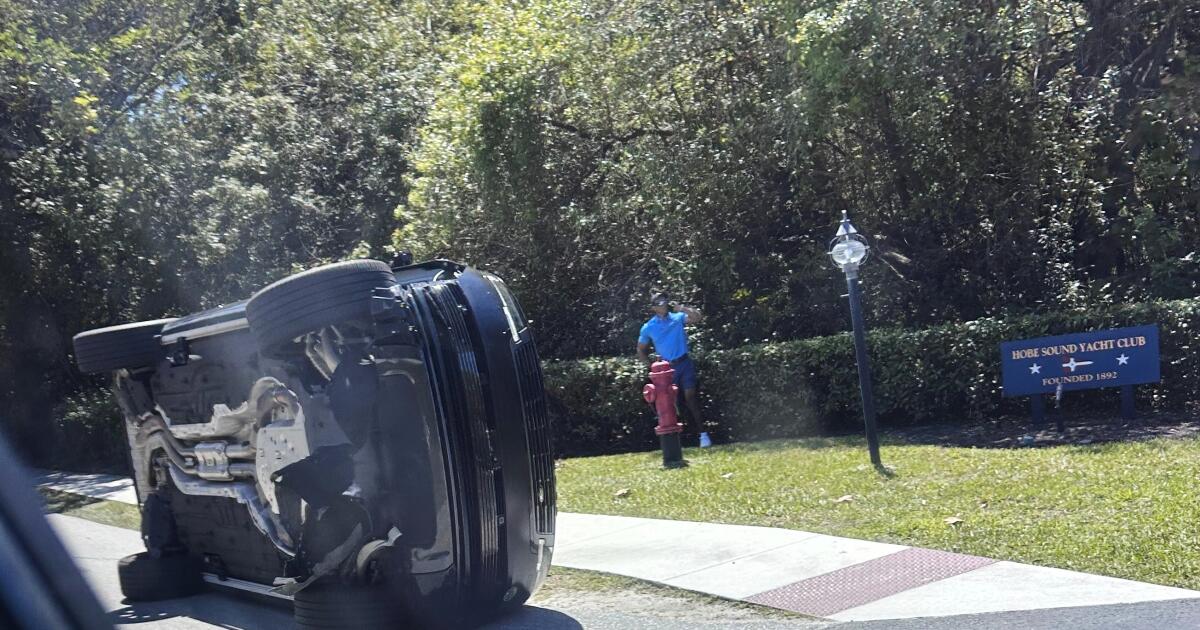
Tiger Woods failed field sobriety tests after crashing into another vehicle last week, and had bloodshot eyes and two hydrocodone pills in his pants pocket, according to a probable cause arrest affidavit released Tuesday.
Woods, 50, told investigators he did not notice the vehicle in front of him had slowed because he was looking at his cell phone and changing the radio station, the affidavit said. His Land Rover rolled onto its side after hitting a Ford-F150 pickup truck pulling a small trailer.
The prescription opioid pills were found during a search after his arrest on suspicion of driving under the influence, causing property damage and refusal to submit to a lawful test. Woods told deputies he had taken prescription medications earlier that day.
The accident and arrest occurred Friday afternoon near Woods’ home on Jupiter Island, Fla. Although Woods appeared impaired, he told deputies he had not consumed alcohol, which Martin County Sheriff John M. Budensiek said was confirmed by a breathalyzer test.
“Our DUI investigators came to the scene here, and Mr. Woods did exemplify the signs of impairment,” Budensiek said.
A Martin County Sheriff deputy noted that Woods had bloodshot and glassy eyes and extremely dilated pupils, according to the affidavit. Woods also was “sweating profusely” while performing field sobriety tests.
Asked if he had any medical conditions, the 82-time PGA Tour champion replied that he has had seven back surgeries and at least 20 leg operations. He was wearing a compression sleeve over his right knee.
“Woods’ movement was lethargic and slow,” sheriff’s deputy Tatiana Levenar wrote in the report. “While walking, I observed Woods limping and stumbling to the right.
“I asked Woods if he was able to perform tasks such as walking and lifting his leg. Woods advised he has a limp and his ankle seizes while walking.”
The affidavit also noted that “Woods had hiccups during the entire investigation.”
The crash is the fourth major incident involving Woods behind the wheel since 2009. When he was arrested on suspicion of driving under the influence in May 2017, Woods was found to have five drugs in his system, including hydrocodone and Dilaudid. Woods checked into a rehab clinic shortly thereafter and completed treatment.
Around Thanksgiving 2009, a report that Woods had been in a car accident near his home erupted into a major scandal involving allegations of affairs. It resulted in Woods’ divorce from Elin Nordegren, the mother of his children.
In 2021, Woods was seriously injured in a rollover crash near Rancho Palos Verdes the morning after the Genesis Invitational, which he hosted at Riviera Country Club. He had to be extricated from the wreckage of the Genesis GV80 SUV he was driving
Woods underwent “a long surgical procedure” on his lower right leg and ankle, according to a statement he released. Doctors inserted a rod into his leg and placed screws into his foot and ankle.

Article content
The company’s annual disclosure unveils its Value Plan 2030+

THIS CONTENT IS RESERVED FOR SUBSCRIBERS ONLY
Subscribe now to read the latest news in your city and across Canada.
SUBSCRIBE TO UNLOCK MORE ARTICLES
Subscribe now to read the latest news in your city and across Canada.
REGISTER / SIGN IN TO UNLOCK MORE ARTICLES
Create an account or sign in to continue with your reading experience.
THIS ARTICLE IS FREE TO READ REGISTER TO UNLOCK.
Create an account or sign in to continue with your reading experience.
or
Article content
STAMFORD, CT — Philip Morris International (NYSE: PM) today released its Value Report 2025, offering a holistic perspective on the company’s approach to sustainable value creation. The report marks the completion of PMI’s 2025 Roadmap, communicating achievements for each aspiration introduced by the company in 2020, and introduces its Value Plan 2030+, set to guide the company’s continued path to sustainable growth.
Article content
Article content
Article content
“
Article content

Top Stories
Get the latest headlines, breaking news and columns.
By signing up you consent to receive the above newsletter from Postmedia Network Inc.
Thanks for signing up!
A welcome email is on its way. If you don’t see it, please check your junk folder.
The next issue of Top Stories will soon be in your inbox.
We encountered an issue signing you up. Please try again
Article content
For more than a decade, PMI has pursued an industry-leading shift away from cigarettes—a transformation that goes far beyond product innovation to encompass how we allocate capital, engage stakeholders, and measure success
Article content
,” said Jacek Olczak, Group Chief Executive Officer.
Article content
“‘change in motion’ captures the reality that transformation is not a project with a defined end date, it is the continuous work of improvement, innovation, and adaptation that keeps us relevant and resilient. We transform continuously because markets evolve, science advances, stakeholder expectations rise, and new opportunities emerge. This is who we are: a company perpetually in motion toward a better future, refusing to stand still even as we celebrate how far we have come
Article content
Article content
Built on the progress that PMI has made over the past decade, the report explains how the company is securing the resources, capabilities, and stakeholder trust that will sustain its business for decades to come. The sustainability of the business is PMI’s strategy; it is how it secures resources, manages risk, meets stakeholder expectations, and future-proofs a business built to deliver results today, while securing the ability to deliver tomorrow.
Article content
“
Article content
Our approach to value creation is anchored in a simple conviction: long-term financial success depends on the health of the resources and relationships that make it possible.
Article content
By investing in natural, human, social, intellectual, and manufactured capital—what we define as non-financial capitals—we strengthen the very foundations on which long-term financial success depends,
Article content
” said Emmanuel Babeau, Group Chief Financial Officer. “
Article content
This is fundamental to our growth, resilience, and identity as a forward-thinking organization.
Article content
Article content
PMI achieved meaningful progress across both product and operational impact in 2025, as it closed its 2025 Roadmap.
Article content
PMI’s Business Transformation Metrics (BTMs) have provided stakeholders with clear, comparable indicators of our progress toward a smoke-free future. These metrics go beyond traditional reporting frameworks to capture aspects unique to PMI’s change of motion. They include the following:
Article content
Article content
Article content
In addition, PMI celebrated progress on:
Article content
Article content
“We have identified six strategic priorities that reflect what matters most to our stakeholders and our business: consumers and product health impact, circularity, climate change, nature and biodiversity, our own workforce, and workers throughout our value chain, which are consolidated in our Value Plan 2030+. This plan identifies where our actions intersect most significantly with business imperatives, ensuring our initiatives drive tangible outcomes across various forms of capital, creating a strategy that is comprehensive yet focused, ambitious yet pragmatic, and deeply integrated into how we operate and grow,”
Article content
said Jennifer Motles, Chief Sustainability Officer.
Article content
“Our plan is explicit about what we control directly and what requires the action of, and partnership with others, setting a strong foundation for effective action. That is the spirit with which we present our Value Plan 2030+, as an invitation to dialogue, a platform for collaboration, and a roadmap for the next chapter: turning sustainability into lasting business value.”
Article content
PMI’s Value Plan 2030+ sets the course for the company’s next chapter—a continuation of the change in motion that has defined PMI’s evolution over the past decade. It focuses on accelerating the growth of its smoke-free product portfolio, working to make cigarettes obsolete, and exploring adjacent avenues of growth in wellness, while maintaining responsible sales and marketing practices, investing in human and natural capital, and strengthening the operational resilience that underpins long-term, sustainable value creation.


Im Yeongsik/iStock via Getty Images
A broker for U.S. Defense Secretary Pete Hegseth sought to make a large investment in major defense firms in the lead-up to the Iran war, according to the Financial Times. The Pentagon has dismissed the report.
The FT reported Tuesday that

In its 36-page report titled ‘Humanity Must Win: Defending rights, tackling repression at the 2026 FIFA World Cup’,, external Amnesty calls on the host countries’ governments to “meet their obligations under international human rights law, while Fifa, national FAs and sponsors all have clear responsibilities to respect human rights…”
“The US government has deported more than 500,000 people from the USA in 2025, more than six times as many people than will watch the World Cup final in the MetLife Stadium”, said Amnesty’s head of economic and social justice Steve Cockburn.
“…It’s a deeply troubling time in the US, which will certainly extend to fans who want to take part in World Cup celebrations.”
Last month, the acting head of US Immigration and Customs Enforcement (ICE) said that the agency is “a key part of the overall security apparatus for the World Cup”, vowing it was “dedicated to ensuring that everyone that visits the facilities will have a safe and secure event”.
Earlier this year, ICE agents shot and killed two American citizens as part of US president Donald Trump’s immigration crackdown in Minneapolis.
Trump has sent federal agents, as well as the National Guard, to major US cities over the past year to make good on his campaign promise to crack down on illegal immigration. They have been met with protests and legal challenges in Democrat-led cities like Portland, Los Angeles and Chicago.
“Despite the astounding numbers of arrests and deportations, neither Fifa nor the US authorities have provided any guarantees that fans and local communities will be safe from ethnic and racial profiling, indiscriminate raids, or unlawful detention and deportation,” said Cockburn.
“Only four of the 16 host cities have so far published their human rights plans, and none of those that have done so to date say anything about protection from abusive immigration enforcement.
“This World Cup is no longer the ‘medium risk’ tournament that Fifa once judged it to be – whether it is to protect people from ICE, guarantee the right to protest or prevent homelessness, urgent action is needed to make sure the reality of this World Cup matches its original promise.”
Amnesty says that ICE and other agencies “pose a chilling threat to people living in the US, those traveling to see a game, and players themselves”.
It added: “Fans face intrusive surveillance, with proposals to force visitors to make their social media accounts available for vetting, and screening for “anti-Americanism”.
In January, fan group Football Supporters Europe (FSE) told BBC Sport it was “extremely concerned by the ongoing militarisation of police forces in the US” before the World Cup”.
At the time, Fifa said the safety and security of fans and participants was its “top priority”, adding it works closely with local authorities “to plan, co-ordinate and deliver comprehensive security measures for the tournament”.
The White House’s World Cup Task Force said that the tournament will be “the largest, safest, and most welcoming sporting event in history” and that it was working to deliver an event “that highlights America’s hospitality, commitment to security, and spirit of excellence”. It promised that fans “can look forward to a smooth, secure, and truly unforgettable tournament”.
Amnesty highlights Mexico’s response to high levels of drug cartel violence, which it says is “raising risks for people protesting”. Earlier this month the World Cup co-host announced plans to deploy nearly 100,000 security personnel to protect fans at this summer’s tournament.
And the campaign group also claims that in Canada, a growing housing crisis has “raised fears that people experiencing homelessness will again be displaced and pushed further to the margins”.
Fifa has been approached for comment.

U.S. Treasury to consult insurance regulators on rising private credit risks: report
Source link
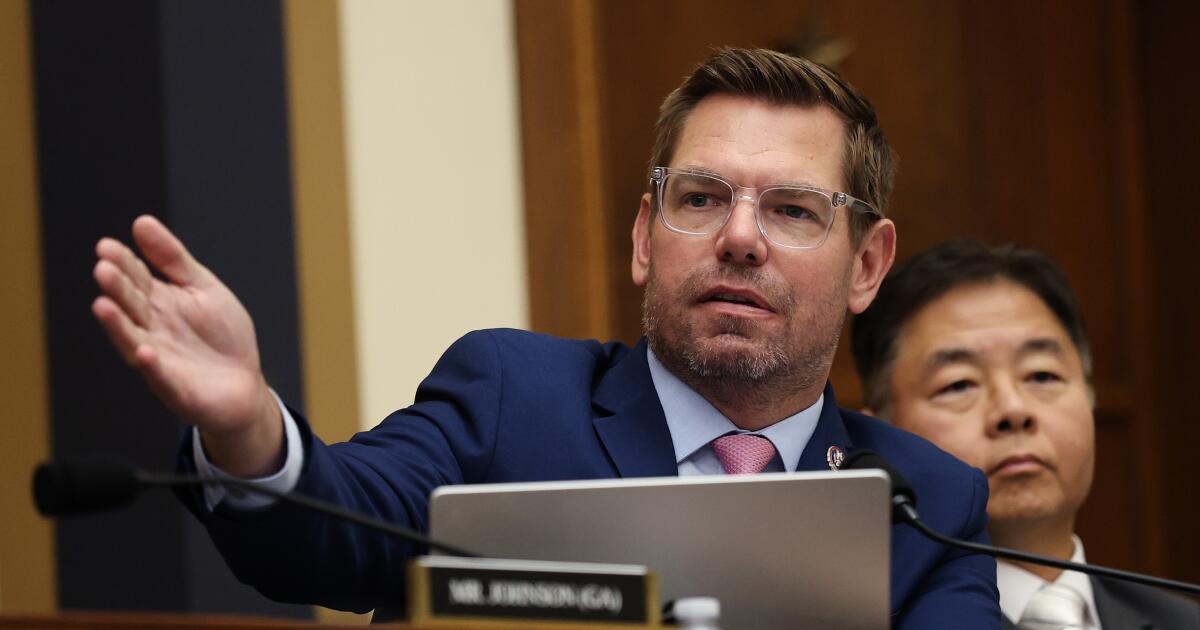
Rep. Eric Swalwell, a leading Democratic candidate for governor of California, has accused President Trump of trying to sway the election following reports that FBI Director Kash Patel may release documents from a decade-old investigation into the congressman’s ties to a suspected Chinese spy.
According to a report by the Washington Post, Patel has directed agents in the bureau’s San Francisco office to redact the case files for public release. According to the outlet, it’s highly unusual for the FBI to release case files tied to a probe that did not result in criminal charges.
The investigation centered on Swalwell’s ties to a suspected intelligence operative, Christine Fang, or Fang Fang, who worked as a volunteer raising money for his congressional campaign. Swalwell cut off ties to Fang in 2015, after intelligence officials briefed him and other members of Congress about Chinese efforts to infiltrate the legislative body.
Swalwell was not accused of impropriety.
The FBI did not immediately respond to a request for comment.
“Through great reporting, we now know the outrageous ends the White House will go to target political opponents,” Swalwell said in a prepared statement Saturday, calling the decade-old story “nonsense.”
“Donald Trump is targeting me. He’s trying to influence the election,” Swalwell said in a post on X. “There is only one reason why: he’s scared.”
Swalwell accused Trump of “desperately trying” to stop him, because he’s now the favored candidate for California governor.
“What Trump wants the most is to have a Western White House. An enabler on the opposite coast,” he said. “A lot of people have bent the knee to this administration. But I will not. And neither will the people of California.”
It’s not the first time Swalwell has accused the administration of targeting Trump’s political opponents.
Last year, Swalwell sued Federal Housing Finance Agency Director Bill Pulte, accusing him of criminally misusing government databases to target Trump’s political opponents. Pulte had accused Swalwell of mortgage fraud and referred him to the Justice Department for a potential federal criminal probe. Swalwell dropped that suit this month.
Swalwell, a former prosecutor who ran for president in 2020, announced his bid for California governor in November. Swalwell said his decision was driven by the serious problems facing California and the threats posed to the state and nation with Trump in the White House.
U.S. Sen. Adam Schiff (D-Calif.), who has endorsed Swalwell for governor, shared the Post story on X Saturday, saying, “This abuse of the FBI is as dangerous as it is unlawful.” Schiff served with Swalwell on the House Intelligence Committee, where they riled Republicans by investigating President Trump during his first term.
Schiff served as the lead manager of Trump’s first impeachment and Swalwell as a manager of Trump’s second impeachment.
“Time and again, the President and his appointees have weaponized the Department of Justice against those who dare stand up to Trump,” Schiff wrote. He added that there was no doubt that Trump and Patel “will stop at nothing to try to tell Californians who their next governor should be.”
The Post story unleashed a flood of critiques from California politicians, including Rep. Jimmy Gomez (D-Los Angeles), who sits on the House Intelligence Committee. On X, Gomez accused Patel of “wasting resources” on a “closed, decade-old case where Swalwell cooperated with the FBI and was found innocent of any wrongdoing.”
“Reopening it now, right as he leads in the polls and ballots are about to drop, is a political hit-job!” Gomez said. “Trump and Kash Patel are weaponizing the FBI against people they deem political enemies.”
Rep. Jamie Raskin of Maryland, the top Democrat on the House Judiciary Committee, released a statement accusing Patel of working at “the behest of the White House” and “wasting the resources of the FBI and perhaps violating the Hatch Act by ordering agents to spend hours preparing a political smear file for a personnel vendetta.”
According to the Associated Press, Fang came into contact with Swalwell’s campaign as he was first running for Congress in 2012. She also participated in fundraising for his 2014 campaign and helped place an intern in his office, the report said. Federal investigators alerted Swalwell to their concerns — and briefed Congress — about Fang in 2015, at which point the California Democrat says he cut off contact with her, the AP reported in 2021.
In 2023, the House Ethics Committee closed a two-year investigation into the allegations of his ties to Fang.
In closing the probe, the ethics committee wrote in a letter to Swalwell that it had “previously reviewed allegations of improper influence by foreign agents and in doing so, cautioned that Members should be conscious of the possibility that foreign governments may attempt to secure improper influence through gifts and other interactions.”
Times staff writer Kevin Rector contributed to this report.
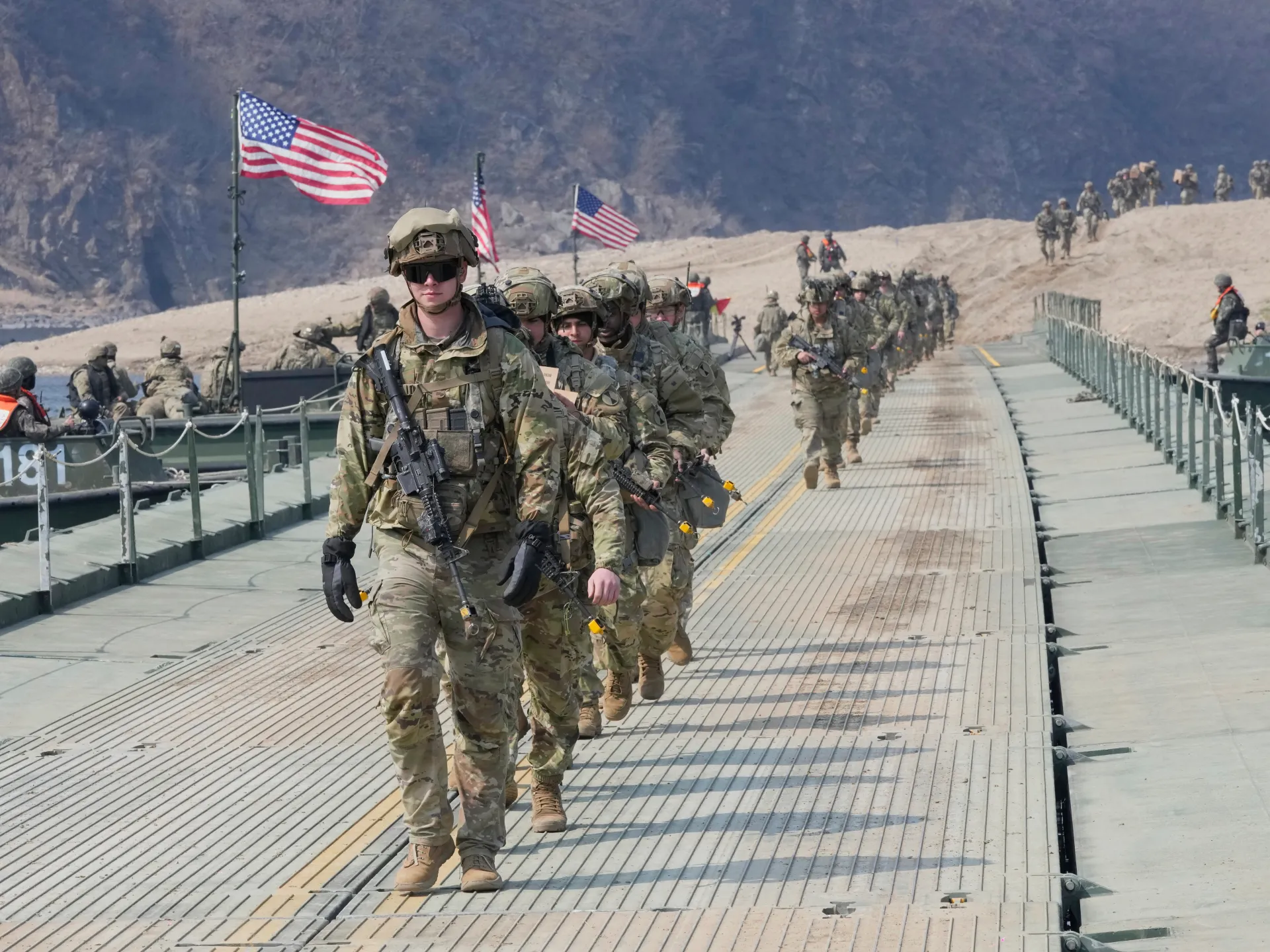
The plans, which fall short of a full invasion, could involve raids by special operations and conventional infantry troops, The Washington Post reported.
The Pentagon is preparing for weeks of limited ground operations in Iran, potentially including raids on Kharg Island and coastal sites near the Strait of Hormuz, according to United States officials quoted by The Washington Post newspaper.
The plans, which fall short of a full invasion, could involve raids by special operations and conventional infantry troops, the Post reported on Saturday, exposing US personnel to Iranian drones and missiles, ground fire, and improvised explosives.
list of 3 itemsend of list
Whether President Donald Trump would approve any of those plans remains uncertain, according to the report.
“It’s the job of the Pentagon to make preparations in order to give the Commander in Chief maximum optionality. It does not mean the president has made a decision,” White House press secretary Karoline Leavitt said in a statement, responding to questions over the Post report.
The Trump administration has deployed US Marines to the Middle East as the war in Iran stretches into its fifth week, and has also been planning to send thousands of soldiers from the army’s 82nd Airborne to the region.
On Saturday, the US Central Command (CENTCOM) said about 3,500 additional soldiers arrived in the Middle East on board the USS Tripoli.
The sailors and marines are with the 31st Marine Expeditionary Unit and arrived in the region on March 27, along with “transport and strike fighter aircraft, as well as amphibious assault and tactical assets”, according to CENTCOM.
Officials speaking to The Washington Post said discussions within the administration over the past month have touched upon the possible seizure of Kharg Island, a key Iranian oil export hub in the Gulf, and raids into other coastal areas near the Strait of Hormuz to find and destroy weapons that can target commercial and military shipping.
According to the report, one person said the objectives under consideration would probably take “weeks, not months” to complete, while another put the potential timeline at “a couple of months”.
The Pentagon had not responded on Saturday to the Post’s requests for comment. Iran has yet to respond to the report.
The report comes as Pakistan, which shares a 900km-long (559-mile) border with Iran, mediates between Washington and Tehran, hosting two days of talks starting on Sunday with the foreign ministers of Saudi Arabia, Turkiye and Egypt.
The Iranian parliament speaker, Mohammad Bagher Ghalibaf, said on Sunday the “enemy openly sends messages of negotiation and dialogue and secretly plans a ground attack”.
“Unaware that our men are waiting for the arrival of American soldiers on the ground to set fire to them and punish their regional partners forever. Our firing continues. Our missiles are in place,” the Tasnim news agency reported, quoting Ghalibaf.
“Our determination and faith have increased. We are aware of the enemy’s weaknesses, and we clearly see the effects of fear and terror in the enemy’s army.”
It was not clear whether Ghalibaf was responding to the Post report.
On Wednesday, Ghalibaf had warned that intelligence reports suggested that “Iran’s enemies” were planning to occupy an Iranian island with support from an unnamed country in the region.
He said any such attempt would be met with targeted attacks on the “vital infrastructure” of the regional country – which he did not name – that assists in the operation.
Tasnim quoted an unnamed military source as saying on Wednesday that Iran could open a new front at the mouth of the Red Sea if military action takes place on “Iranian islands or anywhere else in our lands”.
The source told Tasnim that Iran can pose a “credible threat” in the Bab al-Mandeb Strait, which lies between Yemen and Djibouti.
Tasnim later quoted an “informed source” claiming that Yemen’s Houthi rebels, backed by Iran, are prepared to play a role “if there is a need to control the Bab al-Mandeb Strait to further punish the enemy”.

The TWZ Newsletter
Weekly insights and analysis on the latest developments in military technology, strategy, and foreign policy.
The Pentagon is alarmed by the rate at which Tomahawk cruise missile stocks have been depleted during ongoing operations against Iran, according to officials who spoke to The Washington Post. The latest development highlights a matter of growing importance for the Department of Defense, which is increasingly looking at the resilience of weapons stocks as it envisages a future high-end scenario in the Pacific, especially a conflict over Taiwan.
So far, the U.S. Navy has fired more than 850 Tomahawk missiles in the war with Iran, officials familiar with the matter told The Washington Post. This has prompted discussions about how more missiles could be made available.

As it stands, only a few hundred examples of the critical long-range strike weapon are manufactured each year, meaning the global supply is limited. The exact number available to the U.S. military at any given time is a closely guarded secret, although the article suggested a higher-end figure of between 4,000 and 4,500 Tomahawk missiles on hand at the start of Epic Fury, and a lower-end figure closer to 3,000 missiles. Again, the Tomahawk would be a primary weapon system used in a conflict with China, where the target sets can range into the tens of thousands, and the country’s anti-access umbrella will require the use of standoff munitions like none other in history.
“The Pentagon has tracked the number of Tomahawks used with an increasing focus on what the burn rate will mean for not only a sustained campaign against Iran but for future military operations as well,” the report states.
I’ve posted nearly every TLAM launch video released by the DOD, major launch salvoes had continued until at least the weekend of the 14th. https://t.co/xYP9yaVySs
— OSINTtechnical (@Osinttechnical) March 27, 2026
One official told The Washington Post that the number of Tomahawks left in the Middle East was “alarmingly low,” while another said that without intervention, the Pentagon is closing in on “Winchester” — military slang meaning out of ammunition — for its supply of the missiles in the region.
The Tomahawk also comes with a hefty price tag: up to $3.6 million for some of the more recent versions, and each round can require up to two years to build. The Navy also faces a problem in that, in recent years, only small batches have been purchased: just 57 examples were included in last year’s defense budget.
At the same time, the Trump administration has repeatedly claimed that critical munitions stockpiles have not been dangerously depleted in the Iran war.
White House press secretary Karoline Leavitt said earlier this month that the U.S. military “has more than enough munitions, ammo and weapons stockpiles to achieve the goals of Operation Epic Fury laid out by President Trump — and beyond.”
Every indication we have seen is that for some munitions, that is not reality. The war in Ukraine and constant crisis in the Middle East have depleted those stockpiles, and many of the weapons take years to build, with finite caps on how many can be delivered in any given year. This is a story we have been covering for years. The Trump administration is working to greatly expand production of advanced munitions, but even the fruits of those efforts will take years to realize.
We have concluded updates for the day.
UPDATE: 10:37 PM EST-
A missile and drone attack on Prince Sultan Air Base in Saudi Arabia has led to significant injuries to U.S. personnel. 10 American service members were wounded, two of which were seriously injured. It isn’t clear what damage was done to aircraft, but we have seen at least one tanker destroyed in recent satellite imagery. This is in addition to the attack that damaged multiple tankers and destroyed another earlier in the war.
Ten American service members were wounded in an Iranian drone and missile attack on Prince Sultan Airbase earlier today-Multiple US and Arab officials to the WSJ
Two of the service members are considered seriously wounded. pic.twitter.com/fZFuVQaOCg
— OSINTtechnical (@Osinttechnical) March 27, 2026
“The injured service members were inside a building on the base that was struck in the attack, the officials said…At least one missile struck the base, as well as several unmanned aerial vehicles…The missile strike is at least the second to strike the base during the war… pic.twitter.com/bI5MrwmEDE
— Steve Lookner (@lookner) March 27, 2026
Trump is threatening to abandon NATO after member nations did not pitch in with opening the Strait:
NOW – Trump suggests the U.S. may abandon NATO countries: “We would’ve always been there for them [NATO], but now based on their actions I guess we don’t have to be.” pic.twitter.com/NKgO72FUvf
— Disclose.tv (@disclosetv) March 27, 2026
He is also joking about renaming the Strait after himself or the U.S.:
Trump on Iran:
They have to open up the Strait of Trump, I mean Hormuz… the fake news will say that I said it accidentally.
There are no accidents with me. pic.twitter.com/zQtky4AmZy
— Clash Report (@clashreport) March 27, 2026
Trump is also saying Cuba is next on his list:
As expected, the USS George Washington and its strike group are deploying to the Middle East:
New: The USS George H.W. Bush aircraft carrier will deploy to U.S. Central Command’s area of responsibility, the major combatant command overseeing American military operations against Iran, sources told @JimLaPorta @ellee_watson and me. @CBSNews
— Jennifer Jacobs (@JenniferJJacobs) March 27, 2026
UPDATE: 3:30 PM EST –
Reuters is reporting that Arab states in the Gulf are urging the United States to ensure that any deal with Tehran should do more than end the war. Instead, it must ensure Iranian missile and drone capabilities are “permanently curbed” and that Iran will never again be able to “weaponize” global energy supplies. The agency cites four unnamed Gulf sources.
Meanwhile, it appears that Qatar, Oman, and Kuwait are prioritizing a quick end to the war, while the UAE, Saudi Arabia, and Bahrain are more willing for the fighting to continue, if their longer-term aims are met in any deal to end the war.
Qatar, Oman and Kuwait are pushing behind closed doors for a swift end to the war. The UAE, Saudi Arabia and Bahrain say they are ready to absorb an escalation of the war and will not accept a post-war Iran that is still able to use the Strait of Hormuz as a bargaining chip. https://t.co/LI26CkM40E
— Idrees Ali (@idreesali114) March 27, 2026
UPDATE: 3:10 PM EST –
The Iranian foreign minister, Abbas Araghchi, has confirmed that Israel struck two of its most important steel production facilities, as well as nuclear sites — presumably including the Khondab Heavy Water Complex (see previous updates).
Araghchi said that Friday’s strikes contradicted President Donald Trump’s pledge to postpone attacking Iran’s energy infrastructure for 10 days after he claimed talks were “going well.” He further said that Tehran would exact a “heavy price” for the attacks.
Iran’s Foreign Minister Abbas Araghchi:
Israel has hit 2 of Iran’s largest steel factories, a power plant and civilian nuclear sites among other infrastructure. Israel claims it acted in coordination with the U.S.
Attack contradicts POTUS extended deadline for diplomacy.
Iran… pic.twitter.com/rrSF3PkXxs
— Clash Report (@clashreport) March 27, 2026
Saudi Arabia wants the U.S. military to ramp up its attacks on Iran, according to a Saudi intelligence source, and the kingdom is meanwhile reportedly also considering joining the fight directly, alongside the United States and Israel. Whether or not Saudi Arabia also starts launching strikes against Iran remains to be seen, but it is the clearest indication so far that the kingdom might become more deeply involved in the conflict, at least at some level.
A Saudi intelligence source confirmed to The Guardian that Riyadh was urging the United States to both continue and intensify the military campaign against Iran. The same source confirmed similar reporting in The New York Times, which states that Saudi Arabia’s de facto leader, Crown Prince Mohammed bin Salman, had called upon Trump to not curtail Operation Epic Fury, and that the U.S.-Israeli campaign represented a “historic opportunity” to remake the Middle East.

Earlier this week, Trump told journalists that the crown prince is “a warrior. He’s fighting with us.”
At this point, however, there are no reports of active Saudi military involvement in the conflict, but the kingdom is now at least weighing up that option, if peace efforts fail.
This week, The Wall Street Journal and Jerusalem Post both reported that Saudi Arabia has decided to open up additional military bases for the use of the U.S. military in its operations against Iran. Reportedly, the facilities include King Fahd Air Base in Taif in western Saudi Arabia.

Saudi Arabia has come under direct Iranian attack since the start of Epic Fury, including a drone strike last week on the oil refinery in Yanbu on the Saudi Red Sea coast.
At the same time, Saudi oil exports are not as vulnerable as those of other countries in the region, so it has not suffered to the same degree as other Gulf states. Much of Saudi Arabia’s oil exports are carried by a pipeline to the Red Sea, purposefully avoiding the Strait of Hormuz.
There is also the threat that the Iran-backed Houthis in Yemen, which have long waged a separate war with Saudi Arabia, could be drawn into the current conflict if the Saudi position changes.
Were that to happen, the vital Red Sea oil pipeline could become a very prominent target for Iran and the Houthis.
Iran’s Islamic Revolutionary Guard Corps (IRGC) declared today that shipping “to and from ports of allies and supporters of the Israeli-American enemies” is prohibited through any corridor or to any destination, Iranian state media reported.
The IRGC added that the Strait of Hormuz remains closed and any attempted transit through the strategic waterway will face “harsh measures.”
There have been reports today of three container ships of various nationalities turning back from the Strait of Hormuz, after warnings were issued by the IRGC Navy.
IRGC:
This morning, following the lies of the corrupt president of America regarding the openness of the Strait of Hormuz, three container ships of different nationalities moved toward the designated corridor for the transit of ships with permits, which were turned back with a… pic.twitter.com/uIvDmzpBQJ
— Clash Report (@clashreport) March 27, 2026
COSCO vessels abort Strait of Hormuz transit attempt amid ongoing instability
Following COSCO’s announcement to resume booking acceptance to Gulf destinations, new developments overnight suggest the situation in the Strait of Hormuz remains highly unstable.
According to… pic.twitter.com/VkrtGwOZgD
— MarineTraffic (@MarineTraffic) March 27, 2026
As we reported in our previous rolling coverage, Trump threatened last Saturday that he would destroy Iranian power plants if Tehran did not reopen the Strait of Hormuz within 48 hours.
On Monday, the U.S. leader postponed his threat for five days (until Friday), citing “very good and productive conversations” with Iran on ending the war — something that Tehran has described as “fake news.”
Now, Trump is pushing that deadline back again, pausing his threat to attack Iran’s energy infrastructure for 10 days until April 6, claiming that the request came from Tehran and that talks were going “very well.”
At the same time, there are suggestions that the Iran war, in general, may be of diminishing interest to the U.S. president.
“[Trump] is getting a little bored with Iran,” a senior White House official told Jake Traylor of MS NOW. “Not that he regrets it or something — he’s just bored and wants to move on.”
There are suggestions of something of a rift between Israel and the United States, as to the course the conflict should take.
According to Israeli journalist Barak Ravid, U.S. Vice President JD Vance had a “difficult” call with Israeli Prime Minister Benjamin Netanyahu earlier this week.
Reportedly, Vance said that Israeli assessments for toppling the Iranian regime were not realistic enough, saying, “You were too optimistic in your assessments regarding the overthrow of the regime in Iran.”
According to Barak Ravid, U.S. Vice President JD Vance had a difficult call with Israeli Prime Minister Benjamin Netanyahu on Monday where he said that Israeli assessments for toppling the Iranian regime were not realistic enough, saying “You were too optimistic in your… pic.twitter.com/KfEuGbUkzt
— OSINTdefender (@sentdefender) March 27, 2026
As we reported earlier this week, F-35Cs from the U.S. Marine Corps are the latest fighters poised to deploy to the Middle East region for Operation Epic Fury. The movement of these aircraft to RAF Lakenheath in England signals what is set to be the first land-based combat deployment for the F-35C, the carrier variant of the Joint Strike Fighter flown by both the Navy and Marine Corps. We now have some better imagery of the first visit of these aircraft to a base in the United Kingdom.
🇺🇸 The Tomcats / VMFA-311
Four Lockheed Martin F-35Cs of Marine Fighter Attack Squadron 311 (VMFA-311) based at MCAS Miramar departed RAF Lakenheath on the 26th March as MAZDA 31-34.
This is the first time ever that F-35Cs have visited the United Kingdom.
Probably some of the… pic.twitter.com/1QnZ9TFcea
— Havoc Aviation (@havoc_aviation) March 27, 2026
The United Arab Emirates has told allies that it would participate in a multinational maritime task force intended to reopen the Strait of Hormuz, as it pushes to form a coalition to ensure shipping can pass through the vital waterway, the Financial Times reports.
According to the FT, the UAE has told the United States and other Western nations that it would take part, and that Abu Dhabi would deploy assets from its own navy.
Like Saudi Arabia, the UAE is taking a harder line on Iran, as it comes under regular attack by Tehran’s retaliation strikes.
The same report also states that the UAE is working on a UN Security Council resolution with Bahrain to provide any future task force with a mandate.
The UAE is pushing to form a multinational naval force to reopen the Strait of Hormuz.
It’s willing to deploy its own navy and is lobbying allies and the UN for support.
Only Bahrain has backed the plan so far, while others remain cautious.
Source: FT pic.twitter.com/AWBfpyeTbf
— Clash Report (@clashreport) March 27, 2026
According to an assessment from the Center for Strategic and International Studies (CSIS) in Washington, D.C., the U.S. strike campaign has settled into a “sustainable pace of bombing,” striking between 300 and 500 targets per day. U.S. forces are also now mainly using stand-in weapons, rather than more expensive standoff munitions. As a result of the “munitions transition,” the costs of running the war have been greatly reduced — although not without risk to aircraft and airmen.
“The U.S. strike campaign has settled into a sustainable pace of bombing between 300 and 500 targets per day. U.S. forces also now predominantly use far less expensive, short-range munitions.” https://t.co/iQm636cWwO
— Shashank Joshi (@shashj) March 27, 2026
The Pentagon is looking at sending up to 10,000 additional ground troops to the Middle East, the Wall Street Journal has reported, quoting Defense Department officials. Having more troops in the region would give Trump more military options and greater bargaining power, as he seeks to bring Tehran to the negotiating table.
House Speaker Mike Johnson has said that “it should not be necessary” for U.S. forces to invade Iran. “I think we can get this resolved without it,” he added.
House Speaker Mike Johnson tells @BretBaier, “It should not be necessary” for U.S. forces to invade Iran. “I think we can get this resolved without it.”
— Lucas Tomlinson (@LucasFoxNews) March 27, 2026
Secretary of State Marco Rubio has also suggested that the U.S. military will not need to deploy ground troops to accomplish U.S. objectives in the war, although he also reflected on the importance of giving Trump “maximum optionality” for any contingency.
NEW: Secretary of State Marco Rubio tells me at the airport before leaving France that the US does NOT need to deploy ground troops to accomplish its objectives in the #IranWar.
But part of the cabinet’s job is to always give President Trump maximum optionality, he adds. pic.twitter.com/oYQrmF6Fdy
— Eric Martin (@EMPosts) March 27, 2026
So far, it seems that Iran’s new Supreme Leader, Mojtaba Khamenei, has not yet agreed to negotiations.
Should the U.S. military conduct some kind of ground operation, various energy infrastructure within the United Arab Emirates (UAE) would come under Iranian attack, with a target list published by Iran’s state-backed Fars News Agency. Designated targets include desalination plants, nuclear power plants, and other power hubs across the UAE.
Iran’s state-backed Fars News Agency has released a target list of energy infrastructure within the United Arab Emirates (UAE) that they plan to strike if the U.S. conducts a ground operation against the strategically and economically important Kharg Island or any other Iranian… pic.twitter.com/PbwM14SPIZ
— OSINTdefender (@sentdefender) March 26, 2026
The Israel Defense Forces (IDF) say they carried out further strikes on targets in Tehran early on Friday. A brief military statement said Israeli forces “completed a wide-scale wave of strikes targeting infrastructure of the Iranian terror regime in the heart of Tehran.”
In a separate statement, the IDF said that it had also struck “ballistic missiles and aerial defense systems production sites across Iran.” It reported hitting missile launchers and storage sites in western Iran, as well as missile production sites in the capital. Other targets apparently included Iran’s primary facility for the production of naval cruise missiles and sea mines in Yazd, Iran.
“The site was used for the planning, development, assembly, and storage of advanced missiles intended for launch from cruise platforms, submarines, and helicopters toward both mobile and stationary maritime targets,” the IDF said.
🎯🌊 STRUCK: Iranian Regime’s primary facility for the productions of missiles and sea mines in Yazd, Iran
The site was used for the planning, development, assembly, and storage of advanced missiles intended for launch from cruise platforms, submarines, and helicopters toward…
— Israel Defense Forces (@IDF) March 27, 2026
The latest round of U.S.-Israeli strikes hit a heavy water reactor in central Iran, Iranian media reported today.
“The Khondab Heavy Water Complex was targeted in two stages by aggression from the American and Zionist enemy,” the Fars News Agency reported, citing Hassan Ghamari, an official in the central Markazi province. Fars and other media said there were no casualties or radiation leaks from the site.
The facility is intended to produce the heavy water used to cool nuclear reactors. As a byproduct of this process, plants of this kind also produce plutonium, which can potentially be used in nuclear weapons. This would offer another route to procuring a nuclear warhead, other than enriched uranium.
There are reports out of Iran that recent U.S. and Israeli airstrikes targeted key steel production facilities. The semi-official Iranian Mehr news outlet claims that steel plants were hit in the central Iranian city of Isfahan, with separate attacks on the Khuzestan Steel and Mobarakeh Steel factories.
In response to an inquiry from The Jerusalem Post, the Israeli military said that it was not aware of any Israeli strikes on the facilities.
Reports from Iran suggest that all three of Iran’s largest steel production plants were struck in a coordinated targeted strikes.
This could substantially affect the national steel industry and manufacturing pic.twitter.com/mmrnyDS8UX
— Ben Tzion Macales (@BenTzionMacales) March 27, 2026
The U.S. military has deployed uncrewed surface vessels (USVs) for patrols as part of its operations against Iran, the Pentagon has said, according to the Jerusalem Post. The specific type of drone boats that have been deployed was not reported, although this is not the first time that the U.S. military has used USVs in the region, notably in the Persian Gulf and the Strait of Hormuz.
The Iranian foreign minister, Abbas Araghchi, has accused the U.S. military of using Persian Gulf citizens as human shields.
“From outset of this war, U.S. soldiers fled military bases in GCC [Gulf Cooperation Council] to hide in hotels and offices. They use citizens as human shield. Hotels in U.S. deny bookings to officers who may endanger customers. GCC hotels should do same,” Abbas Araghchi said in a post on his X account.
IRGC:
The cowardly American and Zionist forces, who lack the courage and ability to defend their own military bases, are attempting—out of fear of the firepower of Islamic fighters—to use civilian locations and innocent people as human shields.
Since it is our duty to eliminate…
— Clash Report (@clashreport) March 27, 2026
As we reported yesterday, Iranian bombardment of U.S. military facilities in the wider region does appear to be driving the relocation of soldiers, although there is no suggestion of a human shield policy.
According to a report from The New York Times, citing military personnel and American officials, a significant number of U.S. troops have been forced to relocate from their bases to hotels and office spaces throughout the region.
Iranian Foreign Minister Abbas Araghchi claims that since the start of the war, US troops have left military bases in the GCC to shelter in civilian spaces, effectively using residents as human shields, and urges Gulf hotels to follow US counterparts in denying accommodation to… pic.twitter.com/MJrUht8Di1
— Al Arabiya English (@AlArabiya_Eng) March 26, 2026
Reports in the Lebanese media suggest that an Israeli strike hit Beirut’s southern suburbs early today. Several explosions were heard in the area, which is considered a Hezbollah stronghold. Israel has previously issued evacuation warnings for the area but provided no specific warning in advance of Friday’s strike, AFP said.

Kuwait’s Shuwaikh port was hit by drones, causing material damage with no injuries reported, the Kuwait Ports Authority said today.
The international airport in Kuwait City also appears to have been on the receiving end of recent Iranian attacks, with a significant blaze there today, after a reported drone strike.
🔥 Fire breaks out at fuel tanks at Kuwait International Airport following an Iranian drone attack on Thursday
Firefighters are reportedly still battling the blaze pic.twitter.com/ti0r1RCAH1
— Anadolu English (@anadoluagency) March 27, 2026
Iran-linked hackers today claimed they had accessed FBI Director Kash Patel’s personal email inbox, Reuters reports. The group claims to have published photographs of the director and other documents on the internet.
Satellite imagery of the Yazd missile complex, one of the most important in Iran, from earlier this month, reveals the shadow of an apparent Khorramshahr missile before being launched toward Israel. The original Khorramshahr first emerged publicly in 2017, and it is assessed to be derived, at least in part, from a North Korean design. It is a liquid-fuel medium-range ballistic missile (MRBM) with a claimed range of around 1,250 miles (2,000 kilometers).
Recent analysis from ThePrint, an Indian digital news platform, suggests that Iran has launched around 4,300 missiles and drones since the start of the current conflict, with the majority of these targeting Gulf nations, rather than Israel. The analysis states that Tehran has launched at least 1,815 drones and 372 missiles at the UAE since the start of the war. Israel, in comparison, has faced roughly 930 missile and drone attacks in the same period.
Interesting number crunching by my colleague @Keshav_Paddu
4,300 missiles & drones since day 1 of war: Gulf nations, not Israel faced brunt of #Iran’s retaliation#Israel, in comparison, has faced roughly 930 missile, drone attacks in the same period.https://t.co/WLOancpE8z
— Snehesh Alex Philip (@sneheshphilip) March 27, 2026
In related news, Reuters today published an assessment stating that, so far, the Pentagon can only confirm that about a third of the Iranian missile arsenal has been destroyed.
Satellite imagery from yesterday indicates that the aircraft carrier USS Gerald R. Ford has left Naval Support Activity Souda Bay in Crete, Greece, escorted by three patrol boats. The supercarrier went to Souda Bay for repairs after a fire broke out in the laundry area while underway in the Middle East on March 12, injuring two sailors.
Ukrainian President Volodymyr Zelensky says that his country has “reached an important arrangement” with Saudi Arabia on defense cooperation. The agreement between the defense ministries of the two countries is almost certain to involve counter-drone technologies and expertise.
“We are ready to share our expertise and systems with Saudi Arabia and to work together to strengthen the protection of lives,” Zelensky wrote on X. “Now into the fifth year, Ukrainians are resisting the same kind of terrorist attacks — ballistic missiles and drones — that the Iranian regime is currently carrying out in the Middle East and the Gulf region. Saudi Arabia also has capabilities that are of interest to Ukraine, and this cooperation can be mutually beneficial.”
We have reached an important Arrangement between the Ministry of Defense of Ukraine and the Ministry of Defense of the Kingdom of Saudi Arabia on defense cooperation. The document was signed ahead of our meeting with the Crown Prince of Saudi Arabia, Mohammed bin Salman Al Saud.… pic.twitter.com/j3aXzLXSNr
— Volodymyr Zelenskyy / Володимир Зеленський (@ZelenskyyUa) March 27, 2026
Contact the author: thomas@thewarzone.com

For the second time in recent months, the civilian commission that oversees the LAPD has overruled Chief Jim McDonnell in a police shooting, concluding that officers were in the wrong when they shot at Jillian Lauren, an author and the estranged wife of Weezer bass player Scott Shriner.
McDonnell wrote in a report made public Thursday that two officers were justified in using deadly force against Lauren, 52, who pointed a gun and fired at officers during a standoff in the backyard of her Eagle Rock home last April.
But the Police Commission took the rare step of going against McDonnell’s recommendation, finding fault with the shooting and concluding that the officers made serious tactical mistakes.
Although the five-member panel is the final authority on whether a police shooting is in or out of policy, the chief has final say on officer discipline. Such decisions are rarely made public because of state police privacy laws.
The incident began at about 5:20 p.m. on April 8, 2025, when police responded to a request for help from the California Highway Patrol in tracking down three suspects wanted in a hit-and-run crash. Officers Joshua Wolak and Dorian Zhou joined in the search, along with several others from the nearby Northeast patrol station.
Body-worn camera footage released by the department showed Wolak, Zhou and a CHP officer standing on a retaining wall next to a fence that separated a neighbor’s home from Lauren’s property. The LAPD video shows Lauren, wearing a purple Weezer T-shirt and black tights, walk around the yard with a black handgun, looking around as though she were on high alert.
Police said that officers yelled at Lauren to drop her gun for several minutes, before she shot a round in their direction. Wolak then fired seven rounds, while Zhou shot five from a distance of roughly 50 feet.
Lauren was not connected to the hit-and-run incident, authorities said. Audio from a 911 call by one of Lauren’s neighbors indicated that Lauren believed she was being fired at by armed suspects, who had been spotted running through neighboring properties.
After the shooting, Lauren retreated into her home, where she stayed for about an hour until an officer called her personal assistant, who was also inside. She was later taken to an area hospital with a gunshot wound to her left arm, police said.
During his interview with internal investigators, Zhou said he saw Lauren raise the handgun at a 45-degree angle, “rack” the slide to chamber a round and fire at officers. In response, he said, he fired five rounds, aiming at her center mass.
He responded that he stopped firing “because I lost sight of her.”
The commission voted unanimously to rule the officers’ decision to shoot out of policy. Officials typically do not publicly discuss the rationale for reaching certain decisions.
Both the commission and the chief were critical of the command decisions of Sgt. Albert Hoang at the scene, noting his failure to ensure that the officers involved were interviewed and the fact that he didn’t notify his higher-ups about the shooting until three hours after it occurred.
The civilian panel also diverged from McDonnell in assessing the tactical mistakes made by Hoang and the two officers. In his report, McDonnell found that the differing tactics used by CHP and LAPD only contributed to the confusion in what was already a fraught situation.
McDonnell wrote that he wants to develop protocols to ensure that if a similar incident were to arise “the other agency should be directed to disengage from the tactical portion of the incident or, as practicable, placed in a position and role that minimizes the co- mingling of tactics.”
In a 4-1 vote, the commission also decided that the officers’ decision to draw their weapons did not comply with LAPD policies — another rare finding.
Lauren was initially arrested on suspicion of attempted murder of a peace officer, a charge that carries a lengthy prison sentence, then later charged with assault and negligent discharge of a firearm. In December, a Los Angeles County Superior Court judge granted her diversion due to mental health issues, sparing her potential jail time.
The bestselling author of “Everything You Ever Wanted,” she filed for divorce from her husband in December in Los Angeles County Superior Court. In her petition, she cited “irreconcilable differences” but did not list an official date of separation. The two married in November 2005 and share two teenage sons.
Before the confrontation with police, Lauren had been recovering from cancer treatment and a hysterectomy in March.
Times staff writer Alexandra Del Rosario contributed to this report.

If I had a nickel for every time an editor has sent me an SFGate story and asked me to match it, I’d be at least a couple dollars richer. The San Francisco-based news website provides solid coverage of California public lands, especially our national parks.
So when my colleague Jaclyn Cosgrove told me the National Park Service had reportedly blacklisted SFGate, I wasn’t exactly shocked.
Recent SFGate stories have revealed efforts to limit which public lands employees can share information with the public, quoted critics of the Department of the Interior’s decision to end reservation systems at popular parks and detailed a litany of items that were previously offered at the parks but are now being reviewed for possible removal, thanks to an executive order to “restore truth and sanity” to American history, including books about Indigenous culture and educational materials for children.
The L.A. Times climate team gets you up to speed on climate change, energy and the environment. Sign up to get it in your inbox every week.
By continuing, you agree to our Terms of Service, which include arbitration and a class action waiver. You agree that we and our third-party vendors may collect and use your information, including through cookies, pixels and similar technologies, for the purposes set forth in our Privacy Policy such as personalizing your experience and ads.
But over the past month, the National Park Service essentially stopped responding to inquiries sent by SFGate reporters on dozens of subjects, national parks bureau chief Ashley Harrell wrote last week. The outlet spoke with sources, reviewed internal communications and learned that an Interior Department spokesperson had instructed the National Park Service to ignore SFGate reporters, Harrell wrote. The blacklisting was apparently prompted by a Feb. 10 article on the Interior Department’s efforts to centralize control of park service communications.
I emailed the National Park Service to learn more. “Unfortunately, SFGate has distorted the facts and has caused confusion with their reporting with the mainstream media,” a spokesperson replied. “This has caused the Department to spend countless hours correcting their false narrative with other media outlets.”
Although the statement came from a park service email address, the wording is identical to a statement provided to SFGate by an Interior Department spokesperson.
I’ve also noticed changes in how the park service handles media requests over the past year or so. Some L.A. Times inquiries — about a coyote swimming to Alcatraz and a man charged with BASE jumping in Yosemite, for instance — received prompt replies.
But others — like questions about whether the park service is relying more heavily on seasonal employees amid a decline in permanent staff — went unreturned. And some — like an inquiry for a previous edition of a Boiling Point newsletter about an interpretive exhibit under scrutiny at Death Valley National Park — were fielded by a spokesperson for the Interior Department , rather than the park itself.
I’m not alone. When our wildlife and outdoors reporter Lila Seidman wrote about a wildfire that ripped through Joshua Tree National Park during last year’s government shutdown, she received responses from the Interior Department, but emails to the park service went unreturned.
Jack Dolan, an investigative reporter who often covers public lands, said he hasn’t received meaningful responses from the National Park Service since early last year.
And Cosgrove, who writes The Wild newsletter, said that park rangers remain friendly and helpful, but any communication involves a demand for all questions in writing.
Park service sources and advocates describe all this as part of a broader effort to centralize communications from sub-agencies to the Department of the Interior. Since last year, roughly 230 communications employees have been moved from the National Park Service to the Department of the Interior — part of a broader push in which more than 5,700 employees at the 11 agencies the Interior Department oversees were shifted from the agencies to the department, according to figures provided by the National Parks Conservation Assn., a nonprofit that advocates for the park system.
What’s more, the Interior Department must now approve many park service communications that were once left up to the parks themselves, said John Garder, senior director of budget and appropriations for the National Parks Conservation Assn. That includes exhibits, news releases, website updates and even social media posts, said a source within the park service who asked to remain anonymous over fears of retaliation.
The consolidation “creates significant inefficiencies and removes a layer of accountability to the parks themselves,” Garder said. “It makes it difficult for parks to act nimbly using their professional discretion to make decisions about informing the public about developments in the park,” like a closed road, wildlife hazard or natural disaster.
In an email to The Times, the park service accused National Parks Conservation Assn. employees of donating to Democratic political campaigns and pointed out the nonprofit’s X account follows progressive politicians and groups. “Our parks are nonpartisan, but the NPCA isn’t and they are using you to further raise money off of our parks while never giving those funds to our parks,” a spokesperson wrote in an emailed statement.
National Parks Conservation Assn.’s X account follows over 55,000 users of the platform, including both Democratic and Republican lawmakers and organizations. Garder also noted that the association’s longstanding role has been to advocate for national parks, rather than to raise money directly for them.
The park service email confirmed that officials are “modernizing” the Department of the Interior so that it “will share one voice when communicating the priorities of the Department.”
“The unification of the communication functions will allow for a more collaborative, creative and hands-on approach to Department communications,” the statement said, “and will modernize the federal government by providing a product that is not only better for the American taxpayer but also showcases the state-of-the-art communications capabilities of the United States of America.”
I asked whether I should attribute the statement to a spokesperson for the park service or the Interior Department. The spokesperson replied that I could attribute it to either.
If you’re a Southern California local, you are probably familiar with PBS SoCal. On April 22, the public media organization is premiering the seventh season of the award-winning program “Earth Focus,” which will be followed by the eighth season in May. We’re excited for the eighth season in particular, because we collaborated with the PBS SoCal team on a few stories about the complexities of rebuilding Los Angeles. You can stream the show for free at pbssocal.org/earthfocus.
Karen Budd-Falen, the third highest-ranking official at the Department of the Interior, has been granted an ethics waiver to work on grazing issues despite potential conflicts of interests that prompted her to recuse herself from such matters during the first Trump presidency, according to Chris D’Angelo of Public Domain.
A pair of Republican senators have officially moved to overturn the management plan for Utah’s Grand Staircase–Escalante National Monument, casting uncertainty on its future and raising new questions about the future of public lands management, Caroline Llanes of Rocky Mountain Community Radio reports.
The Trump administration is aggressively expanding the border wall through ecologically sensitive public lands, with a portion planned for Big Bend National Park emerging as a political flash point, Arelis R. Hernández, Jake Spring, John Muyskens and Thomas Simonetti write in this Washington Post deep dive.
The Interior Department has officially pulled back more than 80% of its regulations tied to implementing the National Environmental Policy Act in a bid to streamline the environmental review process for major projects on federal public lands. Conservation groups say the changes will block public input and violate federal law, according to Hannah Northey and Scott Streater of E&E News by Politico.
The Trump administration is taking the final steps to undo the Public Lands Rule, which elevated conservation to an official use of Bureau of Land Management lands, Streater also reports. The rule allowed conservation groups to obtain leases for restoration work, similar to how the Bureau of Land Management awards leases to private contractors for extraction and development, points out Sage Marshall of Field & Stream.
Meanwhile, the U.S. Forest Service is expected to soon release an updated proposal for the rescission of the Roadless Rule, which blocked new road building and commercial logging on some 58 million acres of backcountry. The rollback would strike a big blow to hunting and fishing opportunities, according to a report from Trout Unlimited.
Amid a global energy crisis that’s seen oil prices skyrocket, California has been particularly hard-hit due to a dearth of refineries and higher taxes and fees, all of which have left politicians, consumer groups and business interests arguing over who’s to blame, write Ivan Penn and Kurtis Lee for the New York Times.
In the latest maneuver in its campaign against renewable energy, the Trump administration will pay a French company $1 billion to walk away from two U.S. offshore wind leases, according to Jennifer McDermott of the Associated Press.
Southern California’s most destructive wildfires, wettest holiday season and hottest March heat wave have all taken place in the last 15 months, and there’s one clear through line connecting them all, scientists told my colleague Clara Harter.
Mosquitoes have gone year-round in Los Angeles, but business owners have indicated they’re not willing to pay to expand a promising effort to help control their numbers, my buddy Lila Seidman reports.
This is the latest edition of Boiling Point, a newsletter about climate change and the environment in the American West. Sign up here to get it in your inbox. And listen to our Boiling Point podcast here.
For more land news, follow @phila_lex on X and alex-wigglesworth.bsky.social on Bluesky.
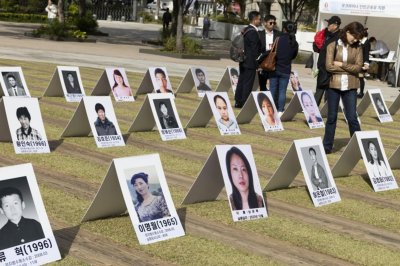

1 of 2 | People look at pictures of North Koreans missing in North Korea during an exhibition held as part of the 2025 Seoul World Convention on North Korean Human Rights in front of Seoul City Hall in Seoul, South Korea, 24 October 2025. The convention, held under the theme ‘Let Them Be Free!’, took place from 22 to 24 October. Photo by JEON HEON-KYUN / EPA
March 25 (Asia Today) — Russia funneled about 50 billion won ($33.4 million) to North Korean workers under the guise of scholarships, according to a report released Tuesday by a South Korean human rights group.
The Citizens’ Coalition for North Korean Human Rights said the arrangement allowed Pyongyang and Russian entities to evade U.N. Security Council Resolution 2397, which bars the hiring of new North Korean workers abroad and requires the repatriation of those already deployed.
According to the report, a Russian university identified as Sozheistvie received 2.7 billion rubles ($33.34million) in support from 76 Russian companies between October 2023 and June 2025 and distributed the funds to North Korean laborers who were presented as foreign students.
The group said the workers were formally registered in language, technical or vocational training programs, but were in practice assigned to full-time construction, logging and industrial jobs.
Based on an analysis of the university’s financial records, the report said individual payments ranged from about 330,000 won to 4.7 million won, or about $220 to $3,135, per worker – far above the average scholarship paid by Russian higher education institutions, which it said was about 70,000 won, or roughly $47, per student in 2024. (Xe)
The report said the wages were ultimately confiscated by North Korean authorities and routed into accounts linked to institutions involved in weapons development and regime maintenance, including agencies associated with uranium mining, nuclear and ballistic missile programs, arms exports and internal security.
It also said North Korean military-linked companies and firms tied to Office 39, a key regime finance network, remain active in Russia despite international sanctions.
The findings were based on in-depth interviews with eight North Korean defectors, including former workers in Russia, witnesses and former managers with direct knowledge of the labor system, the group said.
— Reported by Asia Today; translated by UPI
© Asia Today. Unauthorized reproduction or redistribution prohibited.
Original Korean report: https://www.asiatoday.co.kr/kn/view.php?key=20260325010007833

Zidane will succeed his former national side teammate Didier Deschamps as France head coach, according to the report.
Published On 24 Mar 202624 Mar 2026
French football icon Zinedine Zidane has agreed to take over his national team’s head coaching duties following this summer’s FIFA World Cup, ESPN reported on Monday.
Zidane, 53, reportedly reached a verbal agreement with the Federation Francaise de Football to replace Didier Deschamps, who has held the role since 2012.
Zidane, who managed La Liga powerhouse Real Madrid for two stints (2016-18, 2019-21), has long been expected to eventually become the skipper for France.
As a player, the dynamic midfielder won the 1998 Ballon d’Or and was a three-time FIFA World Player of the Year (1998, 2000 and 2003).
He helped France win the World Cup in 1998 and finish second in 2006. He was infamously sent off during the final of the latter World Cup when he head-butted Italy’s Marco Materazzi in the chest.


A new UN report confirms the past decade was the hottest on record, warning that rising temperatures driven by fossil fuels demand urgent climate action.
Published On 23 Mar 202623 Mar 2026
Share
Karim Khan has denied the allegations and took voluntary leave from his position in May.

Published On 21 Mar 202621 Mar 2026
Judges have cleared the chief prosecutor of the International Criminal Court (ICC), Karim Khan, of all wrongdoing after an investigation into alleged sexual misconduct, Middle East Eye reports.
A report by Middle East Eye published on Saturday said a panel of three judges submitted a confidential report to the court’s oversight body, the Bureau of the Assembly of States Parties (ASP), on March 9.
list of 3 itemsend of list
“The Panel is unanimously of the opinion that the factual findings by [The UN’s Office of Internal Oversight Services] OIOS do not establish misconduct or breach of duty under the relevant framework,” the report concluded, according to the sources cited by Middle East Eye.
The OIOS investigation was commissioned by the head of the ASP in November 2024 after a member of Khan’s office accused the prosecutor of sexual misconduct.
In August last year, a second woman came forward and alleged that Khan had abused his power over her while she was working for the British lawyer.
The woman had described his behaviour to UK newspaper The Guardian last year as a “constant onslaught” of advances.
Khan has denied the allegations and took voluntary leave from his position at the ICC in May, while awaiting the inquiry’s results. His deputy prosecutors have been in charge of his office in his absence.
According to Middle East Eye, the ASP met on Monday to discuss its response to the panel’s report. Under the court’s rules, if the bureau determines that no misconduct has occurred, the investigation should be closed.
The ASP has 30 days from receiving the report to make its preliminary assessment of the alleged sexual misconduct. Khan will then have 30 days to respond, and the bureau will have another 30 days to make its decision.
Khan declined to comment on the report, the outlet said.
The allegations of sexual misconduct came as Khan’s office was pursuing an investigation into alleged war crimes and genocide by Israeli officials and forces in Gaza and the occupied Palestinian territory.
Khan sought arrest warrants for Israeli Prime Minister Benjamin Netanyahu and his then-defence minister, Yoav Gallant, over “criminal responsibility” for alleged war crimes and crimes against humanity in Gaza.
He also sought arrest warrants for Russian President Vladimir Putin and other Russian officials over the alleged unlawful deportation of Ukrainian children during Moscow’s ongoing war on Ukraine.
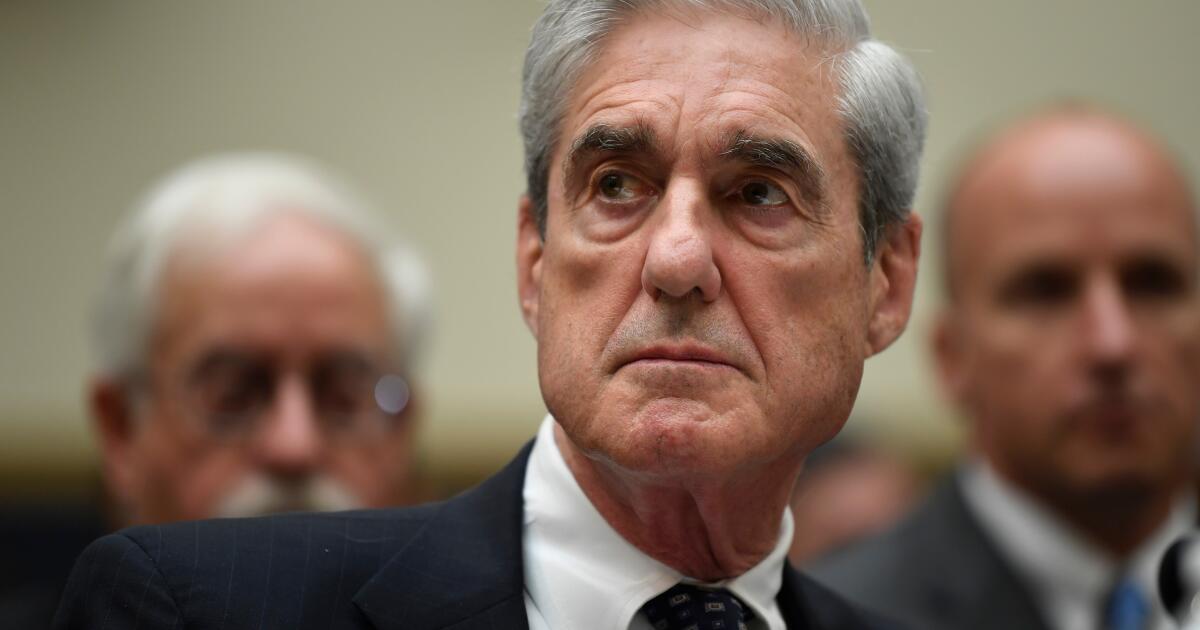
WASHINGTON — Robert S. Mueller III, the FBI director who transformed the nation’s premier law enforcement agency into a terrorism-fighting force after the Sept. 11, 2001, attacks and later became special counsel in charge of investigating ties between Russia and Donald Trump’s presidential campaign, has died. He was 81.
“With deep sadness, we are sharing the news that Bob passed away” on Friday night, his family said in a statement Saturday. “His family asks that their privacy be respected.”
President Trump, responding on social media, said: “Robert Mueller just died. Good, I’m glad he’s dead.” He added: “He can no longer hurt innocent people!”
At the FBI, Mueller set about almost immediately overhauling the bureau’s mission to meet the law enforcement needs of the 21st century, beginning his 12-year tenure just one week before the Sept. 11 attacks and serving across presidents of both political parties. He was nominated by Republican President George W. Bush.
The cataclysmic event instantaneously switched the bureau’s top priority from solving domestic crime to preventing terrorism, a shift that imposed an almost impossibly difficult standard on Mueller and the rest of the federal government: Preventing 99 out of 100 terrorist plots wasn’t good enough.
Later, he was special counsel in the Justice Department’s investigation into whether Russia’s attempts to help Trump’s 2016 presidential campaign amounted to illegal cooperation to sway the outcome.
Mueller was a patrician Princeton graduate and Vietnam veteran who walked away from a lucrative midcareer job to stay in public service, and his old-school, buttoned-down style made him an anachronism during a social-media-saturated era.
In a statement, former President Obama called Mueller “one of the finest directors in the history of the FBI” who saved “countless lives” after transforming the bureau. “But it was his relentless commitment to the rule of law and his unwavering belief in our bedrock values that made him one of the most respected public servants of our time,” Obama added.
The FBI did not immediately respond to a request seeking comment. The FBI Agents Assn., a nonprofit advocacy group representing current and former agency employees, lauded Mueller for his “commitment to public service and to the FBI’s mission.“
The second-longest-serving director in FBI history, behind only J. Edgar Hoover, Mueller held the job until 2013 after agreeing to Obama’s request to stay on beyond his 10-year term.
After several years in private law practice, Mueller was asked by Deputy Atty. Gen. Rod Rosenstein to return to public service as special counsel in the Trump-Russia inquiry.
Mueller’s stern visage and taciturn demeanor matched the seriousness of the mission, as his team spent nearly two years quietly conducting one of the most consequential, and divisive, investigations in Justice Department history. He held no news conferences and made no public appearances during the investigation, remaining quiet despite attacks from Trump and his supporters and creating an aura of mystery around his work.
All told, Mueller brought criminal charges against six of the president’s associates, including his campaign chairman and first national security advisor.
His 448-page report released in April 2019 identified substantial contacts between the Trump campaign and Russia but did not allege a criminal conspiracy. He laid out damaging details about Trump’s efforts to seize control of the investigation, and even shut it down, though he declined to decide whether Trump had broken the law, in part because of Justice Department policy barring the indictment of a sitting president.
In perhaps the most memorable language of the report, Mueller pointedly noted: “If we had confidence after a thorough investigation of the facts that the president clearly did not commit obstruction of justice, we would so state. Based on the facts and the applicable legal standards, we are unable to reach that judgment.”
The nebulous conclusion did not deliver the knockout punch to the administration that some Trump opponents had hoped for, nor did it trigger a sustained push by House Democrats to impeach the president — though he was later tried and acquitted on impeachment charges related to pressuring Ukraine for campaign dirt on Joe Biden and Trump’s role in the Jan. 6 riot and insurrection.
The outcome of the Mueller investigation also left room for Atty. Gen. William Barr to insert his own views. He and his team made their own determination that Trump did not obstruct justice, and he and Mueller privately tangled over a four-page summary letter from Barr that Mueller argued did not adequately capture his report’s damaging conclusion.
Mueller deflated Democrats during a highly anticipated congressional hearing on his report when he offered terse, one-word answers and appeared hesitant at times in his testimony. Frequently, he seemed to waver on details of his investigation. It was hardly the commanding performance many had expected from Mueller, who had a towering reputation in Washington.
Over the next months, Barr made clear his own disagreements with the foundations of the Russia investigation, moving to dismiss a false-statements prosecution that Mueller had brought against former national security advisor Michael Flynn, even though that investigation ended in a guilty plea.
Mueller’s tenure as special counsel was the capstone of a career spent in government.
His time as FBI director was defined by the Sept. 11 attacks and their aftermath, as the agency — granted broad new surveillance and national security powers — scrambled to confront an ascendant Al Qaeda, interrupt plots and take terrorists off the street before they could act.
It was a new model of policing for an FBI that had long been accustomed to investigating crimes that had already occurred.
When he became FBI director, “I had expected to focus on areas familiar to me as a prosecutor: drug cases, white-collar criminal cases and violent crime,” Mueller told a group of lawyers in October 2012.
Instead, “we had to focus on long-term, strategic change. We had to enhance our intelligence capabilities and upgrade our technology. We had to build upon strong partnerships and forge new friendships, both here at home and abroad.”
In response, the FBI shifted 2,000 of the total 5,000 agents in the bureau’s criminal programs to national security.
In hindsight, the transformation was a success. At the time, there were problems, and Mueller said as much. In a speech near the end of his tenure, he recalled “those days when we were under attack by the media and being clobbered by Congress; when the attorney general was not at all happy with me.”
Among the issues: The Justice Department’s inspector general found that the FBI circumvented the law to obtain thousands of phone call records for terrorism investigations.
Mueller decided that the FBI would not take part in abusive interrogation techniques of suspected terrorists, but the policy was not effectively communicated down the line for nearly two years.
In an effort to move the FBI into a paperless environment, the bureau spent more than $600 million on two computer systems — one that was 2½ years overdue and a predecessor that was only partly completed and had to be scrapped after consultants declared it obsolete and riddled with problems.
For the nation’s top law enforcement agency, it was a rocky trip through rough terrain.
But there were many successes as well, including thwarted terrorism plots and headline-making criminal cases like the one against corporate fraudster Bernie Madoff. The Republican also cultivated an apolitical reputation on the job, nearly quitting in a clash with the Bush administration over a surveillance program that he and his successor, James B. Comey, considered unlawful.
He famously stood alongside Comey, then deputy attorney general, during a dramatic 2004 hospital standoff over federal wiretapping rules. The two men planted themselves at the bedside of the ailing Atty. Gen. John Ashcroft to block Bush administration officials from making an end run to get Ashcroft’s permission to reauthorize a secret no-warrant wiretapping program.
In an extraordinary vote of confidence, Congress, at the Obama administration’s request, approved a two-year extension for Mueller to remain at his post beyond its 10-year term.
Mueller was born in New York City and grew up in a well-to-do suburb of Philadelphia.
He received a bachelor’s degree from Princeton University and a master’s degree in international relations from New York University. He then joined the Marines, serving three years as an officer during the Vietnam War. He led a rifle platoon and was awarded a Bronze Star, Purple Heart and two Navy Commendation Medals. After his military service, Mueller earned a law degree from the University of Virginia.
Mueller became a federal prosecutor and relished the work of handling criminal cases. He rose quickly through the ranks in U.S. attorneys’ offices in San Francisco and Boston from 1976 to 1988. Later, as head of the Justice Department’s criminal division in Washington, he oversaw a range of high-profile prosecutions that chalked up victories against targets as varied as Panamanian dictator Manuel Noriega and New York crime boss John Gotti.
In a midcareer switch that shocked colleagues, Mueller left a job at a prestigious Boston law firm to join the homicide division of the U.S. attorney’s office in the nation’s capital. There, he immersed himself as a senior litigator in a bulging caseload of unsolved drug-related homicides in a city rife with violence.
Mueller was driven by a career-long passion for the painstaking work of building successful criminal cases. Even as head of the FBI, he would dig into the details of investigations, some of them major cases but others less so, sometimes surprising agents who suddenly found themselves on the phone with the director.
“The management books will tell you that as the head of an organization, you should focus on the vision,” Mueller once said. But “for me there were and are today those areas where one needs to be substantially personally involved,” especially in regard to “the terrorist threat and the need to know and understand that threat to its roots.”
Two terrorist attacks occurred toward the end of Mueller’s watch: the Boston Marathon bombing and the Ft. Hood shootings in Texas. Both weighed heavily on him, he acknowledged in an interview two weeks before his departure.
“You sit down with victims’ families, you see the pain they go through, and you always wonder whether there isn’t something more” that could have been done, he said.
Tucker writes for the Associated Press. AP writer Nicolas Riccardi in Denver contributed to this report.
Heavy social media use has contributed to ‘worrying decline’ in wellbeing in Western countries, World Happiness Report says.

Published On 19 Mar 202619 Mar 2026
Social media has played a large role in declining happiness among young people in Western countries, a United Nations-backed report has found.
Heavy social media use partly explains a “worrying decline” in the wellbeing of young people in the West, the latest edition of the annual World Happiness Report said on Wednesday.
list of 4 itemsend of list
In total, 15 Western countries, including the United States, Canada, Australia and New Zealand, saw significant declines in youth wellbeing over the past two decades, according to the report.
The trend was not observed globally, with young people in regions covering 90 percent of the world’s population reporting higher life satisfaction than before.
“The trends are caused by many factors, which differ between continents. However, the evidence in this report does suggest that heavy social media use, especially in some countries, provides an important part of the explanation,” researchers John F Helliwell, Richard Layard, Jeffrey D Sachs, Jan-Emmanuel De Neve, Lara B Aknin, and Shun Wang said in an executive summary of the report.
“Outside the English-speaking world and Western Europe, the links between social media use and wellbeing are more positive, and they vary between platforms,” the researchers added.
The report, published by the University of Oxford’s Wellbeing Research Centre in partnership with Gallup and the UN Sustainable Development Solutions Network, cited data from sources including the Programme for International Student Assessment (PISA) and research by the American social psychologist Jonathan Haidt.
Despite the decline in youth wellbeing, Western countries, particularly in Scandinavia, dominated the overall happiness rankings across age groups.
Finland ranked as the world’s happiest nation for the ninth consecutive year, followed by Iceland, Denmark, Costa Rica, Sweden and Norway.
The Netherlands, Israel and Switzerland also made the top 10.
Middle Eastern and African countries had the lowest happiness scores.
Afghanistan reported the lowest life satisfaction, with Zimbabwe, Malawi, Egypt, Yemen and Lebanon also ranking among the bottom 10 countries.
Social media use among young people has been a growing concern for governments amid reports linking platforms to bullying, sexual exploitation and worsening mental health.
Australia last year introduced the world’s first social media ban for under 16s, with plans for similar restrictions under way in Indonesia, France and Greece.

PHOENIX — Dodgers infielder Miguel Rojas addressed an erroneous report from earlier in the week with understanding while also making his feelings clear.
On Monday, a senior baseball writer at the Athletic misidentified Rojas as the recipient of an 80-game suspension for the use of a banned substance on X, the social media platform formerly known as Twitter. It was in fact Phillies outfielder Johan Rojas who had tested positive for Boldenone. The writer, Evan Drellich, quickly deleted the post and corrected it.
“I’m not frustrated because of the report, because we are all humans and we make mistakes,” Rojas said Wednesday morning in front of his locker at Camelback Ranch. “I was expecting a little bit more of an apology, not just to me, but the organization. Because it wasn’t just my name, it was pretty clear that it says, ‘Miguel Rojas from the Los Angeles Dodgers.’ And I don’t think anybody in this organization should be kind of freaking out and jumping out of their seats for the six or seven minutes that it happened.”
Rojas saw the correction post as an opportunity to issue that apology.
“It wasn’t just my name, it was the organization that I represent too, and that’s really important to me,” he said. “So that’s the only thing that I’m kind of bothered [by].”
Later on Wednesday, Drellich followed up with another post: “To Miguel Rojas and the Dodgers, I sincerely and publicly apologize. I’ve reached out to Miguel, the Dodgers and Miguel’s agent to say the same. Once again, I’m sorry.”
In the midst of the fallout from the report, Rojas watched Team Venezuela, who he would have represented in the World Baseball Classic if it weren’t for insurance issues, win the tournament with a victory against the United States in Tuesday’s final.
“It was really special to see my kids kind finding joy in that moment that the third strike was called,” he said, noting that his children were born in the United States. “And they felt Venezuelan the same as I did, and every other family in Venezuela.”
Rojas said he’d moved on after the insurance snag.
“When I made my last post, when I came to spring training, I made a decision of being another fan and supporting from any anywhere that I was going to be,” he said. “Because I knew I wasn’t going to be there anymore. So I had to kind of remove myself from the possibility of playing, and now I’m just becoming another Venezuelan pulling for a team that are getting ready and preparing for something like that.”

March 18 (UPI) — The Federal Reserve announced that it is leaving its benchmark interest rate untouched Wednesday in its first Federal Open Market Committee statement since the start of the war with Iran.
The Fed’s benchmark interest rate remains at a 3.5% and 3.75% range as the committee held on to its projection of at least one rate cut coming this year.
“Available indicators suggest that economic activity has been expanding at a solid pace,” the FOMC statement said. “Job gains have remained low and the unemployment rate has been little changed in recent months. Inflation remains somewhat elevated.”
As for the war in Iran, the statement said its impact on the U.S. economy is “uncertain.”
The Fed continues to pursue monetary policies it believes will bring the rate of inflation down to 2%. In its statement it said it is “committed to supporting maximum employment,” in pursuit of its target.
Economic reports that inform the Fed’s decision have indicated pressures from inflation remain and economic growth has slowed.
Wednesday’s announcement comes on the heels of a producer price index report earlier in the day that showed the largest increase to the index for final demand goods since August 2023.
Last week, the U.S. Bureau of Labor Statistics reported that nonfarm payrolls fell by 92,000 in February. The unemployment rate increased to 4.4%.
These reports have economists and traders cooling on the potential for interest rate cuts. Eugenio Aleman, chief economist at Raymond James, said in a statement that the wholesale inflation report on Wednesday, “likely reinforces a hold decision.”
Data from the producer price index report predates the beginning of the war with Iran.


Live Nation, the ticketing giant that reached a tentative settlement with the Department of Justice last week, remains under fire.
A coalition of more than 30 states that had joined the original lawsuit filed in 2024 is refusing to accept the $200-million settlement, causing the trial to resume this week in Manhattan’s Federal Court.
The settlement with the Justice Department requires Beverly Hills-based Live Nation to open Ticketmaster to rival ticket sellers, force the company to open select venues to competing promoters and cap service fees at 15%. California is one of the key states still involved in the trial.
But those steps fall short, critics say.
“It’s clear that Live Nation has manipulated the market and made itself untouchable by competitors, hurting artists, hurting fans, hurting venues, all the while, raking in the cash,” said California Atty. Gen. Rob Bonta at the Capitol Forum conference last week. “Not because it’s a better service or product, because it acted illegally and created a monopoly.”
U.S. senators have also chimed in. Minnesota’s Amy Klobuchar recently introduced the Antitrust Accountability and Transparency Act to strengthen the review of antitrust settlements. Klobuchar said in a release that it’s “clear the American people got the raw end of the deal.”
And Connecticut’s Richard Blumenthal released a report that provides new details into the inner workings of Ticketmaster and urges attorneys general across the nation to reject the settlement.
Blumenthal said that the Trump administration’s settlement with Live Nation will keep consumers vulnerable to Ticketmaster’s “anticompetitive practices” and ultimately push “concert tickets farther out of reach for fans.”
The senator’s report, entitled “So Casually Cruel: How Ticketmaster’s Monopoly Supercharges Prices and Fees,” examined over 100,000 documents and Ticketmaster’s revenue data. The report argues that the company leveraged its market control to make tickets available on the resale market before they were available to the general public in an effort to hike prices and boost profits.
“The ticketing market is broken,” Blumenthal said in a statement.
In its own statement, Ticketmaster said Blumenthal’s report “misrepresents how the live events industry works” and that the problem lies in the secondary ticketing industry.
“This is why we’ve long called for industry resale reform, including price caps, while also developing tools to empower artists and protect fans,” Ticketmaster said in a statement.
Recently, Ticketmaster has backed ticketing bills like AB-1349 and advocated to Congress for an industry-wide resale cap.
Sens. Blumenthal and Klobuchar are among many industry experts who say the settlement doesn’t adequately address anticompetitive practices and falls short of protecting consumers from high ticket prices.
Under Klobuchar’s new bill, courts could have 90 days to review public comments and government responses.
“When the government prosecutes antitrust violations, the goal should be to uphold the law, lower prices, and protect consumers and small businesses,” Klobuchar said in the statement.
Lindsay Owens, the executive director of the economic policy nonprofit Groundwork Collaborative, said the settlement will end up being “incredibly costly for concertgoers, performers, and independent venues.”
“California and 35 other states are standing up for Americans who are sick and tired of being ripped off and having to scrimp and save to enjoy a night out,” Owens said in a statement.
This ongoing trial is one of several major legal battles the ticketing giant is facing. The company is also being sued by the Federal Trade Commission and is dealing with a handful of class-action lawsuits from groups of concertgoers.
Times staff writer Meg James contributed to this report.