renewable energy

Iran war’s big winners: Wall Street, weapons firms, AI and green energy | Business and Economy News

The International Monetary Fund has downgraded its global growth forecast for 2026 from 3.3 to 3.1 percent, citing the impact of the United States-Israeli war on Iran and the shutdown of the Strait of Hormuz on the world economy.

The war has damaged energy infrastructure across the Gulf, while critical exports like oil, gas, chemicals and fertiliser remain largely stranded by Iran’s shutdown of the strait and the subsequent US naval blockade of Iranian ports.

Recommended Stories

list of 4 itemsend of list

In the worst-case scenario of a prolonged war, the IMF said global growth could fall to 2.5 percent in 2026, with low-income and developing economies hit the hardest by soaring commodity and energy prices. The global shipping and logistics industry is facing a separate crisis.

But every economic crisis also has beneficiaries: despite the dire macroeconomic outlook, some corners of the global economy are thriving on the uncertainty.

Here’s a look at five industries that are doing well either despite – or because of – the darkening economic outlook.

Wall Street investment banks

Global investors have been on a rollercoaster since the start of US President Donald Trump’s second term last year. The president’s erratic decision-making, where he often issues an ultimatum one day and then changes it the next, has led traders to coin the term “TACO trade”, where TACO stands for “Trump Always Chickens Out”.

The recent volatility has made some investors anxious, but it’s been a boon to investment banks, which make millions in commissions and revenue from the surging volume of trade, according to Sean Dunlap, a director of equity research at Morningstar Research Services.

“Clients want to reposition, so they trade frequently,” he told Al Jazeera. “Spreads tend to increase, which increases the profitability for trade intermediaries like banks.”

First-quarter results for 2026 – released this week – showed that Morgan Stanley reported a profit of $5.57bn, up 29 percent year on year, while Goldman Sachs reported a profit of $5.63bn, up 19 percent year on year.

JP Morgan Chase also reported major gains, with first-quarter earnings of $16.49bn, up 13 percent year on year. The banks all cited high levels of trading, deal-making, and “robust client engagement” as the reasons behind surging profits.

The boomtime for banks could reverse course, however, if volatility persists for too long, Dunlap warned, because investors may become increasingly cautious and less willing to borrow money to make trades.

Prediction markets

As mainstream Wall Street banks reap profits, the crypto-based prediction platform Polymarket has been earning upwards of $1m a day since the start of the month by letting users make peer-to-peer bets on everything from sports tournaments to elections.

Polymarket has been doing well since the start of the war, but it revised its fee structure on March 30 to cash in even more on its popularity.

Rival platforms like Kalshi, Novig and Robinhood also follow the same business model, but Polymarket has been the standout winner of 2026 because it controversially allows users to bet on the outcome of conflicts like the Iran war.

Polymarket revised its fee structure on March 30 to cash in on its popularity. The change has already netted the platform more than $21m in fees since April 1, up from $11.6m for all of March and $6.23m for all of February, according to DefiLlama, a website that provides data analysis for decentralised finance platforms.

If the current trend continues, Polymarket could make $342m in fees this year alone, according to DefiLlama’s analysis.

Anonymous users have also made millions correctly predicting the dates of major events like the US-Iran ceasefire, but the outcomes for rank-and-file users are typically less impressive.

Researchers found that the top 1 percent of Polymarket users captured 84 percent of all trading gains, according to a new report released this month analysing 70 million trades from 2022 to 2025. The returns are so high that US federal regulators have pledged to crack down on insider trading in prediction markets following suspiciously well-timed bets on Iran war outcomes.

Aerospace and defence

Unsurprisingly, the aerospace and defence industries are booming this year due to major conflicts in Ukraine, Iran, Sudan, Gaza and Lebanon and a surge in global defence spending.

About half of the world’s countries have increased their military budgets over the past five years, according to an April report from the IMF, which means they are also buying everything from drones to missiles — more than ever before. Demand is growing particularly fast in Europe, where NATO countries have committed to raising defence spending to 5 percent of gross domestic product (GDP) by 2035.

The defence industry has, in turn, seen major gains on the stock market. The MSCI World Aerospace and Defence Index – which tracks aerospace and defence stocks across 23 global markets – reported net returns of 32 percent year on year at the end of March.

The defence index outpaced the MSCI World Index, which tracks 1,300 large and mid-cap companies across the same 23 markets. The index, which gives a broader overview of global stock markets, reported net returns of 18.9 percent over the same period.

Artificial intelligence

Last year, the United Nations Trade and Development (UNCTAD) office predicted that the AI industry would grow from $189bn in 2023 to $4.8 trillion by 2033, and the Iran war does not seem to have dented the outlook.

“Despite the shocks from the Iran war, we’re still seeing resilience in a lot of sectors like artificial intelligence and renewable energy,” said Nick Marro, lead analyst for global trade at the Economist Intelligence Unit.

One metric for the AI boom has been the high volume of semiconductor chips still being exported out of East Asia, he said. At the top of the chart is chipmaking powerhouse Taiwan, which reported record-breaking merchandise exports of $80.2bn in March, up 61.8 percent year on year, according to EIU analysis.

The surge was led by exports to the US, which grew by 124 percent year on year, the EIU said.

Taiwan Semiconductor Manufacturing Company, the world’s top chipmaker better known by its acronym “TSMC,” on Thursday posted a net income of 572.8 billion New Taiwan Dollars (NTD) ($18.1bn) for the first three months of 2026 – up 58 percent year on year in NTD.

Another metric, initial public offerings or “IPOs,” also shows that the industry is confident for the moment, with industry leaders Anthropic and OpenAI both planning to go public this year.

Renewable energy

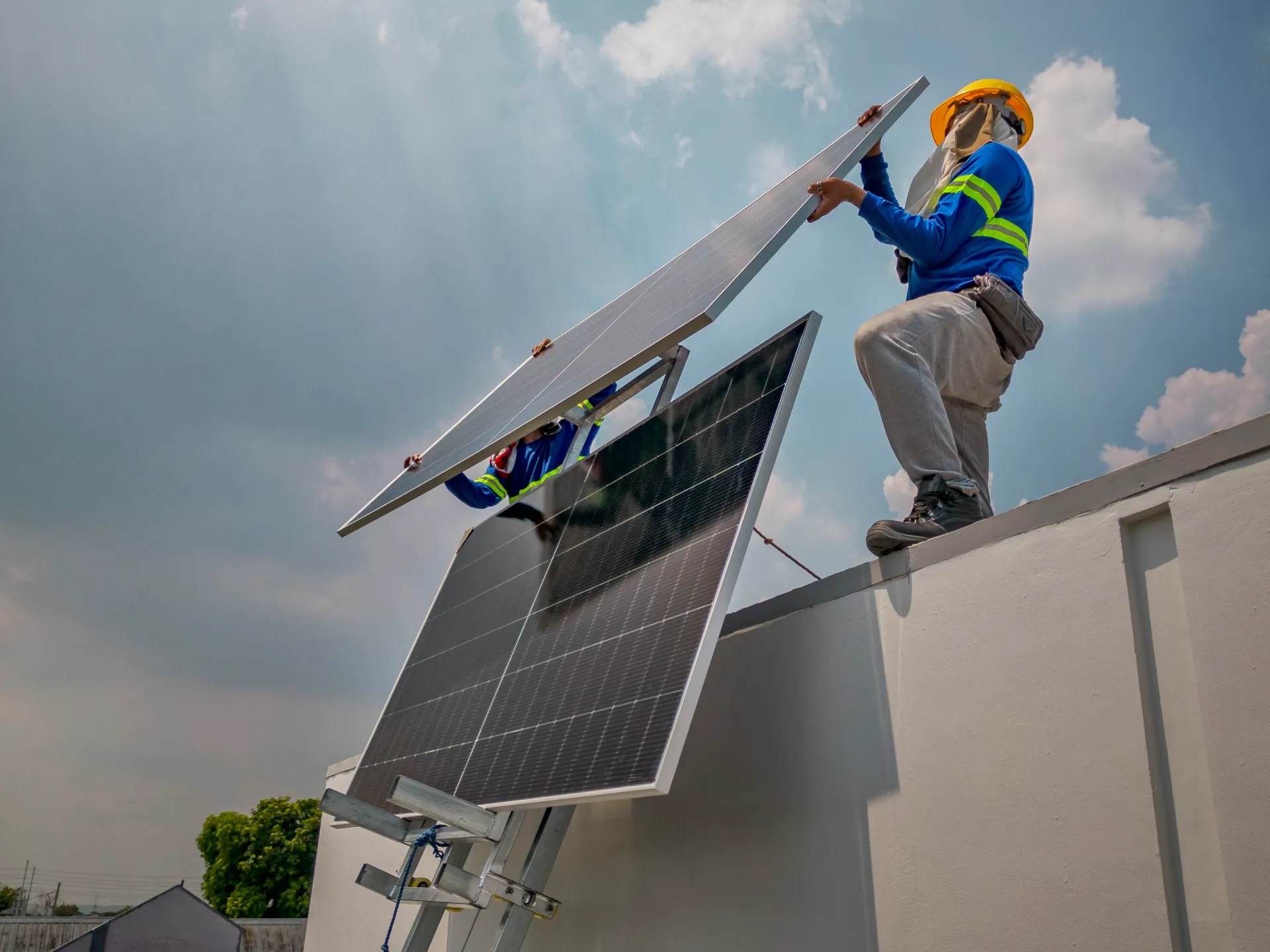
The Iran war has highlighted the need to transition from fossil fuels not only for environmental reasons, but also for reasons of energy security. The war marks the third major energy shock this decade, following the COVID-19 pandemic and the 2022 Russian invasion of Ukraine.

The Iran war has “boosted” renewable energy “given the urgency to switch away from fossil fuels and diversify towards renewable sources,” Marro of the EIU said.

Even before the Iran war began, the International Energy Agency reported that global governments were already taking active measures to invest in renewable energy for geopolitical reasons.

According to an IEA report released this month, “150 countries have active policies to advance renewable and nuclear deployment, 130 have energy efficiency and electrification policies, and 32 have policies to incentivise supply chain resilience and diversification across critical minerals and clean energy technologies.”

The Iran war has triggered another flurry of policymaking in Asia, which typically buys 80 to 90 percent of the oil and gas that transits through the Strait of Hormuz. Since the shutdown, the region has been struggling to find alternative sources of energy, forcing governments to deploy emergency measures like fuel rationing and price caps.

South Korea, Thailand, India, Cambodia, Indonesia, Vietnam and the Philippines have all announced a variety of measures from tax breaks for at-home solar panels to commissioning new renewable energy projects – and even restarting nuclear reactors.

The surge in policymaking has been good for the renewable industry. The S&P Global Clean Energy Transition Index, which tracks 100 companies that produce solar, wind, hydro, biomass and other renewable energy across emerging and developed markets, is up 70.92 percent year on year.

Source link

Cuba restores power after 29-hour blackout amid US oil blockade | Business and Economy News

The national power grid comes back on after Cuba’s 10 million people were plunged into darkness overnight.

Cuba has reconnected its power grid and brought online its largest oil-fired power plant, energy officials said, putting an end to a nationwide blackout that lasted more than 29 hours amid a United States move to choke off the island’s fuel supply.

After the country’s 10 million people had been plunged into darkness overnight, the Caribbean island’s national power grid had fully come back online by 6:11pm (22:11 GMT) on Tuesday. However, officials said power shortages may continue because not enough electricity is being generated.

Recommended Stories

list of 4 itemsend of list

In addition to cutting off oil sales to Cuba, US President Donald Trump has escalated his rhetoric against the Communist-run island, saying on Monday he could do anything he wanted with the country.

A US State Department official blamed the Cuban government for the grid collapse, calling blackouts a “symptom of the failing regime’s incompetence”.

Cuban President Miguel Diaz-Canel fired back at Washington, criticising its “almost daily public threats against Cuba”.

“They intend to and announce plans to take over the country, its resources, its properties, and even the very economy they seek to suffocate in order to force us to surrender,” Diaz-Canel wrote on social media on Tuesday night, shortly after power returned nationwide.

Cuba has yet to say what caused Monday’s nationwide grid failure, the first such collapse since the US cut off the island’s oil supply from Venezuela and threatened to slap tariffs on countries that ship fuel to the nation.

By midday on Tuesday, grid workers successfully fired up the Antonio Guiteras power plant, a decades-old behemoth that underpins the country’s power grid.

Daily blackouts

Electricity generation, hampered by dire fuel shortages and antiquated power plants, is still far below what is necessary to meet demand, providing scarce relief for Cubans already exhausted from months of blackouts.

Most Cubans, including those in the capital, Havana, were seeing 16 or more hours of blackout daily even before the latest grid collapse.

“It affects every aspect of our lives,” said Havana resident Carlos Montes de Oca, noting that the outages had thrown simple necessities such as food and water supply into disarray. “All we can do is sit, wait, read a book… otherwise the stress gets to you.”

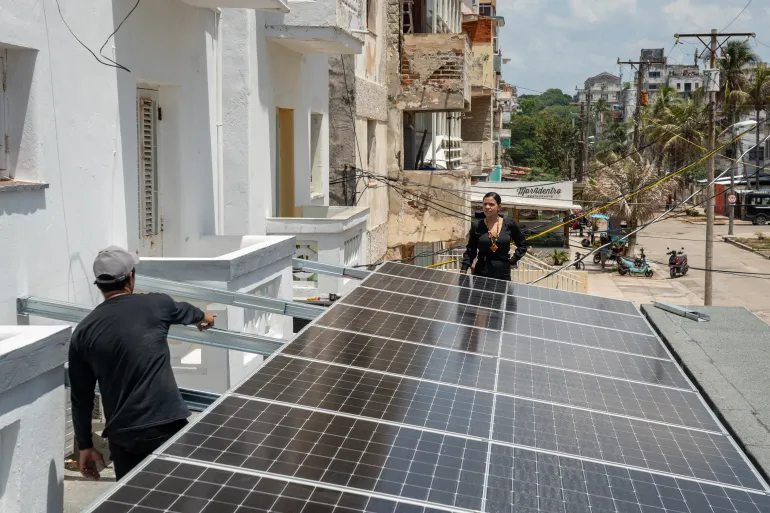
Much of Cuba was overcast through the afternoon on Monday as a cold front neared the island, casting shadows on the solar parks that account for a third or more of daytime generation.

Cuba has received only two small vessels carrying oil imports this year, according to LSEG ship tracking data seen by Reuters on Monday. On Tuesday, a Hong Kong-flagged tanker that could be carrying fuel to Cuba resumed navigation after suspending its course weeks ago in the Atlantic Ocean, the data showed.

Cuba and the US have opened talks aimed at defusing the crisis, among the most acute since 1959, when Fidel Castro forced a US ally from power on the island.

Neither side has provided details of the ongoing negotiations, although Trump has portrayed Cuba as desperate to make a deal.

Cubans, no strangers to hardship, saw little choice but to stay calm.

“We still don’t have power at my house,” said Havana resident Juana Perez. “But we’ll take it in stride, as we Cubans always do.”

Source link

Iran war: Europe’s corporate winners and losers revealed

Eighteen days into the war in Iran, and the scorecard for global equity markets makes for uncomfortable reading.


ADVERTISEMENT


ADVERTISEMENT

European benchmark indices have shed around 7% since hostilities began — the Euro STOXX 50 down 6.5%, Germany’s DAX off 7%, France’s CAC 40 down 7.2%, and Italy’s FTSE MIB lower by 6.4% — dwarfing the more modest 2.5% decline in the US S&P 500, which benefits from America’s status as the world’s largest oil producer and its relative insulation from the energy shock.

Yet the headline numbers tell only half the story.

Beneath the surface, an extraordinary divide has opened up — between European companies that thrive on expensive energy, and those being crushed by it.

The energy shock reshaping the continent

The conflict’s most immediate economic consequence has been a seismic repricing of energy.

Iran’s effective closure of the Strait of Hormuz — through which 20% of the world’s petroleum flows — caused Brent crude to surge from around $70 to nearly $120 per barrel within days.

As of Tuesday, Brent sits at approximately $105, a 42% rally from pre-war levels.

In an attempt to cap the oil price surge, the International Energy Agency coordinated a historic intervention.

More than 30 nations in Europe, North America, and northeast Asia agreed to release a combined 400 million barrels of oil from emergency reserves — the largest such action in the IEA’s 50-year history.

Yet the oil market has sent a clear signal that even this enormous release is nowhere near enough to address the unprecedented supply disruption, with crude prices surging more than 17% since the announcement.

Natural gas has been hit even harder. The Dutch TTF benchmark — Europe’s most important gas price reference — has surged 60% to €52 per megawatt-hour.

In a note this week, Goldman Sachs energy analyst Samantha Dart warned this week that approximately 80 million tonnes per annum of LNG supply — 19% of the global total — is currently offline following the Strait’s disruption and the shutdown of Qatar’s LNG production facilities.

Her team maintains a TTF forecast of €63/MWh for the second quarter of 2026, warning that tightening European physical balances could push prices into the gas-to-oil switching range before the conflict resolves.

The winners: Energy, renewables and fertilizer

The clearest beneficiaries have been European oil and gas producers, whose revenues move in lockstep with the commodity the war has repriced so dramatically.

Norwegian energy giant Equinor has surged 23.7% since the start of the month, as investors pile into one of the continent’s largest oil and gas producers with substantial assets well outside the conflict zone.

Fellow Norwegian producer Vår Energi is up 19.9%, while Aker BP has gained 17.1%. Italy’s Eni is up 14.7%, and Portugal’s Galp Energia has added 13.6%.

The most striking gains, however, have come from an unexpected corner: biofuels.

German renewable fuels producer Verbio SE has shot up 30.4%, and Finland’s Neste Oyj — the world’s largest producer of renewable diesel — has gained 28.1%.

As conventional fossil fuels become more expensive and supply chains more precarious, energy alternatives become dramatically more attractive to both buyers and investors.

German gas utility Uniper SE, which has spent recent years diversifying away from Russian supply, has rallied 19.1%.

The fertiliser sector has also attracted significant gains, with K+S rising 15.3% and Yara International rising 15.0%.

The moves reflect a commodity supply crisis hiding in plain sight: around one third of global seaborne fertiliser trade — roughly 16 million tonnes — passes through the Strait of Hormuz, including 43% of seaborne urea exports, 44% of sulphur, and over a quarter of traded ammonia.

The losers: Steel, airlines and construction

On the other side of the ledger, the losses have been equally dramatic. Energy-intensive industries and businesses exposed to higher costs with little pricing power have been savaged.

Airlines have taken some of the heaviest punishment. Wizz Air — the Budapest-based low-cost carrier with heavy exposure to Central and Eastern European routes — has collapsed 31.2%.

Air France-KLM has lost 22.1% and easyJet has dropped 21.8%. All three face the same brutal arithmetic: jet fuel costs have surged, hedging programmes offer only partial and temporary protection, and there is limited ability to pass costs on to passengers quickly enough to protect earnings.

Steel producers have been hit with similar force. Salzgitter has fallen 27.9%, thyssenkrupp is down 27.3%, and ArcelorMittal has shed 19.1%, joined by stainless steel specialist Aperam, which has dropped 24.5%.

Steel production ranks among the most energy-intensive industrial processes on earth, and mills operating on thin margins face an immediate profitability crisis when gas prices surge 60% in such a short period.

Spanish engineering contractor Técnicas Reunidas has dropped 23.7%, a casualty of its deep exposure to Middle Eastern energy infrastructure projects now thrown into uncertainty by the conflict.

Construction group Webuild has fallen 26.6%, reflecting broader fears that an energy-driven slowdown will freeze infrastructure investment across Europe’s most exposed economies.

Mining company Hochschild rounds out the list, down 21%, rising energy costs compress margins and risk appetite for smaller extractive names evaporates.

Europe enters this crisis in a structurally vulnerable position.

Despite having dramatically reduced its dependence on Russian pipeline gas since the invasion of Ukraine, the continent remains acutely sensitive to energy supply disruptions — and gas storage levels heading into 2026 offer less of a buffer than in prior years.

Source link