Celebrity Ex on the Beach returns for Season 4 with an all-star cast including Helen Flanagan and Jedward’s John Grimes
Daisy May Cooper will be the new narrator for Celebrity Ex on the Beach(Image: Paramount+)
A brand new and explosive series of Celebrity Ex on the Beach has returned to screens with an all-star cast searching for romance.
The popular reality dating programme has made its eagerly awaited comeback to Paramount Plus today (Tuesday, March 31) for its fourth series with Daisy May Cooper as the new narrator.
As the heat intensifies in Tenerife, eight single celebrities are seeking love, but there’s a catch. Their former partners will be lurking, poised to appear at any point.
An official synopsis states: “This season, temperatures rise as eight single celebrities touch down on the stunning shores of Tenerife in search of love but as ever, their exes are waiting in the wings, ready to crash the party.”
It continues: “Celebrities including Corrie actress Helen Flanagan, TOWIE’s Dani Imbert, Love Island star Toby Aromolaran, and pop phenomenon Jedward’s John Grimes, are among the famous faces diving headfirst into the drama and putting everything on the line for a real shot at love.”
The synopsis adds: “With exes such as Curtis Pritchard, Ronnie Vint and Rogan O’Connor ready to make their dramatic entrance into the Villa, how will the singles cope when faced with their former flames seeking closure, truth or even worse, revenge?”
Celebrity Ex on the Beach episode release schedule
Series 4 has launched on Paramount Plus today (March 31) with the programme streaming exclusively on the platform, reports OK!. Episodes will subsequently be released weekly, every Tuesday. This season has seen the release of 10 episodes, with the episode release dates as follows:
Episode 1 – Tuesday, March 31
Episode 2 – Tuesday, April 7
Episode 3 – Tuesday, April 14
Episode 4 – Tuesday, April 21
Episode 5 – Tuesday, April 28
Episode 6 – Tuesday, May 5
Episode 7 – Tuesday, May 12
Episode 8 – Tuesday, May 19
Episode 9 – Tuesday, May 26
Episode 10 – Tuesday, June 2
Celebrity Ex on the Beach cast
Amy Kenyon, 28, known for: Married at First Sight UK
Chase DeMoor, 29, known for: Too Hot to Handle
Dani Imbert, 27, known for: The Only Way is Essex
Freddie Powell, 32, known for: Love is Blind UK
Helen Flanagan, 35, known for: Coronation Street
Izzy Fairthorne, 26, known for: Too Hot to Handle
John Grimes, 34, known for: The X Factor
Toby Aromolaran, 26, known for: Love Island
Celebrity Ex on the Beach trailer
Content cannot be displayed without consent
A thrilling first look trailer was previously unveiled, showcasing the eight celebrities making their grand entrance on the beautiful beaches of Tenerife in pursuit of romance. The intense snippets provide viewers a glimpse into the drama and turmoil they can anticipate, complete with numerous reconciliations and splits.
The trailer, filled with anticipated jaw-dropping twists, features Curtis Pritchard confessing he was “telling the truth”, while another clip shows Helen Flanagan questioning: “Am I just being deluded?”
Celebrity Ex on the Beach can be watched on Paramount Plus.
UK pro-Palestine activist Qesser Zuhrah has been arrested on terrorism charges after being released on bail last month. Video shows masked officers taking her from her home at dawn over what supporters say was an Instagram story.
THIS is the moment Justin Timberlake is put in cuffs as the body cam footage of his arrest for drink driving is released.
The pop star, 45, was arrested in Sag Harbor, New York, in June 2024 after he failed to stop at a stop sign and could not stay in his lane.
Sign up for the Showbiz newsletter
Thank you!
This is the moment Justin Timberlake failed a sobriety test during a drink driving arrestCredit: Sag Harbour Police DepartmentThe pop star was arrested in June 2024 for driving while intoxicatedCredit: Sag Harbour Police DepartmentJustin Timberlake’s mugshot following his arrestCredit: Getty
Shortly after leaving The American Hotel following a night out with friends, the singer was pulled over while traveling southbound on Madison Street, a public highway in the Hamptons village.
Cops, often stationed nearby, noticed Justin swerving on the road and blowing through a stop sign.
They later smelled alcohol on his breath and noted that he was unsteady on his feet and also had slowed speech and glassy eyes.
The body cam footage of his arrest was released on Friday after the star’s legal team reportedly tried to previously prevent its release.
In the video, an officer can be seen shining a flashlight in Timberlake’s face at the roadside before the star performs poorly on sobriety tests.
He is asked to walk in a straight line but has difficulty with the instructions, appearing confused.
Timberlake tells them: “Guys, I’m just following my friends back to my house. I’m not doing anything.”
While attempting the sobriety test, he stumbles before apologising and saying ” I’m a little nervous”.
When asked to do the next test, the officers are forced to explain multiple times before Timberlake says “sorry, my heart is racing” while clutching his chest.
Looking unsteady on his feet, the singer is then heard saying: “By the way, these are like, really hard tests.”
After failing the roadside tests, an officer is then seen asking Timberlake “turn around for me please”.
Saying nothing and looking resigned, he slowly turns before he’s put in handcuffs.
A friend appears and is shocked when police tell her Justin is going with them, saying: “You’re arresting Justin Timberlake? Stop it. What?”
She pleads with the officers to speak with him and give him his phone before she takes his car home.
Timberlake was eventually put in handcuffsCredit: Sag Harbor Police DepartmentThe footage was released despite a challenge from his legal teamCredit: Sag Harbor Police Department
She begs: “Can you guys please do me a favour because you loved Bye Bye Bye or Sexy Back, do me one favour. This is insane.”
At the end of the footage, the 10-time Grammy winner can be seen in the back of a cop car behind bars.
He was taken into custody that night and arraigned in Sag Harbor Village Justice Court the following morning.
He was released without bail on his recognizance and was also charged with one count of DWI due to his refusal of the breathalyzer, according to Justin’s lawyer.
Timberlake’s lawyers previously sued the Village of Sag Harbor to prevent the release as it showed him “in an accutely vulnerable state”, reports CBS.
It was later agreed it would be released with redactions.
That September, Timberblake reached a plea deal to bring the case to an end.
The judge sentenced Justin to a $500 fine with a $260 surcharge, and 25 hours of community service at the nonprofit of his choosing.
After the sentencing, Justin said: “Even if you’ve had one drink, don’t get behind the wheel of a car.
“There are so many alternatives. You can call a friend [or] take an Uber.”
He added: “This is a mistake that I made, but I’m hoping that whoever is watching and listening right now can learn from this mistake. I know that I certainly have.”
During the proceedings the star remained standing throughout and gave a statement in which he expressed remorse for his actions.
He was unsteady on his feet when he was asked to walk in a straight lineCredit: Sag Harbor Police Department
SACRAMENTO — Murder is considered the worst crime out there, but for my money, it’s child rapists who are the worst of the worst — especially the serial ones who destroy one life after another.
That’s wholly subjective on my part, but I doubt I’m alone. Which is why I was far from surprised at the outrage that accompanied two recent, successful parole hearings for convicted serial child predators in Sacramento.
Gregory Lee Vogelsang, 57, and David Funston, 64, both attacked children and were granted parole through California’s elderly parole program — though both remain behind bars for now.
But the fury over the possibility of their freedom has put the state’s controversial elderly parole program under scrutiny — again — and led to a flurry of legislation to add new restrictions. Should sex offenders be excluded? Especially heinous murderers? Everyone under the age of 75?
It’s easy to answer “yes” to all of the above.
“Part of the problem we have is we shouldn’t be making policy decisions based on speculation and on scary rhetoric that’s disconnected from the facts,” Keith Wattley told me. He’s the founder and director of UnCommon Law, a nonprofit that provides legal services and parole advocacy.
“That’s how politicians make people afraid, but it shouldn’t be how we make law,” he said.
And he’s right, as grotesque as these headline-grabbing cases are. In 2024, there were 3,580 elderly parole hearings and 606 people were granted that relief. Most have remained law-abiding. In the 2019-20 year, the most recent recidivism statistics available from CDCR, 221 people were granted elderly parole. Within three years, only four had been convicted of new crimes, and only one of those was a felony for a crime against a person. That tracks with lots of data that shows men generally age out of violent crimes.
But Funston and Vogelsang are the worst of what we fear when we talk about parole, and their cases rightfully make us wonder what the heck the parole board is doing. Though Gov. Gavin Newsom sent both of these decisions back for review, it’s easy to imagine the attack ads should he run for president: Under Newsom’s watch, child rapists walked free.
“Elder parole has gone too far,” Thien Ho, the Sacramento district attorney whose office prosecuted both men, told me. “I support the opportunity of people to be rehabilitated. But I think that certain individuals, in my opinion, and in my experience, cannot be rehabilitated.”
Here’s where I’m going to make a lot of folks mad on both sides of this issue. I agree with Ho, but also, I agree with Wattley. I don’t think we can pass laws based on our grimmest view of humanity. Removing hope from the system turns our prisons into dungeons and does not ultimately serve public safety.
But then, neither does releasing child molesters into our communities.
Lost in all the wrath about these two cases is the difficult business of justice that led to the early release law in 2014, and any interest in the hard and nuanced conversation that we need to have around terrible crimes. It’s easy and popular to say no violent criminal should ever be released, but we can’t just lock up everyone with no possibility of ever getting out because the “R” in CDCR stands for “rehabilitation,” and also — we just can’t afford the forever scenario, morally or fiscally.
California tried the throw-away-the-key model in the 1980s and ‘90s and ended up with prisons so overcrowded that the federal courts stepped in. The original elderly parole effort came through a 2014 court decision on overcrowding that gave inmates 60 or older who had served at least 25 years a chance to go before the parole board. A chance — no guaranteed freedom, and usually it takes multiple hearings years apart before the board approves it.
Later, the Legislature expanded elderly parole to inmates 50 or older who had served 20 years, but excluded those sentenced under the “three strikes” law or those who had murdered peace officers.
The reality is California has a lot of old, aging and sick people behind bars — at great expense. As we grapple with the idea of universal healthcare, there’s one place in California where it already exists — our prisons and jails. We currently pay more than $41,000 in healthcare costs per inmate per year, according to the Legislative Analyst’s Office.
I’m not going to tell you it’s the best healthcare, but it’s taxpayer-funded, and includes even long-term dementia care. And yes, we do have incarcerated dementia patients.
“This is about reducing our prison population and our liability to cover housing and healthcare for an aging prison population, and we have to balance that with the safety of the community and the rights of victims,” state Assemblymember Maggy Krell (D-Sacramento) told me. She’s sponsoring a bill that would create an additional layer of safety around sex crimes by referring these possible parolees to the civil system that evaluates sexually violent predators for confinement in mental facilities after their prison terms.
“Under some circumstances, it is worth considering paroling some of these defendants,” she said, with the kind of thoughtful rationality sure to offend many. “But the cases that you’re seeing right now are completely egregious, and those defendants should not be released.”
Vogelsang was convicted of almost 30 counts of kidnapping and sex crimes, against kids as young as 5. He’s served 27 years of a 355-year sentence.
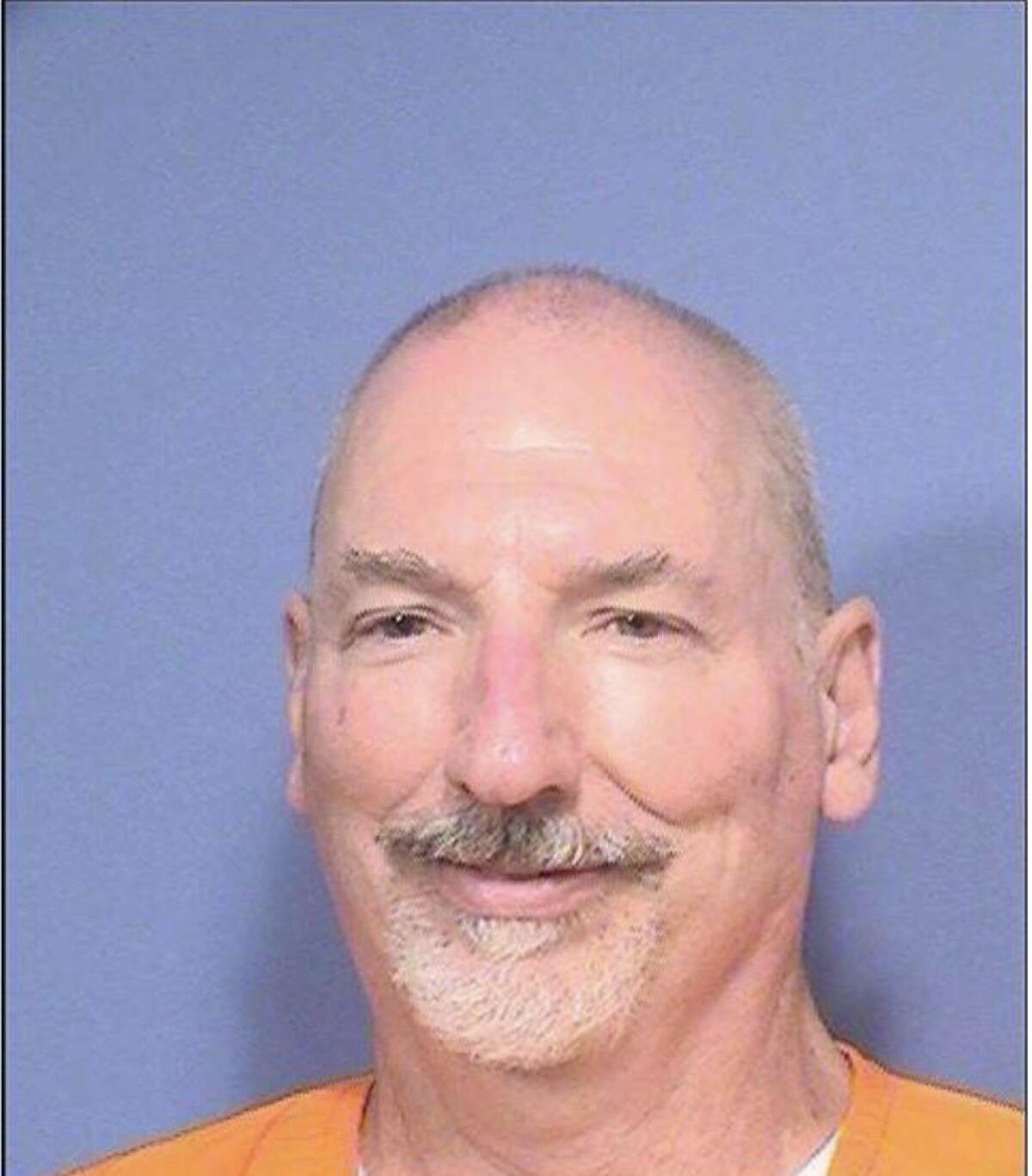
David Allen Funston, a Sacramento County child predator convicted in 1999 of multiple counts of kidnapping and child molestation. Funston was granted parole suitability under California’s Elderly Parole Program after serving more than two decades in prison.
(Sacramento County Sheriff’s Office)
David Allen Funston was convicted in 1999 of 16 counts of kidnapping and child molestation for kids as young as toddlers. He was sentenced to three consecutive 25-to-life prison sentences. Newsom bounced his first successful parole bid back to the parole board for a review, and on Feb. 18, it affirmed its decision.
But Placer County prosecutors quickly charged him with an old crime that had never been filed due to the Sacramento case, and he remains incarcerated awaiting trial on those charges.
Vogelsang’s case particularly raised a red flag for me. He told the parole board he’s been working successfully for about five years to control his thoughts about children.
“I don’t want to become aroused, but I know it’s always going to be there,” he said during the hearing.
Newsom also sent Vogelsang’s case back for review, and he will go before the board again on March 18. Vogelsang’s testimony was concerning enough that if I had a vote in this, I’d probably ask him to come back again in a few years, but we’ll see what the board does.
I’ll admit my decision would be emotional, and these cases do make me wonder. But Wattley is right that condemning elderly parole based on the monstrous deeds of these child predators is shortsighted. There is likely little to no public safety benefit in raising the overall age for elderly parole, and certainly no fiscal benefit.
“When you’re paying for older, sicker people to be incarcerated, and they don’t pose a risk to public safety, what are we actually getting for that? We’re not getting anything that supports survivors. We’re not getting anything that prevents crime. We’re just spending taxpayer dollars on something that doesn’t correlate with the public safety risk,” Wattley pointed out.
As hard as it is to wrap our minds around, it’s best for public safety to allow even the worst of the worst their chance in front of the parole board. It may even make sense for some who have committed truly terrible crimes decades ago to be released, if there is strong evidence of change and a low risk to public safety. That’s the kind of fair and realistic justice that no one on either side of the issue wants to talk about.
I’m not convinced Vogelsang and Funston have met those bars. But that doesn’t mean we should throw out the bars.
You’re reading the L.A. Times Politics newsletter
George Skelton and Michael Wilner cover the insights, legislation, players and politics you need to know. In your inbox Monday and Thursday mornings.
Attacks on multiple commercial ships in the waters around Iran on Wednesday increased global energy concerns, pushed nations to unleash strategic oil reserves and sparked fresh critiques of the Trump administration’s readiness for a war it started.
As Trump administration and U.S. military officials continued to claim increasing success and advantage in the conflict — and authorities downplayed a reported threat of drone attacks on California — leaders around the world scrambled to respond to the latest attacks and the International Energy Agency’s call for the largest ever release of strategic oil reserves by its members to help stem energy price spikes.
President Trump also faced renewed questions about a deadly strike on an Iranian elementary school at the start of the war, after the New York Times reported Wednesday that a military investigation had determined the U.S. was responsible.
“I don’t know about it,” Trump said when asked about the report.
In an address Wednesday morning, IEA Executive Director Fatih Birol said energy shipments through the Strait of Hormuz had “all but stopped” amid the conflict, driving massive global competition for oil and gas in wealthier countries and fuel rationing in poorer nations.
He said the IEA’s 32 member nations have brought a “sense of urgency and solidarity” to recent discussions on the matter, and had unanimously agreed to “launch the largest ever release of emergency oil stocks in our agency’s history,” making 400 million barrels of oil available.
However, he said the most needed change is the “resumption of traffic through the Strait of Hormuz.”
A vendor pumps petrol from Iranian fuel oil tankers for resale near the Bashmakh border crossing between Iraq and Iran.
(Ozan Kose / AFP/Getty Images)
Several countries, including Germany, Austria and Japan, had already confirmed their plans to release reserves.
The White House did not immediately respond to a request for comment on any U.S. plans to release its strategic reserves, or how much would be released. The U.S. is an IEA member.
Trump told reporters Wednesday that the U.S. has hit Iran “harder than virtually any country in history has been hit,” including by wiping out its naval fleet and eliminating other vessels capable of laying mines, and that he believes oil companies should resume shipments through the strait despite the recent attacks.
U.S. Interior Secretary Doug Burgum backed the idea of releasing oil reserves in a Fox News interview.
“Certainly these are the kinds of moments that these reserves are used for, because what we have here is not a shortage of energy in the world; we’ve got a transit problem, which is temporary,” Burgum said. “When you have a temporary transit problem that we’re resolving militarily and diplomatically — which we can resolve and will resolve — this is the perfect time to think about releasing some of those, to take some pressure off of the global price.”
Burgum said that while Iran is “holding the entire world hostage economically by threatening to close the strait,” Trump has made the consequences of such actions “very clear,” and “there’s a lot of options between ourselves and our allies in the region, including our Arab friends in the region, to make sure that those straits keep open and that energy keeps flowing for the global economy.”
The IEA did not provide details as to the release of the 400 million barrels, part of a broader reserve of some 1.2 billion barrels held by its members. It said the reserves “will be made available to the market over a time frame that is appropriate to the national circumstances of each Member country and will be supplemented by additional emergency measures by some countries.”
The agency said an average of 20 million barrels of crude oil and oil products transited the strait per day in 2025, and that options for bypassing the strait are “limited.”
While some tankers believed linked to Iran were still getting through the Strait of Hormuz, which under normal circumstances carries about 20% of the world’s oil and natural gas, Iranian officials threatened attacks on other vessels — saying they would not allow “even a single liter of oil” tied to the U.S., Israel or their allies through the channel, which connects to the Persian Gulf.
Trump has repeatedly claimed that the U.S. and its powerful Navy would support commercial vessels and ensure the strait remains open to oil shipments, but that has not been the case.
Tankers wait off the Mediterranean coast of southern France on Wednesday.
(Thibaud Moritz / AFP/Getty Images)
The United Kingdom Maritime Trade Operations center, run by the British military, reported at least three ships struck in the region Wednesday — including ships off the United Arab Emirates and a cargo ship that was struck by a projectile in the strait just north of Oman, setting it ablaze.
The Trump administration and the U.S. military, meanwhile, have been pushing out messaging about wiping out Iran’s ability to plant mines in the strait — posting dramatic videos of major strikes on tiny boats on small docks.
Adm. Brad Cooper, the leader of U.S. Central Command, said in a video posted to X on Wednesday morning that “in short, U.S. forces continue delivering devastating combat power against the Iranian regime.”
“I’ve said this before, but it bears repeating: U.S. combat power is building, Iranian combat power is declining,” he said.
The U.S. has struck more than 60 Iranian ships, and just “took out the last of four Soleimani-class warships,” he said. “That’s an entire class of Iranian ships now out of the fight.”
Cooper said Iranian ballistic missile and drone attacks have “dropped drastically” since the start of the war, though “it’s worth pointing out that Iranian forces continue to target innocent civilians in gulf countries, while hiding behind their own people as they launch attacks from highly populated cities in Iran.”
He also addressed the attacks on commercial shipping in the region directly, saying that “for years, the Iranian regime has threatened commercial shipping and U.S. forces in international waters,” and that the U.S. military’s “mission is to end their ability to project power and harass shipping in the Strait of Hormuz.”
Other U.S. leaders called the U.S. war plan — and specifically its approach to protecting the Strait of Hormuz — into question.
In a series of posts to X late Tuesday, which he said followed a two-hour classified briefing on the war, Sen. Chris Murphy (D-Conn.) slammed the administration’s plans as “incoherent and incomplete.”
Murphy wrote that the administration’s goals for the war seemed to be focused primarily on “destroying lots of missiles and boats and drone factories,” and without a clear plan for what to do when Iran — still led by “a hardline regime” — begins rebuilding that infrastructure, other than to continue bombing them. “Which is, of course, endless war,” he wrote.
Murphy also specifically criticized the administration’s plan for the Strait of Hormuz — which he said simply doesn’t exist.
“And on the Strait of Hormuz, they had NO PLAN,” he wrote. “I can’t go into more detail about how Iran gums up the Strait, but suffice it [to] say, right now, they don’t know how to get it safely back open. Which is unforgiveable, because this part of the disaster was 100% foreseeable.”
Ships in the strait remained under threat of various forms of attack Wednesday, as did much of the region as the war raged on.
There was an attack on a U.S. Embassy operations center at Baghdad’s airport, which officials attributed to a drone launched by Iranian proxies based in Iraq. No casualties were reported.
Lebanon’s Health Ministry reported the death toll there — from fighting between Israel and Iranian-backed Hezbollah fighters — had risen to 634 since last week, including 91 children. Another 1,500 people had been wounded, the ministry said.
Iranian authorities have said U.S. and Israeli attacks have killed 1,255 people since Feb. 28. That includes many Iranian leaders, including then-Supreme Leader Ayatollah Ali Khamenei. U.S. officials have said Iranian attacks in the region have killed seven U.S. service members, with another 140 wounded.
CBS News reported Wednesday that dozens of those injuries were sustained by service members in the March 1 Iranian drone attack on a tactical operations center in Kuwait — which is also where six of the seven deaths occurred.
The outlet reported that the attack was more severe than the Trump administration has revealed, with more than 30 military members still in hospitals Tuesday with a range of battle injuries including “brain trauma, shrapnel wounds and burns.”
Threats extended beyond the Middle East, too — including to California, where law enforcement agencies were warned by federal authorities that Iran “allegedly aspired to conduct a surprise attack” on California using drones launched from a vessel off the U.S. coast.
However, sources told The Times that advisory was cautionary and not backed by credible intelligence.
Times staff writer Gavin J. Quinton, in Washington, D.C., contributed to this report.