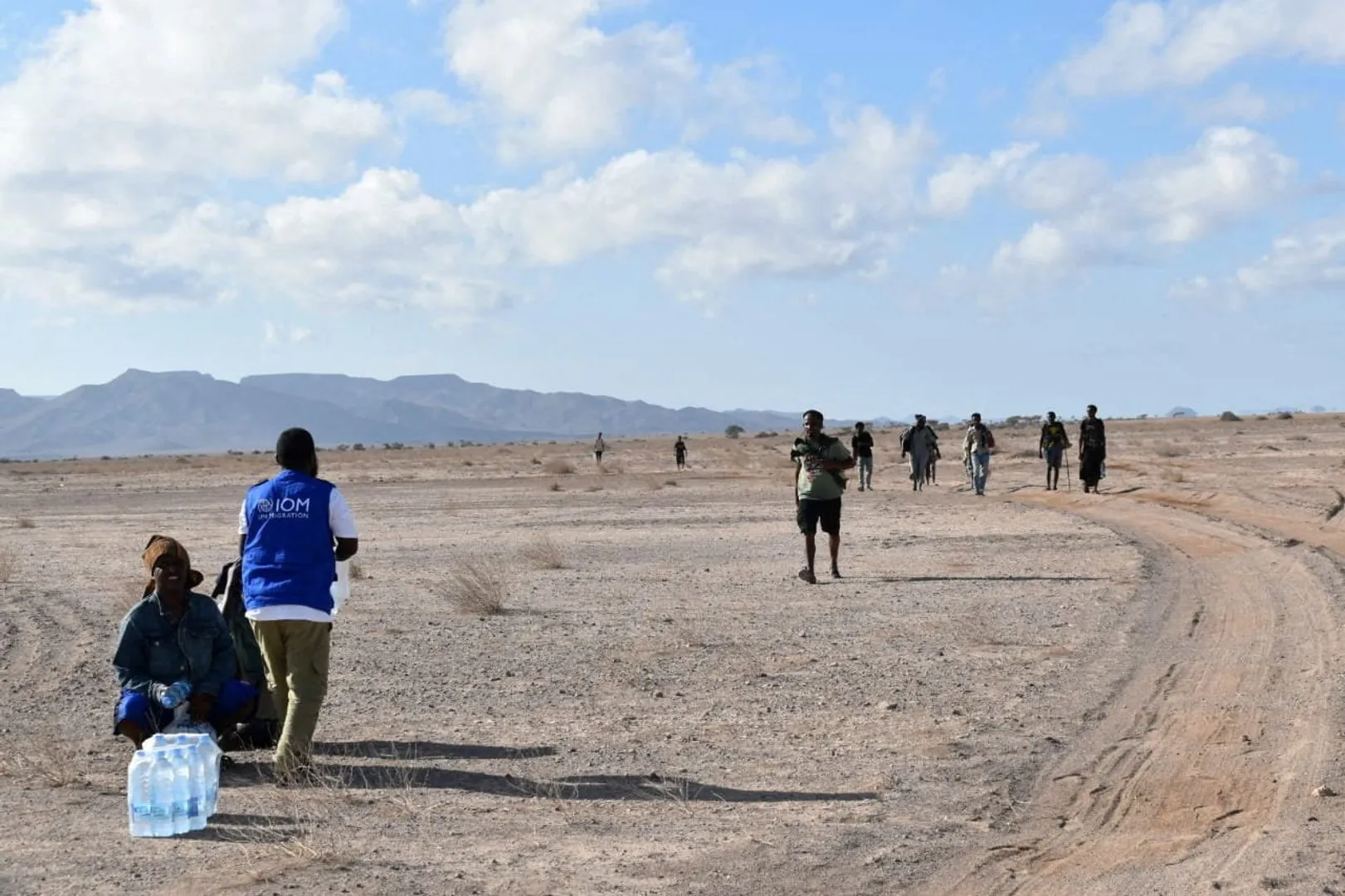
At least 139 migrants, including 15 children, have died and 84 remain missing after a boat carrying more than 300 people capsized off Djibouti en route to Yemen. The disaster highlights the dangers of the Eastern Route, where more than 900 people died or went missing in 2025.
At least 10 civilians were killed in West Kordofan and 5,500 displaced in Blue Nile as clashes widened on Tuesday.
Published On 7 Oct 20267 Oct 2026
Sudan’s military chief, Abdel Fattah al-Burhan, has promised to seize “every inch” of territory under the control of the paramilitary Rapid Support Forces (RSF), rejecting negotiations to end three and a half years of war.
Al-Burhan made the comments on Tuesday while addressing a gathering in Village 5, located in the northern Sudanese locality of Merowe, according to the Sudan News Agency.
Recommended Stories
list of 2 itemsend of list
He said the “military option” would continue until the RSF was removed from Sudan.
The Sudanese army and the RSF have been fighting since April 2023 after leaders of the groups fell out over plans to integrate the paramilitary force into Sudan’s army. The conflict has killed tens of thousands of people and displaced around 13 million, according to UN and international estimates.
Al-Burhan’s pledge to continue fighting came as 10 civilians were killed and several others were wounded in an attack by the RSF in Sudan’s West Kordofan state, according to a local charity group.
Women gather for a meal in al-Rahmaniyah camp for displaced people, near the city of el-Obeid in Sudan’s North Kordofan state, on July 7, 2026 [File: AFP]
In a statement, the Dar Hamar Emergency Committee accused the RSF of multiple violations against civilians in Abu Ajal village in the southeastern countryside of En Nahud.
The RSF has been massing in West Kordofan as Sudan’s army advances towards the cities of En Nahud and Al Khuway after gains in neighbouring North Kordofan.
In Sudan’s Blue Nile state, more than 5,500 people were displaced from villages over three days amid deteriorating security, the International Organization for Migration (IOM) said on Tuesday.
Meanwhile, an envoy of US President Donald Trump said Sudanese parties must take the lead in talks to end the war.
In a post on X on Monday, Massad Boulos, the US senior adviser for Arab and African affairs, said peace could be achieved “through an inclusive Sudanese-owned and Sudanese-led national dialogue, transition toward a civilian-led government”.
The US State Department said last month that neither the Sudanese Armed Forces, the RSF, nor their respective leaders “represent legitimate, constitutional governance for Sudan”.
‘It’s very unfair to send us back to the place we fled from’, says Rohingya rights activist Nur Sadek. Nearly 1,500 Myanmar migrants, including Rohingya refugees, arrived in Myanmar as part of Malaysia’s repatriation push to return 5,000 migrants. The UN and rights groups say it’s unsafe for them to return.
Malaysia continues mass refugee deportations despite warnings from the UN about unsafe conditions in an active war zone.
Published On 5 Oct 20265 Oct 2026
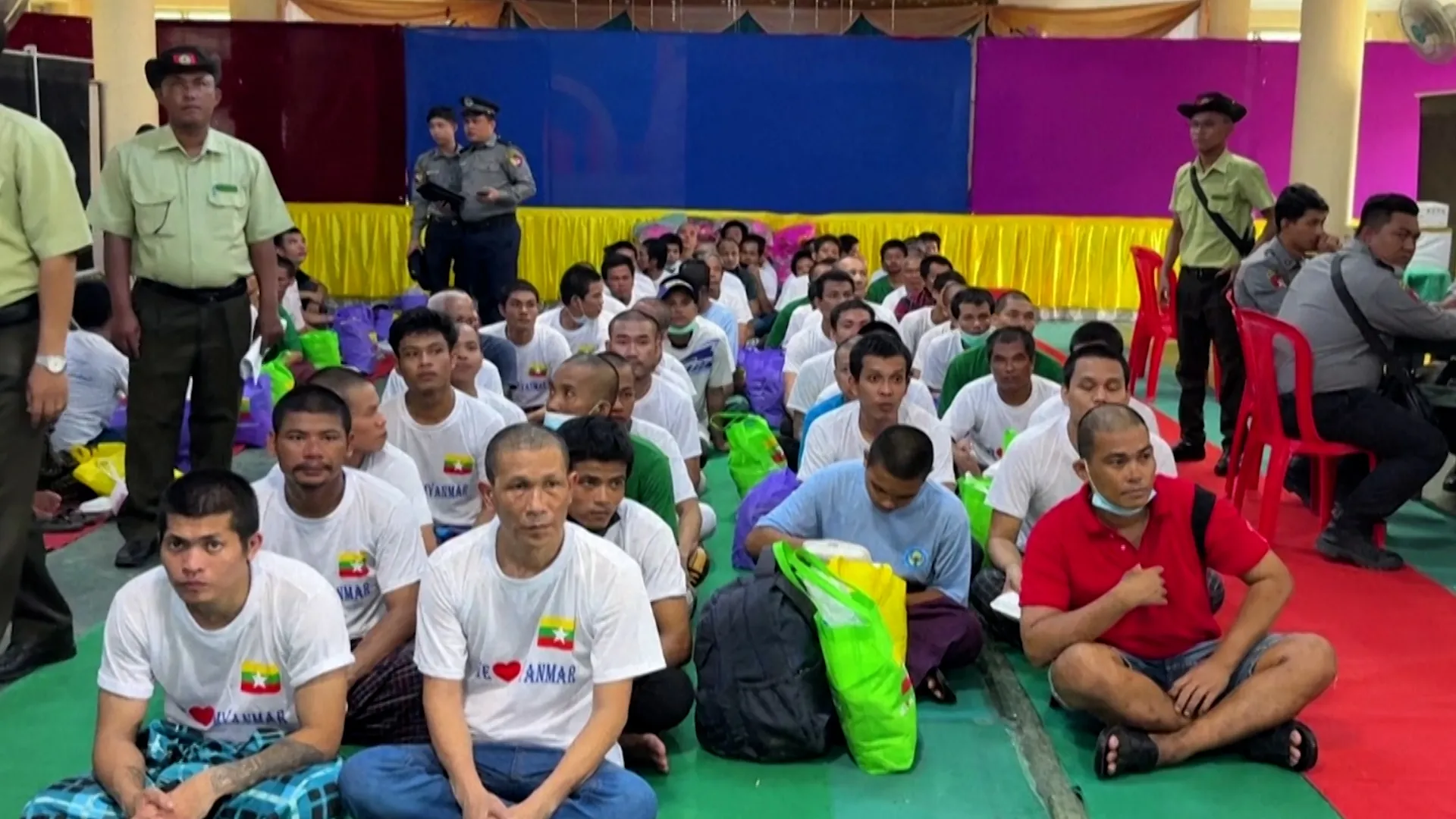
Nearly 1,500 Myanmar refugees and migrants deported from Malaysia have arrived in their war-ravaged country under an opaque repatriation scheme heavily criticised by human rights groups and the United Nations refugee agency.
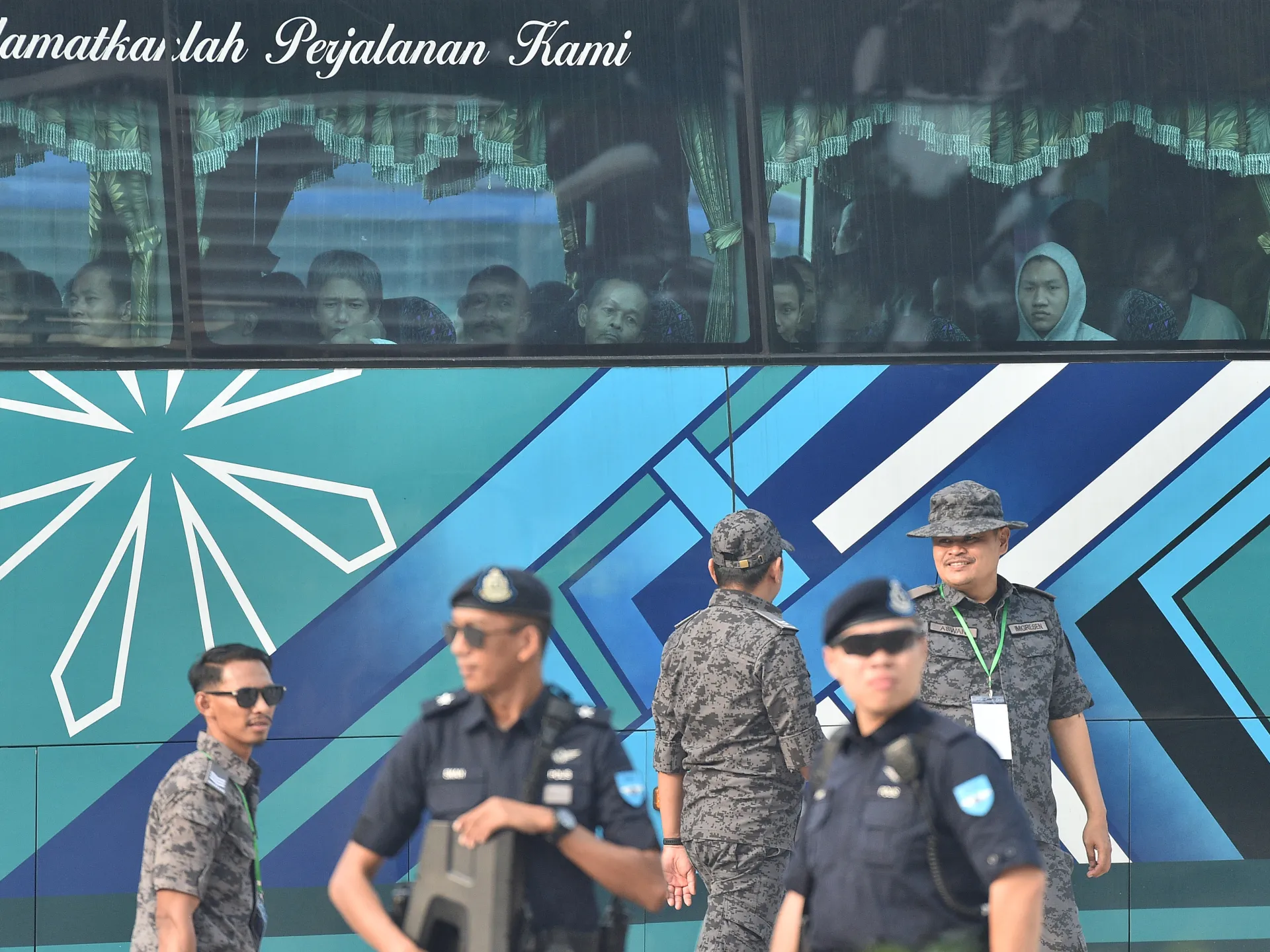
The 1,479 returnees, transported from Malaysia on board two navy warships and a hospital ship on Tuesday, arrived in southern Yangon early Sunday, Nay Lin Tun, a regional government minister, said.
Recommended Stories
list of 3 itemsend of list
They are among 5,000 Myanmar nationals who will be repatriated in stages from Malaysia, where more than 10,300 others are being held in immigration detention centres, according to the country’s Home Ministry.
Malaysia insists all returnees agreed to voluntary repatriation, but rights monitors have raised concerns that Myanmar refugees had little choice and warned that conditions for return remain unsafe.
The UN refugee agency said this past week that its staff were not allowed to meet the Myanmar nationals to confirm whether their decisions to return “were genuinely free and informed”.
Rohingya make up the majority of Myanmar refugees and asylum seekers in Malaysia, but it remains unclear how many members of the persecuted Rohingya are among the returned group.
The deportation was carried out during escalating raids on refugee communities in Malaysia by immigration officials, which led to the detention of more than 50,000 refugees in 2026.
Malaysian Prime Minister Anwar Ibrahim announced the repatriations in July against a backdrop of rising xenophobia towards refugees, particularly the Rohingya.
Kuala Lumpur is moving ahead with plans to return a second group of more than 3,500 refugees and migrants, saying they have caused financial, social and security burdens.
While Malaysia is not a party to the UN Refugee Convention and treats refugees as undocumented migrants, it is home to about 215,600 refugees and asylum seekers registered with the United Nations High Commissioner for Refugees (UNHCR).
This includes more than 126,000 mainly Muslim Rohingya refugees.
Myanmar pledged last month that returns will be “safe and dignified”.
But Yap Lay Sheng, a senior human rights specialist with Fortify Rights, told the AFP news agency: “There’s no telling how the regime would treat returnees.”
Myanmar has been accused of committing genocide against the Rohingya Muslim minority. Earlier this year, the International Court of Justice (ICJ) opened its first genocide case it has heard in full in more than a decade.
The UNHCR and rights groups said returnees could face persecution and forced military conscription in an active war zone. Myanmar has been embroiled in a civil war since the military seized power from the elected government in 2021.
The war has killed more than 100,000 people since the coup, according to the Armed Conflict Location and Event Data (ACLED) project.
Myanmar’s Min Aung Hlaing, the military coup leader who was installed as civilian president in April, is expected to visit Malaysia soon to discuss the repatriation scheme.
Kuala Lumpur, Malaysia – The phone hasn’t stopped ringing in recent days. Raf*, a leader of refugees from Myanmar who are living in Malaysia, receives more than 100 calls a day, and they follow a common pattern.
“They are crying, asking me to do something,” Raf told Al Jazeera.
The Malaysian government on Tuesday deported nearly 1,500 refugees, part of its stated plan to send back at least 5,000 refugees as part of a deal with the military government of Myanmar. That move, from a country that had long taken in the refugees, has sparked fear among the tens of thousands of other refugees from Myanmar in the country, who have one question at the top of their minds: Who might be next?
The deportation was carried out during escalating raids on refugee communities by immigration officials, which have led to the detention of more than 50,000 refugees this year alone. Those working with refugees in Malaysia said the frequency of the raids has increased since June when Prime Minister Anwar Ibrahim announced the repatriation agreement with Myanmar.
“[We’ve seen] a sharp increase. Raids are happening every single day. There’s up to 50 raids or more happening every day,” said Heidy Quah, founder and executive director of the Malaysian nonprofit Refuge for the Refugees.
Minister of Home Affairs Saifuddin Nasution told local media that the government has conducted more than 9,700 such operations from the beginning of this year until September 17. That’s an average of 37 operations a day.
There are now more than 10,000 Myanmar nationals in Malaysia’s immigration depots, according to the Ministry of Home Affairs.
In all, Malaysia is home to more than 215,000 refugees, according to the Office of the United Nations High Commissioner for Refugees (UNHCR). Nearly 194,000 are from Myanmar. There are more than 126,000 Rohingya refugees in Malaysia, where they have been the target of widespread hate speech on social media in recent months. Apart from the Rohingya, the Myanmar refugees in Malaysia include nearly 16,000 from the Chin community and 33,000 from other Myanmar communities. The non-Myanmar refugees in Malaysia include small numbers of Pakistanis, Yemenis, Somalis, Afghans, Syrians, Sri Lankans, Palestinians and Iraqis.
The Myanmar refugee community in Malaysia has yet to identify any Rohingya among the first nearly 1,500 people deported on Tuesday, community leaders told Al Jazeera. Instead, many are from Myanmar’s other ethnic minorities, who are more likely to have valid national identification documents, community leaders said.
“The Rohingyas are a problem for deportation because Myanmar denies their citizenship,” Raf said. “So I don’t think that Myanmar will agree and accept all those Rohingyas.”
Myanmar officially treats the Rohingya as Bangladeshi immigrants despite the community’s long roots in Myanmar and their distinct ethnic identity. The Myanmar army has repeatedly cracked down on the Rohingya minority, including a wave of violence in 2017 that many rights groups have described as genocide. It set off a major refugee crisis when hundreds of thousands of Rohingya fled to Bangladesh, Malaysia, India and other neighbouring nations.
Myanmar community leaders also said the raids this year appear to have targeted locations highlighted in anti-refugee videos on social media in which content creators filmed refugee-populated areas, portraying them as hubs of chaos. These videos have been shared thousands of times on platforms such as Threads, TikTok and Facebook.
Al Jazeera contacted the Immigration Department to verify the link between the videos and raids but had not received a response at the time of publication. Accounts that had posted and shared antirefugee sentiment also did not respond to requests for comment.
Decline in resources
The increase in hostilities towards refugees in Malaysia coincides with a sharp decline in the capacity of local and international aid groups to support them, especially since the closure of the United States Agency for International Development in July 2025.
In Malaysia, this severely shrank resources for organisations helping refugees with basic needs, such as healthcare, Quah told Al Jazeera.
“Then slowly, United Nations organisations were being defunded, and even within the UN High Commissioner for Refugees in Malaysia, they lost a lot of staff,” Quah said. The job cuts reflected global retrenchments by UNHCR last year.
The agency continues to struggle with a funding crisis, saying on Tuesday that it faces a $5.79bn funding gap and, as of July, has received 32 percent of the funds it needs this year.
In Malaysia, this has led to even less protection for refugees and higher rates of exploitation, Quah said.
“Even UNHCR cardholders are arrested and remanded for about 14 days [while the] cards are verified,” she said.
For instance, an asylum-seeking woman who had scheduled an appointment to meet UNHCR representatives this month was recently detained, and immigration authorities demanded a letter from the organisation to prove that she was an asylum seeker, Quah said.
Although UNHCR confirmed the woman was seeking asylum, she remains in detention, Quah said.
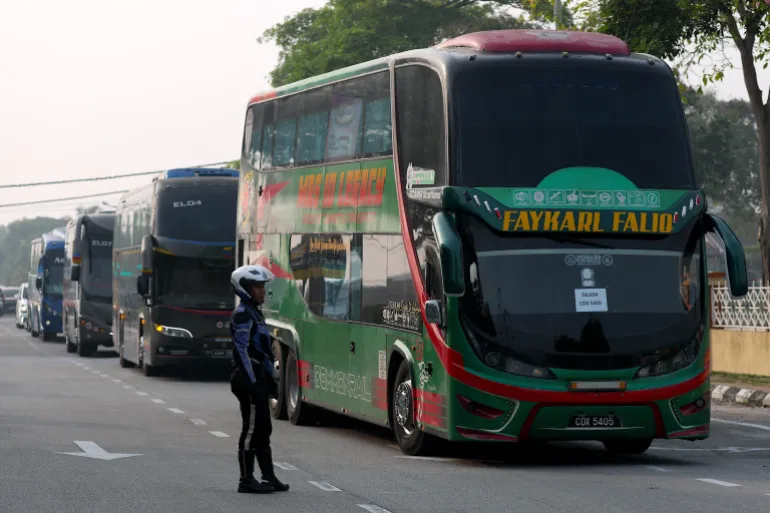
An initial group of 1,476 people from Myanmar are deported from Malaysia on September 29, 2026, first my bus and then by Myanmar navy ships [Fazry Ismail/EPA]
Ongoing violence in Myanmar
UNHCR and rights groups in Malaysia have urged the Malaysian government to stop the deportations as violence continues in Myanmar.
A day before Malaysia’s deportation of the refugees on Tuesday, an air strike by Myanmar’s military was reported to have killed at least 33 people in Rakhine state, the historical home of the Rohingya. The Arakan Army group said the victims included vendors, shoppers and pedestrians. In June, the UN said Myanmar’s military was responsible for more than 700 civilian deaths over a six-month election period that started in August last year.
The Human Rights Commission of Malaysia (SUHAKAM) said that while Malaysia is not a party to the Refugee Convention of 1951, the principle of nonrefoulement has become part of customary international law and Malaysia, therefore, is bound to abide by it. The principle protects people from being returned to a place where they face a real risk of persecution, torture or other serious harm.
Particular attention should also be given to children, SUHAKAM said, highlighting that Tuesday’s deportation included 27 children, some reportedly as young as eight years old.
“No child should be returned to danger. Their safety, dignity and best interests must come first,” it said.
Myanmar community leaders in Malaysia told Al Jazeera the ships that departed on Tuesday will arrive in Yangon on Sunday.
“After that, we will [learn] whether they are allowed to leave the port safely [or are detained],” said one community leader who requested anonymity due to the increase in violence towards refugees in Malaysia.
Still, even those who are allowed to leave the port may need to spend months or years in Yangon because it is unsafe to travel across the country, the community leader said.
Rohingya refugees face evictions from their homes in Malaysia amid rising local tensions and online misinformation [File: Hasnoor Hussain/Reuters]
Call for independent access
Rights groups further criticised the Malaysian government’s framing of the deportations as “voluntary”, saying individuals should have sufficient information about conditions in their home countries before making such a decision.
“While authorities say the returns are voluntary, those returned had been held in immigration detention. This raises serious questions about whether decisions to return were genuinely free and informed,” UNHCR Assistant High Commissioner for Protection Edem Wosornu said.
The Malaysian government said people were selected for deportation based on a list of names shared by the Myanmar government in an official diplomatic note.
“Such [a] ‘voluntary’ decision must be determined by an independent authority, such as the UNHCR, and not by the Immigration Department,” SUHAKAM said .
UNHCR told Al Jazeera that it was not involved in the latest return process and did not have access to the individuals concerned. “[We were,] therefore, not in a position to independently ascertain the voluntariness of their decisions to return,” it said.
“We continue to encourage the government to ensure that return processes include individual assessments, access to protection procedures and safeguards to ensure that any decision to return is free, informed and genuinely voluntary,” it said.
Malaysian Prime Minister Anwar Ibrahim has long positioned himself as a champion of human rights but now faces criticism for the expulsion of Myanmar refugees [File: Rafiq Maqbool/AP]
Malaysia registering refugees
The deportations come at a time when Malaysia is simultaneously positioning itself as welcoming to refugees and their needs.
In 2015, the Malaysian government launched a Refugee Registration Document (DPP) programme. On paper, it is supposed to help register refugees, giving them official documentation.
Raf welcomed the DPP as long as the registration and documentation of refugees in Malaysia leads to access to work, education and healthcare.
“If these three things are provided, I think that’s a good solution for temporary refugees staying here.”
But the Malaysian branches of Amnesty International and Asylum Access said the latest deportations raise profound concerns about the purpose of the DPP. The programme should not be used to fast-track unlawful deportations, the groups said in a joint statement.
*Name changed to protect the individual’s identity
Durban, South Africa – Bishop Raphael Bahebwa is in hiding, afraid he could be attacked for speaking out for the rights of foreigners in South Africa.
“I am in hiding now because they say they are going to kill me for speaking about the rights of foreigners,” he told Al Jazeera.
Bahebwa has lived in South Africa for 26 years, after arriving as a refugee from the Democratic Republic of the Congo (DRC).
In that time, he has watched antiforeigner sentiment flare repeatedly in the country he came to call home. But he says this year feels different.
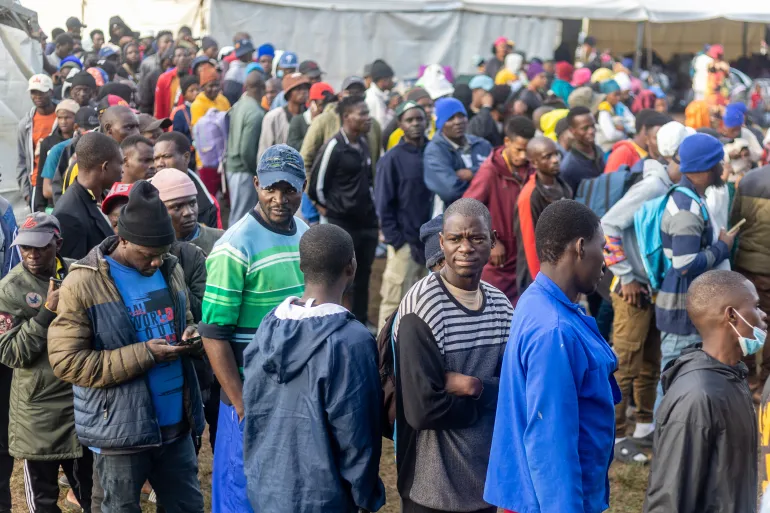
A September 30 deadline declared by March and March, an anti-immigration movement that has led protests across South Africa this year, has renewed fears of violence among migrant communities.
The group has called for undocumented foreign nationals to leave South Africa and has warned of further demonstrations if its demands are not met.
For Bahebwa and other refugees in Durban, however, the distinction between documented and undocumented migrants offers little comfort. They say the hostility they experience on the streets rarely begins with a request to see their papers.
Fears of renewed violence
South Africa will hold local government elections on November 4, in a campaign in which migration has become an increasingly prominent political and social issue.
For months, Bahebwa was among hundreds of refugees and asylum seekers who slept on the pavement outside the Durban Refugee Reception Centre on Che Guevara Road.
Many were from the DRC and Burundi, with others from Uganda, Mozambique and Tanzania. They said they had fled their communities because they feared antiforeigner attacks.
They arrived outside the Department of Home Affairs (DHA) office seeking safety.
Instead, the pavement became their home.
For roughly four months, men, women and children slept outside, exposed to the elements and dependent on civil society organisations and volunteers for food and other necessities.
“It has been very tough,” Bahebwa said. “Never before have I experienced something like this.”
Some of the migrants told Al Jazeera that conditions became desperate. They described irregular access to food and medication and said one man who had tuberculosis died while living at the camp. Al Jazeera has not independently established the circumstances of his death.
The camp was also not far removed from the hostility its residents said they had fled.
On September 3, members of March and March confronted refugees and asylum seekers living outside the centre. Violence broke out, and police intervened. At least four people were reported injured.
At another protest days later, police officers stood between the two groups, forming a barrier as tensions rose.
March and March has described its mobilisation as a campaign against undocumented immigration, crime and deteriorating conditions in South African communities.
The group says the government’s response to immigration enforcement has been insufficient.
Its leaders have repeatedly rejected accusations that their campaign is xenophobic and insist their target is undocumented migration rather than foreign nationals generally.
Bahebwa said documented and undocumented migrants alike have been caught in the hostility.
Earlier this year, six refugees working in salons around Durban’s Warwick Street Market were beaten by men carrying sticks, according to public-interest news outlet GroundUp. Two were hospitalised.
Bahebwa said the migrants had also struggled to obtain help from the authorities after earlier attacks.
“Police said we can’t open cases because we are foreigners. We had nowhere to go,” he alleged. Police have not publicly responded to that specific allegation.
Nowhere obvious to return to
In mid-September, the government moved to clear the makeshift camp outside the refugee centre.
The refugees were given a choice: return to the communities they had fled or accept temporary accommodation at the Lindela facility in Gauteng, hundreds of kilometres from Durban. Lindela is a government-run immigration detention facility used to hold people facing deportation.
The choice divided them.
Malawi migrants to South Africa line up for supplies at an informal refugee camp in Sherwood, Durban, South Africa, after fleeing their homes amid fears of xenophobic attacks [File: EPA]
Some feared going to Lindela, a facility historically associated with immigration detention and repatriation. Others felt they could no longer endure life on the pavement.
On September 15, 274 people were transported by bus from Durban to Lindela. About 150 others chose to remain in Durban and began trying to find alternative accommodation.
For those who stayed behind, leaving the pavement did not resolve the problem that had brought them there in the first place.
Kafuti Muyumba, a small business owner from the DRC and a representative of the refugee community, said many were afraid to return to neighbourhoods where they had built businesses and lives.
People are afraid, he said. “Even the police allow March and March violence. They came with sticks and say we are attacking them,” Muyumba told Al Jazeera.
He said many refugees had lost their livelihoods during the months of upheaval and were now desperate to find accommodation.
“This is not the first time we are experiencing xenophobia,” he said. “In 2008 and then in 2015 we also experienced this.”
In 2008, xenophobic violence spread through townships and informal settlements, killing dozens and displacing thousands.
Further outbreaks of violence against foreign nationals followed in subsequent years.
For Muyumba, those memories make the rhetoric surrounding September 30 difficult to dismiss.
“We don’t trust the police. They are not being fair with us. Some of them are also saying we must go,” he said.
Police have said there are no plans to change their normal policing approach because of the September 30 deadline and that any protesters will be expected to remain within the law.
March and March said all it wants is for undocumented immigrants to leave the country and return home.
But Muyumba said returning to the DRC is not a viable alternative for many Congolese refugees.
“There is still war there,” he said.
A country tightening its borders
In response to ongoing protests, the South African government said it had intensified its immigration enforcement.
Between June 14 and August 20, authorities processed 86,596 foreign nationals for deportation and repatriation, according to the government’s Inter-Ministerial Committee on Migration.
Malawians made up the largest group, followed by Zimbabweans and Mozambicans.
Government data says 90 percent of those repatriated had entered South Africa illegally, while 95 percent were classified as having crossed the border outside official ports of entry.
The government says the operations form part of a broader effort to strengthen border management and enforce immigration law.
At the same time, officials have repeatedly warned private groups against taking immigration enforcement into their own hands.
March and March’s September 30 deadline has no legal authority. The government says common citizens cannot deport anyone from South Africa.
Protesters hold placards during an anti-immigration march in Durban, South Africa, calling for tighter border controls and the deportation of undocumented migrants [File: Thuli Dlamini/Reuters]
But deadlines do not need legal force to create fear, as was the case for an earlier deadline of June 30. For the refugees who spent months sleeping outside the DHA office in Durban, September 30 is another uncertainty layered on top of many others.
Some have been moved hundreds of kilometres away.
Others are trying to find new homes in the same communities they once fled. But among the migrants Al Jazeera spoke to, there is a shared anxiety that paperwork may offer limited protection when anger is directed first at being foreign.
Bahebwa has spent more than a quarter of a century in South Africa. For now, he says he is hiding and does not know what September 30 will bring.
“They are scapegoating us as foreigners,” he said. “It is not going to end on September 30. It has to do with the elections.”
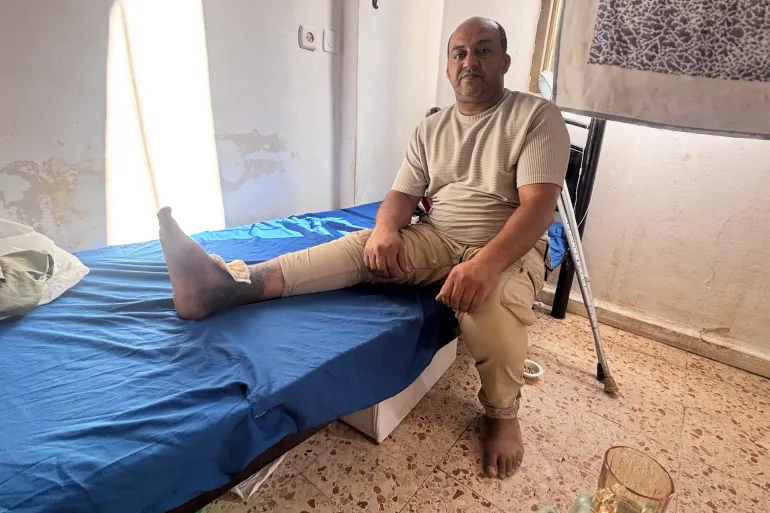
Tulkarem, occupied West Bank – Hakim Mar’i spends his days lying on a single bed, his disfigured leg raised. The windows of Mar’i’s dilapidated apartment, his latest temporary shelter, are covered with old blankets. Unable to work, Mar’i has no money for electricity, so the blankets have to do. At night, his family lives in near darkness.
The apartment is just around the corner from mounds of rubble and gnarled iron structures that mark one entrance to the now-emptied Tulkarem refugee camp. For Mar’i and other Palestinians, the camp was a home once considered temporary. But now, even the physical structure – their home – that tied those generations together is gone.
Recommended Stories
list of 4 itemsend of list
The apartment is just around the corner from mounds of rubble and gnarled iron structures that mark one entrance to the now-emptied Tulkarem refugee camp. For Mar’i and other Palestinians, the camp was a home once considered temporary. But generations lived there, and now, the physical structure – their home – that tied his family together over the years is gone.
Impoverished, Hakim’s family is in disarray. With its debts mounting and its members facing another eviction, he said he has considered taking his life several times over the past year and a half.
Mar’i cannot afford treatment for his debilitating leg injury, which has developed severe infections. He said he sustained it while working as a labourer inside Israel in 2019. The wound worsened after Israeli soldiers severely beat him when they forced his family from the Tulkarem camp. Diabetes and other untreated conditions have piled on, but he is unable to pay for the needed medical care.
“This joint here is completely gone,” he said, gesturing at the swollen, blackened lower leg that prevents him from working.
“The medicine – by God, the medicine, I haven’t been able to get. My wife and kids tell me: get out travel. Go to America, Turkey – so I can the medical treatment I need… I’m a sick man.”
His mother, Salwa, sat beside him, less than a kilometre (0.6 miles) from their former four-storey home. She wept when asked about the family home that was built floor by floor after they were first displaced in 1948 from al-Khudayra, the Arabic name for Hadera, a city in Israel. “We really put a lot into that house,” she said.
After their removal, the Israeli military razed the Mar’i home so a road traversing the now-emptied camp could be built. “Seeing it destroyed was really painful for us – all of us,” she said.
It has been more than 20 months since Israeli forces emptied the Jenin, Tulkarem and Nur Shams refugee camps in a sweeping military operation in the northern West Bank, displacing tens of thousands of Palestinians whose families had already been refugees for three generations. Constantly renewed orders for a closed military zone now prevent their return.
Since January 2025, Hakim’s family has been forced to move four times. First, they fled to a converted youth centre before landing in a cramped apartment with their four children, all under 15.
Unable to pay rent, the family could see the landlord’s generosity run its course as this once-temporary housing arrangement now has no end in sight. Hakim owes money at the local shops for food he bought on credit. Some nights, the children eat at neighbours’ houses.
“I have children. I have food. I have drink,” he said. “My hands are empty. Nobody is with me. Nobody is standing beside me.”
Hakim Mar’i in his family’s apartment with his injured leg, which prevents him from working [Al Jazeera]
‘We’re already at the brink’
The Mar’i family is among more than 33,000 Palestinians forcibly removed from the Jenin, Nur Shams and Tulkarem camps by Israeli forces in early 2025. This is the largest single episode of forced displacement in the West Bank since Israel’s occupation began in 1967, according to the United Nations agency for Palestinian refugees (UNRWA).
UN satellite imagery shows that 20 percent of all buildings across the three camps have been destroyed and another 28 percent are damaged.
“The level of destruction we are seeing is severe and unprecedented,” said Roland Friedrich, director of West Bank affairs for the UN agency for Palestinian refugees, UNRWA.
According to Friedrich, 85 percent of those displaced have no regular income after many lost jobs when the camps were emptied. More than 80 percent of residents are renting, an unfamiliar expense for families who never paid for housing or utilities inside the camps.
The closed military zone covering the camps is renewed every two months, Friedrich said, with no indication of when – or whether – residents will be allowed to return. “What we saw there is forced displacement,” Friedrich said. “The UN’s position is very clear: People have to be allowed to return. The camps must be rebuilt.”
Unlike after the 2000-2005 second Intifada when the Jenin camp was rebuilt, displaced families and UNRWA staff fear there is no return plan this time.
The Israeli military stated the camps were emptied for “operational security” in its effort to root out fighters from the camps. Friedrich worried the aim of the military operations is to “change the geographical expression of the Palestinian refugee issue”.
Now more than 20 months into what was meant to be an emergency response, funding shortages have left UNRWA unable to cover the vast needs of the displaced population. It has moved some operations to keep schools and basic health clinics functioning. With funds dwindling, the agency has shifted to a “targeted approach”, leaving thousands without support.
Friedrich pointed to a rise in gender-based violence linked to the economic strain on families and to growing depression and anxiety among displaced children observed by UNRWA’s psychosocial teams. “We’re already at the brink now,” he declared.
Members of the Zbeidat family sit on couches outside. The room they stay in is on the left [Al Jazeera]
‘Everyone went their own way’
While Hakim’s displacement plays out in the shadow of the camp, the family of Khadija Zbeidat face their own imminent eviction on the outskirts of Tulkarem. They live in the neighbourhood of Dhinnaba, where sparse houses are interspersed with greenhouses. They are unable to afford a residence closer to the city centre.
As Khadija sat on a couch in the middle of the yard, her many children and grandchildren ran past a small patch of plants she has planted – one of her few remaining joys. “I love plants,” she said. “We had many flowers in our home in the camp. Having the plants here is all I have to feel like myself,” she told Al Jazeera.
Khadija, a widow, shares a tiny spartan room with nine family members, nearly all children, along with a small bathroom and a kitchen barely big enough for one person to cook in. A worn couch takes up one corner. The ceiling is peeling above it.
The room was given to them rent free by a relative of Khadija’s brother-in-law after they spent four months crammed into her daughter’s house with nine other people. “It got really cramped, the pressure on each other,” Zbeidat said. “And we became a burden too.”
Khadija’s family was displaced in January 2025 from the Tulkarem camp’s Haret al-Nadi section, a significant part of which has been destroyed, she said.
“The camp was excellent,” she said of their life before. “I swear, I wish they’d take us back. Everything was close to us, dear – … the closeness, that sense of belonging and the warmth, the company and the neighbours.”
The memories that she cherishes most dearly and that bring her to tears are of food: the stuffed grape leaves and the maamoul cookies made as a neighbourhood together for Eid. This year, there was none of it.
“Nothing. No cookies,” she said. “Nobody even had it in them to do anything any more. Everyone went their own way – scattered.”
Like the Mar’i family and others, they were not allowed to bring their belongings during their abrupt displacement. Some residents have since been allowed to retrieve belongings once or twice from their homes in the camps, but much of what they own remains left behind. Khadija’s daughter-in-law at one point returned to the ruins of the camp – at the risk of being shot – to retrieve a doll left behind that Khadija’s granddaughter Sandy would not stop crying about.
In Tulkarem, displaced families live either in the poorest areas closest to the camp, like the Mar’is, or on the cheaper outskirts, like the Zbeidats, remaining close enough to the health and schooling services that UNRWA still provides. But even a simple trip to buy groceries requires Khadija, who has no car, to travel 2km (1.2 miles).
At night, the family sits outside rather than in the stifling heat of the poorly ventilated room, watching Israeli military drones pass low overhead. “What to do? We’re used to seeing them, to having them around, to them raiding houses,” Khadija said. “It doesn’t matter any more.”
The military raids that always haunted life in the refugee camps have now come to wherever the displaced refugees have fled to. “We don’t feel safe,” Khadija said. “Nor the kids. It’s dangerous. When they want to go out somewhere, my heart stays busy until they come back.”
The kitchen and bathroom the Zbeidats have are in the same room they sleep in [Al Jazeera]
Waiting to be kicked out again
For months after the displacement, landlords, relatives and shopkeepers absorbed much of the shock, allowing families to stay for free or buy food on credit. But as the emergency stretches to almost two years now, that informal safety net is fraying. The pressure is felt particularly in economically moribund Tulkarem, where many families had relied on jobs inside Israel before Palestinian work permits were revoked after the Hamas-led attacks in southern Israel and the start of Israel’s genocidal war in Gaza in October 2023.
The owner of the property where Khadija’s family is staying recently sent his sister to tell Khadija’s family to leave. “They think it’s been too long,” Khadija explained. “They want the land, to benefit from the land and the room. … But where can we get money, where to pay from? The rent is very high, and we can’t afford it. We don’t know what to do if she comes again and kicks us out.”
Hakim’s family is on the brink of eviction too. Like others, he received from UNRWA a one-time rental subsidy of 3,000 shekels ($985) and a separate 1,700-shekel ($560) multipurpose cash payment for short-term assistance. “Every minute, I am waiting for the landlord to kick us out,” he said.
Khadija’s family survives on credit from shopkeepers who know their situation and, for now, still extend it – but patience is wearing thin.
Hakim said this goodwill is collapsing: “You tell them: ‘Give me a day, two days. Be patient with me.’ They won’t bear it.”
As distant as a return to her family’s lands in 1948 feels now, Khadija still hopes to return to the camp one day. But she worries that her children may inherit an even more precarious existence than the one that preceded this latest dispossession – refugees for generations displaced yet again. “Only God knows what tomorrow will bring us,” Khadija said.
If you or someone you know is at risk of suicide, theseorganisations may be able to help.
WASHINGTON — The Trump administration plans to limit the number of refugees admitted to the country to 17,500 mostly white South Africans, the administration told Congress on Tuesday, as it continues to transform a program that at one point served as a pathway to safety for people fleeing war and strife from countries around the world.
In a notice to Congress obtained by the Associated Press, the administration said the white South Africans faced seizures of their land and other forms of persecution and would be likely to assimilate when they come to America. The South African government has repeatedly rejected the idea that the white South Africans, who are Afrikaners, are a persecuted minority in the home country.
The Trump administration has dramatically altered a refugee program that historically enjoyed strong bipartisan support as it welcomed tens of thousands of refugees from countries around the world to new lives in America, and instead the administration has transformed it into a vehicle to resettle white South Africans in America.
The administration told Congress in the announcement that it intended to spend about $500 million to resettle the new arrivals to the U.S.
Presidents set the cap on how many refugees the U.S. will approve through the program each year, and historically, they’ve allocated those numbers across various geographic regions while factoring in wars or conflicts that spark humanitarian needs around the globe.
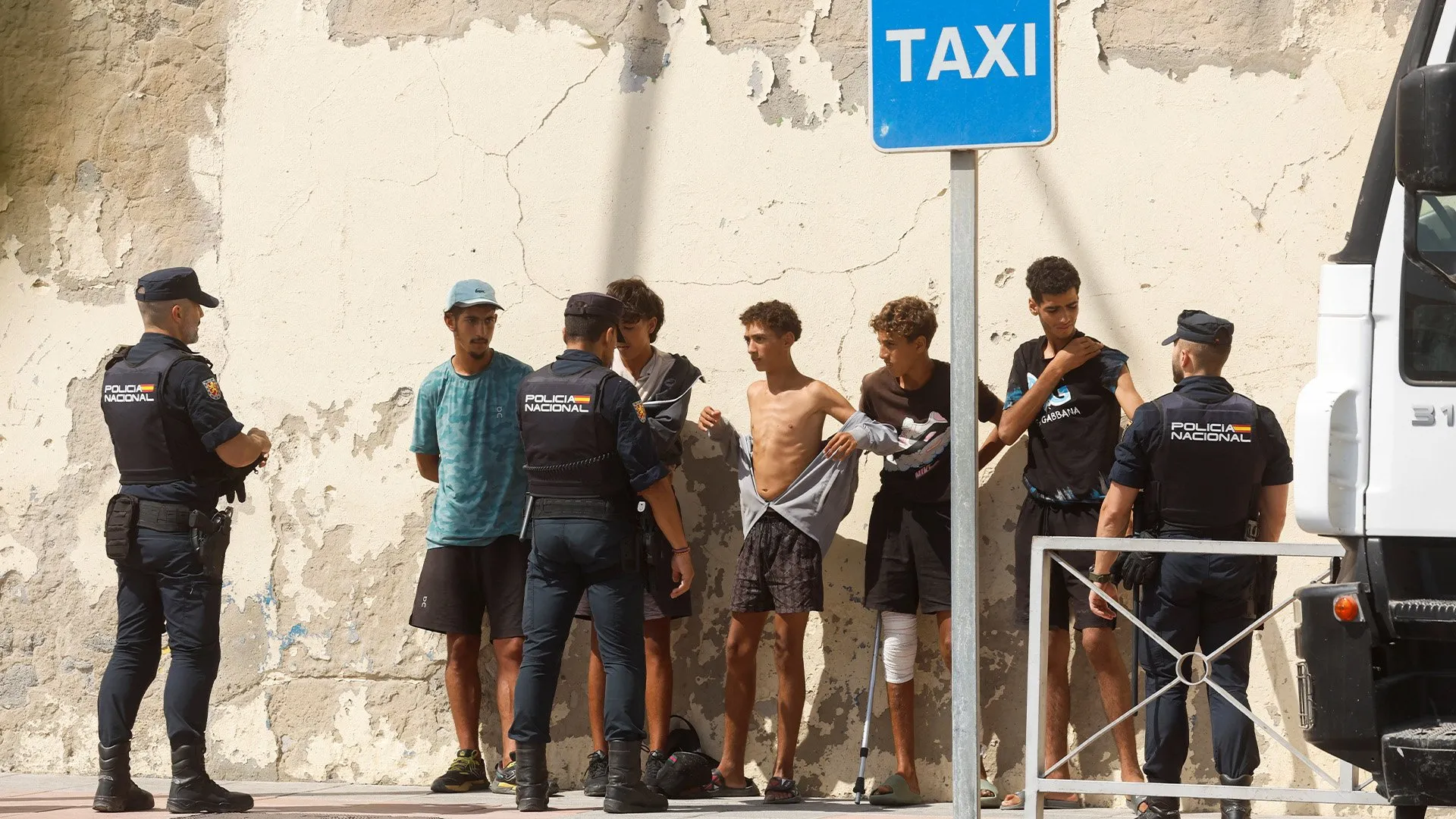
Authorities estimate that at least 10,000 people remain in the enclave of Ceuta after a record surge of 72,000 migrants crossed from Morocco to Ceuta over the course of two days in late July, overwhelming local resources and creating a humanitarian crisis.
Madrid, Spain – Thirteen minutes into La Liga’s Madrid derby on Sunday, a banner was unfurled in the Metropolitano Stadium’s south stand stating: “Ceuta es Espana. Ni se arruga, ni se tapa.” (Ceuta is Spain. It is neither rolled up, nor covered.)
It was a reference to the controversy involving Real Madrid players Kylian Mbappe, Vinicius Junior and Ibrahima Konate, who in a previous football match against Elche had rolled-up shirts carrying a solidarity message linked to Ceuta, the Spanish enclave at the centre of growing political tensions between Spain and Morocco over the influx of migrants and refugees.
Recommended Stories
list of 4 itemsend of list
A record 72,000 migrants crossed from Morocco to Ceuta over the course of two days in late July, overwhelming local resources and creating a humanitarian crisis. The Spanish NGO Caminando Fronteras documented 141 deaths across both sides of the border in the immediate aftermath.
Mbappe and Konate have strong ties to the African continent. Konate was born and raised in Paris by parents who migrated from Mali, while France captain Mbappe grew up in Bondy, outside Paris, to parents who came from Cameroon and Algeria.
Mbappe said his gesture did not reflect a lack of support for Ceuta.
“I also wanted to think about all the people who are suffering, because in the end I am human and I don’t want to prioritise the suffering of one group over another,” he said.
He also said he wanted to acknowledge migrants who had suffered or lost their lives during the crisis.
Real Madrid later said it respected each player’s freedom to participate in the initiative. A day earlier, Barcelona had chosen not to wear the shirts before their La Liga game against Levante.
La Liga president Javier Tebas, meanwhile, criticised the three Real Madrid players and said he did not regard the campaign as political. David Aganzo, president of Spanish footballers’ union AFE, said players instead needed to be properly informed about what they were being asked to wear and why.
While the debate over Spanish football’s support for Ceuta followed Real into their derby against fierce rivals Atletico Madrid on Sunday, it also united supporters from both sides for two minutes as they joined in chants of “Ceuta no se vende, Ceuta se defiende” (Ceuta is not for sale, Ceuta must be defended) before the usual hostility of the derby resumed.
Mbappe and Vinicius were also the target of whistles from both sets of fans when Real’s starting XI was announced prior to kickoff.
Jorge Garcia, a 32-year-old Atletico Madrid supporter, believed they deserved the jeering.
Speaking to Al Jazeera after the match, Garcia termed the players’ move “disrespectful” to both Ceuta and Spain.
Fans hold a banner during the Atletico Madrid vs Real Madrid La Liga match at the Metropolitano Stadium in Madrid, Spain on Sunday, September 20, 2026 [Leyla Hamed/Al Jazeera]
The campaign was launched on September 11 by Asociacion Valenciana de Empresarios (AVE), a non-profit business association, which described the move as an expression of solidarity with Ceuta’s residents and businesses amid an influx of migrants and a message of “territorial and social cohesion in Spain”.
AVE is chaired by businessman Vicente Boluda, a former interim Real Madrid president whose maritime group also operates in Ceuta.
Spain coach Luis de la Fuente travelled to Ceuta with the World Cup trophy, declaring: “This is Spain, this is Ceuta.” Real Madrid president Florentino Perez later visited and said the trip had been organised weeks earlier and was not a response to the controversy involving his players.
Youssef Temsamani, a Spain-based Moroccan journalist, believes the players found themselves in a difficult position: wearing the shirt could be interpreted as taking a political position, but declining to do so could be portrayed as showing a lack of solidarity.
Temsamani said migrants should also form part of discussions about solidarity with Ceuta, and criticised descriptions of the crossings in parts of Spain’s political and media debate as an “invasion” or “occupation”.
Luhay Hamido, president of AD Ceuta football club, defended the right of individual players to make their own decisions and said he respected those who wore it and those who did not.
“We cannot force anyone to identify with a cause they do not understand,” he told Al Jazeera, suggesting footballers are sometimes simply told to put on a shirt in the tunnel without having received a full explanation.
The scale of the crisis that prompted the solidarity campaign remains difficult to quantify precisely. Spain’s Interior Ministry put the number of people who irregularly crossed into Ceuta on July 30 and 31 at 72,000, saying more than 70,000 initially returned to Morocco.
Seven weeks later, the government estimated that 9,000 to 10,000 migrants remained in Ceuta. RTVE reported on September 20 that around 8,300 people were being accommodated in different facilities while more than 4,000 remained on the streets, reflecting discrepancies between estimates compiled at different stages of the crisis. The new temporary centre at the port reached its capacity of 1,700 people within hours of opening.
Hamido said the crisis had also directly affected AD Ceuta, with several advanced signings collapsing because players and their families were worried by what they had seen on television. The club began paying for prospective signings to visit the city before making their decision.
At the same time, he described the support from Spanish football as “pure fuel for us”, giving Ceuta “strength, hope and energy”, and said AD Ceuta could act as an “amplifier” so the city was not forgotten.
Away from the stadiums and political arguments, football is also played in the neighbourhoods in Ceuta, where migrants had gathered in the largest numbers.
There, children could be seen playing barefoot in the street, marking out makeshift goals against walls and turning whatever space they could find into a football pitch. Some wore shirts bearing the names of Yamal, Hakimi or Mbappe – players whose own family histories stretch across borders.
For Hamido, ordinary people caught in the crisis should not be castigated.
“[These] people, in the end, are not to blame,” he told Al Jazeera.
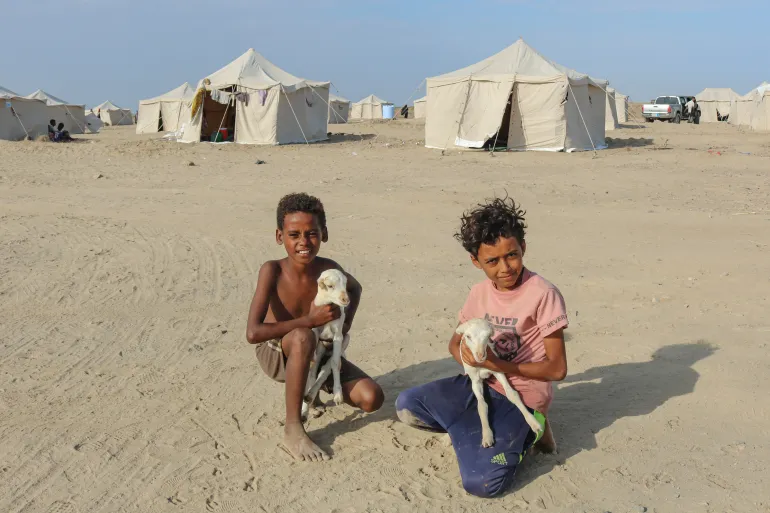
More than 2,700 Yemenis have fled to Djibouti, many making dangerous sea crossings to escape the conflict. Al Jazeera’s Hasan Razzaq spoke with some of those who have arrived in the northern town of Obock, where they are seeking shelter and assistance.
US judges affirm migrants must have opportunities to voice safety concerns before deportation to unfamiliar nations.
Published On 19 Sep 202619 Sep 2026
A US federal appeals court has rejected the Trump administration’s policy of rapidly deporting migrants to countries other than their own – a ruling that could next go before the Supreme Court.
On Friday, a three-judge panel of the 1st US Circuit Court of Appeals in Boston largely upheld a February decision that found the Department of Homeland Security’s so-called third-country removal policy unlawful.
Recommended Stories
list of 3 itemsend of list
The case stems from a class-action lawsuit testing what due process migrants are owed before being sent to nations with which they have no ties.
Writing for the panel, US Circuit Judge Seth Aframe said migrants must be given a “meaningful” chance to raise safety concerns before removal, rejecting the Trump administration’s narrower reading of the law.
The court did overturn part of the ruling on procedural grounds, concerning whether officials must first try deporting migrants to countries they have ties to.
Trina Realmuto, a lawyer for the plaintiffs at the National Immigration Litigation Alliance, said the decision confirmed that “due process and the protections Congress enacted against persecution and torture cannot be circumvented by putting someone on a plane to a country that was never part of their removal proceedings”.
The DHS did not immediately comment. The Trump administration is expected to appeal the ruling.
Under Trump, the US has struck agreements allowing it to send more than 25,000 migrants to at least 29 third countries, most often Mexico, according to Third Country Deportation Watch, a tracker run by the rights groups Refugees International and Human Rights First.
The policy, adopted in March 2025, allowed removals with only minimal notice if officials had diplomatic assurances against persecution.
The controversial programme has reached the Supreme Court twice.
In 2025, the justices cleared the way for eight men, including nationals of Cuba, Myanmar and Vietnam, to be deported to South Sudan, a country the US State Department advises against visiting because of “crime, kidnapping, and armed conflict”.
The DHS called the removals “a win”, while rights groups said they flouted basic protections.
The Trump administration’s immigration agenda has faced a string of setbacks this month.
A federal judge blocked planned caps on student and journalist visas, calling the government’s justification “exceptionally weak”, while a coalition of 22 states and Washington, DC, sued to stop a separate rule that would let officials deny green cards to immigrants who lawfully use public benefits.
United Nations says 22 million people need humanitarian aid as conflict intensifies.
Published On 18 Sep 202618 Sep 2026
More than 112,000 people have been displaced in Yemen and close to 3,000 have fled the conflict to Djibouti, according to the United Nations, as fighting intensifies between the Iran-allied Houthis and Saudi-backed forces loyal to the internationally recognised government.
“Our resources are very, very, very limited and our stocks will be depleted very soon,” Abdusattor Esoev, mission chief in Yemen for the International Organization for Migration, told reporters on Friday.
Recommended Stories
list of 3 itemsend of list
Most of the more than 112,000 internally displaced people have been displaced over the last two weeks, mainly along the west coast and in the provinces of Taiz and Lahj, he added.
The displacement began when the Houthis made a rapid advance, seizing control of the entire Red Sea coast of Yemen to tighten their grip on the vital shipping route, the Bab al-Mandeb Strait.
Esoev estimates 22 million Yemenis – or nearly half the population – are in urgent need of humanitarian aid.
More than 65,000 registered refugees and asylum seekers in Yemen, mainly from Somalia and Ethiopia, are also threatened.
3,000 Yemenis flee to Djibouti
The crisis is growing “by the hour”, warned Francesco Galtieri, a representative for the UN Population Fund (UNFPA), adding that thousands of women who have lost all their possessions are on the run with their children.
Galtieri estimates that 2,000 pregnant women are among the displaced and around 200 are expected to give birth shortly.
Around 3,000 Yemenis have fled Yemen by boat to Djibouti, the UN refugee agency said. The shortest route across the Bab al-Mandeb Strait is just over 25 kilometres.
The UNHCR reports that more than 2,400 people made the voyage in the past week – mostly women, children and older people.
The influx is adding pressure on Djibouti and population of about one million people. It already hosts around 36,000 refugees, most from Somalia and Ethiopia, said UNHCR representative Sandrine Desamours.
“While the number may sound small,” it must be seen in proportion to the population, she added.
The strategically important Bab al-Mandeb links the Red Sea with the Gulf of Aden and has become an alternative shipping route as the United States’ war against Iran choked the Strait of Hormuz.
The Al-Farsi camp for internally displaced people in Ras Imran in southern Yemen, September 17, 2026 [Mohamad Hakim/AFP]
Police in Ceuta used batons and fired shots into the air as they began moving migrants from beaches to a new camp. Nearly 10,000 remain in the Spanish territory weeks after a record influx saw more than 72,000 people cross from Morocco.
Taiz, Yemen – Hajja Fatima Mohammed Saleh, a 70-year-old Yemeni woman, is among the countless people and families displaced from Taiz governorate, southwest Yemen, in recent fighting between government forces and the Houthis.
The Iran-backed rebel group, also known as Ansar Allah (supporters of God), now controls most parts of northwestern Yemen, including the capital, Sanaa.
Recommended Stories
list of 4 itemsend of list
Saleh’s village in Maqbanah district, on the border of Yemen’s western coast, is situated at the epicentre of last week’s Houthi assault in which the group captured the whole of the Red Sea coast, including the port city of Mocha.
At least 100,000 people have now fled their homes following renewed fighting between the two sides, according to the United Nations’ refugee agency, most leaving with few belongings due to the speed of the Houthi offensive.
Saleh said she had to leave her wheelchair behind as it was unsuitable for the rugged terrain her family had to navigate to find shelter.
“The attack was massive, we had never seen anything like it before. Shells were falling heavily on the village, and bullets were flying in every direction,” she told Al Jazeera.
“We had no choice but to leave and flee to a safe place. We left everything we owned and walked a long distance on foot. For me, I suffered especially because I am disabled and cannot walk, so I had to crawl – using both hands – for a long distance through rain and floods before we found a vehicle to carry us.”
UN agencies and the internationally recognised Yemeni government say that Taiz governorate has witnessed most of the displacements, with Taiz City among the Houthis’ next targets after their victory on the Red Sea coast. This means the humanitarian situation could worsen even further.
Ali al-Shumairi, director-general of the Executive Unit for the Management of IDP Camps in Taiz governorate, told Al Jazeera that 65,845 people were displaced between August 10 and September 15. About 95 percent of those displaced come from the five districts which witnessed the heaviest fighting: Jabal Habashi, al-Maafer, Maqbana, al-Wazi’iyah and Mawza.
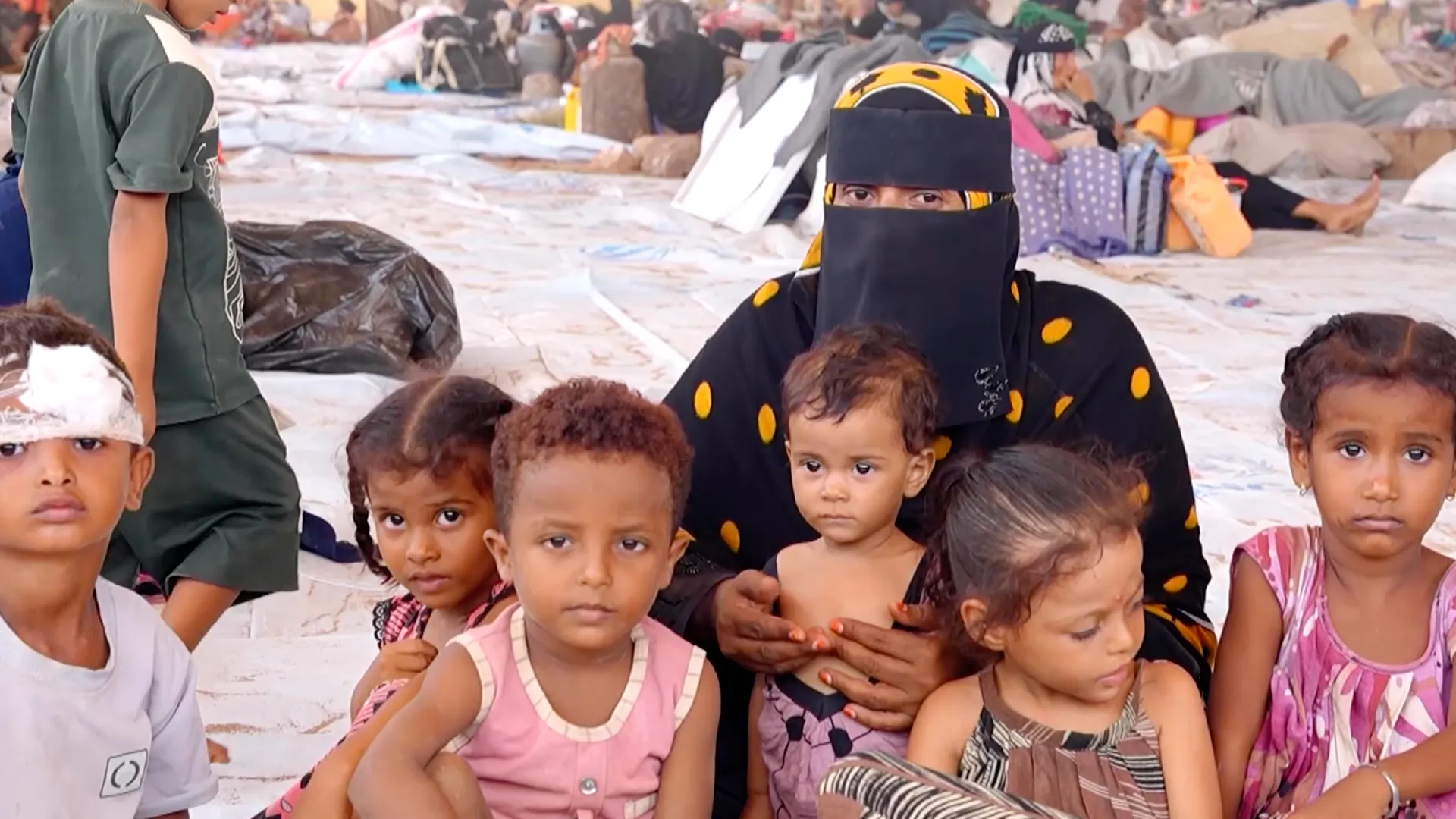
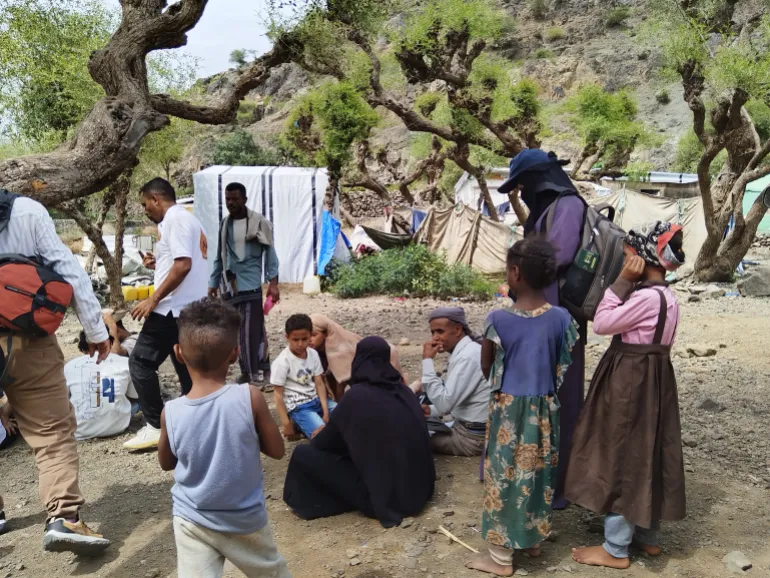
Newly displaced people at al-Munij camp [Al Jazeera]
Fighting has intensified on several fronts in Yemen as government forces have carried out air attacks on Houthi positions in attempts to retake Mocha, days after the group captured the strategic port city, tightening its grip on the Red Sea – a vital shipping lane.
This development has placed the Bab al-Mandeb Strait, the strategic waterway that connects the Red Sea to the Gulf of Aden and the wider Indian Ocean, at the heart of the war between the United States and Iran, and amplifies pressure on global trade routes.
Yemen’s more than 10-year civil war was reignited in July, threatening a United Nations-brokered truce that halted large-scale violence in 2022, after the Houthis declared a maritime blockade on Saudi Arabia and began targeting its ships in the Red Sea.
Forces affiliated with Yemen’s internationally recognised government have launched a campaign against the Houthis on a number of fronts since last week. They have retaken some positions and are advancing in the southwestern Taiz province as clashes intensify.
Osama al-Wafi, supervisor of the Mushrifa camp in Wadi Bikhawlan in Taiz governorate and a representative of the Yemeni government’s Executive Unit in Jabal Habashi district, described the situation as “dire and tragic”.
“These people have been displaced and have lost all the basic necessities of life, after having homes, farms, and livestock. Now they are only looking for a shelter to house them,” al-Wafi told Al Jazeera.
He said the number of displaced people arriving at the camp is steadily rising, with more than 1,500 families entering over the past six days, most living in the open due to a lack of shelter.
The al-Munij camp in the al-Bireen area, about 40 kilometres southwest of the semi-besieged city of Taiz, has become a temporary refuge for Yemenis fleeing the area after another bout of conflict between government and Houthi fighters in 2020.
Over the years, al-Munij has extended over a space of two square kilometres to house more displaced families, while other larger camps have been established in the area. Most residents complain they lack access to the most basic services – such as sporadic drinking water supplies and few toilets – in the camps.
Hajj Saif Qaed Thabet, 73, has been living with his wife and four children in an exposed space with no doors since arriving at al-Munij on September 10. He left behind a farm and livestock from his home in al-Kadaha, western Taiz governorate.
“We were displaced because of the war, fleeing bullets and artillery shells falling over our heads. Since arriving at the camp, we have been living like this, waiting for our situation to be addressed and for us to be housed in a suitable place,” said Thabet. “Praise be to God in all circumstances.”
Displaced man Hajj Saif Qaed Thabet, 73, has been living in the open air since he arrived with his family at al-Munij camp on Thursday, September 10 [Al Jazeera]
Malouk Ahmed Ali, 55, from the al-Kadaha area in Taiz, said her family of 14 all escaped drones, shelling and gunfire on foot, including five children under her care, seven under her daughter’s care, and her elderly grandmother.
“We fled to an area near our village in the hope that the war would calm down quickly and we would return to our homes, but the clashes expanded until they reached us, so we were displaced again to here aboard a military vehicle that came to transport the threatened homeless people,” she told Al Jazeera.
“When we arrived at this camp, we were received and placed in this small tent as temporary housing for all members of the large family. Although they took all our information, our situation has not improved much so far, and we still hope it will improve.”
Ali hopes the war will end soon so she can return home but believes her family’s possessions, including solar panels and a battery, will have gone.
“As for our livestock, most of them died, some fled to the mountains and valleys, and what remained was looted,” she said.
At least 51 people rescued as search operation continues off the island of Gavnos near Crete.
Published On 14 Sep 202614 Sep 2026
One person has died, 25 are missing and 51 people have been rescued after a boat carrying migrants sank off a Greek island near Crete, according to the country’s coastguard.
“Fifty-one were picked up by two boats that were in the area,” a coastguard spokesman said on Monday.
Recommended Stories
list of 3 itemsend of list
He said survivors had reported that 77 people were on board when the boat went down near the island of Gavdos.
Search and rescue efforts were ongoing, with four ships, boats, Frontex aircraft and a coastguard helicopter operating in the area, Greece’s public broadcaster ERT News reported.
The 51 rescued people were due to be brought to Crete, “where the prescribed procedures will be followed”, ERT reported.
After arriving in Crete, undocumented migrants generally face immediate arrest and temporary confinement before being transferred to closed detention camps on the Greek mainland. Under Greek law, individuals are subject to extended administrative detention, severe penalties and fast-track deportation.
Strong winds blowing through the area have been hampering the search operation, ERT said.
In late August, Greece’s ANA news agency published figures from the Ministry of Migration and Asylum that indicated that migrant arrivals in the country fell from about 61,000 in the year to August 2025 to 42,000 in the following 12 months – a decline of about 31 percent.
Greece’s conservative government in July suspended all asylum claims for migrants arriving by sea from North Africa for three months, a move it argued helped deter crossings.
The ban passed in parliament amid a surge in asylum seekers reaching Crete and after talks with Libya’s Benghazi-based government to stem the flow were cancelled in July.
The government remains at odds with regional authorities in Crete over a plan to build a permanent transit facility on the island. It is preparing draft legislation that would mandate imprisonment for people whose asylum claims are denied and require ankle monitors during a 30-day compliance period before deportation.
Authorities in Europe have tightened their immigration rules over recent years as far-right, anti-immigrant political parties have won increasing support throughout the continent.
Greece has been in discussions with Germany and several other European Union countries on setting up “return hubs” outside the bloc for processing migrants’ claims.
Yemeni refugees arrive in Obock, Djibouti, within 24 hours as Houthis tighten their grip on the Bab al-Mandeb strait.
Published On 13 Sep 202613 Sep 2026
About 1,400 people have fled Yemen for Djibouti in a 24-hour period, Djibouti’s economy and finance minister says, as Houthi fighters tighten their grip on the Bab al-Mandeb strait.
Ilyas Moussa Dawaleh wrote on X on Saturday: “1,400 refugees arrived in Djibouti from Yemen in just 24 hours.”
Recommended Stories
list of 3 itemsend of list
In a separate post on Friday, the minister said that 500 refugees had arrived in the coastal city of Obock, including women and children, after they were rescued at sea when their boats ran out of fuel while crossing the Bab-el-Mandeb strait.
Obock, a city only about 20 kilometres (12 miles) across the water from the Yemeni coast, has for several years been a preferred arrival point for those seeking refuge from war-torn Yemen. The Bab-el-Mandeb strait is also used in the opposite direction by migrants from the Horn of Africa, who transit through Yemen on their way to Gulf countries.
Safiya Ibrahim, humanitarian response coordinator for the International Organization for Migration (IOM), told AFP that “vulnerable groups such as women and children have reached the shores of Obock, with more expected in the coming days”.
The IOM warned on Friday that at least 46,000 people had been displaced in Yemen since fighting escalated last week.
“Families are being forced to flee for the second or third time in this conflict, with almost nothing left,” Amy Pope, the IOM director general, said in a statement. “As fighting spreads, reaching people with lifesaving assistance is becoming harder. We urgently need safe, unimpeded access.”
Djibouti hosts tens of thousands of refugees and asylum seekers. United Nations Refugee Agency figures from March 2026 show a registered population of more than 36,000, with the majority from Somalia, Ethiopia and Yemen.
The Houthis seized the Red Sea port city of Mocha on Thursday and have since overrun the coastline and islands surrounding the Bab al-Mandeb strait. The rapid offensive has forced thousands of families to flee, with entire villages reportedly emptied in districts such as Maqbanah, Jabal Habashi and al-Maafer.



![Rohingya refugees facing evicted from their homes amid rising local tensions and online misinformation, Kuala Lumpur, Malaysia, July 27, 2026 [Hasnoor Hussain/Reuters]](https://i0.wp.com/occasionaldigest.com/wp-content/uploads/2026/10/2026-07-27T123715Z_206813602_RC2BMMA6AR5R_RTRMADP_3_MALAYSIA-REFUGEE-1787872480.jpg?w=640&ssl=1)


![Protesters hold placards during an anti-immigration march in Durban, South Africa, calling for tighter border controls and the deportation of undocumented migrants [Thuli Dlamini/Reuters]](https://i0.wp.com/www.aljazeera.com/wp-content/uploads/2026/06/2025-11-07T155727Z_1005019881_RC2NRHA84QWK_RTRMADP_3_SAFRICA-PROTEST-1782784993.jpg?w=640&ssl=1)
![Hakim Mar’i in his family’s apartment with his injured leg, which prevents him from working [Al Jazeera]](https://i0.wp.com/occasionaldigest.com/wp-content/uploads/2026/09/d9-1790406476.jpg?w=640&ssl=1)
![Members of the Zbeidat family sit on couches outside. The room they stay in is on the left [Al Jazeera]](https://i0.wp.com/occasionaldigest.com/wp-content/uploads/2026/09/s2-1790406485.jpg?w=640&ssl=1)
![The kitchen and bathroom the Zbeidats have are in the same room they sleep in [Al Jazeera]](https://i0.wp.com/occasionaldigest.com/wp-content/uploads/2026/09/s4-1790406489.jpg?w=640&ssl=1)


![Fans hold a banner during the Atletico Madrid vs Real Madrid match in the Spanish La Liga at the Metropolitano Stadium in Madrid on Sunday, September 20, 2026 [Leyla Hamed/Al Jazeera]](https://i0.wp.com/occasionaldigest.com/wp-content/uploads/2026/09/Ceuta-banner-Atletico-Madrid-vs-Real-Madrid-Leyla-Hamed-1789993641.jpeg?w=640&ssl=1)


![Newly displaced persons at Al-Munayyaj camp [Al Jazeera]](https://i0.wp.com/www.aljazeera.com/wp-content/uploads/2026/09/%D8%A7%D8%AB%D9%86%D8%A7%D8%A1-%D8%AA%D9%82%D9%8A%D9%8A%D8%AF-%D8%A8%D9%8A%D8%A7%D9%86%D8%A7%D8%AA-%D8%A7%D9%84%D9%86%D8%A7%D8%B2%D8%AD%D9%8A%D9%86-%D8%A7%D9%84%D8%AC%D8%AF%D8%AF-%D9%81%D9%8A-%D9%85%D8%AE%D9%8A%D9%85-%D8%A7%D9%84%D9%85%D9%86%D9%8A%D9%8F%D9%91%D8%AC-%D8%B5%D9%88%D8%B1%D8%A9-%D8%AE%D8%A7%D8%B5%D8%A9-%D9%85%D9%86-%D8%AA%D8%B5%D9%88%D9%8A%D8%B1%D9%8A-1789545157.jpg?w=640&ssl=1)
![Displaced man Hajj Saif Qaed Thabet, 73, has been living in the open air since he arrived with his family at al-Munij camp on Thursday, September 10 [Al Jazeera]](https://i0.wp.com/www.aljazeera.com/wp-content/uploads/2026/09/%D8%A7%D9%84%D8%AD%D8%A7%D8%AC-%D8%A7%D9%84%D9%86%D8%A7%D8%B2%D8%AD-%D8%B3%D9%8A%D9%81-%D9%82%D8%A7%D8%A6%D8%AF-%D8%AB%D8%A7%D8%A8%D8%AA-%D9%85%D8%A7-%D8%B2%D8%A7%D9%84-%D9%8A%D8%B3%D9%83%D9%86-%D8%A8%D8%A7%D9%84%D8%B9%D8%B1%D8%A7%D8%A1-%D9%85%D9%86%D8%B0-%D9%88%D8%B5%D9%88%D9%84%D9%87-%D9%85%D8%AE%D9%8A%D9%85-%D8%A7%D9%84%D9%85%D9%86%D9%8A%D9%8F%D9%91%D8%AC-%D8%A7%D9%84%D8%AE%D9%85%D9%8A%D8%B3-10-%D8%B3%D8%A8%D8%AA%D9%85%D8%A8%D8%B1-%D8%B5%D9%88%D8%B1%D8%A9-%D8%AE%D8%A7%D8%B5%D8%A9-%D9%85%D9%86-%D8%AA%D8%B5%D9%88%D9%8A%D8%B1%D9%8A-1789545163.jpg?w=640&ssl=1)