Suspending gas tax, reducing refinery regulations pushed by two Democrats running for governor
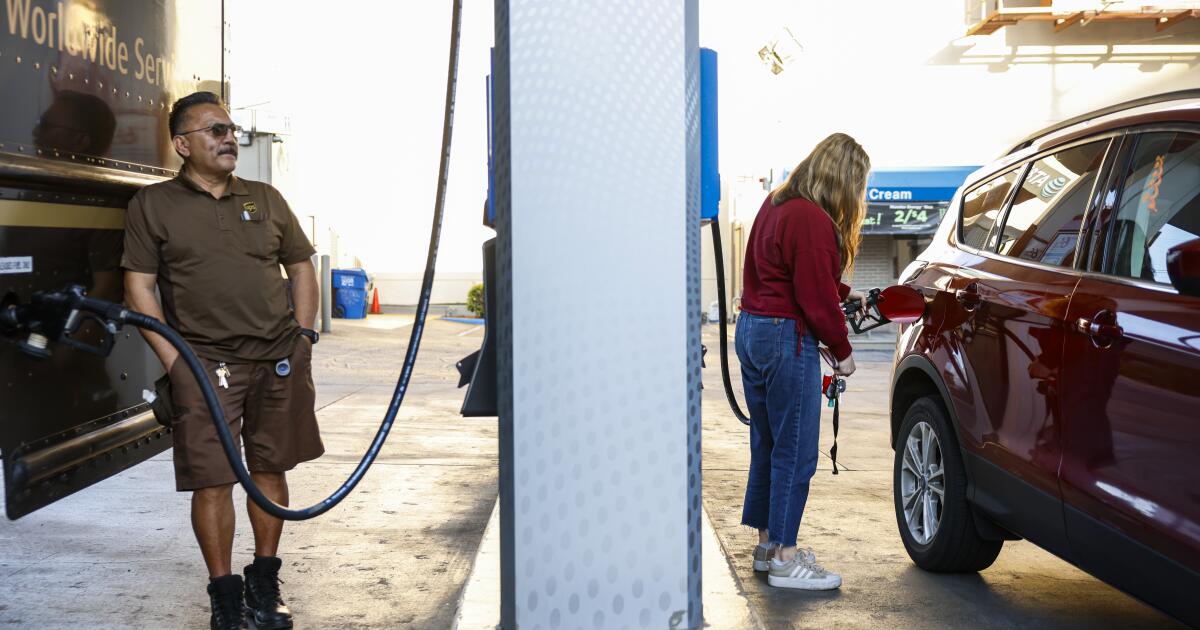
SACRAMENTO — As gas prices surge in California and nationally due to the war in Iran, two Democrats running for California governor are calling for the state to temporarily suspend its fuel tax or ease refinery regulations in an effort to lower costs.
Standing in front of a gas pump in a video posted to social media, San Jose Mayor Matt Mahan said the costs are “becoming an emergency for working families, and I think we ought to act like it.”
The moderate Democrat called on state lawmakers to suspend California’s gas tax, which at 61 cents per gallon is the highest in the nation.
Former Los Angeles Mayor Antonio Villaraigosa also called for an “immediate moratorium” on regulations that he blamed for “overburdening” California refineries and working families.
“These failed policies are not only hurting tens of millions of Californians, they are terrible for the environment because they have forced California to depend on imported foreign oil from the Middle East,” Villaraigosa said in a statement.
The cost of living in California, including the price at the pump, remains a pivotal issue for voters in the state, and has become central to the moderate-leaning campaigns of Mahan and Villaraigosa as they attempt to distinguish themselves in the tightly contested race for governor.
According to AAA, the average price for a gallon of regular gasoline in California on Monday was $5.52, the highest in the nation and more than 50 cents higher than any other state. The national average was $3.71, up from the previous month’s average of $2.92.
Gasoline prices in California are often among the highest in the country for a number of reasons, including environmental rules that require a unique blend of cleaner-burning fuel.
The state also relies mostly on crude oil imported from other countries including Brazil, Iraq and Guyana and processed at in-state refineries. In 2025, 61% of oil processed at California refineries was imported, compared with 23% that was produced in the state, according to data from the California Energy Commission.
A greater reliance on foreign oil has made California more susceptible to price spikes during global conflicts and other disruptions.
Republicans have long supported suspending the gas tax and cutting regulations in order to lower prices at the pump.
Steve Hilton, a GOP candidate for governor and former Fox News host, outlined a plan to lower California gas prices to $3 per gallon by slashing regulations including the low-carbon fuel standard, the rule that requires cleaner-burning gas in order to reduce tailpipe emissions.
The other major Republican in the race, Riverside Sheriff Chad Bianco, supports suspending the gas tax, according to his website.
The current price spike echoes 2022, when Russia invaded Ukraine and disrupted global oil markets.
As prices eventually fell around the rest of the country that year, they remained high for months in California, leading Gov. Gavin Newsom to wage war against oil and gas companies. He accused them of price-gouging drivers and backed laws requiring companies to report their profit margins and keep a supply of fuel on hand to prevent shortages and price spikes.
The governor backed off his battle with the oil companies last year after two refineries announced plans to close. In September, he signed legislation to permit 2,000 new oil wells in Kern County, reflecting an acknowledgement that his war on oil companies threatened to send California’s gas market spiraling.
Republican state lawmakers in 2022 pushed for a temporary suspension of California’s excise tax on gasoline, arguing that it would provide immediate relief to California drivers. That effort was rebuffed by Newsom and Democratic lawmakers, but they later approved $9.5 billion in tax refunds to Californians, providing as much as $1,050 to families as financial relief from record-high gasoline prices and other rising costs.
In 2017, the Democratic-controlled Legislature passed Senate Bill 1, which then-Gov. Jerry Brown signed into law, levying the state’s first gas tax increase in 23 years to fix California’s roads and bridges in disrepair. Under the law, the tax increases each year on July 1 based on the growth in the California Consumer Price Index.
California voters remain conflicted on the state’s regulation of the oil industry, according to an August survey by the Public Policy Institute of California. It found that more than 60% of adults support goals to reduce greenhouse gas emissions and generate electricity from renewable energy sources.
But majorities also said the costs of gasoline and utility bills is a major problem for them personally, according to the poll.
Mahan and Villaraigosa are the only two Democrats who have publicly called to roll back regulations on the state’s oil and gas market, illustrating the political murkiness at the nexus of California’s climate and affordability challenges.
Still, Democratic lawmakers – who hold supermajorities in the state Senate and Assembly – continue to shut down proposals to pause the gas tax, arguing that the state would lose out on much-needed money for roads.
“If anyone has a proposal about how to backfill (transportation) revenues, I’m up for that conversation, but so far, it’s just a bulls— political talking point,” said Assemblymember Cottie Petrie-Norris (D-Irvine).
Petrie-Norris chairs the Assembly Utilities and Energy Committee and has helped lead legislative efforts to stabilize California’s fuels market without retreating from goals to achieve carbon neutrality.
”When I ask people, ‘Do you want affordable gas, clean air or safe roads?’ they say yes. So they want us to do all three of these things,” she said. “We’ve got to be honest with Californians about trade-offs so that we can have real conversations.”
Mahan pushed back on the importance of collecting gas tax revenue.
“The truth is we have the highest taxes in the country and a $350-billion budget, and we ought to be able to pave our roads and enable working families to put food on the table,” he said in an interview. “I just reject the notion that the sky is going to fall if we provide temporary relief to working families who are being pushed to the brink by a war that they didn’t ask for.”
The San José mayor said the state should suspend the fuel tax “for the duration of the war” in Iran “or as long as gas prices are over $5 a gallon” in the state. He also called for “massive regulatory overhaul that brings down costs across the board,” including rules on refineries.
If elected governor, Villaraigosa said he would “reform and overhaul” the California Air Resources Board, which enacts many of the state’s environmental laws — including the low carbon fuel standard and cap-and-invest program.
“We can no longer allow bureaucrats who live in a bubble — with no accountability for the harm they are causing our economy and our people — to have so much power over the lives of every Californian,” Villaraigosa said in a statement.