
Robert Way/iStock Editorial via Getty Images

Robert Way/iStock Editorial via Getty Images
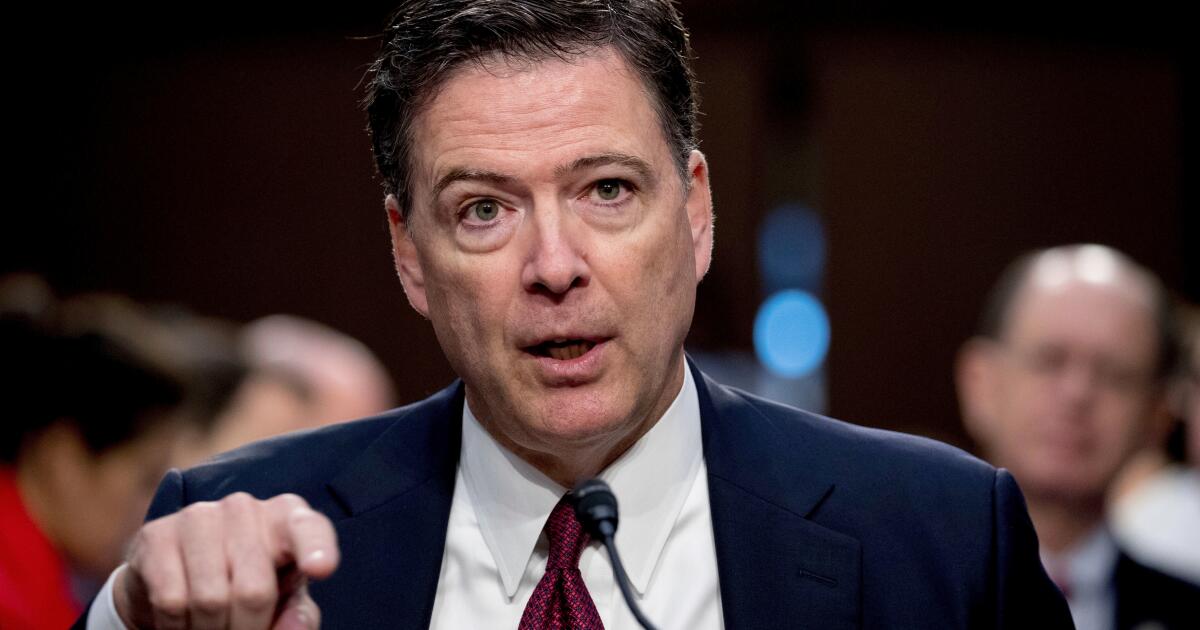
WASHINGTON — The Department of Justice is defending its prosecution of former FBI Director James Comey, saying “there is no serious dispute” that a social media post of seashells he made last year could be understood as a threat against President Trump.
Prosecutors also called into question Comey’s account that he had found the seashells in the numerical arrangement of “86 47” while walking on a beach in North Carolina and suggested that his May 2025 post on Instagram was an effort to generate attention for a forthcoming novel about a social media personality whose words inspire his fans to attack his foes.
The arguments in motions late Tuesday represent the government’s most detailed explanation of its indictment and were filed in response to wide-ranging defense efforts to dismiss the case on grounds including that it constitutes a vindictive prosecution and that Comey’s post did not amount to a true threat. Comey’s lawyers contend that investigators in the case misled judges, submitted documents containing false statements, withheld key facts and repeatedly came up empty in their efforts to prove that Comey intended a physical threat or knew that the number 86 could suggest violence.
The entry for “86” from Merriam-Webster, the dictionary used by the Associated Press, says its meaning is “to throw out,” “to get rid of” or “to refuse service to.” Trump, a Republican, is the 47th president.
Federal prosecutors maintain that the photo of the seashells, which Comey said he found on the beach, constituted a threat against Trump. Comey deleted the post shortly after he put it up, saying he did not know that anyone interpreted the numbers as a call to violence. His lawyers have said that the slogan has long meant to “get rid of” or “eject” and has been featured on thousands of items sold online and is regularly displayed at protests.
But the department sought in its filings to place the post against the backdrop of assassination plots or attempts against Trump in the months before and after Comey’s post. Prosecutors say that two minutes before the post was made, Comey’s wife texted him a screenshot of a definition of “86” that said “to get rid of or refuse service.”
“There is no serious dispute that an objective viewer of Comey’s post could read it to mean ‘Kill President Trump,’” prosecutors wrote.
The photo was posted days before Comey was set to release a novel he wrote titled “FDR Drive,” in which a prosecutor pursues a far-right social media personality who has called out his adversaries by name and inspired violence against them by his fans, the department said.
After the Instagram post provoked an outcry, according to the government’s filings, Comey’s publishing agent observed in a text message to him that he had “gone viral.” Comey responded that that was “not my intention, but I’ll be OK if it sells books.” The agent replied, ”Music to an agent’s ears.”
Prosecutors also asserted there was “reason to doubt” Comey’s account of having come upon the seashells while on a walk, saying they were located four miles “down from the beach from beachfront property where Comey was staying, in an area separated from the ocean by a sand dune.” They said there was “no evidence that anyone else arranged, photographed, or even saw the shells.”
Comey’s lawyers have called the indictment, which was filed months after an earlier and unrelated case against him was dismissed, part of a Trump retribution campaign targeting one of the president’s vocal critics. Trump fired Comey as head of the FBI in 2017 as Comey was overseeing an investigation into potential ties between Trump’s 2016 presidential campaign and Russia. Trump since then has called for him and other perceived adversaries to be jailed.
But the Justice Department denied allegations of vindictiveness, saying the decision to indict Comey was made by the U.S. attorney in the area and did not stem from a directive from the president or the attorney general.
To bolster their claims that Comey was unjustly targeted, the defense team argued that investigators struggled to develop compelling evidence from witnesses that Comey had intended the post as a threat, but they concealed that from federal magistrates as they applied for warrants to search digital accounts associated with Comey and his wife.
For instance, defense lawyers have said, the FBI searched an internal database of information about open and closed investigations for any indication of an association between Comey and the term “86” but found inconclusive results. An FBI agent also requested a review of the FBI file for the case against reputed mobster John Gambino, which Comey worked on as a young prosecutor, but found no references to the term “86.”
Investigators also interviewed a key government cooperator in the case, Salvatore “Sammy the Bull” Gravano, who said he did not recall ever discussing the term “86” with Comey or hearing it in connection with the trial.
The latest filings made clear that the administration was standing behind the premise of the case.
“No Government theory was disproved at that time, or now. No intentionally false omission exists, much less one made with reckless disregard for the truth,” prosecutors wrote. “The evidence still supports that Defendant acted at least recklessly by consciously disregarding a substantial risk that his coded message of “8647” that he sent to his 200,000 or so Instagram followers, and the millions of secondary social media users who would view this as threatening violence against the President of the United States.”
Tucker writes for the Associated Press.

WASHINGTON — The Pentagon issued an apology Tuesday for remarks made by Gen. Carl E. Mundy Jr., commandant of the Marine Corps, who said in a televised interview that black officers and those of other minority groups do not shoot, swim or read compasses as well as whites.
In a statement to reporters, Navy Capt. Michael Doubleday said that Mundy “regrets any offense that may have been taken by his statements,” which were televised Sunday on the CBS program “60 Minutes” as part of a segment on problems minority officers have receiving promotions.
Mundy’s comments on “60 Minutes” marked the third time this year that the commandant has caused a stir. In mid-August, the general abruptly issued orders that would have barred married persons from enlisting in the Marines. He was forced to rescind them immediately after a protest by the President.
Earlier, Mundy angered the Administration by vigorously opposing Clinton’s plan to lift the ban on homosexuals in the military. And he only grudgingly supported the resulting compromise “don’t ask, don’t tell” policy that allows gays to serve but restricts their behavior.
Asked about the latest incident, Doubleday said that top Pentagon officials had no plans to discipline Mundy for his comments but added that, partly as a result, Navy Secretary John H. Dalton had ordered a complete review of minority promotions in the Navy and Marine Corps.
Dalton “would like to see more minorities in positions of leadership” in the Navy and Marine Corps and wants the study “to examine the process and to determine how we can achieve that objective,” Doubleday said.
A spokesman for California Rep. Ronald V. Dellums (D-Oakland), chairman of the House Armed Services Committee, said it was unclear whether the lawmaker would want to meet with Mundy over the incident. Dellums, who is black, plans hearings later this year on racism in the military.
Mundy’s remarks on “60 Minutes” were contained in a transcript provided by the Pentagon. Asked why some minority officers complain that they are not being promoted rapidly, the general said it “has to do with performance.”
“In the military skills, we find that the minority officers do not shoot as well as the non-minorities . . .,” he said. “They don’t swim as well. And when you give them a compass and send them across the terrain at night . . . they don’t do as well at that sort of thing.
“I’m saying that there are problems that we have got to identify that will show us what it is that causes us to promote at a reduced rate,” the general went on, in a brief segment on the program. “It is not intended that we do that.”
Doubleday said Tuesday that Mundy was referring only to the “objective test scores achieved in certain skills during initial entry-level training” and did not mean to suggest that members of minority groups could not do well in the Corps.
“He (Mundy) would like to see more minorities in positions of leadership,” the Pentagon spokesman added.
And the Marines issued a statement saying that, because only part of the interview with Munday was telecast, “it may have sounded . . . that he was implying minorities have less innate ability . . . to fully develop their military capability through training and education.”
“That was not his intent or belief,” the statement went on.
“As an institution, the Marine Corps is totally committed for equal opportunity for all individuals to compete and advance through the ranks, and is aggressively pursuing initiatives to gain balance in our senior officer representation.”
White House officials said Tuesday that they had not been aware of Mundy’s comments but were looking into the matter.
Pentagon figures show that in fiscal 1991, there were 34,200 black enlisted men and women in the Marine Corps–19.7% of the total–and 980 black officers, or 5.1% of the service’s officer corps. Figures for Latinos and other minority groups were not immediately available.
Reading List
10 books for your August reading list
If you buy books linked on our site, The Times may earn a commission from Bookshop.org, whose fees support independent bookstores.
If your summer could use a little energy boost, forget the complicated smoothie — turn to one of these fresh book releases instead. From fast-paced World War II history to a slow-burn rescue in rural Wyoming, along with an art-world mystery and a punchy look at modern America, you’ll find something to galvanize your bedside book stack. Happy reading!
FICTION:

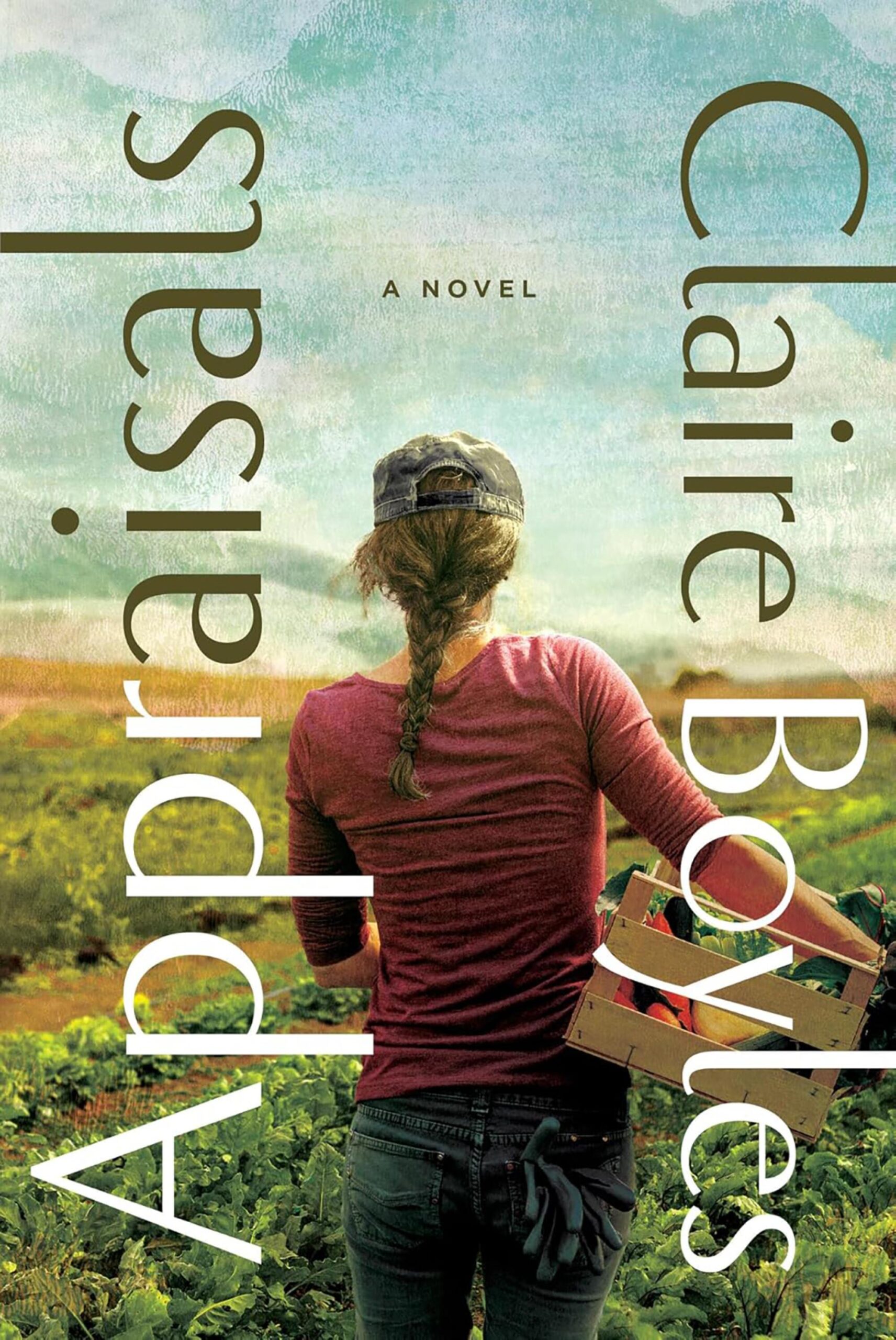
Appraisals: A Novel
By Claire Boyles
W. W. Norton: 288 pp., $30
(Aug. 4)
While Boyles’ debut novel ostensibly follows the fate of an Eastern Colorado family farm, its deeper purpose involves showing how dire water resources are for all agricultural endeavors in the region. Maggie and her husband Fish have inherited their land from her grandparents, but they and their teenage daughter Ozzie all know that without irrigation, even defeating big development plans won’t make much of a difference to locals.

The Seekers of Deer Creek: A Novel
By Thao Thai
Mariner Books: 320 pp., $30
(Aug. 4)
Vietnamese American sisters Vivi and Calla are also a curator and an artist. When their father dies and leaves behind a sketch that might be the work of renowned Vietnamese painter K.P. Lý, the siblings embark on a quest to find out whether Lý had connections to their family. Along the way they reexamine their difficult upbringing and find new ways to communicate that matter more than any artwork.

Etna: A Novel
By Paul Yoon
Scribner: 208 pp., $28
(Aug. 4)
Anyone who has seen “The Odyssey” with Matt Damon or is anticipating “Heart of the Beast” with Brad Pitt (about a veteran and his war dog), should pick up Yoon’s remarkable tale of a combat survivor in an alternate present who happens to be a former military dog named Etna. His adventures traversing a broken land of haunted people and animals may be less the stuff of future myth and more about trauma, but Yoon brilliantly creates voices for human and canine that make both more whole.

A Tender Age: A Novel
By Chang-Rae Lee
Riverhead: 368 pp., $30
(Aug. 11)
Jeon-Gi, known as J-G, is a relatively happy 10-year-old in 1976, until a neighbor’s attack on him fuels his own violent ideas. Although he gets a relatively easy sentence after threatening a classmate, J-G’s parents decide to send him to a Christian summer camp. Incidents there that might be sweet nostalgia for other kids only remind him of how different and lonely he feels inside. However, it’s J-G’s adult reason for sharing his experience that hits home.

Sunrise: A Novel
By Téa Obreht
Random House: 368 pp., $29
(Aug. 11)
Many, so so many, historical novels seek to tie a contemporary protagonist to a long-ago event or story; so so many fail to make the connections mean anything. That’s why Obreht’s superb and fascinating new book should earn a place on your 2026 reading list: She not only meaningfully connects the stories of a stranded young woman, an early-20th-century gunslinger, and a historical reenactor, but manages to make them illuminate each other.
NONFICTION:

Triage
By Claudia Rankine
Graywolf: 192 pp., $28
(Aug. 4)
The book’s epigraph says a great deal: “Any attempt to name and describe our lives will always seem unstable because all language is a form of triage.” Rankine’s new attempt at triage focuses on her long friendship with a person identified only as “the theorist.” Anecdotes and analysis are interspersed with photos of all sorts of sofas and couches, calling into question ideas about where and how we find respite and support — or not.

Your Fellow Americans: Dispatches Across the Country We Call Home
By Peter Santenello
Simon & Schuster: 336 pp., $30
(Aug. 4)
Santenello has over 4 million subscribers on YouTube, where he posts videos about every kind of place in America — rich and poor, renowned and hidden, busy and abandoned. Love or hate the author’s self-described nonpartisan approach, you’ll find this book surprising, particularly as it reveals how geography, climate and infrastructure affect community and communication. Think Anthony Bourdain crossed with Michael Moore.

Empire of Ashes: Truman, Hirohito, and the Descent into Total War
By James M. Scott
W. W. Norton & Co.: 528 pp., $42
(Aug. 4)
Historian Scott (“Black Snow”) creates a propulsive read about the last days of World War II, in which America’s development of the atomic bomb pushed against Japan’s aggressive majority, with tragic results that many — including the author — believe necessary. The contrast between President Harry S. Truman, who had been in office for a matter of weeks, and Emperor Hirohito, whose military seemed unstoppable, remains shocking.

The People’s Historian: The Outsized Life of Howard Zinn
By Dave Zirin
Dutton: 320 pp., $33
(Aug. 4)
Recently a friend showed me a list of books recommended by a pundit and asked which one to read first. Without hesitation I told her she should pick up “A People’s History of the United States” by Howard Zinn, first published in 1980 and still the most comprehensive remedial tonic to received wisdom I know. Zirin’s lively biography of this activist should remind everyone that history isn’t just about facts and figures but also context and compassion.

The Rise and Fall of the Artificial State
By Jill Lepore
Liveright Publishing Corp.: 336 pp., $30
(Aug. 25)
Hannah Arendt, one of the 20th century’s defining political thinkers, posited that modern life was making “being human superfluous”; her learned successor Lepore warns that our present bears out that idea. One day scholars will teach Lepore’s work alongside Arendt’s, seeing that Lepore interrogates not simply a modern moment, but traces our current machine age back to the 17th-century conceit for artifice as improvement. According to her, the way out is to get back to nature. Meet you in the woods.
If you get out to Joshua Tree and the night is clear, look up. You’ll see not just the stars, but a massive swath of the Milky Way. It’s a reminder that the vastness is always present, beyond the city’s bright lights. And once dawn comes, the desert performs the same magic: long horizons, unfamiliar landscapes, the creeping feeling that we are small, short-lived creatures on an immense ancient planet. No wonder some people find it unsettling.
On the Shelf
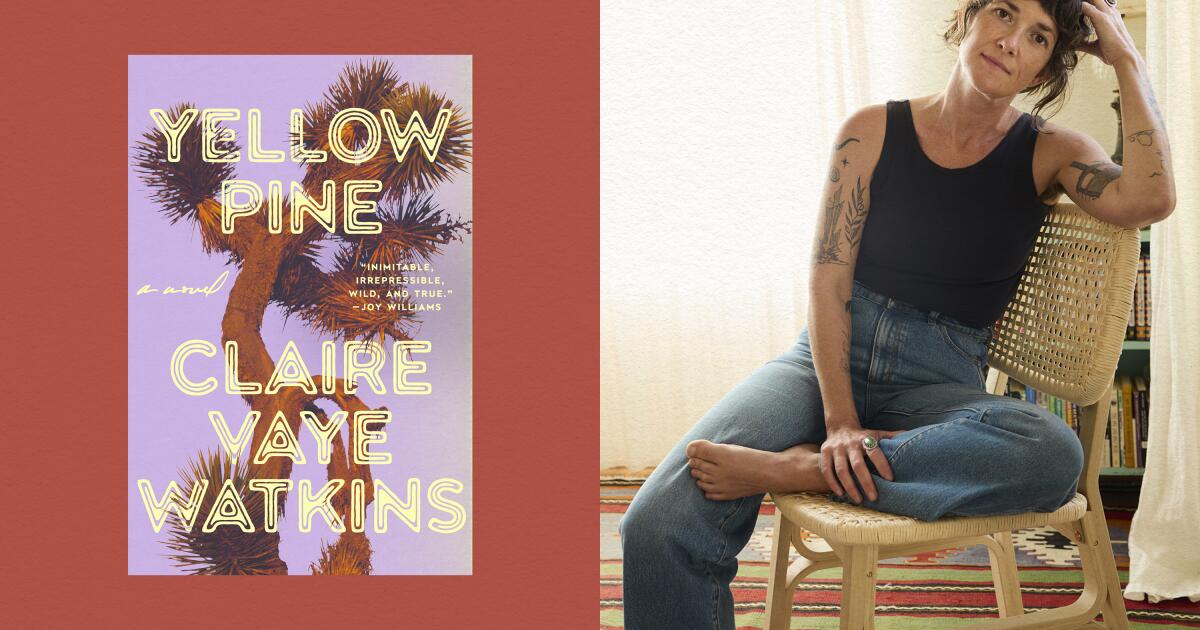
Yellow Pine
By Claire Vaye Watkins
Riverhead Books: 256 pages, $29
If you buy books linked on our site, The Times may earn a commission from Bookshop.org, whose fees support independent bookstores.
Not the characters in Claire Vaye Watkins’ new novel “Yellow Pine,” who embrace the desert in the extreme. They live at the far side of the Mojave Desert where California meets Nevada. Wherefore the pines, you ask? The book’s title is a wry joke — “Yellow Pine” is not a forest, not a tree. It’s a massive solar array slated to be built nearby in the Nevada desert. A ragtag crew of desert dwellers are hoping to stop it, or at least slow down the grinding wheels of capitalism that see the desert merely as an empty space for the taking.
Primary among them is Rose, a 30-something single mom who lives near the end of a very, very long dirt road in a cabin she calls Nothingness Flats. Rose works for an environmental nonprofit that has gone remote because it’s the pandemic; she often spirals at the state of the world. “Sometimes I think I can feel the planet just hemorrhaging under all this greed. Like it’s tectonic,” she laments.
Rampant environmental destruction notwithstanding, the novel kicks off with the joyous return of Miles, the guy who got away. He is an outdoor person, like Rose; has trouble fitting into societal norms, like Rose; and he is an ideal intellectual partner for her, bantering, well-read and ready to engage. Also, they have great sex.
Lest I portray this as a typical summer beach read, Watkins’ writing is in a special, different mode. Her latest books somehow cut past narrative traditions and portray plot and emotion more directly. Another novel might find Rose, after she decides she loves Miles so much that she wants to get pregnant, going to a doctor, getting tests, worrying about being almost 40 and what that means. Rose does none of that — she just suddenly deeply wants a baby, and that desire is vivid in the text. Overexplained storytelling is set aside for something that’s striking and vivid.
When I reached Watkins via Zoom to talk about the book, I asked her how she does it. “Partly it’s an intuition I have about what makes an interesting story,” Watkins says. “A story requires a lot of improbable decisions. Maybe they’re not great decisions, but the person doesn’t know that at the time.”
In “Yellow Pine,” Miles is not without some red flags. In my reviewer’s copy, I found myself scrawling “bad idea!” in the margin, trying to warn Rose about him. It gives the story some tension, and shows that our heroine isn’t perfect — she’s just doing her best under desert skies.
Rose lives in Tecopa, population 120, among people who’ve chosen the isolation, quietude, natural beauty and brutal conditions on purpose. Of the real-life people in these communities, Watkins says, “It’s really tough. The environment is extreme. There are no amenities. There’s no jobs. … I think there’s a refusenik quality to them.”
Nevertheless, some of them come together to try to forestall the installation of the solar array. They point out that “solar farm” is a misnomer because the land — an alluvial plane with Yucca colonies dating back hundreds of years, creosote rhizomatic rings even longer — will be scraped and fenced. What happens to the endangered desert tortoises is awful. These activists are trying every legal recourse and have set up a tiny camp at the edge of the property. Sweetly, and with little hope, they make a small community of people who understand each other and the desert landscape that others see as a blank space on the map.
“In California most of the biodiversity in the state is in the inland deserts, partly because a lot of the other ecosystems have been totally destroyed, you know? It’s a very alive place,” Watkins explains.
In “Yellow Pine,” Rose’s conviction that she should get pregnant grows to a point where she comes up with a wild scheme to make that happen. It is very funny, outsized and unexpected. It’s a small individual resistance to the impending destruction of the desert.
Watkins is very good at making a humorous turn at the end of thoughts, sentences, books. This is her fourth. Her debut, the short story collection “Battleborn” in 2012, set her on a trajectory of accolades; 2021’s “I Love You But I’ve Chosen Darkness,” was an L.A. Times book prize finalist. She is currently a professor of writing at UC Irvine.
“The thing I love about novels, writing them and reading them, is that it’s private thoughts,” Watkins says. “It’s this cool technology that we’ve come up with to deal with the fact that we don’t know what’s going on in each other’s heads and hearts and how painful that can be.”
She adds that a novelist’s job is to care about the reader. “There’s something really beautiful about, I’m going to do my very best with my part and then I give it to you, and I let it go and I trust you and I respect you,” she says. “I love the world when I’m writing and my books are like acts of love, partly because I really struggle. I’m not walking around loving my fellow man easily.”
When our Zoom began, she apologized for the noises outside — construction, dog walkers, gardeners. I couldn’t hear them at all, but I got the impression that those intrusions and distractions were weighing on her. “I feel like I have a very sensitive instrument,” she says. “I get a little agitated and the pace is really, really different.”
I had been expecting to reach her at an improbable desert outpost, like a Death Valley library with Wi-Fi, but instead reached her in Orange County. It’s for her job, and also as a part-time parent, much easier for amenities. It’s a busy town where there are lots of people, lots of businesses, lots of traffic, the hectic pace of modern life — but still, the desert has its pull. She splits her time between the two locales.
“Yellow Pine” is a testament to her beloved remote corner of the Mojave, its beauties, hardships and endangerments. The place has been an essential part of her creative process and project. “What we do for fun in Tecopa is like, watch the sky. That’s our entertainment, you know?” she says, reflecting on the long moments of silence that stretch out over the evenings. “And it’s like, ‘wow.’”
Reading List
If you buy books linked on our site, The Times may earn a commission from Bookshop.org, whose fees support independent bookstores.
This month, “Cool Machine,” a riff on 1980s New York in the form of a tightly plotted crime novel, arrives from Colson Whitehead. It concludes his Harlem trilogy, they say. If you’d told readers two decades ago that Whitehead would become a bestselling crime novelist, they might have thought you were kidding. He started out writing innovative novels with such intellectual and stylistic punch that the MacArthur Foundation gave him a fellowship in 2002.
His written output is fun, fearless and fantastic. Where to start? Here’s a cheat sheet.

For N.Y. lovers
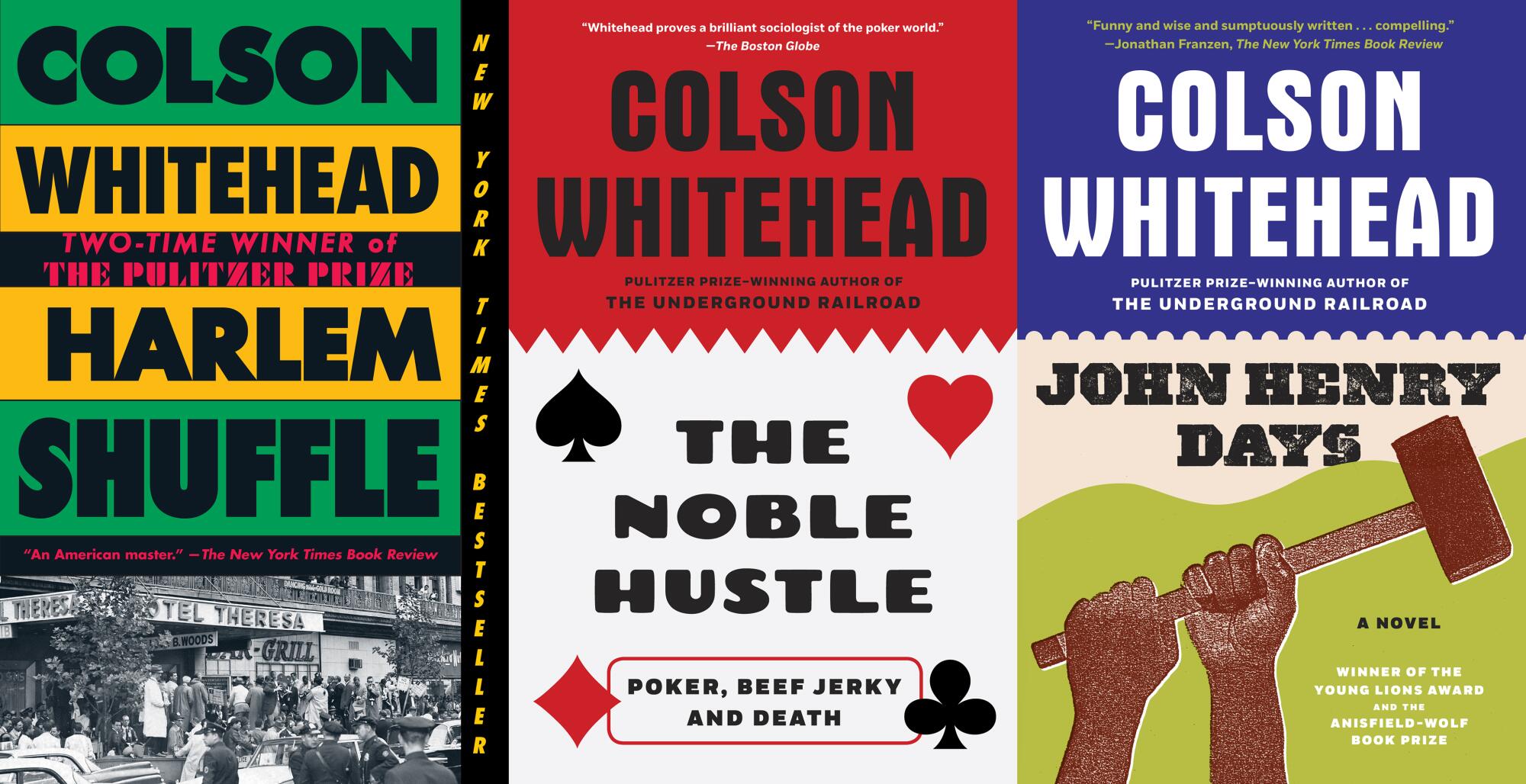
With “Harlem Shuffle,” Whitehead begins his crime trilogy in the 1960s in a furniture store with stylish midcentury stock whose owner, Ray Carney, is trying not to be a fence. Love the evocation of Harlem as a place with a cool interconnected community. Worry about that cousin who’s always trouble. The follow-up, “Crook Manifesto,” is set in the 1970s. All of New York City is at a nadir; Ray is on the straight and narrow, but needs an influx of cash (for Jackson Five tickets for his daughter). Then comes “Cool Machine,” secrets to be revealed when it hit shelves this week . And as a bonus, his essay collection “The Colossus of New York,” which is vivid, episodic and yet still a story: “Talking about New York is talking about the world.”
To break your heart
The novel “The Underground Railroad” comes from an imagined misunderstanding, logical for anyone who grew up riding subways: that the path to freedom for enslaved people that we call The Underground Railroad was in fact underground. In Whitehead’s hands, that imagining takes us through both time and place while making visceral the horrors of enslavement. The book won the National Book Award and the Pulitzer Prize and was adapted by Barry Jenkins into a limited series.
In a rare feat, Whitehead won the Pulitzer Prize a second time for his novel “The Nickel Boys,” another work of historical fiction dealing with the devastating effects of American racism. Based on the true story of a reform school where Black boys went missing, the novel pairs the stories of two teens, one a troublemaker and the other caught up by mistake. Barack Obama called it “a necessary read.” Cleverly structured, it seemed difficult to adapt, but director RaMell Ross made it into a brilliant film.

To blow your mind
In Whitehead’s debut novel, the not-realistic “The Intuitionist,” a Black female elevator inspector faces powerful forces aligned against her. Inflected with Thomas Pynchon-like wordplay and situations, it’s both ambitious and funny. So is “John Henry Days,” mixing narrative forms while telling the story of a Black journalist around the year 2000 going to every press junket he can, unmaking the myth of John Henry all the while. And “Apex Hides the Hurt” is a comic novel about the conflicts that arise in a small town when they hire a name consultant for a possible rebranding.
To eat your mind
Just around the time they started staggering onto TV, Colson Whitehead published a zombie novel. “Zone One” is a smart take on the shuffling hordes and pandemic survivors who try to take Manhattan back.

To beat the odds
Whitehead, an enthusiastic amateur poker player, wrote the nonfiction book “The Noble Hustle” about his entry into the World Series of Poker in Las Vegas. It was a luxurious time in media, circa 2011, when ESPN’s Grantland paid his $10,000 entry fee and said he could keep his winnings. The book, expanded from what he wrote for them, includes his training, pending divorce, joking asides and playing for high stakes.
To take to the beach
“Sag Harbor,” set in the mostly Black, affluent beach community in the Hamptons, is the closest Whitehead has come to writing a coming-of-age story. Taking place during the summer of 1985, Benji and his teenage friends banter about culture and get their first taste of freedom.
Book Review
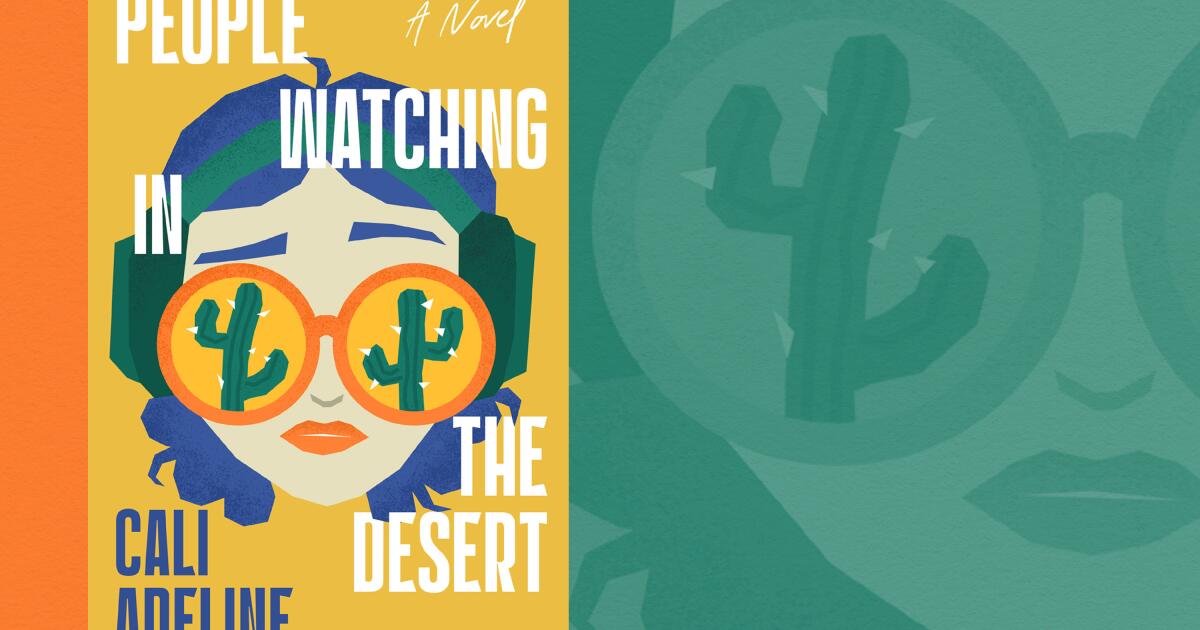
People Watching in the Desert: A Novel
By Cali Adeline
Harper: 400 pages, $30
If you buy books linked on our site, The Times may earn a commission from Bookshop.org, whose fees support independent bookstores.
“Writers are always selling somebody out,” Joan Didion once wrote. She was talking about journalists, but it can be just as true of novelists. Whether the genre is romantasy or autofiction, making up stories often demands making up stories about real people — exploiting them — to serve a narrative purpose.
Cali Adeline’s debut novel, “People Watching in the Desert,” gives this thorny ethical business an impressively complex treatment for a book that comes on like a beach read. Sonny, its hero, has checked into Sanctuary, a spendy Phoenix-area resort, for an extended stay. She’s 25 and unemployed, and it’s unclear at first how she acquired the funds to splurge on an on-site cottage with a pool, 90-minute massages, and various forced-fun adventures. It’s also unclear why she chose a five-star resort for the splurging, given her discomfort with everything from the menu on down. Sitting down for dinner alone, she “discreetly googled some of the words on her phone under the table: cotija, calabacitas, tabbouleh, bisque.”
Adeline lays out a breadcrumb trail that eventually reveals that Sonny has lugged some especially heavy personal baggage to Sanctuary. Her neglectful, addict mom died when she was a child, only to be replaced with a repressive, overprotective grandmother who stomped on her every ambition. Early adulthood has been defined by failed relationships and uninspiring work. People are to be feared: She’d sooner indulge in croquettes at the resort’s cocktail party than make small talk with other vacationers, and when she braves the world outside her cottage it’s usually with a notebook in her hand.
The early pages of “People Watching” weave Sonny’s perspective with brief sketches of her fellow resort-goers, which usually open with godlike authority: “Allana was ten feet tall and beautiful.” “Chloe and Mark had been married for seven blissful years.” “Dale was invisible. He had that way about him.” The odd bluntness of these statements, combined with their touches of surreality (“ten feet tall”?), makes clear that these mini-bios are scribblings from Sonny’s notebook. Terrified of the world, but determined to better understand what she’s been excluded from for so long, she’s determined to imagine her way into reality.
Sonny’s Walter Mitty-like imaginings do some valuable double duty in the novel. For one thing, they offer some necessary conflict in a setting that’s all about relieving tension. Resorts are, almost by definition, boring, but as Sonny hangs out poolside or does yoga or endures a singing bowl, her mind (and the novel) is reeling with imagined infidelities, deaths, gambling debts and other domestic dramas. Second, her sketches serve as character-defining examples of projection on Sonny’s part, as her observations of others reveal her own concerns about love, sex, money and rejection.
And, of course, she’s deflecting, too — better to make up drama about others than confront her own. The memories Sonny eventually surfaces are more potent than anything she makes up. But they’re also crueler, and you can understand why she’ll think and write about anything but. She recalls a time as a child when she was neglected for days on end and braved a trip to a neighbor for help. “The woman asked Sonny when the last time she took a bath or changed her clothes was and Sonny didn’t know the answer. Her only response was, ‘I’m four,’ as she proudly held up five fingers,” Adeline writes. “She was three.”
Remember the words “beach read” up there? It’s not difficult to predict how Sonny’s arc will curve: It’s a Walter Mitty story, but also an Ugly Duckling story. That notebook full of mini-dramas becomes a source of drama in itself. Say, that bartender is pretty cute, isn’t he? And Sonny eventually integrates with a few of her fellow resort-goers, and learns there’s more to them in reality than her imaginings. As one character gently chastises her, “People can surprise you, Sonny, but you have to let them.”
The pat-ness of Sonny’s Sanctuary journey makes her yet another entry in an evolving genre you might call “Is This Character Concussed?” In these novels, the main character has been so absurdly addled by a (late-revealed) trauma that everyday human interactions are wildly aglow with (at first) terror or (later) manic-pixie wonder. Prime examples include Gail Honeyman’s “Eleanor Oliphant Is Completely Fine,” Sayaka Murata’s “Convenience Store Woman,” and multiple characters in the oeuvre of Sally Rooney and Ottessa Moshfegh. (Women are the most common character in these books, but guys can play too: See Fredrik Backman’s “A Man Called Ove.”) Socially awkward characters offer an opportunity for dry humor and deadpan prose. Because these stories have to dramatize a search for normalcy, its leads tend to be awkward in ways that strain credulity.
But you don’t have to wholly buy into the idea of a character like Sonny to find something intriguing about what Adeline is saying about storytelling throughout “People Watching.” In Sonny’s notebook, every observation is a moral choice, a mini-essay about what proper conduct is, what failure is, how you might get past it, and what our responsibilities to others might be. A notebook is a place of wish fulfilment, and a place for vengeance. Sonny explains at one point that she only started to get free of her grandmother’s clutches once she was capable of imagining her violently erased:
“I wrote a story. About her. And how one day while I was at work the house caught fire. Which wasn’t that far-fetched because the whole place really was a fire hazard. And … and … well, she was asleep inside the house, in the story, and didn’t make it out. I didn’t mean it. I was angry. And it was a story.”
Adeline stresses the word “story” three times in one brief passage. Sonny wants to reassure everybody that she was just making it up. But no writer is, not entirely.
Athitakis is a writer in Phoenix and author of “The New Midwest.”
Reading List
10 books for your July reading list
If you buy books linked on our site, The Times may earn a commission from Bookshop.org, whose fees support independent bookstores.
New reads abound for your vacation tote throughout the weeks of July, with fiction picks featuring a Carnival cruise casualty, a highly entertaining jewel heist at the Waldorf-Astoria, and a Soviet-era madcap adventure. In nonfiction, authors consider how we define wild places, how we pigeonhole the aging, and how languages live or die. Happy reading!
FICTION:

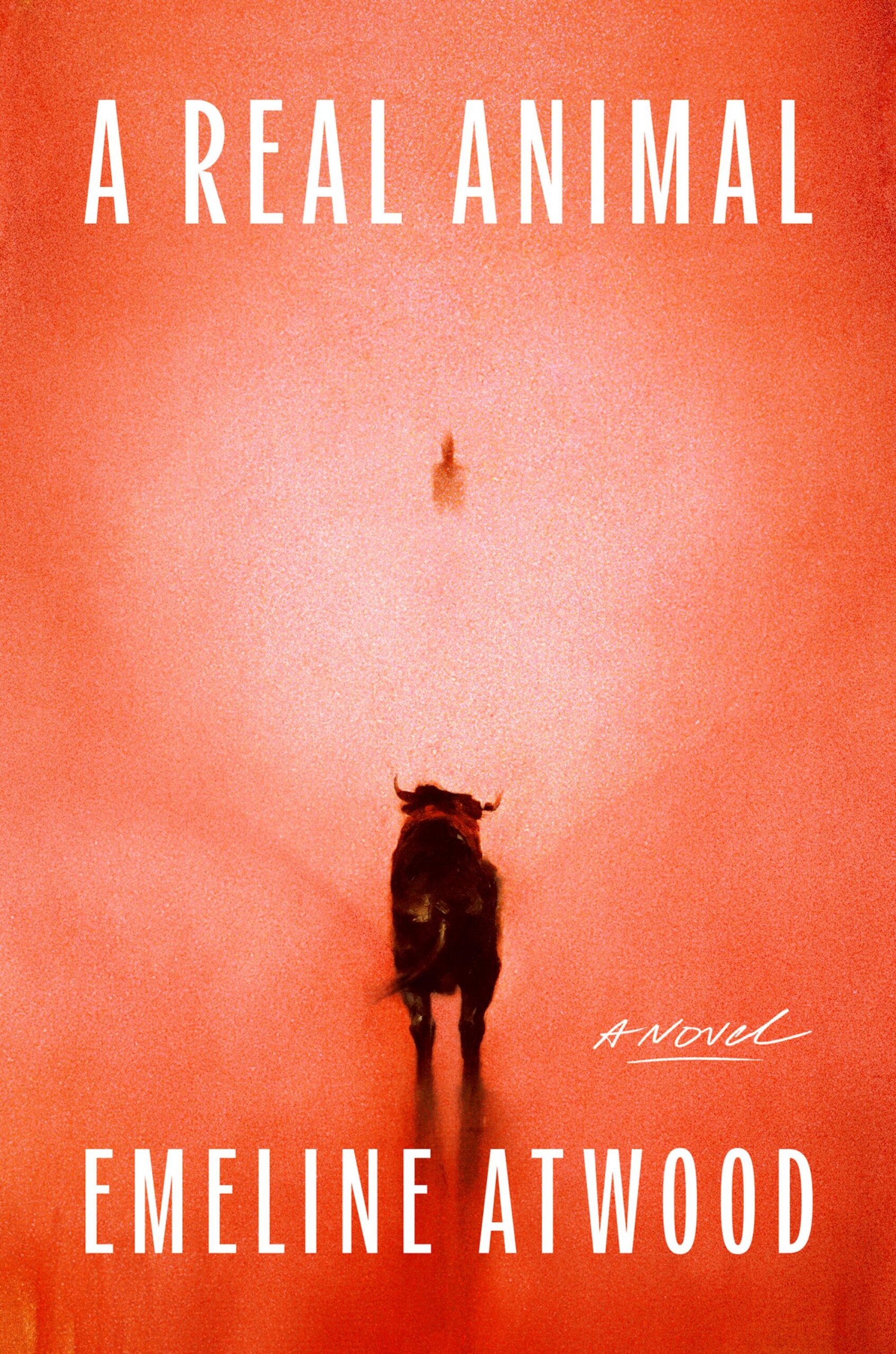
A Real Animal: A Novel
By Emeline Atwood
Catapult: 368 pp., $29
(July 7)
After surviving a sexual assault, narrator Lucy stalks her college campus as a leopard. Don’t spend too much time worrying about whether this transformation is real, or not; Lucy’s knowledge of her fierceness is the point, a fierceness she employs as she struggles to negotiate her independence from parents who wish she’d come home to recover and men who offer up their desires and ignore hers. It’s an astonishing debut with a compelling voice.

Man Overboard!: A Novel
By Kathleen Rooney
Gallery Books: 208 pp., $27
(July 7)
Readers expecting something akin to Rooney’s wondrous previous novel, “Lillian Boxfish Takes a Walk,” should remember that that book followed “Cher Ami “ and “Major Whittlesey,” a story about a pigeon and a World War I Army officer. In other words, Rooney doesn’t repeat herself, and in “Man Overboard!” she’s concocted a hilarious adventure tale of a man floating in the Gulf of Mexico, adrift with himself, his thoughts, and a few sea creatures.

Astronaut!: A Novel
By Oana Aristides
W. W. Norton: 272 pp., $28
(July 14)
Imagine a dystopia set neither in the future nor in fantasy; that’s the 1989 Romania 7-year-old Lia inhabits, its adults living in fear of Communist dictator Nicolae Ceauşescu, its infrastructure strained by deprivation, and its reality so scrambled that calling an explorer an “astronaut” instead of “cosmonaut” risks punishment. When Lia sets out to buy her mother a birthday gift, she sets in motion a series of weirdly probable yet totally weird events.

City of Widows: A Novel
By Nadia Hashimi
William Morrow: 432 pp., $32
(July 28)
During the two decades of American occupation, Afghanistan experienced a sort of peace, one in which women could be educated, work as professionals, and even serve in the military. When the U.S. left in 2020, those same women found themselves — regardless of their individual status — subject to Taliban restrictions that deny differences in gender, desire and ambition. Hashimi (“Sparks Like Stars”) shows how desperate and daring the women become.

Cool Machine: A Novel
By Colson Whitehead
Doubleday: 368 pp., $30
(July 21)
First “Harlem Shuffle,” then “Crook Manifesto,” and now, “Cool Machine,” the highly anticipated “Harlem Trilogy” conclusion from the two-time Pulitzer Prize-winning Whitehead. The inimitable Ray Carney, who started out as a minor criminal, is now Sterling Furniture’s “Northeast Regional Dealer of the Month,” a respected businessman. It’s the mid-1980s, and when Ray’s beloved wife Elizabeth gets turned down for a small-business loan, he takes matters into his own hands, in his own former ways.
NONFICTION:

How to Kill a Language: Power, Resistance, and the Race to Save Our Words
By Sophia Smith Galer
Crown: 304 pp., $33
(July 7)
Smith Galer’s nonna spoke an Italian she called “dialet”; her mother spoke “dialet” and English; Smith Galer herself speaks only English. What do we lose, the author asks, when a language dies? The answers she found are powerful, like an enzyme to treat HIV that was found in a tree that was discovered because a researcher spoke Samoan. Unsurprisingly, she also found that language death often corresponds to ecological and cultural devastation.

The Earth Said Remember Me: How to Revive Our Memories and Restore Our Planet
By Jason Dove Mark
W. W. Norton: 224 pp., $25
(July 14)
Perhaps art will be the thing that preserves the environment, even if humans can’t save it. “Go outside. Bear witness. Make a record. Pass it on,” writes Mark in this eloquent, impassioned plea for us all to remain involved in environmental action. The more we appreciate the natural world, the more we’ll want to care for it, share it with others, and help future generations understand how some changes are natural and not all are inevitable.

Aging Out: An Exploration of Caregiving, Community, and How Americans Grow Old
By Lucy Schiller
Flatiron Books: 272 pp., $30
(July 14)
Services for the elderly range from luxury assisted-living facilities to special digital devices meant to bypass phone scams, but as Schiller explains, these things not only commodify a natural life passage — they separate older people from their natural communities. The author was inspired to investigate our country’s aging population when she cared for a grandmother who died from COVID; the book weaves the personal with the political in a meaningful way.

(Avid Reader Press/Simon & Schust)
Dad, Love, Me: A Memoir
By Matthew Quick
Avid Reader Press: 320 pp., $30
(July 21)
Novelist Quick (“The Silver Linings Playbook”) turns to memoir in recounting his contentious relationship with his father, whom he’s losing to dementia. While the author has had big highs (like the movie adaptation of “Playbook”), he’s also experienced deep lows, including alcoholism and severe creative block. Somehow, through recovery (which he credits to Jungian therapy), he affords both his imperfect, ailing parent and himself grace.

The Savage Landscape: How We Made the Wilderness
By Cal Flyn
Viking: 448 pp., $35
(July 28)
In “Downton Abbey”, the Dowager Duchess of Grantham starchily asked “What is a ‘weekend?’” In this book, journalist Cal Flyn asks — more affably, but with equal intensity — “What is a wilderness?” Her answer: Depends on your perspective. In other words, nearly every place on Earth teems with life. It’s only humans who have attached words like “wild” and “unexplored” to regions where they feel uncertain, afraid, and even awed.
Patrick is a freelance critic and author of the memoir “Life B.”
22:52, 27 May 2026Updated 22:52, 27 May 2026

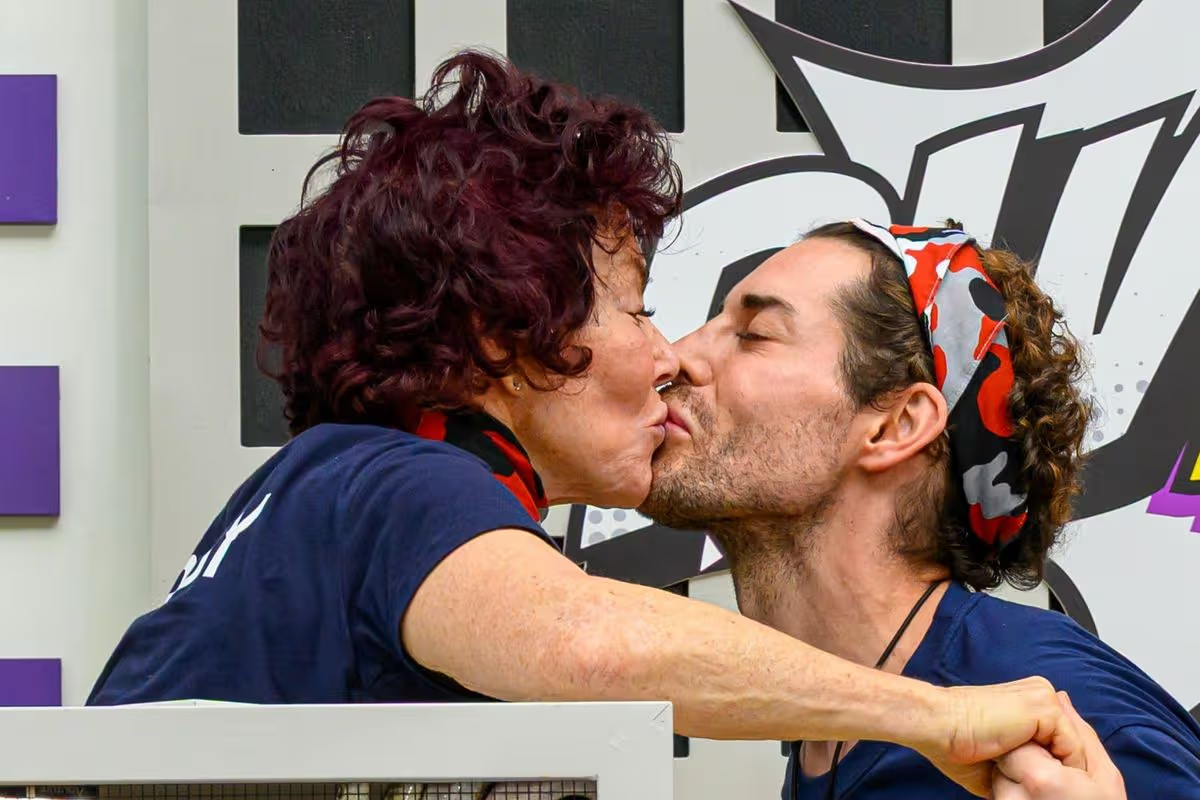
Ruby Wax and Tom Read Wilson will host the LGBT Awards(Image: James Gourley/ITV/Shutterstock)
Ruby Wax will be with Tom Read Wilson as they host the British LGBT Awards together. The comedienne, 73, competed alongside Celebs Go Dating star Tom, 39, on I’m A Celebrity…Get Me Out Of Here! towards the end of last year.
Ahead of teaming up with her jungle campmate, Ruby teased that there is a lot to come from the “glamorous” evening, which all kicks off in London on Thursday night.
She said: “Glamour, chaos and emotion, as well as me trying not to say anything that gets me cancelled before dessert! But seriously, it’s going to be a celebration of brilliant people doing extraordinary things. There’ll be laughter, there’ll be tears, and there’ll probably be someone giving a speech that makes everybody rethink their life choices.”
The star, who has had a stellar career in stand up comedy and worked on Absolutely Fabulous with Jennifer Saunders and Joanna Lumley, was then asked why “visibility” was still so important in this day and age.
She said :”Because visibility changes lives. When people see themselves represented, honestly and proudly, it gives them permission to exist fully. We’ve made progress, but progress can’t be something we assume is permanent. Events like the British LGBT Awards remind people that community matters, ally ship matters and joy matters too!”
Meanwhile, Tom, who has also appeared on This Morning, and presented a host of one-off documentaries, insisted that the whole thing meant “more” than a typical awards ceremony.
He said: “It feels profoundly special. I’ve always believed that visibility is a kind of kindness, and being here among so many extraordinary people who are actively shaping a more inclusive world is humbling.
“This isn’t just an awards ceremony – it is a celebration of courage and community. To play even a small role in that feels like a real privilege.”
Some of the biggest names leading this year’s awards, include Wicked star Jonathan Bailey, Loose Women panellist GK Barry and former X Factor host Dermot O’Leary. They are joined by an influential and diverse mix of nominees spanning entertainment, sport, media and activism, all recognised for their powerful contributions to advancing LGBTQ+ equality.
Additional standout nominees include Charlie xcx, Claudia Winkleman, and Jill Scott MBE, further cementing this year’s ceremony as a landmark moment for representation and recognition.
Rebecca Twomey, Head of Showbiz at the Mirror said: “We’re thrilled to put our support behind this incredible award ceremony which champions the LGBTQ+ community. The Mirror is all about bringing people together and championing all voices from the heart of Britain.”
The glittering ceremony will take place on 28 May 2026 in London, bringing together celebrities, business leaders, campaigners and community champions for an unforgettable evening celebrating progress, pride and possibility.
* Follow Mirror Celebs and TV on TikTok , Snapchat , Instagram ,Twitter ,Facebook , YouTube and Threads .