Rationing

Warning UK is at dire risk of rationing jet fuel due to shortages caused by Iran war

The extended shutdown of the Strait of Hormuz has created what Goldman Sachs describes as “extreme tightness” in Europe’s jet fuel supply, and the UK is seen as particularly vulnerable

Britain is at risk of rationing jet fuel due to shortages stemming from the Iran conflict, an expert has claimed.

With supplies potentially dropping to “critically low levels”, concern has grown for Europe’s jet fuel market and the consequences this will have on travel this summer. Some airlines, such as KLM and Lufthansa, have already cancelled flights due to fears about fuel.

Now, Goldman Sachs, one of the world’s largest investment banks, has said the ongoing closure of the Strait of Hormuz has created “extreme tightness” in the market and the UK is especially exposed due to its limited stockpiles, heavy reliance on imports, and constrained refining capacity. It means the prospect of rationing is believed to being considered to help sustain the travel sector.

Jet fuel prices have doubled since the war began on February 28, prompting bleak warnings from Keir Starmer that travellers may need to rethink their holiday plans.

READ MORE: British Airways, Ryanair, easyJet and Jet2 issue fuel warning amid Middle East warREAD MORE: Soaring petrol prices to have ‘huge consequences for teachers and schools’

Goldman Sachs said in a research note: “The UK is the largest net importer of jet fuel in Europe, and it holds no strategic reserves, leaving commercial inventories as the primary buffer. As a result, inventories in some countries, especially the UK, could fall to critically low levels, increasing the likelihood of rationing measures.”

The Gulf region supplies around one-fifth of globally traded fuel, and with Europe heavily dependent on those flows, airlines are now competing for alternative sources — driving prices even higher. According to The Times, Goldman Sachs noted that the UK, as Europe’s largest net importer of jet fuel, lacks strategic reserves and relies primarily on commercial inventories as a buffer. Those levels, particularly in Britain, could fall dangerously low, increasing the likelihood of rationing.

Any sustained shortage would likely force airlines to cancel or consolidate flights while pushing ticket prices upward. Fuel accounts for as much as a quarter of airline operating costs. IAG, the parent company of British Airways, has already indicated it will raise fares to offset higher fuel expenses, acknowledging it is “not immune” to ongoing volatility despite hedging strategies.

Air France expects its jet fuel bill to rise by $2.4billion (£1.77million) this year, while American Airlines anticipates an increase of more than $4billion (£2.96million) — costs that are expected to translate into higher fares and reduced perks for passengers.

Although UK ministers have suggested supplies can be sourced from elsewhere, industry figures are less optimistic. Ryanair chief Michael O’Leary said airlines are “desperately” looking for flights to cancel and could begin doing so within weeks.

Fuel suppliers have also warned that the UK has the “most limited visibility” in Europe when it comes to jet fuel supply, largely because of its dependence on Middle Eastern imports.

The European Commission said it would issue guidance to airlines this week, with a spokesperson noting that uncertainty remains high and preparations are being made for multiple scenarios.

Analysts also pointed to the UK’s reduced refining capacity following the closure of the Grangemouth refinery — Scotland’s only oil refinery — last April. Concerns had also surrounded the future of the Prax Lindsey refinery in north Lincolnshire, though its new owner, Phillips 66, said the recent acquisition should help stabilise supply.

A report from the Tony Blair Institute argued that Europe’s climate-focused energy policies have contributed to higher prices — two to three times those of competitors — and increased dependence on imports.

Fuel suppliers said May demand should remain manageable but warned that disruptions could begin by mid-to-late June if the Strait of Hormuz remains closed.

Source link

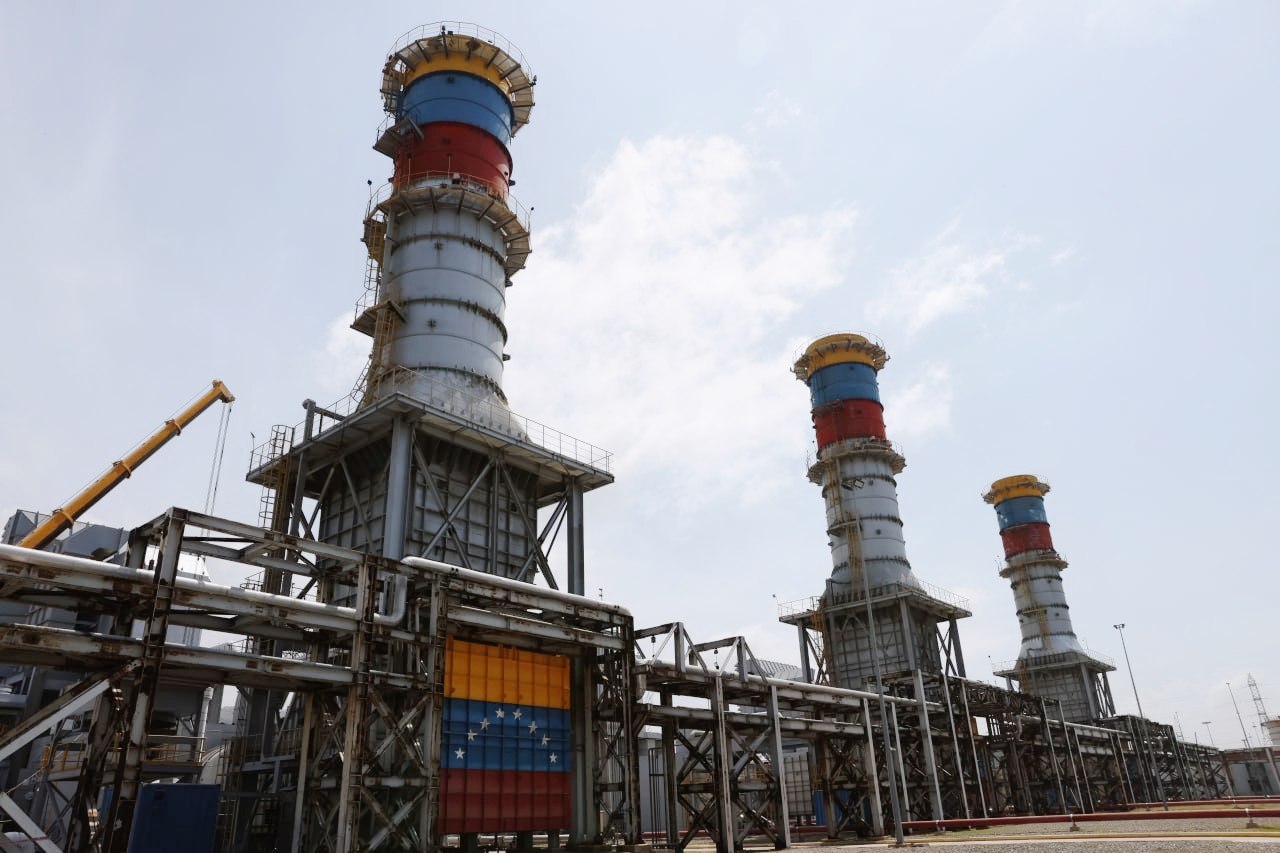
Venezuela: Rodríguez Announces Electricity Rationing Ahead of Heatwave, Drought Forecast

The Venezuelan acting president called for a rational use of electricity in the coming weeks. (EFE)

Mérida, March 23, 2026 (venezuelanalysis.com) – The Venezuelan government announced a 45-day electricity saving plan as extreme temperatures and regional outages impact Venezuela’s power grid. 

The announcement, made by Acting President Delcy Rodríguez on Saturday, comes on the heels of recurring blackouts, particularly in western states

“We are entering a period where solar radiation will impact our territory directly, intensifying heat and drought across the country,” Rodríguez stated during a televised cabinet meeting with officials responsible for the electricity and infrastructure portfolios.

She explained that the “perpendicular passage” of solar rays would significantly increase energy demand for cooling. Alongside drought forecasts, officials expect a greater strain on Venezuela’s electricity generation and transmission infrastructure.

As part of the contingency plan, the Ministry of Electric Energy is set to publish a protocol urging reduced air-conditioning use other rationing measures. In addition, the government has authorized the deployment of thermal drones to monitor high-temperature areas and prevent forest fires from compromising transmission lines.

In March 2025, the Nicolás Maduro administration implemented a similar electricity-savings plan and was compelled to reduce public sector work hours to half a day to ease demand. While the 2025 measures were temporary, the recurrence of shortages underscores the systemic vulnerabilities of the electric grid.

Last Friday, residents in Zulia, Táchira, Mérida, and Trujillo experienced widespread power outages lasting several hours. Local media outlets in the Andean region reported that some sectors are facing daily rationing of up to four hours. Nationwide electricity fluctuations were likewise registered on Monday, with parts of Caracas suffering temporary outages.

The origins of Venezuela’s electrical instability extend over a decade, culminating in the 2019 widespread nationwide blackouts that authorities blamed on “cyber-sabotage.” The alleged attacks compounded infrastructure hard-hit by years of economic sanctions, as well as underinvestment, inadequate maintenance, and the departure of skilled personnel.

Venezuela’s electric grid remains heavily dependent on the Simón Bolívar Hydroelectric Plant, also known as the Guri Dam, in southeastern Bolívar state, which provides approximately 80 percent of the nation’s power. 

However, the transmission lines stretching from the southeast to the western border are often unable to handle the load, with thermoelectric plants in the region unable to cover the additional demand. Current estimates indicate that while Venezuela has an installed generation capacity of approximately 34 gigawatts (GW), only around 12 to 14 GW are currently operational.

Sanctions and push for private investment

In her Saturday address, Rodríguez reiterated the damage caused by US-led unilateral coercive measures and called for their removal. The Venezuelan acting president argued that sanctions hampered the state’s capacity to procure essential technology and components from international suppliers.

“The blockade has impeded the full recovery of this essential service,” Rodríguez said. “Though we have recovered capacity through our own efforts, sanctions limit our response to a demand that grows alongside the economy.”

The Venezuelan government has also announced plans to scale back state control over the electricity sector in order to attract private investment. Earlier this month, authorities unveiled a “pilot plan” to promote foreign investment into the electric grid, following similar blueprints from the oil industry.

Under the proposed framework, the government aims to update the Organic Law of the Electricity System (LOSSE) to allow private companies to assume control of generation and distribution through joint ventures.

According to the Venezuelan Chamber of Construction (CVC), a preliminary investment of US $1.29 billion could lead to the reincorporation of over 6,300 MW to the grid in two phases. The CVC is specifically promoting a project with the Latin America Development Bank to stabilize 2,000 MW in the central industrial region.

The new electricity management model would allow private actors to take control of specific “industrial nodes,” ensuring a reliable supply for manufacturing while retaining a portion of the proceeds to cover maintenance costs.

However, the immediate focus for the Venezuelan executive remains on electricity rationing. Rodríguez concluded her address by calling for “national consciousness,” urging the public to see energy saving not just as a government mandate, but as a collective necessity to navigate the coming weeks of extreme heat and drought.

Edited by Ricardo Vaz in Caracas.

Source link