LAS VEGAS — NBA commissioner Adam Silver reiterated Tuesday night after the Board of Governors meeting that the investigation into whether the Clippers circumvented the salary cap by funneling money to Kawhi Leonard for an endorsement deal he allegedly never fulfilled still is not completed.
Silver said his “timeline remains this summer” to make his findings known after high-powered New York law firm Wachtell, Lipton, Rosen & Katz wraps up its investigation and presents the findings to the NBA.
The investigation centers on a $28-million endorsement deal to Leonard from a company called Aspiration that Clippers owner Steve Ballmer invested $60 million into.
With the investigation being about 11 months old, Silver was asked about a timeline for the NBA to announce the results.
“As you know, I am not conducting the investigation, nor is the league office,” Silver said. “It’s being conducted by the Wachtell law firm, independent of the league. Of course, as I have said previously, we all have an interest in wrapping this up and as I most recently said in an interview, that I’m hopeful that it will wrap up this summer so that will continue to be the goal here.”
The Clippers traded Leonard to the Raptors for Brandon Ingram, Gradey Dick, two first-round picks, a pick swap and two second-round picks. Leonard, who spent the last seven seasons with the Clippers, led the Raptors to the NBA championship in 2019. The Raptors then decided to put the trade on hold until the investigation is over.
“And I just want to clarify, so everyone understands, the league did not pause the trade,” Silver said. “The parties that did the trade made the decision not to go forward given that the investigation would remain open and the possible impact on Kawhi or his contract was yet to be known and so they chose not to live with that uncertainty. But, that was well-known before the trade was proposed and I didn’t think there was any reason for people to believe that the status of Kawhi Leonard would change merely because he was traded. The investigation needs to run its course.”
The Clippers have consistently denied any wrongdoing regarding the investigation.
Because of the probable length of the report, Silver was asked about reading such a voluminous amount of information and if things would be resolved before the start of next season.
Silver also didn’t talk about whether Leonard is being investigated for any other side deals.
“I don’t know specifically what will be in the report,” Silver said. “To the best of my information, the report is not done. I do get regular updates from our general counsel, who is Rick Buchanan, and he deals with on a weekly basis on who they are talking to and what they are finding on a preliminary basis. But my understanding is that Wachtell is now in the process of going through the information they’ve gathered and drawing conclusions from that information. And I think, yes, it is realistic to think that this can be wrapped up, and I would say needs to be wrapped up before the beginning of next season.”
The movement is the latest in a number of similar operations. On July 1, U.S. Air Force B-52 Stratofortress bombers departed from Fairford, where they were forward deployed for Epic Fury, for instance. Other tactical jets have also returned home, with some being replaced and others not. RAF Fairford acts as a major hub for transatlantic U.S. military aircraft movements.
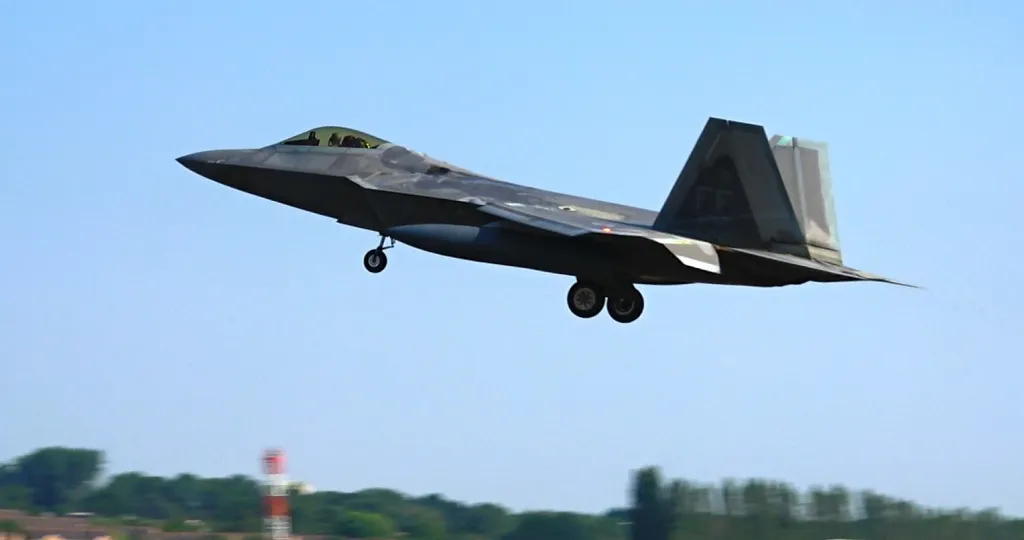
Local spotters say the jets arrived at Fairford in three waves. An aviation photographer who uses the @Saint1Mil handle on X was kind enough to share three photos with us, including the main image above.
@Saint1Mil @Saint1Mil
Online open-source flight trackers followed the flight of these jets and their aerial refueling tanker support.
During Epic Fury, “Raptors executed precision missions against Iranian air defenses, nuclear-related infrastructure and command nodes linked to the Islamic Revolutionary Guard Corps (IRGC),” U.S. Central Command (CENTCOM) noted in its Citadel publication.
“On March 1, F-22s opened the campaign by suppressing S-300 and Bavar-373 batteries, clearing corridors for follow-on coalition strike aircraft entering defended airspace,” the command added.
Between March 1 and 9, “the stealth fighters flew more than 200 combat sorties while remaining undetected by Iranian radar networks throughout the operation,” CENTCOM explained. “F-22 Raptor used its low-observable design and advanced sensors to penetrate defended airspace and deliver precision weapons against strategic Iranian regime facilities during the campaign.”
An F-22 Raptor in the CENTCOM region. (CENTCOM)
The targets included “infrastructure connected to the Fordow Fuel Enrichment Plant and Natanz Nuclear Facility,” CENTCOM noted. “Raptors employed GBU-39/B Small Diameter Bombs and GBU-32 Joint Direct Attack Munitions internally, preserving stealth while striking multiple hardened targets with precision guidance.”
The aircraft “also coordinated with B-2 Spirit bombers and EA-18G Growler electronic attack jets in layered strike packages designed to overwhelm Iran’s integrated air defenses,” according to CENTCOM. “The regime’s forces launched dozens of surface-to-air missiles during the nine-day campaign, U.S. officials said none were successfully tracked or locked onto the stealth fighters.”
A U.S. Air Force B-2 Spirit assigned to the 509th Bomb Wing, Whiteman Air Force Base. (U.S. Air National Guard photo by Senior Master Sgt. Vincent De Groot) Vincent De Groot
The Raptors’ arrival at Fairford from Ovda this morning came as the U.S. and Iran ramped up attacks on each other this week. Iran also struck targets in Bahrain, Kuwait and Jordan during a flare-up sparked by the IRGC’s attacks on three tanker ships in the Strait of Hormuz.
.@POTUS on the status of the ceasefire with Iran: “To me, I think it’s over. I don’t want to deal with them anymore. They’re scum… They’re led by sick people… I’ll speak to our negotiators. They want to negotiate—they’re good people… but they have to come back to me. As far… pic.twitter.com/6eYfwMxSdn
— Rapid Response 47 (@RapidResponse47) July 8, 2026
By Friday evening local time, there were no new reports of attacks while there are indications of a push to rekindle peace negotiations.
🇺🇸🇮🇷🇶🇦Qatari negotiators have travelled to Iran, in coordination with the US, to meet with Iranian officials in an effort to de-escalate the situation and create the conditions for negotiations to resume, according to a diplomat with knowledge of the visit 🇺🇸🇮🇷🇶🇦The diplomat said… https://t.co/w8pTAW5hHf
That’s a scenario one former CENTCOM commander laid out for us earlier this week.
“I think the immediate way forward will be controlled escalation focused on a military campaign to degrade the regime’s ability to disrupt activities in the Gulf,” Joseph Votel, who led the command from March 2016 to March 2019, told us on Tuesday, when the flare-up first erupted.
As we have frequently noted, the two sides signed a 14-point Memorandum of Understanding (MoU) on June 17. The MoU provided a 60-day extension of the ceasefire to iron out an agreement to end fighting throughout the region, including Lebanon, prevent Iran from seeking nuclear weapons, end U.S. sanctions and resume the flow of traffic through the Strait of Hormuz among other points.
Control over the Strait has proven to be the biggest flashpoint, as evidenced by the aforementioned flare-up of fighting.
You can see video of some of the attacks by CENTCOM below.
🚨 CENTCOM RELEASES THE HIGHLIGHT REEL U.S. Central Command says American forces completed another round of strikes against Iran on July 8, hitting approximately 90 Iranian military targets along the coastline. Targets included air defense systems, coastal surveillance assets,… pic.twitter.com/y2HiEMNWdy
It is not completely clear if the Raptors that are now heading back to Langley will be replaced. We reached out to Air Combat Command and the 1st Fighter Wing for details.
As we have frequently reported, given that the U.S. began building up forces in the region in January, many of the ships, aircraft and troops will have to ‘retrograde’ out of the CENTCOM area of responsibility in the coming weeks and months. We’ve already seen aircraft like the B-52s we mentioned earlier in this story, A-10 Thunderbolt II close attack jets, F-15Es and other assets return from the region. Some have been replaced and some have not. As a result, the future of the American footprint there remains a question mark despite the resurgence in hostilities.
Given the ebb and flow of fighting, it is hard to predict the future of negotiations between the U.S. and Iran and whether it will lead to lasting peace.
“The Islamic Republic of Iran has asked us to continue ‘talks,’” Trump claimed Friday morning on Truth Social. “We have agreed to do so, but the United States has stated to them, in no uncertain terms, that the Cease Fire is OVER!”
Should Trump opt to resume major combat operations, reconstituting a large force once it has been even partially drawn down would take time. It would also add extreme stress on a force structure that has seen constant deployment surges over the last year. At the same time, there is immense global pressure to not restart the all-out fighting as markets are struggling to recover from the massive spike in oil prices. Back home, Trump’s party already faces the midterm elections with low voter support for the war and an increasingly shaky economy.
Regardless, a deadline is fast approaching to get a deal done with little incentive for Iran to give up what the U.S. wants beyond threats of more bombardment.
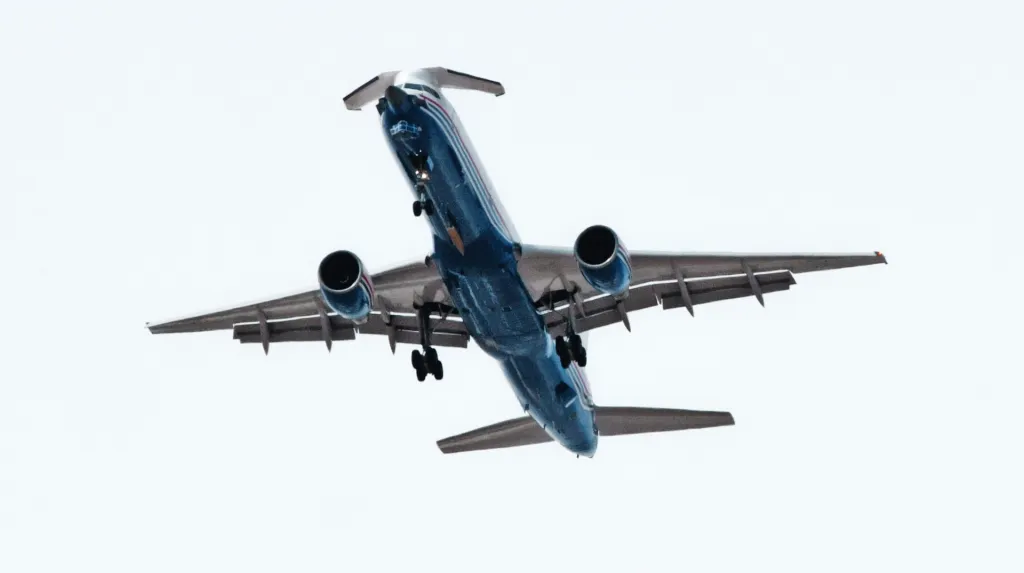
Jerod Harris caught Catfish with the pod under its belly as it came in to land at Edwards Air Force Base in California on Monday. Edwards is the main hub for U.S. Air Force test and evaluation activities, and Catfish has been seen there many times over the years as part of its work. The aircraft, which carries the U.S. civil registration code N757A, also happens to be the first 757 ever built, and took to the skies for the first time back in 1982.
Catfish with the pod under its fuselage seen on approach to Edwards Air Force Base in California. Jerod Harris
As already noted, Catfish has already played a central role in the story of F-22. The aircraft’s heavily modified nose is designed to directly replicate that of the Raptor, and contains the same AN/APG-77 active electronically scanned array (AESA) radar as the fighter. The swept wings on top of the cockpit were also designed to support testing of the conformal antennas for the Raptor’s AN/ALR-94 electronic support measures system and other components of its ‘fused’ sensor suite. The aircraft has supported the development of a wide array of other systems for the F-22, and is packed inside with additional equipment to support those needs in particular, including a replica of the Raptor’s cockpit. You can read more about Catfish and its general history here.
So it is not surprising then that the heavily modified 757 would also be used now to help with continued testing of the new underwing infrared sensor pods for the Raptor. Carrying the pod under the forward end of the fuselage would offer the sensors inside a good open field of view to the front, as well as to the left, right, and down.
Another view of Catfish carrying the stealthy infrared sensor pod. Jerod Harris
The stealthy pods have been test-flown on actual F-22s for years now. At the same time, there are only a limited number of Raptors available, in total, and they are notoriously fuel-hungry, maintenance-intensive, and otherwise expensive to operate. If the particular test plan calls just for level flight, and over extended periods of time, a platform like Catfish could be an attractive alternative. With space for dozens of engineers and technicians in its main cabin, and workstations for them, the aircraft would also offer very different options for testing and evaluating the pod while in-flight. A North American Sabreliner business jet has also been used to test these pods in the past.
N33TR, a Rockwell Sabreliner 65 for Airborne Imaging returns to KJWY/Mid-Way regional Airport as ” AIRBORNE33 ” carrying one of the future F-22 pods.
It was at Nellis AFB testing the pod alongside RATT55/NT-43A, a radar test bed that regularly flies alongside B-2s. pic.twitter.com/kNADnga7H0
The capability, in general, for Catfish to carry stores under its fuselage might open up additional possibilities for utilizing the aircraft in support of other testing efforts, if it hasn’t already.
Catfish continues on with its approach to Edwards. Jerod Harris
Catfish would also be well suited to supporting testing of other elements of the Raptor 2.0 package. Under the current plan, the Air Force’s F-22s are also set to get a new integrated distributed infrared search and track (IRST) system called the Infrared Defensive System (IRDS).
IRST systems have seen a renaissance across the U.S. military in recent years, as well as elsewhere globally. IRSTs detect and track targets via their infrared emissions, making them particularly valuable for helping spot stealthy targets with features designed to reduce their radar cross-sections. The sensors are also immune to radio frequency electronic warfare jamming and operate passively, meaning they do not emit signals that could alert a target to the fact they are being tracked. IRSTs can also be used to cue or otherwise be linked to other sensors, including AESA radars. This data fusion can provide higher fidelity tracks of multiple targets, as well as improved situational awareness overall.
Increased demand for IRSTs has led to a commensurate increase in demand for testing using multiple platforms. This, in turn, has been a major component of a general uptick in U.S. military flight testing in recent years to support a variety of new, advanced programs.
An F-22 with the stealthy underwing infrared sensor pods and drop tanks seen on a test flight over the Mojave Desert in March 2026. Jarod Hamilton
Other elements of the Raptor 2.0 upgrade plan include new stealthy drop tanks, improvements to the jet’s stealthy features, radar capabilities, electronic warfare suite, and more, as you can read about in detail here.
The F-22 upgrade work is reflective of current Air Force plans to keep the Raptors in service for decades to come. In 2024, the Air Force said it no longer had a firm retirement schedule for the fighters.
Catfish seen flying together with a pair of F-22s near Edwards in 2024. Courtesy photo/Kyle Larson via USAF Chase Kohler
At the same time, Catfish is now 44 years old. Boeing 757s, in general, are increasingly disappearing from service globally as they become more complicated and cost-intensive to sustain. Especially with the work ongoing now on the F-47, it seems likely Boeing will start looking toward a new highly specialized testbed aircraft modified to reflect the particular physical geometry, unique avionics, and other features of the new fighter.
Similarly, the F-35 family also has a dedicated test jet, the Boeing 737-300-based Cooperative Avionics Testbed, nicknamed the CATbird. There are several other airliner and business jet-based testbeds flying globally today, though Catfish is certainly one of the largest and most visually distinctive. Improving digital simulation and modeling tools could allow for less reliance on surrogate testbed aircraft in the future, but they will in no way be eliminated.
China’s Tu-204C-based ‘Catfish’ testbed jet. Chinese internet via X
In the meantime, Boeing Catfish remains a very important part of continued work to improve and expand the capabilities of the F-22. This now extends to testing of specialized underwing pods for the Raptor.
Special thanks again to Jerod Harris for sharing his pictures of Catfish carrying the stealthy sensor pod with us.