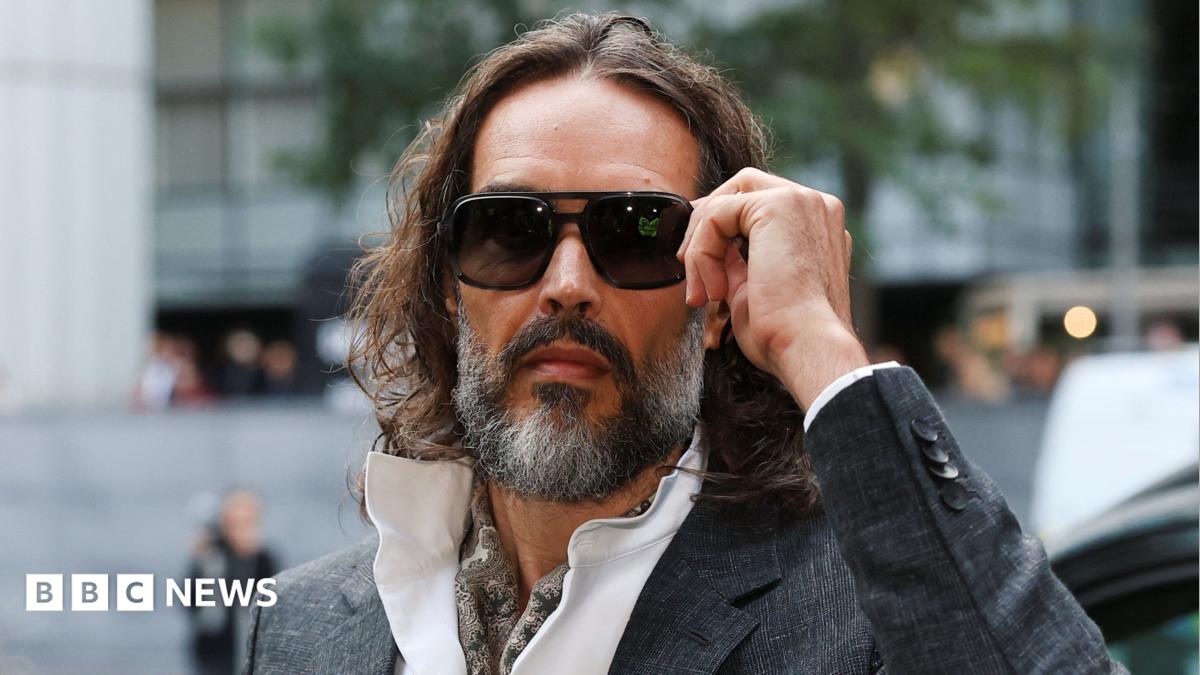
Russell Brand has appeared in court for the start of his rape and sexual assault trial.
The 51-year-old comedian and actor has been charged with three counts of rape, three charges of sexual assault and one allegation of indecent assault, which are alleged to have occurred between 1999 and 2009.
The trial at Southwark Crown Court in London, which could last up to 10 weeks, has now begun with the process of jury selection.
Brand pleaded not guilty to the charges during pre-trial hearings.
The comedian and actor arrived at court wearing a grey suit and sunglasses, accompanied by his wife Laura.
There was a large media presence at the court for the start of the trial, which is expected to last up to 10 weeks.
KATIE Price told social services she feared her then husband Kieran Hayler had groomed and sexually abused his alleged child rape victim, a court has heard.
The 39-year-old is accused of three counts of rape and one count of sexual assault against the girl between June and October 2016, when she was 13.
Katie Price told social services she feared her then husband had groomed and sexually abused his alleged child rape victim, a court has heardCredit: GettyKieran Hayler, arriving at Lewes Crown Court for trial, is accused of three counts of rape and one count of sexual assaultCredit: Darren Fletcher
Katie told a social worker in 2018 that Hayler, 39, had been grooming the girl since she was 13 in a list of agreed facts read in Lewes Crown Court yesterday.
She alleged that Hayler had been grabbing the teen’s bottom, trying to kiss her and said he was falling in love with the girl, jurors heard.
Sign up for the Showbiz newsletter
Thank you!
The social worker then informed Sussex Police about the allegations.
Authorities contacted the mother soon after but she told police her daughter did not want to talk about it or take the allegations any further.
Katie alleged Hayler had been touching and trying to kiss the girl and was falling in love with her, jurors were toldCredit: PAKatie Price and Kieran Hayler in 2017Credit: Getty
Defence barrister Arlette Piercy asked the mother if she had betrayed her daughter’s trust by going to Katie Price with her allegations in 2017 – nearly a year before she reported them to social services.
She asked: “You said you felt you had to tell Katie Price. “You went behind your daughter’s back?
The mum – who cannot be named for legal reasons – responded: “Yes, she probably didn’t want anyone to ever know.
“It probably did cause arguments. We did have a big fall out.”
Asked if the girl was “OK” about her telling Ms Price, the mum said: “No, she wasn’t OK about it.
“But I said to (the girl) because the marriage situation (with Kieran) had broken down, it was only fair that I let Katie know.”
The child told her mum that Hayler had “done everything” to her during a conversation in 2017 – almost a year after his last alleged attack, jurors were told.
The woman then informed former glamour model and mum-of-five Ms Price, 48, weeks after she was told.
Speaking about when she told Ms Price, the woman said she told her: “I think Kieran has done something to (the girl).”
She told the court: “She was shocked and probably swore.”
The mum said she felt “like I have to” tell Ms Price, who was having marriage problems with Hayler at the time.
She added: “She was quite angry and I didn’t feel that she was particularly upset for (the girl).
“I just felt that she was angry and feeling revengeful towards Kieran for the situation they were in.
“And she said, ‘Well, you could get him into trouble if you told somebody’.”
The woman – who said her daughter did not want to tell authorities about the allegations – continued: “I said we have to respect her wishes, she doesn’t want anybody to know, we have to just look after (the girl).”
The girl – now aged in her 20s – denied making up the claims and became emotional, leaving the courtroom at one point as she faced questions from Hayler’s legal team.
The court was shown a video of her police interview from 2021 where she recalled the alleged abuse, sobbing as she said “I thought it was my fault for ages”.
Jurors previously heard Hayler allegedly begged the girl to not tell anyone and told her to “take it to the grave”.
The court also heard previously that before the first alleged rape, Hayler told the schoolgirl he really liked her and began speaking to her about sex – he is accused of raping the girl again on two further occasions.
The girl, who is not a member of Hayler or Katie’s family, contacted the NSPCC in December 2021 when she was aged 18, which prompted an investigation, it was said.
Former stripper Hayler denies all the allegations, which are said to have happened at an address in West Sussex.
Student groups call for the abolition of Greek life and punitive action in wake of fraternity assault allegations.
Published On 5 Oct 20265 Oct 2026
Protesters in the United States have shattered a glass door at Cornell University’s main administrative headquarters and spray-painted messages on the building’s walls as backlash continues following allegations about a 2024 gang rape at a local fraternity.
In the early hours of Monday, the glass panes on an entrance door for the building, Day Hall, were smashed, leaving shards strewn across the floor.
Recommended Stories
list of 3 itemsend of list
Activists, outraged at the school’s handling of the case, also graffitied nearby walls with slogans like “At Cornell rapists are protected protesters are expelled” and “Smash the patriarchy”.
The predawn incident came ahead of a rally demanding “justice for survivors” by student groups on Monday.
Cornell spokesperson Kyle Kimball said Monday that the university was investigating the vandalism.
“We understand the frustration and strong emotions being expressed across our community,” Kimball said. “Those concerns deserve to be heard, but damaging property is not the answer.”
Cornell, a prominent Ivy League university in the state of New York, has been at the centre of a national firestorm over sexual violence on US campuses, after an anonymous student, Jane Doe, filed a civil lawsuit last month alleging a gang rape at the fraternity Chi Phi.
Her complaint accuses seven former students of perpetrating “heinous criminal sexual acts” against her during a fraternity party on the night of October 19, 2024, after she says she was pressured to drink and take the drug ketamine.
The fraternity, Cornell University and others are named as co-defendants in the suit. Lawyers for two of the former students have rejected claims that they participated in sexual assault.
The case has elicited outcry over how sexual assault is handled on campuses across the country.
At Monday’s demonstration, students demanded an overhaul of the university’s sexual assault complaint process, the termination of certain school officials and stricter disciplinary action against alleged abusers.
In a statement to the student news outlet The Cornell Daily Sun, student organisers wrote that they were calling for the “abolition” of the Interfraternity Council system on campus and the “expulsion/revocation of degrees for all Chi Phi members involved in the rape”.
They also demanded that Cornell’s Office of Student Conduct and Community Standards be replaced by a “democratic disciplinary system”. Monday’s protest, they added, was designed to draw attention to the systemic failures that allow sexual violence to occur.
“We wanted to ensure that Day Hall, the centre of Cornell’s administrative function, was not able to continue business as usual,” the students told the campus paper.
The alleged crime at the fraternity, they wrote, was part of a “rampant pattern of sexual assault perpetrated by members of Greek life at Cornell University and hundreds of other academic institutions throughout the country”.
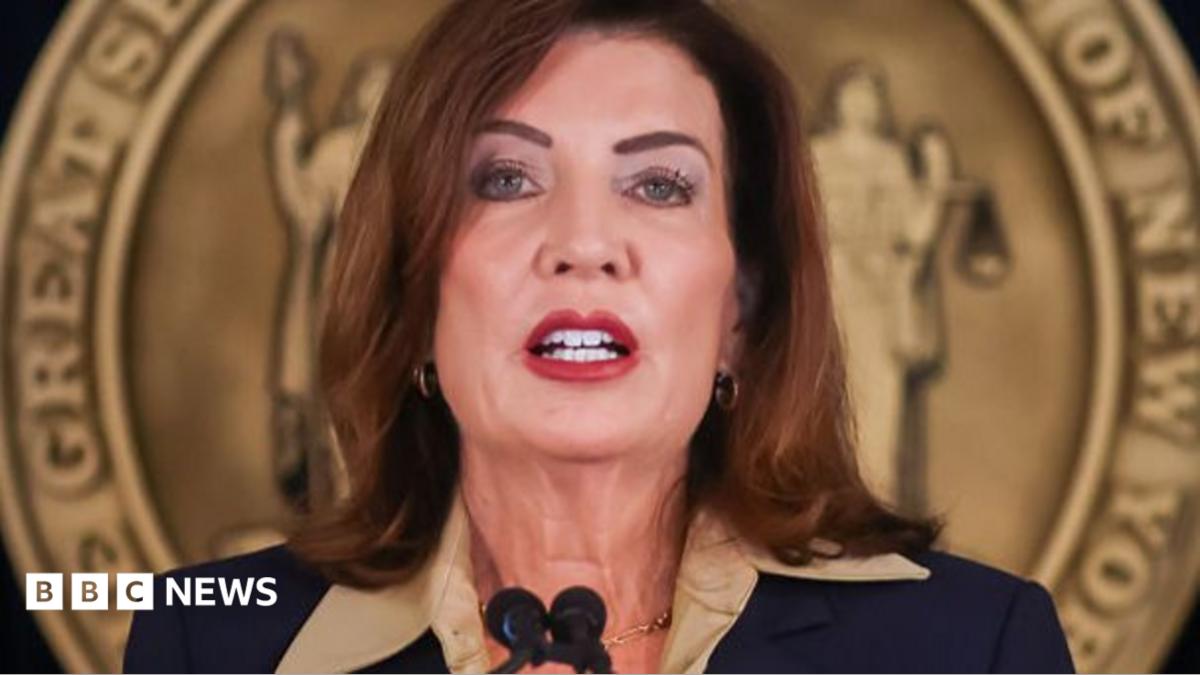
Under pressure by New York Governor Kathy Hochul and Attorney General Letitia James, the university announced this week it would be appointing a law firm to conduct an independent internal review of how it initially handled the case.
A transcript, obtained by US media, shows that although no charges were filed, Doe told campus police at the time that she could “say with 100% confidence I was raped”.
Her lawsuit also alleges that Cornell “afforded” the accused fraternity members “the opportunity to mitigate their conduct by submitting essays” to the school. Two were later expelled, and another two were suspended.
Last month, a woman identified as Jane Doe filed a lawsuit against Cornell University, the fraternity Chi Phi and the seven fraternity members she accused of gang-raping her on the night of October 19, 2024.
Her allegations have triggered a nationwide reckoning in the United States over the prevalence of sexual assault on college campuses.
Recommended Stories
list of 3 itemsend of list
But the case has also reignited efforts to reform laws in the state of New York.
While the left-leaning state has long presented itself as a leader in women’s rights, advocates say sexual assault survivors still face pervasive legal barriers when they seek justice.
Erica Vladimer, a lawyer and founding director of Harassment-Free New York, a survivor-led nonprofit, told Al Jazeera that much of the legislation currently in the spotlight is the culmination of years, if not decades, of work.
“These are bills that we have been fighting for for years when sexual violence is not in the news,” Vladimer said.
She drew a line between the #MeToo movement, which began in 2017 as an online campaign to denounce sexual misconduct, and the current wave of outrage following Doe’s allegations.
“It speaks to the fact that the #MeToo movement is not dead. It is a movement, not a moment,” Vladimer said.
Already, leaders in Albany, the state capital, have signalled they would take action following the Cornell case.
On Wednesday, the New York Assembly announced it had formed a working group to examine the state’s sexual-assault laws and develop recommendations for the 2027 legislative session.
Still, advocates say more concrete measures are needed to address the crisis.
“I appreciate that this work is happening,” said Lindsey Boylan, a New York City Council candidate. “It doesn’t undo the fact that rape culture is pervasive in the United States and very much so alive and well in New York.”
Boylan was the first woman to publicly accuse former New York Governor Andrew Cuomo of sexual harassment in another high-profile misconduct case, back in 2020. She is among those calling for greater reform.
Here are some of the measures advocates are pushing state lawmakers to adopt or amend:
‘Voluntary intoxication’ statute
The Cornell University case has brought renewed attention to New York’s “voluntary intoxication” statute, a legal loophole that can make it harder to prosecute sexual assault when a person has willingly consumed alcohol or drugs.
New York Governor Kathy Hochul pledged on Friday to work with lawmakers to close the gap.
“It should not matter whether they chose to use drugs or alcohol. Voluntary intoxication is not a license for sexual assault or gang rape. Period,” Hochul said.
Under the current state law, a person who voluntarily drinks or takes drugs is not considered “mentally incapacitated” during an assault, even if they become too intoxicated to consent.
That can make it harder for prosecutors to bring a sex-crime charge. The law primarily recognises incapacitation in the context of sexual assault when a person was involuntarily intoxicated, unconscious or otherwise “physically helpless”.
That distinction has become central to the Cornell case. Doe has acknowledged that she consumed substances before the alleged rape, saying that she was pressured into drinking alcohol and taking the dissociative drug ketamine.
The Tompkins County district attorney initially declined to bring charges, pointing to the law’s stance on “voluntary intoxication”. But the investigation has since been reopened, amid public pressure.
New York is one of 19 states in the US that distinguish between “voluntary” and “involuntary” intoxication when it comes to determining consent in sexual violence cases.
But the Cornell case has spurred a push to remove the distinction from the law books. Critics have argued that sexual assault is no less grievous if a victim is drunk or has chosen to take drugs.
“I mean, to have New York, a supposedly progressive state, penalise people who are sexually abused for drinking is disgusting,” Boylan told Al Jazeera.
Vladimer, for her part, explained that distinguishing between “voluntary” and “involuntary” intoxication as a means for pursuing sexual assault cases shifts the focus onto the actions of victims, rather than perpetrators.
“We essentially have codified victim-blaming by saying if you become voluntarily intoxicated and then are sexually assaulted, you essentially cannot seek justice in our court system,” Vladimer told Al Jazeera.
In June, the New York state Senate unanimously passed a bill to allow sexual assault charges regardless of whether a victim is intoxicated voluntarily or involuntarily.
But the legislation has yet to be taken up in the state Assembly.
Students look on at Cornell University’s campus in Ithaca, New York, on October 1 [Lauren Petracca/Reuters]
The rape-shield gap
New York’s rape-shield protections limit the use of evidence about a complainant’s sexual history and conduct in criminal proceedings. But those protections do not currently extend to civil cases.
This distinction could matter in the Cornell case because Doe filed a civil lawsuit.
Vladimer said questions about a survivor’s behaviour could come up in the discovery process of a civil case, as well as in court.
“There is the potential of her having to face questions about things like her sexual history,” Vladimer said.
Bridie Farrell, the director of victim rights advocacy and legislation at the law firm Weitz and Luxenberg, told Al Jazeera that she has seen major differences in how male and female survivors are questioned in civil cases where this practice is still permitted.
In one case involving a brother and sister who were both sexually assaulted, Farrell said the man was not questioned about his sexual history while the woman was “grilled on it”.
A bill sponsored by State Senator Liz Krueger would extend rape-shield protections to civil proceedings. The measure passed the Senate in June and is currently before the Assembly Judiciary Committee.
A student walks through an archway at Myron Taylor Hall on the Cornell University campus in Ithaca, New York, on October 1 [Lauren Petracca/Reuters]
Retaliatory defamation lawsuits
Advocates are also pushing for legislation to prevent retaliatory defamation lawsuits.
Boylan said she has spent more than $2m defending herself in legal proceedings connected to her accusations against Cuomo, who stepped down as New York governor in 2021.
He has repeatedly denied any allegations of wrongdoing, despite a state attorney general’s report that concluded he “engaged in conduct constituting sexual harassment”.
“Every step of the way, we have a system that penalises people for speaking up about their own harm,” Boylan said.
Boylan and Charlotte Bennett, a former aide who also accused Cuomo of sexual harassment, are proponents of the Speak Your Truth Act, which would provide legal protections for people who publicly report sexual assault, harassment or discrimination.
The bill, sponsored by Assembly member Jessica Gonzalez-Rojas, would make certain communications about sexual assault, harassment or discrimination privileged when they are made without malice.
It would also allow survivors of sexual misconduct who successfully defend themselves against a defamation lawsuit to recover legal fees and costs. The bill remains in an Assembly committee.
Cornell University and local officials in Ithaca, New York, have faced questions about how they handled the Jane Doe case [Lauren Petracca/Reuters]
A recent win, a long way to go
For Bridie Farrell, the victims’ rights advocate, the fight for legal change is personal.
Farrell was a 15-year-old competitive speed skater in 1997 when she said she was sexually abused by her 33-year-old teammate and mentor. She came forward with her story of abuse in 2013.
By then, the statute of limitations in her case had expired. Farrell later became an advocate for changes to New York’s laws, helping to pass the Child Victims Act in 2019 that extended the time available for survivors of childhood sexual abuse to pursue criminal and civil claims.
The law allowed Farrell to file her own case, which she did in 2020. She tells Al Jazeera that a trial has finally been scheduled for June 2027.
“Before we passed the Child Victims Act in 2019, New York was one of the worst in the country,” Farrell said of the situation for sexual assault survivors seeking justice.
Farrell considers the legal impediments to Doe’s case — like the “voluntary intoxication” statute — all too predictable. “I’m not surprised if we haven’t updated a law that is archaic,” she said.
Still, lawmakers have signalled willingness to reform such laws. In announcing the state Assembly’s working group on sexual-assault laws, Speaker Carl Heastie pledged to “thoughtfully” consider how the state can strengthen its laws.
“The allegations being reported out of Cornell University are truly horrifying,” Heastie said on Wednesday. “We want to do everything we can to ensure victims of sexual assault see justice served.”
But survivors and sexual violence advocates say the Cornell case points to problems that go beyond any single law. They hope to see widespread systemic and societal change.
“Changing legislation is incredibly important. But legislation in a lot of cases can only go [as far as] the paper that it’s written on,” Boylan said. “It would be amiss to orient this horrible, tragic, unacceptable, infuriating case in isolation without looking at the broader rape culture of our state and our country.”
Michael Kotlikoff expresses deep sorrow over the case, calling it one of the most challenging periods for Cornell.
Published On 4 Oct 20264 Oct 2026
Cornell University’s president, Michael Kotlikoff, has called the alleged 2024 gang rape of a student at a fraternity house “deeply disturbing”, pledging greater transparency amid mounting outrage over how the school handled the case.
“My heart aches when I think of what she experienced,” Kotlikoff said in an eight-minute video message to the Cornell community on Saturday.
Recommended Stories
list of 3 itemsend of list
He characterised the past week as one of the most difficult in the university’s history and said it would weigh on the university for years to come. “It raises heartbreaking and troubling issues about sexual assault, dehumanisation and aspects of party culture, alcohol and drug use,” he said.
The woman, identified in court documents as Jane Doe, alleges she was sexually assaulted by multiple members of the Chi Phi fraternity in 2024 and has sued the university and seven former students.
Scrutiny over Cornell’s handling of the case intensified after New York Governor Kathy Hochul said newly released information had undermined her confidence in the local prosecutor, who initially declined to bring charges.
Hochul subsequently appointed state Attorney General Letitia James as special prosecutor to take over the criminal investigation, saying she would “not allow anyone to sweep this case under the rug”.
New York Governor Kathy Hochul, left, and New York Attorney General Letitia James attend a news conference in New York City on October 2, 2026, regarding an investigation into alleged sexual assault at Cornell University [Jeenah Moon/Reuters]
The case has also renewed scrutiny of the “voluntary intoxication loophole” in New York law that makes it difficult to prosecute sexual assaults involving victims who voluntarily consumed alcohol or drugs, even if they later became too intoxicated to consent.
Tompkins County District Attorney Matthew Van Houten had cited the legal provision in defending his original decision not to pursue charges. Hochul has pledged to push for changes to it.
At a student assembly hearing on Thursday, several speakers called for Kotlikoff’s resignation.
In Saturday’s video, Kotlikoff reaffirmed his support for an independent review of the university’s handling of the case and said Cornell’s Board of Trustees would announce details next week. He also called for a “serious look at the role of fraternities and sororities in campus life”.
James’s appointment has placed the case under a prosecutor whose office has repeatedly clashed with President Donald Trump. She has separately described the case as “an active criminal investigation”.
New York Governor Kathy Hochul has said the woman at the centre of the Cornell University rape case was “failed” at “every turn”.
The woman, known as Jane Doe in legal documents, alleges she was drugged and raped by several men at a fraternity house in 2024.
The case was investigated at the time but no charges were laid. It recently reopened after the woman filed a civil lawsuit last month that thrust the allegations into the national spotlight.
At a news conference on Friday, Hochul said she was “deeply disturbed” by how the investigation was handled. She has now appointed New York Attorney General Letitia James to lead the case.
This appointment was made after Hochul said she “lost faith” in the local prosecutor’s ability to oversee the investigation.
Expressing outrage that local prosecutors did not interview the accuser themselves, Hochul on Friday said: “This young woman had already endured something that is utterly unspeakable, and then at every turn she was failed by people and institutions with an obligation to protect her.”
She has also vowed to close a “loophole” that prevents prosecutors from pursuing rape charges in cases when the victim has voluntarily consumed drugs or alcohol. Jane Doe is believed to have voluntarily taken drugs and alcohol on the night of the alleged gang rape.
“If someone is too intoxicated to consent it should not matter if they chose to use drugs or alcohol,” said Hochul, adding: “Voluntary intoxication is not a licence for gang rape.”
James, who is the state’s chief legal officer, appeared alongside Hochul at Friday’s news conference, pledging to “lead a process guided by the facts and the law”.
She said her office would interview witnesses and pursue prosecutions if warranted.
District Attorney Matthew Van Houten, who previously led the investigation, has defended his office’s previous decision not to file charges in the case, arguing they were not given enough evidence to meet the legal threshold.
Van Houten said much of the information released in recent weeks about the case was not passed to his office.
In a statement on Friday, he said he supported James’ investigation, adding: “It has become clear that we were not provided the full picture by the university.”
Cornell has said it provided evidence to the district attorney’s office from its own investigation, including a Snapchat group chat in which fraternity members discussed a “free” sexual encounter with Doe on the night of the alleged assault.
New York lawmakers are renewing a push to change the state’s sexual assault laws after prosecutors in the United States said the current rules made it difficult to bring charges for an alleged gang rape at a Cornell University fraternity house.
At issue is whether someone who willingly becomes intoxicated can be considered mentally incapacitated and therefore unable to consent to sex.
Recommended Stories
list of 4 itemsend of list
Under current New York law, only someone who was drugged or given alcohol without their knowledge can be considered “mentally incapacitated” because of intoxication and unable to consent. The same does not apply to someone who willingly consumed alcohol or drugs.
State Assemblyman Jeffrey Dinowitz and State Senator Nathalia Fernandez are sponsoring bills in their respective chambers that would change that.
In the state Senate, the bill is known as S10632, and in the New York Assembly, it is filed as Assembly Bill A101.
In a post on the social media platform X, Dinowitz said the proposed law would allow prosecutors to focus on whether someone was capable of consenting, rather than how they became intoxicated, and whether the accused “knew or should have known” that the person was unable to consent.
He said people who voluntarily drink or take drugs currently face significant barriers in sexual assault cases, particularly if they remain partly conscious or responsive during an alleged assault.
“The fact that someone made the choice to consume alcohol or another intoxicating substance should never be used to undermine their experience or shift responsibility onto the survivor when they’ve been sexually assaulted,” Dinowitz wrote.
The years-long reform effort has gained new momentum after Tompkins County District Attorney Matthew Van Houten said the existing law was one reason his office initially declined to pursue charges against several Cornell students accused of sexually assaulting a woman on October 19, 2024.
The woman, identified only as Jane Doe, was 20 at the time. She has since filed a civil lawsuit against seven members of the Chi Phi fraternity, as well as Cornell University and several other defendants.
The lawsuit alleges fraternity members gave her alcohol and ketamine and sexually assaulted her after she became incapacitated.
Doe also reported her allegations to campus police in November 2024.
In a statement explaining why his office did not pursue charges afterwards, Van Houten said Doe never claimed at the time that she had been involuntarily intoxicated, physically forced or unconscious. He also said she did not clearly express that she did not consent.
Any of those circumstances could have provided grounds for prosecutors to pursue rape charges under New York law, according to the district attorney.
“On the contrary, Jane Doe’s statement described her participation in drug use and sexual conduct as voluntary, conscious, and consensual,” Van Houten wrote.
“In this case, multiple prosecutors and criminal investigators reviewed Jane Doe’s statement and correctly determined the alleged facts as set forth in the statement do not constitute a crime.”
Since the lawsuit was filed, Van Houten’s office has faced intense scrutiny. It said on Monday that it will reopen the investigation and bring the case before a grand jury, which will consider whether there is enough evidence to indict anyone.
Van Houten also told CBS News on Wednesday that he had not seen a transcript of a campus police interview conducted three weeks after the alleged assault in which the woman said: “I can say with 100% confidence I was raped.”
Cornell has defended its handling of the case, saying it investigated the allegations and disciplined the accused students, with penalties ranging from suspension to expulsion.
On Wednesday, New York Governor Kathy Hochul said the university had agreed to her request to bring in an outside law firm to conduct a new investigation into its handling of the case.
Previous efforts to change New York’s sexual assault laws have foundered in the state legislature. Senate bill S10632 has passed its chamber but has never received a vote on the Assembly floor.
“Rape is the only crime that I’m aware of where, if the victim was drunk, they may not get justice,” Dinowitz, the assembly member, said in an interview with Reuters. “There shouldn’t be any difference in terms of the survivors of sexual assault between the people who are voluntarily intoxicated and who are involuntarily intoxicated.”
New York is one of 19 states where a person can be considered mentally incapacitated because of intoxication only if they did not willingly become intoxicated, according to Elizabeth Jeglic, a professor at John Jay College of Criminal Justice who studies sexual abuse.
“It doesn’t make sense,” Jeglic said. “If you’re incapacitated, you’re incapacitated, regardless of whether you consumed it yourself or somebody else gave it to you without your consent.”
Lovely Professional University in Punjab suspends classes for 10 days due to campus unrest over rape allegations that university officials deny.
Published On 28 Sep 202628 Sep 2026
A university in the Indian state of Punjab has suspended classes for 10 days after protests on campus over an alleged rape last week, a claim that university officials have denied.
In an announcement on Monday, Lovely Professional University in Phagwara also postponed midterm examinations due to the demonstrations, which turned violent.
Recommended Stories
list of 3 itemsend of list
“Students may, in consultation with their parents/guardians, travel to their hometowns during this 10-day period, if they wish to do so,” it said in a statement.
“Students who stay back are advised to stay inside their hostels/places of residence and avoid unnecessary movement or involvement in any unrest-related activities in the interest of their own safety.”
According to posts on social media, a female student was raped on campus. Some claimed the student committed suicide. Police said they were investigating the alleged incident, adding that the identity of the student had not been established, the news magazine India Today reported.
The protests escalated on Sunday as demonstrators clashed with police, and reports in local media said there were incidents of vandalism inside the university.
Protesters allegedly threw stones, smashed windows and set fire to vehicles on campus as well as damaging police vehicles, according to reports. Students also reportedly blocked a nearby highway.
University registrar Monica Gulati denied the rape had taken place, saying on Sunday that there was “no truth” to the allegations.
“The manner in which such false and misleading information is being systematically circulated appears to be a deliberate and concerted attempt to malign the reputation of the university and tarnish its image,” The Times of India, the country’s largest English newspaper, reported.
Meanwhile, three female students residing in the same building where the alleged rape took place appeared in a video featuring Gulati and backing the registrar’s claims that no rape had taken place.
However, according to the news channel NDTV, a separate video emerged later in which the same three students said they were instructed on what statements to make.
Ongoing concerns around sexual violence
The incident comes as the Supreme Court on Monday pushed for accountability over a recent spate of rape cases in the national capital and neighbouring districts, saying they reflected a “failure of law enforcement”.
Hundreds of students protested in Delhi last week to demand better safety for women after a teenager said she was raped by three men at a park in the city.
Last month, a 17-year-old girl was allegedly raped in a moving bus by the driver and conductor, local media reported.
Sexual violence is a major problem across India with more than 80 rapes reported to police every day, according to the National Crime Records Bureau. Activists said that number is a major undercount and many victims do not report rapes because of social stigma or coercion.
Student protests at Lovely Professional University in northern India have turned violent following social media claims that a female student was raped at a girls’ hostel by a worker. The university has denied the allegations as rumours, while police have launched an investigation.
New Orleans Pelicans star Zion Williamson had a “friendly and casual ‘friends with benefits’ sexual relationship” with the woman who is accusing him of raping and abusing her multiple times between 2018 and 2023, according to a court filing by the former Duke standout’s legal team.
A document submitted to Los Angeles County Superior Court on Monday states that Williamson denies “each and every allegation” made against him by a Jane Doe in a second amended complaint filed in June.
Williamson’s filing describes the interaction between the former No. 1 overall draft pick and his accuser as “infrequent and sporadic.”
“All interaction among and between the Plaintiff and Defendant was pleasant and entirely consensual, with the Plaintiff initiating and communicating her desire to be intimate with the Defendant,” the document states, “and the Plaintiff herself decided to end the relationship because she became upset when she realized that the Defendant was focusing his time and energy on professional basketball and on being a father, and did not have sufficient time or interest to maintain a relationship with the Plaintiff.”
The second amended complaint lists the causes of action as assault, battery, sexual battery, intentional infliction of emotional distress, domestic violence and stalking. The response from Williamson’s team states that the statute of limitations has expired on each cause of action.
The initial complaint, filed in May 2025, also included false imprisonment and conversion as causes of action, which are not included in the latest complaint.
The lawsuit provides details of two instances in 2020 during which Williamson allegedly raped his accuser in a Beverly Hills apartment he was renting at the time.
“These two incidents were not isolated,” the lawsuit states. “Defendant continued to abuse, rape, assault, and batter Plaintiff in California and other states, including Louisiana and Texas, until the relationship ended in 2023.”
The lawsuit also alleges that Williamson committed many other acts of violence against his accuser, including strangling her multiple times to the point that she lost consciousness, suffocating or smothering her, striking and kicking her “with great force,” threatening to kill her and her family members, and pointing a loaded firearm to her head.
Williamson “was either drunk or on cocaine” while allegedly committing many of those acts, the lawsuit states.