rallies

As Vance rallies with Turning Point, some supporters bristle at Trump’s war, memes and feuds

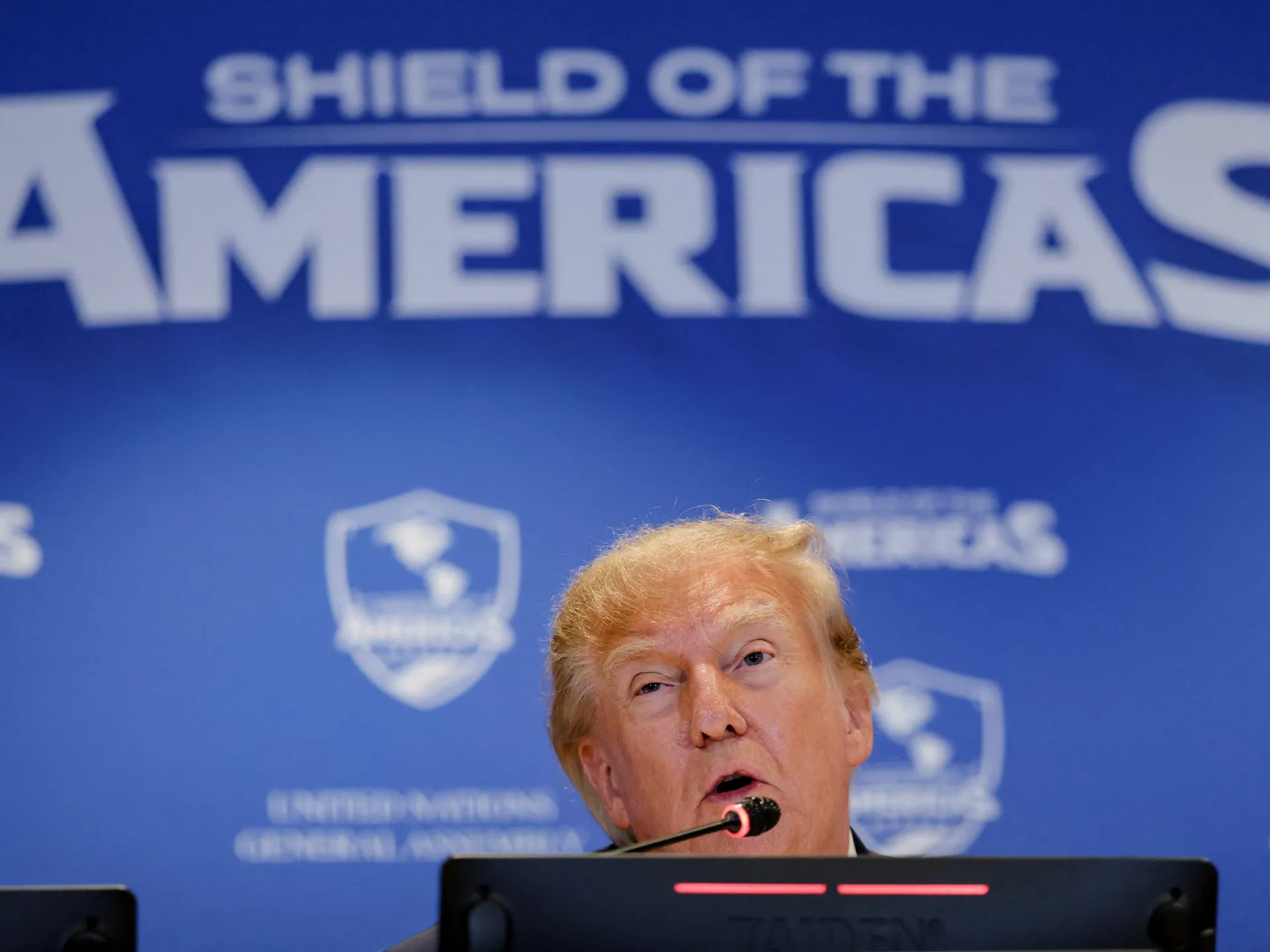
Fresh from a marathon trip to Pakistan that failed to reach a deal for ending the war with Iran, Vice President JD Vance jetted to this Georgia college town for a campus tour organized by the conservative powerhouse Turning Point USA.

But instead of showcasing the youthful energy that the organization harnessed to return President Trump to the White House less than two years ago, there was a mostly empty arena, awkward questions and unusually sharp criticism.

The event affirmed Trump’s difficulty selling the war and how much he’s complicated his own political fortunes by assailing Pope Leo XIV and posting a social media meme that depicted himself as Jesus.

“I did vote for Trump. I am not a Trump supporter anymore,” said Joseph Bercher, a Catholic who said he was glad that Leo has expressed opposition to the war with Iran.

Bercher said the Jesus meme, which the president took down Monday after a rare conservative backlash, was a “red flag” indicating Trump’s true character.

“He sees himself as like a demagogue or someone to be worshipped,” Bercher said.

C.J. Santini, a recent graduate of Liberty University, an evangelical school in Virginia, said he didn’t have an opinion on whether Iran was truly close to manufacturing a nuclear weapon and thus needed to be attacked. But he laughed and shook his head when asked about Trump attacking Leo.

“It’s just stupid. Stupid,” he said, calling it a “distraction” from Trump’s agenda in Iran and at home.

Mostly empty arena contrasts with 2024 rallies

Many of the college-age attendees donned Turning Point attire, Trump hats and red-white-and-blue paraphernalia for the event. Yet they were outnumbered more than 2-to-1 by empty seats in what is not even the largest arena on this sprawling campus that sits about a 90-minute drive from downtown Atlanta.

A Marine veteran who served in Iraq, Vance acknowledged that not all young conservatives are enamored with another U.S. war in the Middle East.

“I’m not saying you have to agree with me on every issue,” Vance told the young crowd. “What I’m saying,” he added, “is don’t get disengaged.”

The vice president took questions from Turning Point executive Andrew Kolvet instead of Erika Kirk, who began leading the organization after the assassination of her husband Charlie Kirk. Kolvet said Erika Kirk canceled her plans to be on stage because of unspecified threats she had received.

Vance, whose presence ensured significant Secret Service and other law enforcement protection around the venue, said he’d been worried that the event would be canceled altogether.

Kolvet asked Vance directly about the war and Trump’s back-and-forth with Leo. Audience questions were more aggressive. Vance jousted with at least one heckler over the war in Gaza, and he was pressed by another person over the administration’s handling of the Jeffrey Epstein case files.

In the audience, even some of Vance’s sympathetic listeners offered caveats and critiques.

“The pope needs to stay out of politics,” said Jessie Williams, a Methodist. But he noted his mother is Catholic, and he said he understands why Catholics recoil at Trump calling the pope “weak” and suggesting that the first U.S.-born pontiff was chosen only as a counter to Trump.

Williams called Trump’s meme distasteful.

“I don’t like it, but it’s — what can we do?” Williams said. “He’s a grown man, he’s gonna do what he wants.”

Blake McCluggage, a Baptist, said he did not approve of the meme or Trump’s profane Easter Sunday message that threatened widespread destruction of Iran’s civilian infrastructure.

The threat, plus Trump’s follow up message that a “whole civilization” would die, prompted escalating criticism from Leo, with the pope calling the president’s comments “truly unacceptable.”

However, McCluggage said, “you can still be a Republican” despite disagreeing with Trump.

A day before coming to Georgia, Vance tried to laugh off the meme as a joke that “a lot of people weren’t understanding.” The vice president also seemed to echo Trump’s assertion that Leo should concentrate less on global affairs.

“It would be best for the Vatican to stick to matters of morality, to stick to matters of what’s going on in the Catholic church and let the president of the United States stick to dictating American public policy,” Vance said in a Fox News interview.

On stage in Athens, he shifted his arguments, saying he welcomes Leo’s comments even if he disagrees with them.

“At the very least, it invites conversation,” said Vance, who converted to Catholicism as an adult.

Still, Vance questioned Leo anew, pushing back specifically at the pope’s Palm Sunday assertion that God does not hear the prayers of those who make war. Leo was quoting scripture from the Old Testament book of Isaiah. Vance asked whether God was on the side of Allied forces in World War II as they liberated Jewish survivors of Nazi extermination camps.

“I certainly think the answer is yes,” Vance said. When Leo mixes global affairs and complex theology, Vance said, “it’s very important for the pope to be careful.”

Barrow and Megnien write for the Associated Press.

Source link

‘No Kings’ rallies draw millions protesting Trump globally

A rolling wave of “No Kings” protests swelled through America’s small towns and big cities Saturday, with crowds gathering to blast President Trump, Immigration and Customs Enforcement crackdowns, the war in Iran and high gas and food prices.

Saturday’s demonstrations were expected to draw millions of people nationwide, including thousands for a downtown Los Angeles rally. More than 40 protests were planned for L.A., Orange and Ventura counties, part of the national “No Kings Day of Nonviolent Action.”

No Kings Coalition organizers were hoping that turnout for the rallies in all 50 states could combine to form the largest single-day protest in U.S. history. They pointed to growing anger over the country’s direction, including fatal ICE shootings and troops dispatched to the Middle East, since the first “No Kings” demonstration was held last June.

On Saturday morning, hundreds gathered around the reflecting pool at Pasadena City College. A band rolled through with a fascism-themed parody of Johnny Cash’s “Folsom Prison Blues.” Sign-toting protesters lined Colorado Boulevard, drawing a constant stream of honking from the cars driving by. For many, the Iran war was top of mind.

“Every time we protest, there’s something completely new, which speaks to the chaos of the Trump administration,” Cindy Campbell told The Times. “ICE raids last year, Epstein files a few months ago. Now, war.”

“This administration doesn’t serve us. It serves billionaires,” said Kent Miller, of Monrovia, who participated in the Pasadena protest. “War with Iran is only making life harder for working people.”

Miller pointed to a Chevron gas station advertising gas for $6.45 per gallon.

“See?” he said.

National coordinators said there has been increased interest in smaller communities, including Republican bastions, with higher-than-expected attendance during Saturday’s protests.

“I’m out here because I’m disgusted with what I’m seeing,” said Kersty Kinsey, a mother who was protesting near the Beaufort, S.C., City Hall. “People are suffering, and he’s playing golf. People are suffering, and he’s going other places and blowing things up.”

In Beaufort, an antebellum city founded in 1711, an estimated 3,000 people turned out — a marked increase over earlier “No Kings” rallies, said Barb Nash, one of the coordinators. Amid the moss-draped live oaks and blooming pink and white azaleas, a person in a purple Barney dinosaur costume held a sign reading: “Dino’s for Democracy.” A young girl handed out homemade “Resistance Cookies.”

Los Angeles coordinators said they expect more than 100,000 people at the local events, which were being planned for Beverly Hills, Burbank, West Covina, West Hollywood and Thousand Oaks. One group planned a “Road Outrage” car caravan to motor through Mid City with flapping flags calling for “No War,” and “ICE Out of LA.” At a Torrance gathering, cars honked, protesters waved flags, and a person in an inflatable green cow costume hoisted a large American flag.

The White House, in a Saturday statement, dismissed the protests as a “Trump Derangement Therapy Session.”

Organizers said they have been particularly encouraged by the surge of interest from groups in rural communities that wanted to join the loose-knit No Kings Coalition and hold protests.

Jaynie Parrish, founder of the Arizona Native Vote project, started planning a protest for her tiny town of Kayenta, on the Navajo Nation in northern Arizona, only earlier this week.

“My dad, who’s a [military] veteran and an elder, said: ‘We should go,’ and I said, ‘OK,’” Parrish told The Times.

“Our folks don’t always protest for things, but this was very important,” Parrish said. “A lot of our families are feeling the impacts right now of higher prices and things being cut. A lot of our healthcare benefits are being cut … and our tribal sovereignty is being threatened.”

Upbeat Midwestern activists withstood whipping winds to form a line of protesters stretching nearly three blocks of Burlington Avenue in Hastings, Neb. Under the crisp blue skies, one of the protesters, Drew Fausett, told The Times in a phone interview that he is a registered Republican in the decidedly red state.

“My politics haven’t really changed — but the party around me has,” Fausett said. “It used to be the two parties were two sides of the same coin, and they would work together — but not anymore.”

He and his wife, Becky, have attended “No Kings” and other protests because “it’s the only way to show that people have different opinions,” he said. “People are out here speaking for their families and their neighbors. That’s what this is all about.”

Trump’s policies are hurting many in Nebraska — including farmers, said Debby Thompson, one of the Hastings organizers.

“We want to urge our representatives in Congress to not just rubber stamp whatever Trump wants because it’s really hurting rural folks and farmers,” Thompson said. “The tariffs and huge increase in prices on fertilizer are hitting farmers really hard.”

The “No Kings” campaign sprouted in June as an act of defiance on Trump’s 79th birthday. He wanted a military parade in Washington to mark his milestone, and anti-Trump protesters came out in force — an estimated 5 million people around the country — with their own display. At the time, Trump’s second-term policies were coming into focus, including ramping up immigration raids, deploying the National Guard to L.A. in response to protests, and mass firings within the federal government.

A subsequent event in mid-October drew even larger crowds, with an estimated 7 million people protesting around the country.

Saturday’s event coincided with a dip in Trump’s approval ratings. A Reuters/Ipsos poll last week found 36% approve of Trump’s job performance, marking the lowest level since his return to office last year. In a separate Fox News Poll released last week, 59% disapproved of his job performance.

“Since the last ‘No Kings,’ we’re seeing higher gas prices and groceries, all while there’s an illegal war in Iran,” national organizer Sarah Parker of the organization 50501 said during a Thursday press briefing. “We’ve also seen our neighbors executed — American citizens executed.”

Widespread protests and candlelight vigils followed January’s fatal shootings by ICE agents in Minneapolis of Renee Good, a 37-year-old mother of three, and Alex Pretti, a 37-year-old intensive care unit nurse.

“The defining story of this Saturday’s mobilization is not just how many people are protesting — but where they are protesting,” Leah Greenberg, co-founder of Indivisible, said during the press briefing. She said two-thirds of the RSVPs to national organizers came from outside of major urban centers.

The Los Angeles event was organized by the local chapter of 50501 (short for “50 protests, 50 states, 1 movement”) and other progressive groups, including the ACLU, Human Rights Campaign, Indivisible and Public Citizen, as well as labor unions such as Unite Here Local 11 and the Service Workers International Union.

“There’s an affordability crisis in this country — people can’t afford groceries or healthcare,” Joseph Bryant, SEIU executive vice president, said in a statement. “But this administration is focused on expanding its power, starting unnecessary wars that benefit billionaires, and targeting immigrants and citizens who dare to stand up for them.”

Source link

Labor union rallies behind Korea Zinc before key shareholder battle

A smelter of Korea Zinc. The company is scheduled to hold a high-stakes shareholders’ meeting Tuesday. Photo by Korea Zinc

SEOUL, March 20 (UPI) — Korea Zinc’s incumbent management and its major shareholder, Young Poong, are locked in a fierce showdown ahead of a regular shareholders’ meeting Tuesday.

The world’s largest non-ferrous metal producer said Friday that it posted record sales and profits last year, which led to high dividends and other shareholder-friendly policies.

Citing the strong performance, Korea Zinc has called for the leadership continuity, as the 2026 shareholders’ meeting would select at least five board members out of 15 seats. The term of Chairman Yun B. Choi is also set to expire.

“We believe that our continued efforts to improve corporate governance and expand shareholder returns have laid the foundation to steadily grow our business and operate our organization in a stable manner,” the firm said in a statement.

But, Young Poong argued that proxy advisers and the National Pension Service, another key Korea Zinc shareholder, have effectively supported its position by opposing the reappointment of Choi as an inside director.

According to Young Poong, such decisions suggest that “this is no longer merely a management control dispute, but judgment over potential structural flaws in corporate governance and failures of oversight.”

Since early 2025, Korea Zinc has been fighting to repel an aggressive takeover bid from Young Poong, which has teamed up with the country’s leading private equity firm, MBK Partners.

The battle came to a head at the March 2025 shareholders’ meeting, and another high-stakes clash is looming at this month’s gathering.

Each side reportedly controls roughly 40% of the voting shares, while NPS holds a 5.2% stake.

Meanwhile, the labor union at Korea Zinc expressed strong support for the current board, urging the NPS to immediately reverse its decision.

“We will fight to the end to prevent the dark hand of speculative capital from tainting our sacred workplace at this shareholders’ meeting,” the union said in a statement.

“If our warning is ignored and the company is undermined, we will mobilize all possible means, including a general strike, to wage an all-out struggle,” it said.

Source link