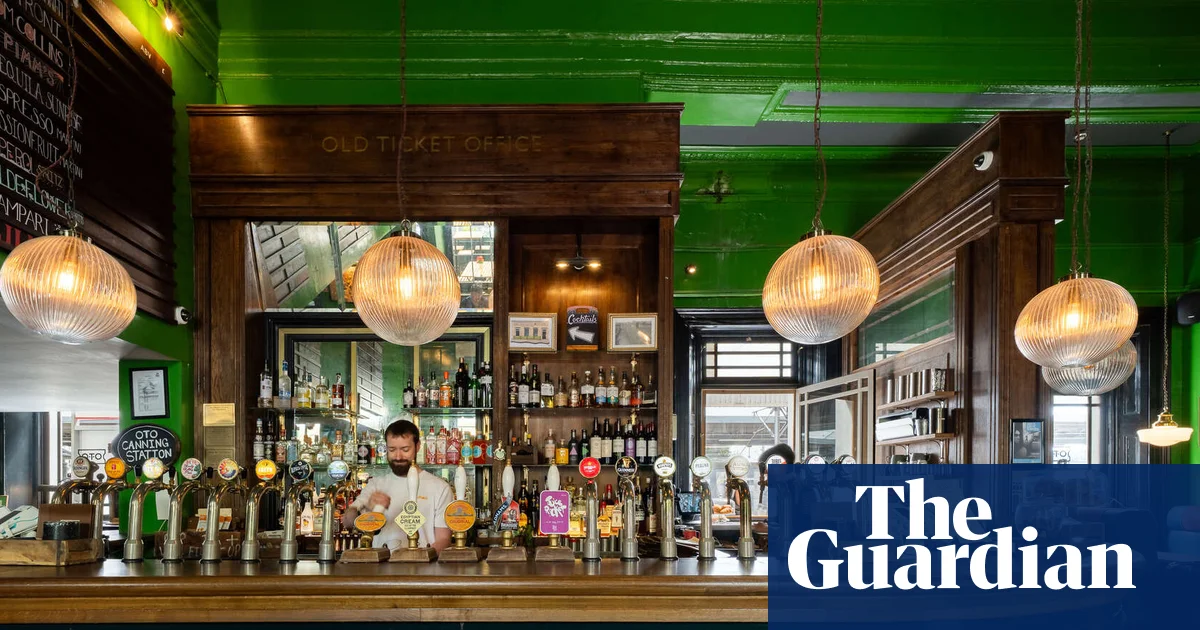
railway

I visited an up-and-coming seaside town with 50 independent shops and a unique railway

Over the holiday period, I travelled to explore what this upcoming seaside town had to offer

Nestled along the British coastline, one “emerging” seaside destination is discreetly transforming itself into the perfect coastal getaway. Boasting over 50 independent retailers dotting its charming streets, it presents a welcome change from identical high streets dominated by familiar chain stores.

The town’s artistic flair complements its historical appeal. From mouth-watering bakeries, trendy bars and eateries to unusual boutiques, each street corner feels distinctly local and brimming with character. Here’s what I uncovered during my visit to the sandy coastal town of Folkestone in Kent.

The beach

Folkestone features six beaches, but the one that captivated me most was the sheltered Sunny Sands. This spot was utterly stunning and serene. My highlight was perched on the brick wall above, observing the freezing turquoise waves rolling in.

Numerous visitors had their amiable dogs wandering freely, bounding across the sand and along the shoreline, and it was such a liberating scene to observe. The temperature was bitterly cold, and the breeze was battering my face, but it was worthwhile spending every moment there in tranquillity.

There was something oddly meditative about the sea, particularly in Folkestone. Well-known seaside destinations like Brighton don’t quite deliver that same sense of calm and peacefulness.

High street full of Independent shops

I thoroughly enjoyed discovering the town, with its undulating hills offering views reminiscent of the South of France, complete with palm trees and vibrant buildings. Yet what truly captured my heart was witnessing what the locals had to offer.

Folkestone boasts a thriving high street packed with a variety of local independent businesses, from clothing boutiques and game shops to traditional pubs and cafés. This area is known as the Creative Quarter, “a true symbol of the regeneration of the town,” said Folkstone and Hythe.

The town is surprisingly artistic and wonderfully eccentric. The quarter is said to hold an “inspiring community of designers, filmmakers, musicians, web developers and artists around the 115 studios and offices and over 50 shops, as well as around 80 flats, making the area a playground for creative and digital businesses.”

I ended up departing with second-hand bags and jewellery, anime and comic book merchandise (who would have thought?), along with charming trinkets to adorn my room.

The unique railway

Sitting at the heart of the harbour is an elongated, disused railway station, which proved both intriguing and thoroughly enjoyable to stroll across. According to Folkestone Harbour Seafront, the station platforms form part of the restoration of the Harbour Arm and its heritage structures.

The former Folkestone Harbour station launched in 1850, with a steep branch line descending from the main station to the harbour, connecting trains with ferries to Boulogne and Calais.

Following the abolition of duty-free shopping in 1999, the ferry operation from Folkestone ceased in September 2000, eliminating the primary purpose for the harbour branch line’s existence.

The arrival of the nearby Channel Tunnel also diminished the requirement for the conventional ferry-to-train connection, resulting in the line being formally closed in 2014. The station was subsequently cordoned off and deteriorated.

Nevertheless, the station was later restored and reopened in spring 2018. The platforms, where passengers once waited for trains, are now sheltered areas to relax, sit, and enjoy the scenery.

Discussing the transformation of the station, a spokesperson for the company said: “When the Folkestone Harbour & Seafront Development Company took possession of the harbour buildings, it was clear that very little of the original 1850 station structure remained.

“Even though the physical structure lacked authenticity, we realised that the existence of a station on the Harbour Arm had been integral to the successful development of Folkestone. It was interlaced with layers of history, making it an important piece of the town’s story.”

London-inspired attractions

After we strolled along the platform, we followed the signpost, which directed us to the “Goods Yard.” There, we discovered what resembled a compact version of London’s Boxpark.

This came as a welcome discovery, as throughout most of our stay, we’d been mingling with locals who appeared to be pensioners, but the Goods Yard attracted predominantly younger people, teenagers and families.

Similar to London, the venue featured a large screen showing family-friendly films and was surrounded by numerous restaurants and drinking establishments.

The dining options include Little Rock and Rocksalt, which provide locally caught seafood alongside coastal panoramas. Fresh fish cuisine can also be found at Chummys.

According to FolkeLife, Plamil Foods manufactures plant-based milks and vegan chocolate, whilst El Cortador delivers Spanish tapas. For beverages, craft beer is available at Brewing Brothers, whereas the Potting Shed provides vibrant atmospheres.

My top dining recommendation

During my time there, the finest experience I had was undoubtedly the cuisine. Beyond the harbour area, my preferred dining destination is the Blackmarket on Tontine Street.

This neighbourhood establishment serves mouth-watering burgers, chicken wings and alcoholic drinks, occasionally hosting live musical performances.

The interior design was remarkable, showcasing an eclectic collection of photographs, art pieces, text, banners, and emblems. It’s incredibly contemporary, yet accommodates visitors of every age and character.

I selected a burger topped with blue cheese, chorizo and crispy onions, which I still fantasise about today. I polished off the soy honey garlic-glazed wings within moments.

While chatting with proprietor Nathan Roberts, he explained they source locally, partnering with one of the town’s few remaining butchers. The menu gets refreshed every couple of months, guaranteeing fresh offerings on each return trip.

Discussing Folkestone’s prospects, Nathan commented: “It’s definitely somewhere to watch, there’s a lot going on, a lot of moves being made. I’d say in the next 10 years, Folkestone will be on the map, especially for people in the city. It’s going to be somewhere to keep an eye on; it’s only going to get better around here.”

Source link

World’s oldest railway is still running in UK with parts dating back to 1621

The railway operates on tracks dating back to 1725 and 1621, making it the world’s oldest. Heritage steam trains run every Sunday along the three-mile route, kept alive by dedicated volunteers

Britain boasts a remarkable industrial heritage, with its railway network standing as a particular point of pride. Through decades of ingenuity and hard graft, tracks were laid across the country, linking villages, towns and cities together.

While many of these lines remain operational today, only one can claim the distinction of being the world’s oldest. Sections of this historic route stretch back to 1725 and continue to operate as a heritage railway.

A passenger service travels along the three-mile stretch every Sunday.

The Tanfield Railway winds its way through Gateshead and County Durham. Its origins began as a horse-drawn colliery wooden waggonway, then evolved into a rope-and-horse railway, and eventually into a rope-and-loco railway.

Preserved industrial steam locomotives still traverse the route between East Tanfield, Durham, and Sunniside, Gateshead. The railway holds the distinction of being the world’s oldest, with track sections dating to 1725 and other portions in service since 1621, reports the Express.

The Tanfield Railway was constructed for transporting coal, not people, to the River Tyne for shipping to London and further afield. It employed cutting-edge technology for its era, with wooden wagons running on wooden rails, hauled by horses.

This predated the arrival of iron rails and steam power on the railway by a century. Today, dedicated volunteers have shouldered the responsibility of maintaining Tanfield Railway’s remarkable heritage.

Last year marked the railway’s 300th anniversary, with celebrations featured in the BBC documentary, The World’s Oldest Railway. Tom Hartley joined as a volunteer in 2004 after being captivated by the North Polar Express train during a childhood trip with his parents.

At 19, Tom and three fellow volunteers set out to restore their own steam engine. They purchased the National Coal Board No. 38 from veteran volunteer Peter Weightman for just £1, working out at 25p each.

The group has invested countless hours and considerable funds into the restoration project, with hopes that the locomotive will soon be operational again.

Peter reflected: “It was frightening to see so many lovely machines that were getting scrapped in the 1960s, and that was my motivation really. Somebody had to do it before we lost our history, our local history.

“It has taken a lifetime to do it all, but I have confidence knowing that the next generation is going to repair it and get it working.”

Around 170 volunteers contribute to Tanfield’s operations, alongside three full-time employees.

General manager David Watchman expressed his pride: “I am really proud of our railway; we have a fantastic bunch of volunteers. Everyone has their own skill set. It is all about the people, and we have volunteers aged 12 through to 92. The railway wouldn’t exist without them.”

Source link

UK railway line to launch new trains with free water refill stations and reclining seats

LNER has revealed its new fleet of trains in first-look images – and they’ve got perks for every customer.

The upgraded carriages will have water refill stations throughout the trains and in First Class even mood lighting and reclining seats.

LNER’s first-look images of its new Class 897 trains – First Class will have reclining seatsCredit: LNER
Throughout all its carriages will be water refill stationsCredit: LNER

LNER, which operates trains across the East Coast Main Line, has revealed what its new fleet of Class 897 trains will look like.

The latest upgrades include “improved seating” across all classes with enhanced seat pads, side bolsters and wider head cushions .

One huge perk for all customers, especially those on a long journey, is that they’ll will be able to stay hydrated for free, thanks to the introduction of five water bottle refill stations throughout the train.

Travellers won’t have to pop to the cafe to buy a bottle of water – instead, just top up as you go.

GO SEA IT

£9.50 holiday spot with shipwrecks, seals offshore & horseshoe-shaped waterfalls


SIGHT SEA

£9.50 holidaymakers’ favourite Skegness activities… away from the beach

The only other train line that offers complimentary water with refill stations is Avanti West Coast on its Pendolino and Evero trains.

Also onboard the new LNER trains will be new digital screens in each carriage so customers can keep an eye on their journey and the upcoming stops.

Each seat will have its own plug socket and USB-C ports too for phone charging.

For Standard Class customers, there will be a new and improved Café Bar.

Here, you can pick up snacks and drinks and can see what’s available in real-time on digital menu screens.

Those sitting in First Class can fully relax in seats that actually recline.

There will also be softer lighting, including mood and table lighting in First Class – so the lights won’t be too bright for those travelling during early mornings and evenings.

Other changes include the redesign of bike storage areas and toilets.

A digital menu will be outside the cafe so customers can see what’s actually availableCredit: LNER
There will be larger spaces for suitcases and bikesCredit: LNER

For wheelchair users, tables have been redesigned to make more room with seat legs moved and additional space created for assistance dogs.

The 10-carriage trains called ‘Serenza’, will each have a total of 569 seats across Standard and First Class, alongside wheelchair spaces.

No date for introduction of the Class 897s has been announced yet.

But the new fleet is set to replace LNER’s InterCity 225 fleet, which focuses on services between London King’s Cross and destinations like Leeds, York, Bradford Forster Square, and Skipton.

For more on rail upgrades, UK’s busiest train station faces ‘decade of chaos’ ahead of multi-million pound renovation.

And here’s the UK’s ‘best rural train station’ – next to the seaside-themed town that is MILES from the coast.

LNER have revealed what its new fleet of trains will look likeCredit: LNER

Source link

Zelenskyy warns of ‘logistics terror’ as Russia hits Ukraine railway | News

President Volodymyr Zelenskyy says he has ordered Ukraine’s military leaders to respond after a spate of Russian attacks targeting railway infrastructure and logistics routes.

His comments on Monday come after Russian forces stepped up attacks, including on a train last week that killed five people in a railway car in the eastern region of Kharkiv.

Recommended Stories

list of 4 itemsend of list

Ukraine has managed to keep its nationwide rail network running despite almost four years of war. Russian forces have prioritised the capture of train hubs, such as Kupiansk and Pokrovsk in eastern Ukraine.

“The Russian army remains focused on terror against our logistics – primarily railway infrastructure,” Zelenskyy said in a post on social media. “In particular there were strikes in the Dnipro region and in Zaporizhzhia, specifically targeting railway facilities.”

State railway operator Ukrzaliznytsia warned that several of its routes in eastern Ukraine are becoming increasingly “high risk” and urged passengers to instead take buses.

In the eastern region of Sumy, Ukrzaliznytsia said it will monitor Russian drone threats and stop trains near bomb shelters if they emerge.

INTERACTIVE-WHO CONTROLS WHAT IN UKRAINE-1769615866

‘Very complex’ negotiations

Russian drones and missiles have continued to bombard civilian areas, killing 12 miners in a bus on Sunday in the most recent mass aerial attack. The barrages are also wrecking the Ukrainian power grid, leaving people without heating, light and running water in bitter winter cold.

The attacks come as a new round of US-brokered talks on ending the war are set to go ahead this week after a brief postponement. Kremlin spokesman Dmitry Peskov said discussions will take place on Wednesday and Thursday in Abu Dhabi, United Arab Emirates, where a meeting was held last month.

On Sunday, Zelenskyy said he will send a delegation.

United States President Donald Trump’s administration over the past year has pushed the two sides to find compromises to end the war. But breaking the deadlock on key issues appears no closer as the fourth anniversary of Russia’s all-out invasion of its neighbour approaches this month.

Peskov described the negotiations as “very complex”.

“On some issues, we have certainly come closer because there have been discussions, conversations and on some issues it is easier to find common ground,” he told reporters. “There are issues where it’s more difficult to find common ground.”

Russian envoy Kirill Dmitriev was in Miami, Florida, at the weekend for talks with American officials, but Peskov refused to provide any details of the meeting.

A key sticking point is whether Russia gets to keep Ukrainian territory its army has occupied, especially in Ukraine’s eastern industrial heartland. Moscow is also demanding possession of other Ukrainian land there that it hasn’t been able to capture on the battlefield.

Ukraine has ruled out ceding ground, saying such a move would only embolden Moscow, and it has refused to sign any deal that might fail to deter Russia from invading again.

After failing in its aim of a lightning offensive to capture Kyiv and topple Ukraine’s leadership in a matter of days in 2022, Russia has been bogged down in the face of Ukrainian defences and is now mounting a grinding advance that has come at a huge human cost.

Source link

Is this the most glamourous train ride ever? The desert sleeper railway with beautiful bar lounges and onboard suites

TRAIN travel is on the up and what could be more glamorous than a train that travels through the desert with stops to stargaze?

A new luxury train experience is being launched in Saudi Arabia called Dream of the Desert.

A new train experience is set to be the most glamorous everCredit: Stephan Juillard
Dream of the Desert will travel across Saudi ArabiaCredit: Stephan Juillard

Across different journeys, the train will travel through breathtaking Saudi landscapes.

Due to launch in late 2026, the rail experience will carry 66 passengers on each journey and travel across a 807 mile network.

The train will feature 14 carriages with 33 suites, two restaurant cars and a traditional Arabic-inspired lounge.

In the two restaurant cars, there will be a rotating menu that celebrates both local and international chefs.

Read more on travel inspo

ALL IN

I found the best value all inclusive London hotel… just £55pp with free food & booze


SI MORE

Ditch Paris and Mykonos… experts reveal most overrated hols and where to go instead

One of the restaurants will focus on Saudi flavours and regional ingredients and the other restaurant will use Italian techniques.

Meals are all included as part of the journey, as is the onboard programme and off-train experiences.

Inside, the Italian-built cabins will boast a design that reflects Saudi traditions, such as carved wood, woven textiles and a desert-inspired colour scheme.

According to Globetrender, the interior designer, Aline Asmar d’Amman, said: “The desert’s palette of earthy tones, and sandy browns are balanced with a zest of lavender, oasis green and burnt oranges, infusing each space with a sense of culture and serenity.

“From the reception lounge to the restaurant, the interiors become a continuous meditation on presence and place in motion.”

So far, five different journeys have been announced, which will run between October and May.

Though, there will be two seasonal routes.

The journeys include a two-day return between Riyadh and Jubbah and a longer route that travels to Al Jouf and AlUla.

Each journey is expected to have its own unique experiences – for example, on the Ramadan Nights itinerary passengers will experience a stargazing stop in Qassim.

Then on the Summer Mirage route, passengers will stay entirely on board during the hotter months.

Also included are meals, but you will have to start saving for a cabinCredit: Stephan Juillard
The dining carts are like a high end restaurant – no trolleys hereCredit: Stephan Juillard

Other experiences include desert camps, guided heritage tours and hosted outdoor meals.

On some routes, accommodation off of the train is included as well.

Prices don’t come cheap though, start at SAR 30,000 (about £6,000) per cabin per night.

The train is being developed by Italy-based Arsenale Group and follows the launch of La Dolce Vita Orient Express in Italy.

The chief executive of the group, Paolo Barletta, also commented that the Dreams of Desert train marks the company’s first overseas luxury train.

In other rail news, here’s the UK train journey that feels like the Hogwarts Express with stunning views along the way.

Plus, one of the UK’s most beautiful train journeys runs right across the beach and it costs less than £20.

The journey will launch later this yearCredit: Arsenale S.P.A./Saudi Arabia Railways

Source link

Only some passengers returned on the UK’s creepy ‘death railway’

Only a few parts of this long-forgotten railway line remain standing, but it once carried up to 2,000 people a year on their final journeys along with their mourning loved ones clad in black

The Victorians have a reputation for dealing with death in strange ways, from photographing the dead to their obsession with Memento Mori objects, reminding them of the inevitability of death. But one almost forgotten part of Victorian history is particularly creepy and involves a long-abandoned railway line.

Early into Queen Victoria’s reign, the city faced a horrific problem. It had doubled in size thanks to the Industrial Revolution, bringing the population up to 2.5 million, many of whom lived in crowded, unsanitary conditions, causing outbreaks of conditions such as Cholera. London was the largest city in the world, but it also had insufficient sewage facilities and poor water quality, leading to disease and death. A Londoner born in the 1840s had an average life expectancy of just 36.7 years.

London’s churches soon found their graveyards were full to capacity, leading to the horrific practice of exhuming the recently deceased to make way for newer burials. As a solution, a huge new cemetery was planned in Brookwood, Surrey, but the plodding horse and carriages of the time would have taken hours to transport a body to this location. Therefore, the idea for the London Necropolis railway was formed.

The London Necropolis railway station was built next to Waterloo, and had a beautiful, ornate exterior typical of Victorian architecture. Here, the bodies of people of all ages and social classes were readied for their final 23-mile journey to the new Brookwood Cemetery in leafy Surrey, a world away from the grubby streets of London.

Coffins were issued a one-way ticket, while the mourners accompanying them would get a return ticket to take them back into the city after the service. Once the trains arrived in Brookwood, they made two stops in the Anglican and Nonconformist parts of the cemetery, depending on the religion of the deceased.

While all sorts of people were laid to rest in Brookwood, the rich, of course, enjoyed a better class of funeral than the Victorian poor. A first-class funeral came with a choice of burial plots and the ability to erect a permanent memorial. Those who chose a second-class funeral could put up a gravestone or other memorial for an additional cost, but if they failed to do so, the grave could end up being reused.

In third class were people who had a pauper’s funeral, paid for by their local parish. While these people weren’t given their own gravestone, they did get separate graves, which were much more dignified than the horrific burial practices going on at London’s graveyards at the time. The London Necropolis Company (LNC) carried out the burials, and about 80% of the funerals it held were third class, for those whose families couldn’t afford a service.

First and second class passengers had a separate waiting area, and their loved ones’ names were announced as their coffins were carried onto the train, a ceremonial touch not afforded to those headed to unmarked graves.

As London grew, and with the building of the London Underground, proper sewage systems, and overground railways, many churchyards stood in the way. The Necropolis Railway took on a huge new project, relocating the bodies from 21 churchyards across the city to the Surrey cemetery

Trains ran daily, and Sundays were a particularly busy day for funerals. It was the only day of the week when many workers had off, and by scheduling their loved ones’ funerals, they could avoid taking an extra day off.

The London Necropolis Railway ran until 1941, when a World War Two bomb destroyed the London station and track. By that point, funeral directors were increasingly using motorised hearses, and in the post-WW2 reconstruction of the city, the destroyed funeral train service wasn’t seen as a priority.

READ MORE: Weather turns on Champagne-sipping passengers as Antarctic cruise ship gets stuckREAD MORE: Cruise packing mistake as passengers warned 1 common item in luggage will be confiscated

Visit Westminster Bridge House and you can still see some of the façade of the old station building, although the old sign is boarded up. However, in Brookwood Cemetery, the remains of this unusual chapter of history are still on display. You can still see parts of the track, and plaques commemorate the 200,000 people who reached their final resting place on this unique train line.

Have a story you want to share? Email us at webtravel@reachplc.com

Source link