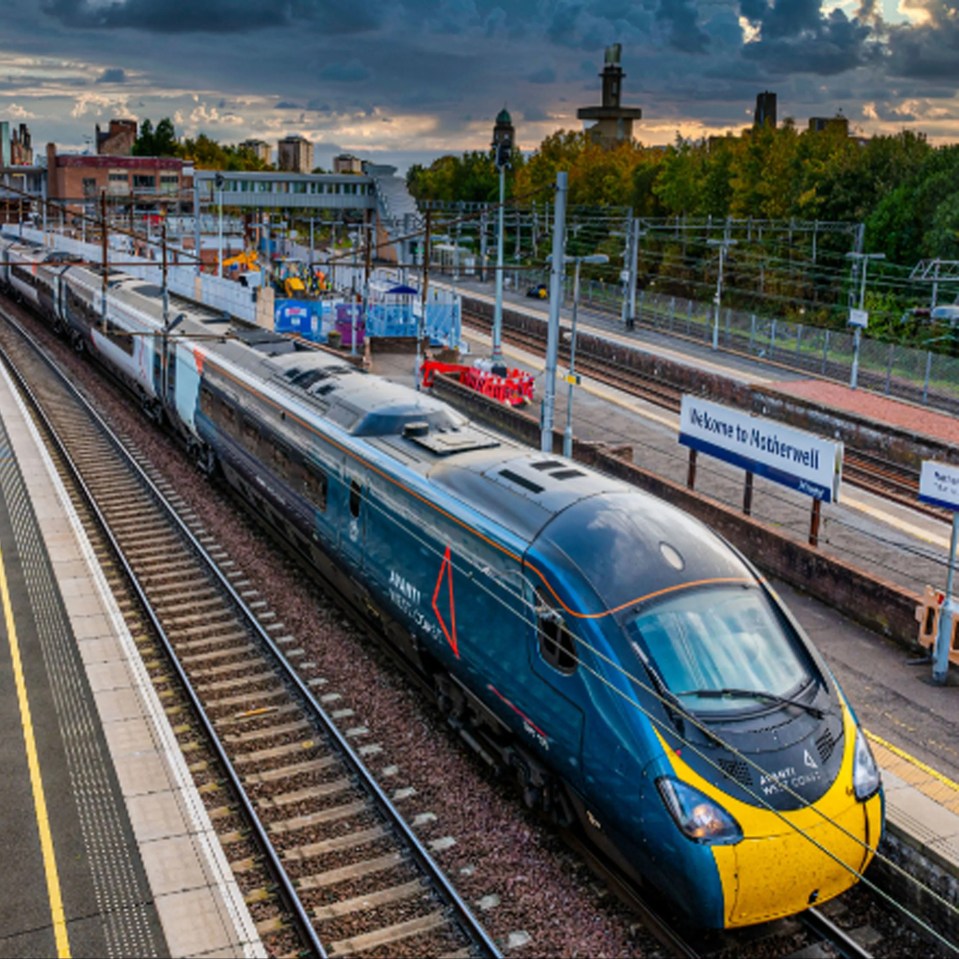
RAIL passengers commuting over the Easter period can expect major disruptions to services.
The UK’s biggest intercity line will be closed for six consecutive days early next month.
Sign up for the Travel newsletter
Thank you!
Rail passengers planning to travel on Britain’s busiest intercity line can expect disruptions to services this Easter (stock image)Credit: PA
Engineering work has been planned for the busy route, which carries over 75 million passengers a year, from Good Friday (April 3) to Wednesday, April 8.
There will be no west coast mainline services between London Euston and Milton Keynes on these dates, with services between Preston and Lancaster halted on Easter weekend (Saturday, April 4 and Sunday, April 5).
The upgrade works are part of a wider £400 million project, which will see improvements to the line’s reliability as well as repairs to tracks.
Jake Kelly, Network Rail’s regional director for the north-west and central region spoke to the Guardian about the latest upgrade.
“The four-day period at Easter gives us a valuable opportunity to complete projects that simply can’t be delivered during a normal weekend,” he said.
“This ensures we maximise the time our teams are out working on the tracks.”
While the north London neighbourhood of Willesden, north London will see new tracks laid, there will also be repairs and upgrades at Harrow and Wealdstone station.
And a historic bridge in Ledburn, Buckinghamshire, which gained international notriety in the Great Train Robbery, is also scheduled for upgrades over Easter.
Kelly added that Network Rail is working hard “to keep as much of the network open as possible while carrying out these vital upgrades”.
Avanti West Coast will run services between Preston and Carlisle via the Settle-Carlisle line over the Easter period, while Anglo-Scottish services will be diverted via Dumfries and Kilmarnock between Good Friday and Easter Monday.
Network Rail has advised passengers to check before they travel on these dates.
Over 270 other upgrade projects are planned for various rail routes over the Easter period this year.
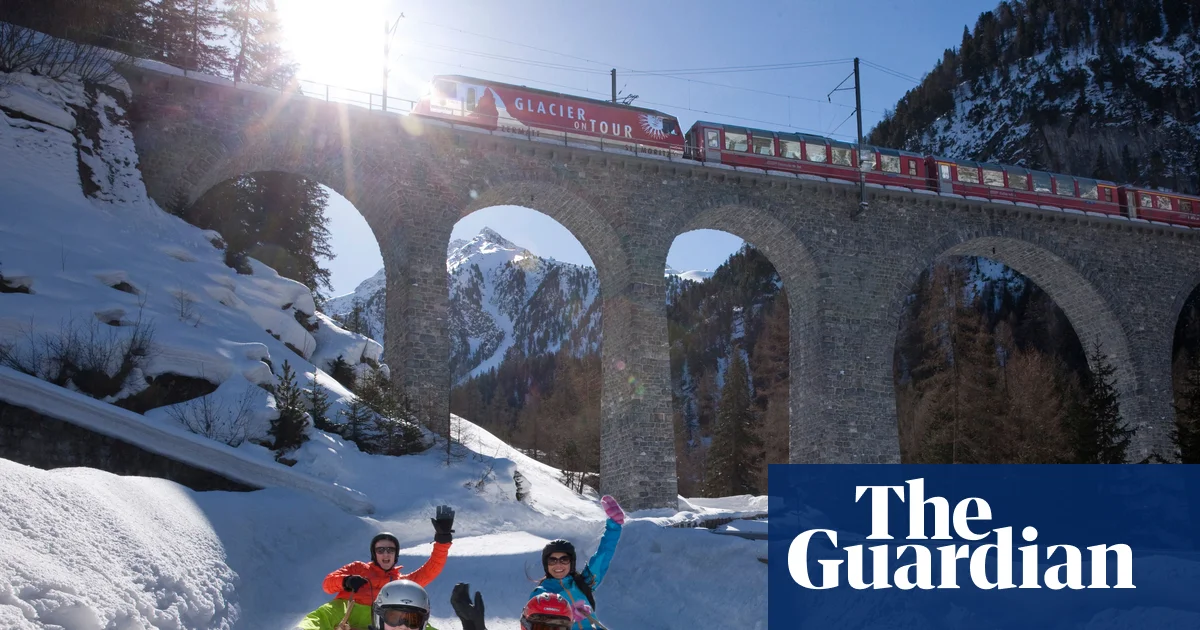
Travelling by rail in Europe gives you plenty of opportunity for ad-hoc adventure. We were returning from a ski trip in Italy and took the Bernina Express part of the way. We’d heard that if you disembark at Bergün, leave your luggage at the station and take the train back one stop to Preda village it’s possible to sledge between the two stations. So there we found ourselves renting traditional wooden sledges from Preda and walking the short distance to the start of the tobogganing run. What we thought might be a gentle run into town turned into a fast and fun-filled couple of hours as we hurtled down the tree-lined course. At times it felt like we were in the game Mario Kart and at one point a children’s birthday party overtook us, the birthday girl’s sledge trailing balloons. About 5 miles later we arrived back in Bergün, before continuing our train journey onwards. Layla Astley
Profile
Readers’ tips: send a tip for a chance to win a £200 voucher for a Coolstays break
Show
Guardian Travel readers’ tips
Every week we ask our readers for recommendations from their travels. A selection of tips will be featured online and may appear in print. To enter the latest competition visit the readers’ tips homepage
–
Interrail to Venice
The Rialto Bridge. Photograph: Marco Bottigelli/Getty Images
Interrailing as a family of five was full of special moments, but taking the night train from Vienna to Venice was the cherry on the cake. Arriving in Venice Santa Lucia around 8am, you can take the vaporetto (water bus) before the city has fully woken. We wandered quietish streets, lingered on the Rialto Bridge in relative solitude, and took our time crisscrossing canals before the hustle and bustle began. It was truly special, and completely unexpected in mid-August. We nearly skipped it – assuming it would just be too busy – but left with a precious couple of hours we’ll never forget. Sophie
A Swiss Alps adventure with the kids
The Allmendhubel playground has views of the Eiger. Photograph: Image Broker/Alamy
Exploring the Lauterbrunnen valley, Switzerland, in summer with our young children was full of surprises. Superb trains on long-distance services to Interlaken include playground family carriages. Epic alpine playgrounds, such as Allmendhubel Alpen Playground, are reached by cable cars (some gondolas have karaoke machines). At Wengen, we enjoyed playing with the marble runs and hiring a “fondue backpack” to accompany our walks. Many of the shorter walks have family-friendly activities en route, such as blowing the alpine horn or milking a model cow. There are many waymarked routes for all abilities – and all without the crowds of a coastal resort. Lucy
Teenage boys let loose in Norway
White-water rafting in Norway. Photograph: Image Professionals/Alamy
Last summer, as a family we explored Norway, starting in Oslo with saunas and fjord jumps, then visiting the Olympic Park in Lillehammer. We spent a week hiking in Jotunheimen national park, climbed Norway’s highest mountain, Galdhøpiggen (2,469m), explored a glacier, and went white-water rafting. The combination of dramatic scenery, outdoor activities and adventure made it a perfect summer holiday, especially for our teenage boys who love the outdoors. Lucy Bissell
Dutch road trip joy
Efteling theme park.
We decided to change things up from an all-inclusive summer break and went on a road trip through the Netherlands for two weeks with our two kids. After enjoying Amsterdam, we picked up a rental car and headed towards Duinrell Eurocamp, which was perfectly pitched for our kids aged nine and 12. We stayed in a cabin for four days, then drove to our next destination, Efteling theme park. I can’t tell you how much my kids enjoyed this park: mythical, magical, thrilling! Our final destination was Texel, an island just off the northern coast of the Netherlands. The kids loved the ferry. Again we stayed in a hut, which came with bikes. Lots of cycle paths, sandy beaches – a slower, more relaxing end to the holiday. Noreen
Winning tip: a waterfall walk in the Pyrenees
The Cirque du Gavarnie in the French Pyrenees. Photograph: Miguel Moya/Alamy
Our young family travelled to the Hautes-Pyrénées in France and, ignoring the offer of a donkey ride, walked for nearly 6 miles from the village of Gavarnie up to the Grande Cascade (a waterfall of 420 metres) in the Cirque du Gavarnie. It made for an easy day out in summer and was great for our five-year-old and seven-year-old, who enjoyed seeing whistling marmots, circling lammergeiers (also called bearded vultures) with their 2.5-metre wingspans, and snow bridges over streams. Spray from the waterfall provided us with a free shower at the walk’s end. Chris Henshall