Winning tip: History, buns and Italianate porticoes in Münster
In an often overlooked corner of Germany, near the Dutch border, Münster is an absolute gem. Covered porticos will convince you you’re in northern Italy, gothic churches will remind you you’re in Mitteleuropa and the buns from Zeit für Brot will insist you’re in heaven. Nature-lovers can take in the Botanical Gardens and relax by the Münstersche Aa river. Those of a historical bent can peek into the room where the Treaty of Westphalia was signed in 1648 and mull the report card of nation states in the nearly 400 years since. But really, it’s a great place just to drop-anchor and lose a few days. Jeremy
Germany’s highest railway bridge, near Düsseldorf
Photograph: Hackenberg-Photo-Cologne/Alamy
In the verdant countryside near Düsseldorf, the 129-year-old Müngsten Bridge, the country’s highest railway bridge, rises 107 metres above the River Wupper. The impressive iron and steel structure is billed as Germany’s answer to the Eiffel Tower (yes, really!) and if you’ve got a head for heights, you can don a harness and make the exhilarating climb to the highest point. You’ll be rewarded with incredible views across the valley, especially if you steel yourself (!) for the nerve-racking walk across the narrow beam that spans the top of the bridge. Eat your heart out, Sydney Harbour Bridge. Bex
Profile
Readers’ tips: send a tip for a chance to win a £200 voucher for a Coolstays break
Show
Guardian Travel readers’ tips
Every week we ask our readers for recommendations from their travels. A selection of tips will be featured online and may appear in print. To enter the latest competition visit the readers’ tips homepage
–
A wild North Sea island made for cycling
The North Sea island of Sylt. Photograph: Westend61 /Alamy
Sylt is more than a North Sea island to us. My German grandmother met my British army grandfather, and Sylt became my mother’s childhood island. It feels made for cycling, with peaceful paths winding between grassy dunes, sweeping beaches and little villages. Spend the day riding, watching the surfers and eating warm Nutella crepes by the sea, before settling into a traditional hooded Strandkorb (hooded beach chair) to listen to the waves. Bike hire costs €8-€10 per day. It is wild, windswept and magical, somewhere our family history becomes real every time we return. Fay
Tour the country for a month for €63
Photograph: Imago/Alamy
Get the Deutschlandticket! An entire month of public transport for €63 – buses, trains, trams, ferries … The only thing that isn’t included is faster long-distance trains, but you can figure out how to get from A to B using the Deutsche Bahn website, which has a special “Deutschlandticket only” filter; the need to change trains means you’ll end up discovering places you wouldn’t otherwise visit. It’s worth it just for a week, or, if you do want to travel long distances quickly, just for inner-city transport. Use the German public transport app Mopla to buy one at any time. Joseph
Cologne’s world-class cocktails bars
Cologne’s famous cathedral dominates the skyline and tops most travel itineraries. But having visited for a day on a previous trip, we returned for a city break with one thing in mind: cocktails. The mixology scene here is world-class. The jewel in the crown is Seiberts (pictured), which often and rightly features in lists of the world’s best bars, but Little Link, Woods and Ona Mor all contend and offer different vibes. While not sat at the bar, you’ll find excellent 20th-century art, street art and a lifesized Milka cow at the chocolate museum. John
On a warm autumn afternoon in Berlin, a friend and I rented classic Dutch bikes to explore the city. As the golden hour approached we discovered Tempelhofer Feld. Used as an airfield during a darker era, today it’s a vast recreational green space. Biking on the disused runway was enjoyably bizarre. Berliners and visitors alike were picnicking, kite flying, inline skating, lolling about on bales of hay, skateboarding, tightrope walking, birding … you name it. It is also an important site for rare flora and fauna and grazing animals. Sarah
Ebikes are the perfect way to explore the beauty and vastness of the Black Forest. Powering up gravel tracks that would be impossible on a push bike was so fun and a real hit with the teenager. Setting off from the astonishingly well preserved town of Gengenbach, we headed to the viewpoint at Moosturm observation tower and the Lothar Monument (pictured), where we were rewarded with a glorious 360-degree view of hills patterned with colour and wisps of cloud. On the way down it seemed churlish not to stop at the NaturfreundehausKornebene mountain hut and restaurant for possibly the best sausages of my life. A thoroughly deserved reward: ebiking counts as exercise, right? Alex
500 years of architecture in Görlitz
Photograph: Albazil/Alamy
Görlitz, near the Polish border, merited more than just the day trip I had planned from Dresden so I returned later in my holiday to explore its delights. It’s chock-a-block with charming, colourful buildings, making it beloved of German and international film-makers. Strolling through the cobbled streets of the old town is like leafing through a lavish picture book of 500 years of German architecture, from gothic through the renaissance to art nouveau – don’t miss St Peter’s Church. Eat hearty Silesian sausages at beer houses and if you feel like a swim head out by bus to Lake Berzdorf, with views of the mountains from the sandy beach – or even the middle of the lake where I ventured to. April
Take the family car around a racing circuit in Nürburg
Photograph: Xavier Bonilla/Getty Images
When my son turned 16 we drove to Munich so he could buy his first beer legally. Breaking up the journey we stopped overnight near the Nürburgring racetrack, to take the family estate car around the Nordschleife circuit. You turn up, pay €30-€35, and get in the queue. We were overtaken by everything apart from a coach full of Italian tourists and an ice cream van. Tim
A spectacle of water in Kassel
Photograph: DPA /Alamy
The unexpected highlight of our German road trip was Kassel’s extraordinary Bergpark Wilhelmshöhe, a Unesco world heritage site. On water feature days, park below Wilhelmshöhe Palace (€8.50 per car, including bus travel for up to seven), ride to the Hercules monument, then follow the water downhill on foot. The free spectacle sends 750,000 litres tumbling without pumps through baroque cascades, waterfalls and a Roman-style ruined aqueduct, culminating in a soaring 52 metre fountain. Following the rushing water from one dramatic stage to the next was an adventure, and after the 2.3km descent, your car is waiting at the bottom. Mary
‘This carriage is due for modernisation. Don’t miss the opportunity to experience 90s Germany style,”reads the sign on the door to the dining carriage. The couple inside aren’t missing theirs: they’re taking endless selfies in the clinical pink-and-turquoise carriage that looks like a hospital canteen and smells like cinnamon buns and strong filter coffee.
I’m on Snälltåget’s iconic red-shelled train, on the Swedish rail company’s new route from Malmö to Oslo – a 6.5-hour journey along Sweden’s picturesque western corridor. Until now, the journey between the two cities involved long bus rides and fragmented train transfers. This direct line is easier and cheaper, with tickets starting at £11 each way. It’s already a hit, shuttling more than 25,000 passengers since launching this summer.
I was first seduced by Scandi rail travel a decade ago on a journey from Stockholm to Gothenburg, when I was berthed in a cosy dark-wood cabin and listened to a pianist play in a dining car. This time, starting in Malmö, I will take advantage of the new route to make a series of stops along the country’s western shore.
In my view Malmö, across the Øresund Bridge from Copenhagen, is too often overlooked in favour of Stockholm. The southern port city is less polished than the capital and grittier, but its residents seem more outgoing and curious. Within an hour of arriving, I’m invited to drinks by a group of local people – a level of openness I never experienced living in Stockholm. Almost half of the population is under 35, and 187 nationalities are represented, making it a hotbed of creativity. In the centre of town, the Form/Design Center occupies a former 16th-century grain store, now a meeting point and exhibition space for design, crafts and architecture enthusiasts. Then, there are Moderna Museet and Malmö Konsthall modern art galleries.
Points of View by Tony Cragg, a public artwork in Malmö. Photograph: Danita Delimont/Alamy
At Möllevången, or Möllan, a trendy neighbourhood popular with creatives, everybody looks as if they’re at art college, or have just returned from a weekend in Berlin. My friend Rob, who has lived in Malmö for nearly a decade, guides me through Folkets Park, the “people’s park”, pointing out his favourite pizza spot, Far i Hatten, which occupies cute wooden huts. We find a table at Ava nearby for a beer on a leafy square dotted with hip restaurants and organic wine bars – it feels like Malmö’s equivalent to London Fields in Hackney. Resisting the urge to continue our purposefully staid bar crawl, we down a nightcap at Bar Bobo and call it a night.
Snälltåget operates just one direct Oslo-bound train a day, at 6.38am from Malmö Central (plans are in the works to increase this next year), so it’s an early start at a station teeming with families and backpackers with rucksacks the size of fridge-freezers. We soon pass the romanesque towers of Lund Cathedral before chugging through pancake-flat yellowing agricultural fields, then skirt Apelviken bay – Varberg’s long, sandy horseshoe beach popular for kitesurfing and surfing.
Varberg is Sweden’s equivalent of a coastal British market town. It’s got bunting, cobbled streets, intimate cafes and a weekend market with vendors peddling fresh vegetables, fruit, marmalade, leather belts and socks. It’s also a spa town, which inspired my visit. I was intrigued by its pretty, Moorish-inspired Kallbadhuset (cold bath house), set on wooden piles above the Kattegat sea, where for about £8 visitors gain access to segregated men’s and women’s saunas, both with spellbinding sea views. A plunge in the brisk water after the sauna proves the perfect antidote to a 6am start after a bottle of red wine the night before. Floating on my back, I look up to see a group of Swedish veterans sitting on a wooden bench, baring all (it’s a nude bathhouse), the building’s mustard shades completing an almost Hockney-esque scene.
The Snälltåget. Photograph: Trygve Finkelsen/Alamy
According to a sign outside Skarpe Nord – a community-run women’s bathing spot nearby – people have been nude-bathing in Varberg for more than 100 years. Walking along the promenade by a cavernous passage of blasted rocks that resembles a secret pathway from Lord of the Rings, I pass a collection of other designated naked bathing spots. But with the grey weather showing no sign of clearing, my hotel’s spa proves more inviting.
In the bowels of Hotell Gästis hides a replica of Vladimir Lenin’s favourite bathhouse. The hotel’s owner, Lasse Diding, built the spa as a homage to his idol, inspired by a visit to the original bathhouse in St Petersburg in the 1980s. This slightly eerie space is clad in more than 75,000 cobalt tiles and decorated with candlelit busts of communist leaders.
Diding’s interest in the communist movement began during the Vietnam war and never left him. The eccentric entrepreneur is responsible for Varberg’s many visible politically left-leaning monuments – a giant Palestine flag, Hotell Havanna (an ode to revolutionary Cuba) and a statue of Danuta Danielsson, who became a symbol of solidarity after hitting a marching neo-Nazi with her handbag in Växjö in 1985.
The following morning, I hopon the fast train to Gothenburg, a 39-minute ride away. After checking in at the sophisticated, French boudoir-style Hotel Pigalle, just five minutes’ walk from Central station, I wander along Kungsgatan, the city’s modern shopping artery, towards Magasingatan. The area is packed with vintage shops (Ragtime, Pop and Humana) and craft stores such as Customwood, which makes bespoke wooden furniture to order.
I grab a fika(the Swedish tradition of taking a break to drink coffee and indulge in a sweet treat)at Da Matteo, a barn turned cafe spread across three floors. The Scandi-industrial interiors are straight out of a design magazine, as bespectacled folk work away on their laptops. Scents of bread and coffee drift from the in-house bakery and coffee roastery; my bullar (a classic cardamom bun) and a latte cost just under a tenner.
Wandering around Slottsskogen park later, I remember why I wanted to move to Gothenburg after a fleeting first visit all those years ago. Sweden’s second-largest city is compact and easy-going. It has a rough-around-the-edges feel like Malmö in places, with the liveability, nature and culture of Stockholm. At its heart is the pretty old town of Haga, which has narrow cobbled streets, inviting wafts of baked goods and the sound of creaky, wooden trams chugging by. And Slottsskogen is my favourite park in Europe. Roughly the size of Hyde Park, it’s home to deer, penguins and Gotland ponies, and exactly the kind of place you can spend long hours strolling without purpose.
The Gothenburg to Oslo leg of the journey is the cinematic climax. It starts with rolling green pastures, cows grazing on a riverbank and forests thick with towering conifers beneath a blue summer sky. Then nature really starts showing off: lakes widen, trees grow greener and granite canyons appear grander with every kilometre, drawing excited kids to press their noses against the windows.
Oslo from Vettakollen viewpoint. Photograph: Sean Harrison/Alamy
Keen to see it up close, after pulling into Oslo I dump my bags at Citybox, a minimalist hotel a few minutes’ walk from the station, and head north to Sognsvann. This lake and recreational area on the outskirts of the city is the starting point for a circular walk up to Vettakollen, a popular viewpoint. After an easy, 30-minute uphill hike, I reach a rocky mound skirted by pine trees, where families are picnicking. Oslo unfurls in the distance, the urban sprawl of metal and glass stretching to the fjord. For me, this is what makes Scandinavia special: the urban and the natural worlds seamlessly colliding.
Located just north of the Centrale train station, Bolognina neighbourhood is more than just a Little Bologna. It is a completely different world from the medieval maze of palaces, churches and towers that define the city’s “Centro Storico”, which is increasingly filled with crowds of tourists as Bologna joins the big league of Italian getaway destinations.
There is an immediate visual difference as narrow cobbled lanes give way to wide, tree-lined avenues, pastel-coloured low-rise apartment blocks, spacious parks and piazzas. Bolognina sprang up at the beginning of the 20th century, initially to house families of workers from the railway, then from nearby manufacturing industries.
Today, the quarter is home to a diverse multi-ethnic population and remains a stronghold for militant leftwing politics, with the local community committed to avoiding gentrification. Tourists are certainly made welcome, and it is a delight to feel part of genuine local life.
Where to eat and drink
Trattoria di via Serra chef Tommaso Maio. Photograph: John Brunton
Eating out here makes a refreshing change from the city centre. Of course there are still spots serving traditional freshly made tagliatelle al ragù such as the atmospheric old-school trattoria La Golosità di Nonna Aurora. But you can also sample Georgian cuisine at Pane Georgiana, a sharing plate of Ethiopian and Eritrean dishes at Ristorante Africano Adal, spicy Sichuan cooking at Ba Hot Pot, or handmade tortellini and tortelloni stuffed with halal meat at the innovative Brodellini.
For vegetarians, the perfect spot is Piazza Martino, a cantina and deli owned by a nearby farm in the Bolognesi Hills that practises a “first we grow, then we eat” philosophy, transforming their organic produce into delicious aubergine parmigiana, vegan pepperoni lasagne, and courgette and potato polpette (balls).
Bolognina’s prime foodie street is Via Luigi Serra, symbolised by the fiercely independent Trattoria di Via Serra. The restaurant’s three small, rustic salons are always packed and getting a reservation isn’t easy as they don’t take bookings through social platforms and rarely answer the phone or emails. Chef Tommaso Maio and co-owner Flavio Benassi used to have a restaurant up in the hills nearby, but 13 years ago decided to come to the city, choosing Bolognina rather than the city centre for their new venture. “Our aim then, and still today, is to offer the locals here an old-fashioned neighbourhood trattoria where they can still order a comforting bowl of tortellini in capon broth, lasagne and freshly baked crescenti biscuits,” they explain.
A mural of local hero Lucio Dalla, an iconic Italian singer-songwriter. Photograph: John Brunton
If there is no free table at the Trattoria, then the street offers plenty of options, from hearty plates of cold cuts and cheeses at the deli-diner La Vecchia Bottega, cocktails, spritz and craft beers at the hip Fermento bar, or local wines at La Petite Enoteca. To finish the evening, there is often live music at the bars in Piazza Lucio Dalla, named after Bologna’s local hero, an iconic Italian singer-songwriter.
Cultural experiences
The monumental Holocaust memorial is one of the first things you see on arriving in the quarter. Photograph: Riccardo Bianchini/Alamy
Leave historic Bologna behind by walking from the central train station across the Matteotti bridge and you immediately come face to face with a striking Holocaust memorial, an austere, minimalist monument of two narrowly separated 10-metre high steel walls. Just opposite stands the massive Chiesa del Sacro Cuore di Gesù, dating back to 1912 when Bolognina was first being built. It is worth visiting just to marvel at the soaring 60-metre-high dome.
Hidden away in the backstreets in a former tram shed, La Memoria di Ustica Museum is a unique homage to a commercial flight between Bologna and Palermo that was mysteriously shot down in 1980 with no survivors. French artist Christian Boltanski has meticulously reconstructed the wreckage of the downed airliner and assembled the personal items belonging to the victims, creating an immense, intensely moving installation.
The impressive dome of Chiesa del Sacro Cuore di Gesù. Photograph: John Brunton
Checkpoint Charly is a thriving alternative art and artisan cooperative occupying a former lingerie warehouse. Workshops include ceramics, printmaking, photography, graphics and music, with a dozen cultural events presented each year. The DLF – Dopo Lavoro Ferroviario – is a sprawling park behind the station originally created in the 1920s for after-work activities for railway workers. This green lung has been saved from abandonment and now houses the laid-back all-day Kinotto Bar, the Vecchia Orsa DLF craft brewery and beer garden, a pizzeria, the Puccini concert arena and the Locomotiv Club, a live indie music venue.
Ilario di Lorenzis in his workshop with one of his hand-crafted bags. Photograph: John Brunton
Although this essentially residential neighbourhood may not be a shopping paradise, bargain hunters should plan to visit on the first Sunday of the month when the Piazza Lucio Dalla is transformed into a huge flea market. Over in the daily Mercato Albani, Ilario di Lorenzis has recently opened Intelligenza Artigianale, an atelier showcasing his funky hand-crafted bags, T-shirts and caps, while cycling fans should head for Bolognina Bike Shop, whose friendly owner, Dario Brunetto, repairs bikes and recycles vinyls, retro decor and collectible vintage cycling jerseys.
Don’t miss
A food stall in Mercato Abani. Photograph: John Brunton
Since opening in 1934, Mercato Albani has been the beating heart of Bolognina. Running down the middle of a shady tree-lined avenue, locals gather each morning for their daily shopping from bustling stalls selling Bologna’s speciality mortadella (pork salami) and prosciutto, fish, cheese and organic veggies. Then there is a complete change of personality from 5pm till around midnight when shuttered stands open up as lively cocktail and craft beer bars, the natural wine enoteca, Vineria Punk, plus casual diners serving pizza and pasta, vegan dishes and Greek cuisine. Giuseppe Agrello the owner of Bollore, a cool vermouth bar, explains that “when we were invited to open in the mercato, we insisted that during the day it should stay as it is and not become just another tourist food court. So we only begin in the evening and also organise concerts, art exhibitions and cultural events for the community.”
Where to stay
The eclectic Hotel Il Guercino. Photograph: John Brunton
Hotel Il Guercino is a delightfully quirky, family-owned hotel, extravagantly decorated with a mix of baroque and Asian influences, with a spa featuring sauna, hot tub and steam bath. Doubles from €150.
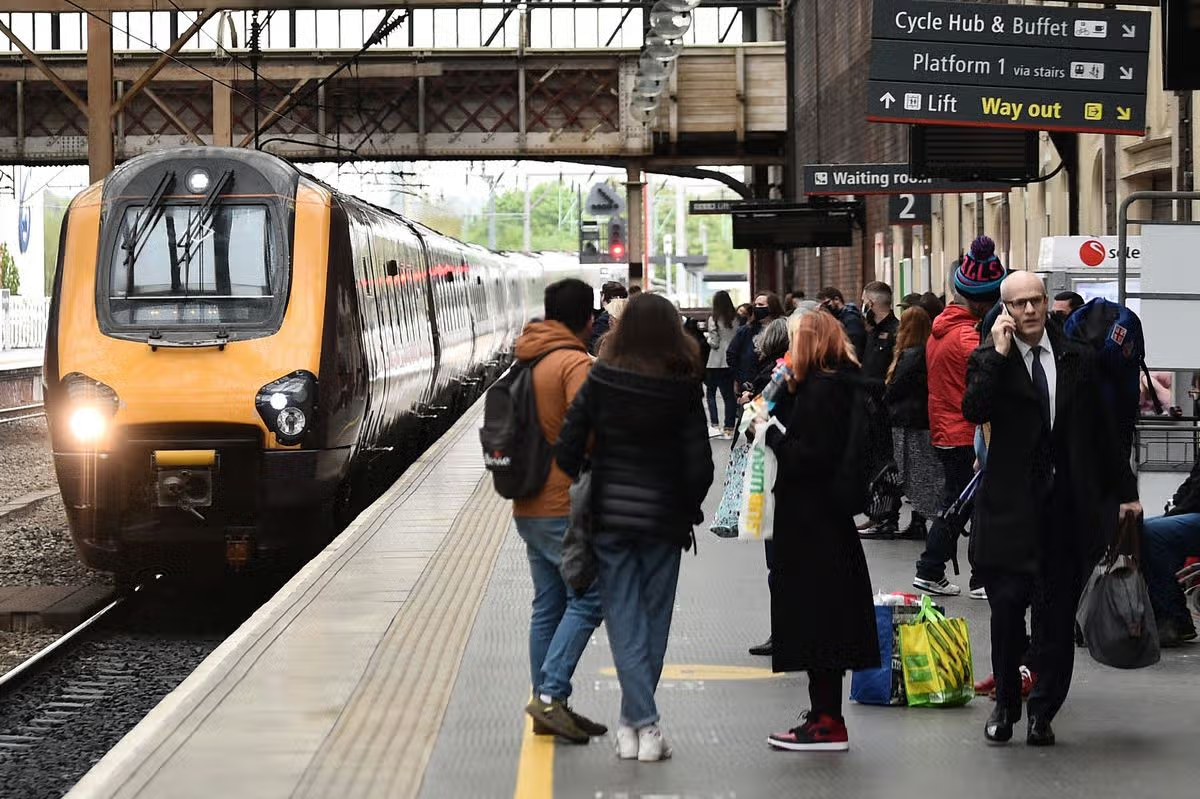
A major rule will come into force this weekend (Sunday, 20 September) for anyone travelling by train – and it’s good news, with the freedom to board other services
Train travel should be alot easier from this weekend(Image: Getty Images)
There’s nothing worse than your train being cancelled, even more so when you know the next one isn’t for another hour or two, or perhaps that was the last one of the day. Travellers risk being fined if they’re caught on board a railway line or route that differs from their original ticket, with others opting to fork out for a last-minute train ticket on another line, just so they can get home for the evening.
However, this travel dread is about to ease, as passengers will easily be able to board an alternative service with another train operator for free if their original train has been cancelled. The significant change will launch on Sunday, 20 September, in hopes of making rail travel easier, as more train operators are involved in the new scheme, as confirmed by the government.
While cross-operator ticket acceptance is already available across publicly owned train operators, from Sunday, four major railway companies will join the scheme: Avanti West Coast, Chiltern Railways, CrossCountry and Great Western Railway. This means that a total of 17 train operators will be part of the initiative from this weekend, with East Midlands Railway also set to join, although a date has yet to be confirmed.
What train companies are involved in the scheme?
c2c
Gatwick Express
Greater Anglia
Great Northern
LNER
London Northwestern Railway
Northern
Southeastern
Southern
Thameslink
South Western Railway
Transpennine Express
West Midlands Railway
CrossCountry
Great Western Railway
Avanti West Coast
Chiltern Railways
Rail Minister, Lord Hendy, said: “This is a simple, common-sense change that puts passengers first. No one should be left stranded because of a fragmented railway when their journey is disrupted. We’re fixing the railway from the ground up, making it simpler, fairer and easier to use, as we move towards Great British Railways and put public service back at the heart of our railways.”
What do I need to do?
If your original train and route are cancelled, you can simply use that same ticket to board another service with a rival railway operator included in the scheme. There’s no need to buy another ticket or to fork out for any additional fees. It’s important to note that the alternative train you’re boarding must depart two hours before or after your originally booked service. Additionally, the service must be a “direct or reasonable alternative route”.
Are there any other changes to train travel?
Elsewhere, new pay-as-you-go services will be launched across Greater Manchester, the Midlands and the south-east at more than 100 train stations by next year. This is due to a £156 million investment from the government as part of a ticketing scheme.
A new Great British Railways website and app are also in the works, in hopes of making train travel that much easier. Alex Robertson, chief executive of the independent watchdog, Transport Focus, said: “When passengers are delayed, they just want to get where they need to be, not worry about whether their ticket will be accepted on another train.
“This is a welcome change that we have long called for and should make it easier for people when services are cancelled. The key now is making sure passengers get clear information about their options whenever disruption occurs.”
Do you have a travel story to share? Email webtravel@reachplc.com
The announcement late last year that the iconic train company would start running double-decker trains across its network from 2031 was big news for those of us who love the towering carriages found in Italy, France and Spain
Eurostar’s new trains will be up and running by 2031
Eurostar’s new-look trains will feature two-storey bars, maximizing passenger capacity and Continental drinking opportunities.
The announcement late last year that the iconic train company would start running double-decker trains across its network from 2031 was big news for those of us who love the towering carriages found in Italy, France and Spain, but never in the UK. The height of UK tunnels means we’re stuck trundling around on lower-capacity, single-storey trains.
Except that is on the high-speed line from London to mainland Europe, which is perfectly capable of taking taller trains, a la France’s TGV Duplex, Switzerland’s SBB IR Dosto and Germany’s DB IC2.
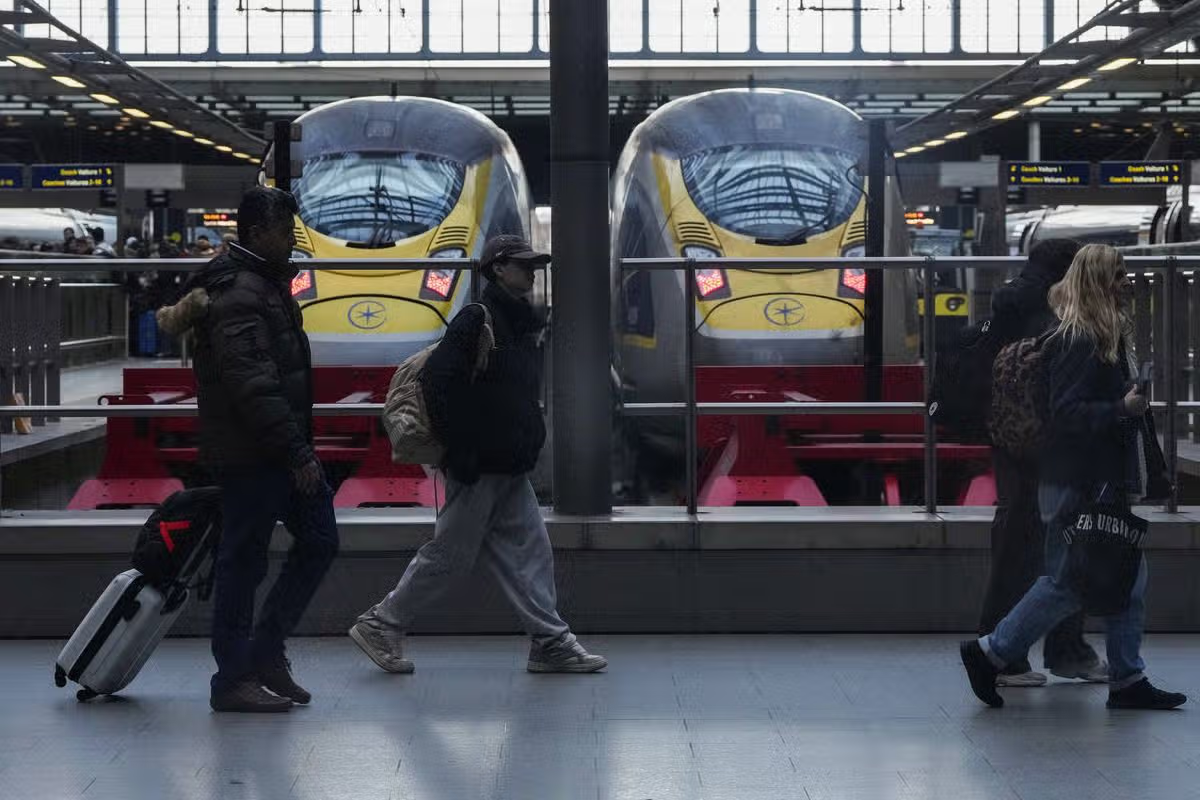
Eurostar’s double-decker announcement last year was exciting enough, but now the Belgium-headquartered firm has announced that its new Celestia trains will feature two-storey bars as its “star attraction”. A Eurostar spokesperson told Euronews Travel: “The name Celestia means ‘heavenly’, reflecting the idea behind the double-decker bar: to create a travel experience beyond the ordinary.”
Eurostar has ordered 30 Celestia trains, with the first scheduled to begin service in May 2031. As well as sporting the bar, the classic blue, grey, and yellow livery that high-speed train fans have become used to seeing whizzing through the countryside will be replaced by a new, more understated grey and green. Their capacity will also be increased.
A Eurostar spokesperson explained: “Eurostar Celestia will have a bespoke design to capture the unique, premium experience Eurostar passengers expect. It is expected that each 200-metre set will have around 540 seats. If running in 400m formation (as through the channel tunnel today), there would be around 1,080 seats per service, a 20% increase from today.
“The first trains are due to join the fleet in January 2031, with commercial services launching in May 2031. Six new trains will be operational at that time, marking the beginning of a new era for travel on board Eurostar Celestia. Once delivered, the new trains will operate alongside the current fleet of 17 e320s, bringing the total fleet to 67 trains – a 30% uplift overall versus today.”
The train company has pledged that the new trains will offer 20 to 50% energy savings compared to the current fleet.
Eurostar is upping its game ahead of the arrival of a potential competitor on the rails. In August, Virgin was granted track access by the Office of Rail and Road, having announced plans to run a rival rail service to Eurostar through the Channel Tunnel. The access will allow Virgin to run up to 20 daily return services between London and Paris, Brussels or Amsterdam, with the agreement running from 1 October 2030 to 31 December 2040.
Eurostar has held a monopoly on passenger services since the tunnel opened in 1994. Before Virgin can join it on the tracks, it needs to secure rolling stock for the services and get safety approval from UK and EU authorities. The ORR approval only covers the HS1 route from London St Pancras to the Channel Tunnel, and not on rail networks in mainland Europe.