racist

China Open: Coco Gauff condemns racist abuse on social media after incident during Sun Xinran match

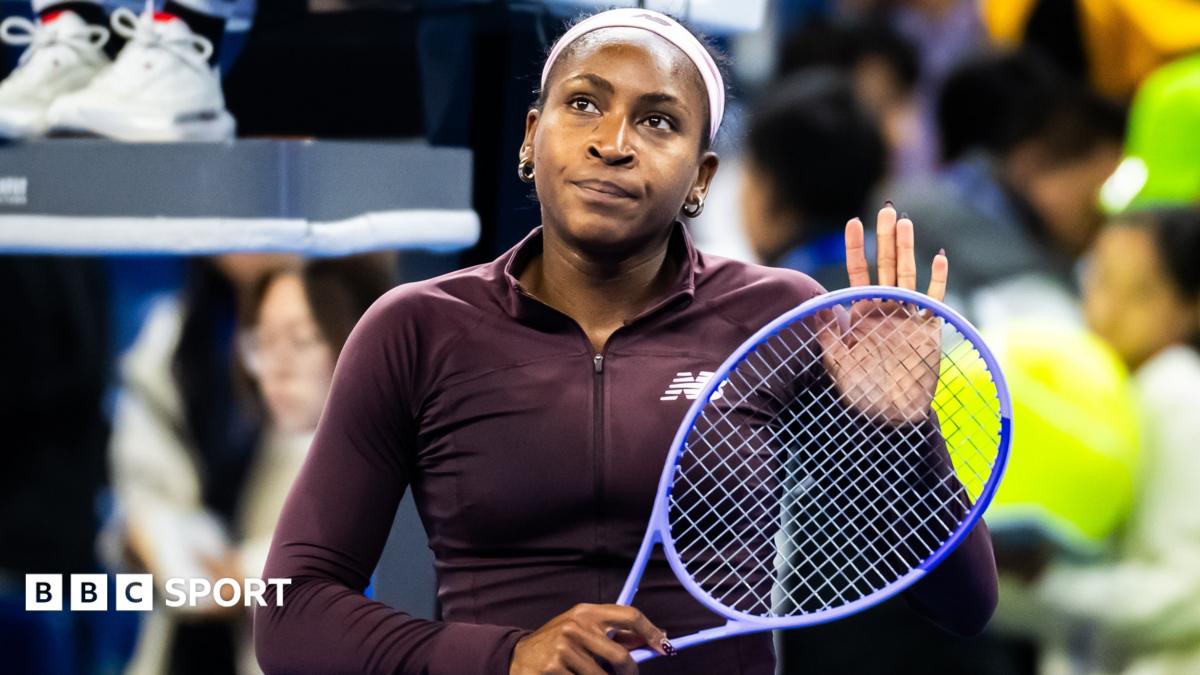
Coco Gauff says she suffered racial abuse on social media following an incident in her win over 16-year-old Sun Xinran at the China Open.

The American had been serving at 4-5 in the first set her Chinese opponent thought she had hit a winner.

However, Gauff raised her hand to halt play because of a flickering light in the side panels surrounding the court.

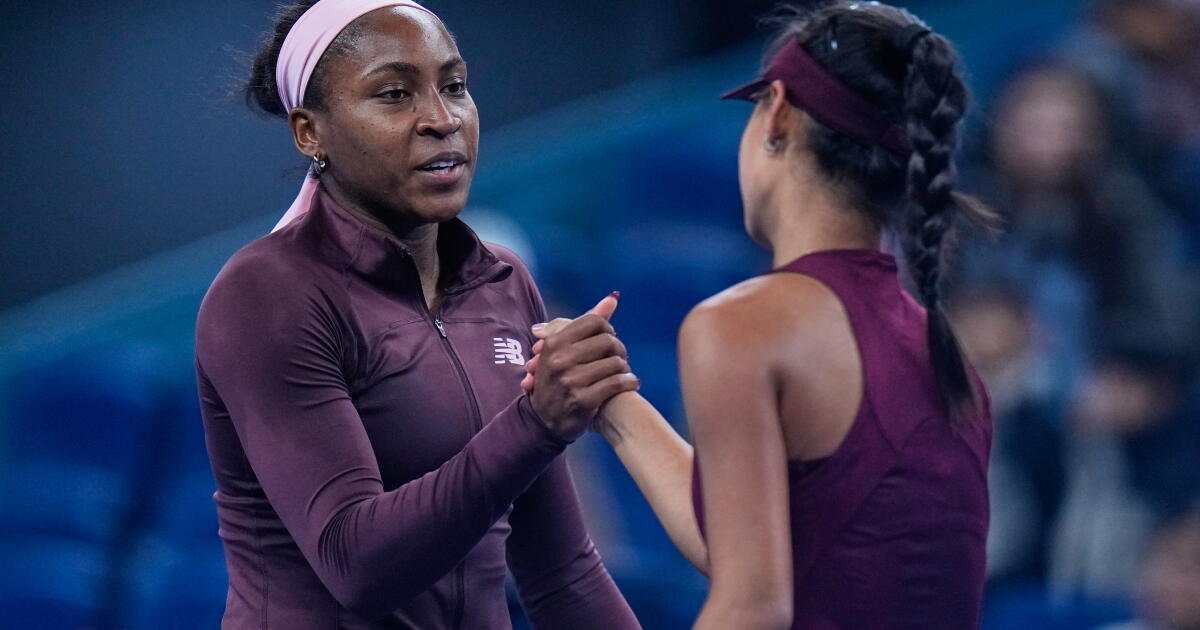
Gauff won the next three points to hold for 5-5 before she closed out the set, and then dropped just one game in the remainder of the contest as she claimed a 7-5 6-1 victory to reach the last 16 in Beijing.

The world number four gave a lengthy explanation of why she stopped the point in a post on X and said it was “an unfortunate situation” but “out of my control”, adding that Sun had understood and accepted her apology.

Gauff then responded to a reply to her original post which included racist language.

“You can dislike me or disagree about what happened without being racist,” Gauff wrote.

“The amount of racist comments/direct messages I’ve received in the last few hours is insane. Lastly, I’m not a cheater or a thief.”

Gauff is far from the first player in the women’s game to suffer social media abuse.

A report in July said female players were subjected to more than 12,000 abusive posts and messages on social media in 2025.

The WTA and World Tennis said “collective action” was required to make “significant progress” in tackling abuse.

Source link

Coco Gauff calls out racist abuse after China Open win

Coco Gauff is calling out the racist abuse she’s received online after following the rules during her latest match at the China Open.

The two-time Grand Slam champion defeated 16-year-old Sun Xinran 7-5, 6-1 on Monday to move on to the round of 16 at the Beijing event. After the match, Gauff took to social media to address the racist comments and messages she’d received for halting a point mid-rally and explained the point in question.

“[H]ey everyone, you can dislike me or disagree about what happened without being racist,” Gauff wrote in a post on X, replying to a user who directed profanity and a racist slur toward her. “[T]he amount of racist comments/dms I’ve received in the last few hours is insane. Lastly, I’m not a cheater or a thief.”

The tennis star then shared a screenshot of the lengthy explanation she posted to Instagram explaining the rules and why she stopped play when she did.

The point in question occurred during the first set, when Gauff was serving and down 4-5. She raised her hands to halt the point toward the end of a lengthy rally, just before Sun returned a volley that could have put her just two points shy of winning the first set.

But just as Sun closed into position to take her shot, the electronic advertising boards around the court flickered as it changed what was displayed.

“I saw it flicker in the beginning of the point but was not sure if that is what I actually saw,” Gauff wrote in her explanation. “[W]hen it flickered again I raised my hands before she hit her shot because this is when I was sure I saw the light flicker and it wasn’t my mind doing tricks.”

The chair umpire then conducted a video review of what happened, and ruled that the flickering ad constituted a “hindrance” outside of the control of the players, like some paper getting blown onto the court. According to the WTA rules, a point should be replayed from the beginning in such instances.

In her Instagram post, Gauff also explained that players are told that they can keep playing a point and challenge once it is over. Both Sun and Gauff would have been permitted to challenge the point regardless of who won it.

She called it an “unfortunate situation” and added that “it’s weird” that she’s “getting hate for following the rules.” Gauff also praised Sun and her talents, saying “it was an honor to share the court in front of her home crowd.”

Source link

Texas candidate’s racist post shows what’s wrong with politics

In the second week of the college football season, in a clash of titans, the University of Texas scored 21 unanswered points to surge past Ohio State in the fourth quarter and win, 24-23.

The comeback, Gov. Greg Abbott decreed, was the greatest home victory in more than 130 years of Longhorn football.

A screen grab of one celebratory moment showed a group of students ecstatic beyond belief. They were clad in the university’s signature burnt orange. Two wore cowboy hats. One flashed “Hook ‘em Horns,” the university’s proud hand signal.

To see the picture earlier this month was to witness pure, untempered joy.

But Bo French, the Republican candidate for Texas Railroad Commission, saw something different.

Most of the students were darkly complected and apparently of South Asian heritage. French posted the photo and wrote on X, “I heard UT graduation this year looked like this. I didn’t believe it. The problem is now obviously far worse than anyone imagined.”

He followed with a second post, doubling down on the racist “Great Replacement” theory.

“Like body-cams exposed criminals, social media is exposing how many Americans have been displaced by foreigners,” French spewed. “It’s everywhere and far worse than any of us could imagine.”

In many places, French’s unapologetic, unvarnished bigotry would be disqualifying. But given Texas’ strong Republican leaning he stands a better-than-even chance of being elected in November to the state Railroad Commission, which, despite its name, oversees Texas’ vast oil and gas industry.

The hateful gibe was perfectly in character. “In some ways in Texas this is old news,” said Brandon Rottinghaus, who teaches political science at the University of Houston.

Last year, as chairman of the Tarrant County GOP, French posted an online poll asking, “Who is a bigger threat to America?” The choice on offer: Muslims or Jews.

Speaking in March at a political conference, he urged President Trump to round up and deport every Muslim in the country, calling the Islamic faith subversive and a clear and present danger to America.

“The Republican Party is used to Bo French making these kinds of outrageous statements,” Rottinghaus said.

Still, the response to French’s latest acrid emission was telling, not least for what it says about reflexive partisanship and today’s political reward structure.

As you’d expect, his Democratic opponent, state Rep. Jon Rosenthal, was scathing. “I spent 25 years as an oil and gas engineer,” he wrote on social media. “Bo French spent Sunday morning sorting our student section by skin color … A man who can’t tell a Longhorn from a foreigner has no business regulating anything in TX.”

The state’s outgoing U.S. senator, Republican John Cornyn, was also quick to denounce French. “This is the Republican nominee for statewide office,” Cornyn said in a post. “Are other Republican elected officials going to condemn the intolerance and racism, or look the other way while it becomes normalized.”

For Abbott and for Ken Paxton, who beat Cornyn in an eye-gouging, rabbit-punching Republican Senate primary, the answer was, for all intents, the latter.

“That is not my message,” Abbott said in a written statement, summoning the moral clarity and political courage of a puff pastry. “We all support our college football teams. The way we win the state is the same way we win football games. We unite under the brand of Texas.”

Then, just to have it both ways, Abbott suggested “that doesn’t mean that Texas cannot also lead in having the toughest immigration laws of any state in America and freezing H1B visas at our universities.” (The overwhelming majority of those holding H1B visas are Asian nationals from India and China.)

Paxton responded by attacking his Democratic opponent, state Rep. James Talarico, for saluting Cornyn for taking a stand against French’s prejudice. “I condemn racism in all its forms,” Paxton wrote on X, adding, “Only one person in this race has a history of dividing Texans by race, and it’s James Talarico.”

A simple, straightforward condemnation shouldn’t have been hard. Lacey Hull, a Republican state representative from Houston, was among those in the GOP who showed how.

“Please delete this,” she urged French on X. “This post breaks my heart. I see college kids cheering on their football team. I see Texans.”

But Abbott, bidding for an unprecedented fourth term, is facing a tougher than expected race against Democratic state Rep. Gina Hinojosa.

Paxton, whose unsavory resume includes impeachment, indictment, petty theft and charges of adultery, has managed the rare feat of turning his race against Talarico into a nail-biter. (It’s been more than three decades since a Democrat won statewide office in Texas.)

Both need a robust GOP turnout to win in November and neither wants to risk alienating too many within the party’s xenophobic, anti-immigrant wing.

“They’re concerned about turnout,” said Mark Jones, a political scientist at Rice University. “Texas is a red state, but one thing that Republicans are concerned about is that the base may not turn out in as large a number as they need.”

Given French’s loathsome history, Abbott and others in the party establishment worked hard to keep him from winning the Republican nomination, Rice noted. But not Paxton. He headlined the kickoff to French’s campaign and has good reason to be glad he won and is now part of the GOP ticket.

His presence means that Paxton is only the second most odious figure seeking statewide office in Texas in November.

Source link

Trump refers to Black man from racist 1988 campaign ad while stumping in North Carolina

As President Trump tries to convince voters that Democrats have let crime run amok, he’s digging into the country’s political past to cite one of the most controversial campaign advertisements that relied heavily on racist tropes.

During a campaign stop Wednesday in Gastonia, N.C., to stump for Republican U.S. Senate candidate Michael Whatley, Trump resurrected a 1988 George H.W. Bush presidential campaign ad featuring Willie Horton, a Black man convicted of rape and assault after his release through a Massachusetts prison furlough program.

A grainy black-and-white prison photo of Horton was used in the ad targeting then-Massachusetts Gov. Michael Dukakis, who was ahead of Bush in the polls. On Wednesday, Trump evoked the Horton ad in an effort to convince voters Democratic former Gov. Roy Cooper, Whatley’s opponent in the Senate race, is soft on crime.

“Willie Horton was a bad guy, really bad guy,” Trump said, before comparing Dukakis’s release of Horton to the pretrial release of a Black man who faces a murder charge for last year’s killing of a white Ukrainian refugee in Charlotte, N.C.

But Cooper was not the governor when the man was released or when he was later charged with killing the refugee.

“Same thing as this, same as, same exact thing,” the president told the crowd in Gastonia.

It’s the second time Trump has invoked Willie Horton while campaigning for his party. Last month during a speech in Las Vegas, Trump called the Charlotte killing a “Willie Horton — modern day” tragedy.

“After the Willie Horton ad dropped, Bush established a lead in the polls and never looked back,” said Andra Gillespie, a political scientist at Emory University outside Atlanta. “They showed the picture, and you ascribed race onto it. It wasn’t sufficiently condemned as racism.”

A spokeswoman for the Republican National Committee, which organized the Gastonia campaign rally, defended Trump’s reference to Horton.

“Roy Cooper emptied prisons and released thousands of violent monsters onto North Carolina streets,” RNC National Press Secretary Natalie Baldassarre said in a statement to the Associated Press. “The results had deadly consequences, and every Democrat who supports abolishing or defunding the police, paroling criminals, and implementing lax bail policies will have to answer for their dangerous records in November.”

Trump paints North Carolina as a ‘dangerous state’

Wednesday’s rally cited the Aug. 22, 2025, killing of white 23-year-old Iryna Zarutska on a commuter train in Charlotte.

Decarlos Brown Jr., who is Black, faces murder and other charges in Zarutska’s stabbing, which was captured on video. Court records showed that at the time of the attack, Brown had 14 prior cases in Mecklenburg County, including serving five years for robbery with a dangerous weapon. Doctors had diagnosed him with schizophrenia.

Republicans and other influential voices in Trump’s Make America Great Again movement claimed the attack showed how Democratic elected leaders in large cities across the U.S. failed to protect residents, while some conservative commentators suggested Democrats were ignoring an unfounded “black-on-white” crime problem.

“He should have been locked up for many, many years,” Trump said Wednesday of Brown.

“Nobody used to think of North Carolina as a dangerous state, criminally dangerous,” Trump added while blaming Cooper. “It was apple pie, right? Now, it’s one of the most violent, one of the worst in the whole nation.”

According to 2024 FBI crime data, North Carolina ranked 19th for statewide violent-crime rates in a 50-state comparison.

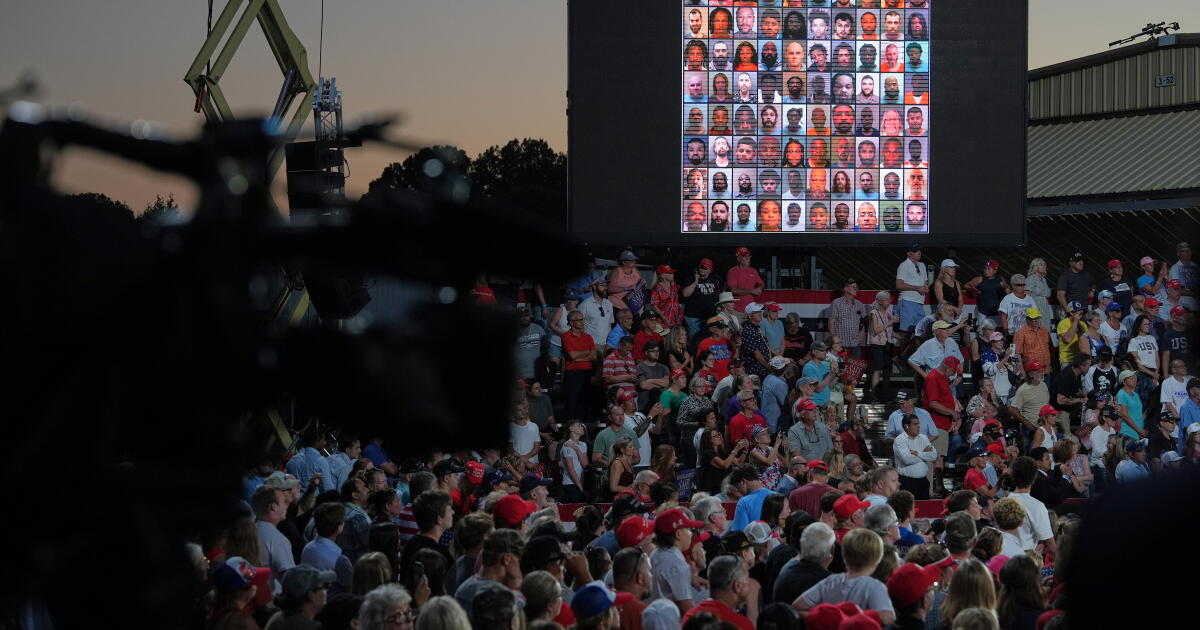
During the Gastonia rally, a mosaic of mug shots was displayed on a large screen for the crowd. Trump claimed Cooper had cut a deal with “radical activists” to release “some of the worst criminals in the nation into North Carolina.”

“He released these people. This is just a small group of them,” the president said, pointing to the mug shots that overwhelmingly featured Black people.

Although it is unclear under what circumstances the people in the mug shots were released, state corrections officials have said Brown was not released early from prison or under Cooper’s COVID-era prisoner-release settlement that Trump referenced.

Before fatally stabbing Zarutska, according to court records, Brown had been on a pretrial release over a misdemeanor offense that was ordered by a magistrate after Cooper left office.

‘Tapping into anger’

Republicans are under pressure to win over swayable voters as the November midterms approach with Democrats pushing to gain control of the House, the Senate, or both. Some political strategists say part of the ploy of adding Horton to the North Carolina Senate campaign is to rile up Trump’s base.

“He’s tapping into the anger to remind Republican voters of what he thinks their first principles are in hopes that will be successful for Republican candidates,” Gillespie said.

“He’s doing this to try and divert attention away from criticism of how he’s governing at the moment,” she added. “Democrats want to make the story of this election Trump’s low approval numbers, the war in Iran, inflation, being preoccupied with things that don’t make a whole lot of sense when there are really serious things going on in the country.”

Dewey Clayton, professor emeritus of political science at the University of Louisville, said Trump and other Republicans may be thinking that what worked before in the 2016 and 2024 elections presumably will work again in this year’s midterms.

“It was very effective,” Clayton said. “You do not necessarily have to look at it as racial, in and of itself, although [race] clearly becomes a component. In 2026, talking about ads going back in the 1980s? I’m sure he had consultants that were basically saying this is tried and true.”

The GOP may need the push in November, Gillespie warns. “I think the motivation by going back to these old strategies is there is real concern about Republican enthusiasm and you might see lower Republican turnout,” she said.

Rhetoric attempts to divert voters’ attention from rising costs

The tactic speaks to desperation by Trump and the Whatley campaign, according to Morgan Jackson, a partner with Nexus Strategies in Raleigh.

“Trump brings up Willie Horton to stoke racial division, something he’s used for the last 10 years,” said Jackson, who is chief strategist for Cooper’s campaign. “It is very clear from the president’s speech last night their only goal is to sow division and hate and lies. Michael Whatley doubles down in support of that effort.”

Jackson also said Trump and Whatley are trying to change the election’s message of “rising inflation and the cost of everything.”

“They want to use inflammatory rhetoric, hate speech and lies to sow division in a chance to win an election,” he said. “By referencing Willie Horton, they are showing their hand very clearly.”

The AP sent an email Thursday seeking comment from Whatley’s Senate campaign.

Williams writes for the Associated Press. Williams reported from Detroit. AP videojournalist Erik Verduzco in Gastonia, N.C., contributed to this report.
Source link

‘Racist’: DHS posted an AI image of a Sikh man. Backlash ensued

The Department of Homeland Security drew backlash over an AI-generated social media post featuring a Sikh man facing off against a character made to look like Optimus Prime from the movie “Transformers.” The agency later deleted the image.

Posted Wednesday to the official X account for DHS, the image created by artificial intelligence depicted the “Transformers” character opposite a bearded man wearing a bandanna over his hair. The image, made to look like a movie poster, stated, “America for Americans.”

“Get off our roads, you don’t know how to drive Mr. Singh,” it continued.

The post was denounced as “racist propaganda” and “completely unacceptable.”

Other X posts by DHS that reference Transformers remain online.

Sikh Americans and elected officials condemned the image and accused the Trump administration of using racist imagery to stigmatize Sikhs while promoting its deportation campaign.

Hasbro, which owns the franchise, issued a statement saying the posts by DHS were made “without permission and do not represent the Transformers brand or Hasbro.”

Singh, which translates to “lion,” is the most common last name for Sikh men.

DHS said the post depicted Harjinder Singh, an Indian truck driver accused of causing a fatal crash last year that left three people dead after his 18-wheeler collided with their minivan in Florida. He has pleaded not guilty to vehicular homicide charges.

In photos released by DHS, Harjinder Singh wears similar clothes as the man in the now-deleted AI image.

In an emailed statement, a Homeland Security spokesperson, who did not identify themself, called criticism of the post “nonsensical drivel.” The spokesperson did not respond to a question asking why it had removed the post.

“Harjinder Singh is an illegal alien from India who should never have been in our country,” the statement said, adding that he had been granted a commercial driver’s license by California.

In its campaign against immigrant commercial drivers, the Trump administration has repeatedly pointed out Sikh and Indian truckers, who make up about 20% of that industry’s workforce.

The department recently cited California as a problem state that allows drivers who don’t speak sufficient English to obtain licenses. It also started a tip line asking members of the public to report truck drivers they suspect of being undocumented.

The press office of California Gov. Gavin Newsom, which shared the deleted image in its own X post, called the post “disgusting” and “racist propaganda.”

Noting that the Central Valley is home to a large Sikh community, Rep. David Valadao (R-Hanford) called the post “completely unacceptable” and said he’s glad it was removed.

“No American should be targeted because of their faith or their name,” Valadao wrote on X.

The Sikh Coalition noted that the DHS post comes as the country mourns the 25th anniversary of 9/11, after which Sikhs were targeted for hate crimes.

“We remain fearless in identifying as Sikhs — even when our government portrays us as enemies,” the coalition wrote on X.


Source link