race

Quick final pit stop helps Alex Palou win Long Beach Grand Prix

For two thirds of Sunday’s Acura Long Beach Grand Prix, Alex Palou bided his time… waiting for the one break he needed.

It came in the form of a caution on the 58th lap, allowing him to overtake front-runner Felix Rosenqvist exiting pit lane and hold the lead the rest of the way, taking the checkered flag by 3.96 seconds for his third triumph in five IndyCar Series races this season and his first at Long Beach.

Right after being showered with applause and confetti at victory lane, the 29-year-old Spaniard thanked his crew, whose quick work on the last pit stop proved to be the difference.

“Everyone was coming in on that yellow and they did an incredible job,” he said. “We were either going to win it or not win right there.”

Rosenqvist settled for second and Scott Dixon, Palou’s Chip Ganassi Racing teammate, was third.

It was the 11th win over the last 22 races dating back to 2024 for the Barcelona native and the 22nd win of his career, tying him with Tony Bettenhausen and Emerson Fittipaldi. It also vaulted him to the top of the Series standings as he chases his fourth Series championship in a row and fifth overall. Palou won the opener March 1 in St. Petersburg (also a street course) and the fourth race March 29 in Alabama.

Palou led for only 32 of the 90 laps Sunday and acknowledged it would have been difficult to catch Enqvist if not for the stoppage.

“I wasn’t giving up but it would’ve been tough to get him today,” Palou admitted. “He was already three seconds ahead. I was happy with my car but I was struggling more on the soft tires than the hards so I’d say my chances were low. The feeling was great seeing all the open space coming out of pit lane because when you spend 60 laps behind a car it disturbs you. I tried to match him on soft tires but it wasn’t working.”

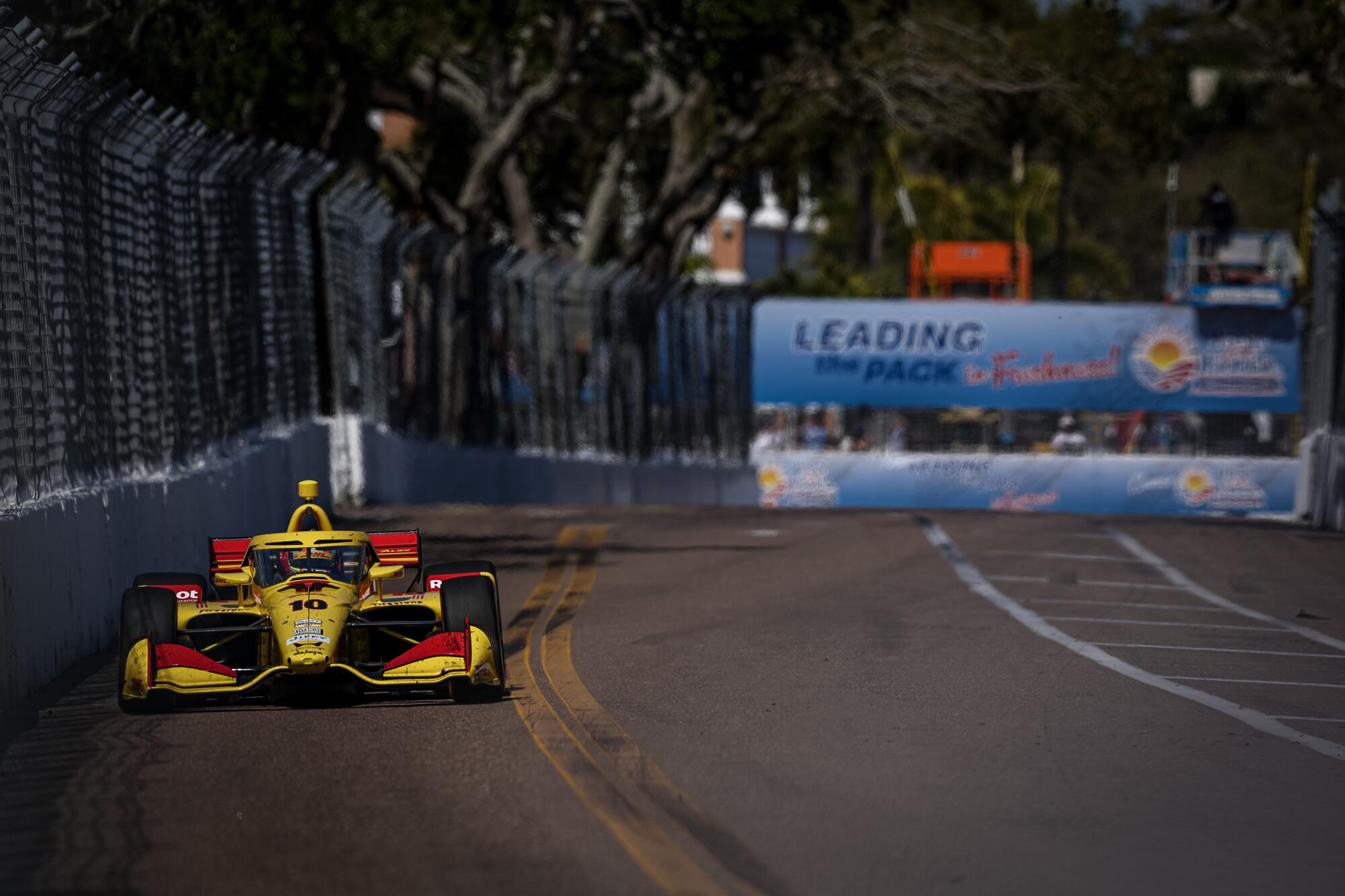
Alex Palou speeds through a curve of the track.

Alex Palou speeds through a curve of the track.

(Ronaldo Bolaños / Los Angeles Times)

In six starts at Long Beach, Palou has never finished lower than fifth.

There is little room to maneuver on the 1.968-mile course with 11 tight turns, but after starting in the third position next to defending champion Kyle Kirkwood, Palou managed to sneak past Pato O’Ward into second place heading into the first turn on Lap 2.

“Making that move on the straightaway was big because I knew it was one of our only chances to get a pass on Pato,” Palou said. “I got that good run on that last corner and he didn’t expect it.”

This year marked the 51st edition of the longest-running major street race in North America, which started in 1975 as part of the Formula 5000 Series, switched to the CART/Champ Car World Series in 1984 and joined the IndyCar Series in 2009.

The top four qualifiers started on softer, high-grip “alternate” tires to establish position while the rest of the grid started on harder, more durable “primaries” to manage degradation on the 110-degree track surface. Of the 25 starters, 24 completed the 177.12 miles.

“We were going to make the two-stop strategy work but didn’t know if it would be doable or not,” Palou added. “As soon as I saw I couldn’t get Felix it was all about patience, fuel and waiting for the right time. I owe this win to my team. Without that pit stop I probably wouldn’t be sitting here now. It only takes one mistake to go from second to seventh but they’re great under pressure.”

Cars make their way down a straightaway during Long Beach Grand Prix.

Cars make their way down a straightaway during Long Beach Grand Prix.

(Ronaldo Bolaños / Los Angeles Times)

Past winners Will Power and Josef Newgarden moved into the top two positions after Rosenqvist pitted but the Swede regained the lead when Newgarden pitted for the first time on Lap 37 and dropped back to 14th.

The first 45 laps were caution-free as Rosenqvist, Palou, Kirkwood, David Malukas and O’Ward held the top five spots. Newgarden fell out of contention when a flat spot on his left front tire dropped him back to 14th.

Rosenqvist’s three-second lead was erased when debris on the track exiting the Aquarium Fountain drew the only yellow flag all afternoon and narrowed the gap. Capitalizing on favorable pit position, Palou emerged from the lane just ahead of Rosenqvist.

After earning the pole position with a lap time of 1 minute, 7.4625 seconds in qualifying, the runner-up had mixed emotions after leading for 51 laps with no win to show for it.

“You want to win when you have an opportunity but I’m proud of today,” Rosenqvist said. “We weren’t as good as Alex on the blacks… the last pit cycle was the defining moment. We had to come around 14, he had more of an opening and his crew nailed it. That happens.”

Kirkwood, who was vying for his third win in four years, finished right where he started in fourth.

“I had a good cushion and figured even with a bad stop I’d probably stay ahead but I knew there’d probably be a yellow at some point and there it came,” Rosenqvist lamented. “Considering Alex had primary [tires] also I think we would’ve been able to hold him off. It’s definitely disappointing when you can’t wrap it up.”

Dixon, who started in the position, earned his first podium this season and the 136th of his career.

Fans watch with two laps left in the race.

Fans watch with two laps left in the race.

(Ronaldo Bolaños / Los Angeles Times)

“The race itself was a bit blah — I sat in the same position for most of it,” Dixon said. “Luckily for us we had it easy out of that last stop.”

Al Unser Jr. holds the record for most wins at Long Beach, chalking up six in eight years, including an unmatched four in a row from 1988 to 1991.

Tom Sargent is becoming a fan of street circuits after two wins this weekend. Driving the Porsche 911 Cup for GMG Racing in the Mobil Pro Class, the 22-year-old Australian led from start to finish in Race 1 of the Carrera Cup North America on Saturday. In Race 2 on Sunday morning, he again started from the pole and claimed a 0.965-second victory over Aaron Jeansonne to complete the double.

In his last bid at Long Beach three years ago, he hit the wall on Lap 2 but still finished second.

“Momentum in sports is critical and the past few weeks have been really cool for me,” Sargent said. “I didn’t do any street circuit racing before I came to the States. Maybe it fits my driving style.”
Source link

How Alex Palou found IndyCar fame — and why he rejected F1

Alex Palou’s 2025 season was the best for an IndyCar driver in nearly 20 years.

He won a career-high eight races, including the Indianapolis 500. He won his third straight series title and his fourth championship overall. He made the podium 13 times in 17 races.

Yet if you ask Palou, he’ll tell you he’s going into Saturday’s qualifying for Sunday’s Grand Prix of Long Beach needing to prove himself all over again.

“Who cares about what we did last year?” he said. “It’s cool to have four championships, but the only important year is 2026. Everybody started with zero points on the board and we need to do it all over again.”

That’s far easier said than done, although Palou is off to a fast start in his quest for a fifth championship having won two of the first four races on the IndyCar schedule to stand second in the driver standings, two points behind defending Long Beach champion Kyle Kirkwood.

“Last year was magical,” said Palou, who has captured 10 of the last 21 checkered flags, dating to 2024. “As an athlete you always want to keep on improving, but I need to be realistic and understand that to win eight races in IndyCar in the same year, it’s pretty tough to beat.

“So although I want to achieve that, we just need to take 2026 separately and just try our best, try to win as many races as possible and then obviously fight for the [Indy] 500 and the championship.”

Winning Long Beach, one of the few prizes on the IndyCar circuit that has eluded him, would be a big step in that drive for five. But that won’t be easy since passing on the tight 1.968-mile street course, with its 11 turns, is difficult. That makes track position important, putting a premium on Saturday’s qualifying and on pit stops in Sunday’s race.

“It’s always super tough to be competitive there,” Palou said of Long Beach, where he finished second last April, giving him three straight podium finishes. “One of the only bad things about street racing [is] that it’s really tough for us to overtake with how tight the tracks are and all the bumps.

“It just makes it super challenging.”

Alex Palou competes during the Grand Prix of St. Petersburg in Florida on March 1.

Alex Palou competes during the Grand Prix of St. Petersburg in Florida on March 1.

(David Jensen / Getty Images)

Not as challenging as the race Palou, the most successful Spanish driver in IndyCar history, had to run just to get into a race car.

As a boy growing up in the tiny Catalan village of Sant Antoni de Vilamajor, Palou started kart racing about the same time he started grade school. He was 15 when he finished second in the 2012 European karting championship yet he didn’t see much of a future beyond that.

Lewis Hamilton had finished in the same spot 13 years earlier, then went on to become the most successful Formula One driver in history. But England has a long-established history with open-wheel racing and Spain did not.

“He came from nothing, showing up at a carting track and then having these big dreams and aspirations. And here he is,” said Barry Wanser, the senior manager of IndyCar operations for Chip Ganassi Racing.

“I know he’s very proud he’s the first Spaniard to win the Indianapolis 500. That’s just absolutely incredible.”

But that was never the goal.

“Honestly,” Palou said, “my goal was just to have fun. When we started, I never wanted to be a race car driver for a living. I never thought that it would be possible.”

Before Palou, Fernando Alonso, a two-time F1 champion, was Spain’s most successful open-wheel driver. After Alonso is Carlos Sainz Jr., who has won four F1 races; Pedro de la Rosa, who made more than 100 F1 starts but climbed the podium just once; and Oriol Servià, who ran 79 IndyCar races in nine years but never placed higher than fourth before retiring in 2019, one year before Palou made his debut in the series.

Aside from Alonso, those drivers were good but not great, leaving the road from Spain to success in open-wheel racing a narrow one. That’s a path Palou is now widening.

“I would say that for sure it’s helping future generations that I’m here and that I had success,” he said, “just because they can know that with a normal European background you can come to the U.S. and fight for wins and championships.”

Alex Palou celebrates after winning the Grand Prix of St. Petersburg on March 1.

Alex Palou celebrates after winning the Grand Prix of St. Petersburg on March 1.

(David Jensen / Getty Images)

Wanser said what makes Palou so good is his feel for both the car and the track and his ability to communicate with his team.

“He has a very unique ability to understand what he needs the car to do to maximize performance on the tires,” said Wanser, the race strategist for Ganassi’s No. 10 car who has sometimes been called Palou’s indispensable partner. “You’re talking about road courses, street courses, for the primary [tires] — the hards and the softs — and understanding what he needs for qualifying and also what the car needs for reducing tire deg[redation] during the race.”

For now Palou, who turned 29 earlier this month, appears content with mastering those skills in IndyCar rather that following the natural progression into an F1 ride.

He said he went “all in” to win an F1 seat following his first IndyCar title in 2021, but doubts about whether he’d be given a competitive car led him to back out. Rumors linking him to Red Bull’s F1 team surfaced after last year’s Indy 500, but Palou shot those down too, saying he was staying with Ganassi.

Wanser, obviously, is happy with that decision and hopes it will pay off Sunday in Long Beach.

“Alex is very young, right?” he said. “IndyCar is so competitive that we could never, ever think about being complacent. If we start heading down that road, we will get beat and get beat often.

“It’s nonstop trying to constantly improve, knowing every weekend we show up to the racetrack it’s going to be difficult to win.”

Source link

Irish Premiership: ‘Job not done’ for Larne as Glentoran need a ‘snooker’ in title race

For a club of Glentoran’s stature, it is hard to believe they are without a title in 17 years.

It has been a long wait for their supporters, who came out in their numbers, and that is why Friday’s game felt so significant to the club.

If Larne pick up the point they need against the Swifts, Glentoran will end the season without a trophy but things could have played out so differently.

They lost the BetMcLean Cup final to bitter rivals Linfield thanks to Chris McKee’s extra-time penalty, while the Irish Cup and County Antrim Shield both slipped away in shootout defeats.

After clawing their way back into the title race after looking out of contention before Christmas, the Glens look like they will come up just short in the league. It’s all about the fine margins.

“Whether we win the league next week or not, I think we have made huge improvements as a football club but that doesn’t take away the disappointment,” Devine said.

“Second, third – it is nothing and we have to accept that. We need a snooker and if we can get a snooker next week, it is important that we uphold our side of the bargain.

“I thank the fans with all my heart. This is a massive club that deserves success.”

Devine said the lack of a clinical edge was “painful” but his players “emptied the tank”.

They will now have to rebound as they travel to the north coast with hope, rather than expectation.

“We are not out of it, we have one more game left in the current campaign to try make sure we get a win,” Devine added.

“This league has thrown up a lot of shocks and surprises and crazy results over the years and hopefully we can do our side of the bargain, but Larne are firmly in the driving seat with a home game to go.”

Source link

Pressure mounts on Peru’s election authorities amid presidential race delay | Elections News

The vote count continues to determine who will join conservative Keiko Fujimori in Peru’s presidential run-off in June.

Calls to remove the head of Peru’s electoral authority have intensified as delays and alleged irregularities clouded the presidential vote count.

As of Friday, no clear challenger has emerged to face conservative frontrunner Keiko Fujimori in the June 7 run-off.

Recommended Stories

list of 3 itemsend of list

The general election was held on Sunday, but an extension was granted to accommodate for the difficulties in ballot distribution.

Pressure has mounted against the head of Peru’s National Office of Electoral Processes (ONPE), Piero Corvetto. Complaints over errors and logistical problems during Sunday’s election have been compounded by a slow tally that has rattled investor confidence and heightened uncertainty.

According to the ONPE, leftist Roberto Sanchez and ultraconservative former Lima Mayor Rafael Lopez Aliaga remain locked in a close battle for second place, separated by about 13,000 votes as of Friday.

With 93.3 percent of the ballots counted, Sanchez held 12.0 percent of the vote and Lopez Aliaga 11.9 percent.

Fujimori, meanwhile, remained firmly in first place with 17 percent, positioning her for the run-off. Final results could take up to two weeks, according to local election-monitoring group Transparencia.

The vote counting has been further delayed by the roughly 5 percent of ballots that were identified for review due to missing information or errors in polling station records, according to ONPE data. Those ballots will be reviewed by a special electoral jury before being included in the final count, officials said.

Business leaders and lawmakers from across the political spectrum have called on Corvetto to step down, arguing that a replacement should oversee the second round.

“Errors this serious have consequences,” Jorge Zapata, head of business chamber CONFIEP, told local radio station RPP.

Earlier this week, Corvetto acknowledged that there had been some logistical delays that forced voting to be extended by a day, mainly in Lima. Those delays triggered fraud allegations, notably from Lopez Aliaga, who has called for counting to be suspended. Corvetto has denied that any irregularities took place.

Even so, Peru’s top electoral court, the National Jury of Elections, filed a criminal complaint with prosecutors against Corvetto, citing alleged offences, including violations of voting rights. Representatives for Corvetto did not immediately respond to a Reuters request for comment.

An investigation is also under way after materials from four polling stations were found on a public road in Lima on Thursday, the police said. ONPE said on the social media platform X that the votes from those stations had already been recorded for counting.

European Union election observers said this week that they found no evidence of fraud.

Source link

Championship promotion race: Who’s going up with Coventry City?

Southampton – fourth on 72pts

When Southampton lost 2-1 at home to Hull on 17 January, they were marooned in 15th, winless in seven and four points behind Leicester City.

Relegation was only six points beneath them and the play-offs a distant 10 points off, as questions were raised about whether Tonda Eckert was really the man to take the team forward.

Three months on, Saints have not lost since and their run of 12 wins and three draws has propelled them up the table, while there is an FA Cup semi-final with Manchester City at Wembley on the calendar on Saturday, 25 April.

No question, they are the in-form team and with a match to come against Ipswich at home, people are no longer wondering if they will make the play-offs but instead if they could carry all this form into that second promotion spot.

“If Southampton are to go and get second, this would be one of the greatest stories ever in the EFL,” said McAnuff.

“They were down and out. Watching them as a group, they were gone.

“Now they’re still an outsider to get in the top two because of where they’ve come from, so they can attack every single game with freedom. That makes them dangerous.”

Having risen up the league and knocked Premier League pair Fulham and Arsenal out of the cup, confidence is flowing at St Mary’s.

Head coach Eckert has been able to tinker with his side in recent games, but his foot remains firmly on the accelerator.

“It sounds boring because I keep repeating myself but we need to keep our heads down and keep working. It’s the only way,” said the German.

“This squad is in a moment and a place where you can put on whoever you want to put on and they’re ready and well able to perform. That’s a big plus for us at this part of the season.

“That’s all it comes down to at this stage of the season. When you step on the grass you need to be ready to perform.”

Source link

Manchester City vs Arsenal: Guardiola says defeat ends Premier League race | Football News

⁠Manchester City boss Pep Guardiola ⁠has called Sunday’s Premier League clash with leaders Arsenal a final, saying defeat would end his side’s title hopes before the much-anticipated showdown at the Etihad Stadium.

City trail Arsenal by six points but have a game in hand, ⁠and victory would cut the gap while ramping up the pressure as the race enters its decisive phase.

Recommended Stories

list of 4 itemsend of list

Guardiola, however, said there was little room for error, acknowledging that anything less than three points would leave his team facing too steep a climb.

“Yes, obviously,” the Spaniard added on whether he sees ⁠the game as a final. “If we lose, it is over.”

Despite the fine margins, Guardiola said City are confident, stressing that belief is crucial at this stage of the season.

“If you could buy confidence in a supermarket, we would buy it immediately. It is one of the most important aspects,” he told a news conference. (Our confidence) is good. We are ready,” he added.

“A month ago, because we dropped points in moments, I thought we would not be here. (But) we ‌saw the calendar and said, ‘OK, we play Arsenal at home for a chance. It is six points. It is not a short distance, but we have a chance to do it.’

“That is the situation we are in. It depends on our behaviour, and everything will be said on Sunday. Our fans have sold out. Everything is perfect to play a game.”

Guardiola said Nico O’Reilly, who scored twice in City’s 2-0 League Cup final win over Arsenal, is fit after he left last weekend’s game at Chelsea clutching his left hamstring.

Solid Man City form sows unease among Arsenal fans

That thrilling victory was part of a solid City run of form, including a 4-0 throttling of Liverpool in the FA Cup ⁠quarterfinals. They have not lost a league game since mid-January.

City’s results have begun to sow unease among Arsenal ⁠fans.

“If we play like the second half (of the League Cup final) during 95 minutes and they play like the second half, we are going to win. Well, maybe not, because football is unpredictable,” Guardiola said.

“I know (Arsenal manager) Mikel (Arteta). They are going to adjust something, and we have to prepare to do it. In the end, it is more simple. It ⁠is how your players individually win the me-against-you.”

Guardiola insisted City must still raise their level if they are to sustain a title push through the final weeks.

“We need to get even better,” he said. “The first half against ⁠Chelsea (a 3-0 win on Sunday) was not bad but not great. The first 30 minutes ⁠against Liverpool was not good either. The first 30 minutes against Arsenal in the final, they were better.

“You cannot pretend that these kind of teams will be 90 or 95 minutes perfect, but this one aspect is not about the future, present or past, it’s about confidence, which is an incredible aspect.”

Asked if City are underdogs, Guardiola played down the label. “I understand ‌your message, but maybe we’re not,” he said. “They have been the best so far, but we want to challenge them.

“I said today to the players, it is just a football game, and we have to approach it like a football game. If you get distracted by emotions, that is ‌how ‌you lose focus.”

Guardiola said City remain proud to still be challenging on multiple fronts, even if Sunday’s result could prove decisive.

“We will see what happens,” he said. “But it is never over until it’s over, and we are still here. I am proud to be there, still challenging them.”

Source link

Powerful California institutions backed Swalwell’s rise. Now they’re facing questions

Before it all came crashing down, Eric Swalwell appeared on the cusp of rising to the top of the Democratic field in the California governor’s race.

Swalwell had just announced a statewide tour and aired his first ad. The former prosecutor and Dublin city councilman launched his campaign on “Jimmy Kimmel Live!” in November, a comfortable setting for a politician who’d built a national reputation by appearing on cable news shows to attack President Trump.

Influential forces in Sacramento had begun coalescing behind the then-Bay Area congressman, including some consultants and advisors close to Gov. Gavin Newsom. Newsom hasn’t endorsed, but his associates’ involvement lent credibility to Swalwell.

Swalwell’s campaign quickly collapsed with the explosive allegations that he sexually assaulted a former staffer and had acted inappropriately with other women who were just beginning political careers. Swalwell denies the allegations but dropped out of the race for governor and resigned his seat in the House.

The whiplash over Swalwell’s rapid rise and fall has Democratic leaders facing questions about whether they had a blind spot about his alleged behavior.

His onetime allies in Congress are being asked whether they knew about his conduct, which has been described as an open secret on Capitol Hill. Unions who backed Swalwell have fled, and political consultants are returning donations.

A woman holds and speaks into a microphone.

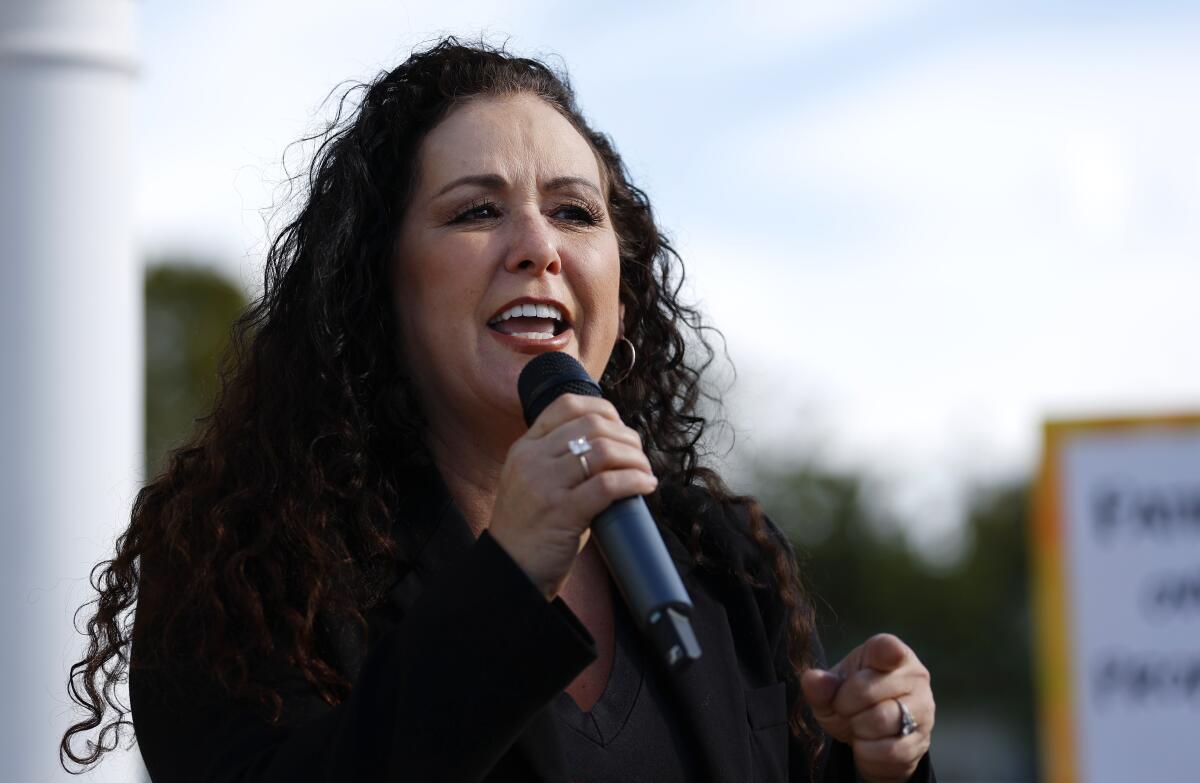
Lorena Gonzalez, president of the California Federation of Labor Unions, speaks to Kaiser Permanente nurses and healthcare workers at the Kaiser Permanente Zion Medical Center in San Diego on Jan. 26.

(K.C. Alfred / San Diego Union-Tribune via Getty Images)

California Federation of Labor Unions President Lorena Gonzalez, whose group endorsed Swalwell and three others in the race, said she confronted Swalwell more than a month ago after hearing rumors about womanizing and illicit photos.

“He’s a liar,” Gonzalez said. “He’s just a very skillful politician who did not tell the truth even when asked directly.”

Though he was little known in much of California, Swalwell, 45, was a youthful and fresh face in a field of candidates, many of them veteran politicians, when he entered the contest.

A little more than a week ago, his campaign was on an upward trajectory. His first statewide ad emphasized his hometown roots and concerns faced by Californians, including rising costs at his favorite doughnut shop in his hometown of Dublin. He rolled out new endorsements from state and federal elected officials almost daily.

Former and current advisors close to Newsom were also helping Swalwell’s campaign, multiple sources told The Times. Others associated with the governor are also helping rival candidates.

“He’s a liar. He’s just a very skillful politician who did not tell the truth, even when asked directly.”

— California Labor Federation president Lorena Gonzalez

Other Democrats in the race said the warnings about Swalwell should have been investigated more thoroughly by the powerful California politicians and interest groups that backed him.

Antonio Villaraigosa, the former mayor of Los Angeles, called him a “flash in the pan” — someone who lacked substance.

“People thought just because he was popular on TV that maybe he had been vetted,” Villaraigosa said. “He had not been vetted.”

A seated woman links toward a man seated next to her.

Gubernatorial candidates Katie Porter and Antonio Villaraigosa share a moment while participating in a candidate forum in Los Angeles on Jan. 10.

(Christina House / Los Angeles Times)

Swalwell’s entrance into the race last fall came at a time when elected officials and leaders of powerful interest groups in Sacramento were unimpressed by the field, particularly after big-name Democrats including former Vice President Kamala Harris, Sen. Alex Padilla and state Atty. Gen. Rob Bonta had passed on running.

Steven Maviglio, a Sacramento-based Democratic consultant, said there was pressure to find the “perfect candidate” for the state’s most powerful office.

“Democrats are looking for a fighter against Trump, and he fit the bill,” Maviglio said. “That was enough for most people.”

As with most members of California’s congressional delegation, Swalwell was an unfamiliar figure to many Californians living outside his Alameda County district, even though he had a lighthearted, robust presence on social media.

He’d never held statewide office when he was elected to Congress after a career that included serving on the Dublin City Council and working as a criminal prosecutor for Alameda County.

But he appeared to be close to former House Speaker Nancy Pelosi (D-San Francisco), who selected him to be an impeachment manager for the case against President Trump in 2021.

A woman speaks into microphones at a lectern.

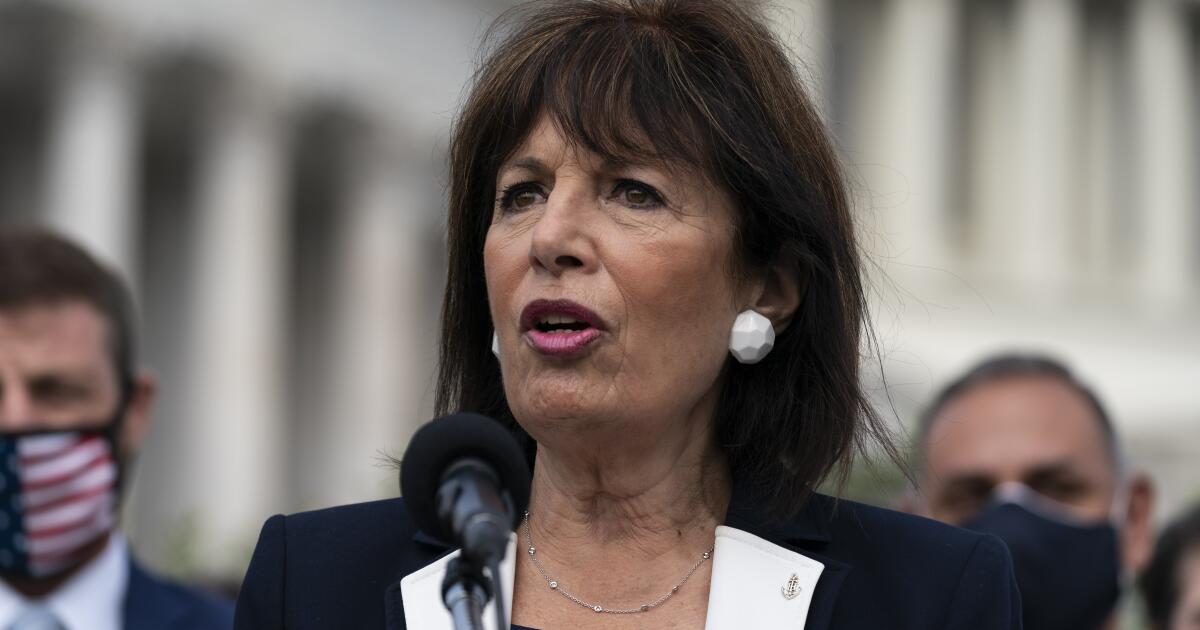
Former House Speaker Nancy Pelosi (D-Calif.) addresses the crowd at the California Democratic Party State Convention in San Francisco on Feb. 21, 2026.

(Christina House/Los Angeles Times)

At a forum in Washington this week, Rep. Pelosi rejected suggestions that Democrats looked past the accusations.

“None whatsoever,” she said, when asked what allegations she’d heard about.

Sen. Adam Schiff (D-Calif.), who previously worked alongside Swalwell on the House Judiciary Committee and endorsed him, said on MS NOW that he felt betrayed and “sickened” by the allegations.

“My paramount feeling is that I’m grateful these women came forward,” Schiff said. “I’m grateful that they did so when they did — it prevented our state from making a potentially terrible mistake.”

Sara Azari, an attorney for Swalwell, said in a statement that he denies all of the allegations of sexual misconduct and assault and will pursue “every legal remedy” against those making the claims.

“These accusations are false, fabricated and deeply offensive — a calculated and transparent political hit job designed to destroy the reputation of a man who has spent twenty years in public service,” Azari said.

A  woman standing behind a seated woman points to a picture of a woman and a man.

Attorney Lisa Bloom reaches toward a photo at a news conference where Lonna Drewes, left, is seen with former Rep. Eric Swalwell, at a news briefing in Beverly Hills on Tuesday. Drewes detailed a 2018 encounter in which she claimed Swalwell drugged and sexually assaulted her after offering professional mentorship.

(Myung J Chun/Los Angeles Times)

On Tuesday, Lonna Drewes accused Swalwell of drugging and raping her in 2018 while she worked as a model, an allegation now being investigated by the Los Angeles County Sheriff’s Department.

Azari, in an interview on NewsNation, said of Drewes’ allegation: “Two adults consenting, which is our position is, is not against the law.”

California Democratic Party Chairman Rusty Hicks declined to answer questions this week about whether the scandal hurts the party’s credibility, saying only that the allegations are “clear for voters: [Swalwell] is not a suitable choice.”

In an interview with The Times, Hicks said the party relies on delegates to vet candidates before endorsement votes at the party convention. While no gubernatorial candidate reached the necessary level of support to earn the endorsement at the February gathering, Swalwell had the largest share with 24%.

Gonzalez, of the labor federation, said she called Swalwell in the first week of March after being contacted by several people about his sexually inappropriate behavior.

She described the awkward conversation — and his immediate denials. None of it was true, he said. If there was anything sordid to find in his past, it would have been dug up by Trump and conservatives who went after him when he was helping to try and impeach the president, he said.

At the union group’s endorsement meeting, members grilled Swalwell about several issues, including his claimed residency in Livermore, his involvement with a nonunion film production, and his ability to manage his own finances.

The issue of inappropriate sexual behavior never came up at the endorsement, Gonzalez said.

“We were in a position, like so many, of trying to figure out who this guy was with all these red flags, but being told by a lot of surrogates that they were his choice — whether it’s people in Congress or folks who knew him from home,” Gonzalez said.

Other institutional players also threw in their support. The California Medical Assn. endorsed Swalwell early in February. The group represents more than 50,000 physicians in the state and spends heavily in elections.

“It definitely was a nod that that’s where the establishment should head,” Maviglio said.

California Medical Assn. spokesperson Erin Mellon said the group met with candidates and backed Swalwell “based on the information available to us” at the time.

Behind the scenes, Swalwell was courting attention. He began hanging out at the Grange, a favorite hotel bar in Sacramento for state lawmakers and lobbyists, trying to make connections, according to a source who ran into him there.

Months earlier, he sent a text to a California political consultant with questions about who should help his campaign. He asked about the well-known firm of Bearstar Strategies, according to the text exchange, which was viewed by The Times.

Swalwell texted, “would you recommend having our IE go to them?” to the consultant, a reference to an “independent expenditure,” which is an outside committee that raises money in support of candidates but is barred from coordinating with their campaigns.

Bearstar Strategies ultimately launched an independent committee to support Swalwell, which in recent weeks raised more than $7 million from political action committees for the California Medical Assn., DaVita and other medical industry groups, as well as Uber.

A standing man shakes hands with a seated man.

Antonio Villaraigosa, left, shakes hands with Tom Steyer during a gubernatorial candidate forum in Sacramento on April 14, 2026.

(Godofredo A. Vásquez / Associated Press)

Bearstar Strategies, whose members have long advised Newsom, also provides media consultants for a committee running attack advertisements against environmentalist Tom Steyer, another candidate in the race. Swalwell would have benefited from the committee’s spending.

Jim DeBoo, a consultant and Newsom’s former chief of staff, is helping on the anti-Steyer committee, according to multiple sources, which has raised $14 million from real estate agents’ and utility industry groups. DeBoo didn’t respond to a request for comment, and a representative for Bearstar declined a request for an interview.

No one has claimed that any of those consultants or individuals knew about Swalwell’s alleged behavior. Bearstar Strategies said in a statement last week that it had suspended all activity on Swalwell’s independent expenditure.

Jamie Court, president of the nonprofit Consumer Watchdog, said institutional groups backed Swalwell because they thought he could win and they wanted to maintain the status quo in Sacramento.

“They picked the wrong guy,” Court said.

Source link

Everything you need to know about the 2026 Long Beach Grand Prix

p]:text-cms-story-body-color-text clearfix”>

The high-powered Indy cars that will be racing in Sunday’s Grand Prix of Long Beach will burn about two gallons of fuel on each of their 90 trips around the tight 1.968-mile street course.

So if all 27 cars that start the race also finish it, the field will use 4,860 gallons of fuel. And that doesn’t include the fuel used in qualifying or in the other five classifications of cars that will be participating in the three days of racing in Long Beach.

That’s a lot of fuel for drivers who will end up in the same place they started, especially when seven weeks of war in the Middle East has driven the price of gasoline to record highs. However, the fuel the IndyCar series uses differs significantly from what that comes out of the pump at the gas station.

“This year marks the fourth season that IndyCar has used 100% renewable race fuel for the NTT IndyCar Series — the first motorsport series in North America to utilize this type of fuel,” an IndyCar spokesperson wrote in a statement. “Developed through a collaboration with Shell, this innovative fuel consists of a blend of second-generation ethanol derived from sugarcane waste and other biofuels mainly derived from animal waste. The use of this renewable race fuel enables a 60% reduction in life cycle greenhouse gas emissions.”

So while driving Indy cars 177 miles in a circle may seem wasteful during a gas crunch, Sunday’s race will have a negligible affect on the price and availability of fuel at service stations. The greater impact will be made by fans driving to Long Beach; last year’s three-day race weekend drew more than 200,000 people.

Source link

Jackie Speier would like her former congressional colleagues to zip up and shape up

It seems like a simple ask that male politicians don’t sexually harass or even rape women, but also, it seems like an open secret in Congress that sexual misconduct is too common.

Take Eric Swalwell, whose epic political immolation has captivated this week’s national political news, including a TMZ-obtained video of the then-congressman bleary-eyed in a bathrobe on a yacht that was literally the least-worst revelation.

For years “there were swirling rumors about Eric,” former Rep. Jackie Speier told me. Speier in 2018 thought she’d put in place tough new rules to stop sexual misconduct among her former colleagues, and the type of backroom shrugs that allowed men to prowl unchecked.

But despite her efforts, Speier, who represented a part of the Bay Area near Swalwell’s district until 2023, said the problem remains Congress itself, and the “crippling” power that elected officials have over their staffs. Don’t get her started on how that power imbalance is even worse for young lobbyists.

“I’ve always said that Congress is Hollywood for ugly people,” she said. “It’s a whole environment that becomes, I think, toxic.”

But also one that, she added, isn’t inevitable.

The 2018 change

In 2017, the #MeToo movement had swept into the public consciousness and ignited calls for change.

Armed with that outrage and the roiling fire of public opinion, Speier set out to change archaic rules that governed how sexual misconduct was handled in Congress.

“I’ll just run through what it was like,” she told me. “If you wanted to file a complaint, you had to be prepared to go through some period of counseling; to have a cooling off period; to participate in mandatory mediation; and sign an NDA, and then the taxpayers picked up the tab if there was a settlement. It was kind of jaw dropping to think that that was the policy.”

It wasn’t just policy, it was culture. Speier herself had been the victim of an assault when she was a young staffer — a senior staffer pushing her against a wall and forcibly kissing her. And like so many women, she put the episode aside and went on with her career because speaking out would have likely brought her more grief than justice.

But by 2017, she realized the public was at a “tipping point,” and, as she said then, “Congress has been a breeding ground for a hostile work environment for far too long.”

With Rep. Bradley Byrne, a Republican from Alabama, they passed the Congressional Accountability Act of 1995 Reform Act.

It did away with the weird and coercive requirement for counseling and a cooling off period and most significantly, forced sexual harassers to pay for their own settlements instead of pinning the cost on taxpayers.

But even with the new rules, some colleagues didn’t seem to get it. Speier recalled one man who, informed of possibility he would have to pay sexual harassment settlements out of his own pocket, asked if he could purchase insurance to cover those costs.

“How about you keep your zipper up?” Speier wondered.

The bigger problem

Still, Speier said she thought the law made a difference not just in how claims of misconduct were handled, but in the culture of Capitol Hill.

But, “over time it just was relaxed,” she said.

When Speier left office in 2023, Rep. George Santos (R-N.Y.) was under investigation for sexual harassment — a claim Congress deemed unfounded, but bounced Santos from its ranks for a bunch of other misconduct.

Let’s be real — Congress has never been without scandal.

But Speier said that doesn’t mean sexual abuse can’t be stopped. She just thinks the rules she put in place need to be even tougher: A zero-tolerance approach similar to what corporate America often enforces.

“I’m thinking now that the way to fix this may be something more direct and straightforward and simple, much like they do in the private sector,” she said.

“When the CEO is having an affair with a subordinate and it becomes known, he’s history. He’s relieved of his duties, and if we made it clear that if you sexually harass a staff member, or you have an affair with a staff member, you will be expelled, or you will be subject to expulsion of Congress, that will change their behavior.”

I love her enthusiasm and I support tossing out miscreant members, but I’m not sure even that will keep the zippers up. But there is always hope.

And something has to be done.

“These cases underscore the fact that these women do not feel comfortable coming forward,” she pointed out. “So we’ve got to figure out why and close that hole.

“Is it because they’re fearful that they’ll be retaliated against or that they’ll be ostracized or blackballed? I don’t know the answer, but I’m really urging my colleagues on both sides of the aisle to fix this, and part of fixing it is talking to these women who were, in fact, sexually harassed and assaulted and find out why they didn’t feel comfortable coming forward.”

That’s the real issue, and the real demand we should be making. From the Oval Office to district offices, too many elected leaders have proven they’ll use their power to obtain sex — by coercion or even force.

And too many women remain afraid to speak out because they still suffer both career and social consequences — a realistic fear that coming forward could end their own ambitions, or at least leave them battling to not be defined by the abuse.

Yes, Swalwell and others have been shamed into resigning.

But it’s past time to make sexual abuse a one-strike-you’re-out offense — for the perpetrator, not the survivor.

You’re reading the L.A. Times Politics newsletter

George Skelton and Michael Wilner cover the insights, legislation, players and politics you need to know. In your inbox Monday and Thursday mornings.

What else you should be reading

The must-read: Swalwell supporters scramble after he drops out of governor’s race. Who will benefit?
The deep dive:Rebuilding After Fires, L.A. Neighbors Join Forces and Innovate
The L.A. Times Special: In L.A. County, many homeless people enter shelters, only to end up back on the streets

Stay Golden,
Anita Chabria

Was this newsletter forwarded to you? Sign up here to get it in your inbox.

Source link

Businessman Checchi Enters Governor’s Race

Mega-millionaire businessman Al Checchi launched the biggest takeover bid of his career Tuesday, declaring his candidacy for governor by promising a less political approach to political office.

Checchi, who built a vast personal fortune plying his financial wizardry in the corporate world, styled himself as a campaign insurgent removed from the ways of Washington and Sacramento.

“My experience outside politics is precisely why I’m running,” the 49-year-old former Northwest Airlines executive told members of a Sacramento civic group, who served as extras for his announcement. “You don’t have to be a politician to succeed in government. And the truth is that for too long, politicians leading our government have failed.”

Touting his “real-world experience,” the Democrat said, “I reject the conventional politics that evades hard choices, that obscures controversial issues and seeks to offend no one except the powerless and marginal.”

He pledged to “tell the people of this state exactly where I stand and, during the months ahead, to set forth real and specific proposals for change.”

To wit, Checchi said that as governor he would cut the state bureaucracy by 10% to raise $5 billion more for education, boost the state cigarette tax by 25 cents a pack to expand health care for the uninsured, and require statewide competency testing of both students and teachers.

Further, Checchi called for expansion of the death penalty to include serial rapists and repeat child molesters, offered a ringing endorsement of affirmative action, endorsed abortion rights and promised to outline a “major” gun control proposal in the months ahead.

“As you can see, my positions aren’t cut to fit any ideological pattern,” Checchi said in his 18-minute address to about 200 members and guests of the Comstock Club, who interrupted his speech with sporadic applause. “The test for me is simple: What will meet the needs of California and move it forward, not what will satisfy the political establishment or big campaign contributors.”

Checchi’s independence comes at no small personal expense. The former airline executive (whose name is pronounced CHECK-ee) has vowed to spend as much as $30 million of his own money to finance his campaign.

His long-expected decision to enter the contest follows a months-long period of study–a sort of California 101 crash course–in which he met with scores of experts, from civic leaders to special pleaders, to learn about everything from agriculture to the impact of welfare reform.

Venturing forth from his gated Spanish-style mansion in Beverly Hills, Checchi visited about 50 cities and met with about 350 individuals as part of his tutorial. A few of the everyday people he met–including a Central Valley farmer and a San Fernando Valley man, Blinky Rodriguez, who lost a son to gang violence–were among those who attended Tuesday’s speech and were cited in Checchi’s remarks.

Such Reagan-like theatrics aside, Checchi’s lack of political sophistication has shown through more than once.

Despite his ambitions, Checchi conceded earlier this year that he failed to vote in four of the last six statewide elections, including the last governor’s race. Tuesday, chastising himself, he said he was simply too busy.

Another time, at a spring gathering of major California water officials, Checchi acknowledged that he didn’t “know anything about water.”

“Before preparing for this meeting, I thought the delta was an airline,” the former Northwest co-chairman joked.

In his speech Tuesday, Checchi predicted that he would probably make more “rookie mistakes” like that between now and the June primary. But all such humility aside, Checchi is no political naif.

Over the years he has contributed hundreds of thousands of dollars to assorted candidates and political causes, occasionally tip-toeing into the gray area that shrouds the political-finance system.

He also demonstrated his ample skill moving legislative levers when he persuaded–bludgeoned, critics say–lawmakers in Minnesota to approve hundreds of millions of dollars in tax breaks and other concessions to help rescue Northwest from bankruptcy in the early 1990s.

Raised in suburban Washington, the son of a high-level bureaucrat for the Food and Drug Administration, Checchi went to work for the Marriott Corp. straight out of college, putting his Harvard MBA to work in a series of creative and highly lucrative ventures.

In 1982, he joined the Bass Brothers investment firm and played a major role in helping save the then-struggling Disney Corp. Checchi and his family moved to California in 1985.

Four years later, he made his biggest financial play–and a financial killing–with a $3.65-billion takeover of Minneapolis-based Northwest.

After narrowly averting bankruptcy, the company thrived as the airline industry came soaring back from recession. Checchi’s relatively small investment–the Dutch airline giant KLM put up most of the cash for the deal–helped him build a fortune today estimated in excess of $550 million.

Checchi continued to lead Northwest as the airline’s co-chairman until stepping down in April to focus full time on preparing for the governor’s race.

He enters the contest as a mere asterisk in the polls and a phantom to most California voters. A random sampling of audience members before Checchi spoke showed that most people knew he was involved in the airline industry, had a lot of money and was interested in high office.

Beyond that–what airline, what position he held, what office he sought, even which party he belonged to–were a mystery.

“He seems to be successful and seems to have his own stash,” said Maxine Milner-Krugman, who knew that much about Checchi but confessed that she couldn’t properly pronounce his name.

More than a few compared him to Republican Michael Huffington, the former Santa Barbara congressman who narrowly lost the 1994 Senate race to Democrat Dianne Feinstein after spending $29 million of his fortune.

Asked later if he was concerned that voters would perceive him as another wealthy dilettante trying to buy his way into office, Checchi professed not to worry. “Most people don’t object to someone spending their own money,” he told reporters.

With Tuesday’s announcement, Checchi became the second declared Democrat for governor, joining Lt. Gov. Gray Davis, who made clear his intention to run a few months after taking office in 1995. Last week, state Sen. John Vasconcellos (D-Santa Clara) launched an exploratory effort to determine whether to mount a full-blown campaign.

Feinstein, the front-runner in the polls, is still trying to make up her mind whether to run and has said a decision may be months away. Coincidentally, one of Checchi’s major co-investors in the 1989 Northwest deal was Feinstein’s husband, financier Richard Blum, who sank $100 million into the deal–five times Checchi’s personal investment.

On the Republican side, state Atty. Gen. Dan Lungren is running unopposed for his party’s nomination. Gov. Pete Wilson, who has served two terms, is ineligible for reelection.

(BEGIN TEXT OF INFOBOX / INFOGRAPHIC)

Profile: Alfred A. Checchi

Al Checchi seeks to parlay his success in business into a desk in the California governor’s office. Checchi, 49, is no newcomer to politics, having donated almost $325,000 to various political campaigns over the years. But the 1998 race for governor will mark the first bid for elective office for the Democrat.

* Born: 6/6/48, in Boston.

* Residence: Beverly Hills

* Education: Undergraduate degree in economics and American studies from Amherst. MBA from Harvard Graduate School of Business.

* Career highlights: He rose through the ranks at the Marriott Corp., directing one of the nation’s largest real estate development businesses, then became a principal with the Texas-based Bass Bros. Enterprises. There, he worked on the firm’s acquisition of a major stake in Disney. In 1989, he and his longtime associate Gary Wilson engineered the purchase of Northwest Airlines. Checchi resigned as co-chairman of the airline last April to pursue his bid for governor. He retains a 10% stake in Northwest.

* Interests: Reading, golf

* Family: Married to attorney Kathryn Checchi, three children.

* Quote: “I reject the conventional politics that evades hard choices, that obscures controversial issues and seeks to offend no one except the powerless and the marginal.”

Source link

Leftist gains in race to presidential runoff in Peru; count continues

Roberto Sanchez, presidential candidate for the Juntos por el Peru party, speaks during a press conference in Lima, Peru, on Monday. Sanchez has moved into second place in the voting, which continues and will lead to a runoff June 7. Photo by John Reyes Mejia/EPA

April 15 (UPI) — Leftist candidate Roberto Sánchez has moved into second place in Peru’s presidential vote count, positioning himself for the runoff election as officials continue to tally ballots from the general election.

With about 90% of ballots counted, official results from Peru’s National Office of Electoral Processes show Keiko Fujimori leading with 16.9% of the vote, securing her place in the runoff. The race for second place remains extremely close.

After three days of slow vote counting, Sánchez climbed to second place with 12,05% of the vote, edging far-right candidate Rafael López Aliaga, who has 11.94%.

Ballots in Peru are processed in the order they arrive, favoring candidates with stronger support in major cities during the early stages of the count. That has kept the country in suspense, as the remaining rural vote could solidify Sánchez’s lead, La República reported.

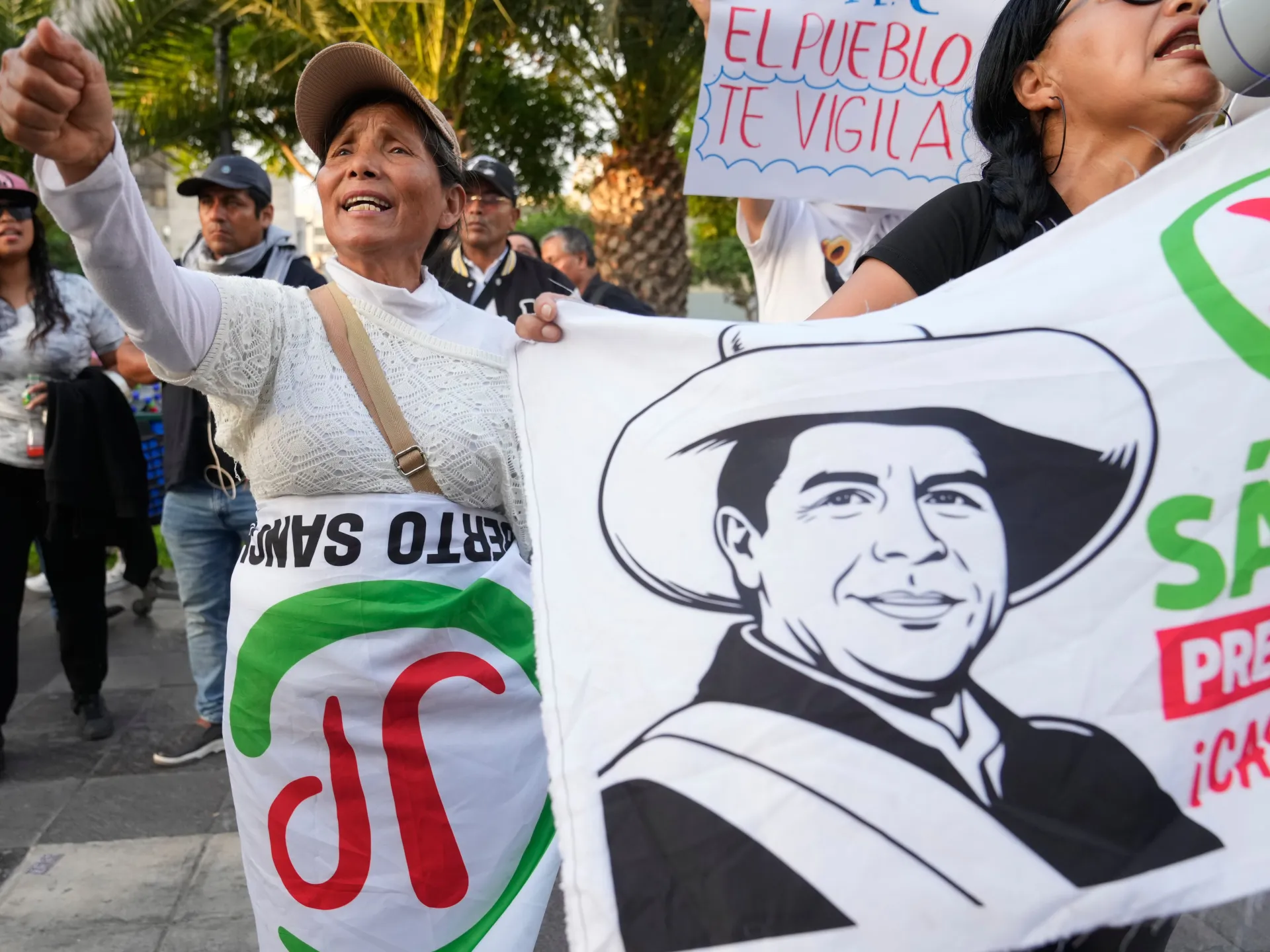
Sánchez, a congressman and head of the leftist Juntos por el Perú party, ran as the political heir to former President Pedro Castillo, under whom he served as trade minister. During the campaign, he adopted Castillo’s signature wide-brimmed hat in public appearances.

His platform calls for sweeping state reforms through a constituent assembly, Peru’s entry into the BRICS bloc and greater state control over strategic resources without expropriation, seeking support in the Andean south and rural regions.

If Sánchez advances to the June 7 runoff, the result would echo Peru’s 2021 presidential election, when Castillo, then a little-known union leader, unexpectedly reached the second round against Keiko Fujimori with 18.9% of the vote.

As Sánchez gained ground, López Aliaga called the election a “systematic fraud” and demanded the vote be annulled, alleging manipulation in the electoral authority’s data transmission system and logistical chaos, El Comercio reported.

Election observation missions Tuesday backed the integrity of the process, describing the vote as credible and transparent despite logistical problems that caused delays and forced some polling stations to remain open longer, according to France 24.

Peru’s comptroller general also warned of serious problems in the distribution of tally sheets and election materials during the 2026 vote, which reportedly delayed polling station openings in parts of the country, Latina TV reported.

Election authorities said the prolonged count is largely due to the technical complexity of processing ballots that combined five simultaneous elections: president, national senators, regional senators, lower house lawmakers and Andean Parliament representatives.

Voters were asked to choose among 35 presidential candidates and nearly 10,000 candidates for Congress and the Andean Parliament.

Facing criticism and legal complaints over the delay, the electoral office director, Piero Corvetto, defended the process and urged calm as officials continue counting ballots from Peru’s most remote rural areas.

Source link

Contributions race – Los Angeles Times

These contributions were reported by major candidates on the Oct. 7 ballot who have received at least $100,000 for their gubernatorial campaigns. Totals are for all contributions through Aug. 23 plus contributions of $1,000 or more through Thursday. Donations of $1,000 or more must be reported within 24 hours of receipt.

* The Operating Engineers Union Local 12 in Pasadena gave the maximum $21,200*. Robins, Kaplan, Miller & Ciresi, a major Minneapolis law firm with a large Century City office, donated $15,000. The Home Ownership Advancement Foundation, an arm of the California Building Industry Assn., provided $10,000. The San Francisco personal injury law firm of Harowitz & Tigerman gave $5,000. Marilyn Y. Isenberg of Sacramento and Vicki L. Nunez of South San Francisco each gave $5,000.

*–* Contributions Candidate or committee Total reported Reported in 24 hours ending Thursday Cruz Bustamante $3,571,934 $96,500 709 contributions 28 contributions

*–*

Bustamante controls three other committees:

Californians for Stability is an anti-recall fund that has raised $421,186. Another fund, the Cruz Bustamante Committee Against Prop. 54, raised $49,700 from the California State Employees’ Assn. Bustamante’s anti-Prop. 54 committee has collected more than $4.6 million, most of it transferred from a third committee, the Lt. Gov. Bustamante 2002 Committee. That is an old reelection campaign fund, which reported raising more than $911,800, excluding the transfers.

*–* Arianna Huffington $632,552 $2,000 2,334 contributions 2 contributions

*–*

* Edward F. Limato, a Los Angeles talent agent, and Russell Lungerich, an attorney in Rancho Palos Verdes, gave $1,000 apiece.

*–* Tom McClintock $1,006,402 $20,990 1,268 contributions 6 contributions

*–*

* Martha Bobbitt, president of JRBT Inc. of Rancho Santa Fe, gave $14,990. John Zsarnay of Sunnyvale contributed $3,000.

*–* Arnold $12,803,611 $499,500 Schwarzenegger 1,505 contributions 146 contributions

*–*

* The Cimarron Group, an advertising, marketing and design company in Hollywood, gave $21,200. So did venture capitalist Robert C. Kagle of Woodside, Palo Alto investor William L. Edwards and George Garrick of Atherton, CEO of Activcard Corp. Goldman Sachs investment banker Bradford C. Koenig, also of Atherton, gave $20,000. UC Regent Ward Connerly, author of Proposition 54, the Oct. 7 ballot measure that would outlaw the collection by government of certain data on race and ethnicity, gave $1,000.

Schwarzenegger also controls Arnold Schwarzenegger’s Total Recall Committee. The pro-recall group has raised more than $1.55 million.

* R. Hall Investment Properties of Tustin gave $57,600. The American Sterling Corp. in Irvine provided $50,000. The financial services firm has contributed $150,000 to the Total Recall committee. The New Majority PAC composed of moderate Orange County Republican businessmen contributed $25,000, bringing their total to $103,800.

Davis Fights the Recall

*–* Californians Against $9,114,078 $910,129 the Costly Recall 581 contributions 47 contributions of the Governor

*–*

Gov. Gray Davis controls this anti-recall committee.

* The Kings Arco Arena partnership in Sacramento provided $100,000. Casden Properties, a Beverly Hills-based real estate investment company, gave $50,000, bringing its total support to $150,000.

Davis also continues to raise money through his former reelection committee, the Gov. Gray Davis Committee, which has transferred more than $1.7 million to Californians Against the Costly Recall.

A third committee, Taxpayers Against the Governor’s Recall, has reported more than $2.7 million in contributions.

*Contributions to candidates from each outside source are limited to $21,200. There is no cap on the amount candidates can give their own campaigns, or on donations to noncandidacy committees.

Reported by Times staff writer Jeffrey L. Rabin and Times researcher Maloy Moore.

Source: Campaign reports filed with the California secretary of state.

Los Angeles Times

Source link