questions

Use of Tear Gas in Waco Raid Under Scrutiny : Siege: Experts raise safety questions. Reno says she was assured substance would not harm children.

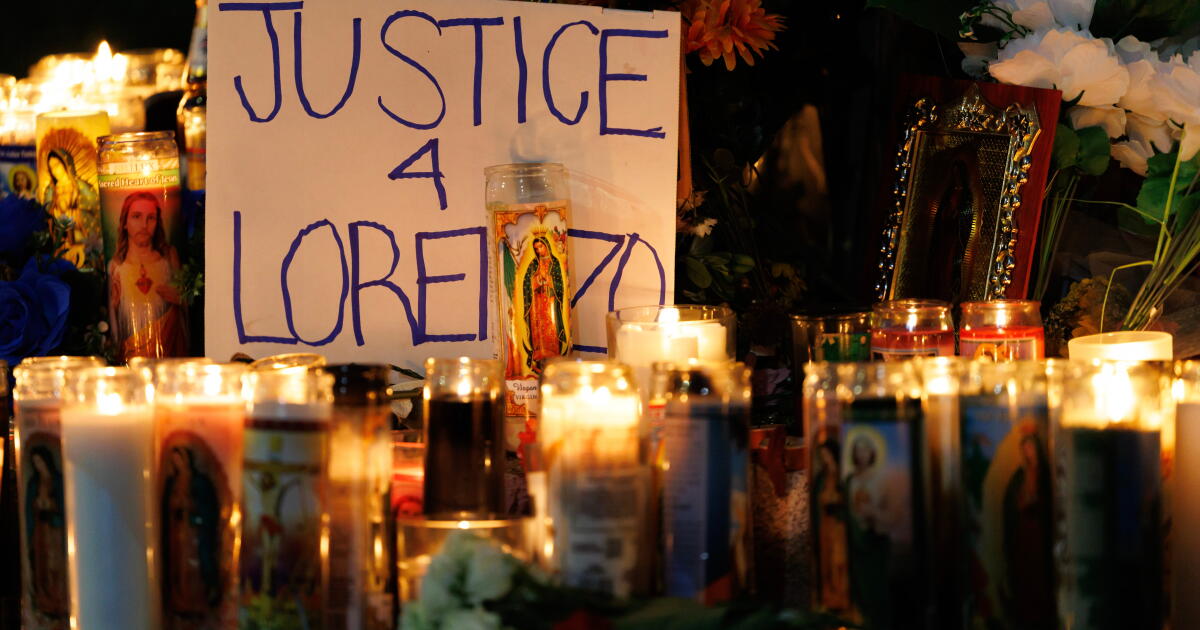
Since a government raid near Waco, Tex., turned into a fiery disaster two years ago, Atty. Gen. Janet Reno has steadfastly defended her decision to storm the besieged compound of the Branch Davidian religious sect and cited a need to rescue the 24 children inside from unsafe and worsening conditions.

But as the episode becomes the focus of renewed attention in the nation’s capital and beyond, fresh questions are centering on certain tactics used by federal agents–specifically the firing of hundreds of rounds of a military-style tear gas into the camp–that may themselves have endangered the children.

At 6:02 a.m. on April 19, 1993, following a 51-day standoff, FBI agents in military tanks advanced from siege lines around the Branch Davidian compound and fired volleys of CS gas inside the buildings to immobilize the heavily armed occupants.

The wooden structures were filled with the gas over the next six hours before the building erupted into flames, leaving more than 80 people dead, including all of the children. Before giving the order to advance, Reno said, she was assured by military experts that CS gas would cause no serious harm or permanent damage to the children of the besieged cult members.

However, it is now clear that medical literature and manufacturers’ warnings available at the time dispute that conclusion.

CS gas is potentially so hazardous when applied in confined spaces that California prison guards are cautioned against using it in the cells of unruly inmates. A Sherman Oaks company suspended sales of CS to the Israeli government in 1988 at the same time Amnesty International linked the gas to the deaths of Palestinians in homes and other buildings in the occupied territories.

Although adults can withstand CS exposure by wearing gas masks, and the Branch Davidian compound was well stocked with military equipment, no masks were available to properly fit children.

“All of those young children who breathed that gas for hours and didn’t have masks would have been in intensive care if they had survived,” said Dr. Alan A. Stone, a Harvard University professor of law and psychiatry who was chosen by the Justice Department to review its performance at Waco and only recently began to speak out. “This seems so clear and apparent that it’s hard for me to imagine how the attorney general, who I have great respect for, could have OKd this.”

The official cause of death for the children, whose bodies were badly burned in the blaze, could not be determined. Smoke inhalation was a leading possibility. However, autopsy records also show that some of the victim’s bodies contained cyanide, a chemical emitted when CS gas–and other substances such as plastic–are heated in a fire. Many of the toddlers and infants may have been overcome by the gas before they died, some experts believe.

In contrast, a government specialist in riot-control agents who requested anonymity said scientific studies indicate that it would be “almost virtually impossible” for large quantities of CS to severely injure any of the Davidians, including the 17 children under age 10. And Justice Department officials say they doubt that many, if any, Davidians breathed significant amounts of CS because of strong winds that whipped through large holes knocked in the building by tank-mounted battering rams to insert the gas.

*

Controversy surrounding the Branch Davidian incident has been fanned by the Oklahoma City bombing on April 19, the second anniversary of the Waco blaze. The leading suspect in the fatal attack on the federal building, Timothy J. McVeigh, reportedly considered the Waco siege an example of government’s intention to crush individual liberties, particularly the right to bear arms.

He is not alone. Some conservatives and civil libertarians question whether the full story of the government’s actions at Waco has come to light. At least two congressional committees plan to hold hearings into the Branch Davidian incident this summer.

Officials at the Bureau of Alcohol, Tobacco and Firearms, which conducted the initial raid at Waco to serve search warrants related to weapons violations, maintain they have learned painful lessons from their mistakes and adopted changes to ensure they are not repeated.

But the Justice Department has denied being at fault, instead blaming the loss of life solely on Branch Davidian leader David Koresh, who was suspected of stockpiling illegal weapons.

“There is much to be angry about when we talk about Waco, and the government’s conduct is not the reason,” Reno told a gathering of federal law enforcement officers this month. “David Koresh is the reason.”

Henry Ruth, a former federal prosecutor who served on the independent board that reviewed the ATF’s actions, said he found the Justice Department’s review of Waco full of glowing appraisals.

“That is appalling to me when children die in a fire and there is a precedent for it,” said Ruth, citing the five children who burned to death in 1985 when authorities dropped a bomb on the MOVE community building in West Philadelphia. “When they don’t learn their lessons, are children going to die the next time?”

The FBI was called in on Feb. 28, 1993, to resolve an exceedingly difficult situation at the Branch Davidians’ compound after the ATF raid there went awry. As ATF agents stormed the compound, armed cult members opened fire, killing four officers and five Branch Davidian members. After negotiating a cease-fire with Koresh, the FBI decided that its principal goal was gaining the release of the children inside, according to the Justice Department review of the incident.

Koresh sent out 21 children and 14 adults through March 23. But the releases stopped, and he showed no willingness to surrender.

*

As weeks passed, the uncertainty about the outcome began to mount. The FBI’s longest previous standoff had lasted four days. When the Waco encounter entered its second month, the situation became more “dangerous” because of the difficulty in maintaining security around such a large area and because the FBI’s hostage rescue team was exhausted and in need of retraining, Reno said. The FBI had no backup unit.

On the 22nd day, FBI officials recommended using tear gas to clear the compound. Three weeks later, on April 12, the attorney general was briefed on the FBI’s proposal to use CS gas.

In meetings with military experts, Reno was reassured that the plan to drive out the Branch Davidians with gradual applications of CS gas was safe. They referred to cases of children who had completely recovered within hours of being exposed to CS with no long-term effects.

Reno spent more time weighing the merits of the gassing strategy than any other issue at Waco, said Justice Department spokesman Carl Stern. Among those she consulted was Harry Salem, a toxicologist at the Army’s Chemical and Biological Defense Command.

Reno was advised that although no laboratory tests measuring the effects of CS gas on children had been performed, “anecdotal evidence was convincing” that there would be no permanent injury, according to the Justice Department report. “The military personnel made Reno feel more confident with the concept of tear gas, as opposed to the original concept in her mind of ‘gassing,’ ” the report said.

Salem declined to be interviewed. In written responses to questions submitted by The Times, Salem wrote that CS can be used indoors as long as safety ratios are not exceeded. Achieving lethal concentrations of CS, Salem wrote, would be “extremely difficult.”

After the Waco standoff’s fiery end, Stone, one of the experts retained by the Justice Department to examine what happened, specifically requested the briefing materials Salem provided to Reno. Stone said he was furnished a copy of a 1971 report by the British government that advocated CS as a crowd-control agent in open-air settings.

“There was nothing the attorney general was given in her material and nothing I was ever given which addressed the problem of CS gas in a closed space,” Stone said.

Stone issued a scathing 33-page report in November, 1993, which the Justice Department declined to make available, that criticized the decision to deploy CS gas. In the Justice Department report, Stone wrote, there is no mention during Reno’s deliberations that young children do not have the lung capacity to use gas masks.

“I find it hard to accept a deliberate plan to insert CS gas . . . in a building with so many children,” Stone wrote. “It certainly makes it more difficult to believe that the health and safety of the children was our primary concern.”

Reno has discounted Stone’s criticism, saying he lacks expertise in the field of toxicology.

The danger of applying CS in enclosed spaces is spelled out in an array of medical literature and manufacturers’ reports, including the Army’s guidelines on civil disturbances. Army Field Manual FM 19-15, published in 1985, warns that CS “is not to be used in buildings, near hospitals or in areas where lingering contamination could cause problems.”

Kelly Donahue, spokeswoman for Federal Laboratories Inc., which produces CS gas, said the chemical is designed for use in a large, open area. “If you were to shoot too much in a building or enclosed area, you could suffocate individuals.”

*

CS takes its name from two scientists, B.B. Corson and R.W. Stoughton, who invented it in 1928. The chemical, ortho-chlorobenzal malononitrile, is considered a “super tear gas” because it works instantly, causing burning eyes, coughing, breathing difficulty, stinging skin and vomiting. Though it is commonly referred to as a tear gas, CS is actually a white crystal that looks like talcum powder. In 1959, the Army adopted CS as its standard riot-control agent, and the chemical was used extensively in the Vietnam War.

The widespread use of CS by South Korea on hundreds of thousands of civilians in 1987 was researched by the Physicians for Human Rights group. After discovering that civilians suffered serious acute illnesses, sometimes with permanent injury, the group called for banning the use of CS on humans.

“Exposure to high concentrations of tear gas in small, enclosed spaces for 10 minutes is potentially lethal, particularly to infants and children. . . ,” the organization concluded.

High levels of CS exposure have led to heart failure and death in adults, according to a 1989 report in the Journal of the American Medical Assn. The principal author of the study, Dr. Howard Hu of Harvard University Medical School, said he would have strongly recommended against firing CS into the Branch Davidian compound if there was any chance the occupants would remain inside.

*

In the days leading up to the assault, FBI officials told the attorney general they planned to introduce the CS gradually over two or three days. They hoped to force the Davidians out the front door by using gas at opposite ends of the compound.

But the tear-gas raid on April 19 was anything but gradual.

Within minutes of the initial delivery of two bottles of CS, the Davidians fired automatic weapons at the military armored vehicle, according to the Justice Department report. Two M-60 tanks and four Bradley fighting vehicles responded by launching an all-out assault on all areas of the building. Under the plan approved by Reno, the FBI was authorized to escalate the gassing operation if the tanks encountered resistance.

By 6:31 a.m., half an hour after the mission began, the entire building had been filled with CS. The rest of the morning, the FBI continued to deliver gas volleys through all openings of the residential structure to increase the pressure on the occupants.

The attack was so rapid that the tanks quickly exhausted the supply of tear-gas canisters that was to last for several days. At 7:45 a.m., senior FBI officials requested additional rounds of CS from field offices around the country. By the time the final gas volleys were fired at 11:40 a.m., the Bradley tanks had fired at least 300 rounds at the building and the M-60 combat vehicles had made six gas injections.

*

Clive Doyle was inside the chapel when an M-60 tank burst through the front door spraying CS and as additional so-called ferret rounds from the Bradley vehicles landed through the windows. While most Davidians in the chapel had gas masks, Doyle said, they only worked for about half an hour before the filters started to fail. He said there were screams as the gas burned the skin of some people and left others gasping.

“The ferret rounds were almost like rockets,” said Doyle, 54, who lived at the compound off and on for nearly three decades and was acquitted of all charges at the Branch Davidian trial last year.

“They crashed through windows, came whistling past your head and embedded themselves in the wall,” he said. “You could hear them hissing once they broke open. We were praying to God that somehow we would be delivered.”

Doyle said there was “no doubt” the gas poured into an aboveground concrete bunker where the women and children had retreated. The 20-by-21-foot bunker, which had been used as a locked vault and food cooler, was waist-deep in stored ammunition.

“The children had no protection from [the gas] being sprayed because there were no windows or major holes,” Doyle said. “I can imagine it was agonizing for them without gas masks and being in a cul-de-sac part of the building with no wind.”

FBI officials offered a contrasting view. They say that any suggestion that CS could have worked its way through rooms into the bunker is highly improbable.

“They probably would not have had to don gas masks or shed one tear from the CS that would have entered that bunker,” said the government specialist on tear gas.

The charred remains of children, including at least 10 who were younger than 3, were found in the bunker along with 13 women, seven men and a fetus. Coroner’s investigators determined that mothers put wet blankets around the children and held them in their arms before they died.

Given the large quantities of CS pumped into the building, it would have been very difficult for children to have walked out to safety, as envisioned by the FBI plan, some experts say.

“The kids would never have made it,” said George F. Uhlig, a retired Air Force lieutenant colonel and professor of chemistry at the College of Eastern Utah who has researched the use of CS at Waco. “Eventually you pump in enough gas and you exclude breathing.”

An arson investigation team compiled by the Texas State Rangers found that the ensuing fire that engulfed the compound was deliberately set by one or more people inside the building. The team concluded that the fire was not caused or spread by any chemicals used in the gassing operation.

It is unclear how many Davidians inhaled the CS gas, according to the Justice Department report. The passage of at least an hour between the last gas attacks and the end of the fire would have allowed evidence of the gas to dissipate in the bodies.

“It is impossible to predict what role CS played in this case,” said Dr. Nizam Peerwani, chief medical examiner of Tarrant County, Tex., whose office performed the toxicological tests on the bodies.

While the criticism has mounted, the Justice Department has held firm that the use of the CS was appropriate. Within the past two weeks, Reno went back to Salem to ask him about the safety of CS gas, according to Justice Department spokesman Stern.

“He hasn’t changed his thinking at all,” Stern said.

Times staff writer Ronald J. Ostrow contributed to this story.

Source link

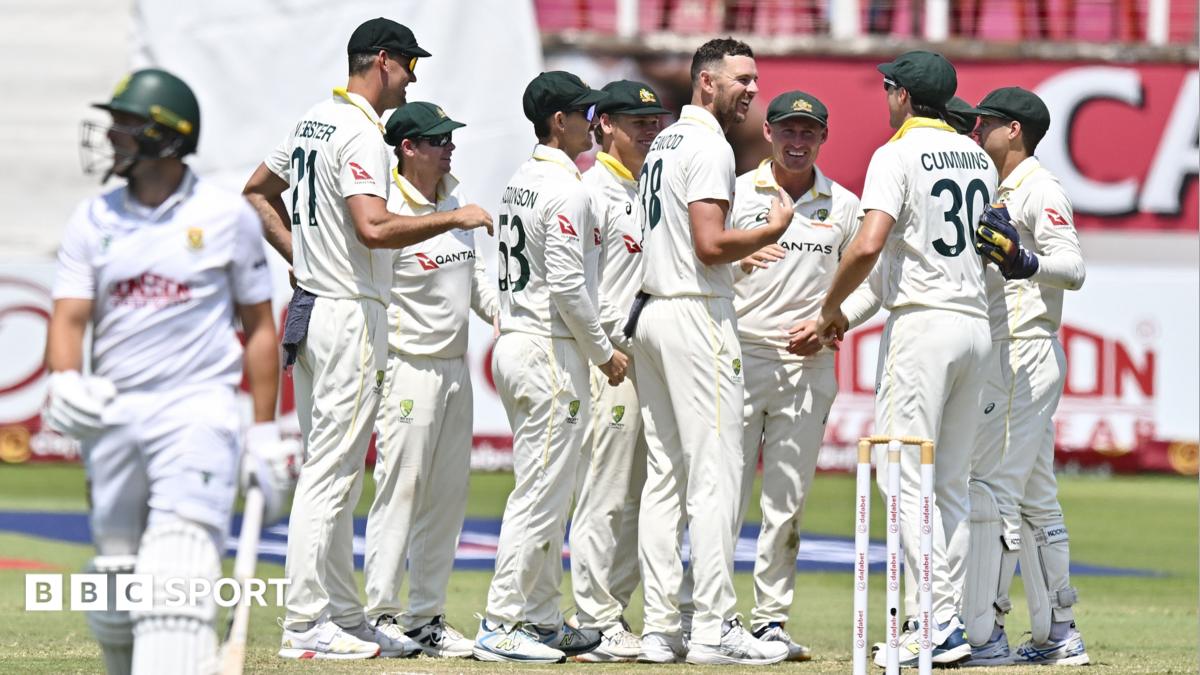
Newcastle: More questions than answers as Eddie Howe’s men yet to catch fire this season

There have certainly been glimpses of what this team could be in recent weeks.

There was a devastating first-half display against Chelsea, a spirited hour away to Paris St-Germain and a fine opening half an hour or so at Anfield.

But games are not won in snatches.

It has been a frustration of the coaching staff that they have lacked the training time during an unrelenting run of fixtures to really work on things and piece it all together like they have during previous sticky spells.

Instead the players have come to rely on meeting rooms, analysis sessions and walk-throughs.

This is the reality of life at clubs who aspire to fight on multiple fronts, of course, but competing in four competitions was an unprecedented feat for Newcastle going into February.

The relentless nature of the schedule has had a knock-on effect on the squad – Bruno Guimaraes, Joelinton, Tino Livramento and Fabian Schar are all currently sidelined, while Anthony Gordon hobbled off with a hamstring issue on Wednesday night.

It has also had an impact on the adaptation of Newcastle‘s summer signings who, aside from defender Malick Thiaw, are still finding their feet at the club.

Thiaw, Jacob Ramsey, Nick Woltemade and Yoane Wissa all joined in the final fortnight or so of a turbulent window, in which the club operated without a sporting director and missed out on a host of top targets.

Newcastle, remarkably, are still searching for a settled combination in the final third despite spending £179m on forwards.

Elanga enjoyed a lively second-half cameo at the Etihad, but Woltemade was substituted at half-time – having failed to score since December – while the rusty Wissa missed a host of good chances in both legs.

It leaves Newcastle with more questions than answers as they embark on a crunch run of fixtures.

“Where does that leave our season?” Howe asked. “We’re still fighting on several fronts.

“The games are coming thick and fast. There’s no let-up for us. We need to get back to winning ways as quickly as possible. It’s the only thing that gives you new energy.”

Source link

Our £9.50 Holidays expert answers YOUR questions

WHETHER you’re wondering which park to pick or you’ve already got yours booked, Tracy Kennedy is helping Sun readers make the most of their £9.50 holiday.

Tracy Kennedy, a Hols from 9.50 expert who has more than a quarter of a million followers online, has long been helping Sun holidaymakers plan their getaways.

Tracy Kennedy is our £9.50 Hols Agony Aunt, and is answering more Sun reader questionsCredit: Paul Tonge

If you fancy asking Tracy something else about the Sun’s Hols from £9.50, she’ll be answering your questions in her new agony aunt column in Sun Club.

One top question each week will be rewarded with a £100 Amazon voucher – use the form further down to send her your question.

Having stayed in holiday parks across the UK from the Isle of Wight to Bognor Regis, Tracy has experience staying in a range of locations.

Along the way she’s picked up some of the best tips and tricks for making the most of your break – and now she’s here to answer your questions.

Read more on £9.50 holidays

PITCH IN

We reveal the most popular £9.50 Holiday Parks last year as booking opens for 2026


TAKE FIVE

Our top picks for ‘fun under £5’ across all £9.50 Holiday destinations in the UK

From how to plan a romantic getaway for couples, to how to find a quiet site to avoid the crowds, our £9.50 Hols Agony Aunt has got you covered.

This week, Sun reader Paula Cubitt has been awarded best question of the week – which means she’s been selected to win a £100 Amazon voucher. Congratulations, Paula!

If I am unable to go on the holiday after booking, can I alter the date or venue? How do I do it?

Denise Houghton

Once you’ve had your confirmation through, speak to your chosen holiday site.

Most read in Best of British

The £9.50 holidays website tells you to speak directly to the parks themselves.

They’re the best ones to tell you. Don’t do anything until you’ve spoken to them!

A lot of the parks are happy to change, but sometimes there’ll be a £20 admin fee or so to make amendments.

Some have rules that you can’t change dates, but some parks will change it for you. So it’s always worth asking. But they don’t give refunds.

How can I make sure I get disabled friendly caravans or chalets?

Paula Cubitt

If you need certain accommodation, use the contact form straight after you’ve booked.

You can fill it in to request the right kind of space. Make sure to contact them straight away, because there’s only so many at each resort.

It says more on the £9.50 Holidays website about how to speak to them once you’ve booked your holiday.

Tracy recommends going for a break in Italy, with resorts like Bella Italia available with Hols from £9.50Credit: Bella Italia Lake Garda

Where is ideal for a romantic getaway for couples?

Adam Meacham

For couples, I suggest maybe going somewhere abroad on a European holiday.

Somewhere in Italy, as there’s quite a few Italian sites. Because Italy is such a romantic country!

If you’re wanting to go away in the UK, it depends on how far you’re willing to travel and where you’re based.

But if you can, I’d say to go up to Scotland for one of the beautiful sites up there – plenty of the Scottish sites welcoming to dogs too.

Can an older couple enjoy a £9.50 holiday, or are they for families?

Tracey Wolverson

There’s lots of things to do for couples and older couples.

Check your preferred park on the website to see what they offer. You can always go for a drink, have a meal, play bingo or go swimming.

Walks along the beach are nice too, or going out to explore the little villages nearby.

For couples looking for lots of things to do, I’d recommend Billing Aquadrome in Northampton.

There’s loads of adults and kids stuff. Lakes and streams to walk around, a lovely bar. It’s absolutely amazing.

It’s also only a 10-minute taxi ride from the closest train station.

HOW TO BOOK HOLS FROM 9.50 WITH SUN CLUB

Join Sun Club at thesun.co.uk/club for £1.99 a month.

Go to the Sun Club Offers hub and find the Hols from £9.50 page.

You do not need to collect any codewords or Sun Savers codes.

Booking is already open and closes on February 15.

Grannies Helian Hame is a scenic choice in Scotland available with Sun Hols from £9.50Credit: Grannies Helian

Tips for those who want to travel by train?

Monica Johnstone

Firstly you should look at your preferred sites to work out how to get there from where you live.

Look at how far the train station is from the park and how easy it would be to take a bus or a taxi from there.

Also you should book your train tickets as early as you can to get the best deals.

If you go to somewhere like Caerelwan, you can literally get off the train, walk out the station and you’re there.

You’re practically next to the tracks, but you can’t hear the trains, it’s great!

There you’ve got a pub down the road, arcades, and a little shop.

How to find quieter sites?

Dora White

I’d say all sites can be quiet, if you book to go out of season.

Maybe book a holiday just before the kids break up. But bear in mind that Scotland break up for school before England do.

If you go between the school holidays, the sites won’t be full of children so are usually quieter.

A good park for some peace and quiet is The Lakes Rookley on the Isle of Wight.

The views are amazing around there, and it’s definitely very quiet.

You can go off site and do plenty of walking. Even on the site itself there’s a lovely lake to walk around, it’s very peaceful.

Everywhere is reachable from there, too. You can jump on an island hopper bus and they can literally take you around the whole island.

You just buy a day saver ticket. So then you can leave the car behind if you fancy a drink.

Tracy says sometimes you can bag yourself a last-minute holiday with surprise deals…Credit: Tracy Kennedy

Tracy’s top tips for £9.50 Holiday planning

Before booking, Tracy recommends researching any dates you can and can’t make ahead of time.

This includes making a note of when the school holidays are, and any key events you have coming up in the year.

You should also consider how far you’re willing to travel, and how exactly you’ll reach the holiday park.

This includes planning out the car journey, or researching ahead of time where the nearest train stations are to the holiday parks.

You should also double check that the park you want has the right facilities for you.

Whether this is accessible accommodation or dog-friendly sites, Tracy says you should definitely check ahead of time to see if the park offers what you need.

Entertainment on offer can change depending on which holiday park you choose, and which time of year you go.

Tracy recommends looking up the entertainment schedule ahead of time to know what will be available once you’re there – especially if you’re bringing kids.

And if your top picks have already been fully booked – don’t worry, they might just be back.

Lots of popular parks get snapped up the minute that booking opens, and gradually more and more places become filled.

But sometimes, later in the year, new spots open up at various holiday parks.

Tracy recommends hopping back on the website from time to time to see if any secret deals have been added.

However, there;s no guarantee that more spaces will open up – so make sure to have some backup holiday parks in mind that you wouldn’t mind booking.

Tracy Kennedy has taken her family away on Sun holidays for under £40 a breakCredit: Tracy Kennedy

Source link